-
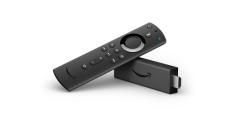 Amazon Announces New Fire TV Stick 4K with HDR10+, Dolby Vision, and Dolby Atmos Support[teaser]The new media stick is the first device of its kind to support both HDR10+ and Dolby Vision.[/teaser] Amazon has revealed the latest addition to its Fire TV line of streaming players. The new Fire TV Stick 4K ($50) offers robust HDR support along with Amazon's latest Alexa Voice Remote. The Fire TV Stick 4K is a compact HDMI media stick powered by a new quad core 1.7GHz processor, offering access to tens of thousands of channels, apps, and Alexa skills. In addition, the device features 4K Ultra HD playback capabilities with support for HDR10, HDR10+, Dolby Vision, and HLG high dynamic range formats. Likewise, the unit also includes support for Dolby Atmos playback. Amazon's newest Alexa Voice Remote with Bluetooth and multidirectional infrared technology is included as well, and users can also opt for hands-free voice control via a separate Echo device. "We've listened to our customers and pushed to deliver the complete 4K solution they are looking for, all within a compact stick form factor," said Marc Whitten, Vice President, Amazon Fire TV. "The team invented an entirely new antenna technology and combined that with a powerful 802.11ac Wi-Fi chip that optimizes for the best possible 4K UHD streaming experience, even in congested network environments. Our new quad-core processor delivers a fast and fluid experience and support for Dolby Vision and HDR10+ provides an amazing picture. Plus, the all-new Alexa Voice Remote lets you control your complete entertainment experience and use your voice to quickly find the content you want. Just say, 'Find 4K movies.'" Amazon's new Fire TV Stick 4K ($50) is now available for pre-order. Units are set to start shipping on October 31. Meanwhile, the new Alexa Voice Remote ($30) is also available for pre-order as a standalone unit with support for the previously released Fire TV Stick (2nd Gen), Fire TV Cube, and Amazon Fire TV (3rd Gen, Pendant Design). Source: AmazonPosted Wed Oct 3, 2018 at 05:45 AM PDT by:
 -
 Everything Coming to iTunes & the Apple TV App in October 2018[teaser]Check out all the new digital titles coming to the iTunes library and Apple TV App in October.[/teaser] Apple has revealed its October lineup of iTunes movies and TV shows. The collection includes films like Ant-Man and the Wasp, Mamma Mia! Here We Go Again, Teen Titans Go! To the Movies, Sorry to Bother You, The Meg, Incredibles 2, and BlackKklansman, along with series like Homeland: Season 7, The Affair: Season 4, and more. And beyond iTunes, Apple has also compiled a list of October streaming titles set to be available via the Apple TV App on iPhone, iPad, and Apple TV devices. The Apple TV App allows users to browse through content from over 60 video services without switching from one app to the next, including titles from Amazon Prime Video, HBO Now, Showtime, CBS All Access, Hulu, and many other pay-TV subscriptions. Here's a full rundown of October iTunes titles per Apple: iTunes Movies 10/2 Ant-Man and the Wasp 10/2 Cold Skin 10/2 DC Superhero Girls: Legend of Atlantis 10/2 Catcher Was a Spy 10/2 Unfriended: Dark Web 10/2 The Darkest Minds 10/2 Three Identical Strangers 10/2 Don’t Worry He Won’t Get Far on Foot 10/5 Loving Pablo 10/9 Mamma Mia! Here We Go Again 10/9 DC: Constantine: City of Demons 10/9 Teen Titans Go! To the Movies 10/9 Justice League Dark 10/9 Sorry to Bother You (exclusive iTunes Extras) 10/9 Hotel Artemis 10/16 The Spy Who Dumped Me 10/16 The Meg 10/16 Generation Wealth 10/19 Galveston (same day as theaters) 10/19 Slender Man 10/23 Juliet, Naked (exclusive on iTunes until 10/29) 10/23 Incredibles 2 10/23 BlackKklansman 10/23 Scotty and the Secret History of Hollywood 10/26 Thunder Road 10/30 Mile 22 10/30 Alpha iTunes TV *full seasons in bold 10/22 The Affair Season 4 10/29 Homeland Season 7 10/29 Insecure Season 3 And here's a rundown of October streaming titles set to arrive on various digital services through the Apple TV App: Apple TV App: Now Streaming 10/1 Queen of the World (HBO) - original doc 10/2 The Neighborhood (CBS) - Season 1 10/2 Happy Together (CBS) - Season 1 103 RBG (Hulu) 10/4 Seal Team (CBS) - Season 2 10/4 Criminal Minds (CBS) - Season 14 10/5 Station 19 (ABC) - Season 2 10/5 Superstore (NBC) - Season 4 10/5 Will & Grace (NBC) - Season 10 10/5 Into the Dark (Hulu) - Season 1 premiere (new episodes every Friday) 10/5 Man in the High Castle (Prime Video) - Season 3 10/6 Fresh off the boat (ABC) - Season 5 10/6 Speechless (ABC) - Season 3 10/6 Child support (ABC) - Season 2 10/6 Van Helsing (Syfy) - Season 3 10/6 Z Nation (Syfy) - Season 5 10/6 Flight of the Conchords: Live in London (HBO) - TV Special 10/8 Doctor Who (BBC America) - Season 11 10/8 Madam Secretary (CBS) - Season 5 10/8 Shark Tank (ABC) - Season 10 10/8 The Walking Dead (AMC) - Season 9 10/8 Talking Dead (AMC) - Season 8 10/8 DWTS: Juniors (ABC) - Season 1 10/10 The Flash (CW) - Season 5 10/10 Black Lightning (CW) - Season 2 10/11 Riverdale (CW) - Season 3 10/11 All American (CW) - Season 1 10/12 Supernatural (CW) - Season 14 10/12 Light as a Feather (Hulu) - Season 1 10/12 The Romanoffs (Prime Video) - Season 1 10/12 Pod Save America (HBO) - 4 One-Hour Specials 10/13 Blindspot (NBC) - Season 4 10/13 Dynasty (CW) - Season 2 10/13 Crazy Ex-Girlfriend (CW) - Season 4 10/13 Gold Rush (Discovery) - Season 9 10/14 Camping (HBO) - Season 1 10/15 Charmed (CW) - Season 1 10/15 Supergirl (CW) - Season 4 10/16 Arrow (CW) - Season 7 10/17 The Conners (ABC) - Season 1 10/17 The Kids are Alright (ABC) - Season 1 10/17 Black-ish (ABC) - Season 5 10/17 Splitting Up Together (ABC) - Season 1 10/17 The Rookie (ABC) - Season 1 10/19 Lore (Prime Video) - Season 2 10/23 Legends of Tomorrow (CW) - Season 4 10/24 The Guest Book (TBS) - Season 2 10/26 Legacies (CW) - Season 1 10/27 Midnight Texas (NBC) - Season 2 10/27 Channel Zero (Syfy) - Season 4 10/28 Ray Donovan (Showtime) - Season 6 10/28 Busy Tonight (E!) - Season 1 10/31 Tell Me a Story (CBS All Access) - Season 1 Source: iTunesPosted Tue Oct 2, 2018 at 11:45 AM PDT by:
 -
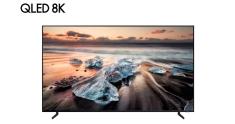 Samsung Launches Q900 QLED 8K TV Pre-Orders for $15,000[teaser]The company's upcoming 8K display is set to launch by the end of the month.[/teaser] According to new retail listings, Samsung has announced pricing and availability for its Q900 QLED 8K TV. The 85" display will start shipping in the US the week of October 28 for an MSRP of $15,000. Pre-orders are now live via Samsung's website. A listing is also posted on Best Buy, though the page states that the model will only be available in store. "At Samsung, we’ve worked tirelessly over the years to move the industry forward when it comes to premium picture quality, and the introduction of our QLED 8K with 8K AI Upscaling is an integral component as we look to the future of displays," said Jongsuk Chu, Senior Vice President of Visual Display Business at Samsung Electronics. "We’re thrilled to introduce the Q900R to consumers and are confident that they will experience nothing short of brilliance in color, clarity and sound on our new 8K-capable models." The Q900 features support for real 8K resolution, HDR10+ playback, and 4,000 nit peak brightness capabilities. In addition, the TV includes AI-powered 8K Upscaling technology and Samsung's 8K Quantum Processor to upscale lower resolution content from any source to 8K. Likewise, the panel offers Direct Full Array Elite local dimming for superior contrast and black levels. And like other QLED models, the TV uses quantum dot tech to provide DCI-P3 WCG support and 100% Color Volume. Meanwhile, the display also includes several lifestyle and smart features like support for Samsung's One Remote, Ambient Mode, The One Invisible Connection cable, SmartThings, and the Universal Guide. Though the 85" model is the only screen size announced for the US so far, 65", 75", and 82" versions are also planned for other regions Source: Best Buy, Samsung via AVS ForumPosted Mon Oct 1, 2018 at 09:45 AM PDT by:
 -
 Coming Soon to Streaming: HOUSE OF CARDS, SACRED GAMES, and More[teaser]A teaser for the final season of House of Cards headlines this week's collection of streaming trailers.[/teaser] Netflix and Hulu have released new previews and info for several of their upcoming programs and films. In addition, FilmStruck has announced its new October lineup of movies for the Criterion Channel. Here's a full rundown of titles scheduled to arrive on each service: Little Things (Netflix, October 5) - Kavya (Mithila Palkar) and Dhruv (Dhruv Sehgal) are a young unmarried couple navigating the complicated world of relationships, careers, and aspirations in the fast-paced city of Mumbai, while always cherishing the little things that make life worth living. The series celebrates the sweet and sour moments of life and their new-age relationship. Making a Murderer: Season 2 (Netflix, October 19) - Emmy Award-winning filmmakers Laura Ricciardi and Moira Demos return to the Midwest where they have exclusive access to Steven Avery and his co-defendant and nephew Brendan Dassey, their families and the legal teams fighting for justice on their behalf. Over the course of 10 new episodes, Making a Murderer Part 2 provides an in-depth look at the high-stakes postconviction process, exploring the emotional toll the process takes on all involved. Wanderlust (Netflix, October 19) - Looks at how we build and maintain happy relationships and asks whether lifelong monogamy is possible – or even desirable. Toni Collette plays Joy Richards, a therapist trying to find a way to keep her spark alive with her husband after a cycling accident causes them to reassess their relationship. As we meet her family, friends, neighbours and clients, remarkable yet relatable stories of love, lust and forbidden desire emerge. Wild District (Netflix, October 19) - Jhon Jeiver, a lethal guerrilla fighter who escapes the jungle after the signing of the Colombian Peace Agreements. He arrives in Bogotá escaping from his past, and tries to reinsert himself in society while looking to reconnect with his long lost family. But he soon finds himself wrapped in a web of crime and corruption, struggling to understand the ways of the concrete jungle, protect his family from his past, and faced with the moral dilemma of choosing what side of the law he wants to be on Marvel’s Daredevil: Season 3 (Netflix, October 19) - Blinded as a young boy but imbued with extraordinary senses, Matt Murdock (Charlie Cox) fights against injustice by day as a lawyer, and by night as the Super Hero “Daredevil” in modern day Hell's Kitchen, New York City. Adam Sandler: 100% Fresh (Netflix, October 23) - Adam Sandler takes his comical musical musings back out on the road, from comedy clubs to concert halls to one very unsuspecting subway station. Shirkers (Netflix, October 26) - An inspired labor of love for zine-making teens Sandi Tan, Jasmine Ng and Sophie Siddique, Shirkers was a Singapore-made 1992 cult classic—or it would have been, had the 16mm footage not been stolen by their enigmatic American collaborator Georges Cardona, who disappeared. More than two decades later, Tan, now a novelist in L.A., returns to the country of her youth and to the memories of a man who both enabled and thwarted her dreams. Magically, too, she returns to the film itself, revived in a way she never could have imagined. House of Cards: The Final Season (Netflix, November 2) - Golden Globe winner and Emmy Award nominee Robin Wright returns as President of the United States in the award-winning, landmark series House of Cards. Wright is joined by Academy Award® nominees Diane Lane and Greg Kinnear as well as Cody Fern this season alongside Emmy Award nominee Michael Kelly, Jayne Atkinson, Academy Award® nominee Patricia Clarkson, Emmy Award Nominee Constance Zimmer, Derek Cecil, Campbell Scott and Boris McGiver. They'll Love Me When I'm Dead (Netflix, November 2) - Academy Award winner Morgan Neville (20 Feet from Stardom) tells the provocative story of legendary director Orson Welles during the final 15 years of his life, when he struggled to make a Hollywood comeback with one last radical gamble. It's the untold chapter of one of the greatest careers in film history. Sacred Games: Season 2 (Netflix, Coming Soon) - A policeman, a criminal overlord, a Bollywood film star, politicians, cultists, spies, and terrorists—the lives of the privileged, the famous, the wretched, and the bloodthirsty interweave with cataclysmic consequences amid the chaos of modern-day Mumbai. The series is based on the critically-acclaimed best-selling novel Sacred Games by author Vikram Chandra. Light as a Feather (Hulu, October 12) - An innocent game of “Light as a Feather, Stiff as a Board” goes wrong when the five teen girls who played start dying off in the exact way that was predicted, forcing the survivors to figure out why they’re being targeted – and whether the evil force hunting them down is one of their own. Meanwhile, Criterion has revealed its October lineup of films for the Criterion Channel on the FilmStruck streaming service. Here's a full rundown of titles premiering in October: Dr. Strangelove, or: How I Learned to Stop Worrying and Love the Bomb, Stanley Kubrick, 1964 (October 1) My Josephine, Barry Jenkins, 2003 (October 2) 100 Years of Olympic Films: 1912-2012 (October 16) Seide, Elnura Osmonalieva, 2015 (October 16) An Act of Love, Lucy Knox, 2018 (October 23) Bath House, Niki Lindroth von Bahr, 2014 (October 30) - A current Netflix subscription starts at $11 per month for HD streaming and $14 per month for Ultra HD streaming. - A current Hulu subscription starts at $8 per month with commercials. In addition, ad-free playback is available for $12 per month. - A current FilmStruck Subscription starts at $7 per month. In addition, a FilmStruck + The Criterion Channel Subscription costs $11 per month, and customers can also opt for an annual Subscription for $99 per year. Sources: Netflix (YouTube), Hulu (YouTube), FilmStruck, One MediaPosted Thu Sep 27, 2018 at 07:20 PM PDT by:
 -
 VADER IMMORTAL: A STAR WARS VR SERIES Announced for New Oculus Quest System[teaser]Darth Vader is heading to Oculus' new VR system.[/teaser] ILMxLAB -- Lucasfilm's immersive entertainment division -- has announced a new Star Wars VR series for the recently revealed Oculus Quest VR platform. Vader Immortal is an upcoming three-part virtual reality series set to debut on the system in 2019. "Our mission at ILMxLAB is to have fans 'Step Inside Our Stories,' and Vader Immortal: A Star Wars VR Series represents a significant step forward in that ongoing quest," says Vicki Dobbs Beck, ILMxLAB Executive in Charge. "Our friends at Oculus share ILMxLAB’s ambition to bring compelling immersive narratives to life, and using Oculus' hardware, we will invite fans to experience Darth Vader as never before." The VR series will focus on Darth Vader during the time between Star Wars: Revenge of the Sith and A New Hope. As part of the experience, fans will be able to wield a lightsaber and explore the Sith Lord's castle on the lava-world of Mustafar (as previously seen in Rogue One: A Star Wars Story). Though full details on the story have not been announced yet, the project will be part of the official Star Wars canon. David S. Goyer (The Dark Knight, Secrets of the Empire) is on board as the writer and executive producer, and the series is being developed under the guidance of the Lucasfilm Story Group. Check out the official Vader Immortal trailer below! "Whether it's hearing Darth Vader's breathing behind you and physically turning to face him in person or wielding a lightsaber with your own hands, Vader Immortal captures the ultimate wish fulfillment," says Oculus Head of Experiences Colum Slevin. "Untethered VR immerses you in this universe and places you at the center of this amazing story." The newly announced Oculus Quest is an upcoming all-in-one VR gaming system. The device features six degrees of freedom and Touch controllers, and does not require a separate PC, wires, or any external sensors. Under the hood, the Oculus Quest uses the same optics as the Oculus Go with a display resolution of 1600x1440 per eye. Likewise, the system offers upgraded built-in audio with deeper bass. Meanwhile, the unit's new Oculus Insight technology is able to track a user's position in real time through the use of four integrated ultra wide-angle sensors and computer vision algorithms. Finally, the included Touch Controllers let players interact naturally with the VR worlds around them. The Oculus Quest is set to arrive in Spring 2019 for an MSRP of $399. Over 50 titles are expected to be available for the launch. Sources: StarWars.com, Oculus 1, Oculus 2Posted Wed Sep 26, 2018 at 01:00 PM PDT by:
 -
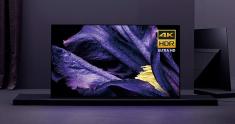 Is the Sony XBR-65A9F OLED Really the Best TV of 2018? Looking For a King at the 2018 Value Electronics TV ShootoutYes, it's that time of year again. The time to get holed up in a dark room for hours on end along with the industry's best TVs as they're pitted against each other in the ultimate 4K HDR cage match. And we got a front row seat. This past weekend, High-Def Digest was invited to participate on the panel of judges for the 2018 Value Electronics TV Shootout held in Scarsdale, New York.[teaser] The annual event placed the year's top displays side-by-side in order to choose the new "King of TV." [/teaser] The lineup of competing displays in this year's competition included four flagship premium 4K HDR TVs: LG’s OLED65E8PUA OLED TV Samsung’s QN65Q9FN LCD TV Sony’s XBR-65A9F OLED TV Sony’s XBR-65Z9F LCD TV In order to evaluate the displays, the Shootout mostly relied on real-world content and a couple of test patterns specially selected by the organizers to highlight various aspects of picture quality. Specific attributes were then scored by a panel of eight judges from 1 to 10 across three categories to determine the individual winners for each section. Likewise, the display with the most overall total points was then named the "King of TV." All of the TVs were visually matched to and evaluated against a Sony BMV-X300 30-inch OLED Reference Monitor used for professional color grading applications. And now that the dust has settled, here's a rundown of the winners in each category based on all the judges' scores: Best Overall "King of TV" - Sony XBR-65A9F OLED Best SDR Day Mode/Video Processing - Sony XBR-65A9F OLED Best SDR Reference Mode - Sony XBR-65A9F OLED Best HDR Reference Mode - Sony XBR-65A9F OLED & LG OLED65E8PUA OLED (tie) Below, I'll offer full details on the tests conducted in each category, along with my own impressions on how each TV fared during the competition and my general feelings on the winners. Let the shootout begin! (Note: Pictures included are from various demos throughout the event and do not necessarily correlate with the specific section heading) SDR Day Mode/Video Processing (Best Living Room TV) This category was designed to determine which display had the best SDR daytime viewing and processing for a living room setting with a high amount of ambient light. The judging criteria included scores for Motion Handling, Off-Axis Performance, Upscaling, and Peak Brightness. Three real-world demos were then used to evaluate all of these attributes. All three were played from a DirecTV HD feed and included clips from a football game, a hockey game, and a local news broadcast. All of the TVs were set to their brightest calibrated SDR mode with motion interpolation activated. Likewise, the blackout curtains were pulled back and the lights were turned on. Motion Handling - Though sports are typically a good showcase for motion, I didn't really feel like any of these clips were substantial enough to offer a particularly good example of each TV's motion handling. In fact, a specific test clip of a woman swinging on a hammock demoed after the judging was completed, provided a much better look at each panel's approach to motion. And even then, each TV offers a lot of leeway to fine-tune its motion handling, meaning that more fiddling with the settings would be necessary to see each at their best. With that in mind, based on the earlier clips this was mostly a toss-up between the four displays for me. Off-Axis Performance - As expected, the two OLED models fared much better than the two LCDs in this regard, with the LG E8 and Sony A9F OLEDs demonstrating relatively minor shifts in color at extreme angles. Meanwhile, the Sony Z9F LCD had a more pronounced shift in color and contrast, and the Samsung Q9FN had the most trouble maintaining accuracy from off-angle viewing. Upscaling - Due to the heavily compressed nature of the testing material, this section was also a bit difficult to judge precisely. In general, I didn't really think any of the TVs did a particularly good job with the low-grade content, and any differences were quite small. With that said, I did notice slightly smoother edges with less visible pixelation around text on the LG E8 OLED compared to the other TVs. Peak Brightness - Here's where the LCDs got a chance to really shine... literally. Though the two OLEDs had solid brightness in the well-lit room (and were essentially equal), the LCDs demonstrated a notable increase in light output -- with the Samsung Q9 edging out the Sony Z9F as the clear leader in this spot. TV Shootout Winner - Sony XBR-65A9F OLED (based on all the judges' scores) My Winner - LG OLED65E8PUA OLED (based on my scores) Final Thoughts - Based on the "Day Mode" designation of this category, I'm a bit torn about the results here (both the overall and my own). Off-Axis Viewing is what really ended up skewing the scores toward the OLEDs instead of the brighter LCDs. Of course, being able to have a good view from any seat on the couch is an important factor for a "Living Room TV" -- I'm just not sure it trumps higher luminance for bright room viewing. Best SDR Reference Mode (Best Home Theater TV) For this category, the focus was on which display had the best SDR dark room performance for a home theater. The judging criteria included scores for Black Level/Perceived Contrast, Shadow Detail, Color Accuracy/Skin Tones, and Near Black Uniformity. A mixture of real-world clips and test patterns were used for this section, and the scores were determined based on how well a display matched the same content on the professional BMV-X300 Reference Monitor. The blackout curtains were let back down and all of the lights were turned off in the store. Likewise, all of the TVs were calibrated to the SDR standard. Black Level/Perceived Contrast - A clip from the Bu-ray edition of Gravity was used for this section, with the disc being paused on an image of an astronaut against a large field of stars. The LG E8 OLED demonstrated the deepest blacks (they essentially disappeared in the darkened room) while still maintaining contrast in the bright whites of the astronaut's suit and the stars. Meanwhile, the blacks on the Sony A9F OLED were just a hair lighter while offering similar contrast. Thanks to its local dimming, the Sony Z9F LCD maintained solid blacks and contrast as well, but the astronaut appeared flatter and dimmer against the backdrop of space, and the blacks were not quite as deep as the OLEDs making the letterbox bars more visible. Finally, the Samsung Q9 LCD and its aggressive local dimming actually produced black levels that were just as deep and inky as the LG OLED, making the letterbox bars completely vanish while offering nice contrast between the astronaut and space. As a side effect, however, the algorithm made the starfield in the back look comparatively patchy, revealing the dimming zones while causing many stars that were visible on the other models to disappear. Shadow Detail - Here's where things might get a little controversial. For this section, the competition used a clip from the Blu-ray edition of Harry Potter and the Deathly Hallows – Part 2 where Voldemort and his followers invade Hogwarts at night. The sequence is very dimly lit and serves as a torture test for shadow delineation. The LG E8 OLED performed admirably, maintaining solid detail in the darkest portions of the picture, though I noticed that the top left corner of the screen actually tended to crush more than the Sony A9F OLED. Meanwhile, I thought that the Sony Z9F LCD actually did the best job of preserving small details in the dark portions of the screen, making it the closest to the Reference Monitor. Unfortunately, the Samsung Q9 LCD was an entirely different story. This sequence essentially broke the TV's local dimming algorithm, causing the contrast to fluctuate and vignette to the point that the panel was almost completely off during some of the scene, basically making it unwatchable. With that said, I reviewed this TV myself and I didn't encounter anything even close to this on anything I watched during my nearly three months with the display (though I never demoed this particular movie). It's clear that this was a weird anomaly rather than a good representation of how the Q9 typically performs. Of course, it's an anomaly that Samsung absolutely has to address and hopefully fix with a firmware update, but I still think that a different scene should have been used. In fact, the Gravity scene used for the black level section was a much more realistic depiction of the Q9's flaws in this regard. Color Accuracy/Skin Tones - A shot from the Blu-ray of Kingsman was paused on the screens for this section. The image featured the cast lined up side by side, offering a fairly neutral assortment of flesh-tones with a few more saturated hues on some of the characters' clothing. In general, I found that both OLEDs exhibited a cooler push while the LCDs had a warmer tinge. With that said, the OLEDs matched the color characteristics of the Reference Monitor more closely. The differences between the LG E8 and Sony A9F were very small, but I ultimately thought that the slight teal bias of the LG actually mirrored the Reference Monitor better. Near Black Uniformity - Banding in darker tones is a known issue for many OLED panels, and this test made that especially clear. A near black screen was displayed on all four panels and both of the OLEDs featured faint banding lines throughout the entire screen. In contrast, the Sony Z9F LCD and Samsung Q9 LCD were both much smoother and consistent, with the Z9F offering the most impressive uniformity of the bunch. TV Shootout Winner - Sony XBR-65A9F OLED My Winner - LG OLED65E8PUA OLED and Sony XBR-65Z9F LCD (tie) Final Thoughts - I can't really argue with the Sony OLED winning since it was essentially neck and neck with the LG and they both matched the Reference Monitor very closely. With that said, I actually think the Sony Z9F LCD did a better job with shadow detail and uniformity. I was also quite surprised by the amount of banding visible on the near black pattern on the OLEDs, though it's important to note that I never saw anything like that during the real world clips. And though I still think the Harry Potter scene was a clear local dimming anomaly rather than a realistic depiction of the Samsung Q9's shadow detail, the test did reveal a very serious problem for that display -- essentially disqualifying it in this category and basically pushing it out of the running. Best HDR Reference Mode (Best HDR TV) This category focused on which display had the best 4K HDR10 dark room performance for a home theater. The judging criteria included scores for Color Accuracy/Skin Tones, 4,000 Nit Tone Mapping, Wide Color Gamut, High Brightness HDR, and Perceived Sharpness. Several real-world clips from 4K Ultra HD Blu-ray discs were used for this section, and the scores were determined based on how well a display matched the same content on the professional Reference Monitor (except for one section). Again, the room was completely dark and the sets were calibrated for HDR WCG playback. Color Accuracy/Skin Tones - The same clip from Kingsman used for the SDR test was used for this section, but this time it was from the 4K Ultra HD Blu-ray edition. Even in HDR WCG, the results were essentially the same, with the OLEDs matching the Reference Monitor better. Again, the differences between the LG E8 and Sony A9F were very small, but I ultimately thought the LG mirrored the Reference Monitor ever so slightly better. 4,000 Nit Tone Mapping - For this section, a shot from Pan was paused on all four TVs with an image of the sky and the sun partially covered by some clouds. The sequence was graded to 4,000 nits and the highlights actually clipped on the Reference Monitor. With that in mind, we were supposed to judge how well the displays maintained detail and luminance in the sun. I actually thought the LG E8 OLED did the best job of offering specular luminance while maintaining the best detail, allowing one to make out the complete shape of the sun and the nuances in the surrounding clouds. The Samsung Q9 LCD also did a very good job in this regard. In contrast, I thought a little more detail in the clouds and white of the sun were clipped away on the Sony A9F OLED, and a lot of the detail was clipped away on the Sony Z9F LCD, causing the sun to look more overexposed while making some of the clouds disappear. Wide Color Gamut - An extremely colorful scene from The Lego Batman Movie was used to highlight wide color gamut support. Though all of the displays looked vibrant, I found that the OLEDs were not quite as bold as the two LCD models which could better match the extreme reds, blues, and greens of the Reference Monitor. High Brightness HDR - For this section, we paused on a shot from The Lego Ninjago Movie where the characters sit on a beach with a volcano in the background. Again, while all of the displays looked great, the OLEDs' HDR performance was a little dimmer than the Reference Monitor. Meanwhile, though the Samsung Q9 LCD actually had the punchiest HDR output, it actually looked a little too bright compared to the Reference Monitor. Ultimately, the Sony Z9F LCD best matched the BMV-X300 best. Perceived Sharpness - A shot from the 4K Ultra HD Bu-ray of The Revenant was used here, focusing on the details in a close-up of one character's face. To be honest, I found this to be one of the closest tests, and I didn't really see any truly notable differences in detail between the panels. With that said, the Sony Z9F LCD looked just a hair less sharp to me than the other displays. TV Shootout Winner - Sony XBR-65A9F OLED and LG OLED65E8PUA OLED (tie) My Winner - LG OLED65E8PUA OLED Final Thoughts - While the LCDs did offer higher HDR brightness, the OLEDs matched the overall look of the Reference Monitor more closely. To be honest, though, I'm not sure I'd really say the OLEDs are "better" at HDR performance. It's really more about what picture quality attributes a user prioritizes. Conclusion The 2018 Value Electronics TV Shootout was an eye-opening and sometimes surprising competition. Getting to see these flagship sets side-by-side is the only real way to judge their individual pros and cons. And though I had a couple of issues with some of the choices made, in general, I thought that the evaluation process was executed fairly. Here's a ranking of the final total points for each TV based on all of the judges' scores: Sony’s XBR-65A9F OLED TV - 850 points LG’s OLED65E8PUA OLED TV - 845 points Sony’s XBR-65Z9F LCD TV - 832 points Samsung’s QN65Q9FN LCD TV - 715 points Though I can't argue with the results, the Shootout did further reinforce to me just how hard it is becoming to really crown a definitive "King of TV." As you can see by the totals, the competition was really close. In fact, scoring the differences between the competitors was often like splitting hairs, and each model revealed its own specific pros and cons that will vary in importance for different users. Based on the criteria provided here, however, the Sony XBR-65A9F OLED was definitely one of the closest to matching the BMV-X300 Reference Monitor for the majority of the tests. We'd like to extend a big thanks to Robert Zohn (President of Value Electronics) and the rest of the Shootout's dedicated team for hosting the event, inviting us to participate on the judges' panel, and for setting up all of the tests! Finally, for those interested in more details about the competition's specific process and equipment used, here's a complete rundown of the testing and calibration methodology used for the Shootout: The number one most-used professional calibration software, SpectraCal’s CalMAN®, and calibration hardware, procedures and workflow will be used. Konica/Minolta’s professional CS2000A spectroradiometer, Klein 10A meters and the new Konica/Minolta CA-410 color analyzer will all be used in the calibration process. The Klein 10A meters will be profiled using the CS2000A spectroradiometer for each TV. SDR, HDR and Dolby Vision patterns will be generated and fed from Murideo’s SIX-G 4K Pattern Generator and a preview selection from Stacey Spears upcoming HDR test disc. All of the cables and interconnects are Metra Home Theater Group Ethereal brand Velox True 24 Gbps passive cables with their Gigabit Accelerator the HDM-GA1. All of the TVs will be visually matched to the white point of Sony’s BMV-X300 professional color grading monitor. Sony’s BMV-X300 reference monitor will also be used as the reference for all TVs to be judged against. Well respected top professional calibrators will be tuning each TV to its best possible FHD/SDR and UHD/HDR performance. The calibrators are David Abrams, DeWayne Davis, and John Reformato, supervised by Tyler Pruitt. All tested panels will be concurrently fed through AVPro’s Edge for 18G Uncompressed professional HDMI distribution matrix switch from four Panasonic UB820 Blu-ray players, 1080 FHD/SDR for Cable/DIRECTV, 4K streaming, SDR and HDR test patterns. The televisions featured this year are the flagship 4K Ultra HD LCD/LEDs and OLEDs from the premium TV manufacturers. Video experts will then guide the attendees through the evaluation process and the panel of experts and all attendees will vote on each picture quality attribute. Attendees will be led through the different attributes of picture quality and will evaluate and judge the newest TVs from the leading consumer electronics manufacturers that are competing to be the" King of TV."Posted Tue Sep 25, 2018 at 09:00 AM PDT by:
 -
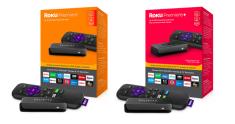 Roku Details New Premiere and Premiere+ 4K HDR Media Players[teaser]New Roku models have been revealed.[/teaser] Roku has announced the latest additions to its 4K HDR streaming media player lineup. The collection includes the new Roku Premiere ($40) and Roku Premiere+ ($50), which will replace the more expensive current gen versions. Likewise, an updated version of the Roku Ultra ($100) has also been detailed. "Roku Premiere and Roku Premiere+ are the easiest and most affordable way to stream in outstanding picture quality. Tens of millions of 4K TVs will be sold this year; we’re seeing more content, even live sports, produced and streamed in 4K and HDR as each week goes by," said Lloyd Klarke, director of product management, Roku. "At under $40, the new Roku Premiere is our lowest-priced 4K streaming player ever, and it’s going to give consumers the best picture quality their TV can handle. It is great for HDTV today and even better if they decide to get a 4K TV tomorrow." Both models feature low profile designs and offer support for 4K HDR10 streaming playback along with access to Roku's robust selection of apps and services, including the Roku Channel and 4K Spotlight Channel. In addition, the Premiere+ model adds a voice remote. Here's a full rundown of key features per Roku: Roku Premiere Clear, immersive picture quality in HD, 4K Ultra HD and 4K HDR Powerful quad-core processor Low profile form factor Includes Premium high-speed HDMI cable Easy to use remote with channel shortcut buttons 802.11 (b/g/n) Dolby® and DTS Digital Surround™ pass through over HDMI® Roku Premiere+ Includes everything Roku Premiere offers Voice remote with TV power & volume buttons And beyond the new Premiere models, Roku has also announced an updated version of its flagship Roku Ultra. The new package includes premium JBL headphones (valued at $39.95), and two new remote finder sounds: SportsCenter's Da-Da-Da from ESPN and HBO's Game of Thrones theme song. Here's a full rundown of key features per Roku: Premium JBL headphones for private listening ($39.95 value) The ultimate in connectivity offering both Ethernet 10/100 and 802.11ac MIMO dual-band wireless Enhanced voice remote with TV power and volume buttons, headphone jack for private listening, gaming buttons Lost remote finder button on the device now with SportsCenter’s DaDaDa from ESPN and HBO’s Game of Thrones theme song USB port for local media playback Dolby and DTS Digital Surround™ pass through over HDMI® Night listening mode The new Roku Premiere (pre-orders now live via Best Buy) and Roku Ultra will be available at all major retailers in early October. Meanwhile, the new Roku Premiere+ will be available exclusively at Walmart and Walmart.com in early October. Source: Roku via BusinessWirePosted Mon Sep 24, 2018 at 10:00 AM PDT by:
 -
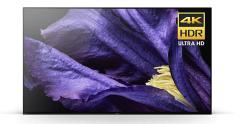 Sony XBR-65A9F OLED Wins 2018 Value Electronics TV Shootout[teaser]A new "King of TV" has been named![/teaser] Value Electronics has crowned its latest TV Shootout winner. The event was held earlier today and featured a head-to-head competition between some of the industry's top 4K Ultra HD displays. And now that the dust has settled, an overall winner has been named: the Sony XBR-65A9F OLED. I was honored to be on hand at the Shootout to represent High-Def Digest as one of the event's nine expert judges. I'll have a more detailed write-up on the contest with a breakdown of the different tests used and my own scores for each TV soon, but until then, here's a quick rundown of the winners in each category based on all the judges' scores: Best Overall TV - Sony XBR-65A9F OLED Best SDR Day Mode/Video Processing - Sony XBR-65A9F OLED Best SDR Reference Mode - Sony XBR-65A9F OLED Best HDR Reference Mode - Sony XBR-65A9F OLED & LG OLED65E8PUA OLED (tie) Here's a full list of the competitors featured in the Shootout: LG’s OLED65E8PUA Samsung’s QN65Q9FN Sony’s XBR-65A9F Sony’s XBR-65Z9F And here's a detailed rundown of the testing methodology used: The number one most-used professional calibration software, SpectraCal’s CalMAN®, and calibration hardware, procedures and workflow will be used. Konica/Minolta’s professional CS2000A spectroradiometer, Klein 10A meters and the new Konica/Minolta CA-410 color analyzer will all be used in the calibration process. The Klein 10A meters will be profiled using the CS2000A spectroradiometer for each TV. SDR, HDR and Dolby Vision patterns will be generated and fed from Murideo’s SIX-G 4K Pattern Generator and a preview selection from Stacey Spears upcoming HDR test disc. All of the cables and interconnects are Metra Home Theater Group Ethereal brand Velox True 24 Gbps passive cables with their Gigabit Accelerator the HDM-GA1. All of the TVs will be visually matched to the white point of Sony’s BMV-X300 professional color grading monitor. Sony’s BMV-X300 reference monitor will also be used as the reference for all TVs to be judged against. Well respected top professional calibrators will be tuning each TV to its best possible FHD/SDR and UHD/HDR performance. The calibrators are David Abrams, DeWayne Davis, and John Reformato, supervised by Tyler Pruitt. All tested panels will be concurrently fed through AVPro’s Edge for 18G Uncompressed professional HDMI distribution matrix switch from four Panasonic UB820 Blu-ray players, 1080 FHD/SDR for Cable/DIRECTV, 4K streaming, SDR and HDR test patterns. The televisions featured this year are the flagship 4K Ultra HD LCD/LEDs and OLEDs from the premium TV manufacturers. Video experts will then guide the attendees through the evaluation process and the panel of experts and all attendees will vote on each picture quality attribute. Attendees will be led through the different attributes of picture quality and will evaluate and judge the newest TVs from the leading consumer electronics manufacturers that are competing to be the" King of TV." Make sure to check back with High-Def Digest for a detailed breakdown of the 2018 Value Electronics TV Shootout soon! Source: Value ElectronicsPosted Sun Sep 23, 2018 at 05:30 PM PDT by:
 -
 Coming Soon to Streaming: DAREDEVIL, HOMECOMING, and More[teaser]The latest season of Daredevil and a new Amazon series starring Julia Roberts are among this week's crop of streaming trailers.[/teaser] Netflix and Amazon have released new previews and info for several of their upcoming programs and films. In addition, FilmStruck has announced its new September lineup of movies for the Criterion Channel. Likewise, the service is now the exclusive streaming home for Orson Welles' Citizen Kane. Here's a full rundown of titles scheduled to arrive on each service: Here's a full rundown of titles scheduled to arrive on each service: Chef's Table: Season 5 (Netflix, September 28) - For Season 5 of Chef’s Table, we dig past the surface of the fine-dining world to reveal remarkable chefs and cuisines whose stories have for too long been hidden. Featured chefs will include Cristina Martinez (Mexico & USA), Albert Adria (Spain), Musa Dağdeviren (Turkey), and Bo Songvisava (Thailand). Travels With My Father: Season 2 (Netflix, September 28) - Last year comedian Jack Whitehall and his father Michael embarked on a South East Asian odyssey, fulfilling Jack’s lifelong dream of a gap year. Against all odds they both survived! This year they’re back on the road in Europe, but now it’s Michael taking the lead – and he has very different ideas... Super Monsters: Season 2 (Netflix, September 28) - From acclaimed producer Avi Arad comes Super Monsters, an all-new animated series for kids following the adventures of six friends and their not-so traditional preschool experience. As preschoolers with super powers, Drac, Cleo, Lobo, Katya, Zoe and Frankie are students with dual identities: humans by day and magical monsters by night. Enrolled at the prestigious Pitchfork Pines Preschool, the group of friends work together under the leadership of their teachers, Igor and Esmie, as they attempt to master their seemingly untamable powers. Private Life (Netflix, October 5) - The new film from Academy Award-nominated filmmaker Tamara Jenkins (The Savages, Slums of Beverly Hills), PRIVATE LIFE is the bracingly funny and moving story of Richard (Academy Award-nominee Paul Giamatti) and Rachel (Kathryn Hahn), a couple in the throes of infertility who try to maintain their marriage as they descend deeper and deeper into the insular world of assisted reproduction and domestic adoption. After the emotional and economic upheaval of in vitro fertilization, they’re at the end of their middle-aged rope, but when Sadie (breakout newcomer Kayli Carter), a recent college drop out, re-enters their life, things begin to look up. YG Future Strategy Office (Netflix, October 5) - YG FSO stars Seungri as the head of YG’s newly formed department, The Future Strategy Office, where many of YG’s troublemakers have been sent. The sitcom series will follow Seungri and his team of misfits as they work to regain their place in the company. Big Mouth: Season 2 (Netflix, October 26) - A half-hour edgy adult animated comedy from real-life best friends Nick Kroll (Kroll Show, The League) and Andrew Goldberg (Family Guy) about the glorious nightmare that is teenaged puberty. Apostle (Netflix, October 12) - The year is 1905. Thomas Richardson travels to a remote island to rescue his sister after she’s kidnapped by a mysterious religious cult demanding a ransom for her safe return. It soon becomes clear that the cult will regret the day it baited this man, as he digs deeper and deeper into the secrets and lies upon which the commune is built. The Haunting of Hill House (Netflix, October 12) - A modern reimagining of Shirley Jackson’s legendary novel of the same name, about five siblings who grew up in the most famous haunted house in America. Now adults, they’re reunited by the suicide of their youngest sister, which forces them to finally confront the ghosts of their own pasts… some which lurk in their minds... and some which may really be lurking in the shadows of the iconic Hill House. Marvel’s Daredevil: Season 3 (Netflix, October 19) - Blinded as a young boy but imbued with extraordinary senses, Matt Murdock (Charlie Cox) fights against injustice by day as a lawyer, and by night as the Super Hero “Daredevil” in modern day Hell's Kitchen, New York City. Lore - Season 2 (Prime Video, October 19) - From an executive producer of The Walking Dead and an executive producer of The Exorcist, this season of the critically acclaimed anthology series will explore real-life frightening and disturbing tales that give rise to modern-day myths and legends. Season two will feature new tales based on the award-winning podcast as well as original stories not yet available in podcast form. Homecoming Season 1 (Prime Video, November 2) - Heidi Bergman (Julia Roberts) is a caseworker at Homecoming, a Geist Group facility helping soldiers transition to civilian life. Years later she has started a new life, living with her mother and working as a waitress, when a Department of Defense auditor questions why she left the Homecoming facility. Heidi quickly realizes that there's a whole other story behind the story she's been telling herself. Meanwhile, Criterion has revealed its September lineup of films for the Criterion Channel on the FilmStruck streaming service. In addition, FilmStruck is now the exclusive streaming home for Orson Welles' Citizen Kane. Here's a full rundown of titles premiering in September: Cul-de-sac, Roman Polanski, 1966 (September 1) Kes, Ken Loach, 1970 (September 1) The Cage, Adrian Sitaru, 2010 (September 4) Dead Man, Jim Jarmusch, 1995 (September 5) Deer Boy, Katarzyna Gondek, 2017 (September 11) When We Lived in Miami, Amy Seimetz, 2013 (September 18) Clouds of Sils Maria, Olivier Assayas, 2014 (September 19) The Voice Thief, Adan Jodorowsky, 2013 (September 25) - A current Netflix subscription starts at $11 per month for HD streaming and $14 per month for Ultra HD streaming. - A current Amazon Prime subscription costs $119 per year or $13 per month. Likewise, Prime Instant Video is available as a standalone service for $9 per month. - A current FilmStruck Subscription starts at $7 per month. In addition, a FilmStruck + The Criterion Channel Subscription costs $11 per month, and customers can also opt for an annual Subscription for $99 per year. Sources: Netflix (YouTube), Amazon (YouTube), FilmStruckPosted Thu Sep 20, 2018 at 05:35 PM PDT by:
 -
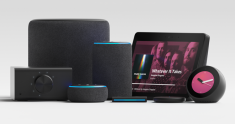 Amazon Reveals New Echo Lineup and Fire TV Recast DVR[teaser]The company has unveiled its latest lineup of gadgets.[/teaser] Amazon detailed its newest collection of Echo devices. The lineup includes the new Echo Dot, Echo Input, Echo Sub, Echo Link Amp, Echo Plus, Echo Show, and Echo Auto, along with the Fire TV Recast. "We want you to have access to Alexa everywhere—in your kitchen, in your living room, in your office, and now in your car or truck," said Tom Taylor, Senior Vice President, Amazon Alexa. "Today, we're excited to expand the number of ways that customers can add Alexa to their homes and their vehicles, so they can use Alexa to make their lives more convenient and easy—whether it’s asking for the traffic on your drive home, checking your email in the morning, or simply saying ‘Alexa, good night’ to turn off your lights and lock your door." The Fire TV Recast is a companion OTA DVR that allows users to receive and record free HD over the air broadcasts via a connected digital antenna without any kind of monthly fee. Live OTA content and recordings can then be streamed wirelessly from the device to other compatible Fire products, including Fire TV, Echo Show, and supported Fire tablet and smartphone models. Fire TV Recast can stream on two devices at the same time, and includes Alexa voice capabilities via a separate Alexa-enabled product. "We are focused on making Fire TV an easy way to watch all the entertainment you love, whether it’s through streaming video services, cable and satellite providers, or even local broadcast stations," said Marc Whitten, Vice President of Amazon Fire TV. "Now with Fire TV Recast, we've made it simpler to find, watch, and record live over-the-air TV at home and on your mobile devices." The Fire TV Recast is now available for pre-order in 500 GB ($230) or 1 TB ($280) models. The 500 GB version includes two tuners and offers support for up to 75 hours of HD recording and the ability to record up to two programs at once. Meanwhile, the 1 TB version includes four tuners and offers support for up to 150 hours of HD recording and the ability to record up to four programs at once. Units are expected to start shipping on November 14. The third generation Echo Dot smart speaker with Alexa features a new fabric exterior design, along with an improved mic array, and a larger 1.6" driver for better sound and less distortion. Likewise, the power output has been increased, allowing for a 70 percent increase in volume. Pre-orders for the updated Echo Dot are now live for $50. Units are available in Charcoal, Heather Gray, and Sandstone variants. Shipments are expected to go out on October 11. The new second generation Echo Plus features improved sound with premium speakers powered by Dolby and an equalizer feature to adjust bass and treble through voice control. Likewise, the device includes a smart home hub and the ability to setup smart devices by asking, "Alexa, discover my devices." In addition, a temperature sensor is integrated as well, allowing users to program actions based on how hot or cool it is in a room. Pre-orders for the new Echo Plus are now live for $150. Units are set to launch on October 11. The new second generation Echo Show features an updated design with a larger 10" HD screen, fabric back panel, a 5MP camera, and an 8-mic array. In addition, the device offers improved stereo sound with dual, side-firing 2" Neodymium drivers, a passive bass radiator, and Dolby processing "Customers tell us they love the convenience of being able to ask Alexa to show them things," said Tom Taylor, Senior Vice President, AmazonAlexa. "Today, we're making the voice-first, visual Echo Show experience better in every way by adding even more experiences to delight our customers—a dynamic and vivid display makes watching live TV enjoyable, new speakers for music and music videos, two-way doorbell video calling, simple set-up and control of smart home devices, Skype calling to friends and family, and all-new visual features." Pre-orders for the new Echo Show are now live for $230 with orders set to start shipping on October 11. The Echo Input is designed to add Alexa voice control to existing speakers through a 3.5mm audio cable or Bluetooth connection. The device itself measures just 12.5mm tall and includes a four-microphone array. An exact release date has not been announced yet, but the Echo Input will be available later this year for $35. The Echo Sub is a 6" down-firing, 100W subwoofer designed for use with Echo devices. The sub can be paired with one Echo or Echo Plus for a 1.1 configuration or two of the same Echo devices for 2.1 stereo sound. Pre-orders for the Echo Sub are now available for $130. A bundle with two Echo speakers is also available for $250. The Echo Link is designed to work with a user's existing speaker setup by connecting to a receiver or amplifier, adding the ability to control music selection, volume, and multi-room playback via a separate Echo device or the Alexa app. In addition, an Echo Link Amp model will also be available with an integrated 60W 2-channel amplifier of its own. Amazon's Echo Link ($200) and Echo Link Amp ($300) will both be available later this year. Finally, the Echo Auto allows users to add Alexa to their car or truck by connecting to the Alexa app on a smartphone, offering support for music, navigation, calling, and more. The device features an eight-microphone array designed for in-car noise and can connect to a vehicle stereo system via a 3.5 mm audio jack or Bluetooth connection. Meanwhile, the unit can be powered by a car's 12V power outlet or USB port. Invitation-only pre-orders are now available for the Echo Auto for a special reduced price of $25. Sources: Amazon 1, Amazon 2Posted Thu Sep 20, 2018 at 02:05 PM PDT by: