-
_MDC_MMA_MMB_MMP_LS@171013@L.jpg) Pioneer Launches VSX-933 7.2-Channel Receiver with Dolby Atmos & DTS:X for Under $500[teaser]The new immersive audio receiver is now shipping.[/teaser] Pioneer has announced the latest addition to its home audio lineup. The VSX-933 offers 7.2 channel support with Dolby Atmos and DTS:X for an MSRP of $479. The receiver is rated for 165 W/Ch (6 ohms, 1 kHz, THD 10%, 1-ch driven) or 80 W/ch (8 ohms, 20 Hz-20 kHz, THD 0.08 %, 2ch Driven, FTC), and uses a Direct Energy design. In addition, the unit offers support for 5.2.2 Dolby Atmos and DTS:X configurations, along with DTS Neural:X and Dolby Surround up-mixing technology. Likewise, the device features a Reflex Optimizer option to enhance the performance of Dolby Atmos-enabled speakers. HDMI connectivity with HDCP 2.2 compatible 4K/60p, 4:4:4, 24-bit, HDR10, HLG, and Dolby Vision video pass-through is integrated as well. Meanwhile, the VSX-933 also provides Hi-Res audio playback over local network and USB, including support for 192 kHz/24-bit FLAC, WAV, AIFF, and ALAC, along with DSD 2.8 MHz/5.6 MHz. Chromecast built-in, Google Assistant, DTS Play-Fi, FlareConnect, Wi-Fi, and Bluetooth are all featured as well. Likewise, users can stream music from services like Amazon Music, Pandora, Spotify, TIDAL, and Deezer. Finally, the receiver incorporates MCACC (Multi-Channel Acoustic Calibration System) for easy speaker setup with an included microphone. Here's a full rundown of key specs per Pioneer: - Dolby Atmos®/Dolby Surround Upmixing - DTS:X®/DTS Neural:X Upmixing - Supports pass-through for HDR10, HLG (Hybrid Log-Gamma), and Dolby Vision signals - 165 W/ch (6 ohms, 1 kHz, THD 10 %, 1ch Driven) - 80 W/ch (8 ohms, 20 Hz-20 kHz, THD 0.08 %, 2ch Driven, FTC) Pioneer's VSX-933 is rolling out to retailers now for an MSRP of $479 -- though Amazon seems to be incorrectly listing the product for $579 as of press time. Source: PioneerPosted Wed Apr 18, 2018 at 10:50 AM PDT by:
Pioneer Launches VSX-933 7.2-Channel Receiver with Dolby Atmos & DTS:X for Under $500[teaser]The new immersive audio receiver is now shipping.[/teaser] Pioneer has announced the latest addition to its home audio lineup. The VSX-933 offers 7.2 channel support with Dolby Atmos and DTS:X for an MSRP of $479. The receiver is rated for 165 W/Ch (6 ohms, 1 kHz, THD 10%, 1-ch driven) or 80 W/ch (8 ohms, 20 Hz-20 kHz, THD 0.08 %, 2ch Driven, FTC), and uses a Direct Energy design. In addition, the unit offers support for 5.2.2 Dolby Atmos and DTS:X configurations, along with DTS Neural:X and Dolby Surround up-mixing technology. Likewise, the device features a Reflex Optimizer option to enhance the performance of Dolby Atmos-enabled speakers. HDMI connectivity with HDCP 2.2 compatible 4K/60p, 4:4:4, 24-bit, HDR10, HLG, and Dolby Vision video pass-through is integrated as well. Meanwhile, the VSX-933 also provides Hi-Res audio playback over local network and USB, including support for 192 kHz/24-bit FLAC, WAV, AIFF, and ALAC, along with DSD 2.8 MHz/5.6 MHz. Chromecast built-in, Google Assistant, DTS Play-Fi, FlareConnect, Wi-Fi, and Bluetooth are all featured as well. Likewise, users can stream music from services like Amazon Music, Pandora, Spotify, TIDAL, and Deezer. Finally, the receiver incorporates MCACC (Multi-Channel Acoustic Calibration System) for easy speaker setup with an included microphone. Here's a full rundown of key specs per Pioneer: - Dolby Atmos®/Dolby Surround Upmixing - DTS:X®/DTS Neural:X Upmixing - Supports pass-through for HDR10, HLG (Hybrid Log-Gamma), and Dolby Vision signals - 165 W/ch (6 ohms, 1 kHz, THD 10 %, 1ch Driven) - 80 W/ch (8 ohms, 20 Hz-20 kHz, THD 0.08 %, 2ch Driven, FTC) Pioneer's VSX-933 is rolling out to retailers now for an MSRP of $479 -- though Amazon seems to be incorrectly listing the product for $579 as of press time. Source: PioneerPosted Wed Apr 18, 2018 at 10:50 AM PDT by: -
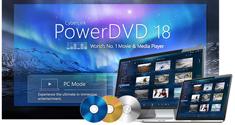 CyberLink Releases PowerDVD 18 with Ultra HD Blu-ray Support[teaser]The new PC Blu-ray software supports 4K HDR content.[/teaser] CyberLink has announced the launch of PowerDVD 18, the latest version of the company's popular Blu-ray media player software for Windows PCs. The new version offers support for Ultra HD Blu-ray discs, HDR10 content, VR headsets, and more. "In today's digital age, people expect to watch high-definition movies and stream videos with zero hassle, no questions asked. PowerDVD continues to lead the way on bringing a premium multimedia experience to users around the world," said Dr. Jau Huang, CEO of CyberLink. "With a number of enhancements added in this release, PowerDVD raises the bar in combining the world of online media with high-definition playback, live videos and 360o content, truly creating an end-to-end solution for users and their entertainment needs. PowerDVD 18 is a best-in-class media player enabling people to maximize the full potential of their VR headsets, Ultra HD 4K TVs, home theater systems—even their PC." PowerDVD 18 supports Ultra HD Blu-ray disc playback on Windows PCs, along with HDR10 and H.265/HEVC video content. In addition, the software allows users to watch 360 degree videos even without a VR headset via a new viewing mode that displays every angle simultaneously. Likewise, YouTube Live integration allows users to stream live YouTube content, and media casting support is included for Fire TV, Chromecast, Roku, and Apple TV devices. Finally, a TrueTheater HDR mode is integrated as well to upscale SDR videos to near high dynamic range quality on HDR displays. PowerDVD 18 is now available for purchase from CyberLink's website in a variety of packages. Click here for details on the differences between each version. Here's a rundown of pricing: - PowerDVD Live: $44.99/12 month or $14.99/3 month subscription- PowerDVD 18 Ultra: $99.95- PowerDVD 18 Pro: $79.95- PowerDVD 18 Standard: $59.95 Source: CyberLinkPosted Tue Apr 17, 2018 at 09:25 AM PDT by:
 -
 Comcast Set to Bundle Netflix Subscriptions with Xfinity TV Packages[teaser]Comcast users will now be able to bundle their cable plans with Netflix streaming.[/teaser] Following the launch of Netflix app support on Xfinity devices back in 2016, Comcast has now announced plans to expand its partnership with Netflix. As part of the deal, the cable company will now offer the option to bundle a Netflix subscription with new and existing Xfinity packages. "Netflix offers one of the most popular on demand services and is an important supplement to the content offering and value proposition of the X1 platform," said Sam Schwartz, Chief Business Development Officer, Comcast Cable. "Netflix is a great partner, and we are excited to offer its services to our customers in new ways that provide them with more choice, value and flexibility. The seamless integration of Netflix with the vast Xfinity entertainment library on X1 present a unique and comprehensive experience for customers." Netflix streaming on Comcast's X1 platform allows customers to watch Netflix content (including 4K HDR titles) alongside Xfinity live, On Demand, and DVR programming all in one place directly through their set-top boxes. The X1 Netflix experience has been designed to take advantage of key X1 technical advances like universal search, natural language processing, IP stream processing, and a cloud-based infrastructure. In addition, the X1's voice control has been expanded to support Netflix titles. Likewise, customers can also access the standard, dedicated Netflix app through their box as well. "Our partnership with Comcast on Xfinity X1 has brought easy access to Netflix for our mutual customers," said Bill Holmes, global head of business development for Netflix. "By speaking into or browsing with the X1 remote, millions of customers have found the perfect thing to watch on Netflix. We can't wait to introduce more X1 customers to Netflix with Xfinity's new packaged offers." Xfinity with Netflix subscriptions will be handled via one monthly statement directly by Comcast. A variety of bundle plans will be available to new and existing customers starting this month with exact offers and availability set to vary by market. Source: NetflixPosted Mon Apr 16, 2018 at 06:30 AM PDT by:
 -
 This Week in Gear: LG Expands Smart TV App Lineup, Optoma Reveals New Laser ProAV Projector, and More[teaser]We've compiled the latest gear news, including LG's expanded smart TV app collection, details on Optoma's newest ProAV projector, and more.[/teaser] From product announcements and streaming app updates to general industry news and recent gear trends, keeping up with the latest tech news can be a daunting task. With that in mind, we're here to offer you a roundup of some of the latest gear and consumer electronics news that you may have missed. For this edition, we're covering new streaming apps for LG smart TVs, the upcoming debut of LG's new G7 ThinQ smartphone, Optoma's newest ProAV projector model, and Sony's updated Video & TV interface for the PS4. So, without further ado, here's a rundown of some of the latest gear and tech news: LG Adds New Smart TV Apps LG has announced the addition of several new apps to its smart TV lineup. The recent arrivals include Showtime & Showtime Anytime, Starz, and Hulu with Live TV. All three services are now available on select LG webOS Smart TV models, including the company's recently released 2018 OLED and SUPER UHD TVs with AI ThinQ. The Showtime streaming app offers standalone live and on-demand streaming access to the Showtime service for $10.99 per month. New users can also receive a 7-day free trial. Meanwhile, the Showtime Anytime app allows users who already have an authenticated Showtime pay-TV subscription to access on-demand content through supported LG smart TVs at no extra cost. Meanwhile, the Starz app offers standalone access to the premium network's streaming catalog of movies and shows for $8.99 per month. New users can also receive a 7-day free trial. Likewise, the app allows customers who already have a Starz pay-TV subscription to sign-in and stream content as well. Finally, the Hulu with Live TV app allows LG Smart TV customers to access Hulu's Live TV service for $40 per month. The platform includes more than 50 live linear channels, along with playback support for the standard Hulu streaming library with a growing collection of movies and original shows. In addition, the app features an updated UI with new Hulu channel offerings, personalized sports experiences, and the ability to record live TV through the Cloud DVR option. "As interest in streaming live events continues to rise, we are offering LG smart TV owners a seamless solution that enables them to experience today's pivotal cultural moments as they are happening from the comfort of their own home," said Matthew Durgin, director of smart TV content partnerships at LG Electronics USA. Source: LG LG Sets May Debut for New G7 ThinQ Smartphone LG has announced plans to officially unveil its latest premium smartphone model next month. The G7 ThinQ smartphone will make its formal debut on May 2 at the Metropolitan West in New York and on May 3 at I’PARK Mall in Seoul. "Now is the time when manufacturers have to pay close attention to what customers actually need and want for their smartphones," said Hwang Jeong-hwan, president of LG Electronics Mobile Communications Company. "With the LG G7ThinQ, LG is continuing to deliver on its promise to enhance core technologies to meet customers’ real life needs by incorporating AI technologies that are more than features, they are part of the user experience." Full specs and details have not been revealed yet, but the G7 will be LG's first G series smartphone to use artificial intelligence tech under the ThinQ name. The previously announced V30S also carries the ThinQ name and uses the technology to enhance its voice recognition and camera performance. The G7 is set to offer similar features along with improved interconnectivity with LG appliances, TVs, and other devices. Source: LG Optoma Details ZH420UST UST Laser ProAV Projector Optoma has revealed its newest ProAV projector model. The new ZH420UST is geared toward professional installation projects and is set to be the industry's first 1080p ultra short throw projector with built-in edge blending and warping adjustments. "The ZH420UST is the industry's first 1080p ultra short throw projector with built-in edge blending and warping adjustments, combining flexibility, reliability and incredible performance," said Brian Soto, head of product management, Optoma Technology. "By bringing high quality and innovation to the market at industry-leading prices, we continue to demonstrate our dedication to providing unique solutions with maximum flexibility to the ProAV market." The ZH420UST is a laser light source projector with support for 1080p resolution, 4,000 ANSI lumens, a 100,000:1 contrast ratio, and a 0.25:1 throw ratio. Likewise, the device is capable of projecting 100-inch images from just 13 inches away. In addition, the unit offers several features for added installation flexibility, including built-in warping adjustment and automatic edge blending. Optoma's ZH420UST will be available in black or white this May through authorized dealers for an estimated street price of $2,799. Source: Optoma via PR Newswire Sony Updates UI for PS4 TV & Video Experience Sony has launched an updated User Interface for the TV & Video section on its PS4 console. The upgraded experience now offers improved streaming content discovery and navigation. The new TV & Video experience offers a centralized hub for streaming videos from a variety of platforms like Netflix, Prime Video, Hulu, and YouTube, allowing users to browse content, rent or purchase titles, and subscribe to services without having to switch in and out of different apps. A "Featured" section displays the best titles from various video services while a "Spotlight" section highlights popular content based on changing themes like "Superheroes" or "Award Season." Users can also link their YouTube accounts to their PlayStation Network accounts to receive personalized recommendations in the YouTube section, and the PlayStation Vue section now shows popular live channels in your area. Finally, the UI still includes direct access to various streaming apps as well. Additional features are also planned for future updates. Source: SonyPosted Fri Apr 13, 2018 at 10:00 PM PDT by:
 -
 Coming Soon to Streaming: 'Jessica Jones,' 'Cargo,' and More[teaser]Check out the latest crop of previews and announcements for new streaming shows and movies. [/teaser] Netflix. Amazon, and Hulu have released trailers and other info for several of their upcoming series and films. Here's a full rundown of titles scheduled to arrive on each service: Mercury 13 (Netflix, April 20) - The remarkable story of the women who were tested for spaceflight in 1961 before their dreams were dashed in being the first to make the trip beyond Earth. NASA’s ‘man in space’ program, dubbed ‘Project Mercury’ began in 1958. The men chosen - all military test pilots - became known as The Mercury 7. But away from the glare of the media, behind firmly closed doors, female pilots were also screened. Thirteen of them passed and, in some cases, performed better than the men. They were called the Mercury 13 and had the ‘right stuff’ but were, unfortunately, the wrong gender. Underneath the obsession of the space race that gripped America, the Mercury 13 women were aviation pioneers who emerged thirsty for a new frontier, but whose time would have to wait. The film tells the definitive story of thirteen truly remarkable women who reached for the stars but were ahead of their time. A Netflix original documentary directed by David Sington (The Fear of 13) and Heather Walsh. DUDE (Netflix, April 20) - Four best friends navigate loss and major life changes -- and smoke a lot of weed -- during their last two weeks of high school. Starring Lucy Hale, Alex Wolff, Alexandra Shipp, Awkwafina, and Kathryn Prescott. Directed by Olivia Milch. Kevin James: Never Don’t Give Up - (Netflix, April 24) - Kevin James, one of the most successful stand-up artists and comic actors of today, returns for his first stand-up comedy special in 17 years. Using his signature comedic timing and hilarious observations that successfully highlight the absurdity in everyday situations, James touches upon a myriad topics including awkward fan photos, how encores in the entertainment industry are insincere, annoying food allergies and the unique abilities (or lack thereof) that his children possess. Bobby Kennedy For President (Netflix, April 27) - The eye-opening and transformative four-part docuseries Bobby Kennedy for President utilizes rare and never-before-seen archival footage – much of it digitized for the first time – to transport us to a turbulent and dynamic era, letting Bobby's voice and viewpoint be the guiding force. With new interviews with RFK confidantes and staffers including William Vanden Heuvel, Dolores Huerta, Rep. John Lewis, Harry Belafonte, Paul Schrade, Marian Wright Edelman and Peter Edelman, acclaimed director Dawn Porter (Trapped, Spies of Mississippi, Gideon's Army) reveals anew what America gained and what it lost in the life, vision, politics, and hope of Bobby Kennedy. Busted! (Netflix, May 4) - A hilarious panel of Korean entertainment icons team up with some of the biggest names in K-Drama in this madcap whodunit variety show. More “Keystone Cops” than “Sherlock Holmes," each episode sees our cast of bumbling detectives solve a different mystery based on vignettes presented by famous Korean actors and comedians. An overarching plot unfolds throughout the series, and the tension mounts as the panel edges closer to the awful truth. End Game (Netflix, May 4) - Where will loved ones spend their last days? Who will be in the room? What feelings and secrets need to be shared with family before it is too late? Acclaimed Academy Award-winning filmmakers Rob Epstein and Jeffrey Friedman (The Times of Harvey Milk, The Celluloid Closet, Paragraph 175) probe these questions and more in the context of two San Francisco Bay Area medical facilities on the forefront of creating new paradigms for end of life decisions with grace. Cargo (Netflix, May 18) - From the producer of The Babadook, and starring Martin Freeman, comes Cargo. Based on the viral short film, this is the story of a man and his infant daughter who are stranded in the middle of a zombie apocalypse in rural Australia. And when he becomes infected, the countdown begins for him to find her protection before he changes forever. In addition, Netflix has also announced a third season renewal for Marvel's Jessica Jones. The show stars Krysten Ritter as the title character, Rachael Taylor as Trish Walker, Carrie-Anne Moss as Jeri Hogarth, and Eka Darville as Malcolm Ducasse. Season two recently premiered through Netflix on March 8. The series follows a super-powered private investigator in NYC and is based on the Marvel comic book character. An exact release date for the third season has not been announced yet. Tiny Shoulders: Rethinking Barbie (Hulu, April 27) - From writer and director, Andrea Nevins, Tiny Shoulders: Rethinking Barbie features newly discovered footage and unprecedented access to the inner workings of a toy giant during Barbie’s biggest reinvention and examines 60 years of women in popular culture through the lens of an 11.5 inch plastic celebrity. With interviews from Gloria Steinem, Roxane Gay, Peggy Orenstein, Mattel insiders and cultural historians, the documentary reveals the progression and regression in women’s fight for equality. All or Nothing: The Dallas Cowboys (Amazon Prime Video, April 27) - Takes viewers inside the locker room, on the sidelines and off the field for an unprecedented look inside an NFL franchise’s season. Season three follows the Dallas Cowboys through their tumultuous 2017 season, which they enter with Super Bowl aspirations and exit with disappointment, just short of the playoffs after a roller-coaster of controversy and emotion. - A current Netflix subscription starts at $11 per month for HD streaming and $14 per month for Ultra HD streaming. - A current Amazon Prime subscription costs $99 per year or $11 per month. Likewise, Prime Instant Video is available as a standalone service for $9 per month. - A current Hulu subscription starts at $8 per month with commercials. In addition, ad-free playback is available for $12 per month. Sources: Netflix (YouTube), Amazon (YouTube), Hulu (YouTube)Posted Fri Apr 13, 2018 at 07:00 PM PDT by:
 -
 Legal Dispute Between Disney and Redbox Continues to Heat Up[teaser]The battle between the two companies is only intensifying.[/teaser] As reported back in December, Disney is suing Redbox for reselling digital copy codes of its films, and in February the studio was dealt a major blow in its case when a California federal judge rejected its motion for a preliminary injunction to stop the rental company. Now, Disney has put forth an amended complaint with the US District Court in Los Angeles to once again call for an injunction. Meanwhile, Redbox has filed its own amended complaint against Disney in response, alleging that the studio is making it unfairly difficult for the rental business to purchase Disney combo packs for its service. Furthermore, the allegations go so far as to claim that a Redbox employee was recently threatened with prison time for buying copies of Coco. Redbox first began selling digital copy codes for Disney films in October for around $5 - $15 per title. The company obtains the codes from inserts that are included with the retail discs it buys for its DVD and Blu-ray rental kiosks. The selection of movies includes many popular titles like Star Wars: The Force Awakens, Guardians of the Galaxy Vol. 2, The Jungle Book, Moana, Frozen, and more. After buying a code, users can pick-up a printout with details on how to use it from one of Redbox's kiosks. The codes can then be used to redeem a digital copy of the selected movie through various supported services and devices. As part of its lawsuit, Disney is claiming that by reselling these codes Redbox is violating the studio's contracts and copyrights since Disney clearly states that these codes are not for sale on its packaging. As such, Disney is seeking an injunction on the sale of its digital codes through Redbox. With that said, the request was initially denied in court by a California federal judge who based his ruling on potential copyright misuse by Disney itself. For its part, Disney now says it has addressed this concern by changing the language in its online license agreements to make it more clear that only the customer who actually buys a combo pack can redeem the digital copy. As such, the studio is once again attempting to get an injunction against Redbox. In the other corner, Redbox is now claiming that Disney is trying to unjustly prevent the company from buying combo packs. To do so, the complaint alleges that the studio is using an in-store merchandising company called Anderson Merchandisers to help stop Redbox from buying discs in store. According to Redbox, one major retailer has even been told to prohibit Redbox employees from purchasing more than five Disney discs. On that note, the complaint states that one Redbox employee was threatened with prison time for buying combo packs of Coco, and the company believes that the threats were made by a representative of Anderson or Disney. The next step is set for June 4, when another hearing will be held to consider Disney's injunction. Sources: Deadline 1, Deadline 2, VarietyPosted Thu Apr 12, 2018 at 03:06 PM PDT by:
 -
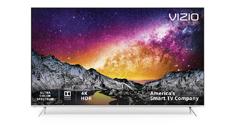 Hands-On with VIZIO's 2018 4K HDR Smart TVs & Dolby Atmos Sound Bars[teaser]Earlier this week, High-Def Digest attended VIZIO's 2018 Spring Showcase. Held at the New York Edition Hotel in NYC, the event spotlighted the company's latest P-Series, M-Series, and E-Series 4K HDR TVs, along with its new Dolby Atmos sound bar systems.[/teaser] Offering expanded SmartCast options, improved HDR brightness performance, and more refined designs all across the board, these 2018 display models maintain VIZIO's celebrated emphasis on bang-for-your-buck quality, providing features like full array local dimming and Dolby Vision at very competitive prices. And unlike the 2017 lineup which was comprised of "displays" without tuners, all of the 2018 models are now proper "TVs" with integrated TV tuners, allowing users to watch OTA broadcasts with a separate digital antenna. Highlighting a couple key picture and smart TV functions, the event featured a few demos revealing some of the differences between each series, along with a head-to-head comparison with a competing TV from another brand, pitting a new P Series Quantum model against one of LG's flagship OLED displays. 2018 4K HDR TV Lineup To kick off the event, VIZIO had its new 65-inch E-Series, M-Series, P-Series, and P-Series Quantum displays all hung up on a wall together in a dim room while various demo clips of bright, colorful HDR imagery played across each screen. And though the repeating reels were fairly brief and the units were not fully calibrated, all of the TVs offered a punchy and eye-catching picture that left a strong first impression. While the lineup actually starts with the entry-level D-Series, the company did not have any of those units on hand, preferring to instead highlight the other step-up models. The D-Series includes 4K HDR Smart TVs ranging in size from 43-inches to 70-inches and price from $350 to $1,000, along with several standard HDTV models as well. The 4K HDR units all feature direct-lit LED backlights but do not offer any kind of local dimming capabilities. HDR10 and HLG high dynamic range formats are also supported with an output of about 200 to 300 nits. With that said, the panels do not offer wide color gamut coverage. Units are now available through VIZIO and are set to expand to more retailers soon. Offering a few key performance upgrades over the D-Series, the new 2018 E-Series features 4K HDR TV models with VA panels (and some IPS for select sizes) ranging in size from 43-inches to 75-inches and price from $350 to $1,600. The displays all feature full array local dimming with the number of zones ranging from 10 to 16 depending on the screen size. HDR10 high dynamic range support is included as well, and new for this year's lineup, the E-Series also provides Dolby Vision and HLG playback. Likewise, brightness performance has also been given a notable improvement over 2017's E-Series, with a new peak brightness capability of 400 nits. Sadly, however, the series still does not offer wide color gamut coverage. In person, the 65-inch model looked rather nice, though the viewing conditions and content being played didn't really allow for any kind of in-depth evaluation. Units are now available through VIZIO and are set to expand to more retailers soon. Further improving contrast and brightness capabilities along with some added aesthetic design perks, the 2018 M-Series includes 4K HDR models with VA panels ranging in size from 55-inches to 70-inches and price from $700 to $1,500. Full array local dimming specs range from the 32-zone 55-incher to the 40-zone 65-incher to the 48-zone 70-incher. HDR10, Dolby Vision, and HLG are all supported as well with a peak brightness of 600 nits. Unfortunately, unlike the 2017 M-Series, the new 2018 panels do not provide wide color gamut capabilities. The omission has been made in part to maintain competitive pricing and to make some aesthetic upgrades, including a new 3-sided bezel-less construction. But while the new design does look rather attractive, I would have preferred P3 color support over a fancier border. Still, the display offered a very pleasing picture at the event, though given the lighting conditions in the room, the differences in performance between the E and M-Series were a little less apparent. Units are now available through VIZIO and are set to expand to more retailers soon. While VIZIO 2016 and 2017 P-Series panels were identical, the company has fully updated the line for 2018, offering some big performance upgrades while actually besting last year's already stellar initial prices. The 2018 P-Series includes 4K HDR TV models with VA panels ranging in size from 55-inches to 75-inches and price from $900 to $2,500. Full array local dimming is featured as well, with the 55-inch offering 56 zones, the 65-inch offering 100 zones, and the 75-inch offering 120 zones. Dolby Vision, HDR10, and HLG high dynamic range formats are all supported with UltraBright 1,000 for up to 1,000 nits of peak brightness. And unlike the other step-down models, the P-Series uses Ultra Color Spectrum tech to provide nearly 100% coverage of the P3 wide color gamut and about 72% coverage of the Rec. 2020 wide color gamut. Noticeably more intense and vibrant than the E and M-Series, the P-Series looked gorgeous during the demo, displaying very bright highlights while maintaining great detail in light and dark portions of the image throughout the demonstration material. Units will be available for purchase soon. Finally, serving as the brand's flagship premium model for 2018, the P-Series Quantum offers some truly impressive specs, especially for its price. Available in a 65-inch model for $2,200, the 4K HDR VA panel features full array local dimming with 192 zones. HDR10, Dolby Vision, and HLG are all supported with UltraBright 2,000 for up to 2,000 nits of peak brightness. In addition, the display uses advanced Quantum Color Spectrum technology with a quantum dot film to offer close to 100% P3 wide color gamut coverage and about 82% coverage for the Rec. 2020 gamut. Essentially stealing the show, the P-Series Quantum looked rather stunning at the showcase. Side-by-side with the already impressive standard P-Series, the Quantum version offered even more robust specular highlight performance and sumptuous colors. Units are set to start shipping later this summer. Though E and M-Series models will likely be strong contenders among other budget offerings, the P and especially P-Series Quantum displays are really poised to give some other much more expensive flagship LCD and OLED models a run for their money. On the downside, however, while VIZIO is open to offering support for the new dynamic HDR10+ format in future generation models, none of the company's 2018 TVs will be able to provide HDR10+ playback. Full Array Local Dimming Demo Given VIZIO's long-standing support of FALD, which is often limited to flagship models for other brands, it should come as no surprise they decided to specifically highlight its display collection's full-array local dimming capabilities. For the demo, VIZIO had E-Series, M-Series, P-Series, and P-Series Quantum panels all hung up side-by-side with their optical stacks and diffusers removed, allowing the raw LEDs to be clearly visible. This offered a great demonstration of how each model's dimming worked and how the gradual increase in zones across each series improved performance. Using video clips of exploding fireworks and a goldfish swimming across an otherwise all black screen, the demo enabled viewers to see the actual LED zones dim, brighten, or turn off to coincide with the content being played. As one might expect, the 65-inch E-Series TV's relatively limited number of 12 zones caused large sections of the screen to illuminate even though the fireworks only filled the center of the TV. Likewise, the pause icon in the top left corner of the screen made the whole top left quadrant of the panel brighten, even though the pause symbol was very small. In contrast, the step-up 65-inch M-Series and its greater number of 40 active zones was able to provide more concentrated backlighting around the fireworks and pause symbol, allowing more of the screen to remain dark. But since the zones were still quite a bit larger than the images, extended portions of the panel still had to be lit up. (M-Series on left, P-Series on right) Meanwhile, the 65-inch P-Series and its 100 zones offered a noticeably greater level of backlight accuracy, condensing the illuminated sections even further while also increasing luminance behind the highlights. Finally, the 65-inch P-Series Quantum and its 192 zones demonstrated the most precise local dimming, allowing just the small areas behind the fireworks and pause symbol to light up while the rest of the screen was able to remain black. Likewise, the LEDs themselves appeared to shine even brighter than the standard P-Series behind the specular highlights. VIZIO P-Series Quantum vs LG OLED For the next demo, VIZIO bravely pitted its new 65-inch P-Series Quantum LCD side-by-side against one of LG's 2017 OLED TVs. The company offered a similar head-to-head during last year's showcase with a 2017 P-Series, but the results this year were even more impressive. Both TVs played back a reel of bright, colorful Dolby Vision imagery including swirling neon lights and glowing flowers. Likewise, both TVs were placed in their default Dynamic or Vivid modes allowing them to ostensibly demonstrate their maximum brightness and contrast levels. It should be noted, however, that the below pictures cannot accurately convey HDR imagery or show how the comparison actually looked in person, and are included only to offer a very rough idea of some of the panels' differences. (VIZIO P-Series Quantum left, LG 2017 OLED right) Though VIZIO readily admits that the OLED panel's black levels are superior to the P-Series' local dimming, the differences between the two were fairly small and, in some cases, barely perceivable. The OLED still offered an inkier look and I have seen some other 2018 LCD's with even more impressive dimming (namely, Samsung's new Q9F QLED), but the P-Series Quantum really did hold its own, allowing the panel's blacks to nearly disappear into the dark of the room. Even more eye-opening, however, was the set's incredible brightness performance. (VIZIO P-Series Quantum left, LG 2017 OLED right) When the 2017 P-Series was pitted against an LG OLED during last year's demo, VIZIO's LCD was able to reveal some slight brightness advantages in a few shots but, for the most part, the OLED had better overall luminance. This time, however, the P-Series Quantum and its whopping 2,000 nit peak brightness easily bested the OLED's max light output. In fact, it really wasn't even close. Throughout all of the demo material, the P-Series Quantum provided noticeably brighter highlights while the OLED looked a little dull by comparison. Don't get me wrong, the OLED still offered a punchy image, but the VIZIO's greater nit performance created a more intense picture while still maintaining strong black levels thanks to its local dimming. Colors also looked a bit more vibrant on the LCD, with the OLED demonstrating a faintly cooler cast -- but, since the sets were not calibrated, it's hard to really say how they would compare with more accurate color settings. SmartCast Features Outside of picture quality demos, VIZIO also demonstrated some new SmartCast features for its 2018 lineup, including voice control functions through Amazon Alexa and Google Assistant. With that in mind, the rep actually kicked off the segment by asking Alexa to start the demo via a connected Echo device, causing the TV to turn on. Other voice control functions like channel navigation with the integrated OTA tuner, and input switching were also demonstrated. And not content to leave Google out of the fun, the rep was also able to use voice commands through a connected Google Home device, pulling up a weather update on the screen with a simple spoken command. Likewise, users can also control the display using the included click button remote or through the iOS or Android SmartCast app, giving customers several options for how they want to interact with the TV. The SmartCast OS looked very similar to the 2017 interface with an on-screen selection of popular apps and support for more via casting from a mobile device. In addition, users can now choose to browse through separate sections for movies and TV shows, with an aggregated selection of titles from several different apps. And though HDR playback was limited to a small selection like Netflix and VUDU on 2017 models, VIZIO said that more SmartCast apps, like Amazon, will also be supporting high dynamic range streaming now. Finally, VIZIO also showed off a new input currently dubbed "Free TV" (the final name is still pending). This input will offer access to live internet TV services through a navigation system designed to mimic OTA or cable interfaces, allowing users to channel surf up and down or pull up a guide. At launch, the feature will work with Pluto TV but support for other live streaming platforms will also be added, allowing the TV to aggregate live channels from the internet and a connected OTA antenna all together under one input and interface. Sound Bar Systems Shifting gears to audio, VIZIO also showed off several new sound bar systems, including two Dolby Atmos models (unfortunately, DTS:X is not supported on either system). The first unit demoed was a new 36" 2.1 channel all-in-one Sound Bar with integrated Dual Subwoofers. The compact system is designed to complement TV screens 40 inches and larger, offering deep performance without the need for a separate subwoofer. In addition, the device includes DTS Virtual:X tech for simulated immersive audio. To demonstrate the device's sound quality, VIZIO played back a WAV music track of Holly Cole's "I Can See Clearly Now" from an OPPO Blu-ray player connected via an Optical cable. The song featured a steady rhythm of full-bodied bass guitar notes that came through with a nice thud. Vocal tones were warm and there was an overall spacious quality to the system that sounded very pleasing. Likewise, lower frequencies did come through with some noticeable kick thanks to the system's built-in subs, but I found the low-end to be a bit too aggressive for the space, resulting in some unwanted vibrations. Some level adjustments would likely help alleviate this. Moving on to the Atmos systems, VIZIO first demoed its new 36-inch 5.1.2 sound bar. This system features standard left, center, and right channels, along with up-firing front left and right channels in the sound bar unit itself. In addition, a separate wireless 6-inch subwoofer and two rear satellite speakers are included as well. For the demonstration, the company played back a Dolby Atmos demo called "Amaze" with lots of nature effects as a thunderstorm breaks out in a rainforest. The system created an enveloping sense of atmosphere, with smooth imaging between the front, back, and height. Upfiring effects for the falling rain and thunder were pretty convincing and on par with similar sound bars, though one mostly got a sense of "higher" sound rather than true overhead audio. With that said, I once again found the bass output to be a little too high for the room, offering very robust but slightly unbalanced LFE output. Expanding the soundfield even further, the final demo highlighted the company's new flagship 46-inch 5.1.4 system. In addition to the larger sound bar unit, the package also includes a larger 10-inch wireless subwoofer and upfiring drivers on the rear left and right satellites. Once again, the "Amaze" clip was played. Though similar in performance to the 36-inch 5.1.2 system, the larger size and added rear height channels created an even more convincing sense of 360-degree sound with beefier presence and even more nuance to the Atmos effects. I just wish the sub sounded a little more honed in -- though, again, some changes in the settings would likely be able to smooth this out. Pricing has not been announced for the new Dolby Atmos sound bar systems yet, but VIZIO is promising competitive value. Units will start shipping mid to late summer. Final Thoughts Furthering the company's trademark balance between performance and value, VIZIO's latest home theater products are poised to offer consumers a lot of bang for their buck. As always, we'll need more time with the units to make a firm judgement, but we left the demo impressed by what we saw and heard. The E-Series provides a solid entry-level option at a very affordable price point while upping its brightness performance over last year's model and adding Dolby Vision support. Meanwhile, the new M-Series provides more dimming zones and a refined design over its 2017 version, but the removal of wide color support is a definite disappointment. On that note, the new P-Series and P-Series Quantum are the clear showstoppers for 2018, offering advanced specs at highly competitive prices. Likewise, the new Atmos sound bars show a lot of promise. Bottom Line: Based on my demo time, the E-Series will likely be a top performer for its price range but, while still solid, the 2018 M-Series might be beat by similar, if not less expensive, models from TCL that are set to offer more dimming zones and a wider color gamut. Meanwhile, the P-Series and P-Series Quantum both look like they could end up offering the most impressive performance-to-price ratio of any new TV models for 2018, offering similar specs to many competing flagship sets for about $1,000 less.Posted Thu Apr 12, 2018 at 12:05 PM PDT by:
 -
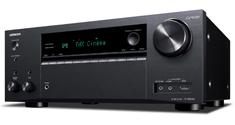 Onkyo Details TX-NR686 & TX-NR585 7.2 Channel AV Receivers[teaser]Two new 7.2-channel immersive audio receivers have been unveiled.[/teaser] Onkyo has announced two additions to its home audio lineup. The new models include the 7.2-channel TX-NR686 (MSRP $649) and the 7.2-channel TX-NR585 (MSRP $549). The TX-NR686 is rated for 210 W/Ch (6 ohms, 1 kHz, 10% THD,1-channel driven) and is THX Certified Select for reference level performance. Meanwhile, the TX-NR585 is rated for 170 W/Ch (6 ohms, 1 kHz, 10% THD, 1 channel driven). Both units offer support for up to a 5.2.2 speaker setup with DTS:X or Dolby Atmos playback. AccuEQ Room Acoustic Calibration is included as well, along with AccuReflex technology for Dolby Atmos-enabled speaker systems. In addition, both models use high-current drive, non-phase-shift amplification circuitry and discrete output stages. 4K/60p video passthrough with support for BT.2020 color, 4:4:4 color sub-sampling, and High Dynamic Range in HDR10, HLG, and Dolby Vision is also provided through HDCP 2.2-compatible HDMI. Hi-Res Audio formats like 5.6 MHz DSD and 192 kHz/24-bit in FLAC, WAV, AIFF, and ALAC are supported over network or USB input. Likewise, the receivers offer built-in compatibility for streaming services like Amazon Music, TIDAL, TuneIn, Deezer, Pandora and Spotify. Connectivity options include Dual-band 5 GHz/2.4 GHz Wi-Fi, Bluetooth, DTS Play-Fi, FireConnect, and Chromecast built-in. Finally, voice control via Google Assistant is also available through an Android phone, iPhone, Google Home, or other compatible device. Listings for the 7.2-channel TX-NR686 (MSRP $649) and 7.2-channel TX-NR585 (MSRP:$549) are now live on Amazon. And beyond these two new immersive audio receivers, Onkyo also recently announced the entry-level TX-SR383 for $399. Though also a 7.2-channel unit, the TX-SR383 does not include Dolby Atmos or DTS:X support. Source: OnkyoPosted Wed Apr 11, 2018 at 07:30 AM PDT by:
 -
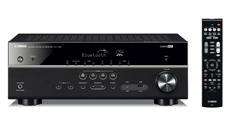 Yamaha Preps RX-V385 5.1 Channel AV Receiver for $299[teaser]The surround sound receiver will be available later this month.[/teaser] Yamaha has announced the launch of its latest home audio component. The new RX-V385 is a 5.1 Channel AV Receiver geared toward home theater users on a budget. "The RX-V385 offers budding home theater buyers cutting-edge technology at an accessible price point," said Robert Goedken, general manager, AV division, Yamaha Corporation of America. "When you factor in YPAO automatic acoustic technology, 4K Ultra HD support, HDR and Dolby Vision, this receiver gives entry-level consumers uncompromising value with everything they need to get started to enjoy a full 4K sound experience at home." The receiver offers support for 5.1 surround sound speaker setups with playback support for HD audio formats like Dolby TrueHD and DTS-HD Master Audio. In addition, the unit features Yamaha's YPAO calibration technology, allowing the device to analyze a user's specific room acoustics via an included microphone for optimal speaker performance. Bluetooth connectivity is included as well for wireless music streaming, and the device also provides 4K Ultra HD video passthrough with HDCP 2.2 (4/1), high dynamic range (HDR10, Dolby Vision, and HLG), and BT.2020 compatibility. Meanwhile, customers also have the option to bi-amp the front speakers in 2.1-channel or 3.1-channel setups. Finally, the receiver is equipped with binding post terminals on all channels with support for banana connectors. Here's a full rundown of key specs and features per Yamaha: - 5.1-Channel powerful surround sound- Bluetooth for wireless connectivity- HDMI® 2.1 with HDCP 2.2 (4 in/1 out)- 4K Ultra HD support, HDR10, Dolby Vision, Hybrid Log-Gamma and BT.2020- YPAO™ auto-calibration technology for ideal sound Yamaha's RX-V385 is set to start shipping by the end of April for an MSRP of $299.95. Source: YamahaPosted Wed Apr 11, 2018 at 06:00 AM PDT by:
 -
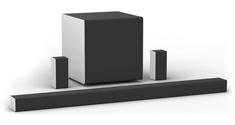 VIZIO Announces 2018 Sound System Collection with Dolby Atmos[teaser]The new audio collection uses upward-firing speaker tech.[/teaser] VIZIO has detailed its new lineup of 2018 home theater audio systems with Dolby Atmos technology. The collection includes 46" 5.1.4, 46" 3.1.2 and 36" 5.1.2 models. "VIZIO is continuously engineering ways to improve the home-entertainment experience for consumers, and this next iteration of audio solutions proves just that," said Bill Baxter, Chief Technology Officer, VIZIO. "By integrating Dolby Atmos into our all-new home theater sound bar systems, we're able to bring premium, multidimensional cinema-quality audio into the home. Our flagship 46" 5.1.4 system features four upward-firing speakers that allow sound to reflect off the ceiling, encapsulating listeners and wrapping the entire viewing area with sound." All of the Dolby Atmos sound systems feature upward firing drivers to bounce sound off of a user's ceiling in order to simulate overhead audio effects. Each model incorporates a sound bar unit with left, right, and center channels along with a separate wireless subwoofer. The 46" 5.1.4 system and 36" 5.1.2 system also incorporate rear satellite speakers to complete a full immersive surround sound experience. In addition, the devices offer Google Chromecast built-in support, allowing users to stream music from any Chromecast-enabled audio app like Spotify, Pandora, iHeartRadio and Google Play Music. Likewise, the sound systems feature voice-control support for Google Assistant, along with Bluetooth connectivity. "Dolby's mission is to enable experiences that transcend expectations, fully immersing viewers into the story exactly as the creatives intended," said Giles Baker, Senior Vice President, Consumer Entertainment Group, Dolby Laboratories. "Through VIZIO's integration of Dolby Atmos into its new home theater sound systems, we are enabling more ways for consumers to bring spectacular audio into their living rooms." Pricing has not been announced for VIZIO's 2018 Dolby Atmos audio system lineup yet, but units are expected to start shipping this summer. Source: VIZIOPosted Tue Apr 10, 2018 at 08:00 AM PDT by: