-
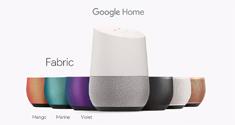 This Week in Gear: Expanded Google Home Voice Control Support, New Headphones, and More[teaser]We've compiled the latest gear news, including expanded app support for Google Assistant, new headphones from Klipsch and Pioneer, and more.[/teaser] From product announcements and streaming app updates to general industry news and recent gear trends, keeping up with the latest tech news can be a daunting task. With that in mind, we're here to offer you a roundup of some of the latest gear and consumer electronics news that you may have missed. For this edition, we're covering the addition of new app support for Google Assistant voice control through the Google Home, the latest headphone model from Klipsch, Pioneer's new earbuds, the integration of DTS Headphone:X tech into the Nubia Z17S smartphone, and the arrival of Spotify Connect support on the KEF LS50W. So, without further ado, here's a rundown of some of the latest gear and tech news: Google Home Voice Control Expands to HBO NOW, CBS All Access, and More Google has announced the addition of Google Assistant voice support for more apps. Users with a Google Home or Google Home Mini smart speaker and a Chromecast streaming dongle can now use the speakers to control playback for apps like HBO NOW, CBS All Access, and The CW through voice commands. Likewise, a compatible Android or iOS smartphone can also be used to cast the content. Customers simply need to link their HBO NOW and/or CBS All Access accounts in the Google Home app. After that, users can say "OK Google" or "Hey Google" and then start speaking commands like "Watch Game of Thrones" or "Play Star Trek: Discovery" to access specific titles, along with voice support for playback controls like pausing and volume adjustments. Likewise CW app support is available without the need for a linked account. The new apps join previously supported services like YouTube, YouTube TV, Google Photos and Netflix. And in addition to Google Assistant support for these apps through the Google Home or Google Home Mini and a Chromecast, support will also soon be available for the Google Home Max when it arrives in November. Source: Google Klipsch Announces Heritage HP-3 Headphone Klipsch has revealed its latest headphone model. The new flagship Heritage HP-3 headphone was inspired by founder Paul W. Klipsch. "After two years behind the curtain, we are finally ready to reveal a headphone worthy of the Heritage name. Acoustically, mechanically, and physically this is the most impressive headphone Klipsch has ever created," said Vlad Grodzinskiy, Sr. Manager of Product Development for Klipsch Group, Inc. The headphones feature a semi-open design along with a recessed pair of free-edge 52mm biodynamic drivers that are designed to mimic the imaging qualities of Klipsch Heritage speakers. Each unit is hand-assembled with solid-wood, triple-vented ear cups, angled sheepskin ear pads, and a genuine hand-stitched cowhide headband. Here's a full rundown of key features per Klipsch: - Free-Edge 52mm Bio Dynamic Drivers- Triple-vented semi-open design- Solid-wood earcups- Genuine cowhide headband- 1.37m and 2.0m removable cables- Custom 1/4” adapter- Custom solid-steel stand- Magnetic removable sheepskin ear cushions The Klipsch Heritage HP-3 headphone is now available at select retailers and Klipsch.com in walnut, ebony, or oak finishes for a suggested retail price of $1,199. The headphone comes with a custom solid-steel rod headphone stand, short (1.37m) and long (2.5m) detachable braided nylon cables, and a custom-fit ¼" adapter. Source: Klipsch KEF Updates LS50W Wireless Music System with Spotify Connect KEF has announced the addition of Spotify Connect support for its LS50W Wireless Music System. To activate the new feature, users simply need to update the device's firmware and the KEF LS50 Wireless Android or iOS app. With Spotify Connect integration, Spotify subscribers who own the LS50W can now stream Spotify's library of over 30 million songs directly to the music system from the cloud. The complete and fully active wireless music system is based on the company's LS50 speakers. The system features a 192kHz/24-bit high-resolution digital signal path and is driven by factory-optimized 230-watt x2 amplification in a bi-amp dual mono configuration. Advanced time-correcting DSP crossover with KEF’s exclusive Uni-Q technology is integrated as well. Connectivity options include dual-band Wi-Fi, Bluetooth 4.0, an asynchronous USB port, digital (toslink) input, and an RCA analog input. The LS50W Wireless Music System is available now in Titanium Grey/Red, Gloss Black/Blue, and Gloss White/Copper for an MSRP of $2,200. Source: KEF DTS Integrates Headphone:X Tech Into Nubia Z17S Smartphone DTS has announced the integration of its Headphone:X audio technology into the new Nubia Z17S smartphone. "We are thrilled to drive the latest in audio technology in conjunction with the world's most innovative smartphones, including the Nubia Z17S,” said Christopher Lang, general manager, China, at Xperi. “As we continue to integrate DTS Headphone:X technology into a growing number of devices around the world, we are fulfilling our commitment to deliver a premium, immersive sound experience to a wide range of consumers.” DTS Headphone:X simulates the 3D environment of an audio track's original mixing stage, providing an immersive 360-degree surround sound experience with 11.1 support and overhead audio through any pair of headphones or earbuds. The Nubia Z17S smartphone features a 5.7-inch display with a resolution of 2040x1080. Under the hood, the unit is powered by a Xiao Long 835 processor (MSM8998) running Android 7.1. The device is now available in China but plans for a US release have not been announced. Source: DTS, Nubia Pioneer Details SE-CL5BT Wireless Ear Buds Pioneer has launched its new ClipWear Active brand of headphones/earphones with the arrival of the SE-CL5BT Wireless Ear Buds. The wireless in-ear headphones feature Bluetooth 4.1 connectivity with multipoint tech, allowing users to connect to two Bluetooth devices simultaneously. In addition, the product uses a special clip design to hold the earbuds in place and act as the device's battery housing. Likewise, the earbuds are sweat and water resistant with an IPX4 rating, and include an inline mic/control unit. Battery life is rated for up to 8 hours of continuous music playback or talk time. Here's a rundown of additional features and specs per Pioneer: - Large diameter 9.2mm driver for high-quality sound reproduction.- Small, medium and large silicon ear tips.- MicroSD charging cable. The Pioneer SE-CL5BT Wireless Ear Buds are available in black, red, blue, mint and white for a suggested retail price of $40. Source: PioneerPosted Tue Oct 31, 2017 at 10:00 AM PDT by:
 -
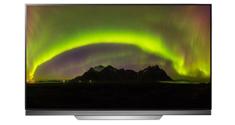 LG Launches Pre-Black Friday Sale on 4K OLED TV Lineup[teaser]The company is offering limited time discounts on select OLED displays.[/teaser] LG has launched a special Home Entertainment Savings promotion on its 4K Ultra HD OLED TV lineup in advance of Black Friday. The deal includes select 2016 and 2017 models. LG's 2017 OLED lineup offers perfect blacks, infinite contrast, expanded color gamuts, and wide viewing angles. Likewise, the sets include Active HDR with Dolby Vision, HDR10, and HLG (Hybrid Log Gamma) support. An HDR Effect feature is included as well, allowing the TVs to simulate HDR with SDR content. In addition, the B7 and C7 series feature blade-slim designs, while the E7 series features a Picture-on-Glass design. Here's a full rundown of the discounted models along with links to purchase them through Amazon or Best Buy when available. These sale prices are expected to be active until November 4. LG OLED TV Picture-on-Glass E7 Series - Amazon65-inch class (64.5-inches diagonal) model 65E7, $3,500 55-inch class (54.6-inches diagonal) model 55E7, $2,497 LG OLED TV Picture-on-Glass E7 Series - Best Buy65-inch class (64.5-inches diagonal) model 65E7, $3,500 55-inch class (54.6-inches diagonal) model 55E7, $2,700 LG OLED TV C7 Series - Amazon65-inch class (64.5-inches diagonal) model 65C7, $2,797 55-inch class (54.6-inches diagonal) model 55C7, $1,797 LG OLED TV C7 Series - Best Buy65-inch class (64.5-inches diagonal) model 65C7, $2,800 55-inch class (54.6-inches diagonal) model 55C7, $1,800 LG OLED TV B7 Series - Amazon65-inch class (64.5-inches diagonal) model 65B7, $2,597 55-inch class (54.6-inches diagonal) model 55B7, $1,597 LG OLED TV B7 Series - Best Buy65-inch class (64.5-inches diagonal) model 65B7, $2,600 55-inch class (54.6-inches diagonal) model 55B7, $1,600 LG OLED TV B6 Series (2016 Model) - Amazon65-inch class (64.5-inches diagonal) model 65B7, $2,497 55-inch class (54.6-inches diagonal) model 55B7, $1,497 Source: LGPosted Mon Oct 30, 2017 at 05:45 PM PDT by:
 -
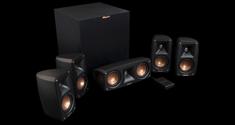 Klipsch Releases Compact Reference Theater Pack 5.1 Speaker System[teaser]The new surround sound system is now available.[/teaser] Klipsch has announced the launch of its latest home audio product, the Reference Theater Pack. The new compact 5.1 pre-packaged surround system uses the same tech, materials, and acoustics as the company's Reference Series speakers. "This is the easiest way to get award-winning, powerful Klipsch Reference home theater sound. It’s the complete system in one compact package — just add an AV receiver," said Kerry Geist, product manager at Klipsch Group. The Reference Theater Pack is a 5.1 horn-loaded audio system that includes four satellite speakers for front left/right and surround left/right channels, a dedicated center channel speaker, and a wireless subwoofer with a wireless transmitter. The satellites and center channel speaker all feature 3.5-inch copper Injection Molded Graphite woofers and .75-inch aluminum Linear Travel Suspension tweeters, along with exclusive Tractrix horn technology. Meanwhile, the subwoofer incorporates a down-firing 8-inch woofer and port with a 150W high-efficiency digital amplifier. In addition, the speakers all offer keyhole mounts and come in a black brushed polymer finish. The satellites and center speaker are rated for 110Hz – 23kHz +/– 3dB, while the subwoofer is rated for 38Hz – 120Hz +/– 3dB. Here's a rundown of key features per Klipsch: - Flexible System Placement- Wireless High Fidelity Subwoofer- Cinematic Acoustics- Spun Copper IMG Woofers- Linear Travel Suspension Horn-Loaded Tweeters The Klipsch Reference Theater Pack is now available for a suggested retail price of $999 at select retailers and at Klipsch.com. And in addition to the new speaker system, Klipsch also recently released its new Reference R-28PF powered floor-standing speakers (MSRP $1,199/pair) and R-14PM powered monitors (MSRP $399/pair). Source: KlipschPosted Mon Oct 30, 2017 at 11:00 AM PDT by:
 -
 Hands on First Look: Hisense 100-inch 4K Smart Laser TV[teaser]Hisense has officially released its new 100-inch 4K Laser TV. And to help mark the occasion, the company invited us to attend a special launch event.[/teaser] Held earlier this week at the Harman Store in NYC, the event included several demos highlighting the impressive TV's picture quality and versatility, along with appearances by Vice President of Hisense Group, Dr. Lin; US soccer legend, Landon Donovan; and famous soccer commentators, Men in Blazers. "It's time to rethink TV," said Dr. Lin, Vice President of Hisense Group. "In addition to an unapologetically amazing viewing experience, the Hisense Laser TV can be easily incorporated into any home environment as it does not require a special darkened environment or cumbersome equipment. The thin, lightweight, 100" screen hangs effortlessly and elegantly, complementing any space or design style." Serving as a kind of middle-ground between a standard large-screen TV set and a standalone projector system, the Hisense 4K Laser TV is designed to offer a premium big-screen viewing experience with integrated smart TV apps, OTA support, and Harman audio. And after checking the device out in person, it seems to be fulfilling that promise quite well. The Basics Not really a traditional television at all, the $9,999 Hisense 4K Laser TV actually uses an ultra-short throw projector unit powered by a Texas Instruments DLP 4K UHD DMD chip and Hisense’s proprietary light source technology to deliver more than 8 million pixels and 20,000 hours of playback -- all with the unit placed just inches from the wall. Likewise, the system includes a super-thin, lightweight, 100-inch Screen Innovations Anti-Glare Screen with a simple wall-mounting solution for easy installation without wires. HDR10 playback support with up to 300 nits and 3,000 lumens of brightness is provided as well, along with standard Rec. 709 color gamut coverage. With that said, the current model does not offer wide color gamut support or Dolby Vision capabilities, though Hisense is planning to implement those features in the company's next generation model. Under the hood, the Laser TV unit itself also includes an integrated custom-designed Harman 2.1 audio system with 5 built-in speakers and a separate 6.5-inch wireless subwoofer. A TV tuner for over-the-air content is featured as well, along with Hisense's smart TV platform with access to apps like Netflix, Amazon Video, Pandora, TikiLIVE, YouTube, and more (HDR playback is currently only supported for Netflix and YouTube). Finally, two HDMI 2.0a connections are provided as well for external sources like an Ultra HD Blu-ray player or AV receiver. This all comes together to create a unique premium large-screen display solution suitable for casual and home theater viewing conditions -- blending some of the ease and versatility of a conventional TV setup with the large-screen performance of a projector system. Here's a full rundown of key specs and features per Hisense: - 4K Ultra HD Resolution- UHD Upscaler- 3,000 Lumens for Optimal Brightness- TV Tuner- Hisense Smart TV Platform- Built-in 110 Watt Harman Kardon Speakers and Wireless Subwoofer- 100" Screen Innovations Anti-Glare Screen- DLP 4K UHD digital micromirror device (DMD) chip- 2 HDMI Inputs- 20,000-Hour Light Source Lifetime- MSRP: $9,999 Demos To show off the Laser TV in person, Hisense had the system set up in several different rooms throughout the Harman Store, presenting an assortment of lighting and viewing conditions with different types of content -- all designed to highlight the TV's versatility. The first room I demoed featured a dim environment with a little bit of blue/purple ambient light filling the space. A 4K HDR reel of gorgeous landscapes, vistas, and cities played on the TV, and the content looked quite nice under these conditions with sharp textures, bright contrast, and rich colors. The screen itself was neatly mounted to the wall and the projector was placed atop a TV stand below the screen, just inches from the wall -- resulting in a clean, minimalist setup. Another nearby area featured a bright living room configuration with more conventional overhead lighting. For this demo, the TV played back a reel of snowboarding footage and though the image did look just a little washed out compared to the TV's performance in the darker room, the icy mountain still maintained bright whites with each powdery speck of snow visible across the 100-inch screen. To further showcase the TV's performance in more casual settings, another bright room demo was offered. This time, a reel of soccer footage was played on the screen. Again, colors and contrast did take a slight hit when playing in these lighter environments, but the picture was still more than bright enough to remain clearly visible and color performance remained solid. The players' red uniforms were particularly punchy, and motion was always smooth as they made their way across the field. But while bright room performance is important for any TV, nothing beats a completely dark room for the best movie playback. With that in mind, Hisense had one final demo set up downstairs in Harman's dedicated home theater room. And for this demonstration, the company stepped things up a notch, swapping out the included 100-inch screen for a larger 136-inch screen. The pitch black environment allowed the projector to really show off what it can do, and though there were some minor quirks, the results did not disappoint. For demo purposes, Hisense played back Lucy starring Scarlett Johansson, and the movie looked fantastic with sharp fine details and pleasing colors. Viewing angles were also particularly impressive, as I didn't really notice any major hit in quality when viewing toward the sides of the room. With that said, I've seen scenes from this particular movie several times on other traditional 4K HDR displays, including models from LG and VIZIO, and the Laser TV's standard color gamut and relatively limited nit output lacked some of the pop found on those other sets. Of course, the 136-inch screen size offered here provided a level of immersion those standard sized models simply could not achieve. Overall contrast was also quite good with bright whites and solid blacks, but the letterbox bars above and below the image were just a tad noticeable, failing to achieve the inky quality that OLED displays and the best local dimming LCD displays are capable of. Likewise, uniformity was mostly good, but there was a faint bright spot on the bottom center of the screen just above the projector unit, which elevated the blacks just a hair in that specific area. This would likely be unnoticeable with 1.78:1 or 1.85:1 material, but the letterbox bars brought more attention to it. Finally, the home theater environment also allowed Hisense to show off the system's integrated Harman speakers and wireless subwoofer. And though the volume appeared to be maxed out, the system filled the relatively large theater room well, offering a deep sound with solid stereo separation. There was a minor booming quality during more aggressive moments, but overall the system sounded on par with similar sound bar units, offering performance leaps and bounds better than typical integrated TV speakers. Final Thoughts Blending much of the simplicity of a standard smart TV set with the immersion of a projector system, the Hisense 4K Laser TV presents an enticing option for users who want a more enveloping viewing experience without sacrificing ease of installation. The system's picture quality was quite strong during the various demos, offering good home theater performance and very solid bright room playback. With that said, the unit's lack of wide color gamut support and fairly limited nit output won't offer the best 4K HDR playback -- though the added screen size might make up for that loss depending on your priorities. There are less expensive 4K TVs (albeit with smaller screens sizes) and standalone projector models (albeit not short-throw) on the market with more advanced picture quality features, but the projector/screen/smart TV/speaker combination here is pretty unique, immersive, and convenient. While I'd need more one-on-one time with the system to make a full judgement, based on these initial impressions, the Hisense Laser TV should be a definite contender for users looking for a 100-inch or larger 4K TV solution. Hisense's 4K Laser TV is now available from retailers nationwide for an MSRP of $9,999.Posted Fri Oct 27, 2017 at 04:00 PM PDT by:
 -
 Everything Coming to iTunes in November[teaser]Several new titles will hit the iTunes library next month.[/teaser] Apple has revealed its new iTunes lineup of movies and TV shows for November. Likewise, the service has also added new digital extras for the iTunes copy of Wonder Woman, including a featurette with director Patty Jenkins discussing her inspirations. Wonder Woman is now on sale for just $10 through iTunes with support for 4K Dolby Vision playback via the Apple TV 4K. The discounted price will be available until October 31. The iTunes November lineup will feature a few exclusives like Newness starring Nicholas Hoult and the documentary Bang! The Bert Berns Story, along with several international TV shows including Apple Tree Yard, Simon's Cat Vol.2, and Monster. Check out the trailer for Newness below! And here's a full rundown of all the upcoming November iTunes titles per Apple: Movies 11/3 Bang! The Bert Berns Story (iTunes exclusive) 11/3 Newness (iTunes exclusive) 11/3 Most Beautiful Island (same day as theaters) 11/3 Columbus 11/7 Patti Cake$ 11/7 The Hitman’s Bodyguard 11/7 Good Time 11/7 Served Like a Girl 11/7 The Villainess 11/7 Beach Rats 11/10 Kedi 11/14 Leap! 11/14 November Criminals 11/14 The Trip to Spain 11/14 Gilbert 11/17 Sweet Virginia (same day as theaters) 11/21 Despicable Me 3 11/21 Home Again 11/21 American Assassin 11/21 California Typewriter 11/28 Detroit 11/28 Acts of Vengeance 11/28 The Solutrean TV *full seasons in bold 11/1 Major Crimes Season 6 11/1 Superior Donuts S2 11/3 S.W.A.T (Free Series Premiere) 11/3 Mom Season 5 11/3 Life In Pieces Season 3 (Free Season Premiere) 11/3 Million Dollar Listing Season 10: Los Angeles 11/4 Robert Kirkman’s Secret History of Comics (Free Pre-Air Premiere) 11/6 Real Housewives of Atlanta Season 10 11/6 Apple Tree Yard Mini-Series (Exclusive) 11/6 Simon’s Cat Vol.2 (Exclusive) 11/6 Monster (Exclusive) 11/6 Sesame Street Selections from Season 47 11/7 Get Shorty (Free Series Premiere) 11/7 Poldark Season 3 (all episodes available with a Season Pass) 11/8 Damnation 11/8 The Curse of Oak Island Season 5 11/8 The Long Road Home 11/10 Steven Universe Vol. 7 11/13 Survivor’s Remorse Season 4 11/13 Elizabeth Smart: Autobiography 11/16 Mythbusters Season 20 11/18 School of Rock Vol. 4 11/19 Cold Blooded: The Clutter Family Murders (Free Series Premiere) 11/20 Search Party Season 2 11/20 The Defiant Ones 11/22 Who Killed Tupac? 11/22 Biography Presents: The Life and Death of Tupac Shukar 11/22 Chicago Med Season 3 11/27 The Deuce Season 1 11/30 Vikings Season 5 Source: iTunesPosted Fri Oct 27, 2017 at 12:40 PM PDT by:
 -
 The Xbox One S 4K Ultra HD Blu-ray Player After One Year: Hello Dolby Atmos & DTS:X[teaser]And let's not forget Netflix, Amazon, Hulu, and Vudu.[/teaser] Ever since we learned the Xbox One S included an Ultra HD Blu-ray drive, people asked me if the Xbox One S was a good 4K Ultra HD Blu-ray player. One friend, in particular, an early Dolby Atmos adopter, has been hoping to pick up an Xbox One S to go with his OLED display. Happily, now over a year since I first reviewed a 2TB Xbox One S, I can say that, yes, the Xbox One S is every bit the 4K Ultra HD Blu-ray Microsoft promised it would be. There remains one caveat that I will come to shortly, but the last year has seen both significant changes to the Xbox One S as well as certain consistencies (gasp!) that lead me to this new, revised opinion of the Xbox One S' media prowess. 4K + HDR10 To re-test the Xbox One S, I took my own year-old 500GB Storm Grey model and put it against my go-to player, the Samsung UBD-8500. (I used both an LG 65UH7700 and a Samsung QN65Q7F for the display, and a Marantz SR6011 for the AVR.) I tested around twenty discs, mainly 4K Ultra HD Blu-rays with a few normal Blu-rays thrown in. With recent favorites like Guardians of the Galaxy Vol.2, John Wick: Chapter 2, and even the '2017 DTS Demo Disc (Volume 21),' I had plenty of Atmos and DTS:X tracks to test, as well as Dolby TrueHD and DTS-HD Master Audio tracks. (During this test period, Microsoft released their Fall 2017 update for the Xbox One S, which necessitated lots of retesting.) I even included one Dolby Vision Ultra HD Blu-ray, Spider-Man Homecoming. But even with a display that supported both Dolby Vision and HDR10, neither the Xbox One S nor the UBD-8500 support Dolby Vision, and thus, this was strictly an HDR10 run. The Xbox One S was nearly perfect in so far as each disc played and displayed to the high standard that I have become accustomed to over the past 18 months. I tried to find faults, anything like stuttering or crashing, and the closest I came was when hopping back and forth between a running disc in the Blu-ray app and the Xbox One S Settings menu, which I don't recommend doing. Naturally, I tried to find fault in the color reproduction or unwanted artifacts. Using two copies of The Revenant, I stepped through various scenes of sunlit cold, but couldn't find even a mirage of an issue. (Watching The Revenant on Ultra HD Blu-ray on something like the QN65Q7F is an indulgent use of a home theater, and it's easy to get sucked in even during a demonstration.) DOLBY ATMOS & DTS:X The Xbox One S (and the original Xbox One) now, after years of doing without, support direct bitstreaming to an AVR, which is necessary for both Dolby Atmos and DTS:X. In fact, the Xbox One S (and the original Xbox One) support Atmos at a system level. By downloading the free Dolby Access app, Atmos capable AVRs can playback Atmos content from around the Xbox One ecosystem. This includes some Netflix content (like the Deathnote movie) and Vudu (Dolby Digital Plus Atmos tracks, of which there are many). The Dolby Access app even has several of Dolby's Atmos demo pieces. (Though the video quality on these demos is world's better off a disc.) The Xbox One S even supports Atmos for gaming, but we are still waiting on content. (Gears of War 4 has been promised as having Atmos support via patch.) I found the system-wide Atmos a little buggy, to be honest, especially as it routinely turns itself off (reverting to the PCM 7.1 setting) and as using Atmos disables the system's optical audio port, which I use for a set Elite 800X headphones (post Fall update the system will even make me disconnect the headphones' transmitter base USB connection in order to engage system-wide Atmos). Fortunately, the system-wide Atmos doesn't really matter for Ultra HD Blu-ray and regular Blu-ray playback as the system has a separate setting in the Disc & Blu-ray section. It's a simple checkbox, "Let my receiver decode audio." This setting let me playback both Atmos and DTS:X disc tracks without issue, and in effect, corrected one of the Xbox One S Blu-ray/Ultra HD Blu-ray player's major weaknesses. As a reminder, when this is engaged and a disc is playing, the Xbox One S is unable to layer in its normal UI sounds. That means, when watching a disc, and say getting a message or notification from Xbox Live, there is no "boop-boop." MS may see this as a drawback, but I completely consider this a desirable outcome. OTHER NOTES FOR 4K ULTRA HD BLU-RAY PLAYBACK The Xbox One S has its quirks for sure. In both the Energy-Saving and Instant On modes, the system can take a little bit of time (10-30 seconds) to boot up. Like the 360 before it, the Xbox One S will only really boot up with an active HDMI connection, which means turning it on and hoping it boots while watching a different HDMI source to save that boot-up time isn't possible. The system has a vacuum disc drive (no tray) which can only be ejected using the button on the front of the console. In terms of system updates, the Xbox One S gets them regularly even without opting in for Preview updates. The most recent one, the Fall update, greatly improved the system's UI speed, but it also reshuffled the Dashboard, and necessitated a trip to the Video settings. In addition to system updates, the Blu-ray player app has its own updates. Ditto other video apps. On the positive side, compatibility with discs hasn't been an issue for me at all (and that includes some burned demo Blu-rays). The Blu-ray app launches quickly and launches discs with impressive speed. The disc UI and controls remain superior in most respects to the UBD-8500. I now use a PDP Talon Media Remote when watching media on the Xbox One S. It's IR-based and unlike the UBD-8500's remote, the Talon Media Remote has all the controls I need, a backlight a runs on AAAs and not an annoying coin cell battery. It's worth noting that in addition to supporting wireless headsets via USB, the included controller has a standard 3.5mm headphone jack. Thus, it's possible with a regular pair of headphones to watch movies without disturbing the rest of the household. (This is a must for a growing family.) Faux surround can be enabled with the Windows Sonic setting or the Dolby Atmos for Headphones setting, the later of which costs a one-time $15 fee that covers use on the Xbox One and Windows 10 platforms. As game consoles go, the Xbox One S is reasonably quiet, but it's not as quiet as the UBD-8500. I don't consider this an issue in a home theater setting, but it's a potential issue for some users. Because the Xbox One S only has one HDMI out, it's not possible to hook it up to a HDMI 2.0 HDCP 2.2 display (as has been the standard for around two years) while also connecting another HDMI cable to an older HDMI 1.4 AVR (or even the rare HDMI 2.0 non-HDCP 2.2) and still get proper Ultra HD Blu-ray playback. The Xbox One S has no analog connections at all, but there is still an optical audio port. For anyone who just bought a new display and new AVR, the sole HDMI out of the Xbox One S is great, but if either of those pieces is more than year or two old, there is likely to be some important issues. STREAMING APPS In addition to Ultra HD Blu-rays, the Xbox One S supports 4K HDR playback from Netflix, Amazon, and Vudu. (Hulu supposedly has 4K content, but I was not able to access it.) This is for sure a step up from the system's debut, but the Netflix app is still an HDR mess. (HDR is forced on for all content, leaving all non-HDR content and even app navigation as unsightly.) XBOX ONE X... SOON! At debut the Xbox One S was the sole game console capable of 4K Ultra HD Blu-ray playback, but of course, there is another waiting in the wings, the Xbox One X. With the Xbox One S being both a prominent and respectable Ultra HD Blu-ray player, we can expect good things from the Xbox One X, which we just got in for review. Expect more on that, and a full comparison, early next week! Order from AmazonPosted Thu Oct 26, 2017 at 05:26 PM PDT by:
 -
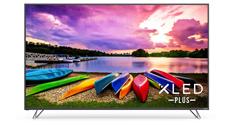 VIZIO Launches Big Screen Sale with up to $500 Off 4K HDR Displays[teaser]Several 4K HDR displays are now on sale.[/teaser] VIZIO has announced the launch of its new Big Screen Sale. As part of the promotion, customers can now save up to $500 off select SmartCast 4K HDR M-Series and E-Series displays. The deals will only be available for a limited while supplies last. Here's a rundown of the currently discounted models available for purchase through Best Buy or VIZIO.com: VIZIO SmartCast M-Series 75-inch 4K HDR XLED Plus Display - $2,000 ($500 off). VIZIO SmartCast E-Series 80-inch 4K HDR XLED Display - $3,000 ($400 off). VIZIO SmartCast E-Series 75-inch 4K HDR XLED Display - $1,900 ($100 off). VIZIO SmartCast E-Series 65-inch 4K HDR XLED Display - $850 ($50 off). VIZIO SmartCast M-Series 50-inch 4K HDR XLED Plus Display - $850 ($50 off). VIZIO SmartCast E-Series 55-inch 4K HDR XLED Display - $530 ($20 off). The 2017 VIZIO M-Series features XLED Plus full-array local dimming backlight technology with Xtreme Black Engine Plus and 32 local dimming zones. In addition, the displays offer XHDR Plus with Dolby Vision and HDR10 content support, along with Ultra Color Spectrum, which provides over one billion colors. Meanwhile, the 2017 E-Series display collection features models with up to 16 Active LED Zones. Likewise, HDR10 support is included on all units 55-inches or larger. Finally, both series include SmartCast capabilities as well, allowing customers to control their displays and access apps directly on the big screen or through the SmartCast mobile app for iOS and Android devices. Source: VIZIOPosted Tue Oct 24, 2017 at 09:15 PM PDT by:
 -
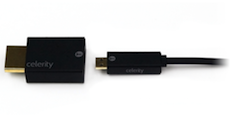 Need a Long HDMI Cable for 4K?Spend enough time as a Home Theater Enthusiast and you're guaranteed to learn -- the hard way -- that not all HDMI cables are created equally. This was true in the first days of 1080p. True in the first days of 3D. And even more true in the days of 4K/HDR when handshake and HDCP 2.2 compatibility issues will shut down your player or streaming capabilities. For shorter HDMI runs -- 3ft to 25ft -- most 4K-rated HDMI cables from companies like Amazon Basics or Monoprice or Rocketfish will work perfectly well. Heck, I've gotten excellent 4K/HDR/60fps signals out of the no-name 3ft cable included with my DirecTV DVR. I would actually argue that, for these shorter runs, far too many folks are OVERpaying for HDMI cables, succumbing to snake oil and big box store sales pitches out of fear. But this changes when your display or projector is far away from your gear. Jump past 25ft or 35ft, and everything changes. Read various Forums or Amazon reviews and you'll see dozens of frustrated folks who have tried multiple cables only to suffer handshake issues along with picture dropout or snowy pixelation. I first experienced this when reviewing the Epson 6040/5040UB projectors after a 35ft "High Speed" cable, that was perfectly fine running 1080p in 3D, balked when presented with 4K HDR sources. Even certain devices will add to your troubles -- I love the Roku Ultra, but without a great cable, you'll get a pink screen o' death HDCP 2.2 error. So [teaser]what should you do if you need to a long 4K / HDR HDMI cable for a remote projector or display?[/teaser] There are a few options, of course. You can stick with HDMI -- Monoprice sells cables that run up to 330ft and cost up to around $160 (we haven't tried these out in person, but if YOU have, let us know about your experience in the comments). Or you can try fiber optic HDMI cables. As you can see in the above preview & setup video, Celerity Technologies just sent us a new 50-foot fiber optic HDMI cable to help me out with my forthcoming Optoma UHZ65 4K laser projector review. Fiber optic HDMI cables are slimmer than copper-based HDMI cables AND capable of supporting 18Gbps, 4K/60, 4:4:4: color, and HDR/Dolby Vision up to 1,000 feet without any loss of signal. To be clear, fiber optic cables won't help with poor signals, nor are they cheap. The 50ft version we're reviewing, which you can buy on Amazon via the link below, costs $350, while a 200ft version will set you back $800 and the 1,000ft flagship cable costs a whopping $1,800 (or about the price of a 75" entry-level VIZIO display.) CT FIBER OPTIC SETUP Setting up your Celerity Technologies Fiber Optic HDMI cable is a breeze. 1) Run your cable. These cables are directional, so you want the "T" connectors to be at your source, and the "R" connectors to be at your display or projector. CT fiber optic cabling is rated for in-wall installations, but I would also recommend these for anyone who needs a more temporary setup -- the cable is so thin it disappears under rugs! 2) Connect the "R" end of the fiber optic cable to the "R" HDMI connector and plug that into your display's HDCP 2.2 and/or ARC HDMI port. Then Plug in the USB power plug to an open USB port on your display. If your display doesn't have one, you can use any 5v plug (like an iPhone connector). 3) Connect the "T" end of the fiber optic cable to the "T" HDMI connector to your source component (AVR, Blu-ray player, etc.). You'll note there is also a USB power plug on this end as well. Per the instructions, this is an optional plug for when your source component doesn't include power from the HDMI port directly. (If a blue light illuminates, you're good to go; if there's no light, use the optional USB plug.) Simple, right? It took me less than five minutes. FINAL THOUGHTS We're only 24 hours into our review, so I can't really comment on the performance nor guarantee that these fiber optic cables will work for you. That said, at 50ft, this is the longest cable I've run with 4K/HDR and 4K/Dolby Vision content and there have been no hiccups. Even the semi-problematic Roku Ultra is running without any HDCP 2.2 pink screens o' death. So far, so good, as they say. Basically, if I don't have to touch this cable again while it's on loan, if I can completely forget about it, then it's going to get a High Recommended rating. Cheers & thanks for reading. Oh, and if you have a second, stop by our YouTube Channel.Posted Tue Oct 24, 2017 at 11:16 AM PDT by:
 -
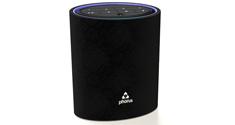 Phorus Releases PS10 Speaker with DTS Play-Fi and Amazon Alexa Voice Support[teaser]The first DTS Play-Fi enabled wireless speaker with Amazon Alexa Voice Service is now available.[/teaser] Phorus and DTS have announced the launch of the Phorus PS10. The wireless speaker is now shipping for an MSRP of $249. "Phorus is continually pushing the boundaries of the DTS Play-Fi ecosystem with new innovative products as demonstrated by the Phorus PS10 smart speaker, the first wireless multi-room speaker to ship with Amazon Alexa Voice Service built-in," said Dannie Lau, general manager of DTS Play-Fi. "The Phorus PS10 is also the first Alexa-compatible product to include one-touch music station presets and support for hi-res 24-bit/192kHz content, giving the product category-leading convenience, performance and sound quality." The tabletop speaker features an integrated far-field microphone system in order to support the Alexa Voice Service, allowing users to access information, control playback, and manage other functions through voice commands. Under the hood, the device uses a built-in 30-watt amplifier with DTS Sound post processing, two 65mm Neodymium full range transducers, and two four-inch bass radiators in a sealed enclosure. In addition, the unit also incorporates DTS Play-Fit tech, enabling customers to wirelessly play high quality lossless music from smartphones and tablets over an existing Wi-Fi network throughout the home. The tech can synchronize playback of a single source to multiple speakers; can stream different sources to different speakers simultaneously from the same mobile device; and can support individual music streams to separate speakers from different devices at the same time. Likewise, Play-Fi is not brand exclusive. This means that Play-Fi audio products from different manufacturers can actually work together seamlessly. Airplay and Spotify Connect are offered as well, and the speaker includes a 3.5mm input and a line-level audiophile grade output. Beyond the new Phorus PS10, the upcoming Onkyo Smart Speaker P3 and Pioneer Elite Smart Speaker F4 are also set to include DTS Play-Fi and Amazon Alexa Voice Service support. UPDATE 10/24/17: After initial rollout in the US, UK, Germany, and Japan, Amazon Music support via DTS Play-Fi is now available in France, Italy, and Spain. Per DTS, more countries will follow in the coming months. Source: DTS via Business WirePosted Tue Oct 24, 2017 at 08:50 AM PDT by:
 -
LG Updates 2017 OLED 4K TV Lineup with Lossless Dolby TrueHD & Atmos Audio Support[teaser]The company's 2017 OLED displays will now offer integrated support for lossless Dolby Audio.[/teaser] LG has announced the addition of Dolby TrueHD lossless audio decoding for its 2017 OLED TV lineup. The new feature will be rolling out to compatible displays via a free over-the-air firmware upgrade this month. "LG's OLED TVs have become the de facto leader in the premium TV market and is the optimal platform for those seeking to experience content the way its original creators envisioned," said Brian Kwon, president of the LG Electronics Home Entertainment Company. "With Dolby's audio and visual technologies, LG continues to deliver an enhanced experience that pushes the boundaries of home TV viewing." Previously, LG OLED TVs could only internally play Dolby audio in a lossy form, but the new update will allow the TVs to internally support lossless, uncompressed Dolby TrueHD decoding. This means that users will be able to hear lossless Dolby TrueHD and Dolby Atmos soundtracks from HDMI sources like an Ultra HD Blu-ray player directly through the TV's built-in speakers or sound bar. In addition, the update also includes Codec MAT (Metadata-enhanced Audio Transmission) support to offer Dolby TrueHD audio bitstreaming when playing console games. Here's a full rundown of LG's 2017 OLED lineup: LG SIGNATURE OLED TV Picture-on-Wall W7 Series77-inch class (76.7-inches diagonal) model 77W7, $14,99965-inch class (64.5-inches diagonal) model 65W7, $7,999 LG SIGNATURE OLED TV Picture-on-Glass G7 Series77-inch class (76.8-inches diagonal) model 77G7, $9,99765-inch class (64.5-inches diagonal) model 65G7, $4,997 LG OLED TV Picture-on-Glass E7 Series65-inch class (64.5-inches diagonal) model 65E7, $3,497 55-inch class (54.6-inches diagonal) model 55E7, $2,497 LG OLED TV C7 Series65-inch class (64.5-inches diagonal) model 65C7, $2,997 55-inch class (54.6-inches diagonal) model 55C7, $1,997 LG OLED TV B7 Series65-inch class (64.5-inches diagonal) model 65B7, $2,797 55-inch class (54.6-inches diagonal) model 55B7, $1,797 Source: LGPosted Mon Oct 23, 2017 at 06:30 AM PDT by: