-
 Sony’s New ES Line Blu-ray Player Adds Wi-Fi Capability[teaser]Simplifies BD Live access and firmware updates. [/teaser] Sony’s announcement of new 400 disc changers has been getting a lot of attention, but that’s not the only new player coming out of Sony this August. The newest addition to the ES line, the BDP-S1000ES is set to hit shelves at an MSRP of right around $700. The S1000ES features built in 802.11N/G/B/A Wi-Fi capability as well as supporting Wi-Fi Protected Setup, making things quite a bit easier for those with secured wireless networks. Of course, it also has all the things one would expect in a higher end Blu-ray player including Super Bit Mapping, Sony’s HD Reality Enhancer, Precision Cinema HD Upscaling and Deep Color output. According to specs on the press release, the S1000ES will also be compatible with advanced audio codecs including 7.1 channel Dolby TrueHD, Dolby Digital Plus and more.Posted Mon Jul 27, 2009 at 09:45 AM PDT by:
 -
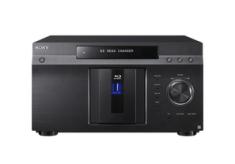 Sony’s New 400 Disc Blu-Ray Players[teaser]For those looking for a simple and efficient way to organize their massive DVD collections, the search is over. [/teaser] Sony’s new MegaChangers, announced in a press release as coming this August, are capable of storage and playback up up to 400 Blu-Ray Discs. The more economic BDP-CX960, retailing around $800, features full 1080/60p HD playback, 24p True Cinema output and Precision Cinema HD Upscale technology. Additionally, an Ethernet port will allow the players xross media bar, via Gracenote, to display information about discs as you scroll through. You’ll be able to pull up such things as the film’s cast, director, and various other details for most films. The BDP-CX7000ES, a part of Sony’s Elevated Standard line, takes all the features of the CX960 and adds significantly to them with features like the HD Reality Enhancer and Super Bit Mapping technologies. At retail for around $1900, the CX7000ES also has the benefit of 7.1 analog outputs and a design meant to easily integrate with third part automation control systems.Posted Mon Jul 27, 2009 at 08:30 AM PDT by:
 -
 The HD Advisor's Catch-22Editor's Note: Each Friday, High-Def Digest's own HD Advisor will answer a new round of questions from our readers. If you have home theater questions you need answered, send an email to [email protected]. If you've already sent a question and don't see it answered yet, please be patient as we work our way through them. To browse through previously answered questions, visit the main HD Advisor page. Answers by Joshua Zyber Projection Screens Revisited In last week's article, a reader asked about the different types of home theater projection screens. I described the basic differences between matte white, gray, and high gain screens. I also stated that my preference has been to stick by my matte white screen, because I haven't found anything that's thoroughly satisfied me that it would be worth the investment. While a gray screen may improve black levels, it will also make bright parts of the image look dimmer. In response to this, another reader sent me the following comment in defense of gray screens. He makes some fair points, so I thought it was worth revisiting the issue. Comment: Your only reference for white in a darkened theater room is what the screen tells you is white. Without a reference, a gray screen will appear to deliver excellent and pure whites, just as good as any "white" screen. There is nothing to compare it to. However, you do have a reference for black in a darkened theater room – the screen borders. Poor black levels are much more obvious in a darkened theater room than dimmed (not dulled) whites. Of course, it is important to remember that the whites are "dimmed" just as much as the blacks in relation to each other. The only difference in white, black and gray is brightness. A high lumen projector on a gray screen can have brighter whites than a low lumen projector on a white screen. Another point – your matte white screen will appear gray if you set it beside a Vutec Silverstar. Since the Vutec has a real world gain of 4.0, it will appear to have much more brilliant whites than your "white" screen. As I said, the only difference between white and gray is brightness. It’s all relative. A perfect analogy in audio is volume – the louder system will almost always sound better. To me, the screen choice is just as important as the projector choice. I believe a screen like the Stewart Firehawk is worth the money in almost any installation. Greater contrast is always desirable. With even budget projectors capable of delivering excellent contrast, it’s almost always the room and screen combo that limits the performance of the system. My argument is that the higher the contrast ratio of the projector, the greater the need for either a totally dark room or a contrast enhancing screen. As soon as you turn on a light, that "50,000:1 contrast ratio" is totally destroyed. The same is true of washout from white walls. HD Advisor's Response: In principle, I don't disagree with anything said above. Those are all perfectly valid points. However, I do think that the viewer's specific room environment, equipment, and personal preference will all play a role in the determination of the best screen type. While it's true that lighter black levels may be more distracting than dimmer whites under some conditions (especially when watching a movie with a lot of dark scenes), the inverse may also be true. In a movie with predominantly bright scenes, relative black level is much less noticeable. The brightness of the image contributes greatly to its "pop" and vibrancy. Depending on the circumstances, that may be more desirable than deeper black levels. I know some viewers who are willing to sacrifice almost totally washed out blacks in their room as a trade off for the high gain of a screen like the Silverstar or DaLite High Power. I don't believe there's just one correct answer to this question. Each viewer will have to make his or her own decision, based on his or her own needs. Without sitting in that person's room and evaluating the specifics of their situation, any advice we give has just as much potential of being wrong as it does of being right. The best we can do is describe the basic fundamentals of what to look for, and try to point them in the right direction. Who Picks What Movies Get Released on Blu-ray? Q: Why do the studios release so many movies that are not widely considered great movies? I suppose this is a subjective question, since it is a matter of taste. But why can we buy so many movies like 'Norbit', 'The Scorpion King 2', 'Starship Troopers 3' and the likes, and do we have to wait for 'Braveheart', 'Lord of the Rings', 'Lawrence of Arabia', 'Saving Private Ryan', 'Gladiator'? Surely, the "big names" will generate more income and speed up Blu-ray sales more effectively? Also, why are some movies released only in the U.S., while all they need to do for other countries is just stick some subtitles underneath (like the Netherlands, my country), or not even that in the case of the UK? A: I wish I knew the answer to your first question. In most cases, it's as much as mystery to me as you. I swear, for some of these studios, I wouldn't be surprised to find out that they simply pin a list of all the movies in their catalog to a board and have a monkey throw darts at it. I mean, really, did someone actually think that there were tons of buyers out there dying to pick up copies of a forgettable early-'90s actioner like 'Striking Distance', a movie that even its own star has openly ridiculed? As far as why certain "great" movies haven't been released yet, a number of factors likely come into play. Perhaps the movie's film elements need a lot of restoration work. Perhaps the studio is waiting for the director's schedule to clear up enough to approve a new video master. Perhaps the movie's distribution rights are tied up in legal red tape. Perhaps the studio just isn't convinced that the title will generate enough revenue to justify to expense of releasing it at this time. Sad as it is to say, catalog titles almost never sell as well as day-and-date releases, no matter how famous or high profile the titles may be. Most consumers are resistant to repurchasing a movie they already own on DVD, even if the Blu-ray represents a significant quality upgrade. That isn't to say that they can't sell well or definitely won't. But when studios are planning their release schedules, day-and-date releases will always take priority over catalog titles. For what it's worth, most of the titles you've expressed a desire for have either been announced for release later this year, or are known to be in the works for the future. You also asked why some movies are only released in one country but not another. Generally, this is due to the movie's distribution rights being held by different studios in different countries. Even within a single multi-national studio, different territories may have separate distribution branches that make their own decisions of this nature. Movies on HD Cable Q: I have a cable provider that offers about every movie channel in HD. Where do the HD sources for each of these movies come from? Let's say I'm watching 'Sudden Death' with Jean-Claude Van Damme on STARZ, broadcast in 1080i. The movie looks great, but has never been on any high-def format. Where does this HD version of the film come from? Same goes with other networks like HDNet Movies. Where do they get the high-def transfers of these yet-to-be-Blu-ray movies? A: Broadcast networks license movies from the studios that own them. The network will not perform any film-to-video transfers of its own. When the network licenses a title, the studio will provide a broadcast master for their use during the licensing period. Regardless of whether a certain movie has been released on Blu-ray or not, the major studios have been mastering their movie catalogs in HD resolution for more than a decade now. In fact, most DVD editions are downconverted from HD masters. Sometimes, just one master will be struck for multiple uses in DVD, Blu-ray, or broadcast. Other times, the studio may strike separate masters for different venues. For example, HBO-HD mandates that almost all 2.35:1 movies be reformatted to the 16:9 aspect ratio. If that's what the network requests, the studio will prepare a cropped or open-matte transfer for that purpose, which may never be used on DVD or Blu-ray. Many of the high-def movies in rotation on cable come from quite old and dated masters. In many cases, the studio may choose to withhold a certain movie from Blu-ray until they have a chance to remaster it in better quality. Unfortunately, seeing a movie in high-def on cable doesn't necessarily mean that a Blu-ray release is imminent. Homework Assignment: You Be the Advisor Some questions that the HD Advisor receives are best answered with a consensus of opinions from our readers. If you can help to answer the following question, please post your response in our forum thread linked at the end of this article. Your advice and opinions matter too! Blu-ray Laptop Recommendations Q: I'm in the market for a new laptop, and would like one with a Blu-ray drive. Do you have any suggestions for good models under $1,000? I'll be connecting this to a high-res monitor, so it'll need an HDMI output. The size or resolution of the laptop screen isn't as important. What specs should I look for to make sure that the laptop has enough processing power to handle high-def video? I may also wish to do some video editing in HD. Check back soon for another round of answers. Keep those questions coming. Joshua Zyber's opinions are his own and do not necessarily reflect those of this site, its owners or employees.Posted Fri Jul 24, 2009 at 01:00 PM PDT by:
 -
 Champion Horse Watches SkyHD On a 52” LCD[teaser]Has better home theater than half of the US.[/teaser] Why the long face? Because there’s a horse in England who has a bigger TV than me, that’s why! In an interesting piece of PR for Sky Sports and the Longines International Horse Show, a former champion show jumper named Belle De Harlequin has been set up with a dream house, including a 52 inch HDTV and SkyHD. For the sake of avoiding confusion, Belle De Harlequin is a horse. De Harlequin, called Belly Bumps for short, is said to respond to the action on screen by her veterinarian, who says that her ears are pricked forward, meaning that she’s responding to the sound and images. Owner Vicky Davies set up this elaborate stable for the horse after it was injured and forced to retire from competition. “People might think it’s extravagant but this old timer deserves a little pampering,” she says. “I didn’t want Belly Bumps to miss out, so I decided to go after the next best thing, a luxurious stable a stone’s throw from the action” Check out pics of the stable , the horse, and the TV atHorsemart.Posted Fri Jul 24, 2009 at 10:00 AM PDT by:
 -
 Japanese Disney Movies To Come Bundled With Micro SD Version[teaser]For playback on cell phones and car navigation systems.[/teaser] With the amazing amount of portable technology available, everything is ripe to become an entertainment device. Japan’s NikJapan’s Nikkei, a media outlet specializing in technology news, announced that Disney has partnered with Panasonic to sell movies on Micro SD cards this holiday season. This of course allows playback of the media on a great deal of devices, including car GPS systems. kei, a media outlet specializing in technology news, announced that Disney has partnered with Panasonic to sell movies on Micro SD cards this holiday season. This of course allows playback of the media on a great deal of devices, including car GPS systems. It’s not as simple as all that of course, as the cards will only be available bundled with Disney DVDs. It’s a bit unclear whether this will be for Blu-ray as well or only standard DVD, but with a price of around $50, it may not matter. There was no mention of attempting this in US markets.Posted Fri Jul 24, 2009 at 08:00 AM PDT by:
 -
 Movies To Be Sold On USB Drives This Holiday Season[teaser]Sonic Solutions and Wildvine to sell movies on USB movie drives.[/teaser] In what appears to be an effort to meet with consumer demand for digital copies while keeping retail stores in the loop, Sonic Solutions and Wildvine have announced plans to release movies on USB drives. Entitled CinemaNow USB Movie Drives, the dongles will provide high quality playback while offering convenience to the customer. Of course the issue of Digital Rights Management (DRM) can’t be ignored. In an effort to combat piracy, the files will play via an integrated media player, and while customers will be able to download additional digital copies, the number of devices on which they can play the video be limited to five. No specifics have been given given as to the quality of the video or the cost of the drives, but we can expect to see them ready this holiday season.Posted Fri Jul 24, 2009 at 06:00 AM PDT by:
 -
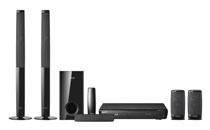 Samsung’s High End Blu-ray Home Theater in a Box[teaser]Coming in at just under $800 this August![/teaser] Samsung announced on Tuesday that this August will see the release of their HT-BD3252, a higher end home theater solution with some great features. With 1000 watts of power pumping through a pretty sizable pair of front speakers, an expanded center and a pair of wireless back speakers all using Samsung’s bio kelp speaker cones, the audio coming out of this system will be more than enough for most consumers. The Blu-ray player integrated into the system is BD Live compatible, and while it does have an Ethernet adapter, a usb dongle is required for wireless connectivity. Customers will have access to Netflix, Pandora, and starting this fall, Blockbuster OnDemand. Most HD audio formats will be supported, according to Samsung, including Dolby TrueHD and DTS-HD Master Audio, and with the Auto Sound Calibration (ASC) Feature, speakers will be adjusted to their optimum output at the touch of a button. The HT-BD3252 comes stock with a decent range of inputs, including a pair of HDMI ins, an optical port, composite connections, and even an iPhone/iPod cradle with an on screen display for easier browsing.Posted Thu Jul 23, 2009 at 11:00 AM PDT by:
 -
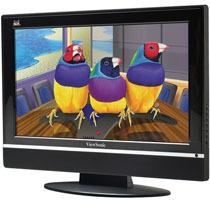 ViewSonic to Leverage SRS TruSurround XT In 16-Inch and 24-Inch 2009 HDTVs[teaser]In a strategic relationship formed yesterday, Viewsonic and SRS Labs will be working together to incorporate SRS TruSurround XT technology into Viewsonic’s upcoming displays. [/teaser] With TruSurround processing, users will have the sensation of listening to a surround sound system using only the speakers built in to the television. A clear deep bass sound and clearly defined highs, TruSurround pushes the limit of what an out of the box display can sound like. This technology will be integrated first into Viewsonic’s 16 and 24 inch flat panel LCDs, and additional models are expected be announced. Said Gene Ornstead, Viewsonic’s director of business development, “We are excited about working with SRS Labs and look forward to integrating their innovative sound solutions in more ViewSonic products across the board.”Posted Thu Jul 23, 2009 at 09:00 AM PDT by:
 -
 LG’s LH90 Named First THX Certified LCD HDTV[teaser]Just like the headline reads, the LG LH90 has been named the first THX Display certified LCD television. [/teaser] There’s no two ways about it, LG’s having a good year. Their sales are at a record high across the board, profits increased in their home entertainment department, where many other companies are suffering, and according to a press release sent out earlier today, the LH90 has been named as the first THX Display certified LCD television. The 240hz capable LH90 features LED backlighting with local dimming for precise picture control and a 2,000,000:1 contrast ratio ensuring a ridiculously good picture. According to Peter Reiner, VP of marketing , “LG's advanced LED Backlight technology precisely controls the brightness of specific areas of the screen, providing crisper, clearer pictures while using less energy than traditional LCD models.” Additionally, the THX Movie Mode offers customers a one button solution to getting the best color, black levels and a nice clean signal. Ranging between $1900 for a 42” model and $3200 for a 55”, the LH90 is in stores now.Posted Thu Jul 23, 2009 at 07:00 AM PDT by:
 -
 Consumer Electronic Sales Down For First Time In 8 Years[teaser]Blu-ray sales continue to grow despite down economy.[/teaser] The Consumer Electronics Association released a midyear forecast, stating that consumer electronics revenues will decline for the first time since 2001. According to the report, CE revenues will drop 7.7 percent, down to about $165 billion by the end of 2009, but resurgence is expected in 2010. The good news, according to the report, is that while sales are down, they’re not as far down as other industries. Compared to auto sales and home sales, says the CEA, consumer electronics are doing amazingly well. The report also mentions that while revenue is down, sales are actually up in many cases. LCD sales jumped 24 percent, but due to lower prices and an increased demand for midsized displays, they’ll be coming up shorter than last year financially. Blu-ray players of course, remain an incredible growth market, which the CEA says will end at over double last year’s sales and revenue. Six million players will be shipped by the year’s end, with revenues jumping to over a billion dollars. Explaining the trend of consumer electronics success was CEA President and CEO Gary Shapiro. “American consumers continue to purchase CE products despite cutting back in many areas, showing that consumer electronics are vital to everyday life in this country.”Posted Wed Jul 22, 2009 at 11:00 AM PDT by: