-
 Did Broadcasters Miss Chance With DTV Transition?[teaser]In a conversation this week with Cnet news, Consumer Electronics Association President Gary Shapiro had a lot to say about the way the DTV transition was handled and the struggles in getting the whole thing launched in the first place. [/teaser] “The broadcasters” said Shapiro “were the biggest challenge by far. They saw nothing to be gained by this.” “Broadcasters blew it in that HDTV was their one opportunity to get ahead of cable and satellite.” Since broadcasters could much more cheaply and easily send out an HD signal to consumers, and consumers could more cheaply and easily pick up the signal, Shapiro saw this as a chance that should have been taken. “It could have been their competitive advantage.” The next big thing is always around the corner, according to Shapiro, “In another 15 or 20 or 30 years there'll be another TV standard. We're working now on 3D TV… 3D television is something which has long been around; certainly Hollywood is very excited about it. It is challenged by the fact that you need special glasses...But people love it” Shapiro is quite proud of the way the transition was handled, and in the past has compared it to the moon landing. “We did it right and it's been fabulous, and it wasn't really celebrated, but I think it deserves celebration. When Neil Armstrong stepped on the moon, it was like, ‘Wow, here's a defining moment.’ When we turned off analog broadcasting a couple months ago, it was kind of like the last item in the news.” Read the whole conversation here.Posted Thu Aug 6, 2009 at 11:00 AM PDT by:
 -
 LG President Says Strategy To Overcome Global Recession Is Working[teaser]Focus on higher end products pays off for LG.[/teaser] LG’s summer line show kicked off with a keynote by president Teddy Hwang, who says LG is flourishing despite a down US economy. According to a press release from LG, the US represents about twenty five percent of LG’s business, and they’ve been focused on staying profitable in that market. “In the United States, the current climate continues to impact the industry” said Hwang. “We've seen this in home appliances, where LG focuses on higher-end products… LG is doing better than last year, because dealers and consumers love our new products, including network plasma and LCD HDTVs and Blu-ray players” Hwang also announced a huge investment into plants in Mexico, and that LG will be consolidating LCD manufacturing from their Reynosa and Mexicali plants into one large plant in Reynosa. “The consolidation and expansion of these plants will offer improved efficiencies and, most importantly, allow us to better serve our U.S. customers”Posted Tue Aug 4, 2009 at 12:00 PM PDT by:
 -
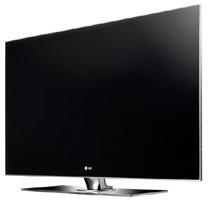 LG’s Seamless Design LCDs Announced At Summer Line Show[teaser]Among the bevy of announcements coming from LG’s summer line show were the SL80 and LED backlit SL90 LCDs. [/teaser] An ultra slim bezel and seamless edge to edge panel are the incredible aesthetic selling points of these new TVs. The appearance of the new line is pretty impressive, but of course, what the screen looks like when it’s on is the bigger concern for consumers. Launching this holiday season, according to LG’s press release, the SL80 features 240Hz TruMotion technology as well as a contrast ratio of 150,000:1. The SL90 isn’t officially detailed, but LG did state that it would be just over an inch thick and feature LED backlighting. Michael Ahn, president of LG North America, said of the new televisions “Our advanced new SL80/90 HDTVs demonstrate how together innovation and design produce exceptional performance”Posted Tue Aug 4, 2009 at 11:00 AM PDT by:
 -
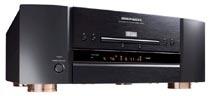 Marantz’s UD9004 Blu-ray Player Shipping Now[teaser]The flagship player from Marantz represents, according to the press release, the pinnacle of home entertainment audio and video reproduction. At $6000, it sure better![/teaser] Marantz says this player will play virtually any 12mm audio or video disc ever created. A pair of Sharc DSPs are onboard decode HD audio, and the 32-bit floating point Analog Devices DSP gives the purest sound possible. When using the player for audio, video output can even be shut down to ensure that the unit is focused on sound and sound alone. Dual HDMI outputs allow for audio and video to be sent separately. Video is sent out with 36-bit Deep Color and a 10-bit Silicon Optix Realta chipset. Those recreating the cinema experience in the home will note the addition of a digital Vertical Stretch feature, which eliminates black bars without adding distortion or artifacts. An Ethernet port is available for BD-Live features, but at $6,000, is the inclusion Wi-Fi really too much to ask? Check out the full specs herePosted Tue Aug 4, 2009 at 08:00 AM PDT by:
 -
 Have You Become A Fan of The High-Def Digest Facebook Page?[teaser]Check out High-Def Digest on Facebook, become a fan, and spread the word, so you and your friends can always find the best Blu-ray and high-def reviews online.[/teaser] Our Facebook page has been going strong for the last fews months, and we'd love you to become a fan and join in the fun. In addition to our reviews and priceless witticisms, we use the page as one more way of spreading the word about the best high-def releases on the market. If you haven't joined yet, you can check it out here and become a fan. Hope to see you there soon!Posted Mon Aug 3, 2009 at 06:15 PM PDT by:
 -
 The HD Advisor Number 23Editor's Note: Each Friday, High-Def Digest's own HD Advisor will answer a new round of questions from our readers. If you have home theater questions you need answered, send an email to [email protected]. If you've already sent a question and don't see it answered yet, please be patient as we work our way through them. To browse through previously answered questions, visit the main HD Advisor page. Answers by Joshua Zyber Bitstream vs. PCM Q: I've read how in theory Dolby TrueHD, DTS-HD Master Audio and PCM should all be the same quality and audibly indistinguishable. I have an A/V receiver that can handle all the current HD Audio formats, so I have my Blu-ray player set to Bitstream. I was wondering since I have the Blu-ray player set to Bitstream, is it in fact handling discs with PCM 5.1 soundtracks differently than when it would decode Dolby TrueHD and pass it to the receiver as PCM? If the player is set to Bitstream, does the AVR then receive the signal in a way that would bypass the “PCM filters” and be treated like a codec or does the player recognize that it is a PCM track and flag it as such to the AVR and then the AVR may apply its filters? A: Uncompressed PCM is the native (digital) format of any movie soundtrack. The studio archive masters for any soundtrack will always be in PCM form. Some Blu-rays (mostly older titles) are authored with uncompressed PCM audio tracks. For these, a direct copy of the studio master is simply pressed onto the disc. Other soundtracks are compressed with the various flavors of Dolby and DTS. Dolby TrueHD and DTS-HD Master Audio are just compression codecs, lossless in both cases. They function like a ZIP file. You take the space-hogging source data (the PCM), ZIP it, and press the resulting file onto the disc with considerable storage savings. Upon playback, the file must be decoded, which is akin to unZIPing it. Because the codecs are lossless, the extracted results will be 100% identical to the original PCM. The decoding process can be done either in the Blu-ray player (if it offers that function) or in the A/V receiver. In either case, the basic steps are the same. You start with TrueHD or Master Audio. That's decoded to PCM. The PCM is converted to analog, and then the analog signal is amplified out to your speakers. The only difference is where each of these steps takes place. If you do the decoding in the player, you'll be left with a PCM file that must then be converted to analog. Again, this can be done either in the Blu-ray player or in the receiver. For the purposes of this answer, I'll assume that you're using an HDMI connection, and the PCM would be passed to your receiver for the D-to-A step. I'll also assume that you have a Blu-ray player with an HDMI 1.3 connection that can transmit the high-def codecs in native form (not all can, unfortunately). In that case, if you choose the "Bitstream" option in your Blu-ray player, the TrueHD or Master Audio signal will simply be transmitted as is, for the receiver to do the decoding. Regardless, at some point, you will always wind up with that same PCM file in your receiver. So, what happens when you play a Blu-ray with a PCM 5.1 soundtrack that hasn't been compressed? Essentially, you just skip over the decoding step. Everything else is the same. Even though you've set your Blu-ray player for "Bitstream," it will know enough to pass the raw PCM data without altering it. It will wind up at the same place in your A/V receiver as a Dolby or DTS signal would after decoding, and it will be treated the same from that step forward. Moving Supplements to BD-Live Q: Should studios put more bonus content on BD-Live and less on the disc? Even if the video quality of the features might be degraded on BD-Live, wouldn't that be a way to make more room for higher video and audio bit rates on the main movie? A: Personally, I don't think that's such a good idea. Although most current model Blu-ray players support BD-Live, a great many households still own legacy units that can't access BD-Live content. Even if a certain player supports BD-Live, there's no guarantee that every owner will have it connected online. It would simply be unfair for all those viewers if every bonus feature was shifted to BD-Live rather than pressed on the disc where any player could access it. You must also take into consideration the logistical challenges of online content. How fast or reliable is the user's internet connection? How long will it take to download each piece of content? For how many months or years will the home video studio continue to host that content on their servers before discontinuing the feed? We've already run into a number of situations where certain online features have stopped being supported by the studio. I'm of the feeling that BD-Live should only be used for features that require an internet component, such as live chats with the filmmakers, or various interactive games and social networking functions. Newly-created content not available at the time of disc authoring, or content that requires regular updating are also good uses for BD-Live. When it comes to the standard featurettes, deleted scenes and whatnot, those should remain on the disc. If space is truly an issue with any particular movie's encode, the studio should put the bonus features on a second disc in the case, and leave the movie to its own primary disc. Connecting a Blu-ray Player to a Standard-Def TV Q: I am about to purchase another DVD player to replace a model I have had for ten years now. The one that has drawn my attention is a Panasonic Blu-ray model. However, I do not currently own an HDTV or an updated A/V receiver. I just figure that it may be worth the upgrade to get a future-proof unit that can handle Blu-ray and DVD. But I do have two questions: My TV is a 36-inch RCA (7 years-old) with an S-Video input but no Component input. What type of picture detail can I expect to see hooked up with the S-video cable? The receiver I am using is a Yamaha RX-V795. It has 5.1 analog inputs on the back side to accommodate, hopefully, Dolby TrueHD and DTS-HD Master Audio. I am a novice with most of this. Is this something that would be worth my while until I can upgrade my TV and receiver or am I wasting my time? A: As far as video quality goes, you will see little to no difference between a DVD and a Blu-ray on your current TV. Blu-rays will usually have less compression artifacts, so you might find some improvement there, but it will be small. The resolution and picture detail of the high definition Blu-ray will be downconverted to the same quality as a DVD over the S-video connection. On the audio front, things are a little better. So long as you pick a Blu-ray player that can decode the high-res Dolby TrueHD and DTS-HD Master Audio audio formats internally, and that has 5.1 analog outputs, you will be able to hear movie soundtracks in full lossless quality. With a Blu-ray player, you'll also be able to access Bonus View (and potentially BD-Live) supplements not found on DVD. Whether any of this is worth the investment without any improvement in picture quality is up to you. If you have to replace your DVD player anyway, and you're not afraid to spend the extra money, a Blu-ray player might be a good future-proofing investment. A number of newer models have really come down in price to affordable levels. It might even spur you on to finally replace that TV as well. Trust me, you'll be glad when you do. A Blu-ray Player Region-Free for DVD? Q: Is there a good Blu-ray player on the market that has region-free DVD playback? I currently own a DVD home theater system but want to get most out of my Blu-rays. My DVD collection is made up of many regions. If the Blu-ray player is region-locked for DVD playback, then I'm going to have problems. A: A few weeks back, I addressed the question of region-free Blu-ray players, but that was specific to the region coding of Blu-ray discs, not DVDs. However, the two things go hand-in-hand. I'm not aware of any Blu-ray players that are region-free for DVD but not Blu-ray. So my answer to that question should apply to yours as well. Homework Assignment: You Be the Advisor Some questions that the HD Advisor receives are best answered by our readers. If you can help to answer the following question, please post your response in our forum thread linked at the end of this article. Your advice and opinions matter too! Downmixing Lossless Multi-Channel Audio to Stereo PCM Q: When you configure a Blu-ray player to output stereo LPCM from the S/PDIF output, with what soundtrack does the player begin, assuming the disc does not have a stereo PCM track? Does it downmix and downsample the 640 kbps Dolby Digital track or 1.5 Mbs DTS core track? Or rather does it start with one of the lossless tracks to create the stereo LPCM output? The technically superior solution would be to begin with a lossless track. JZ: That's a good question. I'd assume that the player starts with the lossless track and downmixes from there, but I don't know the technical workings of the process for certain. Perhaps one of our readers with a more in-depth audio background can help answer this? Check back soon for another round of answers. Keep those questions coming. Joshua Zyber's opinions are his own and do not necessarily reflect those of this site, its owners or employees.Posted Fri Jul 31, 2009 at 12:00 PM PDT by:
 -
 Sony Slashing Prices On TVs, PS3 Says Samsung[teaser]Samsung remains confident of success this holiday season due in part to expected moves by industry giant Sony.[/teaser] In a conversation with Australian lifestyle and technology site Smarthouse, Samsung’s Mark Leathan confirmed that Sony is planning massive price cuts this holiday season. “We are aware that Sony is looking to slash prices as we talk to the same retailers,q however we are not worried as we intend to launch extensive marketing activities going into the peak Christmas/New Year period.” Said Leathan, marketing manager of Samsung’s consumer electronics division, “We also have several new products coming that will excite the market” While price cuts are certainly intended to spur sales, the bigger goal is to get more Sony products into more houses, meaning more future sales. Stores looking at margin and profit, not just price, are less than enthusiastic. Harvey Norman is a large home theater chain based out of Australia. According to one franchisee, the price cut may backfire a bit “There is very little margin in TV's and the last thing we need is less margin.”Posted Fri Jul 31, 2009 at 10:00 AM PDT by:
 -
 Sky Confirms 3D Television Channel Launching In 2010[teaser]Will operate on existing infrastructure and hardware.[/teaser] British HD television provider Sky HD says they will begin providing a 3D television channel next year. Offering a variety of programmings from movies and standard television to sporting events, this is a huge move for Sky. This channel will use Sky’s existing infrastructure and will work with current generation set top boxes, so there’s no need to buy additional hardware. Of course, a 3D ready television will also be required to view the content, which may make the move prohibitive for subscribers. While 3D proves popular in theaters, it’s still a fairly untested market within the home, and the results of this venture will be very telling.Posted Fri Jul 31, 2009 at 09:00 AM PDT by:
 -
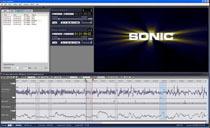 Sonic’s Adaptive HD Streaming Allows Full Blu-ray Encoding[teaser]Sonic Solutions today announced what they hope will be the next big thing in streaming: CineVision Adaptive HD.[/teaser] This new adaptive system leverages the CineVision HD encoding, currently used in the production of Blu-ray discs, to create a fully adaptive HD stream. Content can be encoded in full 1080p Blu-ray quality, but will scale accordingly with connection speeds to enable buffer free playback in the highest quality possible. Mark Ely, executive VP of Strategy at Sonic Solutions noted in a recent press release that simply offering convenience and speed just isn’t enough. “Consumers not only want instant access to new Hollywood hit movies on their connected TVs and Blu-ray players, they want it in HD.” CineVision Adaptive HD is capable not only of encoding content with the quality that video mastering engineers are looking for, but the speed needed to not only release new titles on time, but to encode television programs for next day streaming.Posted Fri Jul 31, 2009 at 07:30 AM PDT by:
 -
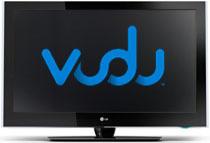 VUDU Streams Its Way Into LG televisions[teaser] Doing away with the need for an external unit, select LG televisions will come with the functionality of the VUDU set top box built right in.[/teaser] This August, several of LG’s new TVs including the LH50 and PS80 lines of LCD and Plasma displays will, according to VUDU, have the same functionality as the VUDU BX100 set top box built right in. Embedding streaming video is nothing new, but the idea that without any additional hookups, the quality would be equivalent to that of videos watched on the set top box is fairly impressive. Alain Rossmann, CEO of VUDU commented “Together, LG's Broadband HDTVs and the VUDU service set the industry standard for easy access to on-demand HD movies” With over 2000 HD movies to pull from, this could be a very good relationship for both companies. More details are available in the press release.Posted Fri Jul 31, 2009 at 06:00 AM PDT by: