-
 HD Advisor FlashbackEditor's Note: Our HD Advisor is taking a much-needed vacation this week. During his absence, rather than run a new Q&A, we're digging back into the archives. Way back. All the way back to this week in September, 1985. Picture the scene with us, if you will. It was a time painted in neon colors and propelled to the electronic beat of a synthesizer soundtrack. A time when a man could look his most masculine wearing a pink T-shirt under a white designer suit and loafers without socks. A time when it simply wasn't possible to own enough Swatches. It was also a time when High Definition was still the stuff of science fiction. Nonetheless, people needed advice with their TVs. So hop in your DeLorean, gun it to 88 mph, and take a trip back in time with us for this special Flashback Edition of the "TV Advisor." Answers by Joshua Zyber Betamax vs. VHS Q: Dear TV Advisor, I'm sure you get asked this all the time, but which is better, VHS or Beta? I know it will be totally rad being able to watch movies at home whenever I want, but the machines are so expensive. I can't afford to spend $500 a piece on both of them. Which format has better quality, and which do you think will win the format war? A: In terms of picture quality, Betamax has an advantage over VHS. Beta tapes have slightly higher resolution (250 lines vs. 240) and less crosstalk. However, VHS tapes can record longer. When it comes to pre-recorded movies, that's shouldn't be too big of a deal. But if you plan to record a lot of TV shows yourself, VHS is probably the better option. At this point in time, VHS has a dominant lead over Betamax in sales. Sony is a stubborn company, so I'm sure Beta will stick it out for a while longer anyway, but in most likelihood VHS will eventually win the format war. With that said, if you're really looking for the best picture quality, you should look into laserdisc players. LDs have much higher resolution than either tape format (425 lines). On the downside, laserdisc players can't record. Also, due to their limited capacity of 1 hour per side maximum in CLV format or 30 minutes per side in CAV, most movies need to be broken up to at least 2 or 3 sides. Flipping and swapping discs can be an inconvenience, but it's worth it for the improved picture. Antenna Input on TV Q: TV Advisor, I really want to buy a VHS machine, but the back of my TV only has connections for its antenna. Could I still hook up the VHS, or do I need to buy a fancier new TV first? A: The standard A/V output for most VCRs is the coaxial connection. That's the cable with the spiky end and the screw-on connector. If you head over to your local Radio Shack, you should be able to find an adaptor that will allow you to connect a coaxial cable to your TV's antenna inputs. It shouldn't cost more than a dollar or two. "Letterbox" Bars Q: I just bought a copy of 'Manhattan' on laserdisc. I think it's defective. It has weird gray bars covering parts of the picture. I exchanged it at Tower Records for another copy, but still have the same problem. What's going on here? Why can't I see the whole movie? Is my LD player broken? A: There's nothing wrong with your player or the disc. It turns out that the 'Manhattan' laserdisc is one of the first movies to be released in a new format called "letterbox." They call it that because it kind of looks like you're watching TV through a narrow mail slot. Apparently, Woody Allen himself requested this. You see, when you go to a movie theater, the screen there is much wider than your TV. The movies are photographed to fit that wide screen. When most movies come to TV or video later, they're put through a process called "pan and scan" where essentially the sides of the picture are cut off so that the middle will fit your TV screen. Sometimes you lose a lot of picture this way, up to half. The "letterbox" format attempts to compensate for this by shrinking the size of the wide movie image until the whole thing fits on your screen. Of course, that will leave empty space above and below the picture. That's what the bars are. You're actually not losing any picture on the top and bottom; you're getting more on the sides, but the picture has to be smaller. "Letterbox" may take some getting used to. Give it a try and see if you can learn to ignore the bars. Personally, I think it was a mistake for the people who transferred 'Manhattan' to make the bars gray. I think that's a little distracting. I hope that future movies in the "letterbox" format use black bars instead. How to Get a CED out of the Case? Q: I recently picked up a SelectaVision player at a yard sale. I know the format was discontinued recently, but the player was so cheap I couldn't resist. I figure I can collect some inexpensive movies for now while I save up for one of those cassette tape machines. The seller even threw in a few free movies. Here's my problem: I can't figure out how to get the movies out of those darn plastic cases, or how to put them in the player. Help! A: Actually, you're not supposed to take the CED disc out of its plastic caddy yourself. You insert the whole caddy into the machine. The player will remove the disc, and then you can extract the caddy. When it's time to take out the disc, put the caddy back in the player. Digital Audio on Laserdisc Q: I thought laserdisc players could also play CDs? My rich friend has a CD player and likes to rub it in everybody's face. He gave me a Thompson Twins CD for my birthday, even though he knows my family doesn't have that kind of money to buy a CD player. That's like $800! Do you know how many Swatches I could buy for that? Anyway, my school recently got a Pioneer laserdisc player (model LD-V4000). I thought I could listen to the CD on that, but I tried it and it didn't work. A: In order to play a CD, you'll need a laserdisc player with digital audio capability. CDs are a digital audio format. Unfortunately, not all LD players have that ability. When the laserdisc format was first created, it only supported analog audio. Digital audio is a recent development. Many movies released on the format these days contain both analog and digital versions of the soundtrack. With the Pioneer brand, you can tell whether a player supports digital audio by its model number. Digital models will begin with a "CLD" prefix, which indicates that they're CD/LD combi players. The LD-V4000 is an industrial model sold to corporations and schools. Sadly, the industrial models still do not support digital audio. Homework Assignment: You Be the TV Advisor The TV Advisor knows many things, but he doesn't know everything. Some questions that the TV Advisor receives are best answered by our readers. If you can help to answer the following question, please send your response in a letter to TV Advisor Headquarters. Your advice and opinions matter too! Cable TV Remote Control Boxes Q: We recently had cable TV installed. I can't believe how many channels there are to watch. We have over 30! And the picture is so much less wavy or snowy than it was with our antenna. We just have one problem: when our kids run around the house, they keep tripping over the remote control's cord. I'm afraid they're going to break it. The cable company says they don't make a cordless version. Do you have any tips for what to do with the remote control box so that it's still convenient to change the channel, but not always in the way? That will conclude our Flashback column. The HD Advisor will be back to his normal schedule with brand new questions and answers next week. If you have home theater questions you need answered, send an email to [email protected]. To browse through previously answered questions, visit the main HD Advisor page. In the meantime, keep those questions coming. Joshua Zyber's opinions are his own and do not necessarily reflect those of this site, its owners or employees.Posted Fri Sep 11, 2009 at 12:00 PM PDT by:
 -
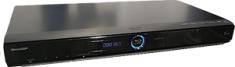 Sharp’s High End Blu-ray Player Gets an Upgrade[teaser]Sharp has granted a much needed revamping to the BD-UP50U, their former top shelf player. [/teaser] While keeping the much loved RS-232 automation control of the BD-UP50U, Sharp’s new BD-UP52U brings things up to date. First and foremost, the BD-UP52U is BD Live capable, something not present on the former Profile 1.1 player. A network adapter has been added, as well as compatibility with current HD audio codecs such as Dolby TrueHD and DTS HD Master Audio. In response to questions on the lack of streaming services available on the player, Sharp spokesman Melissa Non states that “We’re in the midst of signing a contract with Netflix,” and expects it to be available in November. The BD-UP52U will ship in October at an MSRP of $379. Source: CE ProPosted Fri Sep 11, 2009 at 11:15 AM PDT by:
 -
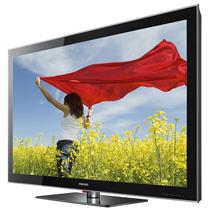 Samsung Launches 65 inch LCD[teaser]In a size typically reserved for Plasmas and projectors, Samsung has announced their newest LCD television. [/teaser] The new LN65B650, a CCFL backlit LCD TV, towers over the competition in terms of size if nothing else. Samsung’s latest display features a massive sixty five inch LCD screen. Shipping later this month at a suggested $5,995, Samsung hopes to capture a relatively untouched market. With a 120Hz refresh rate, a full HD 1080p picture and a 4ms response time, the LN65B650 has quite a robust feature set. Samsung makes mention of their Ultra Clear Panel technology and Wide Color Enhancer 3 as indicative of overall picture quality. Connectivity isn’t left behind here. The LN65B650 comes equipped with Saumsung’s media suite which enables the viewing of a built in content library as well as access to services such as Flickr and YouTube. The set is DLNA compliant and features USB 2.0 ports for viewing of content from capable devices. While Samsung’s massive LCD does come at quite a cost, especially compared to comparable plasma models, it does meet Energy Star 3.0 guidelines and features low power consumption. While the savings in electric bills won’t add up to the difference in price, it may be just enough to push an energy conscious consumer over the edge. Source: ReutersPosted Fri Sep 11, 2009 at 10:45 AM PDT by:
 -
 Microsoft and Tesco Partner for Virtual DVDs[teaser]Adding a dose of content to digital copies.[/teaser] Digitally delivered movies have long been a bit lacking, especially for film buffs. While video quality is getting better, DVD and Blu-ray discs have always had the advantage of extra content. Those looking for audio commentary, deleted scenes, featurettes and the like have had no choice but to go with a hard copy. A recent effort by Microsoft and UK retail giant Tesco aims to change that. Starting this August, Tesco will be allowing customers to purchase digital copies of certain movies for playback on Windows based or Apple computers that will meet DVDs feature for feature. Additionally, extra network connected BD-Live style features such as viewing parties and auto-updating trailers will be featured in these “virtual DVD” copies. Rob Salter, director of entertainment at Tesco spoke highly of virtual DVDs. “For the first time, consumers will be able to enjoy a DVD equivalent experience with digital movies.” He also added that he sees a bright future for the new delivery method. “This is just the beginning. In the future we expect to offer our customers innovative digital solutions that far exceed the DVD experience.” Source: MicrosoftPosted Fri Sep 11, 2009 at 10:00 AM PDT by:
 -
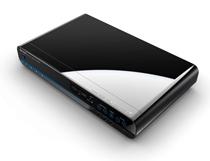 Sherwood’s Slick Looking NetBoxx A/V Receiver[teaser]Sherwood’s R-904N NetBoxx is a media portal and 7.1 channel receiver in one. [/teaser] Featuring a great number of options for media streaming such as Cinema Now, YouTube, SHOUTcast and MediaMall’s PlayOn service, the feature set is quite impressive. The look is slim and stylish, not like a typical A/V receiver at all. The change in look, according to Sherwood’s Marketing VP Jeffrey Hipps, was inspired by a move by consumers. “Use of physical media is declining and being replaced by content obtained through streaming or downloads,” said Hipps. “This led to our taking a fresh look at what an audio-video receiver should be, from its function to its form factor.” The NetBoxx may look different, but its feature set sounds familiar. Supporting audio formats such as Dolby TruHD and DTS-HD Master Audio, as well as myriad other audio and video codecs, the Netboxx is a very capable device. The NetBoxx features seven 100 Watt RMS amplifier channels and 24-bit D/A converters. On the video side, a digital media processor based on DaVinci technology processes the picture. When it hits retailers later this month, the Sherwood NetBoxx will be priced at $649.95 Source: Sherwood (.doc file)Posted Fri Sep 11, 2009 at 07:00 AM PDT by:
 -
 Sony Introduces Internet Video Streaming BDP-N460[teaser]Sony’s newest Blu-ray player embraces internet streaming. [/teaser] Featuring an Ethernet port that’s used for more than just BD-Live, the latest addition to the Sony family offers a wide variety of options for net streaming. The BDP-N460 is a fairly capable Blu-ray player, delivering full HD 1080p/60p and 24p True Cinema output. It decodes HD audio codecs and is BD-Live capable. It supports Deep Color, x.v. Color, upconverts standard definition signals and does everything else a $250 Blu-ray player should, and then some. Slacker Radio, a less often heard of service, will be streaming in Sony’s new BDP-N460 when it ships to retailers in October. The player will also be enabled to stream YouTube videos right out of the box, and Netflix in an update in the late fall. “Whether its Full HD 1080p or streaming video and audio from the Internet, entertainment comes in so many flavors that consumers want choice” said Sony’s Chris Fawcett. “Sony brings the best of both worlds together in one player that offers more content than other stand-alone devices on the market.” Source: SonyPosted Thu Sep 10, 2009 at 02:00 PM PDT by:
 -
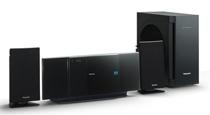 Panasonic’s Blu-ray Home Theater in a Box[teaser]Blu-ray player, sound system and media streaming in one.[/teaser] Announced yesterday and shipping this month, Panasonic offers up their newest home theater in a box -the SC-BTX70. Entering into an increasingly crowded category, Panasonic hopes to one up the competition with quality components and a robust feature set. The SC-BTX70 is a 2.1 system that delivers virtual 7.1 surround sound via a pair of rather visually unimpressive looking speakers. Panasonic boasts that the new top mounted speaker design expands the listening area, while low-density bamboo cones enable a pure and crisp sound. Panasonic’s new HTib also integrates digital media, allowing SD cards, USB devices and iPods to be connected for listening to music and watching videos. An Ethernet connection not only allows the use of BD-Live, but lets the viewer browse and watch videos on YouTube and Amazon Video-on-Demand. Panasonic’s SC-BTX70 is up against some pretty stiff competition, and a dual speaker setup just doesn’t look as good as 5.1 or 7.1 systems at the suggested $999.95 price. Expect Panasonic’s new HTiB in stores later this month. Source: ReutersPosted Thu Sep 10, 2009 at 12:45 PM PDT by:
 -
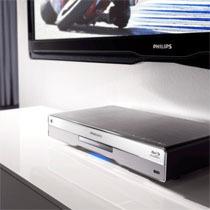 Philips Announces New Blu-ray Players[teaser]Berlin’s IFA expo saw the unveiling of a new flagship player from Philips. [/teaser] The BDP9500, featuring a Qdeo video processor and stylish aluminum frame is set to deliver “a cinematic experience to all consumers,” says Philips. The BDP9500’s processor helps to eliminate noise as well as enrich colors and bring depth to pictures, helped along by Burr-Brown analog to digital converters. The BDP9500 and its little brother, the BDP7500 both offer 7.1 channel analog outputs for sound and support all HD audio formats. Philips also lifted the veil on their newest budget line player, the BDP3000. Offering standards like Full HD playback and BD Live support, the BDP3000 is geared towards customers looking to jump into Blu-ray for the first time. Pricing and availability for these models have not yet been announced. Source: Philips (PDF)Posted Thu Sep 10, 2009 at 08:00 AM PDT by:
 -
 Sony’s Wireless LED Backlit HDTV[teaser]Sony’s new ZX5 is set for a November release in Japan. [/teaser] At just over 16mm thick, the ZX5 line comes in both 46” and 52” sizes. Displaying Full 1080p HD and Sony’s Flow Motion 240Hz refresh rate, the picture is sure to please, though local dimming, rather than edge mounted LED backlighting, would have been welcome. Interestingly the ZX5 models take in signal wirelessly via a bundled media receiver. This separate box handles input from a huge variety of sources, from HDMI to VGA and even SVideo, and then sends the signal wirelessly to the ultra slim TV. The receiver box also handles services such as video on demand, networking, and internet connectivity. Moving these services and connections to the box makes for an incredibly thin and clean display. Neither pricing nor a US release date is available at this time. Source: Sony Japan (via Google Translate)Posted Wed Sep 9, 2009 at 01:00 PM PDT by:
 -
 Samsung Players Now Support Youtube and MKV[teaser]Thanks to a recent firmware update, Samsung’s current line of Blu-ray players have added support for a pair of popular online viewing options. [/teaser] The ever popular Youtube is now viewable on Samsung Blu-ray players, joining the already competitive range of services like Netflix and Pandora, already available on 2009 models. Expectedly but disappointingly, Youtube’s HD content is unable to be streamed. The ever increasingly popular MKV format is now supported by the players. A favorite of those acquiring digital HD content by less than reputable means, MKV is the format most commonly found when downloading HD videos. This pair of post purchase upgrades adds significant value to Samsung’s BD-P1600, BD-P3600 and BD-P4600 players. Source: TechRadarPosted Tue Sep 8, 2009 at 01:00 PM PDT by: