-
 PS3s Reportedly Not Playing Blu-ray Discs after Firmware Update[teaser]Forums and blogs across the internet are abuzz with reports that the newest PS3 update has broken the system, rendering the Blu-ray drive unusable. [/teaser] The long awaited 3.0 firmware update for the Playstation 3 integrated a wide variety of improvements, such as upgraded friends lists, trophy sharing, and a bit more personalization. Unfortunately, it also appears to have caused some problems with the Blu-ray drive. Customers are reporting that both games and Blu-ray discs will play fine for around ten minutes and then just freeze up. The increasingly common story is echoed by countless posters on the Playstation blog such as JohnnyAstro who says that he “upgraded to 3.01 3 days ago, and in the middle of playing a game a day later, the game locked up, and that was it. The drive cannot recognize any disc now. Tried putting in games, Blu-ray movies and DVD’s. Nothing.” Reportedly, Sony customer service is stating that this is likely a coincidental hardware issue, and customers are being asked to pay $150 for repairs on their systems. While this issue does appear to be widespread, it definitely isn’t happening to every system. If you’re using your PS3 as a Blu-ray player though, it may be wise to avoid the update until this all gets straightened out. Source: Playstation BlogPosted Tue Sep 29, 2009 at 11:25 AM PDT by:
 -
 HD Advisor 29Editor's Note: Each Friday, High-Def Digest's own HD Advisor will answer a new round of questions from our readers. If you have home theater questions you need answered, send an email to [email protected]. If you've already sent a question and don't see it answered yet, please be patient as we work our way through them. To browse through previously answered questions, visit the main HD Advisor page. Answers by Joshua Zyber Digital Editing in Filmmaking Q: I know that the transition from old-fashioned film editing to digital editing took a while and occurred towards the late '80s/early '90s. Are there any movies from the early stages of digital editing that could have been scanned for editing at a resolution lower than 1080p, thus making the master less than Blu-ray quality? A: Digital editing, in itself, doesn't necessarily have any effect on the final image quality of the movie. In its simplest form, the process works like this: After a director shoots his movie on 35mm film, the raw footage will be scanned to create digital files that can be fed into a digital editing workstation (such as Avid or its competitors). The resolution or picture quality of those files isn't really important. The movie's editors will then work their magic. Once complete, the workstation produces a list of frame numbers and time codes, which is then given to a Negative Cutter, who will conform the original 35mm film negative into the movie's final cut. No video is ever output from the editing workstation itself. The final assembly, color timing, etc. are all performed in the photochemical realm, just as they have been for over a century of filmmaking. That's assuming that this is a traditional film production chain, which is what would have been in place during those early days of digital editing that you describe (and is still quite commonly used today). However, the introduction of a Digital Intermediate stage complicates matters. When a DI is used, color timing and final assembly are performed digitally, and then the product is output back onto film. In this instance, you're correct that the quality of the digital scan and processing will limit the quality of the final motion picture image. Digital Intermediates did not become commonly used in the film industry until the beginning of this decade. 'Amelie' and 'O Brother, Where Are Thou?' were two of the first films to have all post-production performed in the digital realm. (Previously, some movies may have utilized a DI for selected scenes, but not the entire feature.) While those early DIs may not have been quite up to modern standards, the film still would have been scanned at least at 2k resolution, which is slightly higher than Blu-ray offers and has superior color quality. At least theoretically, those movies should still be fit for eventual Blu-ray transfers. Watching 'The Dark Knight' on a 2.35:1 Screen Q: I'm planning to install a 2.35:1 wide screen in my basement. Right now, I'm using 16:9 screen. How can I adjust the screen when I'm watching 'The Dark Knight' on Blu-ray after I install the 2.35:1 screen? The movie switches back and forth between IMAX scenes and regular wide screen. I'm planning to upgrade my projector and will get an anamorphic lens for it. A: I touched on this issue in my 2.35:1 Constant Image Height Tutorial a few months ago. When 'The Dark Knight' was photographed, director Christopher Nolan knew that only the IMAX theatrical prints would have a shifting aspect ratio. The standard 35mm prints seen in the majority of theaters were projected at a constant 2.35:1 aspect ratio. In order to accommodate this, Nolan framed the IMAX footage loosely enough that it would function at either ratio. Both versions of the movie are valid. When it comes to home video, only the Blu-ray edition of the movie attempts to mimic the IMAX effect. The regular DVD is letterboxed throughout. If using a projector with anamorphic lens attachment, I recommend simply zooming the movie to fill your 2.35:1 screen. Although you'll lose some picture off the top and bottom during the IMAX scenes, you won't be missing anything critical. An argument can be made that you're still complying with the director's intent -- just that it's his intent for the 35mm prints rather than the IMAX prints. I've watched 'The Dark Knight' Blu-ray this way, and it's a perfectly satisfying experience. PAL Content on Blu-ray Q: I'd like to know why store bought foreign editions (particularly from Canada) of Blu-rays will play the movie but not the special features. I have a Sony BSP-S350 and the two movies I have from Canada are 'All the Boys Love Mandy Lane' and 'Black Sheep'. Is there a way to get them to work? A: You may have bought those two discs in Canada, but 'Black Sheep' and 'All the Boys Love Mandy Lane' are both UK video releases that must have been imported to that country. While the discs may not be region coded and the movies themselves are both encoded in the same 1080p24 format used here in North America, the bonus features on those discs are encoded in standard-def PAL format. Your Blu-ray player does not support PAL. Unfortunately, there's nothing you can do about this, short of buying a different Blu-ray player that is compatible with PAL (and can convert the 50 Hz frame rate to 60 Hz, preferably). The OPPO BDP-83 would be a good candidate, if it's really that important to you. Homework Assignment: You Be the Advisor Some questions that the HD Advisor receives are best answered with a consensus of opinions from our readers. If you can help to answer the following question, please post your response in our forum thread linked at the end of this article. Your advice and opinions matter too! Blu-ray Playback on a PC Q: I was wondering if you could help me with my configuration. I am currently using Arcsoft Total Media Theater to play Blu-rays on my PC. I have Logitech Z-5500 speakers that are connected using both a Toslink cable and the standard analog speaker connections. I have been using the Toslink to get DTS and Dolby Digital sound from my Blu-rays, and the sound is fantastic. But when I was reading your column called Blu-ray and HD DVD Audio Explained, I noticed that Dolby TrueHD and DTS-HD MA can be decoded by the player and sent out using multi-channel analog, while Toslink cables can't support the bandwidth for them. Should I continue getting DTS/DD sound using the Toslink and letting my Z-5500 receiver decode the signals, or can TMT decode the signals and give me the full sound quality through the analog connections? Any help would be greatly appreciated. JZ: Unfortunately, at this time, I still don't have Blu-ray playback on my own PC. Perhaps one of our readers more familiar with this configuration can chime in? Check back soon for another round of answers. Keep those questions coming. Joshua Zyber's opinions are his own and do not necessarily reflect those of this site, its owners or employees.Posted Fri Sep 25, 2009 at 12:00 PM PDT by:
 -
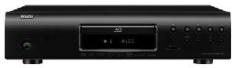 Denon’s Budget Concious Blu-ray Player[teaser]With the announcement of the DBP-1610, Denon has reached their lowest price point yet. The most economical of Denon’s Blu-ray players, the new addition will retail for $499. [/teaser] While certainly scaled down from Denon’s typical line of BD players, the DBP-1610 is still a very capable player. The DBP-1610 does what high end Blu-ray players should do. It supports high definition audio formats such as Dolby TrueHD, Dolby Digital Plus and DTS-HD Master Audio. It features BD-Live capability. It supports DiVX, upscales standard DVDs up to 1080p, and offers Deep Color and x.v. Color support. The DBP-1610 also has a few features not as commonly seen in the $500 range, such as support for oddball formats like Kodak Picture CD and Fuji Color CD, a 24-bit/192kHz audio converter and Pure Direct Mode. Particularly of interest, Pure Direct Mode lets you send a direct signal down the line to a receiver or other component with a better ability to scale the signal. Source: DenonPosted Fri Sep 25, 2009 at 10:00 AM PDT by:
 -
 Best Buy Details Insignia Blu-ray HDTV Combos[teaser]Retail giant Best Buy has released details on their upcoming Insignia brand Blu-ray player HDTV combos. At $599.99, they run a scant $100 more than the equivalent drive free model. [/teaser] Insignia isn’t the first name that comes to mind when thinking of home theater products, but it will almost certainly be on the lips of those searching for a cheap way to get into high definition this holiday season. Best Buy’s 32” Insignia HDTV/Blu-ray combo features everything that the $499 drive free model does, plus a Blu-ray player, at a price of $599. The display is Full HD, and features a contrast ratio of 4000:1. Insignia’s new set also features a pair of HDMI inputs as well as ins for composite, component and PC. The set also features an Ethernet port that “lets you connect your TV to your home network” according to Best Buy’s site. Little information on the Blu-ray drive is available, and the site specifications appear to be off, as the section detailing the built in player states a DVD player, rather than Blu-ray. The Insignia Blu-ray HDTV combo has not been dated, but it can certainly be expected before the holiday shopping season kicks in. Source: Best BuyPosted Fri Sep 25, 2009 at 07:00 AM PDT by:
 -
 For What It’s Worth, DirecTV Has an App Store[teaser]The iPhone proved the viability and importance of having a variety of applications available to offer your customer base, but it seems DirecTV may have learned the wrong lesson. Instead of focusing on quality of product it appears DirecTV simply assumed that having an App Store at all was a victory. [/teaser] Based on countless forum complaints, and a particularly interesting YouTube video, the new addition to DirecTV has been met with quite a bit of dismay. Consumer expectation may have been set too high, but it seems as if the App Store, and the Apps themselves are too slow to be worth using. That is, of course, assuming that one of the very few apps was one that caught your fancy. DirecTV offers several apps for sports scores and Flickr browsing, as well as a few throwaway apps like “What’s Hot” which shows users the most popular programs on DirecTV. Catch the YouTube video here to get a peek at the App Store in "action."Posted Fri Sep 25, 2009 at 06:00 AM PDT by:
 -
 Sony Moves Cautiously Towards Video On Demand Same Day Releases[teaser]In what Sony VP of strategic development Jason Spivak referred to as a test of the market, Sony will be releasing four films on both physical media and through Video On Demand simultaneously. [/teaser] Slated to hit sometime this winter, Spivak didn’t mention specifics as to what movies would be a part of this trial, but he did touch upon why Sony in particular has been slow to adapt this idea. Movies that get rented could be movies that aren’t being purchased. Sony’s VP of digital distribution, Sean Carey, agrees with this sentiment. “We’re very concerned about rental transactions cannibalizing ownership transactions,” he states. The window between retail and VOD has been shortening over the last several years, with some companies more eager to make the jump than others. Warner is the forerunner, and has released most of its films on VOD day and date with DVD releases. The sales are with them, as they hold three of the top five spots in VOD sales over the last six months. Lionsgate on the other hand, hasn’t had a single day and date release, though they’ve shortened their window significantly. President of digital at Lionshead, Curt Marvis is confident that the trend will only continue in the future, predicting “Ultimately, everyone knows all the studios will adopt a day and date position over time.” Source: Video BusinessPosted Thu Sep 24, 2009 at 12:30 PM PDT by:
 -
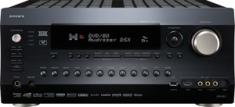 Integra Unveils Four Networked Receivers[teaser]Network capabilities are a huge focus for consumer electronics as of late, and Integra has certainly taken notice of this. With four new networking receivers and a pair of network capable preamps, Integra hopes to cover a large range of consumer needs. [/teaser] Dubbed the DTR-40.1, DTR-50.1, DTR-70.1 and DTR-80.1, Integra’s new receivers feature HD audio decoding, Dolby ProLogic IIz, and a variety of Audyssey functions. Streaming audio is possible from a networked PC or storage drive, and also from providers such as Rhapsody, Sirius Internet Radio, and Pandora. The lower end DTR-40.1 and DTR-50.1 – at $1,000 and $1,400 respectively – feature 7.1 channel audio output and Faroudja DCDi Cinema processing. The DTR-40.1 is capable of 100 watts over seven channels with the DTR-50.1 ramping it up to 135W. On the high end, the DTR-70.1 and DTR-80.1, which run $2,000 and $2,800, take the output up a notch with 9.2 channel capability. Both are THX Ultra2 Plus certified and offer HQV Reon-VX video processing as well as the increasingly popular Dolby Volume. The DTR-70.1, which offers 7 HDMI inputs and 2 HDMI outputs, puts out 140 watts over nine channels, while the DTR-80.1 ups the inputs by one and has an output of 9x145W. The receivers are shipping now, and a similar line of preamplifiers is expected this October. Source: Press ReleasePosted Thu Sep 24, 2009 at 09:30 AM PDT by:
 -
 Silicon Mountain Reveals Allio 2.0 Specs[teaser]The Allio all in one HDTV PC, released in late 2008, has received an update for 2009. Two different models, the Allio Media Center and Allio Lite, are available in both 32” and 42” sizes. [/teaser] Taking a cue from reviews and customer feedback, Allio has beefed up the Media Center version significantly. Featuring a Core2Quad Q8400 2.33 Ghz processor and integrated GeForce 9300 video, the Media Center edition should have no trouble with streaming services, playback, or even light gaming. In particular, MMOs like World of Warcraft should run flawlessly. The Allio Lite takes things in a simpler direction. Powered by Intel’s Atom processor, the Allio Lite has functionality similar to that of a net book. Web browsing and other lightweight tasks are highlighted, though an upgraded version with Blu-ray support is available. Other upgrades to usability are very welcome, such as the change from a tray loading Blu-ray drive to a slot loading solution, an additional HDMI port, and the relocation of the USB ports from the back of the unit to the side. Ranging from $1,299 for the entry level Allio Lite to $2,999 for the high end Media Center set, Silicon Mountain’s new Allios ship October 1st and are available for preorder now directly from the company, or from resellers such as Tiger Direct and Amazon. Source: Press ReleasePosted Thu Sep 24, 2009 at 09:00 AM PDT by:
 -
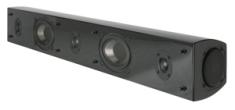 Atlantic Introduces First Seven Channel Sound Bar[teaser]High end speaker company Atlantic is one of many companies getting into the sound bar game, and they’re doing it with the world’s first seven channel sound bar. [/teaser] The Atlantic FS-7.0 sound bar makes use of seven speakers divided up among different sound stages to get full seven channel surround. A pair of full range 3-1/4 inch drivers take care of surround channels, with left center and right channels being divided up among dual 4x6 inch woofers and a trio of 1 inch tweeters. Some higher end companies are still a bit reluctant when it comes to releasing sound bars, but as Steve Feinstein, director of technology and marketing at Atlantic puts it “Single-enclosure surround sound systems have become an important part of the home theater marketplace.” Atlantic went into this with quality at the forefront of their minds, looking for a different way to do things. “We've never been happy with the digital processing approach that has dominated the category,” explains Feinstein. “We went back to the speaker design drawing board, and fleshed out an all-speaker solution that retains every iota of the original sound information.” The Atlantic FS-7.0 sound bar is available now from authorized dealers for $800. Also shipping is the companion SB-800 subwoofer, a 300 watt sub designed especially for pairing with the FS-7.0 sound bar. Source: Press ReleasePosted Thu Sep 24, 2009 at 07:00 AM PDT by:
 -
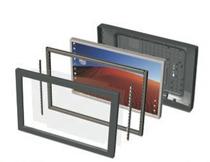 Emo Labs Shows New Invisible Speakers[teaser]Providing sound without traditional speakers is what Emo Labs is all about. With their new Edge Motion speakers, which sit invisibly on a display, they may be on to something big. [/teaser] Emo Labs has developed what they call “the industry's first fundamentally new loudspeaker technology”. Using a sheet that looks something like a large screen protector, Edge Motion speakers are able to send sound directly from the display, rather than from the sides as traditional speakers do. The sound for these speakers is generated by the vibration of the edge of the material, and is said to be a significant improvement over traditional TV and laptop speakers. Emo’s CEO, Jason Carlson, sees this new technology as a great service to a customer base that’s long been disappointed aurally. “Every day, people bring home the newest, most advanced consumer electronics -- only to be disappointed by the poor sound quality these devices deliver,” he says. “"With EMO branded speaker systems, manufacturers can now deliver a richer and more natural user experience without sacrificing size and styling." While pricing, availability and compatibility are up in the air at the moment, Carlson sees no end to the applications for Edge motion speakers. Source: Press ReleasePosted Wed Sep 23, 2009 at 01:00 PM PDT by: