-
 Sony Demonstrates Wireless Power Supply System[teaser]Sony is doing away with power cords, enabling true wireless displays. [/teaser] Saying that a product is wireless always came with an understood asterisk. Your laptop has wireless internet, but still needs to be plugged in after a few hours of use. Your cellular phone has to be charged in most nights, and those wireless surround sound speakers clearly have cords going from them to a base that receives signals wirelessly. The guys at Sony are planning to put an end to all this silliness. According to a press release put out by Sony Japan late last week, the company now has a working prototype “Wireless Power Supply System” capable of powering a 22” LCD television up to a distance of 50cm. Admittedly, it’s not an incredible amount of distance, and the addition of a repeater only ups the range to 80cm, or just over two and a half feet. Sony does make it a point to mention that these devices are currently in the experimental phase and aren’t intended for retail release. Distance is a key problem, with the other being wattage. The WPSS can only send 60W at the moment, though with the increasing focus on energy efficient televisions, this may be easier to achieve. Source: Sony Japan (via Google Translate)Posted Wed Oct 7, 2009 at 08:00 AM PDT by:
 -
 TDK Creates 320GB, 10 Layer Blu-ray Disc[teaser]In an ongoing effort to improve the technology, TDK has created a Blu-ray disc that’s capable of holding an unprecedented three hundred and twenty gigabytes of data. [/teaser] A step up over their previous record breaking 200GB disc, there were a great many issues that TDK faced when making the new 320GB discs. First, signal quality and strength decrease dramatically with each layer. The solution in creating such a high storage medium with so many layers was varying the materials with each layer. The bottom layer is unique, using a mixture of copper and silver, while each layer above it is composed of bismuth peroxide and germanium dioxide. The error rate of the discs is at the threshold of commercial viability according to TDK, and the lasers for both reading and writing the discs are standard. The discs will be shown at Japan’s CEATEC this week, where we can expect to hear more about when consumers might begin to benefit from the new tech. Source: Tech On!Posted Tue Oct 6, 2009 at 01:00 PM PDT by:
 -
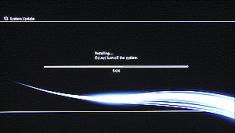 Class Action Lawsuit Filed Over PS3 Failures[teaser]Sony is now facing a class action lawsuit based on the allegation that a recent patch to the Playstation 3 has created hardware failures. [/teaser] We reported last week that a not insignificant number of PS3 systems have experienced optical drive failure after installation of a recent patch. Today it was reported that a PS3 owner named John Kennedy has filed a class action suit against Sony for the failures. Among the accusations are complaints for breach of warranty, negligence, and negligent misrepresentation. The 3.0 firmware update for the PS3 was a mandatory upgrade, and is viewed as responsible for causing systems to freeze while playing games, and even stopping the system from recognizing the optical drive. Sony confirmed that the 3.0 firmware affected systems on its blog shortly after the update, though no specifics were given, stating “SCEA is aware of reports that PS3 owners are experiencing isolated issues with their PS3 system since installing the most recent system software update.” A further firmware update is alleged to have caused even more problems. What prompted the suit though was Sony’s statement that the plaintiff in this case would need to pay $150 to have his system fixed. Sony has not yet released an official statement regarding the suit. Source: Courthouse NewsPosted Tue Oct 6, 2009 at 12:15 PM PDT by:
 -
 30 Days of HD AdvisorEditor's Note: Each Friday, High-Def Digest's own HD Advisor will answer a new round of questions from our readers. If you have home theater questions you need answered, send an email to [email protected]. If you've already sent a question and don't see it answered yet, please be patient as we work our way through them. To browse through previously answered questions, visit the main HD Advisor page. Answers by Joshua Zyber PS3 Audio Decoding Revisited JZ: In a previous column, I wrote that there shouldn't be any difference between decoding Dolby TrueHD or DTS-HD Master Audio in a disc player versus bitstreaming them to an A/V receiver. This led to several follow-up questions from readers, which I will attempt to address together. Q: I know you must be exhausted with questions about PS3 audio decoding. Let me throw one thought your way. The PS3 doesn’t give a Dialog Normalization flag value for Dolby codecs. This can make life difficult and confusing for enthusiasts who are trying to do soundtrack comparisons, or listen at a common volume. That is why I keep at least one player in bitstream mode. Q: I'm pretty sure that I read most if not all your posts on the Playstation 3 and bitstreaming, but I notice a huge difference in sound volume with HD audio. I have a Toshiba HD-A35 player and I don't hear drop off in sound volume. Can you help me out? Q: From recent readings, I saw that the PS3 Slim can pass through Dolby TrueHD and DTS-HD Master Audio via bitstream so an external amp can decode them. I have an old-school brick of a shiny black PS3 that doesn't have this functionality, but this does the decoding of the HD audio on-board, yes? So with decoding taking place at the PS3, is there any real benefit in me upgrading my amp to take advantage of the HD signals, or is the same information already being passed to my current amp? A: I feel this merits clarifying my previous comments. In essence, the decoding of a lossless compression codec such as Dolby TrueHD or DTS-HD Master Audio should be a straightforward process. You should get identical results whether you perform the decoding in a disc player (such as the PS3) or in an A/V receiver. However, after the decoding is complete, an A/V receiver may offer additional processing that the disc player does not. For example, most Dolby soundtracks are flagged with a Dialogue Normalization value. If the disc player doesn't read the DialNorm flag when decoding, your audio may exit the player louder or softer in volume via decoded PCM than it might via bitstream transmission. Note that Dialogue Normalization does not alter the quality or fidelity of a soundtrack. All DialNorm does is set a default starting volume for a soundtrack, similar to raising or lowering the volume control on your receiver. This is explained in more depth in my earlier Uncompressed vs. Lossless Audio article. A change in volume is not the same thing as a change in quality. A louder soundtrack is not automatically a better soundtrack. If the DialNorm flag is ignored, you may want to adjust your receiver's volume control a few notches to bring the soundtrack in line with other movies you've watched, but the content of the track will be unchanged. Although some users may find this a minor nuisance, I don't feel that it merits buying all new hardware for. On the other hand, many A/V receivers can apply ProLogic IIx processing (which will expand a 5.1 soundtrack to 7.1 channels) to a bitstreamed audio signal but not a raw multi-channel PCM signal. The same problem may apply to other optional post-processing functions such as Cinema EQ. In a worst case scenario, some receivers may not be able to perform bass management or speaker level controls. If these are something you'd like or need to use, hardware that will send a bitstreamed audio signal may be beneficial. Disc Incompatibility Issues / Firmware Updates Q: Recently I rented a copy of 'Crank 2' through Netflix. When I tried to play it in my Samsung BDP-1500, the movie wouldn't play. I took the disc and played it on the PS3, and it worked perfectly. Will I have to change my player to play the newer movies, or did I just have bad luck? A: Unfortunately, disc compatibility issues like this continue to crop up on new releases due to the complexity of Blu-ray's ever-changing encryption and BD-Java programming. Just recently, I found that 'X-Men Origins: Wolverine' wouldn't play on two out of my three Blu-ray players. In most cases, issues like this can be resolved by your Blu-ray player's manufacturer through a firmware update. The first thing you should do is check the current firmware on your player, and then visit the manufacturers' web site to see if there is a more recent firmware. Firmware files can usually be burned to a CD, loaded onto a USB drive, or updated via Ethernet connection. Follow the instructions that the manufacturer provides. If your firmware is up-to-date and the disc still won't play, email the manufacturer a description of the problem (providing the UPC of the disc helps) and ask if they have a solution ready. Upconverted Standard-Def Content on Blu-ray Q: 'Star Trek: The Original Series - Season 2' includes a 'Deep Space Nine' episode that I understand is a 1080p upconversion from a 480i master. My concern is that Paramount is testing to see if people will accept this for 'Star Trek: The Next Generation' Blu-ray releases. Let's face it, to scan the original film footage, re-edit, and create new special effects takes time and money. Do you think this is likely? A: Personally, I don't think there's cause to fear here. That 'Deep Space Nine' episode you reference was included as a bonus feature. It was never intended to be the primary content on the disc. I discussed the problems with remastering TV series such as 'Star Trek: The Next Generation' and 'Deep Space Nine' for high definition in an earlier column. Because these shows were post-produced on SD video, their final masters currently exist only in standard definition form. To remaster them, the original film elements would need to be re-edited from scratch. It can be done, but as you note, will probably be time-consuming and expensive. I doubt that Paramount or CBS Home Entertainment have an agenda to release complete season sets of 'TNG' or 'DS9' on Blu-ray in upconverted form. There would be little to no benefit in that for anyone. More likely, the shows will simply not be released on Blu-ray until such time as a full-blown reconstruction and remastering can be performed. Homework Assignment: You Be the Advisor Some questions that the HD Advisor receives are best answered with a consensus of opinions from our readers. If you can help to answer the following question, please post your response in our forum thread linked at the end of this article. Your advice and opinions matter too! Surge Protector Recommendations Q: I recently purchased a 46" Samsung LCD HDTV. Upon purchase, the salesperson strongly encouraged me to buy a high-tech surge protector. He told me a horror story about a man who purchased a new TV, and it was "destroyed" by a power surge from a storm. I did not buy the surge protector that was over $100.00. I am currently using a standard $15.00 surge protector that I purchased from Wal-Mart. Is there a legitimate concern in not having a surge protector specialized for HDTVs? JZ: I highly recommend investing in a good surge protector. However, I don't believe that you necessarily need to buy an expensive (read: overpriced) model sold in the home theater section of the store. On the other hand, a cheap unit may not offer enough protection for your expensive gear. I'll leave this to our other readers to recommend some good, reasonably-priced models. Check back soon for another round of answers. Keep those questions coming. Joshua Zyber's opinions are his own and do not necessarily reflect those of this site, its owners or employees.Posted Fri Oct 2, 2009 at 12:00 PM PDT by:
 -
 Have YOU become a fan of the High-Def Digest Facebook page?[teaser]Fall is here, the leaves are changing, big Blu-rays releases are hitting stores, and there's a party raging on Facebook. Oh, and guess what? YOU'RE INVITED![/teaser] Check out the High-Def Digest Page on Facebook, become a fan, and spread the word, so you and your friends can always find the best Blu-ray and high-def reviews online. Our Facebook page is still going strong! We're gaining new fans with each passing month, and we'd love you to join in the fun. In addition to our reviews and priceless witticisms, we use the page as one more way of spreading the word about the best high-def releases on the market. If you haven't joined yet, you can check it out here and become a fan. Hope to see you there soon!Posted Fri Oct 2, 2009 at 11:00 AM PDT by:
 -
 Westinghouse Ships 42” 120Hz 1080p LCD for Only $750[teaser]Westinghouse has announced that they are now shipping their new sets, which feature a 120Hz refresh rate, at an unheard of $750. [/teaser] Keeping in mind that Westinghouse isn’t a brand that leaps to mind in a conversation about quality and HDTVs, the release of their new TX-42F970Z is still fairly significant. When any technology gets filtered down to the economy brands, it can be seen as a fairly good indicator that not only do people want it, but it’s here to stay. Ray Roque, the VP of Marketing at Westinghouse speaks highly of the new set. “LCD has clearly become the HDTV technology of choice for the majority of consumers in the U.S.” he says. “ Westinghouse is working to bring high-end, advanced HDTVs to all consumers at the most affordable price points possible.” The TX-42F970Z also features a 4ms response time, a 4,000:1 contrast ratio, and four HDMI inputs. Source: TwicePosted Wed Sep 30, 2009 at 10:00 AM PDT by:
 -
 Panasonic Lifts the Veil on Prototype 3D Plasma TV[teaser]Panasonic’s newly shown set could be on shelves as early as next year. [/teaser] It’s been just about a month since Panasonic announced they’d be selling 3D HD sets in 2010, and they’ve got much to show for it. The new 3D Plasma set was shown at the company headquarters in Osaka on Monday morning and is slated to appear in early October at a Japanese electronics show known as Ceatec. The new Panasonic prototype uses active shutter glasses, just like Sony’s 3D sets will, rather than the passive glasses found in movie theaters. The television and glasses work in tandem to create the 3D effect. Panasonic has stated that they needed to build this set from the ground up to make everything work to their standards. Due to the rapid switching of pictures, new PDP materials were required as well as new chips. They’ve taken everything into consideration including the phosphors they use, opting for those with a short time of luminescence decay to ensure there aren’t any images lingering. Source: PC WorldPosted Wed Sep 30, 2009 at 08:00 AM PDT by:
 -
 Vizio’s VF551XVT Available Now at Just Under $2,000[teaser]The first local dimming television from Vizio, and the cheapest on the market in its size, the Vizio VF551XVT is now available. [/teaser] For a $2,200 MSRP and a $1,999 street price, the newest television from Vizio offers local dimming LED lighting, a 55” screen and 240Hz refresh rate. The lower pricing doesn’t come without sacrifice however. The VF551XVT is missing a few things that have become standards on Vizio’s higher end TVs. Vizio’s new display is without options for viewing of networked or internet based content. According to Laynie Newsome, Vizio’s VP of Marketing, this choice was completely intentional. “We didn't want to wait any longer to introduce the breakthrough picture quality enhancements of TRULED and Smart Dimming technology to our customers at a previously unattainable price point,” stated Newsome. “We feel there is a strong market demand for this type of television today at this price. And those who are interested in the internet content capabilities won't have long to wait.” The VF551XVT is considerably cheaper than other fully backlit LCDs, and features a total of 960 LEDs spread across 80 control blocks, for an impressive image. The set also offers 240Hz Smooth Motion technology, which combines 120Hz technology with scanning backlight, ensuring a smooth picture. Source: VizioPosted Wed Sep 30, 2009 at 06:00 AM PDT by:
 -
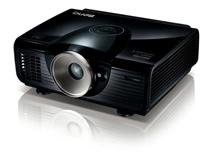 BenQ Announces a Trio of Consumer Line Projectors[teaser]Running the gamut of pricing and features, BenQ is bringing three new projectors to market. [/teaser] At the lowest end of the spectrum of projectors announced by BenQ is the W600, which they refer to as the “sensible home entertainer”. Available soon in the UK at around $800 US, the W600 is capable of a 720p picture, a 3,000:1 contrast ratio and not a great deal else. Stepping up to the W1000, which will sell at around $1,500 US, customers can expect full 1080p as well as more customization of color and picture. The W1000 features a 2,700:1 contrast ratio, and features UNISHAPE technology, which varies the brightness of the projector lamp in sync with the six segment color wheel. BenQ’s W6000 is their top of the line model at around $4,000 US. It offers 1080/24p video as well as upconversion of standard definition sources. The contrast ratio for the W6000 kicks up to 50,000:1, and true 10-bit processing should ensure an excellent picture. Additional features of the W6000 include horizontal and vertical lens shift, 1.5:1 zoom ratio and the ability to display a 2.35:1 ratio using an optional Panamorph Lens. BenQ’s new projectors are set to sell in the UK shortly, with no details currently about US releases. Source: Press ReleasePosted Tue Sep 29, 2009 at 01:00 PM PDT by:
 -
 Polls Say Consumers Willing To Pay Extra For 3D TVs[teaser]According to a recent poll conducted by the In-Stat research group, 43 percent of customers are willing to pay up to a $200 premium for 3D televisions. [/teaser] 3D is getting a huge push in both the cinematic and consumer electronics worlds, and that positive coverage seems to have paid off. According to Michelle Abrahams of In-Stat, 43% of people polled said that they’d be willing to pay a $200 premium for 3D HDTVs. While it’s certainly good news for the new tech that consumers recognize the need for a higher cost, $200 might be underestimating the markup. Of that 43%, nearly a third of them said that they would be unwilling to purchase a 3D-capable Blu-ray player. The problem inherent in these numbers of course is that without a compatible source, viewers would be unable to view 3D content. Just as there has been much education needed to clear up poor information about HDTVS – especially when it comes to the need for an HD signal – Abrahams says that additional education will need to happen in order to make the 3D push work. Source: RapidTVNewsPosted Tue Sep 29, 2009 at 12:30 PM PDT by: