-
 Paramount DVDs and Blu-rays Coming Too Fast For Theater Owners[teaser]While a quick turnaround for Blu-ray and DVD releases may please consumers, theater owners are calling foul. [/teaser] Paramount has sparked the ire of the North Association of Theater Owners (NATO) with the incredibly quick release of a pair of films to home video. The release dates in question involve 'The Goods,' starring Jeremy Piven, and 'G.I. Joe: The Rise of Cobra' starring a lot of people who should have known better. Falling only 88 days after the theatrical release, these movies beat the 129 day industry average by over a full month. When considering that 'G.I Joe' in particular had a fairly long tail, this window seems even shorter. The worry from NATO of course, is that these quick releases will mean a decrease in theater revenue. Ellis Jacob of Cineplex believes that consumers will be less likely to see movies at the theater if availability increases. “We at Cineplex have invested a lot of money in our theaters and in new technology such as 3D,” he says. “So when something like this happens, it creates an issue with people from the standpoint of entertainment choices. If a guest of ours knows a movie is going to be on DVD in less than 90 days, then they know that if they miss it they can catch it on DVD not too much later.” NATO president John Fithian took a less diplomatic tact, saying “Our members are ballistic. We don't know what Paramount is up to, but it's highly objectionable.” Source: Hollywood ReporterPosted Mon Oct 19, 2009 at 08:00 AM PDT by:
 -
 32 Short Films About HD AdvisorEditor's Note: Each Friday, High-Def Digest's own HD Advisor will answer a new round of questions from our readers. If you have home theater questions you need answered, send an email to [email protected]. If you've already sent a question and don't see it answered yet, please be patient as we work our way through them. To browse through previously answered questions, visit the main HD Advisor page. Answers by Joshua Zyber 192 kHz Audio Q: I have a first generation PS3 with an Onkyo TX-SR804 receiver taking audio through HDMI (decoded in the PS3). When I try to play the Dolby TrueHD 192 kHz 5.1 track on the 'Akira' Blu-ray, I only hear sound out of the front left and right speakers. If I change the audio to Bitstream to decode in the receiver, it comes in as 48 kHz (which I'm guessing is because my receiver is older and can't do Dolby TrueHD natively). I can't use a Toslink optical cable since the PS3 can't output 192 kHz 5.1 that way, only stereo. The 48 kHz 5.1 TrueHD track comes in fine, but the sound quality on the 192 kHz track is nothing short of incredible, so I'd really like to hear it. Is there anything I can do short of buying a new receiver? A: The Japanese Dolby TrueHD track on 'Akira' presents a dilemma for many viewers. In their zeal to provide the Blu-ray disc with the best audio quality available, the disc authors failed to realize that not every A/V receiver can accept the full 192 kHz signal. Unfortunately, they neglected to provide a comparable losslessly-compressed option with a lower sampling rate. (At least, not for the original Japanese language track.) The options on the disc are either Japanese Dolby TrueHD 5.1 at 192 kHz or lossy Dolby Digital 5.1 at 48 kHz. Although the PS3 can decode Dolby TrueHD 5.1 / 192 kHz to PCM, your receiver may not accept the full signal at that rate. It sounds like your receiver downgrades the signal it receives to 2.0 format. By choosing "Bitstream" in the PS3 (original model), you are forcing the player to default to the standard Dolby Digital 5.1 track. Your PS3 can decode TrueHD internally, but can't transmit the raw bitstream. That's why you're seeing 48 kHz at the receiver, and hearing a significant downgrade in audio quality. You've not only reduced the sampling rate, you've also chosen the lossy audio track, which is from a different mix than the souped-up TrueHD track. (Ironically, the 'Akira' Blu-ray does also contain another TrueHD 5.1 track at 48 kHz, but only for the English dub.) What you need to do is this: With no disc in the player, go to the PS3's "Sound Settings" menu and de-select any audio option with a sampling rate of 192 kHz. This should force the PS3 to downsample the audio to the next highest rate (96 kHz). If your receiver can't accept that either, de-select 96 kHz as well, and the PS3 will downsample to 48 kHz. Lossless Video Compression Q: Much has been said about the advantages of lossless HD audio compression vs. lossy audio compression, but little is spoken about the potential advantages of lossless video quality. Would there be significant advantages in terms of video quality if media had the capacity to support lossless compression? Given current codecs/compression technologies, what kind of theoretical storage capacity would it take to store a movie using lossless compression and is that something you envision in the not too distant future? With future video formats, people often speak of increased lines of resolutions (2K, 4K, etc.), but few tend to address that today's video codecs are all lossy - just curious why? A: The video compression formats in use on Blu-ray (MPEG-2, AVC/MPEG-4, and VC-1) are all lossy codecs, even at their highest bit rates. Lossless video compression would require an entirely different codec, such as the JPEG 2000 format used in digital cinema. Needless to say, it will also require significantly more disc storage space and a revision of the Blu-ray spec to accommodate the codec. I don't foresee this happening on Blu-ray anytime soon. Or, frankly, ever. I also doubt that we will see a better disc format than Blu-ray in the future. All signs point to Blu-ray being the last physical media format for pre-recorded movies. Future distribution will continue to move toward internet downloads (with even heavier compression, unfortunately). Research currently being conducted into multiple-layered storage discs may be used for computer data applications, but not likely pre-recorded movies. As I wrote in my Specs vs. Reality article a couple years ago, movie fans tend to get too caught up in the idea of higher bit rates or different compression formats being the most important criteria for good picture quality. In almost all cases, this is a fallacy. Unless the video compression is so poorly done that it results in distracting artifacts (which, admittedly, does happen sometimes, although honestly not as much as some people would have you believe), the resolution of the image and the quality of the video transfer are vastly more important. Power Conditioners Q: I recently started hearing about "clean power" and power conditioners. Is there such a thing as unclean power? How much does clean power impact home theater equipment. I have been looking at power conditioners, what should I be looking for in a power conditioner? A: The notion of "dirty" power affecting a home theater first came into vogue through audiophile circles. Certain people insisted that replacing the electrical socket in their wall dramatically improved the clarity of the music they were listening to. This then led to super-expensive power cords that could carry the electrical signal better, and power conditioners designed to "clean" the electricity before it got to the CD player or stereo. Soon enough, the videophile ranks caught on and started seeing extraordinary improvements in picture quality as well. In my opinion, this is almost entirely bunk. These dramatic improvements that people have convinced themselves that they're seeing or hearing are the result of placebo effect. They don't hold up to scientific measurement, or double-blind listening and viewing tests. In my favorite article on the subject, a dyed-in-the-wool audiophile who was absolutely convinced that he could hear a difference in sound quality when using an expensive power cord sat down for a double-blind test and was utterly disabused of that belief. Now, I'm not saying that there's no difference between "clean" or "dirty" power. I don't pretend to be an electrical engineer. I also don't mean to say that power conditioners serve no useful purpose. My own neighborhood used to regularly suffer from power brown-outs in the summer months when everyone ran their air conditioners. This would cause serious problems with my home theater equipment, until I added a power conditioner to stabilize the signal coming into my home. However, in my experience, if you are otherwise receiving a steady power signal, fancy power cords and power conditioners will not improve your picture or sound quality to any discernable degree. A power conditioner can be a worthwhile addition to your home theater, but only if you understand its real purpose. Homework Assignment: You Be the Advisor Some questions that the HD Advisor receives are best answered with a consensus of opinions from our readers. If you can help to answer the following question, please post your response in our forum thread linked at the end of this article. Your advice and opinions matter too! Computer/Multi-Media Speakers with a TV? Q: I just bought a new HDTV for the living room. This is not being used for home theater purposes. This is just a general purpose TV, mainly so that my wife can watch 'The View' and 'Grey's Anatomy' in better quality. The picture is great, but the sound is tinny and awful. The speakers are far worse than the 20 year-old SDTV this set has replaced. Adding surround sound, even from HTIB speakers, is out of the question. My wife won't have speakers and wires running everywhere, and I have no room for a receiver. I've looked into soundbars, but haven't seen anything I liked. Again, a large bulky soundbar is something my wife won't approve. I was thinking of using a pair of small powered computer/multi-media speakers. Even if they don't give me full-range dynamics, they can't be any worse than what's built into this TV. However, most I've seen will only work with a computer. Are there any suitable for using with the analog L/R or Toslink output from this TV? (My wife needs to be able to control the volume using the regular TV remote.) Check back soon for another round of answers. Keep those questions coming. Joshua Zyber's opinions are his own and do not necessarily reflect those of this site, its owners or employees.Posted Fri Oct 16, 2009 at 11:50 AM PDT by:
 -
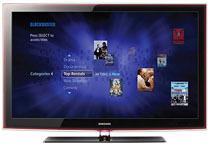 Samsung Adds Amazon and Blockbuster Support[teaser]Samsung has officially released the new firmware for their TVs, HTiBs, and Blu-ray players, which will enable access to Blockbuster and Amazon’s digital delivery services. [/teaser] Getting added value out of already purchased products feels so nice. Samsung’s definitely upped the ante by adding the pair of services to a fairly wide range of devices. Owners of Samsung Plasma Series 650 and above, as well as those having LEDs Series 7000 and above will now have access to Amazon’s Video on Demand service through an Internet@TV widget. This addition gives customers access to over 50,000 movies and television shows available for on demand rental or purchase. Over 2,000 of the titles are in high definition, and all can be viewed not only from the TV, but from computers and other compatible devices. Blockbuster On Demand has been added to the same line of TVs as Amazon’s service, but also to Samsung BD -P1600, BD-P3600 and BD-P4600 Blu-ray players and Samsung Blu-ray integrated Home Theater Systems HT-BD1250, HT-BD3252, HT-BD7200 and HT-BD8200. In a case of “you scratch my back and I’ll scratch yours” Blockbuster will begin carrying Samsung’s capable Blu-ray players in their stores. Source: Press Release (Amazon, Blockbuster)Posted Fri Oct 16, 2009 at 09:00 AM PDT by:
 -
 BluFocus Approved as Blu-ray Testing Center[teaser]The BluFocus testing facility has been approved as the first and only Blu-ray Disc Association approved testing center in the US. [/teaser] Already a comprehensive testing center for compatibility, verification and THX certification, BluFocus can add Blu-ray testing to the list. BluFocus has been officially approved by the BDA for the testing of Movie Player Verification as well as for BD-ROM Audio Visual Content, and is pending approval to officially test BD-ROM PC Application Software. "Our goal since inception has been to promote the Blu-ray format and ensure its success by offering testing and advisory services to all those creating Blu-ray products,” stated Paulette E. Pantoja, CEO and founder of BluFocus. “To be officially recognized and approved by the BDA is a compliment to our hard work and dedication to this format.” Compatibility and functionality are the aim of BluFocus, and though the BDA approval is new, you’ve likely experienced their work before. If you had what BluFocus calls “a seamless, issue-free customer experience” with discs like 'The Dark Knight,' you have BluFocus to thank. Source: Press ReleasePosted Fri Oct 16, 2009 at 07:00 AM PDT by:
 -
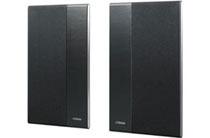 JVC’s Ultra Slim Speaker System Looks Amazing[teaser]It’s one of those products that’ll make you envious of Japanese consumers. JVC’s new wall mountable speaker system is just over an inch thick. [/teaser] At only 31mm thick, JVC’s SP-FT speakers may be the perfect visual complement to your flat panel television. Wall mountable and very slick looking, the SP-FT speakers will come in both black and white models. The audio quality may not be the best, and with a range of 110Hz to 23kHz you’ll almost certainly need a little low end support, but these 300mm high by 186mm wide speakers add some style at an unexpectedly reasonable price. The speakers alone are cool, but JVC added an amplifier – also 300mm high, 186mm wide and 31mm thick – to hang with them. The AX-FT will be colored to match the SP-FT speakers in black or white and features Dolby Digital , DTS, AAC and Linear PCM support. This four channel amplifier sports three optical inputs, one analog, and has an output of 80 watts. Both the speakers and amplifier release in Japan this fall, with black models hitting about a month before white. The SP-FT speakers will sell for the equivalent of about $225 US and the amplifier for around $270. Source: JVC (via Google Translate)Posted Thu Oct 15, 2009 at 01:30 PM PDT by:
 -
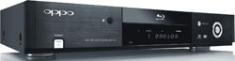 Oppo Drops DVD to Focus on Blu-Ray[teaser]Quite possibly the internet’s favorite brand, Oppo, is setting up in the UK to expand its Blu-ray business, which will be the main focus going forward. [/teaser] In a recent conversation with British home theater site Home Cinema Choice, a spokesman for Oppo revealed a bit about the company’s plans for the future. In a matter of a few months, Oppo plans to set up a base in the UK to expand the business of Blu-ray. As far as DVD goes, that time is over for Oppo according to spokesperson Pan Min. “We have sold out of DVD players and there are no more to come,” he states. “The DVD business is over for us. We are committed to Blu-ray.” Min also talks a bit about why the brand is so beloved. “We may be a very small company, but where we are different from the likes of Denon and Sony is that we listen to our customers. Feedback is really important.” Source: Home Cinema ChoicePosted Thu Oct 15, 2009 at 12:30 PM PDT by:
 -
 China Blue HD Format Hits the U.K.[teaser]While it’s certainly not looking like the start of a new format war, a European import retailer is now selling CBHD players in the United Kingdom. [/teaser] Putting politics aside, online retailer GBAX is now selling CBHD players in the U.K. Currently specific to China, CBHD players and discs may look familiar to those who backed Toshiba a few years ago, since the technology is based heavily on HD DVD. Details on the technical specs of the player in question are a bit fuzzy. The player outputs in 1080p via HDMI and is made by TCL. Other than that, they don’t say a lot. Perhaps the biggest issue facing CBHD adopters is that of movie selection, though GBAX assures that the player’s menu and display are in English, and that the format sports hundreds of Hollywood titles. As if to reassure buyers, the player does come with over a dozen free movies with several “western” titles including 'The Aviator,' 'Blood Diamond,' 'The Island' and 'Poseidon.' Shipping to the States is available, though a converter would be needed for power. The player runs 259 pounds, or around $410 US. Source: GBAXPosted Thu Oct 15, 2009 at 06:00 AM PDT by:
 -
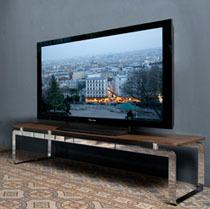 Plasma Defense Coalition Calls For End To Misinformation[teaser]Plasma displays could soon be banned for sale in California, but according to the PDC, the information leading to that ban is just plain wrong. [/teaser] The California Energy Commission has been considering a ban on plasma displays for some time now and it seems that the information they’re going by is a little bit off. Jim Polumbo, president of the Plasma Defense Coalition sums up some of the inaccuracies. “The Commission's FAQ document shows a chart that compares CRT, LCD, and Plasma technologies. However, they use three examples of products that have never been marketed in the United States,” he says of some of the information they’ve shown. “Further, the energy efficiency comparisons for these imaginary televisions are grossly exaggerated.” A chart on the CEC’s website comparing LED to plasma displays uses some fairly odd numbers as well. It states that a 42” LCD television – presumably the average – uses 203 watts, while a 42” plasma uses 271. According to Panasonic’s website, their new 42” Viera S1 plasma has an average power consumption of 173 watts. According to the PDC, Energy Star certified plasmas range from 142 to 195 watts, far under the 271 reported. Polumbo concludes, “We have objected to this inaccurate and misleading portrayal of our industry's finest products, especially given the enormous strides that our members have made to increase energy efficiency over the past several years.” Source: EarthtimesPosted Wed Oct 14, 2009 at 03:00 PM PDT by:
 -
 Dolby Brings the Surround Sound Experience to…EVERYTHING![teaser]High-Def Digest's man in the field attends a Dolby Laboratories shindig in Los Angeles and leaves mighty impressed![/teaser] By Michael S. Palmer Dolby Laboratories came to Los Angeles last week to demo, discuss, and display their current and emerging technologies. Keep in mind this wasn’t a specially designed lab. It was a few rooms in a hotel suite. Lots of glass. Wooden floors. Odd angles. About as far from sound-perfect as you can get. Just like my apartment, or your house. Yet Dolby sound soared. As a company that’s existed since 1965, it’s too easy to think of Dolby as that logo, quietly stamped onto computers, audio receivers, music / video playback devices, and Blu-ray / DVD discs. Too easy to forget that Dolby and its employees, through a need to innovate and enhance consumer content, are continuously raising the bar of audio reproduction. But what’s the difference between all their different brand names? How are they going to enrich my home entertainment experience? That’s really the question, isn’t it? Content providers must give us access to their entertainment on every conceivable platform because the modern world is somehow both insanely connected, yet desperately segmented: Cine and audiophiles strive for home theatre perfection. Gamers compete and interact with others in a global environment. Tweens, Teens, and Twenty-somethings absorb digital content exclusively on phones and PCs. And our parents… well, they still don’t even know how to program the VCR (P.S. - What’s a “V-C-R?”). Enter Dolby stage right. With a convenient set of products (based on Mensa-level mathematic algorithms) to help everyone get the fullest audio experience possible. Any where. Any time. On any platform. [Author’s note: Now I know full well, some of you are already screaming, “what about DTS???” Feel free to continue the endless “which one is better” debate all you want. Our purpose here is simply to let you know what Dolby has to offer now (and in the near future). Cheers.] For Traditional Home Theatre EnthusiastsPosted Tue Oct 13, 2009 at 01:15 PM PDT by:
 -
 Panasonic Talks 3D, Blu-ray, and the Future[teaser]Panasonic execs sat down with some members of the press for a roundtable event at CEATEC in Japan, and offered some interesting insight as to the future of the industry as they see it. [/teaser] They view 3D as a potentially huge market, which isn’t a surprise. Panasonic seems to recognize that there’s potential for failure, but they feel it’s important to establish themselves as being at the forefront of the new technology. Managing executive officer Takumi Kajisha feels that 3D is essential for Panasonic moving forward. “A strong brand must have competitive products like Apple's iPod and Sony's Walkman. Home 3D HD could be that breakthrough product for Panasonic,” he stated. They also spoke about why they perceive Blu-ray Recorders as being an unimportant product for the US. Yoshiyuki Miyabe, the officer in charge of digital network technology, states that while Blu-ray Recorders are big business in Japan “Our marketing people think there is no need for it in the U.S. given IPTV, TiVo [and] digital video recorders there now.” Source: TWICEPosted Tue Oct 13, 2009 at 11:00 AM PDT by: