-
 LG, Samsung, Sony and Valens Launch HDBaseT Alliance[teaser]And just what is the HDBaseT Alliance? Essentially, it’s a body for promoting and standardizing a way of getting uncompressed HD throughout your house. [/teaser] A networked home is a happy home. Music and movies in a networked home can stream wherever they want, without limitation. Bitrate often suffers, but it’s worth giving up for the added freedom. According to the HDBaseT Alliance, your bitrate will suffer no more. HDBaseT eliminates the need for a huge variety of wires and lets audio and video signals be carried through a single CAT5e cable. Multiroom distribution of uncompressed HD video over existing network cables sounds too good to be true, but the next bit is where things get a little crazy. “HDBaseT enables simultaneous multi-room distribution of uncompressed HD Multimedia,” explains LG research fellow ByungJin Kim, “as well as data, control and power over a single CAT5e cable.” Compatible hardware will of course be required, but the idea of using a single cord for all these purposes is pretty impressive, especially if your home is already wired for it. The HDBaseT Alliance will be at CES in January, and you can bet we’ll have some questions. Source: HDBaseT AlliancePosted Thu Dec 17, 2009 at 08:00 AM PST by:
 -
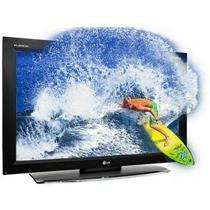 LG Sets Aggressive 3D TV Sales Goals[teaser]LG says they’ll sell four hundred thousand 3D televisions next year, and almost ten times that many in 2011. [/teaser] When they’re not wrestling with Vizio for the top seller spot or working on new products, the good folks at LG have decided to take up the hobby of forecasting. It was just a month or two back that we first heard of LG’s plans to be making OLEDs cheaper than LCDs by 2016. The latest forecast from the company seems to be just as ambitious. Currently, LG’s 3D capable televisions make up a pretty small piece of the pie. In a recent press conference, LG announced that in the year 2010, they expect to sell four hundred thousand 3D capable HDTVs. In 2011, they plan to sell 3.4 million. Analysts are quick to doubt the numbers, citing a lack of 3D content. Though the numbers seem high, it may help to think of them more as production numbers than as sales numbers. LG is going to make and ship televisions next year and a pretty small chunk of them will be 3D capable. By 2011, a fairly sizeable amount of all televisions they ship will be able to handle 3D. Whether consumers buy them because they can do 3D is another question. Source: ReutersPosted Wed Dec 16, 2009 at 02:00 PM PST by:
 -
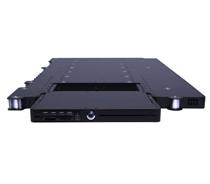 EdgeCenter HTPC Hides Behind Your TV[teaser]The piixL EdgeCenter 3770 is a home theater PC that mounts right onto your television. [/teaser] If you’re serious about having the freedom to access all of your personal content as well as streaming internet based video and audio, there really isn’t a better way to go than an HTPC. Of course, this presents the problem of space. Unless you’ve picked up an incredibly compact PC, chances are you don’t have a great place to put it in your otherwise organized home theater setup. The EdgeCenter hopes to solve that problem simply, thanks to compatibility with VESA mounting configurations. The EdgeBay chassis on the EdgeCenter is capable of attaching to most flat screen televisions on the market, and can be hidden completely behind televisions 37” or larger. Various configurations can be ordered, but the EdgeCenter doesn’t come cheap. The cheapest version available sells for around $4,000 plus $100 for shipping from the UK. Kicking everything up to full – which includes 24GB of DDR3 RAM, two Xeon Processors, and two terabytes of hard drive space – runs about $14,000. Source: pixxlPosted Wed Dec 16, 2009 at 01:55 PM PST by:
 -
 Technicolor Prepping For 3D in the Home[teaser]It’s been a long time since anything was filmed in Technicolor, but the stalwart company is still around. They’re one of the leading CD, DVD, and Blu-ray disc replicators in the country, and they say they’re ready for 3D Blu-ray, but it wasn’t as easy as one might expect. [/teaser] Ahmad Ouri, the chief marketing officer at Technicolor says that in some aspects, nothing is different. “On the replication side, it has been a pretty straight-forward process. We are using the same machines, and there are no major changes.” On the software side of things, 3D technology brought some unforeseen complications. Authoring and encoding tools had to be created, but so did new tools and methods for subtitling. The concern is that the images popping out of the screen will make the two dimensional subtitles more difficult to read. “We are building something new,” said Ahmad “and we want to be the first to deliver on all of these components. I have no doubt that in the first half of next year, our technology will be ready.” Nothing is official until the Blu-ray Disc Association finalizes specifications for the Blu-ray format. The announcement is expected sometime in the next few weeks. Source: Video BusinessPosted Wed Dec 16, 2009 at 07:00 AM PST by:
 -
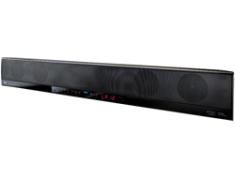 JVC Reveals Wireless Soundbar Systems[teaser]Two new soundbar based HTiBs have been announced by JVC. One, the TH-BA3, is more like a traditional home theater in a box. The other, the TH-BS7, is a standalone soundbar and subwoofer. [/teaser] The less expensive of the two products is the BA3. While the BA3 does feature a soundbar, it acts more as a replacement for the left, right and center channels than as a full surround system. The power amp, surround decoding and system controls are all built directly into the soundbar of the TH-BA3. The soundbar also houses the wireless transmitter for the included left and right surround speakers and wireless subwoofer. The BA3 sports an analog input as well as two optical inputs. It can decode Dolby Digital, DTS and Dolby ProLogic II and will run you around $549 when it hits later this month. The TH-BS7 is the sort of soundbar setup we’re more used to. The 4.1 channel soundbar – yes, 4.1 channel – has a slim design and measures only 1.4 inches tall. The included amplifier/control unit, which is wall mountable, is a touch smaller than that at only 1.2 inches. JVC’s BS7 soundbar offers a frequency range of 200Hz to 20kHz. It’s not a particularly impressive range, but a subwoofer is included to pick up the lows. The soundbar itself has four speakers, two for the left and right main channels and two for the left and right surrounds. Each speaker is driven by 20 watts, while the six inch subwoofer is powered by a 100 watt amp. The TH-BS7 ships before the end of the year and can be had for $599. Source: TWICEPosted Tue Dec 15, 2009 at 11:05 AM PST by:
 -
 Sanyo Sold to Panasonic for $4.6 Billion[teaser]We’ve been expecting this one for a while now, but it’s finally official. Panasonic has picked up Sanyo for over four and a half billion dollars. [/teaser] Company acquisitions seem to come in threes. First Comcast picked up NBC Universal, then Kodak’s OLED business was purchased by LG. The announcement that Panasonic has picked up Sanyo isn’t a surprise, but it does mark the third huge sale in the span of just over a week. Panasonic has talked at great length about their plans for the company, which specializes in batteries and solar energy. The first and most intriguing project mentioned is that of a home monitoring station for energy expenditure. By using the station, homeowners will be able to closely monitor their energy use right on their televisions. This would presumably include the amount of energy being used by Panasonic’s own plasma TVs. Panasonic recently announced a green initiative which, according to a company representative, will not affect the production of plasma displays. Though plasmas are heavily targeted as being inefficient with energy, Panasonic has no desire to give up a business in which they hold a great deal of market share. Source: The StreetPosted Mon Dec 14, 2009 at 02:30 PM PST by:
 -
 60Ghz Wireless Coming Thanks to WiGig Alliance[teaser]Forget all about 802.11g and Draft N. The future, according to WiGig, is in 60Ghz wireless technology, capable of transmitting data at up to 7Gbps. [/teaser] It’s been a long time coming, but the WiGig Alliance has finally announced the specifications for their new wireless streaming technology. There are a great many details including backwards compatibility and support for high and low power versions of WiGig. The real story though, is in the streaming speed. Seven gigabits per second is more than ten times faster than wireless N. It’s a higher bitrate than that of standard DVDs, and higher than Blu-ray discs. What this means from a practical standpoint is that wireless devices are about to get a lot more useful. Though WiGig says we won’t be seeing this standard in products anytime soon – it’s being made available to member companies at the beginning of 2010 – they hope to see it in a wide range of electronics. Dr. Ali Sadri, chairman of the WiGig Alliance puts it thusly. “We're rapidly paving the way for the introduction of the next generation of high-performance wireless products – PCs, mobile handsets, TVs and displays, Blu-ray disc players, digital cameras and many more.” Wireless streaming at this speed would make networked video and audio almost a no brainer. Hopefully they’ll have some dates for us by the time CES rolls around. Source: InformationWeekPosted Mon Dec 14, 2009 at 12:30 PM PST by:
 -
 The HD Advisor's 39 StepsEditor's Note: Each Friday, High-Def Digest's own HD Advisor will answer a new round of questions from our readers. If you have home theater questions you need answered, send an email to [email protected]. If you've already sent a question and don't see it answered yet, please be patient as we work our way through them. To browse through previously answered questions, visit the main HD Advisor page. Answers by Joshua Zyber Forced Trailers via BD-Live Q: Your recent answer about playback issues with 'Starship Troopers' reminded me of something that I've seen happen with a growing number of BD-Live discs. I have a Samsung BD-P3600, which is connected to the Internet but is set to prohibit BD-Live connectivity. My housemate has a Panasonic DMP-BD60, which isn't connected at all. With two separate recent Universal discs – 'Battlestar Galactica: The Plan' and 'Funny People' - we've experienced freezing on our players unless we allow connectivity, at which point the discs will stream additional trailers over the Internet at the point where the freezing occurred. I assume they're being streamed because they come in at 480p and aren't there otherwise. I find it hard to believe that the majority of BD players are connected to the Internet at all, and discs somehow being unplayable on them unless they are connected seems ridiculous. And, of course, I'm not exactly filled with enthusiasm at the BD-Live experience expanding to more advertising before I get to the movie that I've paid for, which is something I'd actually become more amenable to when the trailers were 1080p. Could you shed any light on the issue? A: I've also noticed this trend of streaming trailers before the main menu on recent Universal Blu-rays. Specifically, I've found it on 'Drag Me to Hell' and 'Lock, Stock and Two Smoking Barrels'. What I find truly ridiculous is that one of the ads is the studio's Blu-ray promo trumpeting the superiority of the high-def format over DVD, which usually streams in 720p resolution at best, and sometimes downgraded all the way to standard-def! I've long been critical of studios that force trailers before the disc menus. We pay to own these discs. We shouldn't have to endure advertisements before we can watch the movie. And the notion that a Blu-ray owner needs to be told how great Blu-ray is really strikes me as pointless and absurd. However, if the studio is intent on doing this, I suppose that BD-Live at least allows them to refresh the ads so that we don't have to watch the same old trailers every time. Theoretically, we should also be able to skip the trailers altogether if we disable BD-Live in the Blu-ray player. Unfortunately, as you've discovered, the complexity of Java programming often causes compatibility problems with many Blu-ray players, especially if the disc is searching for but doesn't find a BD-Live connection. To test this, I tried both 'Drag Me to Hell' and 'Lock, Stock' in four different BD-Live capable Blu-ray players, first with the internet connection enabled, and then again with the Ethernet cable disconnected. The players were an OPPO BDP-83, a Playstation 3 (original model), an LG BH200, and a Philips BDP7300. Luckily, in my case, I was able to get both discs to play on all machines regardless of whether BD-Live was active or not. (Obviously, both loaded faster without BD-Live.) Oddly, even with BD-Live connected, it seemed to be a crapshoot as to whether I'd get forced trailers or not. Sometimes I didn't. I don't write this to discount the problems you've had. It's a sad reality of the Blu-ray format that Java and BD-Live frequently cause an inconsistent user experience from one player model to another. Considering how dull and frankly worthless most BD-Live features have been to date, I think we'd all be better off if the studios would just drop them and make their discs simpler. Why Don't All Movies Have Reference Quality Video? Q: Obviously all films do not have the same picture quality. What can be done during filming and post-production to ensure that a movie has the best picture quality possible? A: Your question is more complex than it seems at first glance. I'd like to answer your specific query first, and then expand a little to the subject of why not all movies look the same as one another in the first place. What we in the home theater community typically define as "reference quality video" usually consists of a picture that's bright and sharp, has vivid colors, rich contrasts, and very little grain. When all these factors come together, they can create that so-called "3-D Pop" quality that looks so appealing on an HDTV screen. Filmmakers who wish to photograph their movies in this slick and glossy style do so with a combination of the right cameras, the right lenses, the right film stocks, and (perhaps most importantly) a whole lot of light. A good cinematographer will have plenty of experience testing each of these components to create the image characteristics he's looking for. For example, different film stocks have different "speeds" (which determine how much light they require to expose an image), as well as different grain, color, and contrast properties. "Fast" film stocks are better at producing a visible picture in low-light situations, but are generally grainier. "Slow" film stocks have a finer grain structure, but require more light, and thus are better suited for brighter shooting conditions (such as daylight scenes). You'll notice that very often the movies most likely to give you that "3-D Pop" are big-budget studio productions. That's because the slickest, least grainy photography requires that a tremendous amount of light be exposed onto the film. This usually means rigidly-controlled lighting conditions. You need a lot of big lamps and precise command over where they're placed and how bright they are. Shooting on a studio soundstage helps. You'd probably be amazed at how much light can be needed to shoot a "dark" nighttime scene. What you see by eye on set may be very different than what gets exposed onto the film. Even daylight scenes are frequently augmented by additional lamps. Of course, the more lighting you have on set, the more restrictive your shooting conditions are. You certainly don't want any of those lamps to appear in a shot. Modern film stocks have much more latitude in this regard than those used in previous decades. Today's filmmakers can get away with much looser shooting conditions and still produce a relatively slick image. Nevertheless, these general rules still apply. And they're just as true with digital video as with celluloid. Video shot in low light causes noise rather than grain. The principle is the same, but the texture of the image is different. For an example of a digitally-shot movie with a lot of low-light noise, see 'Miami Vice'. With all that said, what you need to keep in mind is that not all movies are meant to look the same as one another. Nor should they be. If they did, cinema would grow very stagnant and boring. In some cases, photographic quality is dictated by budget. Many low-budget movies can't afford fine-grained film stock or intensive lighting design. In other cases, it may be a factor of the director's desire to shoot in a looser, free-wheeling style unencumbered by soundstages and massive lighting rigs. Or, he/she may wish to shoot in locations that can't support large film crews. Practical considerations like these can play a big part in how a movie looks. Above all else is the subject of artistic intent. Even with the biggest budgets and all the studio resources in the world at their disposal, some movies are simply not meant to look "clean" or "slick." Different filmmakers will use different stylistic techniques to convey specific tones and emotions. Would the battle sequences in 'Saving Private Ryan' be anywhere near as effective if they'd been shot with glossy, grain-free photography and popping comic book colors? Certainly not. Film grain is to photography what brush strokes are to a painting. They provide texture to the image, and can be very beautiful when employed purposefully. For a movie with a lovely, painterly use of film grain that has been accurately captured on Blu-ray, I recommend 'Wings of Desire'. That noisy video in 'Miami Vice' is also used to create a specific mood that the director felt wouldn't have been the same if shot differently. Control over these textures is an important tool that a filmmaker uses to tell his story. In the end, what we define as "reference quality video" is largely subjective. What's truly important in a good Blu-ray transfer is that the disc accurately captures what the filmmaker shot, whether that gives a lot of "pop" on an HDTV screen or not. Homework Assignment: You Be the Advisor The HD Advisor knows many things, but he doesn't know everything. Some questions are best answered with a consensus of opinions from our readers. If you can help to answer the following question, please post your response in our forum thread linked at the end of this article. Your advice and opinions matter too! Connecting a Computer Blu-ray Player to an External Display Q: I saw your question regarding hooking up a Blu-ray player to a laptop, and it made me think of the issue I have. The issue I have is when I connect my Blu-ray capable laptop via HDMI to my TV, the sound is not part of the deal. Some digging got the answer that because the audio and video are processed separately on a computer, there is no way for the sound to be transmitted to the TV through HDMI. Something like the sound card and video card are separate entities, and the video has the HDMI video output only. The laptop in question is an HP Pavillion dv6880se bought in 2008. Do newer systems have this solved? What about on a desktop system, are there similar issues? Check back soon for another round of answers. Keep those questions coming. Joshua Zyber's opinions are his own and do not necessarily reflect those of this site, its owners or employees.Posted Fri Dec 11, 2009 at 11:02 AM PST by:
 -
 Kodak’s OLED Business Picked Up by LG[teaser]LG’s lofty goals for affordable OLED screens are inching closer, thanks to the acquisition of Kodak’s OLED business. [/teaser] Over the past weekend, we all did some shopping. You probably went out and took advantage of one of many holiday sales, grabbed a Blu-ray from Amazon, or picked something up from your favorite deal of the day site. LG did some shopping too, and for their early Christmas present, they nabbed an OLED display business. It was a team of engineers at Kodak who first created and developed OLED technology, and who made some great strides in working with OLED over the past two decades. They were at the head of the OLED line, but as far as making displays of their own, Kodak’s Laura G. Quatela says it’s just not practical. “Our OLED intellectual property portfolio is fundamental, “she states. “However, realizing the full value of this business would have required significant investment.” LG on the other hand is a company with money to spare, especially for OLED. They’ve already announced a strong desire to lead the OLED market, and it wasn’t long ago that we heard about their plan to have OLED displays cheaper than LCDs by 2016. Details of the deal were not disclosed, aside from the mention that several lawsuits have been dropped in this deal, as LG and Kodak each had suits standing against the other. Source: Barron’sPosted Thu Dec 10, 2009 at 11:30 AM PST by:
 -
 WHDI 1.0 Specification Delivers Lossless 1080p/60[teaser]The quest for a wireless high definition solution may be at an end, as WHDI LLC has announced the adoption of the WHDI standard. [/teaser] Wireless HDMI was shown at CES in 2005, and boy did we get excited. At CES 2006, things moved forward a bit, and we were told that wireless HD connections were just around the corner. In 2007, we got the ‘just around the corner’ story again, and the same goes for 2008 and 2009. Forgive us then, if we’re a bit jaded. It’s hard not to get that glimmer of excitement though, especially since unlike other efforts which were spearheaded by a single manufacturer, WHDI is a standard backed by companies like Samsung, Sony, Sharp, LG, and Motorola. The new standard, which is expected to be baked into electronics as early as next year, supports data rates of up to 3Gbps. The range is stated to be greater than a hundred feet while still retaining a latency of less than one millisecond. Setting up a new television by simply plugging in the power without having to worry about other cabling issues is certainly an alluring concept. We’ll certainly be looking forward to a demonstration at CES 2010. Source: WHDI LLCPosted Thu Dec 10, 2009 at 10:00 AM PST by: