-
 What is HDR?Keeping track of the latest audio and video tech can be daunting. Thankfully, High-Def Digest has you covered. Welcome to our new Home Theater 101 series, where we'll be explaining emerging technologies while also recommending the very best possible A/V gadgets n' gear you can buy at your particular budget level. And when it comes to recent display advancements, few are as buzzworthy as HIGH DYNAMIC RANGE. But just what exactly is HDR and how does it work? And what's the deal with all of the competing formats? Fret not! [teaser]If you don't know the difference between HDR10 and Dolby Vision, this guide is here to breakdown the ins and outs of High Dynamic Range.[/teaser] So, without further ado, let's dive right into... HOME THEATER 101WHAT IS HDR? THE BASICS High Dynamic Range, or HDR for short, is an advanced display and image mastering technology used on select 4K TVs and Ultra HD content. The process uses expanded brightness to improve contrast between dark and light aspects of an image, bringing out deeper black levels and more realistic details in specular highlights -- like the sun reflecting off of an ocean -- in specially graded HDR material. This increased brightness performance is measured in nits. In general terms, the more nits a display can produce, the brighter the image and greater the HDR performance will be. The UHD Alliance currently requires LCD displays to produce more than 1000 nits peak brightness and less than 0.05 nits black level, or OLED displays to produce more than 540 nits peak brightness and less than 0.0005 nits black level to receive Ultra HD Premium Certification, ensuring an optimal HDR experience. With that said, there are still many displays that offer some level of HDR performance without reaching those numbers. In addition to enhanced contrast, HDR is often also bundled with support for a Wide Color Gamut (WCG), offering a greater range of colors than those found in traditional HD sources and TVs using the previous Rec. 709 standard. This means that WCG content and displays can now produce more realistic colors, providing a more true-to-life representation of an image. Though current Ultra HD and HDR specs provide support for the Rec. 2020 wide color gamut, wider color gamut content available now is typically produced in the DCI-P3 color space (aka the color space where commercial cinemas operate). Check out the chart below to see the differences between each gamut. The entire curve represents the full visible color spectrum. The smallest triangle represents the old Rec. 709 gamut; the solid triangle represents the wider DCI-P3 gamut; and the large dotted triangle represents the Rec. 2020 gamut. (Source: AVS Forum) As you can see, the Rec. 709 gamut is missing out on many of the colors covered by the larger DCI-P3 and Rec. 2020 color spaces, allowing the wider gamuts to produce hues that don't even exist in the previous standard. When content is graded in HDR with WCG, the video is usually encoded with metadata. This metadata is then interpreted by an HDR display during playback, telling the TV what colors to render and how bright the HDR highlights should appear. HDR metadata is typically implemented in one of two ways: static or dynamic. Static metadata uses the same HDR-grading for the entire video, offering one expanded range for the full runtime. In practice, this type of metadata leads to some dim scenes looking darker than they were originally intended. Meanwhile, dynamic metadata is able to adjust brightness levels on a scene-by-scene or even frame-by-frame basis, offering a more accurate HDR experience. There are currently several different competing and co-existing HDR formats, with the three main options being: HDR10, HDR10+, and Dolby Vision, offering a variety of specific performance quirks, advantages, and disadvantages. HDR10 & HDR10+ The default HDR standard for most content, including Ultra HD Blu-ray discs, is HDR10, an open standard High Dynamic Range content and playback solution. The base HDR10 format uses static metadata while a new expanded version of the tech, called HDR10+, uses dynamic metadata. HDR10 and HDR10+ both support the Rec. 2020 color space, a bit depth of 10-bits, and mastering for up to 4,000 nits peak brightness with a typical target output of 1,000 nits. HDR10 playback is supported through the widest variety of displays on the market from manufacturers like Sony, Samsung, LG, VIZIO, TCL, and Hisense. HDR10 is also the required base HDR format for 4K Ultra HD Blu-ray discs. Likewise, HDR10 content is available through several streaming services like Netflix, VUDU, iTunes, and Amazon Prime Video, offering a growing collection of titles. In order to watch HDR10 content, users will need an HDR10 capable display with internal support for HDR10 streaming apps and/or an external Ultra HD Blu-ray player or HDR capable set-top box. The format requires an HDMI 2.0a connection for external sources and HDCP 2.2 compliance for copyrighted material. Likewise, AV receivers need to meet those same specs in order to pass-through HDR10 video from connected players. Meanwhile, the dynamic HDR10+ format is currently supported by all of Samsung's 2017 and 2018 HDR TVs. As of press time, the only source for HDR10+ content is Amazon Prime Video, though HDR10+ titles are expected to be released from 20th Century Fox and Warner Bros. later this year. Ultra HD Blu-ray players with HDR10+ support are also in the works from Samsung and Panasonic. Though HDR10+ dynamic metadata should only technically be possible over the new HDMI 2.1 spec, HDR10+ is expected to be able to work over the current HDMI 2.0 spec thanks to a process called "Infoframe," allowing for the addition of 24KB of metadata. Samsung already has the process working, but the method is still being finalized and is pending approval from the company's partners. On that note, it remains unclear if current HDMI 2.0 AV Receivers will need a specific HDR10+ firmware update to be able to pass-through the format. DOLBY VISION Serving as the main competitor to HDR10 and HDR10+, Dolby Vision is a proprietary end-to-end HDR format that covers content creation and playback. Versions of the format are available in cinemas and home theaters, with the theatrical implementation being an integral part of the Dolby Cinema process, which uses the Dolby Vision laser projection system. Currently, there are more than 100 Dolby Cinema locations around the globe (HERE is a list of Dolby Cinema at AMC locations here in the US). Meanwhile, for the home theater, Dolby Vision supports the Rec. 2020 color space, a bit depth of 12-bits, and a current target peak output of 4,000 nits and a max output of 10,000 nits. Dolby Vision uses dynamic metadata and needs more specific hardware than HDR10, initially requiring displays to include a special Dolby Vision chipset (though recent developments have made software solutions a possibility). Dolby Vision for the home theater is currently available on several displays from manufacturers like VIZIO, LG, TCL, and Sony. On the content side, Dolby Vision is an optional addition for HDR playback on 4K Ultra HD Blu-rays. Lionsgate, Warner Brothers, Paramount, Universal, Disney, Sony, and BBC have all released Ultra HD Blu-rays with Dolby Vision. In addition, Dolby Vision content is also available through streaming services like Netflix, Amazon Prime Video, iTunes, and VUDU. In order to watch Dolby Vision content, users will need a Dolby Vision-capable display with support for internal Dolby Vision streaming apps and/or a Dolby Vision capable Ultra HD Blu-ray player or set-top box. Unlike HDR10, Dolby Vision technically only requires an HDMI 1.4 connection, but copy-protected content still needs HDCP 2.2 compliance. Likewise, AV Receivers require specific Dolby Vision firmware to pass-through the format. ADDITIONAL HDR FORMATS Outside of the main HDR10 and Dolby Vision standards there are few other emerging high dynamic range formats as well. Most notably, there is the Hybrid Log Gamma, or HLG, standard developed by the BBC and NHK. The royalty free HDR format is geared toward delivering high dynamic range content over live broadcasts. And unlike other formats, HLG's HDR process doesn't actually use any type of metadata. HLG support is now offered on many displays, including models from LG, Sony, Samsung, and VIZIO. In addition, Technicolor's Advanced HDR solution is also geared toward broadcast high dynamic range, along with SDR to HDR conversion. According to Technicolor, Advanced HDR is actually "format agnostic and can take all HDR formats, as well as SDR formats, as inputs and then normalize and deliver all of them on any HDR or SDR device, ensuring a consistent experience in both HDR and SDR worlds." The tech is a combination of Technicolor HDR ITM which up-converts SDR to HDR, and Technicolor HDR which is able to distribute HDR and SDR content through one stream. So far, LG is the only manufacturer to make mention of Technicolor Advanced HDR support for its displays. WHICH HDR FORMAT IS BEST? Taking into account the industry's growing assortment of HDR methods, is there an easy pick for best format among the group? Well, not exactly, but based on what we've seen and know about the tech, dynamic metadata platforms definitely offer a notable edge over static metadata ones. There isn't enough content on the market just yet to fairly compare HDR10+ and Dolby Vision in order to declare a definitive winner, but both are generally capable of providing a superior HDR experience over standard HDR10. RECOMMENDED GEAR There are currently several great HDR display solutions on the market, covering a wide-range of price points and panel technologies. Here's a rundown of some recommended HDR gear available now... TCL 6-Series 65R617 65-Inch 4K Ultra HD Roku TV ($1,000) - TCL's 6-Series just might the feature the best performance to price ratio of any new display for 2018. The 4K TV features Dolby Vision and HDR10 support, along with the Roku OS smart TV platform. In addition, the set uses full array local dimming with 120 zones (96 on the 55-inch model) for improved black levels and contrast. Likewise, the panel incorporates NBP Photon technology with LED phosphors to provide Wide Color Gamut support. A 55-inch model is available as well for an introductory price of just $650. Order from Best Buy LG OLED65C8PUA 65" 4K Ultra HD OLED TV ($3,198) - As one of LG's top-of-the-line 2018 OLED TVs, this display offers some of the best overall picture quality on the market, including perfect blacks and the company's new α (Alpha) 9 intelligent processor for improved image and color performance over last year's models. In addition, the panel also supports onboard Dolby Atmos audio and LG's 4K Cinema HDR suite of high dynamic range formats with wide color gamut capabilities, including Advanced HDR by Technicolor, Dolby Vision, HDR10, and HLG (Hybrid Log-Gamma). Meanwhile, the TV's new ThinQ AI tech allows customers to take advantage of advanced voice assistant features by speaking directly into the remote, enabling users to search for information, images or videos through verbal requests. 55-inch ($2,297) and 77-inch ($8,997) C8 models are available as well. Order from Best Buy Samsung QN65Q9F 65" QLED 4K Ultra HD ($3,498, full review coming soon!) - As Samsung's top-of-line 2018 LCD display, the new Q9 QLED offers some of the industry's leading color volume and HDR brightness specs. And though blacks still aren't quite as impressive as an OLED panel, the company's return to full array local dimming results in fantastic contrast and a huge improvement over the 2017 Q9's edge-lit dimming. Quantum dot technology for wide color gamut coverage is featured as well, along with support for HDR10, HLG, and the new dynamic HDR10+ format. Smart TV functions with Bixby Voice control and a new Ambient Mode round out the premium package. A 75-inch ($5,998) model is also available. Order from Best Buy So, there you have it. Those are the basics of HDR. If you still have any questions about High Dynamic Range, please let us know in the forums! MORE HOME THEATER 101 ARTICLES -Best TVs to Buy on a Budget in 2018-Best 4K TVs for 2018-What is Dolby Vision?-What is Dolby Atmos?-What is DTS:X-What is LCD?-Best Sound Bars-Up-mixed: Dolby Surround vs DTS:Neural:X-Best Dolby Atmos Speakers-Best UHD Streaming Services-HDR Sucks: The Challenges & Frustrations of HDR10-4K Ultraviolet Headaches: How & Where To Redeem Digital Copies in 4K UHD EDITOR'S NOTE: This article was originally published in 4/28/2017. On 5/31/2018, we updated this post with additional information about HDR10+ as well as newly available HDR capable gear.Posted Thu May 31, 2018 at 09:15 AM PDT by:
 -
 What is Dolby Vision?Keeping track of the latest audio and video tech can be daunting. Thankfully, High-Def Digest has you covered. Welcome to Home Theater 101 series, where we'll be explaining emerging technologies while also recommending the very best possible A/V gadgets n' gear you can buy at your particular budget level. When it comes to recent cinematic and display advancements, few are as buzzworthy as DOLBY VISION. But just what exactly is Dolby Vision? And how does it compare to other competing HDR formats? Fret not! [teaser]If you don't know the difference between Rec. 709 and Rec. 2020, this guide is here to breakdown the ins and outs of Dolby Vision.[/teaser] So, without further ado, let's dive right into... HOME THEATER 101WHAT IS DOLBY VISION? THE BASICS Dolby Vision is a proprietary end-to-end High Dynamic Range (HDR) format that covers content creation and playback through select cinemas, Ultra HD displays, and 4K titles. Like other HDR standards, the process uses expanded brightness to improve contrast between dark and light aspects of an image, bringing out deeper black levels and more realistic details in specular highlights -- like the sun reflecting off of an ocean -- in specially graded Dolby Vision material. Versions of the format are available in cinemas and home theaters, with the theatrical implementation being an integral part of the Dolby Cinema process, which uses a dual-4K laser projection system for 500-times the contrast ratio of conventional projection systems (1,000,000 to 1!), pure black levels, expanded color gamut capabilities, and twice the brightness (up to 31fL). Currently, there are more than 100 Dolby Cinema locations around the globe (HERE is a list of Dolby Cinema at AMC locations here in the US). For the home theater, Dolby Vision grading supports a typical target peak output of 4,000 nits -- though the format can support up to 10,000 nits. In general terms, the more nits a display can produce, the brighter the image and greater the HDR performance will be. And since flagship Ultra HD Premium displays on the market now max out at about 2,500 nits, the Dolby Vision format has been designed with support for both current and future hardware in mind -- a notable advantage over the base HDR10 and dynamic HDR10+ format. In addition to enhanced contrast, Dolby Vision is also bundled with support for a Wide Color Gamut (WCG) and a bit depth capability of 12-bits (at the present time, content is graded in 10-bit), offering a greater range of colors than those found in traditional HD sources and TVs using the previous Rec. 709 standard and 8-bit tech. This means that Dolby Vision content and displays can now produce more realistic colors, providing a more true-to-life representation of an image. Check out the chart below to see the differences between each gamut. The entire curve represents the full visible color spectrum. The smallest triangle represents the old Rec. 709 gamut; the solid triangle represents the wider DCI-P3 gamut; and the large dotted triangle represents the Rec. 2020 gamut. (Source: AVS Forum) As you can see, Rec. 709 is missing out on many of the colors covered by the larger DCI-P3 and Rec. 2020 color spaces, allowing the wider gamuts to produce hues that don't even exist in the previous standard. Though the Dolby Vision spec provides support for Rec. 2020, only three-to-four productions have used it (Inside Out, The Good Dinosaur, The LEGO Batman Movie, and possibly Guardians of the Galaxy Vol. 2), and there are no consumer display technologies currently capable of reproducing the full gamut. As such, current gen Dolby Vision movies and enabled-displays reproduce a color space closer to DCI-P3 (aka the color space where commercial cinemas operate). When content is graded in Dolby Vision, the video is encoded with metadata. This metadata is then interpreted by a Dolby Vision display during playback, telling the TV what colors to render and how bright or dark the HDR highlights should appear. Unlike like the standard HDR10 format which uses static metadata, Dolby Vision uses dynamic metadata for its workflow. Static metadata does not change during playback, offering one fixed HDR picture enhancement across an entire piece of content. In practice, this can lead to inconsistent HDR quality in certain scenes, especially if a movie has an overall bright color palette mixed in with a few dimly lit sequences. Dolby Vision dynamic metadata, on the other hand, can adjust brightness levels, color saturation, and contrast on a scene-by-scene or even frame-by-frame basis, producing images that are closer to the director's intent. REQUIREMENTS FOR DOLBY VISION In order to watch Dolby Vision content, users will need a Dolby Vision-capable display with internal Dolby Vision supported media apps. And for external playback, customers will also need a Dolby Vision capable Ultra HD Blu-ray player or set-top box. Unlike HDR10, Dolby Vision technically only requires HDMI 1.4 connections, but copy-protected content still needs HDCP 2.2 compliancy and AV receivers need specific Dolby Vision firmware. Though the format initially required gear to include special Dolby Vision chipsets, recent developments have made software solutions a possibility. Dolby Vision for the home theater is currently supported on several displays from manufacturers like VIZIO, LG, TCL, Sony, and Hisense -- making Samsung the only major manufacturer to not include the tech in its display models. Meanwhile, Ultra HD Blu-ray players with integrated Dolby Vision playback (or future support via upcoming firmware updates) are available from brands like LG, Sony, Oppo, and Philips. In addition, select media players like the Apple TV 4K also support Dolby Vision. DOLBY VISION VS HDR10+ In addition to Dolby Vision, the competing HDR10+ format also offers very similar HDR dynamic metadata capabilities -- but there are a few differences between the two, particularly when it comes to how future-proof each platform is. While both formats allow for mastering with dynamic metadata and support for WCG (up to Rec. 2020), Dolby Vision offers support for a higher bit depth of 12-bits versus the 10-bits used for HDR10+ content. In essence, this means that titles graded with Dolby Vision have the potential to offer a much larger range of colors. With that said, no 12-bit TV panels are currently available, so this distinction is a moot point for now. Meanwhile, when it comes to target brightness, HDR10+ content is typically mastered for a peak of 1,000 nits and is able to support mastering for up to 4,000 nits. In contrast, Dolby Vision content is graded for a target peak of 4,000 nits and the format can support up to 10,000 nits. As was the case with bit-depth, however, consumer TVs can't take full advantage of Dolby Vision's higher nit grading just yet, as current flagship displays max out at about 2,500 nits. Finally, HDR10+ is an open, royalty free high dynamic range platform with only a nominal administrative fee required for use. In contrast, companies have to pay a royalty for implementing Dolby Vision tech into their products. DOLBY VISION CONTENT On the content side, Dolby Vision is an optional addition for HDR playback on Ultra HD Blu-rays (the default standard is HDR10). Lionsgate, Warner Brothers, Paramount, Universal, Disney, Sony, and BBC have all released Ultra HD Blu-rays with Dolby Vision, including many recent titles and popular catalogue films like Black Panther, Star Wars: The Last Jedi, The Matrix, Gladiator, Saving Private Ryan, and more. In addition, Dolby Vision content is also available through streaming services like Netflix, Amazon Prime Video, iTunes, and VUDU, offering a growing collection of titles, including original shows like Stranger Things, Daredevil, and Marco Polo, and popular films like Pacific Rim, Suicide Squad, Star Trek Beyond, Mad Max: Fury Road, Lucy, The Lego Movie, Edge of Tomorrow, Batman v. Superman, The Great Gatsby, and more. RECOMMENDED GEAR There are several great Dolby Vision display and media player solutions on the market right now, covering a wide-range of price points and technologies. Here's a rundown of some recommended Dolby Vision gear... TCL 6-Series 65R617 65-Inch 4K Ultra HD Roku TV ($1,000) - Offering several advanced features normally reserved for more expensive sets, TCL's 6-Series just might offer the best performance to price ratio of any new display for 2018, cementing itself as one of, if not the, top 65-inch 4K TV in the $1,000 price range. The display includes Dolby Vision and HDR10 support, along with the Roku OS smart TV platform. In addition, the set uses full array local dimming with 120 zones (96 on the 55-inch model) for improved black levels and contrast. Likewise, the panel incorporates NBP Photon technology with LED phosphors to provide Wide Color Gamut support. A 55-inch model is available as well for an introductory price of just $650. Order from Best Buy (Note: The Best Buy model does not include Voice Remote) VIZIO P-Series 65-inch 4K Ultra HD TV ($1,300) - Marked by some notable performance upgrades over the 2016 and 2017 models, the new 2018 P-Series once again cements itself as one of the industry's premiere bang-for-your buck TVs. The 4K display offers full array local dimming with 100 zones on the 65-inch set. Dolby Vision, HDR10, and HLG high dynamic range formats are all supported with UltraBright 1,000 for up to 1,000 nits of peak brightness, and Ultra Color Spectrum tech provides nearly 100% coverage of the P3 wide color gamut and about 72% coverage of the Rec. 2020 wide color gamut. The SmartCast OS is used for integrated on-screen streaming apps and the ability to cast even more from a mobile device. And unlike 2017 VIZIO displays, this TV does feature an integrated tuner for OTA broadcasts with a digital antenna. Units are also available in 55-inch and 75-inch (coming soon) sizes. Order from Best Buy LG OLED65C8PUA 65" 4K Ultra HD OLED TV ($3,198) - As one of LG's top-of-the-line 2018 OLED TVs, this display offers some of the best overall picture quality on the market, including perfect blacks and the company's new α (Alpha) 9 intelligent processor for improved image and color performance over last year's models. In addition, the panel also supports onboard Dolby Atmos audio and LG's 4K Cinema HDR suite of high dynamic range formats with wide color gamut capabilities, including Dolby Vision, Advanced HDR by Technicolor, HDR10, and HLG (Hybrid Log-Gamma). Meanwhile, the TV's new ThinQ AI tech allows customers to take advantage of advanced voice assistant features by speaking directly into the remote, enabling users to search for information, images or videos through verbal requests. 55-inch ($2,497) and 77-inch ($8,997) C8 models are available as well. Order from Best Buy Apple TV 4K ($179) - Utilizes the A10X Fusion chip and offers 4K playback capabilities at up to 60 frames per second with support for Dolby Vision and HDR10 content. In addition, the device includes 4K scaling for HD sources, Siri voice search, iCloud support for media sharing, standard AirPlay capabilities, and the ability to serve as a smart home hub for HomeKit accessories with remote access and automated control. Unfortunately, the unit does not currently offer Dolby Atmos playback. So, there you have it. Those are the basics of Dolby Vision. If you still have any questions about Dolby Vision, please let us know in the forums! MORE HOME THEATER 101 ARTICLES -Best TVs to Buy on a Budget in 2018-Best 4K TVs for 2018-What is HDR?-What is Dolby Atmos?-What is DTS:X-What is LCD?-Best Sound Bars-Up-mixed: Dolby Surround vs DTS:Neural:X-Best Dolby Atmos Speakers-Best UHD Streaming Services-HDR Sucks: The Challenges & Frustrations of HDR10-4K Ultraviolet Headaches: How & Where To Redeem Digital Copies in 4K UHDPosted Thu May 31, 2018 at 09:00 AM PDT by:
 -
 Everything Coming to iTunes & the Apple TV App in June 2018[teaser]Check out all the new digital titles coming to the iTunes library and Apple TV App in June.[/teaser] Apple has revealed the June lineup of movies and TV shows set to hit iTunes. The collection includes films like Pacific Rim: Uprising, Sherlock Gnomes, Blockers, A Quiet Place, and Rampage, along with series like Silicon Valley: Season 5, Barry: Season 1, Marvel's Luke Cage, and more. And beyond iTunes, Apple has also compiled a list of June streaming titles set to be available via the Apple TV App on iPhone, iPad, and Apple TV devices. The Apple TV App allows users to browse through content from over 60 video services without switching from one app to the next, including titles from Amazon Prime Video, HBO Now, Showtime, CBS All Access, Hulu, and many other pay-TV subscriptions. Here's a full rundown of June iTunes titles per Apple: Movies 6/1 - Mary Shelly 6/5 - Pacific Rim Uprising 6/5 - Sherlock Gnomes 6/5 - Flower 6/5 - How to Talk to Girls at Parties 6/5 - I Can Only Imagine 6/5 - Midnight Sun 6/8 - Horses: Patti Smith and her Band 6/12 - 7 Days in Entebbe 6/12 - Paul, Apostle of Christ 6/15 - Loving Pablo 6/18 - Bernard and Huey 6/19 - Alex and Me 6/19 - Blockers 6/19 - Beirut 6/22 - Ronnie Coleman: The King 6/26 - A Quiet Place 6/26 - Rampage 6/26 - Woman Walks Ahead 6/26 - Gemini 6/29 - The Catcher Was a Spy 6/29 - Ideal Home TV *Full seasons in bold 6/11 Silicon Valley Season 5 6/15 SMILF Season 1 6/18 Barry Season 1 6/18 Farrenheit 451 6/22 Marvel’s Luke Cage And here's a rundown of June streaming titles set to arrive from various digital services through the Apple TV App: 6/3 Succession (HBO NOW) 6/3 Wrong Man (Starz) 6/4 Pose (FX) 6/4 Dietland (AMC) 6/5 Humans Season 2 (AMC) 6/7 Marvel’s Cloak & Dagger (Freeform) 6/7 Nashville, Season (CMT) 6/8 American Woman (Paramount Network) 6/8 Preacher Season 3 (AMC) 6/10 Claws Season 2 (TNT) 6/11 The Tony Awards (CBS All Access) 6/12 The Bold Type Season 2 (Freeform) 6/13 Million Dollar Listing New York Season 7 (Bravo) 6/14 Strange Angel (CBS All Access) 6/15 Goliath Season 2 (Prime Video) 6/16 12 Monkeys Season 4 (SYFY) 6/17 Shades of Blue Season 3 (NBC) 6/17 The Affair Season 3 (Showtime) 6/18 MTV Movie & TV Awards hosted by Tiffany Haddish) (MTV) 6/19 Love is ______, (OWN) 6/20 Yellowstone (Paramount Network) 6/21 Queen of the South Season 3 (USA) 6/21 Shooter Season 3 (USA) 6/24 Preacher Season 3 (AMC) Source: iTunesPosted Wed May 30, 2018 at 01:45 PM PDT by:
 -
 LG Launches Amazon Alexa Device Support for 2018 ThinQ Smart TV Lineup[teaser]The displays are now compatible with Alexa-enabled devices.[/teaser] LG has announced the launch the of the LG SmartThinQ Skill for Amazon Alexa. With the new skill, users who own a 2018 LG OLED TV or 2018 LG SUPER UHD TV with AI ThinQ can now control their display via voice commands through an Alexa-enabled product. "The addition of Amazon Alexa compatibility to our 2018 LG AI-enabled TVs spotlights LG’s commitment to developing category-leading TVs that combine innovative technologies with the widest range of convenient, user-friendly interfaces," said Tim Alessi, head of home entertainment product marketing at LG Electronics USA. "LG’s open platform-open partnership- open connectivity ecosystem enables LG AI products to work with the most popular smart platforms to deliver the most convenient and customized smart home experience tailored to a consumer’s specific lifestyle." The LG SmartThinQ Skill is compatible with existing Alexa-enabled devices, including Amazon Echo, Echo Show, Echo Dot, Echo Spot and Echo Plus units, enabling voice control for TV functions like volume, play, pause, start, stop, fast forward, channel selection, and content search. Likewise, the feature also allows customers to open specific LG webOS Smart TV apps through simple commands like "Alexa, ask LG to launch YouTube on my bedroom TV." In addition, users can ask Alexa to talk to their LG display in order to control other supported Wi-Fi-enabled smart appliances in their connected ecosystem. And beyond compatibility with Amazon Alexa-enabled devices, LG's 2018 OLED and SUPER UHD TVs also feature LG's own ThinQ AI tech with Google Assistant for integrated voice control via the included remote control. Likewise, 2018 LG ThinQ TVs can be controlled through separate Google Assistant products (like the Google Home) as well. Source: LGPosted Tue May 29, 2018 at 06:00 AM PDT by:
 -
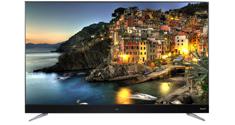 HDD Gear Deals: Up to $300 Off TCL C-Series 4K HDR Roku Ultra HD TVs[teaser]C-Series Ultra HD Roku TVs are on sale now![/teaser] In celebration of Memorial Day Weekend, TCL and Amazon are offering big discounts on the 55-inch and 65-inch TCL C-Series 4K HDR Roku TVs. The 2017 models offer several advanced features like Dolby Vision HDR and wide color gamut support for very affordable prices. Here's a rundown of the current deals: TCL 55C807 55-inch 4K HDR Roku TV - Currently $499, $200 off MSRP of $699. TCL 65C807 65-inch 4K HDR Roku TV- Currently $799, $300 off MSRP of $1,099. The C-Series displays feature edge-lit LCD panels with support for the Dolby Vision and HDR10 high dynamic range formats, along with wide color gamut capabilities and NBP Photon technology. Likewise, the sets also use the Roku OS smart TV platform with access to more than 4,000 streaming channels and 450,000+ movies and TV episodes. An advanced remote offering voice search and a headphone jack for private listening, high-speed 802.11ac wireless and Ethernet networking, and three HDMI 2.0a ports with HDCP 2.2 are integrated as well. In addition, the C-Series uses a super slim, elegant design. And beyond the 2017 C-Series, TCL recently released its new 2018 6-Series and 5-Series 4K HDR Roku TVs. Both models are now featured on our list of Best TVs to Buy on a Budget in 2018. These deals will only be active for a limited time while supplies last. Make sure to stay tuned to High-Def Digest for more sales and special promotions! Source: TCLPosted Fri May 25, 2018 at 01:30 PM PDT by:
 -
 Dolby Opens 100th Dolby Cinema at AMC Location in the US[teaser]The premium cinema format is now available in even more theaters.[/teaser] Dolby and AMC have announced the opening of the 100th Dolby Cinema at AMC location in the US. The new site is featured at the AMC Loews 34th Street 14 in New York City. "Opening the 100th Dolby Cinema at AMC location is a momentous event," said Doug Darrow, Senior Vice President, Cinema Business Group, Dolby Laboratories. "Dolby and AMC embrace a shared passion to deliver a best-in-class, unforgettable entertainment experience. Our growth was made possible by the incredible response from moviegoers, studios, and filmmakers." Dolby Cinema is a premium theater format that uses the Dolby Vision laser projection system to deliver high dynamic range images with expanded colors and enhanced contrast. Likewise, Dolby Cinema also uses Dolby Atmos object-based mixing to create an immersive surround sound experience with overhead audio. In addition, Dolby Cinema at AMC theaters have been designed with comfort in mind, offering reserved recliners with seat transducers. "Dolby Cinema at AMC provides an unparalleled movie-going experience and the guest response around the country has been remarkable," said John McDonald, Executive Vice President, US Operations, AMC. "To reach 100 locations in just three years is a testament to the strong partnership between Dolby and AMC, but also to the strong preference of moviegoers to enjoy their movies in the powerful and captivating environment that Dolby Cinema at AMC provides." Upcoming films set to be shown at Dolby Cinema locations include Ocean’s 8, Incredibles 2, Jurassic World: Fallen Kingdom, Mission: Impossible – Fallout, Mamma Mia! Here We Go Again, The Equalizer 2, BlacKkKlansman, Venom, A Star is Born, Bohemian Rhapsody, Fantastic Beasts: The Crimes of Grindelwald, Aquaman, and more. For a full list of US Dolby Cinema at AMC locations, click here, and for more info about tickets and showtimes, click here. And beyond the US, more Dolby Cinema sites are located in China, Europe, and the Middle East. Source: DolbyPosted Fri May 25, 2018 at 12:15 PM PDT by:
 -
 Amazon Echo Records & Shares Family's Conversation Without Their Knowledge[teaser]Alexa has been up to no good.[/teaser] According to a report by The Washington Post and Seattle news station KIRO 7, an Amazon Echo mistakenly recorded a family's conversations and then sent them to a person in their contacts list without their knowledge. Though apparently just an elaborate fluke, the issue raises some pretty big questions about privacy in the age of smart speakers and always-connected recording devices. The incident occurred in Portland, Oregon two weeks ago when the family in question received a distressing phone call from one of the husband's employees. The caller alerted the family to shut off their Alexa for fear they were "being hacked." It turns out the Echo had sent recordings of the family to the man without the family ever knowing. According to Amazon via an email statement to the Post, the Echo woke up when it heard a word it mistook for "Alexa." It then incorrectly interpreted the family's conversation as a "send message" request. The device then apparently asked "To whom?" out loud and then misheard the background talk as a name from the family's contact list. In response to the glitch, Amazon told the Post, "As unlikely as this string of events is, we are evaluating options to make this case even less likely." Spying concerns about Alexa devices have arisen before, particularly when a flaw was discovered last month that allowed Echo units to continue listening to customers without their knowledge. Though Amazon fixed the issue after being warned of its existence, continued mistakes like the one in Portland show that the company still has more kinks to work out when it comes to protecting its users' privacy. Smart speakers and even televisions with microphones and voice recognition are becoming increasingly popular additions to many modern households, offering hands-free streaming, control of other smart products, and AI assistant features. But as Alexa's growing pains reveal, we should probably still be very careful about what we say around our appliances. Source The Washington PostPosted Fri May 25, 2018 at 10:35 AM PDT by:
 -
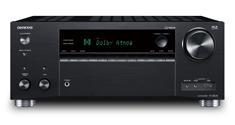 Onkyo Reveals New 9.2-Channel RZ Series Receivers[teaser]Three new receiver models have been detailed.[/teaser] Onkyo has announced the latest additions to its RZ Series of AV receivers. The collection includes the THX Certified Select TX-RZ830 9.2-Channel Network AV Receiver ($1,399) and TX-RZ730 9.2-Channel Network AV Receiver ($1,099), and the TX-RZ630 9.2-Channel Network AV Receiver ($899). The TX-RZ830 is rated for 120 W/Ch (8 ohms, 20 Hz–20 kHz, 0.08% THD, 2 channels driven, FTC) or 250 W/Ch (6 ohms, 1 kHz, 10% THD, 1 channel driven). Meanwhile, the TX-RZ730 has 100 W/Ch (8 ohms, 20 Hz–20 kHz, 0.08% THD, 2 channels driven, FTC) or 225 W/Ch (6 ohms, 1 kHz, 10% THD, 1 channel driven). Lastly, the TX-RZ630 offers 90 W/Channel (8 ohms, 20 Hz–20 kHz, 0.08% THD, 2 channels driven, FTC) or 215 W/Channel (6 ohms, 1 kHz, 10% THD, 1 channel driven). All three 9.2-channel models feature support for Dolby Atmos and DTS:X immersive audio configurations. In addition, the TX-RZ830 and TX-RZ730 also include 11.2-multichannel pre-outs and processing to support up to 7.2.4 speaker setups when paired with a separate stereo amp. HDCP 2.2 compliant HDMI video pass-through is implemented on all three models for 4K/60p, BT.2020, 4:4:4, 24-bit, HDR10, HLG (Hybrid Log-Gamma), and Dolby Vision signals. Likewise, the collection offers AccuEQ Advance room acoustic calibration technology, along with Wi-Fi, Bluetooth, AirPlay, Chromecast built-in, FlareConnect, and DTS Play-Fi connectivity. Finally, the lineup will also be among the first Onkyo receivers to include "Works with Sonos" certification, allowing the receivers to integrate into a user's existing Sonos ecosystem with a Sonos Connect. When the receivers are paired to a Sonos Connect, customers can send any music or source from the Sonos app to the receiver. Likewise, users can group their receiver to other Sonos devices on the network (firmware for this feature will arrive in June). Source: OnkyoPosted Wed May 23, 2018 at 02:00 PM PDT by:
 -
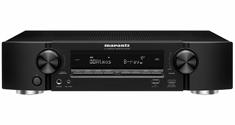 Marantz Details New NR1609 & NR1509 Slim Network AV Receivers[teaser]The new receivers feature space-saving designs.[/teaser] Marantz has detailed the latest additions to its home audio lineup. The new 5.2-channel NR1509 ($549) and the 7.2-channel NR1609 ($749) both offer slim profiles for easier placement. "Marantz has a legacy of providing absolute top-notch audio solutions for consumers who value sound quality, visual clarity, ease-of-use and beauty above all else," said Emmanuel Millot, global brand director at Marantz. "The latest slimline network receivers continue to embody this tradition of excellence. Putting audio and video quality first, both receivers are packed with power and the latest video technologies. We’ve also added HEOS for multiroom wireless chops and Amazon Alexa support to easily control content with your voice." The NR1509 features 5.2-channel support while the NR1609 offers 7.2-channel support along with the addition of Dolby Atmos and DTS:X playback. Both models include 4K/60 Hz video pass-through with 4:4:4 color resolution, HDR10, BT.2020, Dolby Vision, and HLG capabilities. Wi-Fi and Bluetooth connectivity are included as well, and the receivers offer integrated HEOS wireless multi-room audio technology. Here's a full rundown of features per Marantz: NR1609 & 1509 Features - NR1509 boasts a 5-channel discrete power amplifier, 50W per channel (8-ohm, 20Hz – 20kHz, 0.08% THD) - 6 HDMI inputs—including one input on the front panel—and one HDMI output with full HDCP 2.2, ARC and CEC support - 4K/60 Hz full-rate pass-through, 4:4:4 color resolution, HDR10 and BT.2020, plus Dolby Vision compatibility and Hybrid Log-Gamma (HLG) - NR1509 supports Dolby TrueHD and DTS-HD Master Audio surround formats - Ability to decode high-resolution audio ALAC, FLAC and WAV lossless files up to 24-bit/192-kHz—plus, DSD 2.8MHz and 5.6MHz tracks via networking and front USB - Built-in HEOS wireless multi-room audio technology - Works with Amazon Alexa via the HEOS Home Entertainment skill - Stream Spotify, Pandora, TuneIn, Deezer and many others via Bluetooth, AirPlay or the HEOS app - Integrated Phono input to connect turntables - Built-in Wi-Fi with 2.4GHz/5GHz dual band support (dual antenna) - Commercial Integrator support; including IP control, Control 4 SDDP, Web UI, Works with Domotz Pro and Ihiji Invision for remote room monitoring and management, Remote In/Out, Flasher Input NR1609-Only Features - NR1609 boasts a 7-channel discrete power amplifier, 50W per channel (8-ohm, 20Hz – 20kHz, 0.08% THD) - 8 HDMI inputs—including one input on the front panel—and one HDMI output with full HDCP 2.2 ARC and CEC support - Supports object-based audio formats Dolby Atmos and DTS:X, as well as DTS Virtual:X height virtualization technology only with floor speakers - Analog to HDMI up-conversion, 1080p to 4K upscaling capability, Picture Adjustment - Commercial Integrator support; including IP control, Control 4 SDDP, Web UI, Works with Domotz Pro and Ihiji Invision for remote room monitoring and management, Remote In/Out, Flasher Input, Zone 2 preouts, ISF image calibration Source: MarantzPosted Tue May 22, 2018 at 06:15 PM PDT by:
 -
 Acer Launches Predator X27 4K Monitor with NVIDIA G-Sync HDR Tech[teaser]The new gaming monitor boasts advanced HDR performance.[/teaser] According to a recent listing on Newegg, Acer is gearing up to release its new Predator X27 4K Monitor. The advanced gaming display incorporates NVIDIA G-Sync HDR technology. The monitor features a 27-inch AU Optronics IPS panel with a 4K resolution of 3,840 x 2,160 and a 16:9 aspect ratio. In addition, the display uses Quantum Dot technology with 10-bit and wide color gamut capabilities. HDR support is provided as well with a typical brightness of 600 nits and a peak brightness of 1,000 nits. Likewise, the monitor has 384 dynamic LED backlighting zones. Meanwhile, the panel's 4ms response helps to mitigate motion blur and visual artifacts. Finally, NVIDIA G-SYNC tech allows the screen to synchronize its refresh rate to the game being played, enabling a highly responsive, smooth, tear-free experience. Here's a full rundown of key specs per Acer and Newegg: - NVIDIA G-SYNC HDR - IPS 3840 x 2160 (4K UHD), 144Hz - Brightness: 600 nits / 1000 nits (Peak) - 4ms (GTG) Response time - HDMI 2.0, DisplayPort 1.4, USB 3.0 x 4 - Predator Shield, Light Sensor - Swivel, Rotate, Height Adjustments, VESA Acer's Predator X27 4K Gaming Monitor is now available for pre-order at an MSRP of $2,000. Shipments are scheduled for June 1. And in addition to the 27-inch model, Acer is also expected to release its first Big Format Gaming Display, or BFGD for short, this summer. The upcoming 65-inch monitor also offers 4K HDR support with NVIDIA G-SYNC technology, along with NVIDIA SHIELD media player capabilities. BFGD models are set to be available from ASUS and HP as well. Sources: Acer, Newegg, EngadgetPosted Mon May 21, 2018 at 08:45 AM PDT by: