-
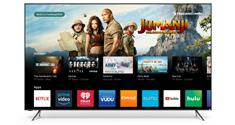 VIZIO Releases 2018 P-Series 4K HDR Smart TV Lineup[teaser]The company's new P-Series displays are now available at various retailers.[/teaser] VIZIO has announced the official release of its 2018 P-Series 4K HDR lineup. The displays range in price from $899 to $2,499 and are now available for purchase from retailers like Best Buy, Costco, Walmart, Sam's Club, and Target nationwide. The premium P-Series displays feature a three-sided bezel-less industrial design with 4K Ultra HD resolution and Active Full Array Pro tech powered by up to 120 local dimming zones. In addition, the units include support for Dolby Vision, HDR10, and HLG high dynamic range formats with UltraBright 1,000 for up to 1,000 nits of peak brightness and Ultra Color Spectrum for nearly 100% coverage of the P3 wide color gamut and about 72% coverage of the Rec. 2020 wide color gamut. Meanwhile, the SmartCast OS is used for integrated on-screen streaming apps and the ability to cast even more from a mobile device, along with voice-control support for Amazon Alexa and Google Assistant. And unlike 2017 VIZIO displays, this TV does feature an integrated tuner for OTA broadcasts with a digital antenna. Models are available in sizes ranging from 55-inches to 75-inches. Here's a full roundup of pricing for each size: VIZIO P-Series® 55” 4K HDR Smart TV (P55-F1) - MSRP $899.99 VIZIO P-Series® 65” 4K HDR Smart TV (P65-F1) - MSRP $1,299.99 VIZIO P-Series® 75” 4K HDR Smart TV (P75-F1) - MSRP $2,499.99 "Picture quality technologies like Ultra Color Spectrum, Dolby Vision HDR and UltraBright 1000 enable the P-Series to take 4K HDR performance to the next level," said Bill Baxter, Chief Technology Officer, VIZIO. "Incredibly realistic on-screen imagery is complemented by cutting-edge smart TV features to round out the collection's entertainment experience. VIZIO SmartCast OS not only expands discovery and streaming options so consumers can watch content they love from their favorite apps, but also serves as an ideal centerpiece to any smart home with easy-to-use voice-control support through Amazon Alexa and Google Assistant." Beyond the P-Series, VIZIO's 2018 lineup also include new D-Series, E-Series, and M-Series models, along with the upcoming P-Series Quantum. Source: VIZIOPosted Wed Jun 6, 2018 at 08:25 AM PDT by:
 -
 Coming Soon to Streaming: 'The Staircase,' 'It Happened One Night,' and More[teaser]Several new titles and classic films are coming to various streaming services.[/teaser] Netflix and Amazon have released new trailers and info for several of their upcoming programs and films. In addition, FilmStruck has announced new content for June, including special curated content in celebration of Pride Month and the latest lineup of Criterion Channel titles. Here's a full rundown of titles scheduled to arrive on each service: The Staircase (Netflix, June 8) - The compelling story of Michael Peterson, a crime novelist accused of killing his wife Kathleen after she is found dead at the bottom of a staircase in their home, and the 16 year judicial battle that followed. The brand new episodes of this true crime phenomenon will air alongside the original series. Produced by Matthieu Belghiti and produced and directed by Academy-award winner Jean-Xavier de Lestrade. The Ranch: Part 5 (Netflix, June 15) - Part 5 picks up where we left off: After hearing the shocking news of the pipeline falling through, Colt and Rooster have to face Beau and Maggie as well as the realities of running two ranches without operating money. Meanwhile, Abby and Colt’s relationship is tested with twists and turns (including the announcement that they're expecting a baby AND engaged to be married). Beau’s kindness during a community crisis brings him closer to Joanne (Kathy Baker) and a new friendship with Neumann’s Hill. But with the tough financial times, Mother Nature’s fury, and risky decisions made - even the country-strong Bennett family will struggle to keep it all together. Hannah Gadsby: Nanette - (Netflix, June 19) - In her hilarious debut Netflix Original stand-up special, comedian Hannah Gadsby gets up close and personal about her life and growing up gay on the small island of Tasmania. Recently hailed by the New York Times as a “major new voice in comedy,” Hannah keeps her audience at the Sydney Opera House laughing with her sharp observations as she takes aim at everything from pride parades, unsolicited opinions and the whole history of art before she turns her punchlines into sucker punches, silencing the laughs and flipping the art of comedy completely on its head. A Christmas Prince — The Royal Wedding (Netflix, Winter 2018) - Ms. Amber Moore and His Royal Highness Prince Richard of Aldovia kindly request the honor of your presence at their royal wedding later this year. Serves as a sequel to the cult hit, A Christmas Prince, which followed an aspiring young journalist sent abroad to get the scoop on a handsome prince who's poised to be king. Rilakkuma and Kaoru: Season 1 (Netflix, Spring 2019) - Rilakkuma is a mysterious bear who turns up to live with Kaoru, a seemingly ordinary young woman, in this stop motion teaser. Besides Rilakkuma, Kaoru also lives Korilakkuma (a small white bear cub) and Kiiroitori (Kaoru's pet bird), and they have adorable, surreal, and amazing adventures. Super Drags (Netflix, Coming Soon) - Super DragsDuring the day, they work in a department store and deal with their uptight bitchy boss. By night, they tighten up their corsets and transform into the baddest SUPER DRAGS in town, ready to combat shade and rescue the world's glitter from the evil villains. Get ready, because the SUPER DRAGS are going deeper than you think. 3%: Season 3 (Netflix, Coming Soon) - A post-apocalyptic thriller set in near-future Brazil, where a select few are allowed to join a privileged society after undergoing an intense and competitive process. A Very English Scandal (Amazon Prime Video, June 29) - The shocking true story of the first British politician to stand trial for conspiracy to murder. Jeremy Thorpe (Hugh Grant), the leader of the Liberal party, has a secret he's desperate to hide. His ex-lover Norman Scott (Ben Whishaw) is putting Thorpe's brilliant political career at risk so Thorpe schemes and deceives until he realizes there’s only one way to silence Scott for good. Meanwhile, the FilmStruck streaming service has announced five curated collections dedicated to exploring LGBTQ themes and artists in cinema to celebrate Pride month throughout June. Here's a rundown of the schedule per FilmStruck: - Dressing the Part, streaming 6/1/18: Alan Cumming and Charles Busch offer their experiences and thoughts on this cinematic look at cross-dressing as an art form with films ranging from 1959’s Some Like It Hot to 2001’s Hedwig & The Angry Inch- Star of the Week: Liza Minnelli, streaming 6/8/18: named as one of OutMagazine's "12 Greatest Female Gay Icons of All Time," Liza Minnelli shines in films like Cabaret (1972) and Tell Me You Love Me, Junie Moon (1972)- Written by Tennessee Williams, streaming 6/8/18: featuring films based on the iconic playwright’s works like Cat on a Hot Tin Roof (1958) and A Streetcar Named Desire (1951)- Director of the Week: Derek Jarman, streaming 6/15/18: featuring nine feature films from director and AIDS activist Jarman, like Sebastiane (1976) and Jubillee(1978) as well as a documentary of his life and work narrated by Tilda Swinton,Derek (2008)- Classics of Lesbian Cinema, streaming 6/22/18: Lea DeLaria examines these seven Sapphic films including the first feature film directed by a black lesbian, The Watermelon Woman (1996), and an adaptation of Jane Rule’s novel, Desert Hearts (1985) In addition, Criterion has also revealed its June lineup of films set to hit the Criterion Channel on the FilmStruck streaming service. Here's a full rundown of titles premiering throughout June: June 1 It Happened One Night, Frank Capra, 1934 June 5 Old Man, Leah Shore, 2012 June 12 Madame Tutli-Putli, Chris Lavis and Maciek Szczerbowski, 2007 June 19 Edmond was a Donkey, Franck Dion, 2012 June 26 Begone Dull Care, Norman McLaren, 1949 June 29 The Other Side of Hope, Aki Kaurismäki, 2017 - A current Netflix subscription starts at $11 per month for HD streaming and $14 per month for Ultra HD streaming. - A current Amazon Prime subscription costs $119 per year or $13 per month. Likewise, Prime Instant Video is available as a standalone service for $9 per month. - A current FilmStruck Subscription starts at $7 per month. In addition, a FilmStruck + The Criterion Channel Subscription costs $11 per month, and customers can also opt for an annual Subscription for $99 per year. Sources: Netflix (YouTube), Amazon (YouTube), FilmStruckPosted Tue Jun 5, 2018 at 10:30 AM PDT by:
 -
 LG Unveils V35 ThinQ Smartphone with OLED FullVision Display & DTS:X Support[teaser]The company's latest premium handset has been detailed.[/teaser] LG has announced the newest addition to its mobile lineup. The V35 ThinQ smartphone is set to launch the US later this month through AT&T and Project Fi. "The LG V35ThinQ is part of our strategy that we announced early this year to introduce new iterations of existing products that improve on a proven and successful idea," said Hwang Jeong-hwan, president of LG Electronics Mobile Communications Company. "With carefully considered updates that increase performance and convenience, the LG V35ThinQ is a great option for anyone looking for a complete and powerful multimedia smartphone." The V35 features a 6.0-inch OLED FullVision 18:9 Display with a QuadHD+ resolution of 2880 x 1440 and 538ppi. In addition, the screen uses scratch-resistant Corning Gorilla Glass 5 and offers support for HDR10 video playback. Under the hood, the device is powered by a Qualcomm Snapdragon 845 with 6GB of RAM and 64GB of internal storage. A rear dual camera with 16MP standard and Super Wide Angle lenses, and a front 8MP Wide Angle camera are integrated as well. And when it comes to audio, the smartphone features a Hi-Fi Quad DAC and offers DTS:X support for virtual 3D sound with up to 7.1 channel audio using earphones. Finally, the device also implements several advanced AI features, including AI CAM with 19 shooting modes for intelligence-optimized shots; Google Lens for discovering more information about objects like landmarks, plants, animals, books, and text; and support for Super Far Field Voice Recognition (SFFVR) via Google Assistant. Exact pricing and availability for the LG V35 ThinQ smartphone have not been announced yet, but the device is scheduled to start rolling out in the Americas this month before expanding to limited markets in Asia, Middle East, and Africa. Source: LG 1, LG 2Posted Tue Jun 5, 2018 at 09:00 AM PDT by:
 -
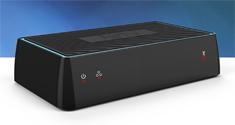 New AirTV Model Streams Live OTA Broadcasts to Connected Devices[teaser]The new media box can send free OTA broadcasts to a variety of connected devices.[/teaser] Dish has announced the launch of its new AirTV. The device can connect to an OTA antenna and home Wi-Fi network in order to wirelessly stream free local channels to a user's internet-connected TVs and mobile devices. "Our new AirTV solution solves two problems: first, it blends free local channels with OTT television, something customers have demanded since the advent of streaming," said Mitch Weinraub, director of product development for AirTV. "And, because it's a Wi-Fi-enabled device, you can power your entire home with one OTA antenna, simplifying the installation process." Once the AirTV is connected to an OTA antenna (sold separately) and Wi-Fi connection, users simply need to download the AirTV or Sling TV app for Roku, Amazon Fire TV, and iOS and Android mobile devices. Once installed, customers can then start streaming live HD OTA broadcasts to the app on the component of their choice without having to setup multiple antennas on different devices. The AirTV can provide up to live two streams at the same time inside the home. And alternatively, one of those streams can be used to view live content on the go instead. "Customers can mount their antenna connected to AirTV wherever the signal is strongest, whether it's tucked away in an attic or hidden behind the living room TV," said Weinraub. "AirTV wirelessly streams to AirTV-enabled devices visible to a home Wi-Fi network, so there's no longer a need to run cables across the home to get OTA signals." The new AirTV is now available for an MSRP of $120. The device joins the company's previously released AirTV 4K Android Media Player. Source: AirTVPosted Tue Jun 5, 2018 at 07:00 AM PDT by:
 -
 Dolby Atmos Support Set to Arrive on Apple TV 4K This Fall[teaser]Dolby Atmos support will be added to Apple's media player later this year.[/teaser] Apple has announced plans to add Dolby Atmos audio support to the Apple TV 4K. The feature will be part of the upcoming free tvOS 12 update which is set arrive this fall. Once updated, the Apple TV 4K will become the only streaming media player on the market that is both Dolby Vision and Dolby Atmos certified. Likewise, iTunes will offer the industry's largest library of Dolby Atmos-supported movies. And just as Apple provides free 4K HDR upgrades to iTunes titles that customers already own, Dolby Atmos audio mixes will also be available for no extra charge on supported films. With that said, it's not yet clear whether other apps like VUDU and Netflix will also offer Dolby Atmos via the Apple TV 4K. Dolby Atmos is an immersive, object-based audio technology that can add overhead audio to supported content and sound systems through ceiling speakers or Dolby Atmos speakers with upward firing drivers. The Apple TV 4K utilizes the A10X Fusion chip and offers 4K playback capabilities at up to 60 frames per second with support for Dolby Vision and HDR10 content. In addition, the device includes 4K scaling for HD sources, Siri voice search, iCloud support for media sharing, standard AirPlay capabilities, and the ability to serve as a smart home hub for HomeKit accessories with remote access and automated control. Apple TV 4K models are now available in 32GB ($179) and 64GB ($199) versions. Beyond Dolby Atmos support, the upcoming tvOS 12 update will also provide several additional features, including a zero sign-on option for all supported pay-TV apps; new aerial screensavers; the ability to autoFill passwords from iPhone and iPad; Apple TV Remote support via the Control Center on iPhone or iPad; and Apple TV compatibility with Home control systems like Control4, Crestron and Savant. Source: ApplePosted Mon Jun 4, 2018 at 01:45 PM PDT by:
 -
 LG Announces Pricing & Availability for CineBeam 4K Laser Projector[teaser]The compact home cinema projector will start shipping this week.[/teaser] LG has announced the launch of its HU80K CineBeam 4K Laser Projector. The is set to start hitting select retailers this week for an MSRP of $3,000. "The LG CineBeam 4K Laser Projector is a true game changer in the projector market,” said Tim Alessi, head of home entertainment product marketing at LG Electronics USA. "Portability and versatility combined with 4K technology delivers the ultimate large-screen home cinema experience in a compact size. This projector will lead the way in changing how consumers view 4K content in any room at home." The new compact projector was designed with quality 4K performance and portability in mind, allowing users to bring their UHD entertainment to any room in the house. The device can project a 150-inch image with 2,500 lumens of brightness and uses a mirrorless I-shaped engine. This helps to enable the projector's compact form factor and upright design, allowing the unit to display images whether it's placed on the floor, wall-mounted, or hanging from the ceiling. In addition, the HU80K also supports high dynamic range content using the HDR10 format. Two 7W speakers are included as well, but users can opt to connect external speakers or a sound bar through the projector's optical output, HDMI port, or Bluetooth wireless connectivity. Meanwhile, LG has also integrated its webOS 3.5 smart TV interface, offering access to several streaming services. Installation has been made flexible as well thanks to the projector's carrying handle and Auto Cord feature. The HU80K CineBeam 4K Laser Projector is a recipient of Red Dot’s "Best of the Best Product Design Award" and previously earned a "Best of Innovation Award" at CES 2018. Source: LGPosted Mon Jun 4, 2018 at 11:05 AM PDT by:
 -
 This Week in Gear: Samsung Releases FreeSync Update for 2018 4K TVs, ASUS Preps New HDR Monitor, and More[teaser]We've compiled the latest gear news, including the launch of FreeSync support for Samsung TVs, the upcoming release of ASUS' new HDR monitor, and more.[/teaser] From product announcements and streaming app updates to general industry news and recent gear trends, keeping up with the latest tech news can be a daunting task. With that in mind, we're here to offer you a roundup of some of the latest gear and consumer electronics news that you may have missed. For this edition, we're covering the addition of FreeSync support to select 2018 Samsung 4K TVs, the latest 4K HDR monitor from ASUS, abd LG's new OLED displays for hotel rooms. So, without further ado, here's a rundown of some of the latest gear and tech news: Samsung Releases FreeSync Update for Select 2018 4K TVs Samsung has released a new firmware update (ver 1103.4) enabling AMD FreeSync technology on select 4K displays. The update is available now for the NU8000 LED TV and the entire 2018 lineup of QLED TVs, including the Q6, Q7, Q8 and Q9. With AMD FreeSync tech, supported displays can now sync their refresh rates to a game's frame rate in order to help minimize screen tearing. The mode can be toggled on through the Game Mode Settings menu and is compatible with PCs that use AMD graphics cards, Xbox One S game consoles, and Xbox One X game consoles. Once selected, users can choose "Ultimate" for a range of 48-120Hz or "Basic" for 90-120Hz gaming. With that said, there are some resolution limitations tied to the feature. According to Digital Trends, Samsung TVs with FreeSync enabled are capable of supporting 1920 x 1080 gaming at 120Hz, 2560 x 1440p gaming at 120Hz, and 3840 x 2160 gaming at 60Hz. Samsung also cautions that users may experience issues with panel brightness when using FreeSync. Samsung's 2018 QLED lineup with FreeSync tech is led by the flagship Q9FN. The display features some of the industry's top color volume and HDR brightness specs powered by full array local dimming and quantum dot technology. HDR10, HLG, and the new dynamic HDR10+ format are all supported as well. Smart TV functions with Bixby Voice control and a new Ambient Mode round out the premium package. Sources: Digital Trends, Engadget, Samsung ASUS Sets June Launch for New NVIDIA G-Sync HDR Monitor Following the release of Acer's Predator X27 4K Monitor, ASUS has announced a late June launch window for its own comparable 4K monitor, the ROG Swift PG27UQ. The 27-inch IPS monitor features a 4K UHD resolution of 3840 x 2160, along with Quantum Dot tech for 97% coverage of the DCI-P3 color gamut and 99% coverage of the Adobe RGB color gamut. DisplayHDR 1000 certification is included as well for optimal high dynamic range capabilities, along with full array local dimming powered by 384 zones. In addition, the display includes NVIDIA G-SYNC HDR tech which allows the screen to synchronize its refresh rate to the game being played, enabling a highly responsive, smooth, tear-free experience. Here's a full rundown of key specs per ASUS - 27-inch 4K UHD (3840 x 2160) HDR gaming monitor with an overclockable 144Hz refresh rate for super-smooth gaming visuals- NVIDIA G-SYNC HDR delivers lifelike contrast and color, with the brightest whites and darkest blacks bringing out details like never before- Quantum-dot IPS display with a wide DCI-P3 color gamut provides realistic colors and smoother gradation- ASUS Aura Sync technology creates immersive ambient lighting and supports synchronization with Aura-enabled components and peripherals- New ROG Light Signal casts the ROG logo to create the perfect atmosphere for your gaming setup The ROG Swift PG27UQ will carry an MSRP of $2,000 and Newegg currently lists a release date of June 22. And in addition to the 27-inch model, ASUS is also expected to release its first Big Format Gaming Display, or BFGD for short, this summer. The upcoming 65-inch monitor also offers 4K HDR support with NVIDIA G-SYNC technology, along with NVIDIA SHIELD media player capabilities. BFGD models are set to be available from Acer and HP as well. Sources: ASUS, Engadget, Newegg LG Brings 4K OLED TVs to Marriott Hotel LG has announced the first installation of commercial-grade OLED TVs designed specifically for hotel rooms. The displays are now featured in various suites and clubs at the Marriott Marquis Chicago at McCormick Place. "LG OLED hotel TVs are revolutionizing the hospitality industry by offering the very best picture quality available today, promising a lasting impression on today's most discerning business and leisure travelers. Commercial LG OLED technologies empowers hoteliers to reach and engage guests throughout the hotel, from luxury suites to public spaces, in ways never thought possible. This is truly the next generation of TV technology for hotel guests," Kosla said. The specially designed 55-inch and 65-inch TVs feature razor-thin 4K OLED panels with perfect blacks and wide viewing angles. In addition, the displays use Pro:Idiom® digital rights management system, LG's Pro:Centric® interactive TV platform, and embedded b-LAN capability. Likewise, the units also feature LG's webOS 3.0 Smart TV Platform. Meanwhile, for users who want to take LG's OLED experience home, the company also recently launched its 2018 consumer 4K OLED TV lineup. The collection includes the B8 (coming soon) and C8 Cinema Screen Series, the E8 Picture-on-Glass Series, and the W8 Picture-on-Wall Series. With the exception of the entry-level B8, all of the OLED sets use the company's new α (Alpha) 9 intelligent processor for improved image and color performance over last year's models. In addition, the OLED lineup also includes support for on-board Dolby Atmos audio and LG's 4K Cinema HDR suite of high dynamic range formats, including Advanced HDR by Technicolor, Dolby Vision, HDR10, and HLG (Hybrid Log-Gamma). Likewise, the TVs use LG's new ThinQ AI tech with advanced voice assistant features. Source: LGPosted Fri Jun 1, 2018 at 10:30 PM PDT by:
 -
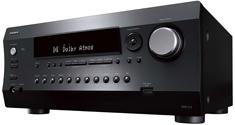 Integra Details New Dot 2 Series 9.2-Channel AV Receivers[teaser]Three new 9.2-channel receiver models have been announced.[/teaser] Integra has revealed its new Dot 2 Series of AV receivers geared toward the custom installation market. The collection includes the DRX-5.2 9.2-Channel Network A/V Receiver (MSRP $1,700) the DRX-4.2 9.2-Channel Network A/V Receiver (MSRP $1,400), and the DRX-3.2 9.2-Channel Network A/V Receiver (MSRP $1,000). The DRX-5.2 is rated for 120 Watts per channel (8 Ohms, 20 Hz–20 kHz, 0.08 % THD, 2 Channels Driven, FTC), while the DRX-4.2 offers 100 W/channel (8 Ohms, 20 Hz–20 kHz, 0.08 % THD, 2 Channels Driven, FTC), and the base model DRX-3.2 provides 90 W/channel (8 Ohms, 20 Hz–20 kHz, 0.08 % THD, 2 Channels Driven, FTC). All three models feature support for up to 5.2.4 or 7.2.2 Dolby Atmos and DTS:X configurations, and the DRX-4.2 and DRX-5.2 can also support 7.2.4 setups with an external amp. In addition, the Dot Series receivers will be the first Integra models to include "Works with Sonos" certification, allowing the receivers to integrate into a user's existing Sonos ecosystem with a Sonos Connect. When the receivers are paired to a Sonos Connect, customers can send any music or source from the Sonos app to the receiver. Likewise, users can group their receiver to other Sonos devices on the network (firmware for this feature will arrive later this month). Here's a rundown of additional connectivity and custom installation features for the Dot 2 Series per Integra: -Chromecast built-in wireless audio streaming that works with the Google Assistant;-Music streaming from DTS Play-Fi-enabled applications;-FlareConnect multi-room network and analog wireless audio distribution to compatible components and speakers-On demand services such as Amazon Music, Spotify, TIDAL, TuneIn, Pandora, and Deezer-AirPlay Audio Streaming from iTunes and iPad, iPhone, and iPod touch-Bi-directional ethernet with IP Control for home automation-RS232 port for control;-HDBaseT output capability on selected models.-Zone 2 Pre- / Line Out for distributed audio playback in another room;-Zone 2 DAC for S/PDIF, NET and analog sources;-Independent Zone 2 bass / treble / balance control;-IR inputs and 1 output;-Three 12V trigger outs with adjustable delay. Source: IntegraPosted Fri Jun 1, 2018 at 12:50 PM PDT by:
 -
 What is HDR10+?Keeping track of the latest audio and video tech can be daunting. Thankfully, High-Def Digest has you covered. Welcome to our new Home Theater 101 series, where we'll be explaining emerging technologies while also recommending the very best possible A/V gadgets n' gear you can buy at your particular budget level. And when it comes to recent high dynamic range display and content advancements, few are as buzzworthy as HDR10+. But just what exactly is HDR10+ and how does it work? And how does it compare to other competing HDR formats? Fret not! [teaser]If you don't know the difference between static metadata and dynamic metadata, this guide is here to breakdown the ins and outs of HDR10+.[/teaser] So, without further ado, let's dive right into... HOME THEATER 101WHAT IS HDR10+? THE BASICS HDR10+ is an open, royalty-free dynamic metadata platform for use with High Dynamic Range content and displays. The format builds upon the base HDR10 format and has been developed in partnership with Samsung, Panasonic, and 20th Century Fox. Like other HDR standards, the process uses expanded brightness to improve contrast between dark and light aspects of an image, bringing out deeper black levels and more realistic details in specular highlights -- like the sun reflecting off of an ocean -- in specially graded HDR10+ material. This increased brightness performance is measured in nits. In general terms, the more nits a display can produce, the brighter the image and greater the HDR performance will be. The UHD Alliance currently requires LCD displays to produce more than 1000 nits peak brightness and less than 0.05 nits black level, or OLED displays to produce more than 540 nits peak brightness and less than 0.0005 nits black level to receive Ultra HD Premium Certification, ensuring an optimal HDR experience. With that said, there are still many displays that offer some level of HDR performance without reaching those numbers. In addition to enhanced contrast, HDR10+ is often also bundled with support for a Wide Color Gamut (WCG) and a bit depth capability of 10-bits, offering a greater range of colors than those found in traditional HD sources and TVs using the previous Rec. 709 standard and 8-bit technology. This means that WCG content and displays can now produce more realistic colors, providing a more true-to-life representation of an image. Though current Ultra HD and HDR specs provide support for the Rec. 2020 wide color gamut, WCG content available now is typically produced in the DCI-P3 color space (aka the color space where commercial cinemas operate). Check out the chart below to see the differences between each gamut. The entire curve represents the full visible color spectrum. The smallest triangle represents the old Rec. 709 gamut; the solid triangle represents the wider DCI-P3 gamut; and the large dotted triangle represents the Rec. 2020 gamut. (Source: AVS Forum) As you can see, the Rec. 709 gamut is missing out on many of the colors covered by the larger DCI-P3 and Rec. 2020 color spaces, allowing the wider gamuts to produce hues that don't even exist in the previous standard. When content is graded in HDR10+ with WCG, the video is encoded with metadata. This metadata is then interpreted by an HDR10+ display during playback, telling the TV what colors to render and how bright or dark the HDR highlights should appear. Unlike the base HDR10 format which uses static metadata, HDR10+ uses dynamic metadata for its workflow. Static metadata does not change during playback, offering one fixed HDR picture enhancement across an entire piece of content. In practice, this can lead to inconsistent HDR quality in certain scenes, especially if a movie has an overall bright color palette mixed in with a few dimly lit sequences. HDR10+ dynamic metadata, on the other hand, can adjust brightness levels, color saturation, and contrast on a scene-by-scene or even frame-by-frame basis, producing images that are closer to the director's intent. REQUIREMENTS FOR HDR10+ In order to watch HDR10+ content, users will need an HDR10+ capable display with internal support for HDR10+ streaming apps and/or an external HDR10+ capable Ultra HD Blu-ray player or set-top box. Though HDR10+ dynamic metadata should only technically be possible over the new HDMI 2.1 spec, HDR10+ is expected to be able to work over the current HDMI 2.0 spec thanks to a process called "Infoframe," allowing for the addition of 24KB of metadata. Samsung already has the process working, but the method is still being finalized and is pending approval from the company's partners. On that note, it remains unclear if current HDMI 2.0 AV Receivers will need a specific HDR10+ firmware update to be able to pass-through the format. HDR10+ is now supported on all 2017 and 2018 4K HDR TVs from Samsung. In addition, Panasonic's FZ950 and FZ800 Series 4K OLED TVs also support the format, but these models are not currently available in the US. When it comes to Ultra HD Blu-ray players, future HDR10+ firmware updates have been confirmed for the Samsung UBD-M9500, UBD-M8500, and UBD-M7500, though a release date has not been announced yet. Likewise, the company's upcoming UBD-N8500 & UBD-N7500 Ultra HD Blu-ray players are also set to include support for the format. Meanwhile, Panasonic's new DP-UB820 and DP-UB420 Ultra HD Blu-ray players are scheduled to receive HDR10+ playback through a future firmware update as well. HDR10+ VS DOLBY VISION In addition to HDR10+, the competing Dolby Vision format also offers very similar HDR dynamic metadata capabilities -- but there are a few differences between the two, particularly when it comes to how future-proof each platform is. While both formats allow for mastering with dynamic metadata and support for WCG (up to Rec. 2020), Dolby Vision offers support for a higher bit depth of 12-bits versus the 10-bits used for HDR10+ content. In essence, this means that titles graded with Dolby Vision have the potential to offer a much larger range of colors. With that said, no 12-bit TV panels are currently available, so this distinction is a moot point for now. Meanwhile, when it comes to target brightness, HDR10+ content is typically mastered for a peak of 1,000 nits and is able to support mastering for up to 4,000 nits. In contrast, Dolby Vision content is graded for a target peak of 4,000 nits and the format can support up to 10,000 nits. As was the case with bit-depth, however, consumer TVs can't take full advantage of Dolby Vision's higher nit grading just yet, as current flagship displays max out at about 2,500 nits. Finally, HDR10+ is an open, royalty free high dynamic range platform with only a nominal administrative fee required for use. In contrast, companies have to pay a royalty for implementing Dolby Vision tech into their products. HDR10+ CONTENT Currently, the only source for HDR10+ content is Amazon Prime Video streaming. According to Amazon, the service's entire collection of Prime HDR content is now available in HDR10+ via compatible displays. This includes shows like The Grand Tour, The Tick, Bosch, and The Man in the High Castle, along with around 100 other movies and TV series. But while Amazon's website states that a specific "HDR10+" label is supposed to appear in the video details for applicable titles, this is not actually the case. After contacting customer service, the company confirmed that it's still just using a universal "HDR" badge for all high dynamic range content regardless of the format. With that said, Amazon assured me that all Prime HDR videos do indeed automatically play in HDR10+ on supported Samsung TV models. Outside of Amazon, 20th Century Fox and Warner Bros. have also announced their support for HDR10+. No specific titles have been announced yet, but both companies are expected to release Ultra HD Blu-ray discs and digital content with HDR10+ later this year. RECOMMENDED GEAR While Samsung is currently the only company to offer HDR10+ displays in the US, they have several worthwhile models on the market. Here's a rundown of some recommended HDR10+ gear available now... Samsung QN65Q9F 65" QLED 4K Ultra HD ($3,498, full review coming soon!) - As Samsung's top-of-line 2018 LCD display, the new Q9 QLED offers some of the industry's leading color volume and HDR brightness specs. And though blacks still aren't quite as impressive as an OLED panel, the company's return to full array local dimming results in fantastic contrast and a huge improvement over the 2017 Q9's edge-lit dimming. Quantum dot technology for wide color gamut coverage is featured as well, along with support for HDR10+, HDR10, and HLG. Smart TV functions with Bixby Voice control and a new Ambient Mode round out the premium package. A 75-inch ($5,998) model is also available. Order from Best Buy Samsung QN65Q8F 65" QLED 4K Ultra HD ($2,798) - Brightness and contrast are a little less robust compared to the Q9, and some premium design flourishes are missing, but the Q8 offers very similar performance for quite a bit less. Like its step-up sibling, the TV features full array local dimming along with quantum dot technology for wide color gamut capabilities and some of the industry's leading color volume specs. HDR10+, HDR10, and HLG are supported as well. Smart TV functions with Bixby Voice control and a new Ambient Mode round out the premium package. A 55-inch ($1,998) and 75-inch ($3,998) model are also available. Order from Best Buy Samsung UBD-M9500 4K Ultra HD Blu-ray Player ($298) - The M9500 features Ultra HD Blu-ray disc playback along with HDR10 support and planned support for HDR10+ via an upcoming firmware update. Likewise, the player includes Bluetooth wireless streaming connectivity and Samsung Smart Remote integration across the UHD ecosystem. In addition, the device can automatically optimize a customer's TV screen and audio levels by analyzing the content source being played -- such as HDR, Atmos or DTS-X -- enabling users to enjoy the content they want without changing their TV or audio settings. A new Private Cinema Mode is offered as well, which allows TV audio to be transferred to personal Bluetooth headphones. Finally, the M9500 also provides expanded mobile integration, letting users stream Blu-ray titles to their mobile devices, along with support for watching 360-degree mobile content through the player on the big screen. So, there you have it. Those are the basics of HDR10+. If you still have any questions about HDR10+, please let us know in the forums! MORE HOME THEATER 101 ARTICLES -Best TVs to Buy on a Budget in 2018-Best 4K TVs for 2018-What is Dolby Vision?-What is HDR?-What is Dolby Atmos?-What is DTS:X-What is LCD?-Best Sound Bars-Up-mixed: Dolby Surround vs DTS:Neural:X-Best Dolby Atmos Speakers-Best UHD Streaming Services-HDR Sucks: The Challenges & Frustrations of HDR10-4K Ultraviolet Headaches: How & Where To Redeem Digital Copies in 4K UHDPosted Thu May 31, 2018 at 02:45 PM PDT by:
 -
 Sony Releases Dolby Vision Firmware Update for A8F & X900F 4K Ultra HD TVs[teaser]Dolby Vision support is rolling out to the company's 2018 displays.[/teaser] According to a report from Forbes, Sony has released the Dolby Vision firmware update for its A8F OLED 4K HDR TV and X900F LCD 4K HDR TV models. The upgrade is currently rolling out to units in the US and Canada, following an initial launch on European models last week. The Dolby Vision firmware update supports Dolby Vision playback through the A8F and X900F's internal streaming apps. Likewise, the update also supports Dolby Vision playback from external devices like an Ultra HD Blu-ray player or Apple TV 4K via HDMI -- but the connected device must have a separate firmware update of its own specifically enabling Sony's implementation of Dolby Vision. The A8F Series 4K Ultra HD OLED TV is available in 55-inch and 65-inch screen sizes. The display uses a 4K OLED panel with a one slate design, and features Sony's TRILUMINOS tech and X1 Extreme processor, along with support for HDR10 and Dolby Vision playback. In addition, the set uses Acoustic Surface technology to create audio from the screen itself. Android TV with Google Assistant is integrated as well. Sony XBR-55XA8F 55” class (54.6” diag) 4K HDR Ultra HD TV - $2,799.99Sony XBR-65XA8F 65” class (64.5” diag) 4K HDR Ultra HD TV - $3,799.99 The new X900F LCD 4K Ultra HD TV series is available in 49-inch, 55-inch, 65-inch, 75-inch, and 85-inch screen sizes. The display uses Sony's TRILUMINOS wide color tech and the X1 Extreme 4K HDR processor which incorporates Object-based HDR remaster, Super Bit Mapping 4K HDR, and Dual database processing technology. In addition, HDR10 and Dolby Vision are supported as well. Likewise, the TV features direct LED panel local dimming and new X-Motion Clarity tech to help keep fast motion smooth. Android TV with Google Assistant is integrated as well. Sony XBR-49X900F 49" class (48.5" diag) 4K HDR Ultra HD TV - $1,099.99 MSRPSony XBR-55X900F 55" class (54.6" diag) 4K HDR Ultra HD TV - $1,499.99 MSRPSony XBR-65X900F 65" class (64.5" diag) 4K HDR Ultra HD TV - $2,199.99 MSRPSony XBR-75X900F 75" class (74.5" diag) 4K HDR Ultra HD TV - $3,799.99 MSRPSony XBR-85X900F 85" class (84.6" diag) 4K HDR Ultra HD TV - $5,299.99 MSRP Source: ForbesPosted Thu May 31, 2018 at 02:15 PM PDT by: