-
 Asahi Dragontail Glass to Compete With Corning Gorilla Glass[teaser]Because, let's face it, Dragons are way cooler than Gorillas. [/teaser] Sony made a pretty big deal about their use of Corning Gorilla Glass on their new 2011 line of televisions. Of course, Corning isn't the only game in town, and it looks like the company has some strong competition from one of Japan's largest glass manufacturers. Asahi Glass has unveiled a new glass that they're calling Dragontail. It's built to resist damage and has been tested in videos against hammers, key scratches, and even dropping. It's exciting that the glass is strong, but the real application for it is on ultra-thin products. Stronger glass means that manufacturers can use thinner sheets and make thinner products. The folks at Asahi glass are expecting a 30 percent share of the consumer electronics market by 2012, so expect to start showing up on your devices soon. Source: Network World.Posted Mon Jan 24, 2011 at 11:00 AM PST by:
 -
 XBMC Now Works on Jailbroken iPhones, iPads, and Apple TVs.[teaser]No light versions here - this is the real thing. [/teaser] The biggest problem with the Apple TV is that there's not actually that much you can do with it. You can buy movies from iTunes, watch movies from Netflix or... rent movies from iTunes. It's a pretty sad little device. But if you jailbreak it, you can turn it into something much better. XBMC, once famous for turning your Xbox into an impressive media playing machine, is finally available for the new Apple TV. You'll have to do a little bit of hacking, but once you do, gone forever are the file type restrictions and limited playback capacity of Apple's box. Owners of iPhones and iPads are in luck too, since the XBMC is now available for those devices as well. It's a big day for XBMC, and an even bigger day for iPhone, iPad and Apple TV owners. Source: Engadget, CrunchGearPosted Mon Jan 24, 2011 at 09:00 AM PST by:
 -
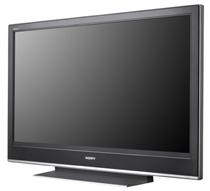 LCD Panel Inventory Building Up[teaser]Inventory is getting high, which means it's time for production to slow down. [/teaser] LCD panels have been selling well, there's no secret about that. It seems that they haven't been selling quite as well as expected though, since major manufacturers are starting to pile up inventory. According to a recent report by DisplaySearch, "Most brands are still facing high inventories for LED-backlit LCD TV models." That means that we're likely to see quite a bit of promotion for the LED backlit sets - companies want to move them before new models hit the shelves. Research from iSuppli reveals similar findings, and speculates that the overabundance of LED backlit LCD televisions could result in lower prices to prevent oversupply. "If panel suppliers can control production skillfully and rationally, 2011 can be very positive year for the LCD industry," says iSuppli's Sweta Dash. "On the other hand, excessive production in the first half may lead to an inventory buildup and oversupply in 2011." Source: TWICEPosted Mon Jan 24, 2011 at 07:00 AM PST by:
 -
 HD Advisor at Playhouse 90Editor's Note: Each Friday, High-Def Digest's own HD Advisor will answer a new round of questions from our readers. If you have home theater questions you need answered, send an email to [email protected]. If you've already sent a question and don't see it answered yet, please be patient as we work our way through them. To browse through previously answered questions, visit the main HD Advisor page. Answers by Joshua Zyber What's So Great About Projectors? Q: Why do some people look at a home projector as the best setup? I know you can get a larger image, but from what I've seen, they are not as good as top-of-the-line televisions in areas like black levels or color vibrancy. Having to manually focus the image can get close to perfect focus but not quite perfect, which a TV already is out of the box. You also need to have absolute control over the lighting in the room, as any external light will obscure the image. That basically means you have to build a room in your house with no windows. Why would someone want to do this instead of just getting a high end TV? A: My philosophy is that there's a reason the hobby we're in is called "home theater," and not "home TV." As far as I'm concerned, projectors offer by far the best option for replicating the theatrical moviegoing experience in the home. As large of an HDTV as you may install, you're ultimately still just watching TV. The most obvious benefit of a projector is screen size. You can produce a much larger picture with a projector than is realistically feasible in most homes with a TV. And you're generating that picture from a relatively small, portable box. When I first got into this hobby, my wife was very opposed to the idea of buying a large TV, which would be quite obtrusive in the room and difficult to transport if we moved. On the other hand, a projector offers a much bigger picture and can be moved pretty easily. This gives it a huge Wife Acceptance Factor. Along similar lines, projectors are much easier to swap out and sell off when you want to upgrade to a new model. For example, if you own a 60" TV and decide that you're ready for 3D, it can be a real ordeal for you to get rid of the old set. If the projectors you've seen have poor contrast and color vibrancy, I think you've just not been looking at very good projectors. Yes, these can be legitimate issues, especially with entry-level models, but the better home theater projectors will give you a picture every bit as pleasing (or more so) than any HDTV. Projectors are not practical for every viewer. The better models are expensive. You will probably find more value in a big TV. And you're correct that a proper projector installation requires light control, which means watching mainly at night, blocking out all external sources of light, and even painting your walls a dark color. (What's known as a "bat cave" theater is the ideal.) This isn't going to be for everyone. If you prefer to do most of your viewing in the daytime with your windows open and a lot of ambient light in the room, you may not get a watchable picture at all out of a projector. But for those willing go the extra mile, projectors definitely provide a cinematic experience that can't be beat. Contrast Calibration Q: I just bought the Sony 52" NX800. I still have a ton of DVDs and just a few Blu-rays. The TV is basically still at its factory calibration. All I want is to watch movies with the color/saturation/blacks/whites as close to what is actually on the source material as possible. But my TV has a million calibrations and it is a bit overwhelming. I tried the THX Optimizer, but I couldn't find a setting simply labeled "Contrast" on my TV. Any advice would be great here. A: "Contrast" is a control for setting your display's white level. Some manufacturers may choose to use different names for this, such as "White Level" or "Picture" or "Intensity." I don't have a Sony TV myself, so you'll need to check your owner's manual. I generally recommend that you purchase a real calibration disc rather than the THX Optimizer patterns found on some DVDs and Blu-rays. A calibration disc will offer a wider range of test patterns, with explanations for how to use them. 'Digital Video Essentials: HD Basics' is a solid go-to calibration tool. The 'Spears and Munsil High Definition Benchmark' is used as the reference standard by many professional home theater reviewers. Disney also recently put out a calibration disc called 'WOW: World of Wonder' that's very comprehensive and user-friendly. (For some reason, that one's hard to find at retail, unfortunately.) I think you'd find any of these more helpful than the rudimentary THX Optimizer patterns. Pre/Pro Connections Q: I have a question regarding HDMI. As all new Blu-ray machines pass video and audio through HDMI, why are separates manufacturers still using analog connections between Pre/Pros and power amps? Surely a single HDMI cable would be a better option? A: The digital audio on a video disc must go through three steps before you hear any sound. First, the Dolby or DTS compression codec must be decoded to PCM. Then that PCM must be converted to analog. Finally, the analog signal must be amplified out to your speakers. The point of using separates in an audio system is to isolate those first two steps away from the third. The theory behind this is that combining all of these functions into one A/V receiver limits the amount of power available to the amplifiers in order to avoid overheating (or needing an unwieldy large chassis). A separate, dedicated amp can handle a lot more power, which is helpful for large listening environments, really loud playback levels, or speakers that suck up a lot of juice. The name "pre/pro" is short for "preamp-processor." As inferred by the "preamp" portion of that, the processor takes care of everything in the audio signal chain before amplification. The pre/pro will perform all decoding and digital-to-analog conversion, then export the resulting analog signal to a separate amp. Obviously, the analog signal can only be transmitted over analog connections. HDMI would not work for this purpose. Any signal transmitted over HDMI would still be digital, and would still need to be decoded to analog somewhere downstream in the chain. Homework Assignment: You Be the Advisor The HD Advisor knows many things, but he doesn't know everything. Some questions are best answered with a consensus of opinions from our readers. If you can help to answer the following question, please post your response in our forum thread linked at the end of this article. Your advice and opinions matter too! Samsung DLP Pixelation Q: I have a question that a lot of technicians have tried to answer, but I never get the right answer. I notice pixelation issues on my HDTV. This tends to happen when there is a lot of action on the screen at one time. The frame distorts into little pixels which drives me crazy to no end. I have one of the older Samsung DLP 1080p projection TVs that I bought in December 2006. I have a PS3 connected by HDMI into my TV, and my DirecTV goes through Component Video. I don't know if it's the TV itself, how I have it set up, or what. I have heard a bunch of reasons: the processing speed of the television isn't fast enough, I need more expensive HDMI cables (your column already debunked that, I think), etc. Is there anything I can do about this? JZ: Pixelation during motion or complex action like you describe is a common artifact of satellite TV when low bit rate transmissions or signal break-ups occur. However, if you're seeing this on everything you watch, including Blu-ray, then there must be something wrong with the TV. This isn't normal, even for a set from 2006. If any of our readers have experienced this, please respond in the forum thread linked at the end of this article. Check back soon for another round of answers. Keep those questions coming. Joshua Zyber's opinions are his own and do not necessarily reflect those of this site, its owners or employees.Posted Fri Jan 21, 2011 at 10:30 AM PST by:
 -
 Opera Brings Internet Browsing to Sony TVs and Blu-ray Players[teaser]Whether you'll use it or not, it's nice to know the option is there. [/teaser] Web browsing on a television tends to be an exercise in futility, especially without a capable mouse or touchpad. That hasn't stopped companies from including the capability though, and you can be sure they'll keep adding it to sets in the future. Sony has - not too surprisingly - chosen Opera as their browser of choice for new connected TVs and Blu-ray players. It's a fairly popular web service for devices like cell phones and it offers compatibility for new standards like HTML5. "Our ability to address key hybrid broadcast-broadband initiatives in numerous markets makes us a natural fit with Sony," says Opera Software chief Christen Krogh. "By delivering both a global viewpoint and the necessary technology, we are able to stay on the cutting edge of the industry." Source: Tech Zone 360Posted Fri Jan 21, 2011 at 10:10 AM PST by:
 -
 Samsung Hits the Two Million App Download Mark[teaser]Things are looking very good for Samsung's app program with this impressive download count. [/teaser] You may remember a story very similar to this one from last month when Samsung hit one million app downloads. Between that announcement on December 6th and the announcement today, Samsung TV owners have downloaded another million apps. Not too shabby. "This achievement and the short period in which it was achieved demonstrate the rapidly growing popularity of applications and content for Smart TVs," says Sangchul Lee, Samsung VP. "Samsung's leadership role in this category has paid off and allowed us to provide new experiences for consumers that are more rich and integrated than any before." What's more impressive is that unlike Apple's app store, the selection at Samsung is fairly limited. You can access 380 different apps, 259 of which are free. Samsung makes a point to note that they couldn't have done it without the app developers. "The developer community is a critical component to maintaining the momentum and growth of Samsung Apps for the TV," says Samsung's Kevin Lee. "These talented individuals will bring depth and personalization to an environment built initially with our industry-leading partners." Source: EngadgetPosted Fri Jan 21, 2011 at 09:00 AM PST by:
 -
 Boxee Box Gets Vudu in Latest Firmware Update[teaser]The highly acclaimed rental service finally hits the Boxee Box - offers a free rental for new users. [/teaser] The latest update to the Boxee Box adds the Vudu video rental service to the mix. With Vudu, Boxee users are able to get high-definition movies to their TVs at the best streaming quality currently possible. Vudu offers SD rentals, but the big highlight of the service is HDX movie rental. Thanks to a technology called TruFilm, Vudu is able to stream movies at 1080p, with Dolby Digital Plus 5.1 surround sound and at 24 frames per second. Vudu is so confident you'll love the service that they're even giving you a free rental to try it out. In addition to Vudu, the new update brings plenty of bug fixes and some much needed tweaks. The biggest of these is an option to ignore "the" and "a" in movie titles when sorting in alphabetical order. Enhancements have also been made to the browser. Source: Boxee BlogPosted Fri Jan 21, 2011 at 07:00 AM PST by:
 -
 Vizio and LG Settle on Patent Disputes[teaser]LG dropped the cases, but terms for the settlement were not discussed publicly. [/teaser] The suits between LG and Vizio have been in the works for quite some time, but they’ve finally come to a close thanks to an agreement between the two companies. The original lawsuits were brought to the International Trade Commission as well as courts both in the US and in Taipei. LG claimed that Vizio and the television manufacturer AmTran were infringing on patents held by LG. On the same day that the ITC was scheduled to rule on banning Vizio TV sales in the US the two companies came to an agreement and called off the suits. That ends two years of court battles between the rival TV makers. Source: BloombergPosted Thu Jan 20, 2011 at 09:00 AM PST by:
 -
 Industry Execs Give Their Thoughts on Netflix[teaser]Some love it, some hate it, others are glad that someone’s buying up the content that nobody else wants. [/teaser] There’s a great read over on The Hollywood Reporter that gives thoughts from all over the industry on the Netflix service, business structure, and the future of streaming content. Jeff Cusson of HBO for example, has little regard for the service, since HBO has always focused on exclusivity and sees Netflix as a competitor rather than a partner. Netflix CEO Ted Sarandos thinks things will work out though. “We’re buyers and they’re sellers, so we’ll figure out a deal that makes sense. If we don’t, then the service doesn’t have everything, and that’s okay too.” One anonymous Disney exec talked highly of the service, saying that “they’re another buyer, even for stuff that others don’t consider terribly valuable.” After all, Netflix wants as much streaming content as possible – if they have to buy some shows that few people will watch to get some good movies then so be it. You can read the full article at The Hollywood Reporter.Posted Thu Jan 20, 2011 at 07:00 AM PST by:
 -
 The Comcast/NBC Deal Approved by FCC, Justice Department[teaser]Comcast says everything will finally be complete by the end of the month. [/teaser] Unless you’ve been living in under a rock, or in a cave without Wi-Fi, you know about the deal between Comcast and NBC that’s been in the works. It’s been talked about all over the internet, discussed on mainstream news and even been parodied on ’30 Rock.’ Today that deal got one big step closer to completion, as both the FCC and the Justice Department have given their approval. Under the terms of the arrangement, Comcast will now own 51 percent of NBC, with GE owning the other 49. “The NBC Universal joint venture will be well positioned to compete, innovate, and bring new choices to consumers,” says Comcast CEO Brian L. Roberts. “Our original vision for the combination remains intact so that consumers will benefit, and our competitors will be treated fairly.” Source: EngadgetPosted Wed Jan 19, 2011 at 01:20 PM PST by: