-
 Dolby Announces "Dolby Vision" with Partners Sharp, Amazon, VUDU, TCL, & Microsoftby Michael S. Palmer [teaser]Just before the holidays, HDD was one of the first sites to preview Dolby's new high dynamic range imaging technology. And now, Dolby has revealed more details about their exciting tech. [/teaser] Check out the link to see an in-depth overview, but the basics are this: Digital cinema cameras are able to capture vivid images with lifelike contrast ratios and dynamic ranges. However, our current gen displays are currently tied to an old CRT-era specification, limiting overall brightness to "100 Nits" and Blu-ray's reduced color specification, REC 709, which can't accurately reproduce colors like the famous red London double-decker buses. Dolby wants to create a new "container" (think codec) with a wider dynamic range that will allow filmmakers to color grade productions for new and enhanced UHD or HD displays that have a peak luminance upwards of 10,000 Nits. The intended result: more lifelike and more accurate displays, regardless of size, frame rate and resolution. Today at CES 2014, Dolby gave their new tech a name: Dolby Vision. Dolby also announced TV manufacturers, Sharp and TCL, will be demonstrating "prototype televisions at CES that show off the benefits of Dolby Vision on various panel types and screen sizes." So hopefully that's, at least, two of the companies who will be producing these new displays, though there's no official word on when TVs will be available to the general public, nor pricing. The other big tidbit we've learned is Dolby's first "ecosystem" partners -- AKA, who's going to deliver the content? -- will be Amazon Instant Video, VUDU, and Microsoft's XBox Video. At the preview event, Dolby implied their "container" would work with broadcast, streaming / digital download, and optical disc technologies, but they didn't specify as to whether or not it would work with Blu-ray. Though there's still no word on which TV and/or film productions will be produced and color graded in Dolby Vision, we do know the first Dolby Vision content will be delivered via streaming (or digital download) once Dolby Vision compatible displays hit the consumer market. Dolby Vision looks incredible, but my demo was done with uncompressed video. Admittedly, when watching services like Amazon and VUDU on my HD display, the idea of "streaming" concerns me a little, given bandwidth limitations when compared to optical formats like Blu-ray. That said, Dolby said its new container isn't bandwidth heavy compared to current UHD content. And I've already purchased TV shows on Amazon Instant and streamed them because they were commercial free and looked better than the muddled DirecTV broadcast. Also, Xbox Videos can be downloaded to your console. I suppose I was hoping for a Blu-ray announcement of some kind, but there's probably a number of challenges and hurdles to integrating something like this into an existing optical disc format. Many more questions remain. Regardless, Dolby Vision should result in some amazing new displays, perhaps a real reason for the 4K / UHD upgrade. And as long as Dolby and its creative partners can deliver content that shows off their technology (it's really night and day when you're in person), we are definitely in for a few interesting years. I just hope Dolby Vision's not limited to streaming. Downloads, most likely an option, will be a must. And hopefully optical as well. Seriously, I can't wait to see what happens next. If you're attending CES this year, I highly recommend heading over to the Dolby/Sharp/TCL booths to see Dolby Vision in person. Here is the rest of Dolby's official Press Release: ABOUT DOLBY'S NEWEST IMAGING TECHNOLOGY Dolby's new imaging technology helps content creators and TV manufacturers deliver true-to-life brightness, colors, and contrast. It augments the fidelity of Ultra HD and HD video signals for over-the-top online streaming, broadcast, and gaming applications by maintaining and reproducing the dynamic range and color palette of the original content. Why this technology is necessary: Even though most television shows and movies are recorded using camera technology that captures the colors and brightness of real life, much of that richness is lost by the time consumers get to watch. That's because current television and cinema standards are based on the limitations of old technologies and require that the original video content be altered – dramatically reducing the range of colors, brightness, and contrast -- before it can be reproduced for transmission and playback. Dolby's new imaging technology changes that, giving creative teams the freedom to use a fuller range of colors, peak brightness, and local contrast with the confidence that once the content is encoded for transmission with Dolby's new imaging technology, it can be reproduced on televisions with Dolby's new technology. More background on our Dolby Lab Notes blog (Is Your TV Bright Enough?) and (Your TV is Missing Some Colors). What it will deliver to consumers: Dramatically brighter and more vivid images with more accurate, beautiful color and higher contrast to make it easier to discern details that might have previously gone unnoticed. An expanded color palette for movies and broadcasts to include more of the colors the human eye can actually see. Why we believe that it will succeed: Thanks to this new technology, creative teams can use the full range of colors, peak brightness, and local contrast already captured with current camera technologies, with the confidence that films and TV shows encoded and transmitted with Dolby's new imaging technology will be reproduced faithfully on televisions with this new technology. Our new imaging technology is already getting support from all points in the ecosystem, from those who create and distribute entertainment content, to those who manufacture the devices to display it. Filmmakers and other content creators get to unleash their creativity with the broader range of colors and brightness already captured by their cameras, and TV OEMs can offer consumers a dramatically-improved video experience, regardless of screen size or distance.Posted Mon Jan 6, 2014 at 09:00 AM PST by:
 -
 HDD's 2014 Home Theater Gear Predictions, Hopes, and Pipe Dreamsby Steven Cohen [teaser]With the new year just getting started, and a whole slew of new products and tech set to be revealed next week at CES, we here at High-Def Digest thought it might be fun to give a rundown of our top hopes and predictions for HD gear in 2014. [/teaser] From cheaper 4K sets to continued plasma support, these are our wishes for the home theater industry. Some are already in the works, while others might forever remain unrealistic fantasies, but you can't blame us for dreaming! 2013 saw the arrival of Ultra HD and OLED, the end of Panasonic plasma production, and the continued dominance of LCD panels. But what will 2014 have to offer? Without further ado, here's our list of our top HD Gear expectations and wishes for 2014… More Affordable 4K Sets To their credit, almost all of the major players, including Sony, Samsung, and LG have offered solid price cuts to their initial lineup of Ultra HD televisions since they first launched. With that said, considering how high they were priced to begin with, this still makes 4K adoption a rather pricey endeavor. $3000 for a 55-inch LCD isn't exactly affordable, and if these manufacturers really want to see Ultra HD become mainstream, then they are going to have to find a way to appeal to the average consumer. There are several budget 4K sets currently available, however, most notably from Seiki Digital (and Polaroid just announced their own $1000 model), but their picture quality likely won't be able to compete with the big name brands. Hopefully, this year, Sony and company will take notice of these cheaper alternatives and offer their own more affordable 4K models. 4K Models with Better Tech If more inexpensive 4K TVs are out of the question, then Ultra HD displays should at least have the panel technology to back up their high price tags. Unfortunately, all of the Ultra HD TVs currently on the market use regular old LED/LCD panels, and while there are some benefits to that display technology (most notably brightness), LCDs are still susceptible to several key drawbacks -- namely poor viewing angles, lackluster black levels, and inferior uniformity. Some of the models available from the bigger companies do use edge-lit local dimming, but very few utilize full-array local dimming (Samsung's UN85S9 being the primary exception) which would substantially improve black levels. High resolutions are only one part of picture quality, and all the pixels in the world don't mean much if it all turns into washed-out mush when the lights are off. If manufacturers want to stick with LCD for their Ultra HD offerings, hopefully they will start developing more full-array local dimming options. Of course, an even more desirable tactic would be to expand beyond LCDs altogether. Though plasma support seems to be dwindling, PDP technology provides superior black levels and contrast which would be a perfect fit for Ultra HD's superior resolution. Unfortunately, there have reportedly been substantial cost and development issues related to manufacturing 4K plasmas, which is one of the reasons that the tech is being phased out to begin with. Still, this does leave one viable contender for the future of Ultra HD TVs: OLED. OLED panels feature several of the benefits of LCD and plasma displays without suffering from many of their weaknesses. For now, the technology is still very expensive, but LG will be showing off a 77-inch 4K OLED TV at CES. It will likely cost more than my car (or maybe even a house!), if it ever gets a retail release at all, but hey, it's still a step in the right direction. More OLED Models and Cheaper Price Tags Speaking of OLED technology, though initial impressions of the current offerings from Samsung and LG have been very positive, their price tags are still incredibly high and they remain the only two options available to US consumers. Likewise, both models feature curved-screen designs, which might not appeal to many potential buyers. The recent news that Sony and Panasonic have ended their OLED development partnership doesn't bode well for future OLED models in 2014, but at least for now, LG has reiterated its commitment to the technology and will be demoing several new sets at CES, including a flat screen 55-inch TV that will hopefully make its way to the US. Now if only they can get those prices down. More 4K Content Electronics manufacturers' recent push for Ultra HD is all good and well, but without actual 4K content to display on their expensive TVs, there really isn't much reason to buy them. Currently, the only way to get substantial Ultra HD content is to buy a Sony 4K TV with the Sony FMP-X1 4K Ultra HD Media Player, which puts many early 4K adopters without a Sony set in a pretty bad spot. Thankfully, streaming services like Netflix, Amazon, and YouTube have started to pledge support for Ultra HD content, and through the use of new codes like VP9 and H.265, we could begin seeing 4K streams very soon. Still, streaming technology has clear limitations, and though these new codecs will certainly help, internet speeds and bandwidth issues will no doubt limit quality and lead to compression artifacts -- and who wants that? The solution? A true 4K disc medium. Rumors have been swirling about an official announcement regarding 4K Blu-ray from the BDA for quite some time, and hopefully the association will have something concrete to report this year. Pretty please? Better Quality HD Streams Though 4K might be all the rage right now, good old fashioned HD material still has a lot of room for improvement, especially when it comes to streaming services. Thankfully, the new VP9 and H.265 codecs won't just be useful for Ultra HD content. Instead, their advanced compression methods enable high quality video with limited bitrates, which might finally offer true Blu-ray quality HD streams to your living room. But video is only part of the equation, and when it comes to streaming services, audio is often neglected. One of our main wishes for 2014 is for Netflix and other streaming services to start offering higher quality audio options. Lossless mixes would be ideal, but internet speed limitations might be a preventing factor. Pre-Calibrated Sets Advanced display technologies and higher resolutions are all very exciting, but more than thinner bezels and more pixels, I would love for manufacturers to start providing more pre-calibrated display options. The THX mode offered on several current TVs is a big step in the right direction, but the accuracy of that preset isn't always up to par. I'm a stickler for wanting to see a movie exactly how the filmmakers intended, and is it too much to ask for my TV to come calibrated to the industry standards? As of now, I guess so, but maybe that will change. Sure, consumers can pay for ISF calibration after the fact, but wouldn't it be great if all TVs simply came with the proper color, brightness, and grayscale adjustments to begin with? Sadly, considering the quality control necessary to truly pull off such a feat, and factoring in how much manufacturers love to market their TVs in their blinding "Torch Mode," I have to assume that this wish will remain a pipe dream for now. Panasonic Decides to Return to Plasmas! OK, so this one really is ridiculous, but it truly is one of my main hopes for the year. They may have just recently announced the end of their plasma development, but Panasonic couldn't really mean it, could they? I mean, their PDP TVs are widely regarded as some of the best displays on the market -- they can't really be pulling the plug! Tell me it's all just a bad dream. It's just a really early April Fool's joke, right? No? Fine, but if you don't mind, I'm just going to continue living in denial. After all, as far as I'm concerned, Pioneer is just taking a "break" too, and both companies will miraculously decide to reenter the plasma market this year to create the ultimate TV! If I'm forced to face reality, however, here's hoping that Samsung and LG still stay invested in the technology. Come on guys, don't disappoint me! Surprise Innovations Sometimes the most exciting technological advances are the ones you don't see coming at all. 2014 already seems to be starting off well in this regard, with the recent announcement of Dolby's High Dynamic Range Imaging Technology. The company's push toward better, brighter, and more accurate pixels and color reproduction could prove to be revelatory, and the manner in which they are planning to integrate the tech into the actual film and television production workflow could help bring a director's true vision to the screen in ways that current standards simply can't. Hopefully, 2014 will bring more innovative tech and gear concepts like this, helping to push the boundaries of the home theater experience. For now, we'll simply have to wait and see how the year shapes up. Perhaps some of these wishes will come true, while others might be disappointingly dashed. Either way, we are sure to get a much better sense for the general direction of the industry next week at CES in Las Vegas, so be sure to stay tuned to High-Def Digest for all the latest HD Gear and Home Theater related news.Posted Fri Jan 3, 2014 at 02:00 PM PST by:
 -
 YouTube Reveals 4K Plans[teaser]The popular video site will be demoing Ultra HD streaming at CES. [/teaser] According to a report by GigaOM, YouTube will be showcasing new 4K streaming technology next week at CES in Las Vegas. The website will be implementing the VP9 codec for its Ultra HD content. VP9 is a royalty free codec developed by YouTube owner Google that will enable high resolution playback at manageable bitrates. Likewise, the codec will also improve standard HD streaming, reducing the amount of data required to deliver HD content by about 50 percent. This will lead to substantially less buffering times. In order to bolster VP9 support, YouTube and Google have partnered with several manufacturers and hardware developers, including Intel, Broadcom, Samsung, and Sharp. YouTube plans to demonstrate its 4K streaming tech at the Sony, LG, and Panasonic booths at CES next week. VP9 decoding is expected to roll out to PCs and mobile devices first and then expand to upcoming television models in 2015. Source: GigaOMPosted Fri Jan 3, 2014 at 11:00 AM PST by:
 -
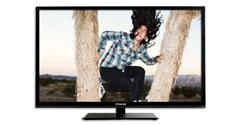 Polaroid Details Affordable 4K TV[teaser]The company plans to reveal a $1000 Ultra HD display at CES. [/teaser] Polaroid has announced a brand new 50-inch 4K television that will make its debut at CES next week. And unlike other Ultra HD offerings from manufacturers like Sony, Samsung, and LG, this model will come in at a very reasonable retail price of $1000 -- though it remains to be seen how its picture quality will compete with those more expensive offerings. "Not many people realize that Edwin Land was a pioneer in developing the polarizing technology used in modern televisions," said Scott W. Hardy, President and CEO of Polaroid. "We are excited to bring consumers a state-of-the-art product at an affordable price point. Families can share more movie nights together with our new home entertainment options." The 50GSR9000 features a 50-inch LED LCD panel with a resolution of 3840 x 2160, giving it four times the pixels of a traditional HDTV. In addition, the set comes with 3 HDMI inputs. Also joining the newly announced 4K set, is a new 1080p Smart TV. The 50GSR7100 is a 50-inch HD display that includes a built-in Roku Streaming Stick, giving users access to more than 1000 entertainment channels. Exact release dates have not been announced, but the 50GSR9000 4K TV will retail for $1000 and the 50GSR7100 Roku Ready Smart TV will retail for $600. Both models will be on display at Polaroid's booth at CES on January 7. Source: PolaroidPosted Fri Jan 3, 2014 at 09:00 AM PST by:
 -
 LG to Demo OLED Displays at CES[teaser]A variety of OLED TVs will be showcased at CES, including curved-screen and 4K models. [/teaser] LG has announced plans to show off its growing lineup of OLED displays at CES next week. The comprehensive collection includes 55-inch, 65-inch, and 77-inch curved-screen 4K OLED sets, a curved-screen 55-inch 1080p set, and a flat-screen 55-inch 1080p set. "All of the exceptional OLED models we're showcasing at CES 2014 offer the ultimate in picture quality and refined, modern aesthetics," said In-kyu Lee, Senior Vice President and head of the TV Division at LG Electronics' Home Entertainment Company. "Driving the evolution of television into the next generation, LG will continue to employ its technological and design expertise to bring impressive OLED TVs to market." The company's Ultra HD OLED lineup, spearheaded by the impressive 77-inch 77EC9800, all feature curved-screen designs and a resolution of 3840 x 2160, giving them four times the pixels of a traditional HDTV along with the added benefits of OLED technology's superior contrast and black levels. The 77EC9800 also uses LG's Color Refiner to control the color temperature of each pixel on the display, and LG's High Dynamic Range algorithm to manage its infinite contrast ratio. In addition, the set also features Ultra Cinema 3D which promises reduced flicker and cross-talk. Finally, users can easily upscale SD and HD material to 4K thanks to the television's Tru-ULTRA HD Engine Pro. Joining the 4K models, will be two 55-inch 1080p sets, the curved-screen 55EB9600 and the flat-screen Gallery EA8800. The 55EB9600 is an updated version of last year's 55EA9800, and is constructed of more recyclable materials and fewer parts than that previous model. Meanwhile, the EA8800 also includes a 2.2 channel, 100W Canvas Speaker hidden behind its frame, offering consumers superior audio. Exact pricing and availability have not been detailed, but all of these models will be on display at LG's booth at CES next week, and the company has reiterated its commitment to OLED manufacturing with the announcement of new production bases in Brazil, Poland, China, Thailand, and Mexico. Source: LGPosted Thu Jan 2, 2014 at 11:00 AM PST by:
 -
 Cambridge Audio Announces 2014 Lineup[teaser]The company has detailed its new slate of high-end amplifiers and speakers all set to be on display at CES. [/teaser] Cambridge Audio has revealed its upcoming lineup of audio products due to be released throughout the year. The collection includes the Azur 851 series of preamplifers, amplifiers, and digital to analog converters, the Azur 651W amplifier, the Minx XL Satellite Speakers, and the Minx C46 Ceiling Speakers. The new Azur 851E Preamplifier & 851W Power Amplifier are designed to work together to offer true hi-fi sound. The 851E preamp promises nearly imperceptible distortion, and includes three balanced XLR inputs, and a linear volume control circuit. Meanwhile, the 851W amp features an updated version of Cambridge Audio's proprietary Class XD system, and two toroidal transformers and Terrapin impedance buffering modules to ensure sizeable power and precise sound. Likewise, the company is also offering the 651W two-channel power amplifier which is designed to be paired with a digital pre-amplifier like the Cambridge Audio Stream Magic 6. Aimed at delivering high quality digital audio files from set-top boxes, computers, smartphones, and a variety of other devices, the Azur 851D Digital-Analog Converter is a powerful DAC that boasts enhanced upsampling technology. On the speaker front, Cambridge Audio is also releasing the affordable Minx XL Satellite Speakers. The compact speakers feature a silk dome tweeter for smooth, detailed sound from all your streaming sources. Finally, the company has announced the Minx C46 Ceiling Speakers. The 80mm diameter speakers boast wide dispersion with BMR technology (Balance Mode Radiator), and can be concealed anywhere. Cambridge Audio's entire lineup will be demoed at CES next week in Las Vegas. The 851D ($1,649), the 851E ($1,999), the 851W ($2,799), and the Minx C46 Speakers ($129) are all set for release later this month. The 651W ($1,099) and the Minx XL Speakers ($350) are scheduled for a spring release. Source: Cambridge AudioPosted Thu Jan 2, 2014 at 09:00 AM PST by:
 -
 HDD First Look: Dolby's High Dynamic Range Imaging TechnologyBy Michael S. Palmer [teaser]With CES 2014 set to begin on January 7, Dolby invited a few tech journalists to the lab to see a first look preview of a technology Dolby hopes will revolutionize the consumer display business. [/teaser] First, we sat down with Pat Griffis, Dolby Laboratories' Executive Director of Technology Strategy, Office of the CTO. While Dolby is best known for its advancements in sound technologies (Atmos being their latest innovation), the company realizes sound is only half the experience. This is why, a few years ago, they developed the Professional Reference Monitor, or PRM, for post production and professional color grading. They've also joined forces with the Cameron Pace Group to design glasses-free 3D display technology (which is, at present, separate from what we are about to discuss). And finally, Dolby has been experimenting with better codecs, bit rate efficiency, as well as understanding the science and technology of displays. Basically, if Dolby wants to make TV better, then they wanted to know: Is it about more pixels (4K, etc)? Is it about faster pixels (High Frame Rate, etc)? Or is it about better pixels? Dolby says all of the above, but what the heck are "better pixels" exactly? Well, over a series of focus groups and experiments, Dolby learned people preferred images that were 200 times brighter than current TV standards, and with 4,000 times more contrast. In short, Dolby thinks the keys to better TVs are brighter pixels as well as pixels with a much more dynamic contrast. What are "NITS"? Before we can talk about the demo and jump into Dolby's new high dynamic range imaging technology, we need to be on the same page about current standards, and a few necessary terms. The first such term is a Nit, which is a measurement of light (similar to, but quite different from a foot-lambert). One Nit = one candela per square meter, which doesn't really help define a Nit. So here's some real world scenarios: if you point your peepers directly up at the sun (please don't), your corneas are frying under 1.6 billion Nits. A typical skylight lets in about 100 million Nits. A florescent light emits about 4,000 Nits. Even black asphalt, on a sunny day, reflects about 2,000 Nits. And way, way down at the very bottom of the spectrum, we have the distribution infrastructure for cinema projectors and CRT televisions. Cinemas (when projected properly) only come up to 50 Nits, where broadcast TV and Blu-ray top out at 100 Nits. All of this to say, filmed entertainment, when displayed in cinemas and in the home, isn't exactly lifelike in terms of brightness levels. For example, have you ever taken a photograph inside a room where there are a lot of windows? Your eyes can see inside and outside perfectly, but with the camera, you're either going to "blow out" the windows, or by seeing outside, everything inside is too dark. Essentially, current generation displays are limited to make similar choices in terms of brightness levels and contrast. You wouldn't think this is so terrible. The current standards have been around for decades. Why does it matter? When you reduce brightness and dynamic range, you also rob yourself of reproducing certain colors. Check out these three slides of the various color spectrums (photos taken with an iPhone, so my apologies for the quality). The entirety of the visible color spectrum (what we can see) is the outer line. In each corner, you have Red, Green, or Blue. Somewhere in the middle, with enough of each color, you get "pure white." The first triangle inside All Visible Colors is called the "REC2020" standard, which represents all the colors reproducible by an upcoming laser projection technology. Note how many colors disappear from what we can actually see: Then we have the "P3" standard, which represents all the colors reproducible in film (and digital cinema). We've lost even more: Finally, we have the "REC 709" standard, which (despite the typo) represents all the colors Blu-ray currently reproduces: I know. These charts don't really mean much, so I hope this helps: Blu-ray marks the best home entertainment distribution format currently available, right? Turns out Blu-ray's color spectrum is so limited that anytime you see a green highway sign, or one of the famous red London buses, the colors are incorrect. That's right, those particular shades of red and green do NOT exist in REC 709 Blu-ray, so the filmmakers -- when color grading for Blu-ray (and broadcast TV) -- have to cheat, but in doing so, brightness levels and contrast suffer. Meaning, when they find a replacement green or red, it's often much closer to white on the color spectrum and, when compared to the original uncompressed RAW footage captured during production, much more washed out. And when colors wash out, you're losing fine detail and apparent resolution. I hope that makes sense. It's a little technical and abstract, even for me, but just know the above color charts aren't flat pies, but rather tall towers to account for color AND relative brightness. Every limitation, every time you can't reproduce a color or a natural dynamic range, affects accuracy. This is basically why so many modern movies feature washed out white skies rather than bright blue ones (please forgive the simplicity). Moving on... The Demo At this point, we know TV and film are pretty limited in terms of accurately reproducing contrast and colors, but to demonstrate what this means for perceived picture quality, it was time for Dolby's demo. In a room perfectly devoid of light, we watched HD footage shot on the ARRI Alexa digital cinema camera. The first part included an aluminum skinned WWII fighter plane flying over the Pacific Ocean as well as a woman in a white dress, standing under a blue sky in a field of blossoming flowers. The second part highlighted a Low Rider car club driving their vehicles in and out of a garage, as well as a mechanic doing some welding. All footage was uncompressed and color graded to Blu-ray's REC 709 standard and displayed on the aforementioned Dolby PRM 4200. To my eyes, and given the lack of compression, it looked even better than Blu-ray. Then it was time to watch the footage again, with an enhanced dynamic range, on a modified PRM called the Dolby Experimental Display. This Experimental Display had the exact same 1080p LCD panel as the standard model (same number of pixels, same resolution), but was upgraded to emit a peak luminance of 4,000 Nits (it's lowest setting was 0.005 Nits). [It's important to note that Dolby is NOT getting into the consumer display production business, but they needed the Experimental Monitor to show off what they're doing.] We watched the enhanced footage by itself as well as side-by-side with the original color grading. Our eyes are naturally attracted to brighter imagery (thus the reason why big box stores set all their displays to "Torch Mode"), so I tried my best to make sure appreciable differences were not due to the increased brightness. That said, the enhanced dynamic range was pretty incredible. The same uncompressed footage had been color graded to something closer to the P3 standard (though when Dolby officially announces this technology at CES -- more on this below -- it will be capable of up to 2020) and it was stunning all around. More colors, more lifelike details, more everything. And to prove it wasn't just its own footage, Dolby showed us clips from 'Samsara', which when given the wider dynamic range, were even more vivid and eye popping than Dolby's materials. I've never really thought of "color" as being important to resolution, but the more accurate the colors on display, the more details in the images I could see. Here's one example screen grab, supplied by Dolby, that approximates the experience. Like all screen grabs, this image is limited by the inherent compression issues of making a jpeg file (click on the link to see the full size image): I was actually reticent to post the above images because some of you will look at this and already think this tech is bogus, or doesn't make any difference. If you're thinking this, that's okay, I get it. You're limited to my vague descriptions and one screen grab. But please, please, just wait for a chance to see this technology with your own eyes before judging one way or another. More so than with Blu-rays, this screengrab can't compete with the real thing. Because in person... When you are sitting in front of the moving images, it's a revelation. Here are some improvements I noted: In REC 709 (standard Blu-ray), oranges and yellows on brightly lit flowers would wash out. They seem fine when you're watching them, but head to head, the enhanced dynamic range versions were brighter and bolder and more colorful. With the added colors, I could see more depth and details in the petals. In the airplane sequences, the REC 709 color graded sun was a giant, white orb. Reflections off the plane and ocean surface shimmered brightly. On the Experimental Display, the the sun was more lifelike (less blown out) and the plane's aluminum skin was more crisp -- you could see individual rivets -- because there was no need to reduce the brightness to see objects around the plane. The REC 709 Low Riders weren't as colorful, and when they drove out of garages, you couldn't see shadow details. In the enhanced footage, you could see shadow details akin to real life. The welder footage was remarkable too. What was, in REC 709 limited to 100 Nits, another white orb, became, on the Experimental Display, a distinct pinpoint of light, which allowed us to see details on the welder's face mask and gloves. Lastly, it's important to note that in no way does enhancing contrast and brightness make footage feel like TruMotion or any of the frame rate interpolation technologies from TVs and/or anything like 'The Hobbit.' What Does This Mean For You? Sure, Dolby turned a few of there super-expensive professional displays into experimental demo displays, and piped in uncompressed video that was professionally color graded to take advantage of these one-off televisions, but is "High Dynamic Range Imaging" the next 3D or 4K? Another niche, expensive product where I have to replace all my gear? Sort of? Maybe? I don't know yet. Dolby thinks their new technology could actually be the thing that helps 4K really take off. But regardless of pixel counts and competing technologies, Dolby wants to create an entire "ecosystem," or pipeline, that goes directly from content creators to your home cinema without messing up what's already working. Starting at the top, today's color grading systems (and digital cinema cameras) already work at a much higher quality than what displays are capable of. The problem is that, after the film is made and when it's time to send it out for Blu-ray or TV broadcast, the limitations are set by a television technology no one uses anymore. So Dolby is developing a new Plugin for color grading systems that will allow content creators to output their projects in a "container" (think codec) that is fully backwards compatible -- it will work with 4K, 1080p, and 720p -- but includes "enhancement information" on top of current standards to take advantage of new displays with higher peak luminance levels and wider contrast ratios. Meaning, the content will play on current technology and look pretty good, but will look even better on new gear. Another way of putting it: Dolby hopes to enhance the way content is produced and distributed, to free its inherent limitations, without making the consumers change anything. Interestingly, many current gen flat panel displays are capable of 300-400 Nits, with one Sharp model measuring up to 1,000 Nits. Displays are already brighter, but because the content is graded for 100 Nits, if you bump up the brightness (see the aforementioned "Torch Mode"), the colors look like crap. Therefore, thanks to HDMI, when content in Dolby's new container hits the streets (or air), some of the current displays *could* see improved contrast and colors (though not all). That said, if you want the full benefits of Dolby's innovation, you'll need a new display from one of Dolby's impending partners. Though they wouldn't say what products, or with which companies, Dolby seems geared up to be making some big announcements at CES 2014. They'll likely -- again, this is my guess -- team with one or more display manufacturers, as well as one or more Hollywood Studios, to announce the "ecosystem" that will take film and/or TV content, put it out on a Blu-ray (or perhaps via a streaming box) to a new UHD (4K) display capable of producing upwards of 10,000 Nits and a 1,000,000:1 native contrast ratio (compared to current generation display, which are color graded to more like 1,000:1). Again, I don't know if these new displays will be massively more expensive than standard sets. Or when they will be available. Or what companies will be delivering content. Or what method (optical, streaming broadcast) said content will be distributed. There are a lot of practical chicken-and-egg questions that may or may not have already been solved. But if our movies and TV shows can reap the benefits of "better pixels," then I'm very excited to see what High Dynamic Range Imaging Technology will mean for home cinema enthusiasts and hopefully general consumers as well. Blu-rays already look and sound fantastic, but they can definitely be improved. If we're already hearing the bit-for-bit identical soundtrack master, Dolby's innovation could be the closest thing to being on set while the film is in production. For More Information Check out this blog, Is Your TV Bright Enough, by Mike Rockwell, Executive Vice President, Advanced Technology Group, Dolby Laboratories, or Scott Wilkinson's piece over at AVS Forum.Posted Tue Dec 31, 2013 at 01:30 PM PST by:
 -
 High-Def Digest's Essential Picks: December 2013by Steven Cohen Every month, dozens of Blu-rays hit shelves, littering stores with high-def temptation. New releases, catalog titles, complete TV seasons, and elaborate box-sets all vie for affection, and with so many worthy releases targeting our wallets, choosing which discs to spend our hard earned cash on can be rather tricky. To make things a little easier, we here at High-Def Digest thought it might be helpful to bring you our top three must own recommendations for the month. From important classics to contemporary blockbusters, these are the discs that we consider to be the absolute cream of the crop. High quality releases with great video, audio, and supplements, these are the Blu-rays that are truly worth every penny. Last month we spotlighted the birth of a drug kingpin, a hilarious sci-fi pub crawl, and a masterpiece of world cinema. If you haven't already, be sure to check out the Essential Picks for November, December, January, February, March, April, May, June, July, August, September, October, and November 2013. [teaser]This month, we're covering an adamantium laced action flick, an umbrella-flying nanny, and an emotionally charged mystery thriller. Please be aware, that if you haven't already seen them, there might be some spoilers for the films listed.[/teaser] If you can only buy three titles that hit Blu-ray in December, here's what we suggest you pick up, starting with the most essential... 'The Wolverine' - After the travesty that was 'X-men Origins: Wolverine,' I can't say that I had particularly high expectations going into the mutant hero's latest big-screen outing. Thankfully, however, with a little help from director James Mangold ('Copland' '3:10 to Yuma'), 'The Wolverine' manages to heal the still festering wound left by its predecessor -- a superhuman feat that even Logan would be impressed by. With a (mostly) self-contained story, slick action, and a solid focus on character, the flick offers audiences a thrilling adventure that does the comic book icon justice. Very loosely inspired by the 1982 comic book series by Chris Claremont and Frank Miller, the story sees Logan head to Japan to deal with dangerous Yakuza while trying to escape his deadly past -- which isn't exactly a productive combination. With Hugh Jackman once again back in the role that made him famous, we're treated to another grizzly, brooding performance filled with animalistic rage and badass charisma. Comic fans have been waiting to really see the character let loose on-screen, and while he never quite goes "berserker," it's pretty cool to watch him slash his way through an army of ninjas and thugs. And as an added twist, we even get to see the nearly invincible man get a taste of mortality (a plotline that almost every godly superhero seems to endure at one point or another), leading to some decent character bits that delve a bit deeper into his psychology. Director James Mangold keeps things stylistically interesting throughout, offering a few cool set pieces with kinetic action and engaging choreography. I was dreading the bullet train sequence when I first saw it in the trailers, but the finished scene was actually very exciting, and though things can get a little too cartoony with the CG, the film manages to retain a welcome grittiness that suits the character very well. As a life-long 'X-Men' fan, (the 90s cartoon was a huge part of my childhood) I can't help but still geek out every time I hear "Snikt!" blare from my speakers, and thankfully with this release there's now finally a solo Wolverine flick that I can get excited about. It's not exactly perfect, but it's a huge step in the right direction, and Jackman continues to kick ass in the role. This Blu-ray disc comes packed with demo worthy video and audio, and a great assortment of special features, making it the perfect flick to show off all that fancy new equipment you just got for Christmas. And be sure to stick around during the credits for a tantalizing little tease for this summer's 'Days of Future Past.' Here's to hoping that director Bryan Singer can somehow use the time travel plot to completely erase the events of 'X-Men: The Last Stand.' That's not too much to ask for, is it? 'Mary Poppins: 50th Anniversary Edition' - "Supercalifragilisticexpialidocious." Young or old, if you were lucky enough to grow up with movies in your life, then you must have surely heard that word. An immortal bit of magical nonsense, it's simply "something to say when you have nothing to say," and it's just one of the ageless pieces of wonder that makes 'Mary Poppins' so special. A treasured family classic that continues to stand the test of time, the film is full of fantastic images, infectious songs, heartwarming emotion, and an iconic performance from Julie Andrews. In other words, it's "practically perfect in every way." As a mysterious and seemingly magical nanny enters the lives of two troublesome children and their stern father, the movie places audiences on a fantastical journey. From the minute she first descends into view, floating down to the ground with her flying umbrella, Andrews effortlessly embodies the title role, creating a firm but loving character full of whimsical insights and clever life lessons. And then there's Dick Van Dyke as Bert the chimney sweep, who manages to delight audiences with one of the worst Cockney accents to every grace the silver screen. Or is it one of the best cockney accents to ever grace the silver screen? After all, there's a very fine line between the two. Either way, his rendition of "Chim Chim Cher-ee" is as hummable as they come, and the rest of the movie's songs also prove to be irresistibly enjoyable as well. From "A Spoonful of Sugar" to "Jolly Holiday," the film's melodies are destined to put a smile on the faces of all who hear them. Likewise, the special effects are also marvelous, blending live action, animation, and practical wizardry to concoct all sorts of fun imagery like a tea party on a ceiling. It's enough to melt the heart of any adult, even good old stuffy Mr. Banks. This 50th Anniversary disc from Disney is packed with supplements and features beautifully restored video and audio presentations, preserving this timeless classic for generations to come. Like 'The Wizard of Oz' before it, this is one of the greatest family films ever produced, and it will likely always remain so, no matter which way the wind blows. 'Prisoners' - I know what you're thinking, "Really? More Hugh Jackman?!" Well, you're damn right more Hugh Jackman! But this time I promise he keeps his shirt on. Sorry, Beatrice. A far cry from the sci-fi thrills of 'The Wolverine,' 'Prisoners' instead sees the Aussie action star take on the weighty role of a determined father desperately trying to find his missing daughter. Intricately plotted and tightly woven, this is an admirably crafted mystery thriller steeped in unsettling brutality and harrowing drama. Tackling a tragic case of abducted children, the film's plot plays out like a carefully designed maze of tension, misfortune, vengeance, and justice. As we follow detective Loki (Jake Gyllenhaal) slowly track down the elusive kidnappers, we are also bear witness to one of the Father's misguided attempts to seek retribution himself. Through Keller Dover (Jackman) we see a man pushed to the brink, blinded by his obligations as a parent and consumed with a lone mission. Overrun with frustration and grief, Dover takes matters into his own hands, but his rage clouds his judgment, and as we see him continually push beyond the point of no return, we know that even vindication won't save him from the inescapable moral consequences of his actions. The script's treatment of this material is surprisingly complex, weaving a morally gray story where relatable motivations are twisted into disturbing horrors. And beyond the multifaceted characterizations and deep themes, the film's central mystery is well executed, resulting in an engaging and winding thriller that offers a few solid twists and a mostly satisfying conclusion. Sure, it's not quite up to par with the very best of the genre, and as David Krauss relates in his full review, the pace does drag a bit, but the film's flaws are minor compared to its strengths, and the movie ultimately packs a powerful emotional punch. A distressing but fully gripping examination of tragedy, revenge, sacrifice, rage, obsession, and paternal instinct, 'Prisoners' reveals just how far some are willing to go when their family is placed in danger, illuminating the all too murky line between men and monsters. Though light on extras, Warner's Blu-ray release features an exceptional technical presentation, fully evoking the film's dreary and somber mood. The movie's disturbing subject matter does limit its mass appeal, but this finely crafted drama certainly deserves a spot among this month's top titles. So, there you have it. While there are many titles worth picking up this December, those are our top three must own recommendations. We'll be back next month with three more essential picks, but for now, what do you think of our selection? What are your choices for December's must own titles?Posted Mon Dec 30, 2013 at 02:45 PM PST by:
 -
 HDD Gear Deal Spotlight: HDTVs[teaser]Amazon is offering up to 56 percent off select HDTVs! [/teaser] Though Black Friday and Cyber Monday might be over, great shopping deals are still in full swing. As part of their year-end sales promotions, Amazon is discounting several HDTVs, including models from Toshiba, TCL, and Panasonic. The selected models currently on sale include: Toshiba 58L7350U 58-Inch 1080p TV - Currently $958 (56 percent off its retail price of $2200). TCL LE55FHDF3300ZTA 55-Inch - Currently $694 (37 percent off its retail price of $1100). Panasonic TC-L60DT60 60-Inch 1080p TV - Currently $1502 (46 percent off its retail price of $2800). Panasonic TC-L55WT60 55-Inch 1080p TV - Currently $1319 (56 percent off its retail price of $3000). As always, these deals will only last for a limited time. Make sure to stay tuned to High-Def Digest for more end of the year deals, and don't forget to check out Amazon's Year-End Deals Page for all their latest sales and special promotions!Posted Mon Dec 30, 2013 at 11:00 AM PST by:
 -
 Samsung Releases 110-inch 4K TV[teaser]Samsung's massive Ultra HD TV is now available for a massive price. [/teaser] Samsung has finally announced plans to release its gigantic 110-inch 4K display, surpassing the company's previously available 85-inch model. The mammoth sized TV is now on sale in South Korea and will expand to more markets including China, the Middle East, and Europe within the next couple of months. The LCD display features a resolution of 3,840 x 2,160, giving it four times the number of pixels found on a traditional 1080p HDTV. The set measures an impressive 2.6 meters by 1.8 meters and is geared toward business and government applications such as video conferencing. An exact price was not revealed, but the Associated Press has reported that the display will retail for about $150,000, giving the enormous set an equally enormous price tag. Currently the TV is only available through custom orders and a US release date has not been announced. Samsung is expected to detail more new 4K displays at CES next week, so stay tuned to High-Def Digest for all the latest news. Sources: Engadget, Associated PressPosted Mon Dec 30, 2013 at 09:00 AM PST by: