-
 LG Reveals 34UC89G UltraWide Gaming Monitor[teaser]The new display has been designed with gamers in mind.[/teaser] LG has announced the launch of its newest monitor. The 34UC89G 34-inch 21:9 curved UltraWide gaming monitor is now available for a suggested retail price of $1,000 from several retailers, including Newegg, Amazon, Fry's Electronics, B&H, and Beach Camera. "LG took every consideration in designing this display for one purpose and one purpose only, and that was to create the ultimate gaming monitor," said David VanderWaal, vice president of marketing, LG Electronics USA. "LG is committed to providing the latest in cutting-edge monitor technology and whether you're a professional or a casual gamer, this monitor has the features necessary to give you an edge over the competition." The 34UC89G features an UltraWide IPS panel with a 21:9 aspect ratio and a resolution of 2560 x 1080 pixels. Likewise, the display offers a widened color gamut that offers over 99% of the sRGB color space with wide viewing angles and shorter input lag. In addition, the monitor uses NVIDIA G-Sync gaming display technology which dynamically matches the 144Hz (overclockable to 166Hz) refresh rate of the screen to the frame rate output of the GPU, helping to eliminate tearing while reducing stutter and input lag. Finally, different display modes to enhance certain gameplay types are provided as well, including Black Stabilizer, Dynamic Action Sync, and Crosshair. Here's a full rundown of key specs per LG: Screen Size: 34" Curved Panel Type: IPS Color Gamut: (CIE1931) sRGB over 99% Color Depth (Number of Colors): 8bits, 16.7M Pixel Pitch(mm): 0.312 x 0.310 Response Time(GTG): 5ms (High) Refresh Rate: up to 166Hz w/ OverClock Aspect Ratio: 21:9 Resolution: 2560x1080 Brightness: (Typ.)300cd/m2 Contrast Ratio( Original): 1000:1 (Typ.) Viewing Angle(CR≥10):178 /178 (C R ≥ 10) Surface Treatment: Anti glare ,3H Source: LGPosted Fri Jun 16, 2017 at 05:30 AM PDT by:
 -
 Philips Releases 5000 Series 4K Ultra HD TVs with HDR, Prices Start at $530[teaser]The new affordable 4K TV series has started shipping.[/teaser] P&F USA has announced the launch of its latest Philips branded lineup of Ultra HD TVs. The 5000 series features Chromecast built-in tech and comes in sizes ranging from 43 inches to 65 inches. With Chromecast built-in, users can stream content from over 1,000 apps through their mobile devices to their big screen displays. Likewise, the TVs are also compatible with the Google Home smart speaker powered by the Google Assistant, offering voice control support for select commands. In addition, the series uses 4K LED LCD panels with HDR10 high dynamic range support (but not Dolby Vision). Likewise the displays include 120 Perfect Motion Rate (PMR), Pixel Plus Ultra-HD Engine 4K up-scaling, 802.11ac wireless LAN with MIMO antennas, Macro Dimming, and Sonic Emotion Premium Absolute 3D sound technology. HDMI 2.0a with HDCP2.2 connections and a USB port with support for numerous file types, including HEVC, H.264, AAC, MP3, and JPEG are integrated as well. Here's a full rundown of pricing for each size: 43PFL5922 43-inch class $530 50PFL5922 50-inch class $600 55PFL5922 55-inch class $700 65PFL5922 65-inch class $1,200 And beyond the 5000 series, P&F also previously revealed Philips branded 6000, 7000, and 8000 series Ultra HD TVs with Dolby Vision support at CES with sizes ranging from 43 inches to 98 inches. Here's a rundown of pricing and availability for each model: 6000 series 43PFL6902 43-inch class Spring 2017 $649.99 50PFL6902 50-inch class Spring 2017 $799.99 55PFL6902 55-inch class Spring 2017 $899.99 65PFL6902 65-inch class Spring 2017 $1299.99 75PFL6902 75-inch class Summer 2017 $2499.99 86PFL6902 86-inch class Summer 2017 $3999.99 7000 series 98PFL7902 98-inch class Summer 2017 $19,999.99 8000 series 49PFL8922 49-inch class Fall 2017 $999.99 55PFL8922 55-inch class Fall 2017 $1199.99 65PFL8922 65-inch class Fall 2017 $1699.99 Sources: TWICE, CNETPosted Thu Jun 15, 2017 at 10:30 PM PDT by:
 -
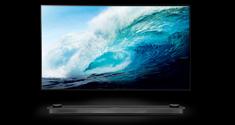 HD Gear News Roundup: Pioneer Headphones, LG OLED Tops TV Rankings, and More[teaser]We've compiled the latest gear news, including new headphones, TV rankings, and app updates.[/teaser] From product announcements and streaming app updates to general industry news and recent gear trends, keeping up with the latest tech news can be a daunting task. With that in mind, we're here to offer you a roundup of some of the latest gear and consumer electronics news that you may have missed. For this edition, we're covering new Pioneer headphones, new honors received by LG's TVs, Cloud DVR updates for Sling TV, and the arrival of FilmStruck on Roku devices. So, without further ado, here's a rundown of some of the latest gear and tech news: Pioneer Releases SE-Monitor5 Hi-Res Headphones Pioneer has announced the latest addition to its audio lineup. The new fully enclosed SE-Monitor5 dynamic stereo headphones are now available for a suggested retail price of $1,000. The hi-res headphones feature Pioneer's proprietary cellulose nano-fiber headphone transducer with an organic wood pulp refined on the nano-scale serving as the basis for a 5 Hz–85 kHz-capable 50mm (1.96") driver designed for optimized fidelity. In addition, the headphones include three cords: two unbalanced bi-wire cords featuring gold-plated 3.5 mm (1/8") stereo connectors, and one balanced audio cord with a 2.5 mm (3/32") 4-pole stereo plug for compatible digital audio players. Likewise, the device has been built to minimize distortion with a magnesium alloy housing; advanced dual-chamber system; diffuser technology; and floating structure with rubber insulators that reduce vibration and cross-channel interference. Source: Pioneer LG OLED Ranked Top TV by Consumer Reports According to a recent Consumer Reports listing, LG's Signature OLED W7 has earned the top spot among all current Ultra HD TV models. Likewise, the company's 65SJ9500 SUPER UHD TV also ranked highly among LCD models, coming in just below Sony's XBR65X930E 4K Ultra HD LED TV. "LG pioneered OLED TV technology and since its inception has continued to dedicate enormous resources to its growth to the benefit of all consumers," said William Cho, president and CEO, LG Electronics North America. "Top TV reviewers consistently rank OLED as the best TV technology available, and we’re the only manufacturer to offer a variety of OLED TV screen sizes and models – there is no better time to purchase the best TV technology on the market." Per the report, LG OLED TVs earned top scores for picture quality, viewing angle, and versatility resulting in an overall score of 89, the highest among the included displays. The Signature OLED W7 features perfect blacks, infinite contrast, an expanded color gamut, and wide viewing angles. Likewise, the set includes Active HDR with Dolby Vision, HDR10, and HLG (Hybrid Log Gamma) support. In addition, the display uses a unique Picture-on-Wall design. Beyond the W7, LG's 65" LG SIGNATURE C7 OLED Ultra HD TV earned the second place spot on the list. Source: LG Turner and Criterion Expand FilmStruck Streaming Service to Roku Devices The Criterion Collection and Turner Classic Movies have announced the addition of FilmStruck to the Roku TV and Roku media player channel lineup in the US. The ad-free subscription platform offers a curated and constantly refreshed library of streaming independent, art-house, international, cult, and contemporary cinema. FilmStruck offers a mix of contemporary and classic arthouse, indie, foreign and cult films from many major studios and independent distributors, including Janus Films, Flicker Alley, Icarus Films, Kino, Milestone, Zeitgeist, Film Movement, Global Lens, First Run Features, Oscilloscope Laboratories, Shout Factory, Warner Bros., and Metro-Goldwyn-Mayer (MGM). Likewise, the platform also features extensive bonus content, filmmaker interviews and rare footage. Titles currently streaming include films like Babette’s Feast, Blow Out, Boyhood, Breaker Morant, Chicago, A Hard Day’s Night, My Life as a Dog, Our Song, The Player, A Room with a View, Seven Samurai, The Seventh Seal, Thelma & Louise, The Times of Harvey Milk, The Umbrellas of Cherbourg, and more. And beyond the standard FilmStruck library, subscribers can also sign up for the Criterion Channel -- a premium add-on service dedicated to the Criterion Collection with access to the company's entire streaming library of films and special features. Here's a full rundown of subscription plans: - FilmStruck Subscription: $6.99/month, offering hundreds of constantly refreshed, hard-to-find and critically acclaimed films, plus exclusive bonus content including hosted introductions, originally produced pieces, interviews and rare footage. - FilmStruck + The Criterion Channel Subscription: $10.99/month, offering everything in the FilmStruck subscription plus unlimited access to Criterion's entire streaming library of films and special features, along with channel-exclusive original programming such as filmmaker profiles, master classes, and curated series by celebrated guests from the film world and beyond. - Annual Subscription: $99/year for FilmStruck + The Criterion Channel (a $30 annual savings). In addition to Roku devices, FilmStruck is available on Apple TV (4th generation), Amazon Fire TV, Chromecast, web, iOS and Android devices. New users can receive a special 14-day free trial. Source: Roku Sling TV Reveals New Cloud DVR Features and Updates Sling TV has announced an expansion of its Cloud DVR option with support for new channels, devices, and features. With the Sling TV Cloud DVR, subscribers using an Amazon Fire TV or tablet, Android device, Apple TV, Roku, or Xbox One can purchase 50 hours of storage for $5 per month with any channel package. Likewise, support for more platforms, including Windows 10, AirTV Player, and iOS devices will be added in the coming weeks. In addition, the company has announced new DVR support for FOX channels, including FOX local networks, FOX Sports 1 (FS1), Nat Geo, and FX. Finally, several new Cloud DVR features have been added as well. Here's a rundown per the announcement: - Protect: Want to watch that epic sports play over and over or keep a favorite movie from being deleted? Now you can! If you want to keep a recording, simply choose “Protect” in the “Manage DVR” section, and the recording will stay on your DVR as long as you subscribe. - DVR Folders: We know it can be time-consuming to scroll through all your recordings, so we’ve made it simpler by grouping shows from one series into a single folder. That way, if you’re looking to catch up on every Game of Thrones episode before the premiere or binge-watch House Hunters, you’ll find all your recordings in one place. Roku users can currently see the new DVR Folders feature, and we will continue rolling it out to other devices soon. - Record from Franchise: Now you can record a show or series from its franchise screen, so if you search for a show like “The Walking Dead,” you can see episodes available on demand and set a recording for new episodes as they come out. Source: Sling TVPosted Thu Jun 15, 2017 at 06:20 PM PDT by:
 -
 Optoma Details 4K500 & UHZ65 4K Ultra HD Projectors[teaser]Two new 4K UHD projector models have been revealed.[/teaser] Optoma has announced the latest additions to its projector lineup. The UHZ65 laser phosphor light 4K UHD projector and the 4K500 lamp-based 4K UHD projector are both geared toward the ProAV market. "With the introduction of the UHZ65 and 4K500, Optoma now has a full portfolio of 4K UHD projectors for the ProAV market to complement the line of 4K UHD projectors for the home theater market announced earlier this month," said Brian Soto, head of product management, "By bringing quality and innovation to the market at industry leading pricing, we're showing we're listening to our customers and designing projectors to meet their needs." The UHZ65 uses a powerful laser phosphor light engine and offers a resolution of 3840x2160 with 8.3 million pixels, about 2,800 lumens, and a 1,500,000:1 contrast ratio. Likewise, the projector supports high dynamic range with HDR10 capabilities, along with wide color gamut (REC.2020) support. HDMI 2.0 with HDCP 2.2 is integrated as well. In addition, the device feature a 15 percent vertical lens shift and a 1.6x optical zoom. Meanwhile, the 4K500 uses a lamp-based light source to deliver 8.3 million pixels, 5,000 lumens, and a 1,200,000:1 contrast ratio with Dynamic Black enabled. A variety of inputs are integrated as well, including HDMI 2.0 with daisy chain support. Finally, horizontal and vertical lens shift, motorized zoom and focus, keystone correction, and a 2.0x zoom ratio are also implemented. The Optoma UHZ65 is set to hit the market through distributors in the fall for an estimated street price of $4,999. The 4K500 is expected to become available in July for an estimated price of $6,999. Source: Optoma via PR NewswirePosted Wed Jun 14, 2017 at 12:45 PM PDT by:
 -
 HDD First Look: Blackfire Red Wireless Entertainment Framework[teaser]The new wireless entertainment framework aims to unify Wi-Fi media devices and content throughout the home.[/teaser] Blackfire Research Corp has announced the launch of its latest smart home entertainment solution. Dubbed Blackfire Red, the new tech is a Real-time Entertainment Distribution framework designed for use with a broad range of AV products, allowing customers to enjoy all of their digital content wirelessly, synchronously, and seamlessly throughout the home, including surround sound and 4K video on multiple supported devices over standard Wi-Fi. "The Smart Home industry is due for a shake-up," said Adam Wright, Senior Research Analyst, Consumer IoT, IDC. "While the initial IoT concept has evolved into the Connected Home, we still see that Home Entertainment is lagging behind due to unreliable connectivity and lack of interoperability, among other issues. The Smart Home industry has been in need of a solution that has the ability to link all of these excellent, yet disparate, smart devices. Reliable, real-time connectivity between devices and the ability to work together seamlessly is essential for the Smart Home ecosystem to move past this innovation plateau." And to help show off this new framework, Blackfire invited High-Def Digest to a special in-person demonstration of the tech. Held at the London Hotel in NYC, the demo featured a variety of Blackfire Red-enabled media devices, offering an impressive taste of what consumers can expect from a full Blackfire Red Smart Home Entertainment ecosystem. THE BASICS While there are currently many different wireless solutions for a variety of AV devices, including several multi-room audio systems like Sonos, DTS Play-Fi, Yamaha MusicCast, and Denon HEOS, the Blackfire Red framework strives to give manufacturers and users a more unified Wi-Fi entertainment experience -- offering wireless cross-brand support for audio and video formats. Instead of multiple frameworks that create different "islands" of Wi-Fi enabled products throughout a home which can only speak to certain brands and types of devices and only transmit certain audio or video formats, the Blackfire Red platform aims to enable an ecosystem where compatible smart TVs, mobile products, media players, computers, receivers, and speakers from different companies can all freely send and receive audio and video from one another, including 4K and multi-channel sound. In other words, the tech has the potential to create a scenario where a customer could send video from their living room Ultra HD Blu-ray player to their bedroom TV, or 5.1 sound from a streaming dongle to a wireless multi-speaker system -- all over the same Wi-Fi connection regardless of device type or brand. To accomplish this, the technology uses an entertainment-centric infrastructure software framework specifically developed to overcome common limitations of Wi-Fi when used for media applications, creating a wireless system that focuses on reliability and precision in an effort to prevent synchronization issues. Per the company, the Blackfire Red framework is made up of: ● A Software Engine; a small lightweight piece of software, embedded in consumer electronic products, and is network, chipset and operating system agnostic, making integration easy. ● A Communication Protocol, that allows Blackfire RED enabled products to talk to each other, over a standard network stack. This was designed and tailored specifically to overcome the limitations of traditional Wi-Fi by working around the effects of interference and ensuring a reliable, high-speed connection. ● A Programming Interface that allows easy real time distribution and handling of entertainment content from and to the products. And here's a rundown of key feature of the tech: ● Reliable multi-room, multi-channel, low latency wireless audio and video over Wi-Fi; ● Advanced multi-source media pipeline handling for services such as Google Chromecast Audio and Spotify Connect; ● Native integration into Smart TVs, enabling the TV itself to decode and send multi-channel audio to wireless speakers; ● Wireless 4K video for transmitting audio and video from a Smart Set Top Box simultaneously to multiple TVs and speakers throughout the home; ● Voice AI integration into multi-room, enabling a whole-home voice-control system. ● Easy integration into all smart devices. Demos For the first demo, the company demonstrated the Blackfire Red platform's multi-room audio streaming capabilities by playing the same audio track across multiple devices. For testing purposes, the music was streamed from a smartphone and first sent to an Onkyo wireless speaker. Then, the track was seamlessly expanded to an additional Pioneer wireless speaker in the same room without skipping a beat. Continuing the trend, the song was once again expanded to another audio device, this time an Onkyo receiver connected to a wired pair of stereo speakers in an adjacent room. Finally, the track was added to a portable Harman Kardon speaker in a third room. Throughout it all, the music played back simultaneously on all of the different devices without any discernible sync issues or technical hiccups. For the next demo, we shifted to a Smart TV as our source to test the tech's synchronization capabilities even further by streaming wireless audio from a video clip. As a scene from Alice Through the Looking Glass played on the TV from an Xbox One connected via HDMI, the Blackfire Red framework integrated into the TV's motherboard sent the file's Dolby Digital 5.1 audio track to a fully wireless 5.1 Harman Kardon Omni 20 Plus speaker system. Though it was only a brief clip, each distinct channel of audio played through its corresponding speaker perfectly in sync with the video on screen and with each other. To help further emphasize the framework's phase and sync accuracy, a test pattern screen was brought up on the TV as well. This demo featured an audio cue coinciding with shapes clapping together on the TV, and the clicking sound repeatedly played through the wireless speakers without any delays with the visuals on the display. Moving on to content that's a little more dynamic in nature, the next demonstration featured live gameplay of Titanfall on Xbox One. Once again, the 5.1 audio was wirelessly transmitted to the Harmon Kardon speakers from the smart TV. As bullets blasted and explosions shook the room, the video on screen and audio from the wireless speakers maintained sync without any notable lag. But while synchronized wireless 5.1 audio is impressive, what about 4K video? To test this feature of the Blackfire Red framework, a 4K clip featuring adorable puppies was streamed wirelessly from a smartphone to a media box (sitting in for a smaller dongle) connected to an Ultra HD monitor. At the same time, 6-channel audio from the clip was wirelessly played through the Harman Kardon speakers. Both the video and audio played without a hitch, revealing no notable sync or compression issues. FINAL THOUGHTS Though more one on one time is needed with multiple Blackfire Red enabled products to form a full judgement, my brief time with the tech left me very impressed. I've used other wireless frameworks with various product lines before, but the full breadth of potential device, brand, and format support covered here under a single platform is especially enticing. Certain format and device linking limitations could be employed by certain manufacturers, but the underlying technology behind the Blackfire Red framework really does open up the possibility for a fully unified, multi-room smart entertainment ecosystem -- where all AV devices in a home are free to send and receive all forms of content from one another wirelessly. Audio brands like Harman Kardon, Onkyo, Pioneer, and Integra are all currently shipping products that use Blackfire Red technology. Likewise, media players, smart TVs, and other home entertainment products with Blackfire Red support are all in the works -- though specific release dates and manufacturers have not been announced yet. Source: BlackfirePosted Tue Jun 13, 2017 at 11:45 AM PDT by:
 -
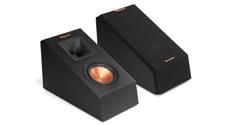 HDD Gear Deals: Up to 34% off Klipsch Dolby Atmos & Outdoor Speakers[teaser]Several Klipsch speakers are now on sale through Amazon![/teaser] As part of the company's summer savings promotion, Klipsch is running a sale on select Dolby Atmos and outdoor speaker models. Klipsch RP-280FA Floorstanding Speaker - Currently $799 (33% off). Klipsch RP-140SA Dolby Atmos Speaker (Pair) - Currently $355 (29% off). Klipsch AWR-650-SM Sandstone (Ea.) Outdoor Rock Speaker - Currently $198 (34% off). Klipsch AW-650 Indoor/Outdoor Speaker - Black (Pair) - Currently $389 (29% off). Klipsch CP-6 Indoor/Outdoor Speaker - Black (Pair) - Currently $279 (20% off). These deals will only be active for a limited time while supplies last. Make sure to stay tuned to High-Def Digest for more sales and special promotions!Posted Mon Jun 12, 2017 at 08:05 PM PDT by:
 -
 IMAX Announces Layoffs as Part of Cost Reduction Plan[teaser]The company is cutting its workforce to save costs.[/teaser] IMAX has announced a new cost reduction initiative marked by layoffs and a share repurchase program aimed at increasing the company's value. The decision comes in the wake of four consecutive quarters of declining per-screen attendance. "We are committed to expanding our theatre network, pursuing new initiatives and delivering value to shareholders," said IMAX CEO Richard L. Gelfond. "Our confidence in the Company's growth prospects is underscored by our recent buyback activity, and by today's announcement of an additional buyback program for up to $200 million. A more streamlined cost structure will enable us to scale our business with increased efficiency and facilitate operating leverage during both strong and weak periods of box office. It also affords us the bandwidth to pursue important new initiatives, including original content and virtual reality." As part of the initiative, IMAX will be cutting 100 full-time positions, including jobs at IMAX China. In total, the reduction will be equal to roughly 14% of the company's full-time global workforce, and is set to help reach approximately $20 million in annualized cost savings. In addition, IMAX's new share repurchase program will authorize the repurchase of up to $200 million of its common shares by June 30, 2020. IMAX's dropping attendance comes as theater configurations with reclining seats and competing premium formats like Dolby Cinema continue to expand their presence in the market. Beyond IMAX's large-screen theatrical installations, the company recently launched new IMAX VR Centers in New York and LA, offering immersive Virtual Reality experiences with room-tracking technology, single-player and head-to-head multiplayer competitions, advanced VR headset technology, and control devices with lifelike haptic feedback. Sources: IMAX, DeadlinePosted Mon Jun 12, 2017 at 07:30 PM PDT by:
 -
 What is VR? -- Everything You Need to Know About Virtual RealityKeeping track of the latest audio and video tech can be daunting. Thankfully, High-Def Digest has you covered. Welcome to Home Theater 101 series, where we'll be explaining emerging technologies while also recommending the very best possible A/V gadgets n' gear you can buy at your particular budget level. When it comes to recent immersive tech and gaming advancements, few are as buzzworthy as VIRTUAL REALITY. But just what exactly is VR? And which headset is right for you? Fret not! [teaser]If you don't know the difference between an Oculus Rift and a Daydream View, this guide is here to breakdown the ins and outs of Virtual Reality.[/teaser] So, without further ado, let's dive right into... HOME THEATER 101WHAT IS VIRTUAL REALITY? THE BASICS While virtual reality in some form or another has been around for decades, the format has recently seen a major revival and performance overhaul as display and computing technologies have advanced -- providing a new level of immersion that is a far cry from the blurry, pixelated mess one might have experienced in arcades back in the 90s. In its basic form, modern VR essentially consists of a high-resolution stereoscopic headset display with motion tracking. Likewise, some VR setups also include external motion controllers, binaural audio solutions, and more advanced spatial room sensors. But just what do all of these elements bring to the equation? Well, a high-res stereoscopic headset features separate lenses for the left and right eye, allowing a user to view VR images, video, and interactive experiences in full 3D -- just like one would with traditional 3D glasses you find in cinemas and home theaters. But unlike traditional 3D, a VR headset combines stereoscopic output with head tracking technology (either internal or external), a first person perspective, and a wide field of view (FOV) for peripheral vision, letting users turn their heads in order to shift their perspectives up, down, and around 360-degrees -- creating the sense that what you are seeing is actually all around you. Various external motion controllers then bring another level of interactivity to the experience, enabling hand gestures, and button presses to enable touch, movement, and selection of virtual items. Meanwhile, binaural audio technologies, including Dolby Atmos and DTS Headphone:X, allow sounds to move around a listener's head in a 3D virtual space through headphones, further enhancing the sense of immersion. Finally, more advanced VR rigs also include spatial sensors or some other form of body tracking for room scale virtual reality, actually allowing users to move around a real room to accomplish movement in a virtual space. Alternatively, walking can also be simulated through omnidirectional treadmills or similar devices. HEADSETS With growing support from numerous manufacturers and tech companies -- including Google, Samsung, Sony, Facebook, and HTC -- there's now several competing Virtual Reality hardware and software platforms on the market. And when it comes to headset models, there are two primary hardware types: headsets with built-in displays and headsets with smartphone displays. Headsets that feature integrated displays of their own usually require an external PC, laptop, or game console to power them. And though these models tend to be more expensive, their support for powerful computer and GPU hardware allows them to achieve the best performance. Meanwhile, smartphone compatible models typically use an inserted mobile device's display and processing power to run. And while these solutions are usually more affordable than headsets with integrated displays and PC requirements, they are also hindered by comparatively limited smartphone specs. In addition, some fully standalone VR headsets that feature their own integrated displays and hardware solutions without the need for separate computers or smartphones are also in the works. Here's a rundown of some of the main VR headsets available now or coming soon. Note: All listed prices reflect current retailer discounts at press time and do not include taxes. Samsung Gear VR ($106) - Samsung's current Gear VR headset is designed to be used with a Galaxy S8, S8+, S7, S7 edge, Note5, S6 edge+, S6 or S6 edge smartphone. Users simply need to connect their mobile device and lock it in place to start experiencing VR with up to a 2960 x 1440 resolution AMOLED display (S8). The headset features 42mm lenses with a 101-degree FOV (Field of View), and advanced distortion correction technology to minimize motion sickness. The device supports both micro USB and USB Type-C ports with a converter in-box. In addition, the 2017 headset comes with a new motion controller with touchpad and trigger for enhanced interaction, along with a strap to hold it in place when not in use. And though the headset does allow audio playback from a connected smartphone's integrated speakers, users will need separate headphones for binaural audio support. The Gear VR is powered by the Oculus mobile VR platform. It does not currently support room-scale VR. Google Daydream View ($70) - The Daydream View requires a Daydream-ready smartphone like the Google Pixel or Motorola Moto Z. Likewise, the Samsung Galaxy S8 and S8+ will also soon be supported. With the Pixel XL model, the headset sports a QHD 1440×2560 AMOLED display with an FOV (Field of View) of about 90-degrees. The Daydream View is available in Slate, Crimson, or Snow colors and is made with flexible and soft breathable fabrics, allowing the device to be 30% lighter than similar products while providing added comfort. To use the Daydream View, customers simply need to drop in a Daydream-ready smartphone and lock it into place. From there, the phone and headset connect wirelessly with an auto alignment system. In addition, the product includes a compact controller packed with sensors, letting customers interact with content through movements and gesture. And when not in use, the controller can slide right inside the headset for easy storage. Though the headset does allow audio playback from a connected smartphone's integrated speakers, users will need separate headphones for binaural audio support. The Daydream View uses Google's Daydream VR platform. It does not currently support room scale VR. Standalone Daydream Headsets - In addition to smartphone Daydream devices, the first standalone Daydream headsets are set to be released later this year. Standalone headset models will not require a smartphone or PC, and will instead use their own integrated displays and hardware optimized for VR. Daydream standalone headsets will also use new headset tracking technology called WorldSense, which can enable positional tracking to determine a user's precise movements in space for some level of room-scale VR without any external sensors. Google has partnered with Qualcomm to create the standalone headset reference design, and upcoming standalone Daydream headsets are in development from HTC VIVE and Lenovo. Oculus Rift ($500) - Designed for use with Windows PCs and laptops, the Oculus Rift features a 2160 x 1200 OLED display (1080×1200 per eye) with a 90Hz refresh rate and a 110-degree FOV (Field of View). Built-in audio, an integrated mic, and an Xbox One controller are included as well. And in addition to the headset itself, a bundle with two Oculus Touch motion controllers ($598) is also available. Sensors for movement tracking are included with the headset and controllers as well, but buyers will need a third sensor for room-scale VR. Recommended PC specs: Graphics Card - NVIDIA GTX 1060 / AMD Radeon RX 480 or greater Alternative Graphics Card - NVIDIA GTX 970 / AMD Radeon R9 290 or greater CPU - Intel i5-4590 / AMD Ryzen 5 1500X or greater Memory - 8GB+ RAM Video Output - Compatible HDMI 1.3 video output USB Ports - 3x USB 3.0 ports plus 1x USB 2.0 port OS - Windows 7 SP1 64 bit or newer HTC Vive ($799) - Like the Oculus Rift, the HTC Vive is designed for use with Windows PCs and laptops (though Mac support is on the way), and the headset also features a 2160 x 1200 OLED display (1080×1200 per eye) with a 90Hz refresh rate and a 110-degree FOV (Field of View). Unlike the Oculus Rift, however, the default HTC Vive package is ready for room-scale VR right out of the box, with two wireless controllers and two base stations. In addition, the standard bundle also includes a link box, earbuds, integrated mic, Vive accessories, safety guide, and warranty card. Recommended PC specs: Processor - Intel Core i5-4590 or AMD FX 8350, equivalent or better Graphics - NVIDIA GeForce GTX 1060 or AMD Radeon RX 480, equivalent or better. Memory - 4 GB RAM or more Video output - 1x HDMI 1.4 port, or DisplayPort 1.2 or newer USB - 1x USB 2.0 port or newer Operating system - Windows 7 SP1, Windows 8.1 or later or Windows 10 PlayStation VR ($387) - Designed for use with a PS4 and PlayStation Camera, the PS VR headset features a 1920×RGB×1080 (960×RGB×1080 per eye) OLED display with a 110-degree FOV (Field of View) and a 90Hz refresh rate (120Hz in cinema mode). The default package also includes the Processor unit, PlayStation VR headset connection cable, HDMI cable, USB cable, Stereo headphones, AC power cord, AC adaptor, and PlayStation VR Demo Disc. In addition, a bundle ($500) with the required camera, two Move controllers, and the PlayStation VR Worlds game is available as well. Limited room scale VR is supported. CONTENT Even the fanciest VR headset is pretty useless without worthwhile content available. Thankfully, game developers, filmmakers, and various media companies are starting to embrace virtual reality with a growing library of VR experiences through several platforms and gaming solutions like the Oculus Store and SteamVR. Some popular PC and PlayStation VR titles currently include games like Job Simulator, Resident Evil 7: Biohazard, Batman: Arkham VR, Minecraft VR, and Star Trek: Bridge Crew. Likewise, many streaming services like YouTube, Hulu, and Netflix have also started to offer some VR content support as well, though the latter currently only lets you watch standard videos in a virtual environment. Native VR videos, however, typically come in the form of full stereoscopic 3D 360-degree interactive or passive experiences -- though the quality of these titles can vary wildly. And that's where companies like Legend come into play. Known for their visual effects work and 2D to 3D conversions, Legend is also now a prominent fixture in the emerging VR scene, where they are involved in the creative development, on-set production, and post-production of VR content, helping clients realize their budgets on screen while utilizing the tech and storytelling tools of VR to their fullest. For this feature, Will Maurer, Legend 3D's VP of VR and VFX, was kind enough to speak with us, offering an overview of Legend's work and the company's overarching approach to the evolving VR platform. "I think there's a lot of opportunities in VR from the storytelling space. And I call it experiential storytelling, because you can't take the traditional filmmaking techniques and force it into VR," said Maurer. Instead, he recommends companies really ask themselves, "Why VR?" before approaching the format. Otherwise, users could simply be left with a lackluster experience that leaves them asking, "Why do I have this thing on my head?" On the unique aspects of experiential storytelling, Maurer described VR cinema as being "almost a melding of a game and a narrative going back to branching narratives or choose your own adventure books." This type of multi-path storytelling also offers a lot of potential for replay and re-watch value. "In the simplest form, you're watching an argument in front of you. One person goes to the left and one person goes to the right. I have a choice to follow one of them and then see where their story branches to or continues and then I can go back and re-watch the piece... and choose the other perspective." And on the subject of whether or not there are any key technical requirements for compelling VR content, Maurer stressed the importance of stereoscopic imagery and 3D spatial sound, along with a need to keep compression to a minimum while seamlessly blending stitching and effects work. In essence, once the separate elements and imperfections of a video become visible, the sense of immersion really starts to collapse, and Legend is working hard with its clients to ensure that this doesn't happen. In addition to 3D video and audio, emerging tech like HDR (high dynamic range) may also find its way into more future virtual reality content. In fact, the company recently worked on a 3D 360-degree content piece for REX Real Estate that was captured in HDR with a Red Epic camera. Other advances on the horizon also have Maurer especially intrigued about the future possibilities of VR experiences, including developments with room-scale VR. "I'm excited about volumetric capture. For instance, in the concert space or the sports space where you can actually go up and feel like you're in the same room and environment and actually move around." But rather than scour through hundreds of clips on VR app stores with smartphone headsets, Maurer actually sees a lot of potential in emerging VR arcades and venues like the new IMAX VR Centers in New York and LA. "Going back to malls and airports and movie theaters, I think that's the perfect opportunity for a captive audience. I think they trust going somewhere and paying that they are going to see quality content." Of course, that's not to say that you can't find plenty of quality VR experiences right now if you know where to look. On that note, if you'd like to see some of Legend's VR content for yourself, be sure to check out the Kong: Destination Skull Island VR experience that the company recently worked on with ILM. He gets so close you can almost feel his breath. So, there you have it. Those are the basics of Virtual Reality. If you still have any questions about VR, please let us know in the forums! MORE HOME THEATER 101 ARTICLES -Best Dolby Atmos Speakers for 2017-Best Budget TVs for 2017-Best UHD TVs for 2017-What is Dolby Vision?-What is HDR?-What is Dolby Atmos?-What is DTS:X-Best Sound Bars-Up-mixed: Dolby Surround vs DTS:Neural:XPosted Mon Jun 12, 2017 at 10:44 AM PDT by:
 -
 Streaming News Roundup: 'Gypsy, 'Oh, Hello Broadway,' and More[teaser]A new Netflix drama starring Naomi Watts and a Broadway show from Nick Kroll and John Mulaney are among the latest streaming announcements.[/teaser] Netflix has released new trailers, date announcements, and other info for several of their upcoming shows and movies, including Gypsy, Oh Hello Broadway, Chasing Coral, The Ranch, Alexa and Katie, and The Death and Life of Marsha P. Johnson. Check out a full rundown of the latest streaming news and trailers below: Oh Hello Broadway (Netflix, June 13) - Gil Faizon (Nick Kroll) and George St. Geegland (John Mulaney) bring their hit Broadway show to Netflix. Two delusional geriatrics reveal curious pasts, share a love of tuna and welcome a surprise guest in this filming of the popular Broadway comedy show. Oh, Hello on Broadway is produced by RadicalMedia; it's written, performed and executive produced by Nick Kroll and John Mulaney, and directed and produced by Michael John Warren. Dave Sirulnick, Jon Kamen, and Justin Wilkes executive produced for RadicalMedia. Alex Timbers, Dave Becky, Mike Berkowitz, Julie Darmody, David Miner and Christie Smith also served as executive producers. Lisa Nishimura and Robbie Praw executive produced for Netflix. The Ranch: Part 3 (Netflix, June 16) - Set in the present day on a Colorado ranch, THE RANCH stars Ashton Kutcher as Colt, a failed semi-pro football player who returns home to run the family ranching business with his older brother Jameson "Rooster" (Danny Masterson) and father Beau (Sam Elliott), whom he hasn't seen in 15 years. Debra Winger stars as Colt's and Rooster's mother, Maggie, who runs the local town bar. Don Reo (Two and Half Men, My Wife and Kids) and Jim Patterson (Two and a Half Men, Mike and Molly) executive produce. Kutcher and Masterson also serve as executive producers. Gypsy (Netlifx June 30) - The ten-part psychological thriller focuses on Jean Halloway (Naomi Watts), a Manhattan therapist with a seemingly picturesque life who begins to develop intimate and illicit relationships with the people in her patients' lives. As the borders of Jean's professional life and personal fantasies become blurred, she descends into a world where the forces of desire and reality are disastrously at odds. In addition to Watts, Gypsy also stars Billy Crudup (Spotlight) as Jean's husband Michael Halloway, Sophie Cookson (Kingsman) as Sydney, Lucy Boynton (Murder on the Orient Express) as Jean's patient Allison, and Karl Glusman (Nocturnal Animals) and Jean's patient Sam. Chasing Coral (Netflix, July 14) - Taps into the collective will and wisdom of an ad man, a self-proclaimed coral nerd, top-notch camera designers, and renowned marine biologists as they invent the first time-lapse camera to record bleaching events as they happen. Unfortunately, the effort is anything but simple, and the team doggedly battles technical malfunctions and the force of nature in pursuit of their golden fleece: documenting the indisputable and tragic transformation below the waves. With its breathtaking photography, nail-biting suspense, and startling emotion Chasing Coral is a dramatic revelation that won’t have audiences sitting idle for long. The Death and Life of Marsha P. Johnson (Netflix, Later this year) - When Marsha P. Johnson, the beloved, self-described "street queen" of NYC's gay ghetto, was found floating in the Hudson River in 1992, the NYPD refused to investigate. Instead, they chalked it up to suicide, a widely dismissed conclusion, and left the mystery to fester for decades. Having played a pivotal role in the Stonewall Riots of 1969, Marsha and fellow icon Sylvia Rivera went on to form the world's first trans-rights organization, STAR (Street Transvestites Action Revolutionaries) in 1970. And despite their many challenges over the years – harassment, homelessness, alcoholism - Marsha and Sylvia ignited a powerful and lasting civil rights movement for gender nonconforming people. Now, 25 years after her untimely death, at a time of unprecedented visibility for, and escalating violence against, the transgender community, veteran crime-victim advocate Victoria Cruz has taken it upon herself to reexamine what happened to Marsha and measure the challenges that still face the community. The film follows as this intrepid champion pursues leads, mobilizes officials, and raises troubling new questions about a famous cold case. Along the way she burnishes the political legacy of a celebrated historical figure. "Almost single-handedly, Marsha P. Johnson and her best friend Sylvia Rivera touched off a revolution in the way we talk about gender today," said David France. "Their names should be household words. But Marsha’s life was cut tragically short and Sylvia died shortly thereafter, the victim of a broken heart. Getting to know their story through the investigation undertaken by Victoria Cruz, a seminal activist in her own right, has been one of the great honors of my career. Now, with Netflix as our distribution partner, I am confident the legacy of these tremendous women will never be forgotten." Finally, Netflix has announced the addition of Tiffani Thiessen (Dinner at Tiffani’s, White Collar) to the cast of Alexa & Katie. Thiessen will join the series as Lori the determined and protective mother of one of the lead characters. The show is a multi-cam comedy about two lifelong best friends eagerly anticipating the start of their freshman year of highschool. The friends confront a crisis that leaves them feeling like outsiders, at a time when what seems to matter most is fitting in. Alexa and Katie also stars Paris Berelc (Mighty Med, Lab Rats: Elite Force) and newcomer Isabel May, who play the title characters respectively. The series was created by Heather Wordham (Hannah Montana, Reba). Matthew Carlson (Malcolm in the Middle, Samantha Who?) is on board as showrunner. In addition, Wordham and Carlson are listed as executive producers. The 13-episode first season is set to premiere in 2018. A current Netflix subscription starts at $10 for HD streaming and $12 for Ultra HD streaming. Sources: Netflix 1, Netflix 2, Netflix (YouTube)Posted Sun Jun 11, 2017 at 07:00 PM PDT by:
 -
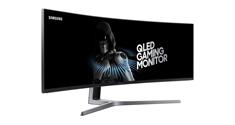 Samsung Launches New QLED Monitors with HDR and Quantum Dots[teaser]Three new HDR displays geared toward gaming have been detailed.[/teaser] Samsung has announced the latest additions to its gaming monitor lineup. The new QLED display collection includes the ultra-wide 49-inch CHG90, the 27-inch CHG70 , and the 32-inch CHG70. "Gamers want to feel completely immersed when they play, and our new monitors provide the most stunning visuals to deliver the ultimate gaming experience," said Andrew Sivori, VP, Product Marketing at Samsung Electronics America. "These QLED gaming monitors represent the future of gaming for both casual and dedicated players alike, and we're confident that our innovative design and state-of-the-art features will enhance the entire gaming arena." All three displays use QLED Quantum Dot technology (also available in the company's 2017 QLED Ultra HD TV lineup) with a new metal core and support for 125 percent of the sRGB color space and 95 percent of the DCI-P3 color space. Likewise, the monitors all offer HDR (high dynamic range) capabilities with 600 nits of brightness, AMD's new Radeon FreeSync 2 technology, a curvature of 1,800R, a 178-degree viewing angle, a rapid 1ms response time, and a 144hz screen refresh rate. In addition, the 49-inch CHG90 model features a resolution of 3,840x1,080 and an ultra-wide 32:9 aspect ratio, while the CHG70 models feature a resolution of 2560x1440 and a 16:9 aspect ratio. The 49-inch CHG90 is now available for pre-order on Amazon.com and at local Micro Center retail stores for an MSRP of $1,499. Meanwhile, the 32-inch CHG70 is available for pre-order exclusively through Newegg.com for $699, and the 27-inch CHG70 is available for pre-order through Samsung.com for $599. In addition, the 32-inch CHG70 will be on display at Ubisoft's booth during the Electronic Entertainment Expo (E3) next week. Source: SamsungPosted Fri Jun 9, 2017 at 04:30 PM PDT by: