-
 Netflix Launches Dolby Atmos Streaming Support[teaser]Select devices can now play Dolby Atmos tracks on supported Netflix titles.[/teaser] Netflix has announced the launch of Dolby Atmos audio support with the release of Bong Joon Ho's latest film Okja. In addition, several other Dolby Atmos titles are set to arrive throughout the coming months. Atmos playback for Netflix is currently only available through the Xbox One and Xbox One S consoles, but support for more devices will be added in the future. Dolby Atmos is an immersive, object-based audio technology that can add overhead audio to supported content and sound systems through ceiling speakers or Dolby Atmos speakers with upward firing drivers. Check out director Bong Joon Ho's thoughts on the technology below: In order to play Dolby Atmos content through Netflix, customers will need: - A Dolby Atmos capable audio system- A “4 Screens + Ultra HD” Netflix plan- A Netflix capable device with Dolby Atmos support- Streaming quality set to High or Auto Currently, Dolby Atmos Netflix playback is only supported through the Xbox One and Xbox One S consoles. With that said, support for 2017 LG OLED TVs is coming soon, and more devices are expected to be added over time as well. Beyond Okja, Netflix's upcoming slate of titles with Dolby Atmos audio tracks will include: - BLAME! (July 28)- Death Note (August 25)- Bright (December)- Wheelman (2017) A current Netflix subscription starts at $10 for HD streaming and $12 for Ultra HD streaming. Outside of Netflix, Dolby Atmos audio is also found on select Blu-rays, Ultra HD Blu-rays, and VUDU streaming titles. Likewise, the technology is also used in several theatrical releases and select movie theaters. Source: NetflixPosted Wed Jun 28, 2017 at 08:00 AM PDT by:
 -
 HDR Sucks: The Challenges & Frustrations of HDR10Keeping track of the latest audio and video tech can be daunting. Thankfully, High-Def Digest has you covered. Welcome to our new Home Theater 101 series, where we'll be explaining emerging technologies while also recommending the very best possible A/V gadgets n' gear you can buy at your particular budget level... Before a mob forms and screams for my head, please let me apologize for the provocative title and clear up a couple things. I'm not about to argue against HDR (high-dynamic range) content and neither am I arguing for its demise. In fact, I want to champion HDR content and hope for its success. There is much to love and appreciate in the pursuit of better contrast, richer blacks and improved, wider color reproduction, especially as someone who wants to recreate a true theatrical experience at home. The purpose of this article is to share specific grievances and frustrations with the implementation of HDR10 across Ultra HD Blu-ray and UHD streaming, and explain why Dolby Vision is superior and should eventually win this current battle for my wallet. So, without further ado, welcome to HOME THEATER 101HDR10 SUCKS We've already covered the basics about What is HDR? and What is Dolby Vision? in previous Home Theater 101 articles. If you need a refresher, please click on those article titles above. As any long-time home theater enthusiast knows, the introduction of new toys rarely goes smoothly or without a hitch. Those of us infected with the ridiculous obsession of upgrading to the latest and greatest (the terminal and incurable condition affectionately referred to as "upgraditis") are usually the guinea pigs for manufacturers promising better quality in some small area or another. And sometimes, it's difficult to remain objective, to criticize or admit the faults and drawbacks of the recent addition to the setup, in light of the amount of money spent to own the new, shiny toy. When Blu-ray was officially introduced to the market in 2006, it was fraught with a variety of issues and a mostly terrible selection of titles mixed with a few good ones. A bigger problem still was the awful picture quality of every single one of those movies, mainly due to the fact that studios simply recycled outdated DVD masters. Today, we're faced with a similar problem with many of the 4K Ultra HD (UHD) titles being released based on upconverted 2K digital intermediates (DI). The outcome isn't always bad, but the process can introduce some unwanted artifacts, such as aliasing, an unnatural grain structure or just poor resolution quality. This is precisely the problem with recent releases 3:10 to Yuma (2007), xXx: The Return of Xander Cage and the first Iron Man movie, which was released in Germany. To be fair, sharper image quality is only one small advantage of UHD discs. The reason for the format's existence is really on the implementation of HDR and a wider color gamut (WCG), capable of at least 90% of the DCI-P3 (Digital Cinema Initiative P3) color space used in cinemas today. But this is where we encounter one of our first problems because sadly, the quality of those features is dependent on the television set. While it's worth mentioning consumers are not always buying true 4K material, a bigger issue with the HDR mastering process introducing other possible faults in the format is related to the capabilities of individual TVs. In other words, while there is an agreed-upon standard for HDR created by the Ultra HD Forum, there isn't exactly a specified guideline for TV makers to abide by. Ultimately, this means that the 4K content being displayed can be handled differently from one manufacturer to the next. So, what are these standards and how can this create an issue between the many TV sets? Picture taken on high-def camera with HDR, but not an accurate representation of the actual content According to the Forum, HDR content can be mastered up to 4,000 "nits" of peak brightness, though it currently maxes at 1,000 nits, in 10-bit color depth. But most sets on the market right now range between 500 and 700 nits. The higher end Sonys and Samsungs have tested a tad brighter, and LG promises their more expensive line of OLEDs are capable of over 1,000 nits. I'm pointing out these differences because the question then becomes what happens to the extra missing nits. Well, that is decided by the manufacturer, which could either lead to better detailing in the specular highlights or a loss of them depending on the TV model purchased. When comparing the same still image, a Samsung TV can look brighter, but it can also wash out the finer details in the whitest whites. Meanwhile, a higher-end Vizio will seem darker, but whites will remain brilliant while maintaining clarity of those tiny, fine lines. The same goes for very dark scenes where shadows may crush small background information in one TV, but not as bad in another. The same movie on UHD can actually look better and brighter in one TV versus another. This, too, introduces another obstacle when it comes to calibration. When trying to adjust contrast, some TVs will achieve 1,000 nits with little issue, but other sets could potentially start blooming before even coming close. The same goes for adjusting brightness levels where the goal is to hit below 0.05 nits, but there is little guarantee that new TV can achieve that level before crushing. With manufacturers deciding the peak brightness of each set and depending on the model, there is potential for lots of discrepancy and disagreement in PQ between viewers. On top of that, HDR10 is an open-source format (no licensing fees for using it or advertising it), which allows manufacturers and studios to use it as they see fit without any consensus on how the content should be displayed. HDR10 is also a static mastering process that clicks on at the start of the movie, like someone simply flicking a switch and calling it good. The tone and gamut mapping techniques don't change or adjust depending on the scene or according to the stylized cinematography. Everything is dialed to specific peak targets, and they stay that way from start to finish with less consideration as to whether or not it was the filmmakers' intention or looks appropriate to the scene. On the other hand, Dolby Laboratories aims higher and with the future capabilities of television in mind with their HDR standard and mastering process. Dolby Vision is a proprietary format, meaning manufacturers pay a licensing fee because everyone involved must meet the same, universal standard. You can read the great article by Steve Cohen linked above for a breakdown of those standards. But for our purposes, I'll only mention that, with the promise of 68 billion colors, primaries already appear fuller and more true to life in the current slate of televisions while displaying a richer, more varied array of secondary hues. Much of the format's already noticeable superiority is due to a tone and gamut mapping process that's far more dynamic and active, meaning peak targets are adjusted scene by scene or frame by frame. By being a proprietary format, manufacturers must calibrate picture settings to Dolby's requirements. The drawback to this is that it limits the calibration efforts of the end user. That's not to say that owner's of their new, shiny 4K HDR display can't make alterations, but rather, the adjustments shouldn't be that far off from the prescribed settings out of the box. This would explain why we have yet to see Dolby Vision available on projectors, and we might not for several more years. The technicians at Dolby have a set goal in mind of how the picture should look. TVs can be made with those specific settings because they are not quite as sensitive as a projector, which is dependent on the condition of the room and must be adjusted accordingly. I don't have any official word from Dolby as to why Dolby Vision has yet to be included in projectors, but I suspect those technicians take into consideration that not all PJ owners watch in very dark rooms or environments where the lighting is controlled. Picture taken on high-def camera with HDR, but not an accurate representation of the actual content Granted, the strength of Dolby Vision all sounds good and fantastic on paper, but if most current televisions can't even reach 1,000 nits and max at 10-bit color depth, including 2017 models, then what does it matter? The point is that as excited as I am of HDR10 — and I am, owning every single UHD disc released thus far, including some rather questionable titles and a few imported from other parts of the world — I am even more excited for Dolby Vision. The standard is the future of home theater with the promise of being a better representation of a filmmaker's vision. And already, we can see the benefits and differences, especially now with three UHD titles featuring Dolby Vision HDR with plenty more coming in the next few months. Admittedly, the differences are very subtle, minor and arguably negligible for some, but they are nonetheless notable improvements giving us a glimpse of what is possible. On the more obvious and immediate side of things, there are CG animated films like The LEGO Movie and The LEGO Batman Movie available on VUDU and can be had using the digital copy codes in the UHD package. In both cases, viewers can enjoy a significantly richer and far more energetic color palette than the HDR10, which are themselves a gorgeous presentation. The same goes for Despicable Me and its sequel. A point of comparison in part one is the Gru talking to his neighbor Fred, showing more vibrant yellows in his shirt against a luminous blue sky and lush green grass. In part two, when the two men are playing cards, the barrel on which they're playing and the container behind them glows a more accurate orange while the whites of the snow and the large number on the side sparkle a little brighter. And in either movie, Kyle's teal-colored hairs appear more intense and insect-like. Amazingly, the improved, deeper black levels make possible for even more visible details in the individual LEGO blocks, Batman's costume, Gru's jacket and Dr. Nefario's lab, giving each 4K presentation a jaw-dropping realism while providing the overall picture with an incredible three-dimensional depth. But what about live action movies? I can already hear some dissenters chanting, "That's all well and good, but how does Dolby Vision make my favorite live-action movie any better?" Well, going back to VUDU, in something like Unforgiven or Mad Max: Fury Road where the stylized photography shows a more restrained palette, the advantage is not so much in the colors, though flesh tones in MM:FR appear more natural and less reddish than the UHD, but in the contrast and brightness levels. In Clint Eastwood's award-winning western, there is more noticeable detailing in the fluffy clouds against a bright blue sky whereas the HDR10 makes them seem mistier. In George Miller's dystopian actioner, the faded, cracked white paint of War Boys is more realistic while individual grains of sand and rust spots of the War Rig are more visible. When combined with brightly colorful films, such as Pan or Pacific Rim, the Dolby Vision version easily wins that contest, again with better detailing in the specular highlights and against the blackest blacks, especially in the case of Guillermo del Toro's anime-inspired sci-fi fantasy. What really took me by surprise is also seeing this sort of improvement when comparing Power Rangers. The opening sequence with the Red Ranger crawling on the floor revealing more details in the dark distance while maintaining excellent contrast throughout. As Zordon inches closer to the camera, we can better make out what I assume are blue veins around his face and shoulders while the rest of his body comes with a bluish gray tone. Later on, the colorful Ranger outfits are absolutely brilliant and glowing while maintaining extraordinary clarity of the black fine lines in the design. When the kids stand around the Morphing Grid to finally morph, the intensely bright light doesn't wash out the individual wrinkles and creases in their clothes while the rest of the room remains covered in dark shadows. In the end, as much as I enjoy the current slate of 4K UHD Blu-ray titles, I am slowly coming to the conclusion that HDR10 sucks. Its limitations will soon fail to keep up with the future of television (which is why there have already been announcements about HDR10+ -- the + adds dynamic metadata -- for Samsung TVs and Amazon streaming content). Dolby Vision, on the other hand, is ready for that demand and already showing its advantages.Posted Mon Jun 26, 2017 at 09:02 AM PDT by:
 -
 Epson Reveals Home Cinema 4000 Projector with 4K Enhancement & HDR for $2,199[teaser]The new projector supports 4K and HDR content.[/teaser] Epson has announced the latest addition to its projector lineup. The Home Cinema 4000 offers 4K Enhancement technology and HDR10 playback for an MSRP of $2,199. "Epson's latest 4Ke solution provides a comprehensive viewing experience that incorporates outstanding superior brightness, extreme contrast, broad color gamut, high color fidelity and amazing resolution to deliver image quality that rivals more expensive 4K solutions currently available in the market today," said Rodrigo Catalan, senior product manager, Projectors, Epson America. "From the light source, to the signal processor, to the 3LCD module, to the lens – Epson projectors deliver high quality images at a range of price points to bring big-screen performance to a range of consumers." Though not a native Ultra HD model, the projector features the company's 4K Enhancement technology, allowing the device to accept 4K UHD content by shifting each pixel diagonally by 0.5 pixels to double the resolution and surpass Full HD image quality. Likewise, the projector provides HDR10 support for high dynamic range content and 100 percent coverage of the DCI-P3 wide color gamut, along with 100 percent Pure Color Brightness with 2,200 lumens, a contrast ratio of up to 140,000:1, and support for screens up to 300-inches wide. Two HDMI connections and an optical audio port are integrated as well. Here's a full rundown of key specs and features per Epson: • 4K Enhancement Technology – Accepts native 4K UHD content; also up-scales 1080p input for resolution that exceeds Full HD • HDR10 – High Dynamic Range for full 10-bit color output; extraordinary range of brightness for images bursting with real-life color • 100 Percent Pure Color Brightness – 2,200 lumens equal color and white brightness3 for vibrant, rich color in every mode • UltraBlack™ Contrast – Up to 140,000:1 contrast ratio for rich detail in both bright and dark scenes • Smart Motorized Lens – Preset up to 10 positions for powered focus, zoom and lens shift; features 2.1x zoom and ultra wide lens shift • L*a*b* Ultra Wide Color Gamut – Offers 100 percent coverage of the DCI-P3 color space, the digital cinema standard4 • Delta Level Color Accuracy – With a low Delta E rate, the Home Cinema 4000 delivers extremely accurate color reproduction for true-to-life images • Epson 3LCD Technology – Precision-aligned 3-chip engine delivers jaw-dropping action scenes with no rainbow effect The Epson Home Cinema 4000 is AVAILABLE NOW through select retailers, e-tailers, and the Epson online store for an MSRP of $2,100. Home Cinema 4000 vs Home Cinema 5040UB For anyone curious, we recently reviewed the Pro Cinema 6040UB / Home Cinema 5040UB -- which you can read HERE. When talking to Epson about the launch of the Home Cinema 4000, we asked about key differences between the models... At present, the HC 5040UB costs around $300 more than the HC 4000. For that $300, you get 2500 lumens (vs. 2200) and a million-to-one contrast ratio (vs 140,000:1), both of which will improve overall brightness, black level, and HDR performance. Otherwise, the Home Cinema 4000 offers the same basic casing, menu design, and color volume performance described above and in our full review. It's hard to argue with a $2,199.99 entry-level pricing, but if you want to do any daytime and/or 4K HDR viewing, the 5040UB might be a better choice. Either way, though, you'll be happy -- until true-4K projectors become more affordable, Epson 4Ke projectors are the best deals in town. Source: EpsonPosted Mon Jun 26, 2017 at 07:00 AM PDT by:
 -
 Streaming News Roundup: 'Star Trek: Discovery,' 'Wet Hot American Summer' and More[teaser]A release date for the new Star Trek series has finally been announced.[/teaser] CBS has announced a September 24 premiere for Star Trek: Discovery. The show will be broadcast that night on the CBS Television Network at 8:30-9:30 PM, ET/PT. Likewise, the series premiere will also be available through the CBS All Access streaming service, along with the second episode that same night immediately following the broadcast premiere. New episodes will then be available on-demand weekly on Sundays exclusively through CBS All Access in the US. The first season will consist of 15-episodes and will be released in two chapters. The first eight episodes will run from September 24 through November 5. The remaining episodes will then start streaming in January 2018. Meanwhile, Netflix has released new trailers, date announcements, and other info for several of its own upcoming shows and movies, including The Standups, To The Bone, Last Chance U, The Incredible Jessica James, Wet Hot American Summer: Ten Years Later, Atypical, and The Good Cop. The Standups (Netflix, July 4) - What’s better than one stand-up special? Find out when Netflix releases “The Standups,” a comedy special featuring six 30-minute episodes where six up-and-coming comedians take the mic to show off their material to the world. In “The Standups,” filmed live at the Cicada Restaurant and Club in Los Angeles, each comic brings a uniquely fresh and hilarious take on life in this intimate series of comedy shows. “The Standups” features the comedic talents of Nate Bargatze, Deon Cole, Fortune Feimster, Nikki Glaser, Dan Soder and Beth Stelling. To The Bone (Netflix, July 14) - Ellen is an unruly, 20-year-old anorexic girl who spent the better part of her teenage years being shepherded through various recovery programs, only to find herself several pounds lighter every time. Determined to find a solution, her dysfunctional family agrees to send her to a group home for youths, which is led by a non-traditional doctor. Surprised by the unusual rules—and charmed by her fellow patients—Ellen has to discover for herself how to confront her addiction and attempt self-acceptance, in order to stand a chance against her demons. Last Chance U: Season Two (Netflix, July 21) - A character driven, gut-wrenching behind-the-scenes look at the world of college football. The first season followed a group of young men training to become the future stars of the NFL. The football players are the latest recruits to East Mississippi Community College (EMCC), an undefeated team with 3 consecutive National Championships under their belt. The EMCC Lions have become a phenomenon in junior college sports, attracting elite athletes, some of whom have been held back by poor academic performance or behavioral issues. Under Coach Buddy Stephens, EMCC has become one of the most successful but least known athletic programs, graduating more than 20 players per year into football scholarships at four year universities, with nine of his former players currently playing in the NFL. The Incredible Jessica James (Netflix, July 28) - Jessica Williams (“The Daily Show”) stars as a young, aspiring playwright in New York City who is struggling to get over a recent breakup. She is forced to go on a date with the recently divorced Boone, played by Chris O’Dowd (Bridesmaids) and the unlikely duo discover how to make it through the tough times in a social media obsessed post-relationship universe. Lakeith Stanfield (FX’s “Atlanta”, Straight Outta Compton) and Noël Wells (Netflix’s “Master of None”) co-star. The film was written and directed by Jim Strouse and produced by Michael B. Clark and Alex Turtletaub of Beachside. Jessica Williams and Kerri Hundley serve as executive producers. Wet Hot American Summer: Ten Years Later (Netflix, August 4) - Welcome to the Camp Firewood 10 Year Reunion! From David Wain and Michael Showalter, the filmmakers that brought the original 2001 cult classic and the 2015 acclaimed prequel series by the same name, Wet Hot American Summer: Ten Years Later is the hilarious new eight-part limited series starring the original cast, plus an all-star lineup of new cast members. 10 Years Older. 10 Years Hotter. 10 Years Wetter. Returning cast includes A.D. Miles, Amy Poehler, Beth Dover, Chris Meloni, Chris Pine, David Hyde Pierce, David Wain, Elizabeth Banks, Eric Nenninger, H. Jon Benjamin, Janeane Garofalo, Jason Schwartzman, Joe Lo Truglio, John Early, Josh Charles, Ken Marino, Kristen Wiig, Lake Bell, Marguerite Moreau, Marisa Ryan, Michael Ian Black, Michael Showalter, Molly Shannon, Nina Hellman, Paul Rudd, Rich Sommer, Sarah Burns and Zak Orth. New cast members include Skyler Gisondo, Samm Levine, Mark Feuerstein, Marlo Thomas, Joey Bragg, Jai Courtney, Dax Shepard, Alyssa Milano and -- surprise! -- Adam Scott. Atypical (Netflix, August 11) - A coming of age story that follows Sam (played by Keir Gilchrist), an 18-year-old on the autistic spectrum as he searches for love and independence. While Sam is on his funny yet emotional journey of self-discovery, the rest of his family must grapple with change in their own lives as they all struggle with the central theme: what does it really mean to be normal? Jennifer Jason Leigh stars as his mother, Elsa, who is on her own journey of self-discovery. Michael Rapaport plays his father, Doug. Brigette Lundy-Paine (Margot vs Lily, The Glass Castle) plays Sam’s sister Casey and Amy Okuda (How to Get Away with Murder) plays his therapist Julia. The series produced by Sony Pictures Television is created and written by Robia Rashid (The Goldbergs, How I Met Your Mother, Will & Grace). Academy Award winning producer Seth Gordon (Baywatch, The Goldbergs, Horrible Bosses, The King of Kong) directs several episodes. Rashid and Gordon serve as executive producers along with Mary Rohlich, and with Jennifer Jason Leigh serving as a producer. The Good Cop (Netflix, Coming Soon) - Tony Danza plays Tony Sr., a disgraced, former NYPD officer who never followed the rules. He lives with his son, Tony Jr., an earnest, obsessively honest NYPD detective who makes a point of always following the rules. This “odd couple” become unofficial partners as Tony Sr. offers his overly-cautious son blunt, street-wise advice on everything from handling suspects to handling women. "We're excited to bring viewers the return of Tony Danza, one of television's most beloved icons," said Cindy Holland, Vice President, Original Content for Netflix. "The Good Cop is a funny, charming procedural series that we think our members will love." - A current Netflix subscription starts at $10 for HD streaming and $12 for Ultra HD streaming. - A current CBS All Access subscription costs $5.99 per month with reduced commercials or $9.99 per month for a commercial-free plan. Sources, Netflix (Youtube), Netflix, CBSPosted Fri Jun 23, 2017 at 10:00 PM PDT by:
 -
 HD Gear News Roundup: LG Flexible OLED, Varjo VR Display, and More[teaser]We've compiled the latest gear news, including a new flexible OLED, high-res headmount display, and app updates.[/teaser] From product announcements and streaming app updates to general industry news and recent gear trends, keeping up with the latest tech news can be a daunting task. With that in mind, we're here to offer you a roundup of some of the latest gear and consumer electronics news that you may have missed. For this edition, we're covering LG's new 77-inch flexible OLED, Varjo's "20/20" VR display, iOS Cloud DVR support for Sling TV, and YouTube updates. So, without further ado, here's a rundown of some of the latest gear and tech news: LG Reveals World's First 77-inch Flexible and Transparent OLED Display LG Display has announced its latest innovation in large screen OLED tech -- a 77-inch flexible and transparent OLED display. "LG Display, opened the large-sized OLED TV market in 2013, has been leading the OLED industry and will continue to bring innovation to the market," said Senior Vice President and Chief Technology Officer In-Byung Kang. "We pledge to provide differentiated value as the leader in the future display market." The new OLED is now the world's first and largest flexible and transparent display of its kind. The screen features an Ultra HD (UHD) resolution of 3840x2160 with 40% transparency, 80 radius of curvature, and the ability to be rolled up to a radius of 80mm without affecting the function of the display. LG previously demoed an 18-inch flexible and rollable OLED panel with 30 radius of curvature, an 18-inch transparent OLED panel, and a 55-inch transparent OLED panel with 40 percent transparency. Though only a demo piece for now, the company hopes to use the flexible and transparent OLED tech in the digital signage space. Meanwhile, LG continues to produce traditional large-screen 4K Ultra HD TV OLED panels for the home theater market. Source: LG Display Varjo Details "20/20" Human Eye-Resolution VR/AR/XR Headmount Display Varjo has revealed the world’s first "Human eye-resolution" headmounted display. The tech is designed for use in upcoming Varjo-branded immersive computing products. "Varjo's patented display innovation pushes VR technology 10 years ahead of the current stateof-the-art, where people can experience unprecedented resolution of VR and AR content limited only by the perception of the human eye itself," said Urho Konttori, CEO and founder of Varjo Technologies. "This technology, along with Varjo VST, jump-starts the immersive computing age overnight – VR is no longer a curiosity, but now can be a professional tool for all industries." Codenamed "20/20," the prototype is capable of an effective resolution of 70 MP -- almost 70x beyond any currently shipping or announced head-mounted display like the Oculus Rift or HTC Vive (1.2 MP), offering new levels of immersion for Virtual Reality, Augmented Reality, and Mixed Reality (VR/AR/MR) platforms. To achieve such enhanced performance, the 20/20 uses Varjo's patented technology to replicate how the human eye naturally works, enabling a super-high-resolution image further combined with video-see-through (VST) for AR/MR support. 20/20 tech will start shipping in Varjo-branded products for professional users and applications in late Q4, 2017. Source: Varjo YouTube Announces VR180 Format and Expands YouTube TV to More Markets YouTube has announced the VR180 virtual reality format developed in conjunction with Daydream. VR180 is designed to make creating VR videos easier and more affordable by limiting recording to what's in front of a user. The format offers 3-D video with 180-degree capture, resulting in an immersive experience when viewed through a VR headset, while also looking great on a traditional tablet, smartphone or desktop. The company is working with camera manufacturers like LG, Yi, and Lenovo to build new VR180 cameras, with prices set for as little as a couple hundred dollars. Meanwhile, YouTube has also announced an expansion of its YouTube TV streaming service. The subscription internet TV platform will be rolling out to ten more markets in a couple of weeks, including Dallas-Fort Worth, Washington, D.C., Houston, Atlanta, Phoenix, Detroit, Minneapolis-St. Paul, Miami-Fort Lauderdale, Orlando-Daytona Beach-Melbourne, and Charlotte. YouTube TV offers access to more than 40 live streaming networks, regional sports channels, and cable stations, including ABC, CBS, FOX, NBC, The CW, ESPN, Fox News, MSNBC, USA, Syfy, FX, Disney Channel, Sprout, E!, Bravo, and more for $35 per month. Likewise, the platform also includes an unlimited Cloud DVR feature, allowing users to record as many shows as they want at the same time with no storage limitations. Each recording will be available across supported playback devices and will be stored for nine months. In addition, the internet TV service provides access to YouTube Red original series and movies as well, along with the option to add Showtime or Fox Soccer Plus to the channel lineup for an extra fee. YouTube TV is available through Android and iOS mobile devices and computers, and users can also cast the service to their TVs via a Google Chromecast or Chromecast built-in TV. Source: YouTube TV Sling TV Brings Cloud DVR to iOS Devices Sling TV has announced an expansion of its Cloud DVR to iPhone and iPad iOS devices. The feature is also supported through Amazon Fire TV or tablet, Android device, Apple TV, Roku, Windows 10, AirTV player, and Xbox One. With the Sling TV Cloud DVR, subscribers with a supported device can purchase 50 hours of storage for $5 per month with any Sling TV package. Sling TV offers a variety of live streaming and on-demand programming packages. The base Sling TV Orange plan currently costs $20 per month and features more than 30 channels, including Disney/ESPN stations. Meanwhile, the base Sling TV Blue plan costs $25 per month and features more than 40 channels, including FOX and NBC stations. Finally, customers can also opt to combine both plans for $40 per month. Source: EngadgetPosted Fri Jun 23, 2017 at 09:30 PM PDT by:
 -
 Streaming News Roundup: 'Transparent,' 'Friends From College,' and More[teaser]New seasons of Transparent and Unbreakable Kimmy Schmidt are among the latest streaming announcements.[/teaser] Netflix and Amazon have released new trailers, date announcements, and other info for several of their upcoming shows and movies, including Transparent, Unbreakable Kimmy Schmidt, Bill Nye Saves the World, Rory Scovel Tries Stand-Up For The First Time, Nobody Speak, Chris D'Elia: Man on Fire, Okja, and Friends From College. Check out a full rundown of the latest streaming news and trailers below: Transparent: Season Four (Amazon Prime Video, Fall) - Written, directed and executive produced by multi-award winner Jill Soloway, 'Transparent' is a half hour novelistic series that explores family, identity, sex, and love. The series stars Jeffrey Tambor as Maura. When she reintroduces herself to her family, everyone else’s secrets finally start to come out. This includes her ex-wife Shelly (played by Judith Light), and their children—meandering Ali (played by Gaby Hoffmann), music producer Josh (played by Jay Duplass), and sexually conflicted Sarah (played by Amy Landecker). Each family member spins in a different direction as they figure out who they won’t become. "As the quality of television rises to new heights, Transparent continues to stand out for its depth of character, compassionate storytelling and its infinite creative risk-taking," said Joe Lewis, Head of Half Hour TV at Amazon Studios. "We're grateful that customers have responded so enthusiastically to the Pfefferman family and we’re excited to bring them another chapter of their story." Bill Nye Saves the World: Season Two (Netflix, Coming Soon) - Bill Nye – the Emmy-nominated host, educator, engineer, and curator of curiosity – returns with a new show that tackles topics from a scientific point of view, dispelling myths, and refuting anti-scientific claims. But the revelations are real, Bill reminds us, as he neutralizes falsehoods and boosts the truth: "It’s not magic – it’s science!" Each episode of Bill Nye Saves the World entertainingly and enthusiastically dives into a specific topic or concept through lively panel discussions, wide-ranging special correspondent reports and Bill’s very special blend of lab procedure and genuine persona. Equipped with inquisitiveness, chemical-resistant gloves, and his beloved bow ties, Bill’s a magnetic force that’s hard to resist. Rory Scovel Tries Stand-Up For The First Time (Netflix, June 20) - Comedian Rory Scovel storms the stage in Atlanta, where he shares unfocused thoughts about things that mystify him, relationships and the "Thong Song." Nobody Speak (Netflix, June 23) - Journalists are trained to look for stories behind the stories. The reporters investigating the Hulk Hogan sex tape and the sale of the Las Vegas Journal-Review, however, found something unprecedented: billionaires covertly using their fortunes to silence the media. Nobody Speak explores what Peter Thiel’s financial support of the lawsuit against Gawker and Sheldon Adelson’s shadowy purchase of Nevada’s largest newspaper mean for future of journalism, the First Amendment, and the power of the ultra wealthy. Chris D'Elia: Man on Fire (Netflix, June 27) - Actor and comic Chris D’Elia delivers a hilarious takedown of life’s greatest pitfalls in Chris D'Elia: Man on Fire. For D’Elia, these include love and marriage, not having kids, and why it’s not okay to buy pants for a friend. Performed in front of a packed house at the historic Vogue Theater in Vancouver, Man on Fire is D’Elia’s second Netflix Original comedy special. Okja (Netflix, June 28) - Follows Mija, a young girl who must risk everything to prevent a powerful, multi-national company from kidnapping her best friend – a massive animal named Okja. Mija will be played by Seohyun An. The movie also stars Tilda Swinton (Hail, Caesar!, Moonrise Kingdom), Jake Gyllenhaal (Nightcrawler, Everest), Paul Dano (Love & Mercy, 12 Years a Slave), Devon Bostick (The 100), Lily Collins (To The Bone), Byun Heebong (The Host), Shirley Henderson (Anna Karenina), Daniel Henshall (The Babadook), Yoon Je Moon (Mother), Choi Wooshik (Set Me Free) and Steven Yeun (The Walking Dead). Producers include Brad Pitt, Dede Gardner, Jeremy Kleiner, Lewis Taewan Kim, Dooho Choi, Woo-sik Seo and Bong Joon Ho. Friends From College (Netflix, July 14) - Friends from College is a new Netflix Original Series from Nick Stoller (Neighbors, Neighbors: Sorority Rising, Forgetting Sarah Marshall, Get Him to the Greek) and Francesca Delbanco. The husband and wife team serve as executive producers and writers on the series and Stoller directs all eight episodes. The eight episode series features an all star cast including Keegan-Michael Key (Key & Peele, Keanu, Don’t Think Twice), Cobie Smulders (Jack Reacher: Never Go Back, Avengers, How I Met Your Mother), Annie Parisse (Vinyl, The Following), Nat Faxon (Married, American Dad, Ben & Kate), Fred Savage (The Grinder, The Wonder Years) and Jae Suh Park (The Mindy Project, The Big Short). The show centers on a group of friends who went to Harvard together and are now facing down their forties and experiencing a range of success, or lack thereof, both professionally and domestically. With interwoven and oftentimes complicated relationships with one another, the series is a comedic exploration of old friendships, former romantic entanglements and balancing adult life with nostalgia for the past. Finally, Netflix has also announced a fourth season renewal for Unbreakable Kimmy Schmidt. The series stars Ellie Kemper as Kimmy Schmidt, a woman who escapes from a doomsday cult and starts life over in New York. Armed with just a backpack, light-up sneakers, and a couple of way-past-due library books, she's ready to take on a world she didn't even think existed anymore. Wide-eyed but resilient, nothing is going to stand in her way. Additional cast members include Tituss Burgess, Jane Krakowski and Carol Kane. Executive producers are Tina Fey, Robert Carlock, Jeff Richmond and David Miner. Seasons one, two, and three of the show are now streaming through Netflix. - A current Netflix subscription starts at $10 for HD streaming and $12 for Ultra HD streaming. - A current Amazon Prime subscription costs $99 per year or $11 per month. Likewise, Prime Instant Video is available as a standalone service for $9 per month. Sources: Netflix (YouTube), Amazon (YouTube), NetflixPosted Mon Jun 19, 2017 at 05:00 AM PDT by:
 -
 Samsung Unveals Pricing & Availability for "The Frame" 4K Ultra HD TV[teaser]The new lifestyle TV will be available for purchase on June 18.[/teaser] Samsung has announced pricing and availability for "The Frame" Display. The premium TV was developed in collaboration with renowned designer Yves Behar and is set to go on sale Sunday, June 18, in 55-inch ($1,999) and 65-inch ($2,799) models. "At Samsung, we have built our leadership in the TV business by delivering the very best ways for consumers to view their favorite content on TV – which until now, has been focused primarily on picture quality and interaction," said Dave Das, Senior Vice President of Consumer Electronics for Samsung Electronics America. "With The Frame, we are changing how consumers actually view the TV itself. The entire concept of The Frame is unique and totally groundbreaking. When it's turned on, it offers the stunning picture quality our customers expect. When it’s turned off, it becomes the picture itself. So whether viewing movies or art, The Frame will redefine what consumers expect from a TV." Emphasizing premium design, The Frame is a display built to look like a picture frame hanging on a user's wall when not in use as a TV. When the unit is placed in "Art Mode," the screen displays custom-designed digital art pieces instead of fading to black like a traditional television. Customers can choose from 100 art pieces in 10 different categories through the "Samsung Collection" -- including landscape, architecture, wildlife, action, drawing, and more. Likewise, users can also purchase additional pieces from Samsung’s "Art Store" or save and upload their favorite personal art work or photographs using “My Collection.” Finally, The Frame uses Samsung's new Invisible Connection and No Gap Wall-mount, allowing versatile mounting options without unsightly cables or wires, along with customizable accessories like interchangeable bezels and an optional Studio Stand. Optional bezels for the 55-inch model include white, beige and walnut shades of real wood for an additional $200. Meanwhile, bezels for the 65-inch model are available for $250. Source: SamsungPosted Sat Jun 17, 2017 at 06:45 AM PDT by:
 -
 Sony Announces $20,000 Price Tag for 77-Inch 4K Ultra HD OLED TV[teaser]The company's 77-inch OLED display will be available next month.[/teaser] Sony has announced pricing and availability for its 77-inch BRAVIA OLED A1E Series TV. The XBR77A1E is set to start shipping in July for an MSRP of $19,999. "With over 10 years of OLED experience Sony is pleased to introduce the BRAVIA OLED 4K HDR TV, its first large screen consumer OLED television," said Kevin Brinkman, Director of Product Marketing, TV and Projectors, North America. "Our long experience with OLED technology, together with the new 4K HDR Processor X1 Extreme, meant that this was the right time to return to the consumer OLED market. The A1E features a powerful mix of our exclusive image processing with a striking new design concept that is sure to make an impression in anyone’s home." The BRAVIA OLED A1E Series Ultra HD TVs feature Sony's 4K HDR Processor X1 Extreme, the world's first Acoustic Surface sound system that produces audio directly from the screen itself, a unique, cutting-edge stand-less form factor design, and the Android TV platform. In addition, the display's OLED panel offers superior black levels and viewing angles over traditional LCD TVs. Likewise, the sets include HDR10, HLG (via firmware update), Dolby Vision (via firmware update), and TRILUMINOS color support. In addition to the new 77-inch model, the A1E series also comes in 55-inch and 65-inch versions. Here's a full rundown of pricing for each set: - XBR-77A1E, 77” class (76.7” diagonal), $19,999 MSRP, July- XBR-65A1E, 65” class (64.5” diagonal), $6,499.99 MSRP- XBR-55A1E, 55” class (54.6” diagonal), $4,999.99 MSRP Beyond the company's OLED lineup, Sony also recently launched its new 720E and X690E series LCD Ultra HD TVs with sizes ranging from 43 inches to 70 inches. Source: AVS ForumPosted Fri Jun 16, 2017 at 06:00 PM PDT by:
 -
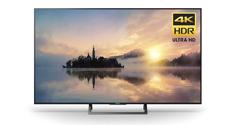 Sony Details New KD-X720E and KD-X690E 4K Ultra HD TVs[teaser]Two new 4K Ultra HD TV series are now available for pre-order.[/teaser] Sony has announced the latest additions to its 4K Ultra HD TV lineup. The new collection includes the X720E and X690E series with sizes ranging from 43 inches to 70 inches. The X720E models feature edge-lit LED backlighting while the X690E feature direct LED backlighting -- though neither series uses local dimming. Both TV series offer 4K resolution with HDR10 support, along with the company's 4K X-Reality PRO engine for improving HD and SD content by upscaling every pixel to near 4K quality. In addition, the sets use Dynamic Contrast Enhancer tech to produce brighter highlights, deeper blacks, and more natural tonal gradation. Likewise, the displays include Sony’s MotionFlow XR refresh rate technology. ClearAudio+ technology and a hidden cable routing design for a clean look are integrated as well. Finally, the TVs come with a remote control with quick access to YouTube and Netflix through dedicated buttons. Here's a full rundown of pricing for each model per Sony: Sony KD-43X720E 43” class (42.5” diag) 4K HDR Ultra HD TV, $899.99 msrpSony KD-49X720E 49” class (48.5” diag) 4K HDR Ultra HD TV, $999.99 msrpSony KD-55X720E 55” class (54.6” diag) 4K HDR Ultra HD TV, $1,099.99 msrp Sony KD-60X690E 60” class (60” diag) 4K HDR Ultra HD TV, $1,299.99 msrpSony KD-70X690E 70” class (69.5” diag) 4K HDR Ultra HD TV, $1,999.99 msrp Both series are now available for pre-order through Sony authorized retailers like Best Buy and Amazon. The X720E series is set to start shipping in late June and the X690E is expected to hit stores in early August. Source: SonyPosted Fri Jun 16, 2017 at 05:30 PM PDT by:
 -
 C Seed Debuts World's Largest 4K Widescreen TV with Whopping 262-Inch Display[teaser]You're gonna need a bigger living room.[/teaser] C Seed, the Austrian-based Luxury electronics specialist company, has announced the launch of its new C SEED 262 Ultra HD TV. At a gigantic 262 inches, the display is now the world's largest 4k widescreen TV. Geared toward customers with really big luxury mansions, the C SEED 262 features a record setting 262 inch display, measuring an overwhelming 20 ft. by 8.4 ft. In addition, the 4K LED TV has a resolution of 4096 x 1716 and uses black LED technology for higher contrast along with support for 800 nits of brightness and a wide color spectrum. An integrated 4K media server, ten integrated high-end speakers for a 7.1. or 9.1 cinema surround configuration, and a motorized custom high end fabric cover to hide the screen at the click of a button are included as well. For those lucky few who might have big enough living rooms and wallets for such a towering display, the C SEED 262 is now available worldwide for $539,000 (for the TV itself) and an extra $38,500 for installation. Here's a full rundown of key specs for the display per C Seed: Brightness nits 800 Brightness Control Auto/Manual Pixel Pitch mm 1,5 Number of SMD LEDs 7.028.736 Processing Depth colors 281 Trillion Refresh Rate Hz 2.880 Lifespan h 100.000 Contrast Ratio 5.000:1 Colour Temperature K 6.500-9.000 Pixel Configuration/Type Black SMD 1010 Viewing Angle- Horizontal degrees 160 Viewing Angle- Vertical degrees 160 LED Fixings Front-service Operating Temperature Range °C -20 to +45 LED Failure Rate 1% (0% at delivery) Broadband speaker peak out W 6 x 250 Broadband speaker frequency range 60 Hz - 25 kHz Sources: C Seed, The VergePosted Fri Jun 16, 2017 at 06:45 AM PDT by: