-
 Netflix Reveals New 'Stranger Things' Season Two Trailer[teaser]A full trailer for the show's second season has been released.[/teaser] Netflix has debuted a new Comic Con trailer for Stranger Things season two. The new season is set to start streaming exclusively through Netflix on October 27. It's 1984 and the citizens of Hawkins, Indiana are still reeling from the horrors of the demogorgon and the secrets of Hawkins Lab. Will Byers has been rescued from the Upside Down but a bigger, sinister entity still threatens those who survived. Check out the new trailer below! Returning cast members for season two include Winona Ryder ('Show Me a Hero'), David Harbour ('Suicide Squad'), Finn Wolfhard ('The 100,' 'Aftermath,' 'The Resurrection'), Millie Bobby Brown (BBC's 'Intruders,' 'Once Upon A Time,' 'NCIS'), Gaten Matarazzo ('The Blacklist'), Caleb McLaughlin ('The Lion King on Broadway'), Noah Schnapp ('Bridge of Spies,' 'The Peanuts Movie'), Natalia Dyer ('After Darkness,' 'Hannah Montana: The Movie'), Charlie Heaton ('Shut In,' 'Urban and the Shed Crew'), and Joe Keery. In addition, new cast members will include Sean Astin, Paul Reiser, Linnea Berthelsen, Sadie Sink, and Dacre Montgomery. The show comes from creators Matt Duffer and Ross Duffer ('Wayward Pines,' 'Hidden') Season two of Strangers Things is set to include nine episodes. Meanwhile, all eight episodes of the show's first season are now available to stream globally through Netflix. Beyond Stranger Things, Netflix also recently released a new trailer for Marvel's The Defenders starring Charlie Cox, Krysten Ritter, Mike Colter, and Finn Jones. The miniseries is set to premiere on August 18. A current Netflix subscription starts at $10 for HD streaming and $12 for Ultra HD streaming. Source: NetflixPosted Sat Jul 22, 2017 at 04:06 PM PDT by:
 -
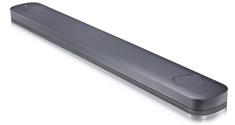 Hands On with LG's 2017 Audio and OLED 4K Display Lineup[teaser]A Dolby Atmos sound bar, floating speakers, 4K Ultra HD TVs, and more were all spotlighted.[/teaser] Earlier this week, High-Def Digest was invited to attend LG's Sound Bites demo in New York City. Held at the Flatiron Penthouse, the event offered a free-flowing look at the company's latest audio and video products, allowing attendees to wander through various rooms to experience the gear in a casual, real-world setting. And all while mixing the demonstrations with a healthy assortment of delicious bites and curated music selections courtesy of Chef Dale Talde. From levitating speakers and Atmos sound bars to OLED TVs and Ultra HD Blu-ray players, there were so many products on display that the showcase required an actual map to navigate through all the rooms full of tech goodies. Seriously, check it out below (click for full size). And now that my eyes, ears, and belly have been fully satiated, I've returned with a roundup of gear highlights and impressions. Note: All prices below reflect current Amazon or manufacturer listings before taxes or shipping fees. OLED DISPLAYS & ULTRA HD BLU-RAY PLAYER Fresh off the LG 65E7P OLED Ultra HD TV's recent sweep of the 2017 CE Week TV Shootout Awards, LG took the opportunity to spotlight another one of its 2017 OLED TV models. Proudly displayed in four different rooms throughout the space, the company had its more affordable 65C7P and 55C7P Ultra HD TVs on hand. To show off the displays, LG primarily played back a variety of Ultra HD clips in Dolby Vision HDR from a connected USB drive. The demo material included scenes from Mad Max: Fury Road, Everest, Batman v Superman, Pacific Rim, and more. I've now had a chance to see this year's crop of OLEDs at a few different events and they never seem to disappoint. With the same panel found on the 65E7P, the C7P model offers the same inky black levels, rich colors, strong viewing angles, and impressive HDR highlights that helped its more expensive sibling earn the "King of UHD TV" title. With that said, this model does not include the E7's fancy Picture-on-Glass design or sound bar stand. But even without those design perks, the C7P looked gorgeous in person and the demo material really shined -- despite seemingly having one of the TV's unnecessary motion smoothing modes enabled. Exploding fire balls during the Mad Max scene flared with smoldering intensity while the title showdown from Batman v Superman offered a great example of the set's impressive contrast, maintaining perfect blacks and shadows while specific highlights and colors, like Batman's glowing eyes and swirling green clouds of kryptonite, popped from the screen. The 65C7P is now available for $3,797 and the 55C7P is currently on sale for $2,497. And beyond the Dolby Vision clips, LG also had its new UP970 4K Ultra-HD Blu-ray Player connected to one of the OLED TVs as well. For the event, the company played back scenes from the Ultra HD Blu-ray release of The Secret Life of Pets in HDR10. Like the other demo material, the flick looked great with bold colors and sharp detail. And though the player couldn't show off any Dolby Vision discs just yet, LG stated that the highly anticipated Dolby Vision firmware update is expected to be available by the end of the month/early August. In addition to multi-HDR capabilities and Ultra HD disc playback, the device also includes support for Blu-ray/3D Blu-ray, DVD, and 4K streaming playback. The UP970 4K Ultra-HD Blu-ray Player is now available for $297. SOUND BARS Switching gears to LG's new audio lineup, the company also demoed its recently released SJ9 sound bar with Dolby Atmos as part of a living room system along with the OLED and Ultra HD Blu-ray player. The sound bar features multiple speakers, including two powerful up-firing drivers for bouncing sound off a user's ceiling, and a wireless subwoofer to offer a 5.1.2 Dolby Atmos experience. Likewise, the device is currently the thinnest Atmos-enabled sound bar model on the market according to LG. To demonstrate the sound bar, the company again played a scene from The Secret Life of Pets, and though this sequence sounded pretty good it just wasn't a particularly robust showcase of the device's quality. Thankfully, LG played a few clips from a Dolby Atmos demo disc as well, and these videos really revealed the unit's full potential. The first piece, titled Leaf, featured a rustling leaf floating through the trees as birds, frogs, and other nature effects filled the background of the track. The sound bar provided surprisingly wide imaging, spreading the ambient sounds far off to the left and right. Likewise, the leaf itself had some genuine dimension to it as it moved throughout the room, and though true surround presence was lacking, the sound bar did a great job of creating a sense of overhead audio. The system's subwoofer provided some nice kick to the video too, but the levels had to be pushed quite high to overcome the noisy event which did lead to some occasional harshness. Another well-known Atmos clip, called Amaze, was also played. Marked by more nature effects like fluttering wings, thunder, and falling rain, this demo also gave the up-firing drivers a nice workout, offering a convincing overhead effect as the storm opened up and seemed to descend from above the listening position. The SJ9 sound bar with Dolby Atmos is now available for $997. Outside of the Atmos model, LG had a few other sound bars on display as well, including the SJ7 "Flex" Sound Bar and the SJ5Y Sound Bar. The SJ7 is a 320W sound bar system that features a unique Flex option allowing the two-part sound bar unit to be used as a single bar with 2.1 channels; two separate left and right speakers for 2.1 channels; or as a separate front speaker and rear surround speaker for 4.1 channels. Likewise, both pieces have Bluetooth support and the right unit has a battery. In addition, the package includes a wireless subwoofer. During the event, LG had the sound bar configured as separate front and surround units, with the front speaker placed under a TV and the rear speaker placed on a table behind a couch. The Dolby Vision demo reel was played, and though the volume was bit too low to really get a full sense of the system's quality, the sound bar did correctly send front and rear effects to the appropriate unit for 4.1 surround sound. Due to the compact size of each speaker there wasn't really much stereo imaging on the individual units, but the front to back separation created a relatively immersive soundfield. I'd need more time with the product and all of its different modes to form any kind of full opinion, but based on my limited preview this actually looks like a pretty clever design. The SJ7 "Flex" Sound Bar is available now for $427. Meanwhile, the SJ5Y Sound Bar is a more traditional 320W 2.1 channel system with a wireless subwoofer. The sound bar offers Bluetooth connectivity and hi-res audio playback support, along with HDMI 1.4 in and out ports. For the demo, the system was also paired with LG's SPJ4 2.0 Channel Sound Bar Wireless Rear Speaker Kit, adding separate left and right rear satellites for surround sound. A clip from Oblivion was played as a demo, and the system sounded quite lively with a solid sense of immersion for its size, providing performance not unlike similar VIZIO sound bar/rear satellite systems I've reviewed in the past. The SJ5Y Sound Bar is now available for $270 and the additional LG's SPJ4 2.0 Channel Sound Bar Wireless Rear Speaker Kit is available for $127. PORTABLE SPEAKERS In addition to home theater gear, LG also spotlighted some of its new and upcoming portable audio devices, including the PJ9 ZeroG Levitating Speaker, PJ8 Twin Speaker, and PJ3 SoloG Speaker. With its unique floating design, the PJ9 was the most striking of the bunch. The system features a compact 360-degree portable speaker unit that levitates and spins above a separate subwoofer base via magnetic technology. Likewise, the subwoofer base also acts as a wireless charging dock. When separated from the base, the speaker can last for up to 10 hours of portable use and also offers IPX7 Water Resistance. Bluetooth connectivity, speakerphone support, and a 3.5mm connection are integrated as well. Meanwhile, the speaker will also be available as a standalone portable model dubbed the PJ3 SoloG Speaker, which offers the same performance minus the magnetic levitating technology and the subwoofer base. In addition, a PJ8 Twin Speaker version with two PJ3 units connected together via a charging dock is also in the works. Likewise, two PJ3s can be wirelessly paired as well to offer left and right stereo playback. Sadly, it was a bit too noisy at the event to really get a good listen of the speaker, but the levitating feature was genuinely cool in person, giving the device a high-tech aesthetic that definitely demands attention. The PJ9 ZeroG Levitating Speaker is now available for pre-order with an MSRP of $300. Shipments are expected to launch in September. FINAL THOUGHTS Marked by impressive audio gear, gorgeous OLED displays, great music, and delicious food, the LG Sound Bites Event provided a nice sampling of the company's new and upcoming crop of AV products. Though the noise could make it a little hard to hear some of the speaker demos, the casual setting offered a more laid back and real world taste of what these devices can do. And beyond the highlighted gear above, LG also showed off some of their new Hi-Fi sound systems, including the beefy 3500W CJ98 ($897) which brought a fun atmosphere to the event's outdoor terrace via some thumping bass and flashing lights. We're hoping to get more hands-on time with some of the gear from the event, but for now, what do you think about LG's 2017 lineup? Will you be taking the plunge on an OLED display or any of these sound bar models? Let us know your thoughts in the forums!Posted Fri Jul 21, 2017 at 08:30 PM PDT by:
 -
 Netflix Unveils New Trailer for Marvel's 'The Defenders'[teaser]The superhero team-up series will hit Netflix in August.[/teaser] To coincide with the 2017 San Diego Comic Con, Netflix has released a second trailer for its upcoming miniseries, The Defenders. The show will premiere on August 18. Marvel’s The Defenders follows Daredevil (Charlie Cox), Jessica Jones (Krysten Ritter), Luke Cage (Mike Colter) and Iron Fist (Finn Jones). A quartet of singular heroes with one common goal – to save New York City. This is the story of four solitary figures, burdened with their own personal challenges, who realize they just might be stronger when teamed together. Check out the new trailer below! The upcoming miniseries stars Charlie Cox, Krysten Ritter, Mike Colter, Finn Jones, Deborah Ann Woll, Simone Missick, Elden Henson, Carrie-Anne Moss, Eka Darville, Rachael Taylor, Rosario Dawson, Scott Glenn, Jessica Henwick, and Elodie Yung -- all reprising their respective roles from various Marvel series on Netflix. Likewise, Sigourney Weaver has joined the cast as the villainous Alexandra. Douglas Petrie (Buffy the Vampire Slayer) and Marco Ramirez (Orange is the New Black) are on board as showrunners. In addition, Petrie, Ramirez, Drew Goddard (The Martian, Lost, Alias), and Jeph Loeb will all serve as Executive Producers for the mini-series. The show is being produced by Marvel Television in association with ABC Studios for Netflix. Beyond the new Defenders trailer, Netflix also just confirmed a second season renewal for Iron Fist. The series centers around Danny Rand (Finn Jones). Fifteen years after being presumed dead in a plane crash, Rand mysteriously returns to New York City determined to reclaim his birthright and family company. However, when a long-destined enemy rises in New York, this living weapon is forced to choose between his family’s legacy and his duties as the Iron Fist. All 13 episodes of the show's first season are now available to stream through Netflix. A release date for the second season has not been announced yet A current Netflix subscription starts at $10 for HD streaming and $12 for Ultra HD streaming. Sources: Netflix (YouTube), VarietyPosted Fri Jul 21, 2017 at 07:45 PM PDT by:
 -
 CE Week 2017 Highlights: Focal Dolby Atmos Speakers, Samsung Gear, Headphones, and More!Last week, High-Def Digest was invited to attend the 2017 CE Week tradeshow in New York City. The annual mid-year event spotlights the latest tech and consumer electronics from some of the industry's top manufacturers -- and this year's show featured several exciting new products from companies like Focal, Samsung, Cleer, Merge VR, and more. [teaser]From Dolby Atmos speaker systems and high-end headphones to Ultra HD TVs and virtual reality gadgets, the show floor was packed with impressive demos, allowing me to go hands-on with some exciting new gear.[/teaser] With that in mind, I've returned with a list of highlights and impressions from the event, rounding up the best tech products in attendance. And in addition to the picks below, be sure to check out our detailed rundown of the CE Week 2017 TV Shootout, which was also held during the show. Pitting six Ultra HD TVs in a head-to-head competition, the Shootout crowned LG's 65E7P OLED Ultra HD TV as the new "King of TV." But while those fancy TVs did hog most of the spotlight, they were far from the only worthy products to see... Note: All prices below reflect current Amazon or manufacturer listings before taxes or shipping fees. FOCAL For CE Week, Focal came out in full force, offering an enticing look at some of its new and upcoming products. The French audio brand brought several premium headphones to its booth, but the real show-stopper, and one of the best products at the event period, was the company's Sib Evo Dolby Atmos Speaker System. The compact 5.1.2 package includes three Sib Evo satellites (center and surrounds), two Sib Evo Dolby Atmos loudspeakers (front left and right), and one Cub Evo subwoofer. The standard satellites feature a 3/4" soft dome tweeter and 5" Polyflex woofer with a frequency response of 70Hz to 25kHz. Meanwhile, the Dolby Atmos speakers add an upfiring 4" full-range driver on top to bounce sound off a user's ceiling in order to simulate overhead audio. Finally, the sub features an 8 1/4" Polyflex woofer, a 200W Class-D amplifier, and a frequency response of 35Hz – 150Hz. For demo purposes, Focal had the system set up in a private room mostly isolated from the noisy tradeshow environment. And though the room's high ceilings were a bit taller than the standard recommended height for upfiring Atmos drivers, the company was still able to calibrate them correctly for the demonstration via a Denon receiver. To showcase the speakers, Focal first played a Dolby demo clip featuring lots of nature effects with rain and thunder, creating an impressive dome of sound that reflected effects quite convincingly from above. An additional music clip was played as well which gradually spread cues around the room while expanding the audio in all directions. This demo was a little less directional, creating a more general sense of higher sound. And concluding the showcase with an appropriate bang, the company switched gears to the wildfire scene from the second season of Game of Thrones. As the explosion reverberated around the room, the subwoofer growled with a deep and escalating LFE cue while falling debris boomed from the Atmos drivers. Overall, it was an impressive demonstration, offering upfiring effects that seemed to be on par with other Atmos speakers and modules that I've heard. Likewise, the general audio quality of the speakers themselves was great, with a full, spacious sound and clean dialogue despite the satellites' compact size. Likewise, the sub balanced well with the system, though there were some harsh vibrations in the floor every now and then (likely more a result of the less than ideal room than the woofer). With all that in mind, it's no surprise that the package received a CE Week Best in Show Award during the event. The Sib Evo Dolby Atmos Speaker System is now available for an MSRP of $1,299, making it a very appealing option for users who want a full space-saving surround sound setup without sacrificing Dolby Atmos support. And for users who want to build more extensive immersive audio configurations, additional Sib Evo Dolby Atmos speaker pairs can be purchased for an MSRP of $599. SAMSUNG In addition to competing in the TV Shootout with its QN65Q9 Ultra HD QLED TV, Samsung also had its own separate booth on the show floor, highlighting a few of its other 2017 AV products. The lineup included the 65" Class Q8C Curved QLED 4K TV, the 65-inch Frame Ultra HD TV, and the HW-MS650/ZA Sound+ Premium Soundbar. Though I'm still not crazy about curved-screened panels, the Q8 looked quite beautiful in person. With quantum dot technology to deliver a max of about 1500 nits (according to Samsung), the set was able to maintain a strikingly vibrant and intense image even in the bright lighting conditions of the room. An HDR demo reel of flowers and scrolling hues filled the screen, showing off the model's impressive color performance with lush reds, greens, and blues. Sadly, while the set does offer local dimming, the TV uses an edge-lit backlight which might hinder dark room performance a bit compared to full array local dimming models. Still, for customers looking for a 4K display with great HDR10 performance in bright environments, this is definitely a set to keep in mind. The 65" Class Q8C Curved QLED 4K TV is now on sale for $3,498. Meanwhile, the Frame Ultra HD TV turns its attention to an entirely different consumer base, switching emphasis away from nits and quantum dots to instead focus on aesthetics and design. Developed in collaboration with renowned designer Yves Behar, the display has been built to look like a picture frame hanging on a user's wall when not in use as a TV, complete with customizable accessories like interchangeable bezels and an optional Studio Stand. When the unit is placed in "Art Mode," the screen displays custom-designed digital art pieces instead of fading to black like a traditional television. Likewise, users can also save and upload their favorite personal art work or photographs using "My Collection." At the show, Samsung demoed this feature by defaulting the panel to a sample layout of personal photos before cycling the display through different art pieces and pictures. In general, this all looked quite nice, and the handsome design might be appealing to users who want a display that blends in with their living room decor. With that said, the aesthetics alone likely won't justify the pricing for most customers -- especially considering the set's relatively low 400 nit HDR performance. Samsung's 65-inch Frame Ultra HD TV is now on sale for $2,798. Finally, Samsung also had its new MS650 Sound+ Sound Bar on hand as well. The 3-channel sound bar features 9 speakers with dedicated amps, integrated bass, and the company's wide range tweeter for room-filling audio and a frequency response of 40Hz~20KHz. Dolby Digital and DTS processing are supported as well, along with Wi-Fi, Bluetooth, HDMI with 4K HDR passthrough, and HD audio playback. Unfortunately, though the sound bar looked nice enough in person, the device was not actually being demoed in the loud show environment so I can't offer any insights into its performance. Samsung's MS650 Sound+ Sound Bar is now available for $448. CLEER Cleer used CE Week to spotlight some of it latest audio products as well, including its upcoming NEXT headphones. The audiophile headphones feature an open-back, alloy structure with an ironless magnesium driver to provide high-resolution sound with 30x less distortion at higher volumes. In addition, the unit uses soft-touch sheepskin and memory foam earpads and headband for extra comfort. Likewise, a 1.5m four-conductor audio cable with LEMO hardware is also integrated. In person, the headphones' high-tech aesthetic worked nicely and the device felt quite good over my ears. But cool looks and a nice fit are meaningless if the cans don't sound great. And thankfully, the NEXT sounds like it's going to be a strong performer. For the demo, I listened to a few hi-res audio tracks being played from an Onkyo DAP, including AC/DC's "Back in Black" and Daft Punk's "Get Lucky." Despite the loud environment, the audio came through well with a pleasingly spacious and intimate profile that evoked a similar quality to planar magnetic and electrostatic headphone models I've heard in the past. Bass beats were deep and resonant while balancing well with the mids and highs to create a great sense of depth and dynamic range in the vocals and instruments. I'd need to take a longer listen in a quiet space to form any kind of full opinion, but from what I head the headphones rightly earned their Gold Star Award at CE Week. The Cleer NEXT Headphones are set to start shipping in September for an MSRP of $699. MERGE VR No modern tech show would be complete without a virtual reality demo, and thankfully Merge VR was in attendance to satiate that craving. With their VR Goggles and upcoming Merge Cube on hand, I got to demo the company's latest virtual and augmented reality gear. Unlike Google and Samsung's more expensive headsets which are only compatible with specific Android smartphones, the Merge VR Goggles are designed to work with most Android and iOS phones made in the last four years. But with their simplified construction and purple, lightweight foam build, they're clearly geared toward a younger crowd of kids, tweens... and childish adults like me. For the demonstration, Merge was highlighting its new Cube augmented reality hologram toy to go along with the goggles. Basically, it's a normal physical cube that can fit in a user's palm, but when viewed through the VR Goggles it can be transformed into a variety of interactive objects and mini games. For instance, during my first demo, the cube turned into a pirate's telescope, allowing me to look through the cube with the headset on in order to see an island with ships and canons. Likewise, another demo turned the cube into a campfire that I could hold in my hands and another turned it into a bundle of fireworks I could set off and watch explode. In these instances, just the cube itself was altered through the goggles for an augmented reality experience, leaving the rest of the room and my surroundings unaffected. One final mini game I tried, however, turned the cube into a spaceship and then placed me in a full virtual environment, allowing me to move the cube around and click on the headset's buttons in order to fly through space and shoot down enemies. These were all very simple interactive experiences and the mini games didn't really have much depth to them, but I can definitely see this being a fun VR and AR toy for kids. The Merge VR Goggles are now available for $59. Meanwhile, the Merge Cube is set to go on sale later this summer for less than $20. FINAL THOUGHTS With a nice mixture of established brands, boutique companies, and exciting start-ups, CE Week offered a fun assortment of AV tech and gadgets. We're hoping to get more hands-on time with some of the products featured here, but for now, what do you think about this year's crop of gear? Are you interested in any of the items highlighted? Let us know your thoughts in the forums!Posted Thu Jul 20, 2017 at 03:00 PM PDT by:
 -
 Streaming News Roundup: 'The Tick,' 'Narcos,' and More[teaser]New trailers for Amazon's The Tick and Netflix's Narcos are among the latest streaming updates.[/teaser] Netflix and Amazon have released new trailers, date announcements, and other info for several of their upcoming shows and movies, including The Tick, Ozark, The Incredible Jessica James, Icarus, Atypical, Naked, Narcos, and Suburra. Check out a full rundown of the latest streaming news and trailers below: The Tick (Amazon Prime Video, August 25) - In a world where superheroes have been real for decades, an underdog accountant with zero powers comes to realize his city is owned by a global super villain long-thought dead. As he struggles to uncover this conspiracy, he falls in league with a strange blue superhero. The Tick stars Peter Serafinowicz (Guardians of the Galaxy), Griffin Newman (Vinyl), Jackie Earle Haley (Watchmen), Valorie Curry (House of Lies), Yara Martinez (Jane the Virgin) and Brendan Hines (Scorpion). The Tick is executive produced by Ben Edlund (Supernatural), Barry Josephson (Bones) and Barry Sonnenfeld (A Series of Unfortunate Events), directed by Wally Pfister (The Dark Knight), and written by Edlund. The Tick is a co-production with Sony Pictures Television. Ozark (Netflix, July 21) - The Byrdes, husband and wife Marty (Jason Bateman) and Wendy (Laura Linney), their teenage kids Charlotte (Sofia Hublitz) and Jonah (Skylar Gaertner) -- are for all intents and purposes an ordinary family. Ordinary save for Marty’s job: The top money launderer for the second largest drug cartel in Mexico. The Incredible Jessica James (Netflix, July 28) - Jessica Williams (The Daily Show) stars as a young, aspiring playwright in New York City who is struggling to get over a recent breakup. She is forced to go on a date with the recently divorced Boone, played by Chris O’Dowd (Bridesmaids) and the unlikely duo discover how to make it through the tough times in a social media obsessed post-relationship universe. Lakeith Stanfield (FX’s “Atlanta”, Straight Outta Compton) and Noël Wells (Netflix’s Master of None) co-star. The film was written and directed by Jim Strouse and produced by Michael B. Clark and Alex Turtletaub of Beachside. Jessica Williams and Kerri Hundley serve as executive producers. Icarus (Netflix, August 4) - In the audacious documentary Icarus, director Bryan Fogel’s bold gambit was this: to investigate doping in sports, Fogel (an amateur bike racer) would dope himself, observe the changes in his performance, and see if he could evade detection. In doing so, he was connected to a renegade Russian scientist, Dr. Grigory Rodchenkov, a pillar of his country's "anti-doping" program. Over dozens of Skype calls, urine samples, and badly administered hormone injections, Fogel and Rodchenkov grow closer despite shocking allegations that place Rodchenkov at the center of Russia's state-sponsored Olympic doping program. When the truth is more complex than imagined, and accusations of illegalities run to Russia's highest chains of command, the two realize they hold the power to reveal the biggest international sports scandal in living memory. Exemplifying the special bond between filmmaker and subject, this is a vital portrait of the sacrifice some people will make to stand up for truth. Icarus places you at the heart of an international game of cat and mouse, where a miscalculation can cost you your life. Atypical (Netflix, August 11) - The coming of age story follows Sam (Keir Gilchrist), an 18-year-old on the autistic spectrum on his search for love and independence. His funny yet painful journey of self-discovery upends his entire family, forcing them all to grapple with change in their own lives as they all struggle with the central theme: what does it really mean to be normal? Jennifer Jason Leigh stars as his mother, Elsa, who is on her own journey of self discovery, and Michael Rapaport plays his father, Doug. Brigette Lundy-Paine (Margot vs Lily, The Glass Castle) will play Sam's sister Casey and Amy Okuda (How to Get Away with Murder) portrays his therapist Julia. Naked (Netflix, August 11) - When Rob Anderson (Marlon Wayans), a charming man-child, arrives in Charleston the night before he is about to marry the woman of every man's dreams, Megan Swope (Regina Hall), he hasn't written his vows, learned the steps for the first dance, or even remembered to bring the ring. Instead of taking care of his responsibilities, Rob goes out for a night on the town with his best man (Jonathan Todd Jackson). Then something unexpected happens... Rob wakes up naked in an elevator with no idea how he got there. When the elevator doors open Rob is shocked to find that it's late in the morning and he has only one hour to get to the church or miss his own wedding. He tries desperately to get to the chapel, streaking through a city marathon, stealing clothes, avoiding capture by local police, a near death confrontation with a vicious motorcycle gang, and many other obstacles only to find himself waking up in the elevator again and again. Some unknown force has conspired to make Rob live this hour repeatedly until he finally grows up and becomes the man that his amazing fiancée deserves to marry. Narcos: Season 3 (Netflix, September 1) - This raw, gritty series chronicles the gripping real-life stories of the drug kingpins of the late 1980s and the corroborative efforts of law enforcement to meet them head on in brutal, bloody conflict. It details the many, often-conflicting forces - legal, political, police, military and civilian - that clash in the effort to control cocaine, one of the world's most valuable commodities. Suburra (Netflix, October 6) - Suburra is a crime thriller set in Rome that describes how the Church, the state, organized crime, local gangs and real estate developers collide and blur the lines between the legal and the illicit in their quest for power. At the heart of the story three young men with different backgrounds, ambitions and passions will have to forge alliances to achieve their deepest desire. Based on the novel of the same name but set several years before, Suburra the series, is full of action, drama and crime that sees 20 days of turmoil in 10 powerful episodes. - A current Netflix subscription starts at $10 for HD streaming and $12 for Ultra HD streaming. - A current Amazon Prime subscription costs $99 per year or $11 per month. Likewise, Prime Instant Video is available as a standalone service for $9 per month. Sources: Netflix (YouTube), Amazon (YouTube)Posted Wed Jul 19, 2017 at 07:00 AM PDT by:
 -
 Don't Miss 'War for the Planet of the Apes' in Dolby Vision & Dolby AtmosWhile we'll leave the full review to Phil Brown over on the Bonus View (read his thoughts HERE), I set out to see War for the Planet of the Apes this weekend at one of the 100 Dolby Cinema locations now open worldwide and thought I'd share my thoughts with you all here. If you don't know what I mean by Dolby Cinema or Dolby Cinema at AMC, please check out THIS ARTICLE where we first demonstrated the premium cinema auditorium. And, for more information on Dolby Vision and Dolby Atmos technologies, please click HERE and HERE, respectively. WAR FOR THE PLANET OF THE AWESOME FRANCHISES I'm a pretty big fan of this new Apes trilogy despite (or perhaps because of) my limited affinity for the original Apes movies. I'm not saying they're bad, mind you; it's just a franchise I haven't experienced outside of a few casual Saturday afternoons back in the days where you had to watch commercials OR flip channels to find something else to watch. Still, the new trilogy is special to me because these films are equal parts blockbuster entertainment and character-focused dramas. Also, as far as prequels go, they're uniformly surprising and dramatic where many feel inert and unnecessary. Especially in an era where blockbusters and franchise movies are often overlong and/or dramatically depend on you watching later chapters, the Apes trilogy works equally well as stand-alone chapters or one complete story. In short, I'm in awe that these new Apes movies exist AND stand up next to modern cable television for having dynamic and complex characters... who just so happen to be CGI-rendered apes. Where Rise began in our world, showcasing Caesar's childhood and the outbreak of a biological virus that was meant to cure Alzheimer's, Dawn took audiences ten years into the post-apocalypse for the first armed conflict between mankind and ape-kind. Both stories highlighted well-intentioned characters making mistakes while trying to do good things and a whole bunch of tragic outcomes. War picks up only two years after Dawn, with Caesar trying to protect the apes from The Colonel and his army of soldiers who are hell-bent on hunting down and killing every last ape. Caesar still hopes for peace, sending back human survivors after battles, but The Colonel's definition of mercy is as brutal as his desire to destroy anyone, human or ape, who opposes his tactics. There's more to the story, of course, but I managed to go into War unaware of the bigger plot-points and, because of this, was genuinely surprised by the story choices the filmmakers made. Effectively, if you're expecting another chapter akin to Dawn, this one goes in a different sub-genre direction. What I will say is that the movie is grounded in some heartbreaking emotions that layer thematics on top of character arcs. War is very much about whether or not Caesar will lose his soul to avenge and defend his ape family, which is dramatically explored through every choice and consequence Caesar makes and experiences. The filmmakers have also added more of a female presence, which I applaud, and smartly continued to build, through callbacks and payoffs, towards a world that resembles the original franchise. If you enjoyed Rise and Dawn, War is highly recommended; for everyone else, I would definitely recommend giving this trilogy a try so you can experience its third chapter on a premium, immersive, big screen where it's meant to be seen and heard. Speaking of which... DOLBY VISION As I was watching War for the Planet of the Apes, I couldn't help but feel a bit disappointed. It looked quite good, don't get me wrong. Everything was clear and sharp, and the contrast was very good. Still, when you compare it to Guardians of the Galaxy Vol.2 or The Jungle Book, those movies are so much more aggressively stylized (and colorful) than this gritty blockbuster with its cold and wintry color palette. In fact, I was considering not writing this article... Until afterward, when I popped into a conventional digital cinema auditorium, and my jaw dropped. It looked like UTTER GARBAGE by comparison. Graying black levels. Jacked contrast with severe shadow detail crushing. Drab and muted colors, especially the yellow subtitles for when the apes use sign language. And it wasn't as visibly sharp. Hands down, watching War in Dolby Vision is like getting laser eye surgery after needing glasses for years. You can see all the fur follicles and tree branches and rusted metal fencing. You can see characters and locations in the shadows, even when they're intentionally out of focus. You can see the flickering orange fury of campfires and explosions. Colors are more vibrant and vivid and true. And black levels are actually black. In short, it's a night & day difference, folks. One you might not realize you're missing until it's too late. Bottom line, and what I take away from this screening, is this: Dolby Vision won't always be show-stopping from an in-your-face color and visual spectacle department, in very much the same way that not all Blu-rays are demo material even when the transfers reproduce the original source materials perfectly. BUT when you go into a Dolby Cinema, or see a movie in Dolby Vision, you're going to get a dramatically more accurate, detailed, and colorful version of whatever film you're seeing. It's like buying an OLED display -- everything looks better even if you're not always obviously-wowed. [EDITOR'S NOTE: by the way, there are other great premium cinema formats too -- IMAX Laser is extraordinary, for example -- and my intention here is ONLY to compare Dolby Cinema to standard digital cinemas, primarily because they are the only two formats in which I've seen War thus far. In short, if you prefer something else, that's great and feel free to tell us about it in the comments. Cheers!] DOLBY ATMOS War arrives with another outstanding Dolby Atmos mix that, at times, is a touch more subtle than the theatrical mix released with Dawn, but serves its world-building well before becoming outright demo material during the film's climax. With more of a wintery setting than the previous films, War knows when exactly when to ramp up, ping-ponging sound around the hemisphere, and when to be quiet. In that sense, the film often portrays moments of action and mayhem in a somber, dreamlike quality before returning to more traditional bombast. This Dolby Atmos mix also excels at expanding the film's locations, where cave chambers echo with falling water and wind whips through snowy mountaintops and fire crackles in an empty hotel lobby. All of these choices uses Atmos' pinpoint precision to extend the movie OFF the screen, thrusting us into its universe. Still, the mix can seem a little less overt compared to Dawn's theatrical mix, which featured many scenes in rainy forests with plenty of overhead sound placement. Until the climax that is, when War's Dolby Atmos mix becomes absolutely bonkers in a Fury Road kinda way. Precision Chaos is the good way to describe it; where, despite the madness on screen and surrounding us aurally, you can hear every sonic choice amidst the overall bombast. It's a lot of fun. Overall, War boasts a very good Dolby Atmos mix and here's hoping Fox includes it on (at least) the 4K Ultra HD Blu-ray because it's going to make a lot of sound enthusiasts happy. FINAL THOUGHTS Regardless of where it ranks in the series and against other modern franchise pictures, War for the Planet of the Apes is extraordinary blockbuster filmmaking that seamlessly blends emotion and character and thematics with a heaping dosage of thrilling action. Dolby Cinema, with its one-two punch of Dolby Vision projection and Dolby Atmos, enhances the whole experience with far more clarity and contrast and color. To be clear, the HDR grading and color palette isn't as in-your-face WOW as Guardians of the Galaxy Vol.2 or The Jungle Book, but the standard SDR grading and performance capabilities of conventional digital cinemas literally pale in comparison.Posted Mon Jul 17, 2017 at 06:28 PM PDT by:
 -
 Dolby Opens 100th Global Dolby Cinema Location[teaser]A new Dolby Cinema theater has opened and even more are on the way.[/teaser] Dolby is celebrating the opening of its 100th global Dolby Cinema location. The new site is located at the AMC South Bay Galleria 16 in Redondo Beach, California. And beyond the 100 current sites, a total of 325 Dolby Cinema sites have been committed worldwide, and there have been more than 100 titles released or announced in the format so far. "It is very gratifying to see top filmmakers and industry creatives whose first choice is to showcase their work in Dolby Cinema," said Doug Darrow, Senior Vice President, Cinema Business Group, Dolby Laboratories. "Audiences continue to embrace Dolby Cinema as well. The rapid growth of Dolby Cinema to 100 locations shows that movie lovers around the world are hungry for a truly immersive experience with state-of-the-art images and sound that make them feel like they are inside the story." Dolby Cinema is a premium theater format that uses the Dolby Vision laser projection system to deliver high dynamic range images with expanded colors and enhanced contrast. Likewise, Dolby Cinema also uses Dolby Atmos object-based mixing to create an immersive surround sound experience with overhead audio. In addition, Dolby Cinema at AMC theaters have been designed with comfort in mind, offering reserved recliners with seat transducers. In the US, AMC currently has 77 Dolby Cinema locations open and the company has plans to have a total of 160 sites by the end of 2018. Likewise, more Dolby Cinema sites are also planned for China, Europe, and the Middle East. For a full rundown of US Dolby Cinema at AMC locations, click here. Source: DolbyPosted Mon Jul 17, 2017 at 05:45 PM PDT by:
 -
 Sharp Releases 2017 4K Ultra HD Smart AQUOS TV Lineup, Prices Start at $450[teaser]New 4K models with HDR and local dimming are now available.[/teaser] Sharp has announced the release of its 2017 4K Ultra HD TV lineup. The collection includes the P8000 and P7000 series with sizes ranging from 43-inches to 65-inches. The premium P8000 series features HDR support, Motion Rate 120, Full Array Local Dimming, and 4K Ultra HD Upscaler tech. Meanwhile, the P7000 series features HDR, a slim, super-thin panel, direct-lit LED backlighting, and UHD Upscaling. Exact HDR specs are not listed and performance will vary by model. In addition, both series use Sharp's new simplified Smart TV platform with a streamlined user interface and access to 4K streaming through popular apps like Netflix, Amazon Video, and YouTube. Here's a full rundown of key features and pricing for each model per Sharp: Sharp P8000 Series – 4K Smart AQUOS® TV • HDR • Full Array Local Dimming • Motion Rate 120 • UHD Upscaler • Smart TV with Apps and Web Browser • dbx-tv® Award-Winning Audio Technology • ATSC/NTSC/Clear QAM Tuner • MSRP 50" Class LC-50P8000U: $699.99 • MSRP 55" Class LC-55P8000U: $899.99 • MSRP 65" Class LC-65P8000U: $1,299.99 Sharp P7000 Series – 4K Smart AQUOS ® TV • HDR • Direct-LED Backlight • UHD Upscaler • Motion Rate 120 • Smart TV with Apps and Web Browser • dbx-tv® Award-Winning Audio Technology • ATSC/NTSC/Clear QAM Tuner • MSRP 43" Class LC-43P7000U: $449.99 • MSRP 50" Class LC-50P7000U: $549.99 • MSRP 55" Class LC-55P7000: $649.99 • MSRP 65" Class LC-65P7000U: $1,199.99 Beyond the new 4K Ultra HD displays, Sharp has also launched its new P5000 series of Full HD displays as well. Sizes range from 32-inches to 55-inches and prices range from $230 to $530. The Sharp brand is currently used under sub-license in the United States by Hisense USA Corporation. Source: SharpPosted Mon Jul 17, 2017 at 02:05 PM PDT by:
 -
.jpg) HD Gear News Roundup: Samsung Sound Bar, Onkyo Amplifier, and More[teaser]We've compiled the latest gear news, including a Samsung sound bar, new amps, and more.[/teaser] From product announcements and streaming app updates to general industry news and recent gear trends, keeping up with the latest tech news can be a daunting task. With that in mind, we're here to offer you a roundup of some of the latest gear and consumer electronics news that you may have missed. For this edition, we're covering the launch of Samsung's latest sound bar model, new amps from Onkyo and Rotel, and a Mohu all-in-one cord cutting kit. So, without further ado, here's a rundown of some of the latest gear and tech news: Samsung Releases MS750 Sound+ Sound Bar Samsung has announced the launch of its newest sound bar model. The MS750 Sound+ Soundbar is available now for a MSRP of $700. "Bringing the best viewing and listening experience to our home entertainment lineup is paramount at Samsung," said Jim Kiczek, Vice President of Digital Audio/Video Marketing for Samsung Electronics America. "MS750 Sound+ Soundbar provides a sweet spot no matter where you sit with Samsung’s patented distortion cancelling technology." The sound bar features 5-channels of audio through 11 speaker units with dedicated amplifiers, three wide-range tweeters, six woofers, and two vertical wide-range tweeters. With that said, while the unit does include upward firing drivers, the device does not offer Dolby Atmos or DTS:X support. A UHD upscaling option which uses Ultra High Quality 32-bit audio technology to automatically preserve a recording’s original sound is offered as well. Likewise, the speaker features a Smart Sound Mode capable of identifying and optimizing content as Movie, Voice, Music or Sports. The cross-over range is rated for 600Hz ~ 20kHz and the unit supports 4K pass-through for Ultra HD video sources. Wi-Fi, Bluetooth, and multi-room audio capabilities are integrated as well. Finally, users can also add an optional W700 subwoofer ($500) for deep bass as low as 27Hz. Source: Samsung Onkyo Details A-9150 Integrated Stereo Amplifier Onkyo has revealed its newest audio component. The A-9150 Integrated Stereo Amplifier is now available for an MSRP of $599. The amp is rated for 60 W + 60 W (4 Ohms, 20Hz-20kHz, 0.08% THD, 2 Channels Driven, FTC). Likewise, the device features a high-current transformer; two large, custom-made filter capacitors, and discrete output-stage transistors. In addition, the unit uses a Discrete SpectraModule to generate a class-leading 500 volts per microsecond slew rate, and incorporates AKM's premium 768 kHz/32-bit AK4452 digital-to-analog converter with Onkyo's original DIDRC Filter technology. A gold-plated MM/MC phono input backed by an independent phono circuit board with dedicated MM and MC equalizers and custom head amp is integrated as well, along with four gold-plated RCA line inputs; two gold-plated coaxial digital inputs; two optical digital inputs, and gold-plated speaker posts with A/B selector. Here's a full rundown of key features per Onkyo: • Refined Power Amplification Circuitry with Discrete SpectraModule • Dedicated MM/MC Circuit Board and High Quality Discrete Head Amp • High Current Power Supply • Natural Music Reproduction with Hi-Grade DAC and DIDRC Filter • Robust Flat Chassis • Quality Audio Terminals Source: Onkyo Rotel Launches RA-1572 Amplifier, RC-1572 Stereo Preamp, and RCD-1572 CD Player Rotel has released its latest lineup of 15 Series audio gear. The collection includes the RA-1572 integrated amplifier ($1,699), RC-1572 stereo preamp ($1,099), and RCD-1572 CD player ($899). The RA-1572 is a stereo integrated amplifier with 120 watts per channel. The device features an AKM premium 32-bit/768kHz Digital to Analog Converter and an oversized toroidal transformer. Support for DSD capable PC-USB (32-bit/384kHz), Bluetooth with aptX, and LPCM music sources with up to 24-bit word lengths sampled at 192 kHz via two coaxial (RCA) and optical (TOSlink) inputs are integrated as well. In addition, the unit includes a pair of balanced XLR connectors and conventional RCA jacks. Meanwhile, the RC-1572 stereo preamp also features a 32 bit/768kHz AKM stereo digital-to-analog converter along with a large toroidal transformer, regulated power supply, and premium circuit components. Four digital inputs (2 coax and 2 optical), and a rear PC-USB support digital sources up to 32/384 resolution, and analog inputs include balanced XLR connectors and four pairs of conventional RCA inputs. Bluetooth connectivity with aptX is included as well. Finally, the RCD-1572 CD player uses a Wolfson WM8740 digital filter/stereo digital-to-analog converter to process digital signals up to 24-bits in length at sampling rates from 8 kHz to 192 kHz. In addition, the unit features an oversized custom Rotel-designed and precision-manufactured toroidal power transformer that feeds precise rectifiers, tight-tolerance voltage regulators, and advanced Slit-Foil low-ESR storage capacitors. RCA and XLR rear panel connectors are integrated as well, and the device also supports MP3 playback. The Rotel RA-1572 integrated amplifier ($1,699), RC-1572 stereo preamp ($1,099), and RCD-1572 CD player ($899) are available now. Sources: Rotel, AVS Forum Mohu Announces Premium Pro Pack Cord Cutting Kit Mohu has announced the launch of its new Premium Pro Pack. The all-in-one Professional Installation Kit is designed to provide businesses with access to HDTV, HD Radio, and FM Radio through one device. The Premium Pro Pack includes: - Mohu's newest 65-mile range antenna, the Mohu Leaf 65- 3 high performance, low-loss coaxial cables (two 10 feet and one 16 feet)- A patented HDTV Amplifier with low noise figure and one-of-a-kind RF filtering for outstanding HDTV reception, made possible by patented USB power- A Two-Way RF Splitter In addition to the new pack, Mohu also recently released the new Leaf Glide, a powerful indoor HDTV antenna for consumers with a 65-mile range; Amplified by Jolt with Clean Peak filter technology to remove unwanted RF signals and boosts the ones you want; patented SignaLift technology for receiving VHF channels; and Multi-directional support to eliminate the need for "pointing." Mohu's Premium Pro Pack will be available in mid-August at select retailers like BrandSmart for an MSRP of $100. Meanwhile, the Leaf Glide is available now for an MSRP of $90. Source: MohuPosted Mon Jul 17, 2017 at 09:45 AM PDT by:
HD Gear News Roundup: Samsung Sound Bar, Onkyo Amplifier, and More[teaser]We've compiled the latest gear news, including a Samsung sound bar, new amps, and more.[/teaser] From product announcements and streaming app updates to general industry news and recent gear trends, keeping up with the latest tech news can be a daunting task. With that in mind, we're here to offer you a roundup of some of the latest gear and consumer electronics news that you may have missed. For this edition, we're covering the launch of Samsung's latest sound bar model, new amps from Onkyo and Rotel, and a Mohu all-in-one cord cutting kit. So, without further ado, here's a rundown of some of the latest gear and tech news: Samsung Releases MS750 Sound+ Sound Bar Samsung has announced the launch of its newest sound bar model. The MS750 Sound+ Soundbar is available now for a MSRP of $700. "Bringing the best viewing and listening experience to our home entertainment lineup is paramount at Samsung," said Jim Kiczek, Vice President of Digital Audio/Video Marketing for Samsung Electronics America. "MS750 Sound+ Soundbar provides a sweet spot no matter where you sit with Samsung’s patented distortion cancelling technology." The sound bar features 5-channels of audio through 11 speaker units with dedicated amplifiers, three wide-range tweeters, six woofers, and two vertical wide-range tweeters. With that said, while the unit does include upward firing drivers, the device does not offer Dolby Atmos or DTS:X support. A UHD upscaling option which uses Ultra High Quality 32-bit audio technology to automatically preserve a recording’s original sound is offered as well. Likewise, the speaker features a Smart Sound Mode capable of identifying and optimizing content as Movie, Voice, Music or Sports. The cross-over range is rated for 600Hz ~ 20kHz and the unit supports 4K pass-through for Ultra HD video sources. Wi-Fi, Bluetooth, and multi-room audio capabilities are integrated as well. Finally, users can also add an optional W700 subwoofer ($500) for deep bass as low as 27Hz. Source: Samsung Onkyo Details A-9150 Integrated Stereo Amplifier Onkyo has revealed its newest audio component. The A-9150 Integrated Stereo Amplifier is now available for an MSRP of $599. The amp is rated for 60 W + 60 W (4 Ohms, 20Hz-20kHz, 0.08% THD, 2 Channels Driven, FTC). Likewise, the device features a high-current transformer; two large, custom-made filter capacitors, and discrete output-stage transistors. In addition, the unit uses a Discrete SpectraModule to generate a class-leading 500 volts per microsecond slew rate, and incorporates AKM's premium 768 kHz/32-bit AK4452 digital-to-analog converter with Onkyo's original DIDRC Filter technology. A gold-plated MM/MC phono input backed by an independent phono circuit board with dedicated MM and MC equalizers and custom head amp is integrated as well, along with four gold-plated RCA line inputs; two gold-plated coaxial digital inputs; two optical digital inputs, and gold-plated speaker posts with A/B selector. Here's a full rundown of key features per Onkyo: • Refined Power Amplification Circuitry with Discrete SpectraModule • Dedicated MM/MC Circuit Board and High Quality Discrete Head Amp • High Current Power Supply • Natural Music Reproduction with Hi-Grade DAC and DIDRC Filter • Robust Flat Chassis • Quality Audio Terminals Source: Onkyo Rotel Launches RA-1572 Amplifier, RC-1572 Stereo Preamp, and RCD-1572 CD Player Rotel has released its latest lineup of 15 Series audio gear. The collection includes the RA-1572 integrated amplifier ($1,699), RC-1572 stereo preamp ($1,099), and RCD-1572 CD player ($899). The RA-1572 is a stereo integrated amplifier with 120 watts per channel. The device features an AKM premium 32-bit/768kHz Digital to Analog Converter and an oversized toroidal transformer. Support for DSD capable PC-USB (32-bit/384kHz), Bluetooth with aptX, and LPCM music sources with up to 24-bit word lengths sampled at 192 kHz via two coaxial (RCA) and optical (TOSlink) inputs are integrated as well. In addition, the unit includes a pair of balanced XLR connectors and conventional RCA jacks. Meanwhile, the RC-1572 stereo preamp also features a 32 bit/768kHz AKM stereo digital-to-analog converter along with a large toroidal transformer, regulated power supply, and premium circuit components. Four digital inputs (2 coax and 2 optical), and a rear PC-USB support digital sources up to 32/384 resolution, and analog inputs include balanced XLR connectors and four pairs of conventional RCA inputs. Bluetooth connectivity with aptX is included as well. Finally, the RCD-1572 CD player uses a Wolfson WM8740 digital filter/stereo digital-to-analog converter to process digital signals up to 24-bits in length at sampling rates from 8 kHz to 192 kHz. In addition, the unit features an oversized custom Rotel-designed and precision-manufactured toroidal power transformer that feeds precise rectifiers, tight-tolerance voltage regulators, and advanced Slit-Foil low-ESR storage capacitors. RCA and XLR rear panel connectors are integrated as well, and the device also supports MP3 playback. The Rotel RA-1572 integrated amplifier ($1,699), RC-1572 stereo preamp ($1,099), and RCD-1572 CD player ($899) are available now. Sources: Rotel, AVS Forum Mohu Announces Premium Pro Pack Cord Cutting Kit Mohu has announced the launch of its new Premium Pro Pack. The all-in-one Professional Installation Kit is designed to provide businesses with access to HDTV, HD Radio, and FM Radio through one device. The Premium Pro Pack includes: - Mohu's newest 65-mile range antenna, the Mohu Leaf 65- 3 high performance, low-loss coaxial cables (two 10 feet and one 16 feet)- A patented HDTV Amplifier with low noise figure and one-of-a-kind RF filtering for outstanding HDTV reception, made possible by patented USB power- A Two-Way RF Splitter In addition to the new pack, Mohu also recently released the new Leaf Glide, a powerful indoor HDTV antenna for consumers with a 65-mile range; Amplified by Jolt with Clean Peak filter technology to remove unwanted RF signals and boosts the ones you want; patented SignaLift technology for receiving VHF channels; and Multi-directional support to eliminate the need for "pointing." Mohu's Premium Pro Pack will be available in mid-August at select retailers like BrandSmart for an MSRP of $100. Meanwhile, the Leaf Glide is available now for an MSRP of $90. Source: MohuPosted Mon Jul 17, 2017 at 09:45 AM PDT by: -
 HDD Attends 2017 CE Week 4K Ultra HD TV ShootoutYes, it's that time of year again. The time to get holed up in a dark room for hours along with the industry's best TVs as they're pitted against each other in the ultimate 4K HDR cage match. And we got a front row seat. Jealous? Thought so. [teaser]Earlier this week, High-Def Digest was invited to attend the 2017 CE Week TV Shootout held in New York City. The annual event places the year's top displays side by side in order to choose the new "King of UHD TV."[/teaser] And though now in its 14th year, 2017's competition featured a few notable changes from previous iterations in an effort to improve transparency and judging. First, this year's Shootout was officially held by CE Week itself rather than former organizer Value Electronics, a leading independent audio video retailer in Westchester County, NY. Despite being the event's original creator, Value Electronics President, Robert Zohn, graciously handed over the reins to squash any potential concerns about retailer investment in picking a particular winner. In addition, the judging was limited to three industry professionals with backgrounds in content creation and calibration rather than all the guests in attendance. Finally, the award categories were also amended slightly this year, resulting in prizes for: -Studio Lighting/Home Theater performance -HDR/Bright Room performance -Streaming performance To determine the winner, the six competing Ultra HDTV models were measured and compared against each other based on various display aspects including: -Perceived contrast (40% of score) -Color saturation and color volume (20% of score) -Colorimetry (20% of score) -Motion artifacts (20% of score) The judges then voted on the different picture quality attributes to determine a winner in each of the three categories. Joel Silver of the Imaging Science Foundation hosted the event, and evaluation sessions were conducted on July 12 and July 13. I attended the full session on July 12 (filled mostly with press and other industry members) and the last half of the July 13 session which featured the judges and the results. Below, I'll offer details on the competing displays used and the tests conducted, along with my own impressions of each TV and my feelings on the winners. Let the shootout begin! THE TESTS To properly test and compare the competing displays, each TV was calibrated to full SDR and HDR standards using high-end meters and Calman calibration software. The six competing models were all placed side-by-side. The order from left to right was as follows: -LG 65E7P OLED Ultra HD TV -Sony XBR65A1E Bravia OLED Ultra HD TV -Sony XBR65Z9D 4K Ultra HD LED TV -Samsung QN65Q9 Ultra HD QLED TV -VIZIO P-Series Ultra HD HDR Home Theater Display -Westinghouse WA65UFA1001 LED 4K Ultra HD TV And as a key point of reference, a Sony BVM-X300 broadcast monitor was included as well. Used for professional mastering, this monitor offers just about the most accurate picture possible, allowing direct comparisons to be drawn to each consumer display. Throughout the shootout, various test patterns and clips were used to judge the different picture criteria -- first with the lights off for home theater performance and then with the lights turned on for bright room performance. All tested panels were concurrently fed through a professional HDMI distribution amp from the latest 4K signal generator for test patterns. Ultra HD Blu-ray material was played back through an Oppo UDP-203. Those familiar with typical display calibration software should have a good idea of what the evaluation process was like. Like last year, host Joel Silver walked us all through the different test patterns (in SDR and HDR) -- including numerous pluges, ramps, checkerboards, and color bars -- pointing out what we should look for while occasionally bringing out the meters to indicate specific results. Tests for local dimming (a thin white line scrolled across a black background and a floating white ball), 1080i deinterlacing, and a new gradient pattern for HDR nit performance were employed as well. As the various tests were conducted, Silver encouraged all of the attendees to get up close and personal with each TV. Likewise, the three judges all walked down the display line to fully evaluate each set's performance. And while grayscale patterns are surely fascinating on their own, actual content was also used to help judge the displays, including Ultra HD Blu-ray clips from Planet Earth II, Lucy, and Kingsman: The Secret Service playing side-by-side in HDR10. It should be noted, however, that there was an issue with how the Oppo player was outputting content during the first evaluation session, resulting in notable banding and false contouring on all the displays when playing the Planet Earth II disc. Thankfully, this was corrected for the second day of testing when the judges were present. Finally, for the last category of judging, all of the displays played back the Netflix short film, Meridian, using their integrated Netflix smart TV apps to compare how each set handles streaming material (models with Dolby Vision support played the film in that format while the others played it back in HDR10). IMPRESSIONS As I stated last year, before going into my individual impressions for each display, I do think it's important to note just how impressive and similarly well performing most of the competing models really were. At times, it was hard to spot specific differences or weaknesses between the TVs. With that said, the test patterns and demo material did reveal a few key pros and cons. Note: All prices below reflect current Amazon or manufacturer discounts before taxes or shipping fees. LG 65E7P OLED Ultra HD TV ($4,797) - As one of LG's flagship 2017 OLED TVs, this model offers Dolby Vision and HDR10 support (with an HLG firmware upgrade coming soon), improved picture performance over 2016 models, perfect black levels, wide viewing angles, wide color gamut playback, a Picture-on-Glass design, and a Dolby Atmos 4.2 Ch 60W sound bar stand. Pros - Thanks to its OLED screen, the LG E7P offered some of the most impressive black levels and viewing angles of the bunch (tied with the Sony A1E). As one of two TVs in the shootout capable of displaying true black on a pixel by pixel level, the E7 produced a gorgeous, deep inky look. Likewise, the TV offered very strong performance for perceived contrast in a dark room, and though not the best performer when it comes to HDR, the test pattern revealed a measurement around 700 nits. With these factors in play, the TV was one of the most well rounded of the bunch and came the closest to matching the picture of the reference broadcast monitor. Cons - As fantastic as the LG OLED was, the display was not quite perfect, particularly when it came to bright room performance. In this category, the Sony and Samsung LCD sets clearly had an advantage, allowing for a brighter picture that maintained their pop better even with the lights on. Likewise, the TV featured a bit more visible noise when looking closely at the panel compared to the LCDs and the Sony OLED, but this really wasn't an issue from a normal viewing distance. Sony XBR65A1E Bravia OLED Ultra HD TV ($4,998) - Sony's first big-screen OLED uses the same panel as LG's model while incorporating Sony's own proprietary video engine and processing. Key features include HDR10 (Dolby Vision and HLG via future firmware update), perfect black levels, wide color gamut playback with Triluminos tech, wide viewing angles, and a unique Acoustic Surface sound system that produces audio directly from the screen itself. Pros - Almost identical to the LG model, the Sony OLED basically offered the same pros with equally good black levels and viewing angles, nearly tying for best home theater performance in a dark room. In addition, the set also offered slightly superior video processing compared to the LG, resulting in a little less noise when up close and personal with the TV. Cons - While picture quality was almost the same between both OLEDs, the Sony looked just a little dimmer compared to the LG in most instances (though some meter readings proved this wasn't always the case). To this end, the HDR test pattern showed results a little under the LG. In addition, the Sony panel featured a slightly more teal tinge to its color, making the LG's image ever so slightly closer to the reference monitor's picture. Sony XBR65Z9D 4K Ultra HD LED TV ($5,498) - Though technically a 2016 model, the Z9D was not yet available during last year's Shootout and remains Sony's flagship LCD display. The TV features full-array local dimming, wide color support, and HDR10 performance. Likewise, the set will reportedly receive a Dolby Vision firmware update later this year. Pros - Demonstrating that LCD tech still isn't down for the count, the Z9D was capable of producing the brightest picture and the most impressive HDR performance. To this end, the HDR test pattern revealed levels over 1,000 nits. Likewise, while not quite as impressive as the OLED panels, the display's full array local dimming allowed the TV to produce deep, inky black levels from a direct viewing angle. For these reasons, I thought the TV offered the best bright room performance. Cons - Though fantastic from a direct view, the Z9D suffered from off-angle viewing, resulting in washed out colors and black levels compared to the OLEDs. Some light blooming from the TV's local dimming feature was also visible in dark scenes with isolated bright lights -- including a sequence from Planet Earth II with glowing eyes. And while the TV actually had some of the most accurate grayscale readings, the picture looked just a hair warm compared to the reference monitor. Samsung QN65Q9 Ultra HD QLED TV ($3,998) - Samsung's flagship 2017 Ultra HD TV uses new metal quantum dot technology to deliver wide color gamut support and 100 percent color volume. Likewise, the set includes HDR10 support and is among the first displays to include new HDR10+ support (but not Dolby Vision). Pros - The Q9 was capable of getting brighter than the OLED panels offering great light room performance. Likewise, the set was capable of strong HDR performance, with the test pattern showing around 1,000 nits. Cons - Sadly, all of the lingering flaws of LCD tech were readily apparent with this set. The edge-lit local dimming panel did not do a good job of creating deep black levels, resulting in grey blacks, clearly visible clouding, and uniformity issues. To this end, one could see the LEDs shifting brightness at the corners of the screen during the local dimming test and dark content. In addition, viewing angles were also subpar compared to the OLEDs. Overall, this was one of the least impressive models when viewed in home theater conditions. VIZIO P-Series Ultra HD HDR Home Theater Display ($1,700) - VIZIO's flagship 4K display includes full-array local dimming with 128 zones, Dolby Vision and HDR10 support, and wide color gamut support. With that said, the display does not include a TV tuner. Pros - While the VIZIO P-Series display was not the top performer in any of the categories, the set held its own remarkably well against the much more expensive competition. Local dimming performance was very good (though not quite as good as the Sony) resulting in very strong black levels from a direct angle, and though toward the low end of the pack, HDR performance was still solid with about 600 nits in the test pattern. Backlight uniformity was also much better than the Samsung and Westinghouse. Cons - Like all of the LCDs in the Shootout, viewing angles suffered from the side. And though local dimming was very good overall, the white line noticeably pulsed during one of the test patterns as it moved across zones, and a scene from Meridian where a character held a flashlight also revealed some blooming. Westinghouse WA65UFA1001 LED 4K Ultra HD TV ($650) - Westinghouse's new 4K Ultra HD TV is geared toward budget conscious buyers and features the Amazon Fire TV platform for streaming apps. Though the TV's listed specs make no mention of HDR support, it was apparently able to at least receive an HDR signal properly during the Shootout. Pros/Cons - No disrespect to Westinghouse, as this is a model geared toward a completely different budget level compared to the rest of the displays featured here, but the WA65UFA1001 really did not hold its own in this lineup and probably should not have been included in a Shootout with these premium flagship models. Though not a terrible performer for the price, this was the least impressive display across the board with subpar accuracy, comparatively harsh, exaggerated colors and poor black levels and uniformity. WINNERS AND FINAL THOUGHTS When all was said and done, the LG 65E7P OLED Ultra HD TV was crowned the winner in all three categories by the panel of judges, claiming top awards for Best Studio Lighting/Home Theater, HDR/Bright Room Performance, and Streaming Performance. This marks the fourth year in a row that an LG OLED has won the prize. The Sony XBR65A1E Bravia OLED Ultra HD TV came in at a very close second and received a special honorable mention for Best Studio Lighting/Home Theater performance. While I completely agree with LG's win for Home Theater performance, I'm actually a little surprised the OLED panel snagged the best HDR/Bright Room award. Based on what I saw (and ignoring viewing angles), the Sony XBR65Z9D 4K Ultra HD LED TV was the clear winner for HDR with the lights on. Meanwhile, Streaming performance was more of a toss-up for me, as I didn't really see any of the displays stand out in this regard. Still, it's hard to begrudge the panel for their selection. The LG OLED really was the closest to the reference monitor across almost all of the tests and material. Likewise, it was simply the best overall performer, especially when playing back the featured Ultra HD Blu-ray discs thanks to its inky blacks and HDR highlights. Here's my own rankings for Best Home Theater Performance from the Shootout: -LG 65E7P OLED Ultra HD TV -Sony XBR65A1E Bravia OLED Ultra HD TV (almost tied for top spot) -Sony XBR65Z9D 4K Ultra HD LED TV -VIZIO P-Series Ultra HD HDR Home Theater Display -Samsung QN65Q9 Ultra HD QLED TV -Westinghouse WA65UFA1001 LED 4K Ultra HD TV High-Def Digest would like to extend a big thanks to the folks over at CE Week and Joel Silver and his team for hosting the event. Likewise, another big thanks to Robert Zohn for starting the Shootout and ensuring that it remains in good hands. We're looking forward to seeing what next year's competition has in store, but for now, what do you think about the 2017 CE Week TV Shootout results? Do you own or plan to buy any of the participating displays? Let us know your thoughts in the forums!Posted Fri Jul 14, 2017 at 11:00 AM PDT by: