-
 Coming Soon to Streaming: 'The Crown,' a New Show from the Coen Brothers, and More[teaser]A teaser trailer for the second season of The Crown and details on the Coen Brothers' new Netflix series are among the latest streaming updates.[/teaser] Netflix has released new trailers and other info for several of its upcoming shows and movies, including Disjointed, Our Souls at Night, The Crown, The Ballad of Buster Scruggs, and GLOW. Likewise, the streaming platform has announced new production deals with Shonda Rhimes, David Letterman, and Millarworld for exclusive content. In addition, Amazon has revealed a development agreement with The Walking Dead creator Robert Kirkman. Check out a full rundown of the latest streaming news and trailers below: Disjointed (Netflix, August 25) - A workplace comedy from Emmy winning creators Chuck Lorre and David Javerbaum. Academy Award winner Kathy Bates plays Ruth, a lifelong advocate for legalization who is finally living her dream as the owner of a Los Angeles cannabis dispensary, Ruth's Alternative Caring. Joining her are three charismatic "budtenders", her entrepreneurial twenty-something year old son and a very troubled security guard. In addition to Bates, the series stars Tone Bell, Aaron Moten, Elizabeth Alderfer, Dougie Baldwin and Elizabeth Ho. Our Souls at Night (Netflix, September 29) - Based on the novel written by Kent Haruf and adapted for the screen by Scott Neustadter and Michael H. Weber (The Fault in Our Stars), Our Souls at Night is set in Colorado and begins when Addie Moore (Jane Fonda) pays an unexpected visit to a neighbor, Louis Waters (Robert Redford). Her husband died years ago, as did his wife, and in such a small town they’d been neighbors for decades, but had little contact. Their children live far away and they are all alone in their big houses. She seeks to establish a connection, and make the most of the rest of the time they have. The Crown: Season Two (Netflix, December 8) - Tells the inside story of two of the most famous addresses in the world -- Buckingham Palace and 10 Downing Street - and the intrigues, love lives and machinations behind the great events that shaped the second half of the 20th century. Two houses, two courts, one Crown. In season two, as Queen Elizabeth's marriage and empire crumbles around her, she must do what is required to ensure the British monarchy survives. Netflix has also given the greenlight to a 10-episode second season of GLOW. The show comes from creators/showrunners Liz Flahive (Homeland, Nurse Jackie) and Carly Mensch, along with executive producers Jenji Kohan and Tara Herrmann. The series' first season is now available to stream. Set in 1985 Los Angeles, GLOW follows Ruth Wilder (Alison Brie), a struggling out-of-work actress as she auditions for, trains and eventually makes the first-ever women's wrestling TV show. Inspired by the short-lived but beloved show from the 80s, GLOW is a Cinderella story with bodyslams. Meanwhile, Netflix has announced a 2018 debut for The Ballad of Buster Scruggs. The upcoming series will be written and directed by Joel and Ethan Coen, and produced by Annapurna Television. A western anthology, the show will feature six tales about the American frontier told through the unique and incomparable voice of Joel and Ethan Coen. Each chapter will feature a distinct story about the American West. The project will star Tim Blake Nelson as Buster, and many others. "The Coens are visionary directors, masterful storytellers, and colorful linguists. We are thrilled for Netflix to become home to the full range of their talents," said Cindy Holland, Vice President, Original Content for Netflix. In addition, the company is also set to premiere a new series starring former Late Show host David Letterman in 2018. The yet-to-be-named, six-episode series has Letterman combining two interests for which he is renowned: in-depth conversations with extraordinary people, and in-the-field segments expressing his curiosity and humor. In each hour-long episode, Letterman will conduct a long-form conversation with a singular guest - and will also explore topics on his own, away from the studio. "Just meeting David Letterman was a thrill; imagine how exciting it is for me to announce that we will be working together," said Ted Sarandos, Chief Content Officer, Netflix. "David Letterman is a true television icon, and I can’t wait to see him out in the wild, out from behind the desk and interviewing the people he finds most interesting. We'll have to see if he keeps the beard." Likewise, Netflix has announced a multi-year deal with Shonda Rhimes (Grey's Anatomy, Scandal) and her production company Shondaland to produce new shows and other projects for the streaming service. "Shonda Rhimes is one of the greatest storytellers in the history of television," said Ted Sarandos, Chief Content Officer, Netflix. "Her work is gripping, inventive, pulse-pounding, heart-stopping, taboo-breaking television at its best. I’ve gotten the chance to know Shonda and she’s a true Netflixer at heart -- she loves TV and films, she cares passionately about her work, and she delivers for her audience. We’re so excited to welcome her to Netflix." And rounding out the Netflix updates, the service has also acquired Millarworld, a comic book publishing company started by writer Mark Millar (Kick-Ass, Kingsman). As part of the acquisition, Netflix and Millar will develop films, series, and kids' shows based on Millarworld's library of characters and franchises. Likewise, the company will also continue to create and publish new stories under the Netflix label. "As creator and re-inventor of some of the most memorable stories and characters in recent history, ranging from Marvel’s The Avengers to Millarworld’s Kick-Ass, Kingsman, Wanted and Reborn franchises, Mark is as close as you can get to a modern day Stan Lee," said Netflix chief content officer Ted Sarandos. "We can't wait to harness the creative power of Millarworld to Netflix and start a new era in global storytelling." Finally, Amazon has announced its own development deal with Robert Kirkman, creator of The Walking Dead comic book series. As part of the agreement, Kirkman and his production company, Skybound Entertainment, will develop streaming projects exclusively for Prime Video. "Robert is a gifted storyteller who shares our passion for elevated genre storytelling that pushes boundaries," said Sharon Tal Yguado, Head of Event Series, Amazon Studios. "Robert and the team at Skybound are some of the most innovative and fearless creatives in the business. Together, we plan to explore immersive worlds and bold ideas for Prime Video." - A current Netflix subscription starts at $10 for HD streaming and $12 for Ultra HD streaming. - A current Amazon Prime subscription costs $99 per year or $11 per month. Likewise, Prime Instant Video is available as a standalone service for $9 per month. Sources: Netflix (YouTube), Netflix, AmazonPosted Sun Aug 13, 2017 at 10:30 PM PDT by:
 -
 This Week in Gear: RCA Roku TVs, $40,000 B&O Speakers, and More[teaser]We've compiled the latest gear news, including new Roku TVs, premium speakers, a variable aspect ratio projector screen, and more.[/teaser] From product announcements and streaming app updates to general industry news and recent gear trends, keeping up with the latest tech news can be a daunting task. With that in mind, we're here to offer you a roundup of some of the latest gear and consumer electronics news that you may have missed. For this edition, we're covering the release of new Roku HDTVs from RCA, B&O's latest speakers, a projector screen with a variable aspect ratio feature, the addition of Netflix HDR support to the Sony Xperia XZ Premium smartphone, and the arrival of Amazon streaming on VIZIO SmartCast TV displays in Canada. So, without further ado, here's a rundown of some of the latest gear and tech news: RCA Launches New Roku HDTV Lineup Roku and RCA have announced the release of a new collection of Roku TVs. The lineup includes HDTV models ranging from 32-inches to 50-inches with suggested prices starting at $250. RCA Roku HDTVs feature integrated tuners for over-the-air broadcasts along with smart TV functionality powered by the Roku OS, offering access to more than 5,000 streaming channels and 500,000 movies and TV episodes. In addition, the TVs also include a Favorites Channel list feature, a Live TV Pause option, and a remote with channel shortcut buttons. Likewise, customers can also use the Roku iOS or Android mobile app for remote functionality with voice search, private listening, a keyboard, and the ability to share media. Here's a full rundown of the lineup along with current Amazon sale prices: RCA RTR3260 32-Inch Roku Smart LED TV - $160 RCA RTR4360 43-Inch 1080p Roku Smart LED TV - $379 RCA RTR5060 50-Inch 1080p Roku Smart LED TV - $429 Source: Roku B&O Details BeoLab 50 Loudspeakers B&O announced the latest addition to its audio lineup. The new high-end BeoLab 50 loudspeakers will be available later this month for a suggested price of $19,585 per unit or $39,710 for a pair. "The balance of BeoLab 50 is light and refined. This impressive speaker’s footprint is relatively small, making it easy to fit into people’s homes," says designer André Poulheim. The 2100 watt speakers feature silver-polished aluminium surfaces and warm oak wood lamellas. Likewise, the units include Active Room Compensation technology which uses an external microphone to measure the speaker's physical acoustic surroundings in order to apply the optimal compensation filters. In addition, the BeoLab 50 uses Acoustic Lens Technology on top of the speaker, enabling users to disperse high-frequency sound through Beam Width Control into either a 180-degree sound mode for group listening or a narrow mode for "sweet-spots." Multichannel digital audio streaming based on WiSA tech is integrated as well. Source: B&O via GlobeNewswire Screen Innovations Releases Transformer Projector Screen Screen Innovations has announced the launch of its newest projector screen option. The Transformer screen features support for variable aspect ratios without the use of a masking material. "Masking has been an integral part of projection screens for decades, because they are a simple solution to a problem; not all content has the same aspect ratio," said Skyler Meek, Director of Marketing at SI. "However," Meek continued, "they are unnecessary. Instead of covering the screen with obtrusive draping systems or masking panels, we have created a screen that transforms, seamlessly changing its shape, depending on the type of content the viewer is watching." Thanks to the screen's proprietary telescoping frame system, the Transformer can shift into different aspect ratios. Likewise, the unit uses Somfy Sonesse RS485 Quiet Motors to offer friction free motion wherever possible. Screens are available in sizes up to 235-inches and come with pre-programmed default positions for 16:9, 1.85:1, 2.35:1, and 2.40:1 aspect ratios along with the option for user adjustable customizations. Screen Innovations Transformer is now available for a starting MSRP of $18,000. Source: Screen Innovations Sony Xperia XZ Premium Smartphone Adds Netflix HDR Support Netflix has announced the addition of mobile HDR streaming support for the Sony Xperia XZ Premium smartphone. In order to watch HDR streaming content on the Xperia XZ Premium, users will need version 5.0 of the Netflix Android app along with the latest firmware for their phone. Likewise, subscribers will need the premium Netflix plan. The Sony Xperia XZ Premium is now the second smartphone to offer some form of Netflix HDR playback. Previously, Netflix added mobile Dolby Vision HDR support to the LG G6. And beyond Netflix HDR, the Xperia XZ Premium is also set to support HDR content through Amazon Prime Video. Sources: Netflix via Engadget, Sony VIZIO Brings Amazon Video to Canadian SmartCast TV Displays Following the US launch earlier this week, VIZIO has announced the addition of Amazon Video streaming to its SmartCast TV platform in Canada. "With the recent launch of SmartCast TV, one of the things we're most excited about is providing consumers with added entertainment options," said Matt McRae, Chief Technology Officer, VIZIO. "Amazon Prime Video brings an array of content option to the screen, all accessible via a traditional remote via the Amazon Prime Video button. We're glad to continue to bring in-demand content and solutions to our Canadian customers." The service now joins previously available apps like Netflix and Crackle, allowing SmartCast TV users to access Amazon Prime Video directly from their displays. Amazon Video allows users to buy or rent titles from a growing collection of movies and TV shows. Likewise, Amazon Prime subscribers can also sign into their accounts through the app to access Prime Video content. Amazon Video is now available through the SmartCast TV platform directly on VIZIO 2017 P-Series and M-Series displays. In addition, the SmartCast TV update is also set to arrive on other models, including the E-Series, later this summer. A current Amazon Prime subscription costs $99 per year or $11 per month. Likewise, Prime Instant Video is available as a standalone service for $9 per month. Source: VIZIOPosted Thu Aug 10, 2017 at 07:10 PM PDT by:
 -
 What is LCD?Welcome to HDD's Home Theater 101 articles, where we explain emerging technologies while also recommending the very best possible A/V gadgets n' gear you can buy at your particular budget level. When it comes to new display and TV technologies in 2017, there are two options: LCD and OLED. The most common panel type in the Ultra HD TV market remains LCD. But just what exactly is an LCD TV? And what's the distinction between the tech's varying panel types and LED backlight options? Fret not! [teaser]If you don't know the difference between edge-lit LED panels and full-array local dimming panels, this guide is here to breakdown the ins and outs of LCD.[/teaser] So, without further ado, let's dive right into... HOME THEATER 101WHAT IS LCD? THE BASICS A Liquid Crystal Display (LCD) is a type of panel technology frequently used for televisions, computer monitors, laptops, and mobile devices. Though the first commercial LCD TVs were launched in the late 80s, the tech did not start to enter the mainstream market until 2004 when HDTV LCDs began to catch on as an alternative to plasmas, CRTs, rear projection, and other display types. By the end of 2007, LCDs rose to the top of the TV sales chart for the holiday season, besting the competition and cementing itself as the most popular TV tech. And unlike those other now defunct display formats, LCDs have been able to keep up with evolving picture quality standards and manufacturing costs, enabling them to support next-gen features like 4K Ultra HD resolution, high dynamic range, wide color gamuts, and 10-bit processing at mass market prices. As the name implies, LCDs use liquid crystals in order to display pixels. In simplest terms, a Liquid Crystal is essentially a substance that has some properties of a solid and some properties of a liquid. When integrated into a display panel with a light source, these liquid crystals are capable of rotating polarized light to switch an LCD TV's pixels on or off. Typically, this is accomplished by placing a polarized glass filter in front of and behind the liquid crystal used in each pixel. (Image via Wikimedia Commons) When the pixel is switched off, electricity flows through the crystal causing it to straighten. In this form, most light is prevented from exiting the second polarizer, creating a dark pixel. Meanwhile, to switch the pixel on, the flow of electricity is stopped, causing the liquid crystal to twist. This structure then enables light to flow through the two polarizing filters, resulting in a bright pixel. Subpixels with a red, blue, or green filter then give the pixel the correct color for the content being displayed. LCD PANEL TYPES Though the basics of LCD tech are similar across the board, specific variations on the process are used to achieve slightly different results, leading to a few key LCD panel types with their own strengths and weaknesses. TN (Twisted Nematic) are the most common and cheapest LCD panel types to produce and essentially work through the twisting crystal process described above. Unfortunately, these displays typically offer the weakest performance when it comes to viewing angles and contrast. With that said, they do provide some of the fastest response times, making them well suited for gaming. Meanwhile, VA (Vertical Alignment) panels use crystals arranged vertically and perpendicular to the display. This then causes them to tilt horizontally when electricity is applied allowing light to pass. VA panels feature the best contrast ratio and black level performance of any LCD panel type, making them the ideal fit for home theater use in a dark room. However, while they boast improved viewing angles compared to TN screens, color and contrast suffer at off angles so you'll want to sit directly in front of them. Also, response times tend to be slower than other LCD options. Finally, IPS (In-Plane Switching) panels feature liquid crystals arranged horizontally in a manner which causes them to turn by 90 degrees in parallel with the display when voltage is applied. This process offers superior color reproduction and the best viewing angles of any LCD type while providing response times almost on par with TN panels. With that said, these displays have weaker contrast compared to VA screens, limiting their effectiveness for home theaters. BACKLIGHT METHODS & LOCAL DIMMING Beyond primary panel types, different LCD displays can also use different methods of lighting in order to illuminate their pixels. Initially, most LCD TVs used a CCFL (cold cathode fluorescent lamp) backlight with an array of parallel CCFLs positioned behind the panel. This tech worked well but limited how thin manufacturers could make their displays. Likewise, these backlights were not as energy efficient as modern methods. Today, most LCD TVs use a form of LED (light emitting diode) lighting to illuminate the display's pixels. In fact, this method has now become so prevalent that most manufacturers actually refer to their LCD display models as LED TVs now. Two primary types of LED arrangements are currently used: direct-lit and edge-lit. In a direct-lit configuration, an array of LEDs is placed behind the panel across the entire screen. In an edge-lit system, a row of LEDs is positioned on one or more edges of the panel. Because of their size, LEDs enable manufacturers to produce thinner LCD screens. With that said, some edge-lit displays tend to produce inferior light uniformity compared to direct-lit LED or CCFL backlights. And in addition to improvements in size and power consumption, LEDs also give LCD display manufacturers the option of implementing a useful feature called local dimming. In a traditional LED LCD, some light still passes through to the pixels even when the liquid crystals are switched on to block it. This prevents typical LCD TVs from ever being able to produce true black levels. With local dimming technology, however, manufacturers can actually dim and completely turn off individual LED light sources, allowing the screen to brighten or totally darken in selected spots to coincide with the content being played. This allows the local dimming sets to create deep, inky black levels. Local dimming can be implemented with both direct or edge-lit LED panels, but direct-lit local dimming -- also referred to as full-array -- produces the best results since the LEDs are positioned behind the TV's pixels in multiple zones across the entire screen, not just strips on the sides. Local dimming performance is also affected by the number of LED zones used in a display (in general, the more the better) and the specific dimming algorithm the manufacturer has developed. QUANTUM DOTS Outside of panel types and lighting methods, other new enhancements continue to be used with LCDs, helping to keep the tech relevant and up to next-gen standards in the 4K HDR market. And that's where Quantum Dots come in. Typically used in higher-end LCD displays, quantum dots are nano-crystals that are capable of emitting different colors when exposed to light depending on their size. When quantum dots are placed on a film over an LCD backlight with blue LEDs, they convert the light to produce higher brightness levels with more accurate and realistic colors. This lets TVs with quantum dots support wide color gamuts beyond the traditional Rec. 709 color space along with higher nit output for optimal high dynamic range performance. Sony has been using a form of quantum dots in select displays under the company's Triluminous branding for several years. Likewise, Samsung currently uses new metal quantum dot technology in its flagship Q7, Q8, and Q9 display lineup branded as QLED TVs. With that said, all current LCD quantum dot displays simply use their nano-crystals to convert light from traditional LEDs for enhanced color performance rather than using the quantum dots to completely emit their own light -- but future QLED display technologies could result in emissive quantum dots without the need for an additional backlight. RECOMMENDED GEAR 55" TCL P-Series Ultra HD TV ($680) - In contention to become the top bang-for-your buck LCD Ultra HD display of 2017, this model features an LED VA panel with a direct-lit local dimming backlight and 72 zones. Other key specs include Dolby Vision and HDR10 support, and wide color gamut capabilities with NBP Photon technology. Likewise, the set uses the Roku OS smart TV platform with access to more than 4,000 streaming channels and 450,000+ movies and TV episodes. VIZIO P-Series Ultra HD HDR Home Theater Display ($1,700) - VIZIO's flagship 4K display features a VA LED panel with full-array local dimming and 128 zones. With that said, the 55-inch model uses an IPS panel, resulting in a lower contrast ratio. Other key features include Dolby Vision and HDR10 support and wide color gamut support. It should also be noted, however, that the display does not include a TV tuner. 65" Sony XBR55X900E LED Ultra HD TV ($1,998) - This Sony model features a VA LCD panel with a full-array LED local dimming backlight. Other specs include wide color gamut support with Triluminos tech, HDR10 support, and a firmware update planned for HLG playback (but sadly not Dolby Vision). Finally, the set uses the Android TV platform for smart TV apps and streaming. Samsung QN65Q9 Ultra HD QLED TV ($3,998) - Samsung's flagship 2017 Ultra HD TV uses a VA LCD panel with new metal quantum dot technology to deliver wide color gamut support and 100 percent color volume. Meanwhile, the set uses an edge-lit backlight with local dimming. Other specs include HDR10 support and HDR10+ support (but not Dolby Vision). So, there you have it. Those are the basics of LCD TVs. If you still have any questions about LCDs, please let us know in the forums! MORE HOME THEATER 101 ARTICLES -Best Budget TVs for 2017-Best UHD TVs for 2017-What is Dolby Vision?-What is HDR?-What is Dolby Atmos?-What is DTS:X-Best Sound Bars-Up-mixed: Dolby Surround vs DTS:Neural:X-Best Dolby Atmos Speakers-Best UHD Streaming Services-HDR Sucks: The Challenges & Frustrations of HDR10-4K Ultraviolet Headaches: How & Where To Redeem Digital Copies in 4K UHD Sources: LCD TVs (Wikipedia), Quantum Dots (Wikipedia), Explain That Stuff!, PC MonitorsPosted Wed Aug 9, 2017 at 08:25 PM PDT by:
 -
 Disney Set to Remove Movies from Netflix and Launch its own Streaming Platform[teaser]The studio is planning to end its deal with Netflix.[/teaser] Disney has announced plans to end its distribution agreement with Netflix in favor of staring its own streaming platform. Likewise, the company also plans to launch a separate ESPN streaming service as well. To help make both platforms a reality, Disney is acquiring majority ownership of BAMTech, LLC -- a global leader in direct-to-consumer streaming technology. "The media landscape is increasingly defined by direct relationships between content creators and consumers, and our control of BAMTech's full array of innovative technology will give us the power to forge those connections, along with the flexibility to quickly adapt to shifts in the market," said Robert A. Iger, Chairman and Chief Executive Officer, The Walt Disney Company. "This acquisition and the launch of our direct-to-consumer services mark an entirely new growth strategy for the Company, one that takes advantage of the incredible opportunity that changing technology provides us to leverage the strength of our great brands." The news was revealed during a recent earnings report from the company and comes in the wake of rumors that Disney was actually looking to purchase Netflix. Currently, Netflix has an exclusive streaming deal with Disney for its films, but that agreement is now set to close at the end of 2018. Disney then plans to debut its own direct-to-consumer streaming platform in 2019. The new streaming service will become the exclusive US home for subscription-video-on-demand access to Disney and Pixar's new releases, starting with the studio's 2019 lineup which will include films like Toy Story 4 and the sequel to Frozen. In addition, the platform will also include an extensive library of catalog titles from Disney, Pixar, Disney Channel, Disney Junior, and Disney XD. Likewise, the company will be investing in a yearly slate of exclusive content for the service, including original movies, TV shows, and short-form media. Disney films are set to remain on Netflix through the end of 2018, and Marvel Netflix shows will not be affected by the new plans. Sources: Disney via BusinessWire, CNBCPosted Tue Aug 8, 2017 at 04:25 PM PDT by:
 -
 VIZIO SmartCast TV Launches Amazon Video Support and LG webOS Adds Sling TV App[teaser]The VIZIO SmartCast TV platform now includes Amazon Video streaming.[/teaser] VIZIO has announced the addition of Amazon Video to its lineup of supported SmartCast TV apps. The service now joins previously available apps like Netflix, Hulu, Vudu, and Crackle. "With the recent launch of SmartCast TV, one of the things we're most excited about is providing consumers with added entertainment options," said Matt McRae, Chief Technology Officer, VIZIO. "Amazon Video brings an array of content options to the screen, all accessible on the traditional remote via the Amazon Video button. We're glad to continue to bring in-demand content and solutions to our customers." Amazon Video allows users to buy or rent titles from a growing collection of movies and TV shows. Likewise, Amazon Prime subscribers can also sign into their accounts through the app to access Prime Video content like Transparent, The Grand Tour, and Manchester by the Sea. Amazon Video is now available through the SmartCast TV platform directly on VIZIO 2017 P-Series and M-Series displays. In addition, the SmartCast TV update is also set to arrive on other models, including the E-Series, later this summer. A current Amazon Prime subscription costs $99 per year or $11 per month. Likewise, Prime Instant Video is available as a standalone service for $9 per month. Meanwhile, LG has also announced new additions to its own webOS smart TV platform. As part of the update, Sling TV is now available on 2017 LG OLED and LG SUPER UHD webOS 3.5-enabled smart TVs. The subscription service provides access to live streaming channels and on-demand content. Likewise, the Channel Plus streaming service on 2016 and 2017 LG smart TVs running webOS 3.0 and 3.5 now offers even more content, surpassing 100 digital channels. The app includes live and on-demand streaming content through an interface that provides over-the-air broadcast channels alongside over-the-top (OTT) streaming channels. "The addition of Sling TV and more Channel Plus content provides LG OLED and LG SUPER UHD TV owners access to a robust slate of live TV and on-demand content," said Matt Durgin, LG Electronics USA's director of content innovation. "With literally hundreds of channels from top-tier content providers at their fingertips via our webOS smart TV platform, consumers can enjoy the content they love when they want to see it and on some of the top-rated TVs on the market." Sources: VIZIO, LGPosted Mon Aug 7, 2017 at 10:35 AM PDT by:
 -
 4K Apple TV with HDR & Dolby Vision Likely in the Works[teaser]New leaked firmware indicates an upcoming 4K Apple TV with high dynamic range playback is on the way.[/teaser] According to posts made on the Twitter account of developer Guilherme Rambo, Apple may have just inadvertently revealed details on its latest Apple TV model. Potential info on the rumored device was discovered by examining the firmware for Apple's upcoming HomePod Smart Speaker. After examining the HomePod code, Guilherme Rambo came across a few different references to new Apple TV features, including lines that indicate support for 4K Ultra HD playback, along with HDR10, Dolby Vision, and HLG (Hybrid Log Gamma) high dynamic range formats. In addition, some iTunes users recently discovered several titles in their purchase history, including Passengers and Fantastic Beasts and Where to Find Them, listed as 4K HDR. Though the service still only supports HD content at this time, these listings hint that iTunes is gearing up to launch support for Ultra HD titles with HDR, which meshes well with news of a potential 4K Apple TV. While there are several 4K HDR media players on the market now, including the Roku Ultra and NVIDIA Shield TV, Apple's current 4th Generation Apple TV is only capable of Full HD playback. Under the hood, the player is powered by a 64-bit A8 chip with Bluetooth 4.0 and Wi-Fi. The device also comes with an advanced remote with Bluetooth 4.0, an accelerometer, a gyroscope, a glass touch surface for intuitive navigation, and a Siri voice search feature for comprehensive voice search results. Official confirmation from Apple about a new 4K HDR Apple TV is still forthcoming. Sources: Guilherme Rambo Twitter via Engadget, 9to5Mac, Apple InsiderPosted Mon Aug 7, 2017 at 06:00 AM PDT by:
 -
 Coming Soon to Streaming: 'Transparent,' 'Narcos,' 'Mindhunters,' and More[teaser]New trailers for Transparent, Narcos, and David Fincher's Mindhunters are among the latest streaming updates.[/teaser] Netflix, Amazon, and Hulu have released new trailers, date announcements, and other info for several of their upcoming shows and movies, including Comrade Detective, One Mississippi, Transparent, What Happened to Monday, Narcos, American Vandal, First They Killed My Father, Mindhunter, A Little Help With Carol Burnett, and Futureman. Check out a full rundown of the latest streaming news and trailers below: Comrade Detective (Amazon Prime Video, Now Streaming) - In the 1980s, millions of Romanians tuned in to Comrade Detective, a gritty and sleek buddy cop show that not only entertained its citizens but also promoted Communist ideals and inspired a deep nationalism. It has now been digitally remastered and dubbed into English for the first time by a cast featuring Channing Tatum, and Joseph Gordon Levitt. One Mississippi: Season Two (Amazon Prime Video, September 8) - A dark comedy inspired by comedian Tig Notaro's life. Tig returns to her hometown in Mississippi, where she contends with the death of her mother and her own mortality as she embarks on a painful yet hilarious journey that unearths uncomfortable truths about her family and her self. Transparent: Season Four (Amazon Prime Video, September 22) - The Pfeffermans take off on a spiritual and political journey as they dig deep into their family's history. Maura heads to Israel to speak at a conference and makes a startling discovery. Before long the rest of the family joins her for an explosive adventure. Adrift in the desert, each member of the family ultimately set off on their own paths to find acceptance, love, and truth. Starring Jeffrey Tambor, Judith Light, Amy Landecker, Jay Duplass, and Gaby Hoffman. What Happened to Monday (Netflix, August 18) - In a not so distant future, where overpopulation and famine have forced governments to undertake a drastic "One Child Policy," seven identical sisters live a hide-and-seek existence pursued by the Child Allocation Bureau. The Bureau, directed by the fierce Nicolette Cayman (Glenn Close), enforces a strict family-planning agenda that the sisters outwit by taking turns assuming the identity of one person: Karen Settman (Noomi Rapace). Taught by their grandfather (Willem Dafoe) who raised and named them - Monday, Tuesday, Wednesday, Thursday, Friday, Saturday and Sunday - each can go outside once a week as their common identity, but are only free to be themselves in the prison of their own apartment. That is until, one day, Monday does not come home… Narcos: Season Three (Netflix, September 1) - This raw, gritty series chronicles the gripping real-life stories of the drug kingpins of the late 1980s and the corroborative efforts of law enforcement to meet them head on in brutal, bloody conflict. It details the many, often-conflicting forces - legal, political, police, military and civilian - that clash in the effort to control cocaine, one of the world's most valuable commodities. American Vandal (Netflix, September 15) - From co-creators Tony Yacenda (Pillow Talking) and Dan Perrault (Honest Trailers), and showrunner Dan Lagana (Zach Stone Is Gonna Be Famous), American Vandal is a half-hour true-crime satire that explores the aftermath of a costly high school prank that left twenty-seven faculty cars vandalized with phallic images. Over the course of the eight-episode season, an aspiring sophomore documentarian investigates the controversial and potentially unjust expulsion of troubled senior (and known dick-drawer) Dylan Maxwell. Not unlike its now iconic true-crime predecessors, the addictive American Vandal will leave one question on everyone's minds until the very end: Who drew the dicks? First They Killed My Father (Netflix, September 15) - An unflinching portrayal of the Khmer Rouge's reign of terror and genocide, from the view of a five-year-old survivor cut off from her family in 1975. Starring Sareum Srey Moch, Phoeung Kompheak, and Sveng Socheata. Directed by Angelina Jolie. Mindhunter (Netflix, October 13) - How do we get ahead of crazy if we don’t know how crazy thinks? Two FBI agents (Jonathan Groff & Holt McCallany) set out on a sinister investigative odyssey to discover the brutal answers. Also features Anna Torv (Fringe) and Hannah Gross (Unless). The show is directed by David Fincher (Gone Girl, The Social Network, Zodiac), Asif Kapadia (Amy, Senna), Tobias Lindholm (A War, A Hijacking) and Andrew Douglas (The Amityville Horror, U Want Me 2 Kill Him?). In addition, Fincher, Joshua Donen (Gone Girl, The Quick and the Dead) Charlize Theron (Girlboss, Hatfields & McCoys) and Cean Chaffin (Gone Girl, Fight Club) are Executive Producers. A Little Help With Carol Burnett (Netflix, 2018) - Comedy legend Carol Burnett will make her return to series television and her Netflix debut in 2018. A Little Help With Carol Burnett features Carol, celebrity guests, and every day people receiving advice to their real-life problems from the straightest-shooters around: little kids. Futureman (Hulu, November 14) - From Executive Producers Seth Rogen (Sausage Party, Knocked Up, This is the End) and Evan Goldberg (Preacher, Sausage Party, Superbad, Knocked Up), Future Man follows a janitor by day/world-ranked gamer by night who travels through time to prevent the extinction of humanity after mysterious visitors from the future proclaim him the key to defeating the imminent super-race invasion. Josh Hutcherson (The Hunger Games, The Kids Are Alright) stars as Josh Futterman, an uninspired and dejected gamer who quickly becomes earth’s unlikely hero. Eliza Coupe (Happy Endings), Derek Wilson (Preacher), Ed Begley Jr. (St. Elsewhere) and Glenne Headly (Don Jon) also star. - A current Netflix subscription starts at $10 for HD streaming and $12 for Ultra HD streaming. - A current Amazon Prime subscription costs $99 per year or $11 per month. Likewise, Prime Instant Video is available as a standalone service for $9 per month. - A current Hulu subscription starts at $8 per month with commercials. In addition, ad-free playback is available for $12 per month. Sources: Netflix (YouTube), Amazon (YouTube), Hulu (YouTube)Posted Fri Aug 4, 2017 at 09:15 PM PDT by:
 -
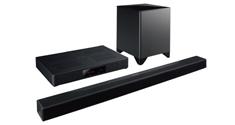 This Week In Gear: Onkyo & Pioneer Launch DTS Play-Fi Update, Hisense Expands Smart TV App Lineup, and More[teaser]We've compiled the latest gear news, including a DTS Play-Fi firmware update for select audio products, and new apps for Hisense TVs.[/teaser] From product announcements and streaming app updates to general industry news and recent gear trends, keeping up with the latest tech news can be a daunting task. With that in mind, we're here to offer you a roundup of some of the latest gear and consumer electronics news that you may have missed. For this edition, we're covering the release of a DTS Play-Fi update for select Onkyo and Pioneer devices, the addition of new apps to Hisense's Smart TV lineup, Phiaton's latest headphones, and the arrival of Daydream VR support for Samsung's Galaxy S8 smartphones. So, without further ado, here's a rundown of some of the latest gear and tech news: Onkyo & Pioneer Launch DTS Play-Fi Update Onkyo and Pioneer have announced the launch of a DTS Play-Fi firmware update for several of their products. The upgrade is now available for the Pioneer MRX-3 Wireless Speaker and FS-EB70 Elite Network Soundbar System, and the Onkyo SBT-A500 Network Surround Sound Bar System and NCP-302 Wireless Network Speaker. In addition, DTS Play-Fi firmware updates for all network-enabled 2017 Onkyo and Pioneer audio components, along with the 2016 Onkyo PR-RZ5100 Network A/V Controller, TX-RZ1100, and TX-RZ3100 Network A/V Receiver, and the 2016 Pioneer SC-LX901, SC-LX801 and SC-LX701 receivers are set to arrive by the end of September. With DTS Play-Fi audio products, users can wirelessly play high quality lossless music from smartphones and tablets over an existing home Wi-Fi network to Play-Fi components throughout the home. The tech can synchronize playback of a single source to multiple speakers; can stream different sources to different speakers simultaneously from the same mobile device; and can support individual music streams to separate speakers from different devices at the same time. Likewise, Play-Fi is not brand exclusive. This means that Play-Fi audio products from different manufacturers can actually work together seamlessly. And beyond the firmware update, Onkyo and Pioneer have also both released new Music Control apps that include DTS Play-Fi integration. Source: Onkyo Hisense Adds New Apps to Smart TV Lineup Hisense has announced the addition of TikiLIVE, XUMO, and iTalkBB to its collection of live TV apps. Likewise, the company also released its new media sharing application, Qview. "The addition of TikiLIVE, XUMO and iTalkBB to our extensive app library truly enhances our ability to provide live, cord-cutting viewing experiences," says Mark Viken, Vice President of Marketing at Hisense US. "Above all, we designed the Hisense Smart TV platform to bring consumers back to the living room to enjoy their favorite shows on large high quality TVs." The TikiLIVE app provides access to premium TV channels, video on demand (VOD), and commercial-free music stations to its monthly subscribers. Content includes more than 200 channels, thousands of on-demand episodes, and live premium sports, news, drama, lifestyle, travel, comedy and indie programs. Meanwhile, XUMO offers free live and on-demand streaming content with over 100 different channels, including access to music, news, epic fails, stand-up comedy, sports coverage, and more. In addition, iTalkBB includes access to live channels like CCTV, Phoenix and ETTV, along with thousands of series, shows, movies, and more. Likewise, the app includes free VOD and DVR features. Finally, Qview is Hisense's new proprietary media sharing application. The app can be downloaded on Android or iOS mobile devices, enabling users to view photos and videos on Hisense displays that are 43-inches or larger. Up to 10 connected users can take turns sharing and displaying content from mobile or tablet devices to their TVs. The new apps are now available on a wide variety of Hisense Smart TV models. Source: Hisense Phiaton Details BT 390 Foldable Headphones Phiaton has announced the release of its latest headphone model. The BT 390 Foldable Headphones are geared toward users on the go like travelers and commuters. The compact Wireless headphones feature 40mm drivers with an optimized vibration system for extra emphasis on high frequency clarity and an improved sound stage. Likewise, the headphones use oversized Neodymium magnets to offer rich bass. In addition, Bluetooth 4.1 connectivity with multipoint technology is included as well, and battery life is rated for 30 hours of music playback. Meanwhile, padded ear and head pads are integrated for added comfort, and the foldable design makes storage easy. Finally, the headphones include multifunction buttons and a microphone on the ear cups for wireless control and phone calls. The Phiaton BT 390 headphones are now available in black and white for $79 on Amazon. Source: Phiaton Samsung Galaxy 8 and Galaxy S8+ Add Daydream VR Support Google has announced the launch of the Daydream-ready update for Samsung's Galaxy S8 and Galaxy S8+ smartphones. With the update, users will be able to use both models with a Daydream View VR headset. Previously, Samsung smartphones were only compatible with the company's own Samsung Gear VR headsets. The Daydream View is currently on sale for $60 and comes in Slate, Crimson, or Snow colors. The headset is made with flexible and soft breathable fabrics, allowing the device to be 30% lighter than similar products while providing added comfort. To use the Daydream View, customers simply need to drop in a Daydream-ready smartphone and lock it into place. From there, the phone and headset connect wirelessly with an auto alignment system. In addition, the product includes a compact controller packed with sensors, letting customers interact with content through movements and gesture. And when not in use, the controller can slide right inside the headset for easy storage. Meanwhile, the Galaxy S8 features a 5.8-inch AMOLED quad HD screen with a resolution of 2960x1440 and 570ppi, and the Galaxy S8+ features a 6.2-inch AMOLED quad HD screen with a resolution of 2960x1440 and 529ppi. Both models offer an Infinity Display bezel-less design with Corning Gorilla Glass 5 on the front and back. Under the hood, the phones are powered by an Octa core (2.3GHz Quad + 1.7GHz Quad), 64 bit, 10 nm process or an Octa core (2.35GHz Quad + 1.9GHz Quad), 64 bit, 10 nm processor with 4GB of RAM running Android 7.0. A rear 12MP camera and a front 8MP camera are integrated as well. In addition, the devices have been certified by the UHD Alliance as MOBILE HDR PREMIUM. Likewise, each smartphone comes with new high-performance earphones from AKG by Harman. The Daydream VR app is now available for Galaxy S8 and Galaxy S8+ users through the Google Play Store. Sources: Google via EngadgetPosted Thu Aug 3, 2017 at 09:30 PM PDT by:
 -
.jpg) LG Announces New Flagship Smartphone with OLED FullVision Display & HDR10 Support[teaser]The new premium handset will use an OLED screen with high dynamic range and wide color support.[/teaser] LG has announced plans to release the first ever smartphone with a plastic OLED FullVision display. The currently unnamed OLED flagship handset is set to mark the extension of LG's OLED leadership in the premium TV market to the mobile space. "Expertise in OLED has long been a core competency of LG, and the technology has always been seen as a potential value-add for smartphones," said Juno Cho, president of LG Electronics Mobile Communications Company. "With competition in the global smartphone space fiercer now than ever, we felt that this was the right time to reintroduce OLED displays in our mobile products." Though full specs have not been announced yet, the smartphone will feature a 6-inch FullVision OLED screen with a QHD+ resolution of 1440 x 2880, 4.15 million pixels, and HDR10 support for high dynamic range video playback. Meanwhile, the upper and lower bezels of the device have been reduced by 20 and 50 percent compared to LG's V20 smartphone model, and the LG logo has been moved to the back of the phone to further maximize viewable screen space. In addition, the display will support a wide color gamut with 148 percent of the sRGB color space for digital images and 109 percent of the DCI-P3 color space for digital cinema. Likewise, the OLED tech offers an operational response time that is tens of times faster than an LCD, making it ideal for VR applications. Finally, the smartphone will also incorporate Corning Gorilla Glass 5 with shatter-resistant technology for screen protection, and advanced encapsulation and pixel-scanning technology to greatly reduce the chance of burn-in associated with OLED technology. More details on LG's upcoming P-OLED FullVision flagship smartphone will be revealed at a later date. Source: LGPosted Thu Aug 3, 2017 at 09:00 PM PDT by:
LG Announces New Flagship Smartphone with OLED FullVision Display & HDR10 Support[teaser]The new premium handset will use an OLED screen with high dynamic range and wide color support.[/teaser] LG has announced plans to release the first ever smartphone with a plastic OLED FullVision display. The currently unnamed OLED flagship handset is set to mark the extension of LG's OLED leadership in the premium TV market to the mobile space. "Expertise in OLED has long been a core competency of LG, and the technology has always been seen as a potential value-add for smartphones," said Juno Cho, president of LG Electronics Mobile Communications Company. "With competition in the global smartphone space fiercer now than ever, we felt that this was the right time to reintroduce OLED displays in our mobile products." Though full specs have not been announced yet, the smartphone will feature a 6-inch FullVision OLED screen with a QHD+ resolution of 1440 x 2880, 4.15 million pixels, and HDR10 support for high dynamic range video playback. Meanwhile, the upper and lower bezels of the device have been reduced by 20 and 50 percent compared to LG's V20 smartphone model, and the LG logo has been moved to the back of the phone to further maximize viewable screen space. In addition, the display will support a wide color gamut with 148 percent of the sRGB color space for digital images and 109 percent of the DCI-P3 color space for digital cinema. Likewise, the OLED tech offers an operational response time that is tens of times faster than an LCD, making it ideal for VR applications. Finally, the smartphone will also incorporate Corning Gorilla Glass 5 with shatter-resistant technology for screen protection, and advanced encapsulation and pixel-scanning technology to greatly reduce the chance of burn-in associated with OLED technology. More details on LG's upcoming P-OLED FullVision flagship smartphone will be revealed at a later date. Source: LGPosted Thu Aug 3, 2017 at 09:00 PM PDT by: -
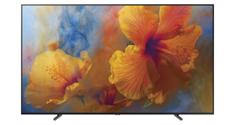 Samsung Releases 88-inch Q9 QLED 4K TV for $20,000[teaser]The ultra-large Ultra HD TV is now shipping.[/teaser] Samsung has announced the launch of its 88-inch Q9 QLED 4K TV in North America and Korea. The new model joins the previously released 65-inch QN65Q9 and the 75-inch QN75Q9. "At Samsung, we are aiming to expand our footprint in the ultra-premium TV market with our ultra-large QLED TV models that embody the perfect combination of technology and art," said Jongsuk Chu, Senior Vice President of the Visual Display Business at Samsung Electronics. "With their superior picture quality and innovative features, we are confident that our QLED TV lineup will continue to drive sales and solidify Samsung’s leadership in the global TV market." The 88-inch Q9 display uses Samsung's new metal quantum dot technology to deliver wide color gamut support and 100 percent color volume. Likewise, the set includes HDR10 support and is among the first displays to include new HDR10+ support (but not Dolby Vision). In addition, the unit features a boundless 360 Design and a 1.88mm, transparent optical cable (dubbed the Invisible Connection), allowing users to connect peripheral devices without messy wires. Finally, a No Gap Wall-mount is also offered, enabling the screen to be mounted flush against a user's wall. Samsung's 88-inch Class Q9F QLED 4K TV is now available in the US for an MSRP of $20,000. The ultra-large model is also set to launch in Europe later this month. In addition, the 65-inch QN65Q9 is currently on sale for $3,998 and the 75-inch QN75Q9 is currently on sale for $8,998. And beyond the Q9 Series, Samsung's QLED lineup also includes the Q8 QLED Ultra HD TV Series and the Q7 QLED Ultra HD TV Series. Source: SamsungPosted Wed Aug 2, 2017 at 01:25 PM PDT by: