-
 DirecTV N3D and ESPN 3D Channels Available June 11th[teaser]Love 3D? Love Sports? Maybe it’s time to start loving DirecTV. [/teaser] If you’re a sports fan with a love for 3D programming and a capable television, DirecTV has some good news. Not only will ESPN 3D be available to DirecTV customers on launch day, but it’ll be available at no additional cost to the consumer. Of course, it might be best not to get too excited about that June 11th date unless you’re a soccer fan, since the first program being broadcast in 3D is the world cup match between South America and Mexico. Soccer will make up about 30% of the programming on ESPN 3D; out of the 85 games being shown in 3D, 25 will be FIFA soccer. It’s hard to complain too much when it’s free though. Assuming you’re already set up with a 3D capable television, 3D glasses and DirecTV service, you’ll be all set when the June 11th date rolls around. All it takes is a quick software update and you’ll be good to go. The Panasonic sponsored N3D (get it?) channel will also be available on launch day, and will provide a variety of 3D programs. Source: ESPNPosted Tue Mar 30, 2010 at 11:30 AM PDT by:
 -
 Verizon FiOS Expansion Comes to an End[teaser]If you don’t it now, chances are good it's just not in the cards.[/teaser] Verizon set out with a lofty goal: to wire up 18 million households with fiber optic lines for faster delivery of internet and television by the end of 2010. We’re just about eight months away and it looks like the goal will be met, but a lot of Verizon customers are left wanting. Around a third of the company’s service area is lacking FiOS and it doesn’t look like those homes will be getting it any time soon. Verizon has stopped negotiations with major markets, and is wrapping negotiations with smaller areas. The company is going to hold back on further expansion for the time being in order to finish up with the markets it already has and, it seems, work on profitability. FiOS isn’t cheap to set up, after all. It’s estimated that the company pays about $1,350 per home to get it up and running. Customers in areas currently lacking FiOS will be happy to know that Verizon hasn’t ruled out future expansion. Source: Associated PressPosted Tue Mar 30, 2010 at 10:00 AM PDT by:
 -
 Bang & Olufsen Announces 46” BeoVision 10[teaser]If the 40” BeoVision 10 wasn’t enough for you, Bang & Olufson has upped the ante. [/teaser] There’s a certain market that Bang & Olufson targets with their televisions. It’s a market segment that I’d quite like to meet, and ask for some explanation. Not only is the BeoVision 10 incredibly expensive considering the feature set, that bottom speaker panel makes it an eyesore as well. Of course, that hasn’t stopped Bang & Olufson in the past, and it’s not going to stop them now. The newest announcement from the company is that they’re officially launching a 46” version of the BeoVision 10 television. It’s got LED edge lighting, and a 240Hz technology that aims to bring you the smoothest pictures yet. Oh, and according to Bang & Olufson, the BeoVision 10 is not only the slimmest television they’ve ever made, but it’s “designed to hang on your wall with your other artwork.” Source: Bang & OlufsonPosted Tue Mar 30, 2010 at 06:00 AM PDT by:
 -
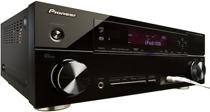 Pioneer’s New Receivers Coming in May[teaser]From basic to flagship, Pioneer’s new 7.1 channel receivers have a definite iPhone focus. [/teaser] iPhone and iPod connectivity has been good to Pioneer. They experienced a huge amount of growth in their sub $500 receivers, and marketing manager David Bales says it’s thanks to the iPhone. “We know that the dramatic growth was a direct result of our enhancements to convenience and connectivity options expected from Apple users,” he says. Continuing that trend, Pioneer has added even more iPod and iPhone functionality to their receivers. iPhone owners can plug in and play music from their device, and all Bluetooth capable phones will be able to stream music, but only the iPhone gets the iControl app. When connected to a WiFi network, you’ll be able to control your receiver directly from your iPhone. There’s plenty more to the receivers than just iPhone functionality. The VSX-920-K, coming out at $399, is a fairly inexpensive 7.1 receiver and Anchor Bay HDMI processing. The $549 VSX-1020-K sports six HDMI inputs and adds Sound Retriever AIR which is designed to help the sound of compressed audio. The VSX-1120-K is the flagship model of the new receivers and comes out a month later than the others. It adds THX Select2 Plus certification, and switches out Anchor Bay processing for Marvell 1080p/24 processing. It’ll run $749 when it launches in June. Source: PioneerPosted Mon Mar 29, 2010 at 11:00 AM PDT by:
 -
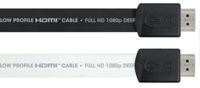 Ultralink Unveils Ultra Flat and Right Angle HDMI Cables[teaser]If you’ve got a nice thin screen mounted right on the wall, round cables just don’t have the right look, or just plain don’t fit. That’s where Ultralink comes in. [/teaser] It’s become fairly clear that buying an exceedingly expensive cable is pointless with HDMI. Shelling out a few hundred dollars on a cable that simply transmits digital information just isn't the best use of your money. Spending a bit of extra cash on a cord that works better for your setup is different. Ultralink has two new cables coming out. The first is the Ultra Flat UFHDMI cable. You can get it in sizes from one to three meters and is nice, flat, and thin. The cables even come with an adapter that lets them bend at a right angle without straining the connectors. The new C2HDMI-RA Challenger series right angle HDMI cables are made with a right angle setup in mind. They’re available in lengths from one to five meters and are rated as compliant with HDMI high speed standards. Source: UltralinkPosted Mon Mar 29, 2010 at 09:00 AM PDT by:
 -
 Samsung’s 3D Glasses Are up for Pre-order[teaser]If you need 3D glasses for the Samsung 3D TV you’re planning on picking up, you can order them now, in both traditional and rechargeable flavors. [/teaser] Planning on picking up one of Samsung’s new 3D TVs? For now, they’re still coming with that handy starter pack that included 'Monsters vs Aliens' and two pairs of their SSG-2100AB 3D Active glasses, but chances are you’ll want to watch with more than just one other person. 3D glasses are finally available for preorder on Amazon, and while pricing isn’t surprising, it’s still not too encouraging. The SSG-2100AB glasses that come in the starter kit can be had for $149 each. A new piece of information though, is that they’re not rechargeable. As soon as they die, you’ve got to have a new battery handy. Of course, if you want to step up to rechargeable, there’s a price hike involved. The rechargeable SSG-2200AR glasses come at $199 a pair. The functionality may justify the price, but the look sure doesn’t. While Samsung’s Touch of Color looks fantastic on televisions, it just looks silly on glasses. But wait, you can’t leave your son or daughter out of the 3D experience! Samsung’s got you covered though, with the $179 SSG-2200KR glasses, which look more like swimming goggles than glasses. They’re rechargeable, which is nice, but they also look pretty breakable, which is not. Source: AmazonPosted Mon Mar 29, 2010 at 07:00 AM PDT by:
 -
 HD Advisor 5.1 SurroundEditor's Note: Each Friday, High-Def Digest's own HD Advisor will answer a new round of questions from our readers. If you have home theater questions you need answered, send an email to [email protected]. If you've already sent a question and don't see it answered yet, please be patient as we work our way through them. To browse through previously answered questions, visit the main HD Advisor page. Answers by Joshua Zyber 120 Hz without Frame Interpolation Q: I just read your HD Advisor 50 and have a question about your suggestion that frame interpolation can be turned off. If you turn it off, do you lose the advantage (e.g. reduced motion blur) of the faster refresh rate that 120 Hz TVs have? Is there then any need to buy a 120 Hz TV if you don't like that "camcorder" look? Or can you still have the increased refresh rate without frame interpolation? I have a 60 Hz 1080p TV, and I'm wondering if going to 120Hz has any advantage to me if I'm one of those people that hates that artificial video look. A: Yes, when you turn off the frame interpolation feature on a 120 Hz HDTV, you will still benefit from the fast refresh rate. A 120 Hz TV always runs at 120 Hz, and will automatically convert any input signal to that frame rate. It will not slow down its refresh rate to 60 Hz just because you've turned off frame interpolation. 120 Hz was chosen for these displays because it's an even multiple of 60 Hz (the common frame rate of NTSC and broadcast HD sources) and 24 Hz (the frame rate of 1080p content on Blu-ray). When frame interpolation is turned off, the TV will apply 2:2 Pulldown to all 60 Hz input signals. This means that each frame in the source is doubled and refreshed twice as fast, without any interpolation. The TV will also apply 5:5 Pulldown to 24 Hz sources, which duplicates each frame 5 times. A simple multiplication of the original frames will look seamless to your eye, but will reduce the motion blur inherent to LCD displays. When frame interpolation is applied, that does more than just multiply the original frames in the content. The TV uses pieces of the original frames to create brand new "in-between" frames. Those artificial frames are what makes the picture smeary and causes movies to look like they were shot on camcorder. 3-D Shutter Glasses Q: I have a shutter glasses that I purchased with my Samsung DLP 3-D ready TV. I was wondering if they will work with the new Samsung 3-D TVs that are coming out? A: As far as I'm aware, those shutter glasses will only work with the TVs they were made for. The type of 3-D that Samsung and Mitsubishi built into their previous "3-D ready" DLP TVs was an older format that only provided approximately 540p resolution to each eye. The new 3-D standard being released this year has been completely overhauled, and will now provide full 1080p resolution to each eye. Also, the old shutter glasses were designed to work at a standard 60 Hz refresh rate, while the new 3-D format requires a 120 Hz rate. That alone should prevent the old glasses from syncing with the new hardware. And, let's face it, even if the old glasses could be made to sync with the new TVs, the manufacturers want you to buy new glasses for your new TV anyway. I'm sure they'd change all the emitter frequencies just to prevent you from using the old glasses. Blu-ray Player with 2 HDMI Outputs Q: I am in the market to purchase a new Blu-ray player a little better than my PS3. One thing that I'm looking for is a player that actually bitstreams Dolby TrueHD and DTS-HD Master Audio instead of decoding internally. Another thing I'm looking for if possible is a player that has two HDMI ports (1 for video and 1 for audio) so I can be sure that I don't get any interference between the two signals passing through the same HDMI. The reason that I'm even looking for this is because I have noticed that certain movies that have gotten really good audio ratings in reviews I've felt were very underwhelming on my Onkyo system. So I'm questioning if I'm getting some interference on some discs. I had heard that they were coming out with players that have 2 ports. Is there such a player that has 2 HDMI ports. If so, are they worth it? A: Blu-ray players with separate HDMI outputs for video and audio do exist. These are generally high-end models targeted to the audiophile crowd, such as the Denon DVD-A1UDCI (MSRP $4,500). It so happens that Panasonic will be releasing a new 3-D Blu-ray player with two HDMI outputs, model DMP-BDT350, later this year. Because 3-D video requires an HDMI 1.4 connection, it may not be able to pass through existing A/V receivers that only have HDMI 1.3. A Blu-ray player with two HDMI outputs will allow users to route the video directly from player to TV by HDMI 1.4, while routing the audio to an HDMI 1.3 receiver separately. The more pertinent question here is whether you need to go to this effort in your specific circumstance. In my opinion, no. HDMI has more than enough bandwidth to accommodate carrying video and audio on the same cable. You will not get any interference between the two. These are digital data streams. The cable cannot "color" the end results of a digital transmission, as might happen with analog signals. If you've been disappointed by the sound quality of highly-reviewed Blu-ray discs, the HDMI output of your PS3 is just about the least likely culprit that might be causing it. Your speakers are the biggest determining factor in the sound quality that you hear. If your speakers can't reproduce the full frequency range of a Blu-ray soundtrack, replacing the Blu-ray player will do nothing for you. Upgrading your speakers will improve the sound quality of all sources you listen to. After the speakers, the next most important factor is your receiver, and the quality of its Digital-to-Analog Conversion and amplification. Again, if your receiver has poor DAC or amp components, those will limit the quality of anything that passes through them, no matter how pure the signal. It's also extremely important that you calibrate you speaker levels and bass crossover settings with a sound level meter and calibration disc, if you haven't already. Many receivers these days offer auto calibration tools such as Audyssey MultEQ, in which you place an included microphone at various points throughout your room and let the receiver calculate its own optimal settings. In my experience, these generally work pretty well for a quick-and-dirty calibration. However, you can probably fine-tune your results more accurately (or more to your own personal preferences) by doing your own measurements. Any of these things will have a more immediate and substantive impact on the sound quality of your system than your Blu-ray player's HDMI output. Homework Assignment: You Be the Advisor The HD Advisor knows many things, but he doesn't know everything. Some questions are best answered with a consensus of opinions from our readers. If you can help to answer the following question, please post your response in our forum thread linked at the end of this article. Your advice and opinions matter too! Resume Play Function on Java Discs Q: I know it's been mentioned that the "resume" function is not possible on a BD-Java enabled disc. What I would like to understand is why isn't it possible? With all the technological advances in multimedia, I cannot understand why it's not possible to fix this with a simple firmware update. Is the limitation the hardware? JZ: You've got me. It bothers me as well that such a seemingly-simple feature has been eliminated from a significant number of Blu-ray titles. Can any of our other readers shed some light on the real reasons (technical or otherwise) why Resume Play doesn't work on Java-enabled discs? Was this just an oversight in the format specs, or is there really an insurmountable hurdle that prevents it from working with Java? Check back soon for another round of answers. Keep those questions coming. Joshua Zyber's opinions are his own and do not necessarily reflect those of this site, its owners or employees.Posted Fri Mar 26, 2010 at 11:25 AM PDT by:
 -
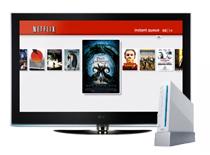 Netflix Ships Wii Instant Streaming Discs[teaser]In just a few days, Wii owners will finally get the benefit of Netflix instant streaming. [/teaser] It’s official. Netflix is now able to be used on all three current gaming systems. Whether you’ve got an Xbox 360, PS3, or Wii, you can jump on and watch your favorite movies and TV shows online with no download needed. The Wii, like the PS3, requires the use of a disc in order to stream Netflix content. Unlike the PS3 though, the Wii has a number of disadvantages for those looking for the best viewing experience. For starters, the Wii isn’t HD capable, and so isn’t capable of Netflix HD streaming. With the HD streaming experience coming to PCs before the end of the year, the Wii will be among the few options that doesn’t support HD. The other downside to the Wii is that it doesn’t offer support for 5.1 channel surround. Netflix currently only streams in stereo, so the trio of systems is on a level playing field for the moment. When the 5.1 update comes later this year though, the PS3 and Xbox 360 will be able to take advantage of it while the Wii will not. Source: 1UPPosted Fri Mar 26, 2010 at 10:00 AM PDT by:
 -
 LG Launches Ultra-Slim 3D LED Backlit LX9500[teaser]It’s the world’s first Full LED 3D television and it’s nearly bezel free. [/teaser] LG’s new LX9500 is a fantastic looking set. It’s nice and slim, to start with. Even the 55” model, the largest in the line, is a mere 22.3 millimeters thick. What makes it even more attractive is the extremely small 16mm bezel. It’s LED backlit, and the largest model features 1,200 individual LEDs. It sports 480Hz TruMotion technology and DLNA compliance. It comes with two sets of 3D glasses, which offer a 40 hour battery life. When LG says that the LX9500 is the first Full LED 3D television, it can rub people the wrong way. After all, it’s an LCD TV with LED backlighting and it’s not the first one to come out in 3D. The hair that LG is splitting is that between edge-lit LED displays and fully backlit LED displays. Like most LG products, the LX9500 is hitting Korea first before moving over to the US. Pricing isn’t too surprising, but obviously the new sets aren’t cheap. The 47” version of the LX9500 is selling for the equivalent of $4,134, but that number is expected to drop before it hits US shores. Source: NewswirePosted Fri Mar 26, 2010 at 08:00 AM PDT by:
 -
 Are Circuit City Stores Coming Back?[teaser]After experiencing great sales numbers online, Systemax is considering brick-and-mortar locations for Circuit City stores. [/teaser] You remember Circuit City. Their stores were once close competitors to Best Buy, but they took a slow spiral down to liquidation in 2008/2009. It seems like forever ago that there was a mainstream competitor to the blue giant, aside from online retail locations of course. And it’s online retail that may be bringing Circuit City back. The current owner of the company, Systemax, is strongly considering the relaunch of traditional brick-and-mortar Circuit City stores. Systemax may not be a familiar name, but the brands sure are. They own Tiger Direct, and they’re the company who brought CompUSA back from the brink of non-existence. Their stores aren’t quite as widespread as they once were of course, but there still are 34 CompUSA locations across the country. As chief executive Richard Leeds puts it, “We have a tremendous amount of excitement around our company now because of these acquisitions.” He says that the purchase of the two companies was the deal of a century. “Recession hurts, but it also creates opportunities that would not have existed otherwise.” Source: Chicago Breaking BusinessPosted Thu Mar 25, 2010 at 03:00 PM PDT by: