-
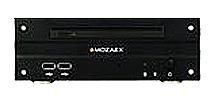 Mozaex Solo 1 is the World’s Most Affordable Blu-ray Server[teaser]The Solo 1 has up to 2TB of storage and can play 1080p video and 7.1 channel surround with the best of them. And, for a Blu-ray Server, it’s nice and inexpensive. [/teaser] Blu-ray servers aren’t for everyone. They’re expensive, they’re time consuming to setup, and they have limited functionality. The Mozaex Solo 1 is no exception, but it does strive to be the most practical one yet. The Solo 1 holds up to 2TB worth of Blu-ray content, which averages out to be around 25 movies. No matter what room of the house you’re in, you can watch content directly from the Solo 1. It’s a cool setup for sure. Of course, it plays a lot more than just backed up Blu-rays. Netflix and Pandora are both enabled on the Solo 1, and ripped CDs, DVDs , MP3s and other files all play back on the Solo 1 to any location in the house. It’s small, it’s quiet, and it’s the lightest Blu-ray server yet, at just over six pounds. It’s built especially for hanging out on server racks in homes or on yachts. The Mozaex Solo 1 is available now, but even as the most affordable Blu-ray server, it retails at “just under $4,300.” Source: Home ToysPosted Thu Mar 25, 2010 at 02:45 PM PDT by:
 -
 3D TVs Hitting Walmart This Year[teaser]Walmart says they’re working to bring down costs and give customers an affordable 3D experience. [/teaser] It usually takes a long time for technology to be considered a part of the mainstream, and Walmart sales are the number one indicator of just what is and what isn’t a crucial part of the market. It took the super sized retailer a long time to start stocking anything but a few new release Blu-rays, and just as long to get BD players on shelves. In a surprise announcement, Walmart revealed that they’ll be stocking 3D televisions for the 2010 holiday season. It’s big news, especially since 3D TVs are still so new. Early adopters are still just getting their hands on these and Walmart is already ready to stock them. “We are going to be instrumental in helping to bring the costs down and bring a more affordable 3-D experience to customers,” said Walmart’s Gary Severson. “We are excited about it.” The success of home 3D entertainment is still a question mark, but this endorsement from Walmart looks like an indicator that 3D may be here to stay. Source: Market WatchPosted Thu Mar 25, 2010 at 10:00 AM PDT by:
 -
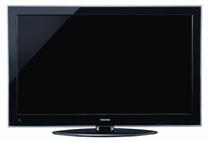 Toshiba Announces New LCDs for March[teaser]A total of five new LCD lines are coming out this month from Toshiba, but sadly, the CELL is not among them. [/teaser] There’s a lot coming out from Toshiba this month, but much of it is, frankly, not worth mentioning. The CV100 series is available at up to 32” and offers a built-in DVD player, while the 720p C100 series does not. The E200 line kicks things up to 1080p and adds a luminous logo, but not a lot else. The G300 series is a bit more interesting. It boasts 120Hz ClearFrame technology, it’s available in some good sizes, and it’s not too expensive. If you’re not looking for much more than a solid display, the 55” G300 can be had for $1,599. Toshiba’s UX600 is the big one this month. It’s got that 1080p LED backlit picture and ClearFrame technology, but also boasts strong internet functionality. There’s no Netflix, but you can access VUDU, YouTube, Flickr, Facebook and Twitter. And you can do it all wirelessly, thanks to an included WiFi adapter. The 55” model runs $2,499. Most of the new Toshiba models are available now, but you’ll still have to wait a bit to get your hands on the UX600. Source: ToshibaPosted Thu Mar 25, 2010 at 06:00 AM PDT by:
 -
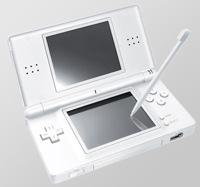 Glasses Free 3D is on the Way With Nintendo’s 3DS[teaser]There’s a glasses-free 3D experience on the way, but it’s not a TV and it’s not compatible with your 3D Blu-ray discs. It’s a handheld game system and it’s coming next year. [/teaser] There’s been seemingly endless speculation about what Nintendo’s next gaming system would be, and all signs pointed to the Wii HD. The gaming community has been clamoring for it, and popping even a base level Blu-ray player into the Wii would make it a lot more attractive to home theater buffs. When 1UP’s Sam Kennedy posted the news of the 3DS today, it took everyone by surprise. According to the article, Nintendo’s new handheld will be bringing 3D gaming to the palm of your hand. The system is set to release before March of next year in Japan. We’d expect an October or November launch for the U.S. release. There are a lot of questions yet to be answered. Will the 3D pop out or will it only have that ‘pop-in’ effect? The 3DS is compatible with old DS games, but will it convert them to 3D? Why is this not happening on our televisions? Sony is also rumored to be working on something along these lines, but we’ve yet to hear any official response. Nintendo says we’ll find out more at this summer’s E3. Source: 1UPPosted Wed Mar 24, 2010 at 10:55 AM PDT by:
 -
 Bang & Olufson Takes the BeoVision 10 on Tour[teaser]So you’ve got a taste for the finer things in life. If you swing by to see the BeoVision 10 on its North American tour you can get an exclusive look at the new Carbon Black Aston Martin and possibly walk away with some Dom Perignon. [/teaser] The folks at Bang & Olufson know that asking $6,248 for a 40” television takes a big of convincing. It’s not something you’re going to buy sight unseen, but the luxury entertainment company hopes that you’ll have no choice once you go eyes-on with the BeoVision 10. Just in case you weren’t thoroughly enticed by their set, Bang & Olufson have asked their partner Aston Martin to come along. They’ll be bringing the Aston Marton DBS in a special edition Carbon Black color for the first time in the U.S. And no, we weren’t kidding about the champagne. Dom Perignon is the official champagne sponsor of Bang & Olufson’s tour. Yes, they have an official champagne sponsor. Guests in attendance can register to win a bottle of Dom Perignon 2000 Vintage champagne. The BeoVision 10 is hitting North American showrooms this summer in a variety of styles. Pricing starts at $6,248, or $7,675 including the wall mount, Beo4 remote control, and an upgraded antireflective screen. Source: Bang & OlufsonPosted Wed Mar 24, 2010 at 10:45 AM PDT by:
 -
 PowerDVD 10 3D Ultra Brings 3D Blu-rays to Your PC[teaser]Not using a Nvidia card for your HTPC? There’s still hope. [/teaser] Nvidia’ 3DTV Play software brings your PC into the 3D realm. It lets you watch 3D Blu-rays, and adds support for 3D gaming as well, but it only works with Nvidia graphics cards. If you’re using anything else, it’s just not going to work. Of course, CyberLink isn’t going to leave you hanging. If you’re using an Intel G45, Radeon HD 2400, Geforce 8800GT or better, you can get full 3D playback using PowerDVD 10 3D Ultra. In addition to 3D Blu-ray playback, PowerDVD 10 also sports TrueTheater 3D technology, which converts 2D movies into 3D. Of course, the program is fully compatible with all forms of 3D displays and all 3D file formats, so you don’t need to worry about compatibility. PowerDVD 10 3D Ultra can be had for $99. If you picked up PowerDVD 10 Mark II, you’re in luck, because you’ll get a free upgrade later this Summer. Source: CyberlinkPosted Tue Mar 23, 2010 at 07:00 AM PDT by:
 -
 Even Octopuses Prefer HDTV[teaser]Most humans have been aware of the enhanced picture quality of high definition television for a while now, but based on recent testing, is seems octopuses are hip to the benefits as well. [/teaser] Octopuses seem to be fairly intelligent animals that respond directly to visual cues. An image of a shark, in theory, should set the octopus off. Past experiments on cephalopods though have revealed absolutely no reaction. Previous tests were done with standard definition sets, and no matter what image the researches showed, the octopus didn’t seem to care. “It was a case of the technology not being up to the relatively high standard of octopus eyesight,” says Renata Pronk of MacQuarie University in Sydney, Australia. The most recent test uses high definition sets, showing 1080p video to the target cephalopods, and has been a great success. While the reaction of the octopuses hasn’t been consistent, the fact that they react has been. Whether it’s the progressive scan technology or the higher resolution, they can’t yet say, but there’s no question that even the humble octopus can tell the difference between standard definition and high definition. Source: BBC Earth NewsPosted Mon Mar 22, 2010 at 11:25 AM PDT by:
 -
 These Are Not Blockbuster Times for Blockbuster[teaser]The video rental giant may have to file for Chapter 11 Bankruptcy, according to a recent SEC filing. [/teaser] In its annual report, Blockbuster stated that it may no longer be able to continue without filing for Chapter 11 bankruptcy. The report stated that “increasingly competitive industry conditions" raise "substantial doubt about our ability to continue as a going concern.” While Netflix and Redbox are taking a chunk of business from the company, it’s Video on Demand rentals that Blockbuster cites as the biggest competition. After a year where consumers rented more than ever – according to Sony co-chair Michael Lynton – Blockbuster lost nearly 20% of revenue. As a reaction to the report, Blockbuster is planning to slash over $200 million in costs, including the closing of over 500 stores. After the 572 stores closed last year, another 500 will bring them down to 6,000 worldwide, and as few as 3,500 in the US. Blockbuster will also attempt to adapt through imitation by increasing the amount of Blockbuster Express kiosks floating around. This certainly isn’t the end for Blockbuster, but it looks like that end may not be far off. The days of leaving the house to rent a movie are over for a lot of people, and Blockbuster has been slow to adapt. Source: VarietyPosted Mon Mar 22, 2010 at 11:05 AM PDT by:
 -
 HD Advisor Five-OEditor's Note: Each Friday, High-Def Digest's own HD Advisor will answer a new round of questions from our readers. If you have home theater questions you need answered, send an email to [email protected]. If you've already sent a question and don't see it answered yet, please be patient as we work our way through them. To browse through previously answered questions, visit the main HD Advisor page. Answers by Joshua Zyber We here at High-Def Digest get asked a lot of technical questions about our reviews, about Blu-rays, and about home theater in general. I started this column a little over a year ago to address that need. I'll be honest, at the time, I wasn't sure how long it would last. I expected that eventually we'd cover all of the most pressing topics and interest would peter out. Well, here we are at the 50th Q&A column, and the questions keep pouring in. I think that's great. (And not just because I get paid some meager amount to write these things.) As long as people are interested, I'll try to help. One consequence of lasting this long and building up an archive of material is that I tend to get asked similar questions that might have been previously covered, by newer readers who may not have followed this column since the beginning. Although I maintain an index of prior articles, the subject titles may not always be sufficiently clear or detailed enough to search for a specific piece of info. Rather than just tell these readers to dig through all 49 older articles until they find what they need, I'm going to use this 50th milestone column as an excuse to take a look back at popular subjects we've covered in the past. Audio Not in Sync with Video Q: I was watching 'King Kong' on Blu-ray. In the middle of the movie, for a few chapters, I noticed that the movements of the lips, gun fire, and roars were coming first before the video. That irritated me, but the chapters when Kong arrived in New York through the end, things went back to normal. What went wrong in the middle of the movie? Is it the disc itself, or does my A/V receiver need to be calibrated? A: Audio sync mismatches like this typically occur when the video is delayed in the signal chain separately from the audio. I talked about this a little all the way back in my third column. HDTVs with "MotionFlow" Q: I currently own a Sony XBR rear-projection TV (LCoS) and was considering an upgrade to an LCD/LED display. However, I noticed that when these models are on showroom floors demoing movies, the frame rate has a strange and unnatural movement to it. I find it very 'unfilm-like', almost as if it was shot with a handycam! I'm not sure if this is the 120 Hz refresh rate, or some other pull-down feature like MotionFlow. Oddly, I raised this issue with a Sony sales associate and he didn't know what I was talking about. Is this a feature that can be turned off? A: "MotionFlow" is just Sony's brand name for its frame interpolation feature. Different manufacturers have different names for essentially the same thing. LG calls it Trumotion. Samsung calls it Auto Motion Plus. There are many other variations. As I've mentioned in this older column and this one, frame interpolation often has side effects exactly like you describe. Movie scenes suddenly look more like behind-the-scenes camcorder footage. I can't stand it. Fortunately, most TVs allow you to turn it off. Home Theater in an Apartment Q: I've been spoiled with my home theater, living in a house distant from any neighbors. The home theater and subwoofer rules were really anything goes. I have an 800 Watt 5.1 system and a 10" 100 Watt subwoofer. Now I'll be moving into a small New York City apartment and my girlfriend is worried I'll be destroying the neighbors next door, above, below, you name it. Any tips for avoiding eviction while still enjoying a reasonably good home theater experience? A: I live in an apartment myself, but am fortunately situated in a corner with no neighbors on the other side of my HT room. I've only got the laundry room below me and a mostly-deaf elderly neighbor above. I don't get too many complaints about volume. However, in my previous apartment, I had a very inconsiderate neighbor right on the other side of my bedroom wall who would blare bassy hip hop music at obscene volumes all through the night. I eventually had to move just to get away from him. Don't be like that guy! With the help of another reader, I offered up some tips for reducing the noise that carries through your apartment walls in March of last year. High-End (i.e. Expensive) Blu-ray Players and Cables Q: Is there really any substantial difference between a Blu-ray player that costs $150-$300 and one that costs $1,500-$3,000? Also, same question about cabling. Are really expensive cables really worth the extra dough? And I'm not talking about Monster cable expensive, but Kable (or Goertz and the like) cable expensive that can run up to $500 or more per cable, be it HDMI, speaker, etc. A: The question about expensive HDMI cables was in fact the very first topic I ever covered in this column. Long story short: Expensive digital cables are mostly a waste of money. A digital transmission cannot "color" your picture or sound quality. Analog cables (including speaker wire) may be a different story, however. An analog signal can be easily corrupted by poor transmission properties in a cable that will degrade your end result. That in no way justifies the obscene prices that some cable manufacturers (especially boutique audiophile brands) charge. In my experience, most decently-shielded cables are just as good as any other. For speaker wire, I recommend 14-gauge for most applications, or 12-gauge for particularly long runs. Some of our audiophile readers may take issue with this and argue that their $5,000 Toslink cables caused a revelation in the clarity of their soundstages. But I have to take a practical view of such things. If an alleged difference in video or audio quality can't be consistently demonstrated in double-blind testing, then that difference just plain doesn't exist. Your question about high-end Blu-ray players was covered in this later column, and at least obliquely addressed in this question about Bose (in relation to expensive electronics in general) and in my OPPO BDP-83 review. Digital vs. Analog Audio Transmission Q: I have been helping someone hook up a new Samsung BD-P3600 and told him that the best option for audio was to use the analog outputs, since his receiver does not have HDMI but does have 5.1 analog. He said that everywhere he read and everyone he talked to told him that the Toslink optical was the best bet. We tried both and the optical definitely sounded crisper. But this does not make sense to me as the analog would be sending the HD audio formats and the optical would not. Is there any reason why the analog would not be better than the optical? All the cables are connected properly and set up to the extent the player will let you set it up (it lets you choose speaker size but not distance or volumes). A: The truth of the matter is that there's more to sound quality than lossy or lossless audio formats. When you make a choice between digital and analog audio transmission, you change the location of the audio decoding and the digital-to-analog conversion. That last step in particular can have a tremendous impact on your end sound quality. I've covered this a bit in this column, this one, and this one. That last article was specifically referring to differences in transmission between analog and HDMI when both keep the signal lossless. However, the basic principle also applies to S/PDIF. It's perfectly possible to get better results from a lossy signal transmitted to a receiver over Toslink than a lossless signal transmitted over multi-channel analog, if the DAC components in the receiver are superior to those in the disc player. It's also very possible that you've simply experienced a difference in volume, not really a difference in quality. I talk about that in my Uncompressed vs. Lossless Audio article. That's it for our retrospective. No Homework this week. We'll be back with some fresh topics next week. Keep those questions coming. Joshua Zyber's opinions are his own and do not necessarily reflect those of this site, its owners or employees.Posted Fri Mar 19, 2010 at 11:55 AM PDT by:
 -
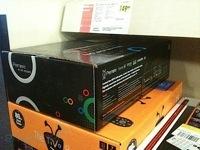 TiVo Premiere Hits Best Buy on March 28th[teaser]The new TiVo units are reportedly at Best Buy stores now and ready to hit shelves just over a week from now.[/teaser] Can’t wait until April to get your hands on the new TiVo? Then you’re in luck. According to one Best Buy employee, they’re in stock and ready for their March 28th release date, just a bit ahead of the early April ETA that TiVo announced. Though the Premiere doesn’t appear to be the second coming that TiVo needed, it’s still an impressive piece of recording hardware and a nice upgrade for current TiVo users. Not only do they have nice big hard drives, but they’ve got the added bonus of a slick new user interface. The TiVo Premiere XL is especially nice, with a full terabyte of hard drive space and THX certified sound and video. At $499, plus a subscription fee, it may not be everyone’s first choice. For those looking to spend a bit less, the $299 Premiere offers a 320GB drive, with the same fast performance. Source: TechNews.AMPosted Fri Mar 19, 2010 at 08:00 AM PDT by: