-
 Seventy-Six HD Advisors Led the Big ParadeEditor's Note: Each Friday, High-Def Digest's own HD Advisor will answer a new round of questions from our readers. If you have home theater questions you need answered, send an email to [email protected]. If you've already sent a question and don't see it answered yet, please be patient as we work our way through them. To browse through previously answered questions, visit the main HD Advisor page. Answers by Joshua Zyber Subwoofer Power Q: I have a powered subwoofer for my home theater system. On my old A/V receiver, the subwoofer power cord plugged directly into the unit. When the receiver turned off, so did the subwoofer. I recently got a new receiver that does not have a power outlet on it for the subwoofer, so I have to plug it directly into the wall. I was wondering if the subwoofer can become worn out if it is always plugged into the wall? Should I unplug it when I'm not using it? I should also mention that the subwoofer does not have a power switch on it. A: I'm pretty sure that all of the powered subwoofers I've ever used have offered a Standby mode that will automatically turn the subwoofer off if it doesn't receive a signal for a certain amount of time. On mine, there's a power indicator light that turns green when active or red when not in use. You haven't mentioned the brand or model of your subwoofer. I would check the unit to see if it has a Standby switch. If not, Google the model number to see if you can determine whether it defaults to a Standby mode. If your powered subwoofer does not have a Standby mode, I'd suggest that plugging it into a power strip that can easily be turned on or off would be a better solution than constantly plugging and unplugging it. I connect all of my home theater equipment to a power strip and turn it all off when not being used. In fact, a power strip with surge protector is a good idea in general, to protect your expensive HT gear from potentially damaging power surges. Laserdisc Viewing in the HD Era Q:I was wondering whether there is any benefit to be had in running the Composite video from my Pioneer CLD-99 Laserdisc player through a modern A/V receiver that has upconversion / upscaling capability? I have played some of my Laserdiscs through a friend's 32" LCD and the video quality is atrocious, especially when zooming a letterboxed Laserdisc movie to fill the screen. Digital sources on the same screen look great, obviously. By upscaling analogue Laserdisc to 1080p and sending to a compatible HD monitor via HDMI, would there be any improvement in picture quality? Or am I stuck with viewing Laserdiscs on my old CRT to get the best picture from analog video sources? I recall there being line-doublers that high-end laserphiles used to improve picture quality back in the pre-DVD era. Is this similar to what upscaling A/V amps do today? A: Back in 2004, I wrote an article on this subject for my own Laserdisc site. While that article is a bit out of date with regard to the latest video processing technology available in modern TVs and A/V receivers, the basics still apply. Laserdisc video is (like DVD) an interlaced standard definition signal. To view this on an HDTV, the picture must be deinterlaced and then scaled to the set's native resolution. Every HDTV has a processing chip built in that will perform this deinterlacing and scaling to all video signals it receives. Not all processing chips are created equally, unfortunately. So you may get better results pushing these functions to an A/V receiver or an external video processing unit instead, if either has a better chip installed. Old-fashioned "line doublers" were simply an early form of video processor that would deinterlace a 480i signal to 480p for display on CRT projectors. The technology is quite primitive by current standards. A line doubler that cost $10,000 - $15,000 back in the day can be easily bested by the processing chips that come standard in most $100 DVD players today. Even with the best deinterlacing and scaling, you'll simply need to keep your expectations in check for how good a Laserdisc picture can be made to look on an HDTV. The format is quite low resolution compared to what we have now, and its Composite video encoding is hampered by its antiquated design. Also, digital televisions are not optimized for playback of analog signals. Limitations in the raster of older CRT televisions would help to mask some of the flaws in noisy analog video signals. Digital televisions are more transparent, which is a benefit to a high-resolution digital signal, but can be harmful to sources like Laserdisc. I still have a sizable Laserdisc collection. I continue to cherish those discs for the years of enjoyment they brought me back when crapvision VHS was the only other alternative for watching movies at home. However, truth be told, I have a hard time watching Laserdiscs today. There are steps that can be taken to improve an LD picture on an HDTV, but there will always be inherent weaknesses in the picture quality that you won't be able to get past. Homework Assignment: You Be the Advisor The HD Advisor knows many things, but he doesn't know everything. Some questions are best answered with a consensus of opinions from our readers. If you can help to answer the following question, please post your response in our forum thread linked at the end of this article. Your advice and opinions matter too! Multi-Region Blu-ray Drives for Computer Q: I've been thinking about upgrading my computer and was considering adding a Blu-ray drive which I could then connect to my TV. Are these multi-region like DVD drives? Check back soon for another round of answers. Keep those questions coming. Joshua Zyber's opinions are his own and do not necessarily reflect those of this site, its owners or employees.Posted Fri Sep 24, 2010 at 12:00 PM PDT by:
 -
 Sharp Launches a Pair of 3D Blu-ray Players[teaser]Both come equipped with Netflix, WiFi and of course, 3D capability. [/teaser] This weekend is CEDIA, and that means one thing – hot new high-end gear. The latest Blu-ray players from Sharp aren't in that ultra expensive bracket as some others, but they're definitely a step or two above entry level. Sharp's BD-HP90U and BD-HP80U players both handle 1080p Blu-ray playback, upscaling of standard definition content and 7.1 channel audio reproduction. They've got built-in WiFi so you can connect to Netflix, Pandora and Vudu without the need for wires, and boast the ability to play DivX HD, MP3 and JPG files. If you're connecting to an Aquos 3D LCD TV, you'll be able to take advantage of features like Aquos Pure Mode, which delivers content "dot-by-dot," and Aquos Link for simple interoperability. You'll be able to snag Sharp's new Blu-ray players, both of which come equipped with 75mm VESA mounting patterns, later this month. The BD-HP80Uwill sell for $429 while the HP90U will run $499. Source: SharpPosted Fri Sep 24, 2010 at 11:00 AM PDT by:
 -
 Sharp's New HDTV Lets Viewers Choose Between 2D and 3D[teaser]There'll be no fighting over which version to watch – simply switch the glasses for a 2D picture. [/teaser] The latest sets from Sharp don't exactly solve the 3D issue, but they go a long way towards helping out. If you get a headache from 3D or simply don't enjoy it, you can switch your glasses to 2D mode. You'll still have to wear them of course, but you won't have to deal with things popping out at you at least. That's not the only thing Sharp's new set does. The Quattron 3D LE925 series uses that good old Quad Pixel technology and LED backlighting to give you the brightest picture on the market today – something that's absolutely essential when you're wearing 3D glasses. "Quattron, which combines quad pixel technology and the X-Gen LCD panel, provides a foundation for 3D that other manufacturers simply cannot match," says Sharp VP Bob Scaglione. " Quattron 3D overcomes the dark and blurry images associated with traditional 3D televisions so the consumer can realize the full potential of this compelling new format." You can pick up Sharp's new TV now in a 52 inch size for $4,200 and at 60 inches for $5,299. Source: SharpPosted Fri Sep 24, 2010 at 09:00 AM PDT by:
 -
 Roku New HD Streaming Devices Start at $59[teaser]Even at $60, you're getting 720p video and much more. [/teaser] When the Apple TV was announced, it looked pretty weak compared to Roku's streaming offerings. Now it's looking downright sad. The new Roku HD is a $59 streaming device that will get you a 720p resolution. It's also got built-in WiFi and the ability to access Roku's full catalog of streaming services including Netflix, Amazon on Demand, Pandora and More. Roku's new XD ($79) and XDS ($99) boast a 1080p output over HDMI and 802.11n capabilities baked right in. The XDS takes it up a step further, by making that wireless N technology dual-band and adding a component out, optical audio out and USB port. The XD and XDS also add a new feature called Instant Replay. With the touch of a button, you'll be able to skip back seven seconds in the video you're streaming – without the need to buffer or load it again. All three players are available now. Source: RokuPosted Fri Sep 24, 2010 at 07:00 AM PDT by:
 -
 Disney is Offering Calibration Discs Starting November 2nd[teaser]The setup disc will be available as a DVD and a Blu-ray and is designed for users of every skill level. [/teaser] There's a new Blu-ray coming from Disney this November, but it's not a feature film. And no, it's not an old classic or a collection of TV shows either – it's a setup disc. Disney's new World of Wonder (WOW) calibration disc was created for use by absolute beginners and experts alike, and includes step by step on-screen instructions for those that need them. It can walk you through everything from calibrating projectors and CRT sets to OLED screens and 7.1 channel surround. There are plenty of other features included too, like Pixel Flipper, which helps to eliminate stuck pixels. Viewing Angle Diagnostic lets you determine your viewing angle, while the Video Encoder Stress Test pushes your encoder to the absolute limit. The WOW Blu-ray will be hitting retail on November 2 at a price of $35. You'll also be able to pick it up bundled with Visions: Inspired by Nature for an additional $5. Source: TWICEPosted Thu Sep 23, 2010 at 11:00 AM PDT by:
 -
 Vizio Launches an LED Edge Lit Portable TV[teaser]The new Razor TV is small, slick and best of all – pretty cheap. [/teaser] Portable TVs may seem a bit antiquated – we're living in an age where we can watch movies on our phones after all – but if you're hoping to watch some live football it's a great way to go. Vizio's offering to the portable TV market is actually pretty impressive. The Razor VMB070 is a seven inch television that's just one inch thick and boasts three and a half hours of battery life. But that's not what makes it so interesting. The VMB070 is the world's first portable TV to sport LED edge lighting. That means you'll be getting a nice and bright picture with above average contrast and richer colors. It also packs touch sensitive controls, Dolby Digital sound and a fold-in antenna. You can pick up Vizio's Razor VMB070 now for a price of $159. Source: eCousticsPosted Thu Sep 23, 2010 at 09:00 AM PDT by:
 -
 Netflix Goes Live in Canada[teaser]But sadly, the selection seems to be significantly less than what's offered in the US. [/teaser] Oh our neighbors to the north, how we love to tease you! Your ways – and your bacon – are different from ours, but we kid because we love. Netflix loves you too, and has finally made it across the border with its streaming service. Canadian residents wishing to get their stream on will be shelling out $7.99 a month, just a touch cheaper than the least expensive one-disc plan in the states. Just like in the US, you'll be able to watch Netflix on the PS3, Wii, and soon the 360 as well. The downside is that the selection seems much more limited than the US version. Canadians don't have access to shows like 'Lost,' or 'The Office,' which we do. There's no official word from Netflix, but it's almost certainly a licensing issue. It's not cheap to get such a wide variety of shows available streaming, and Netflix seems to be testing the market a bit before diving in head first. Source: NetflixPosted Thu Sep 23, 2010 at 07:00 AM PDT by:
 -
 SunBrite Launches a new Outdoor Display[teaser]It's not cheap, but it'll stand up to just about anything you throw at it. [/teaser] If you live in one of those nice sunny places where you get to spend a lot of time outside, you may have toyed with the idea of setting up a TV on your deck. There's the problem of weather though, and unless you're prepared to bring your TV in every time it looks like it might rain, it's not practical. SunBrite TVs, on the other hand, are designed for the purpose. They're made to resist the harshest conditions and keep on working throughout the year. Heat isn't a problem, thanks to the proprietary Multi-Fan Airflow System which can keep your TV running with exterior temperatures as high as 121 degrees Fahrenheit. Living a little farther north? An internal heater can keep your set going at temperatures as low as -24 degrees. The 2220HD boasts a 22 inch screen with a 1366 x 768 resolution and a 2500:1 contrast ratio. It's not the largest thing ever, but how much TV do you really need while you're grilling? SunBrite's 2220HD will be available October 1st at a price of $2,095. Source: eCousticsPosted Wed Sep 22, 2010 at 01:00 PM PDT by:
 -
 Integra Launches a Pair of Blu-ray Players[teaser]These high end players are made specifically for custom installers. [/teaser] Tomorrow is the first day of the Custom Electronic Design and Installation Association Expo, better known as CEDIA. It's like the CES of high-end gear, full of all that expensive stuff that you won't find at Best Buy. Integra kicked things off with the announcement of two new Blu-ray players designed to complement the company's lineup of AV receivers and preamplifiers. Both the DBS-30.2 and 50.2 offer access to sources like Netflix and Blockbuster On Demand, but only the latter comes packed with video enhancing features. The DBS-50.2 utilizes the Marvell Qdeo HD Video processor, which gives a better picture and much improved upscaling of standard definition content. The 50.2 also sports a more rigid construction and 7.1 channel analog audio output. Both players are available now through authorized installers. The DBS-50.2 will run you $700, while the 30.2 comes in at $500. Source: eCousticsPosted Wed Sep 22, 2010 at 11:00 AM PDT by:
 -
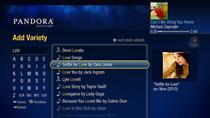 TiVo Adds Pandora to the Premiere[teaser]The music streaming service is available now, and for free. [/teaser] If your parents taught you anything, it's that you shouldn't watch TV while you're eating dinner. Thanks to the addition of Pandora though, you can still utilize your home theater system while avoiding bad manners. The streaming service is available now for the TiVo Premiere and TiVo Premiere XL, nicely rounding out the music streaming side of the system. Pandora fits in nicely with Live 365 and Rhapsody – already available to TiVo users. So next time you're having a classy dinner party you can feel free to turn on the idiot box and scroll over to Pandora to put on some background music. Bonus points if you throw on a Paganini mix while yelling out "Ooh, thems my jams!" Source: eCousticsPosted Wed Sep 22, 2010 at 09:00 AM PDT by: