-
 TCL Announces New "Super-Smart" 4K UHD MoVo UD[teaser]MuVo UD is the first 4K set with Google TV software.[/teaser] TCL has announced the MuVo UD, the first Ultra HD set to feature Google TV. While nothing about the set's display characteristics was revealed, including the size, the set will feature Android 4.2.2, and more significantly, TCL's Personal Box Office version of Google TV. Also described as "Lazy TV," here is TCL's breakdown of their Personal Box Office and MoVo TV features, "Based on Google's powerful search engine and combining TCL's proprietarily developed PBO (Personal Box Office, commonly known as the "Lazy TV") innovative technology, MoVo can automatically identify a user with its motion sensor-transmitter and proactively comprehend the user's preference by analyzing his behavior and habit. Its content recommendation engine can integrate the user analysis and its content searching module to recommend automatically exciting content that accommodates the user's preference. In so doing the user can enjoy a real "Lazy TV" super smart experience without operating a remote control or initiating voice recognition. This better serves the current needs of busy consumers and brings TVs back to the centre of home entertainment." Admittedly, TCL 's triumph over the assumed difficulty of combining a 4K display with Google's TV platform does not seem like an astounding breakthrough. The company nevertheless seems to be beating to market both Samsung and LG, industry leaders who ought to have the edge in deploying Android functionality. TCL has not yet shared whether or not the MuVo UD will see a release in the west, but with the company making noise with splashy products on the high-end of the spectrum, can a TCL breakthrough to North American homes be far off? Source: Engadget & PRNewswire Author: Brian HossPosted Thu May 16, 2013 at 08:30 AM PDT by:
 -
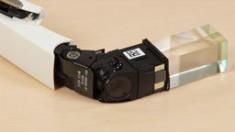 Google Glass Teardown Stops Short of Tearing[teaser]The expensive device does not appear to be susceptible to advanced repairs. [/teaser] As Google Glass floats about in beta mode, one of the questions directed at the new tech involves its internal make-up and reparability. Unfortunately, Bill Detwiler's attempt to crack open a Google Glass unit fell well short of the mark. Without a green light to destroy the hard-to-come-by $1,500 Google Glass device, the dissection had to be restrained. Still, some aspects are accessible. The actually glasses part of the device, the titanium frame, lenses and nose pieces can be removed from the device just be removing a single Torx T5 screw. After that, the housing around the camera and display assembly is simple to remove, leaving the camera and hinge exposed. Sadly though, that is where the dissection ends. Stopping short of breaking the device, and using multiple less invasive methods, including applying heat, did not gain entry into the innards of the device's rear and main modules. The takeaway, apart from being unable to confirm the components of the device, is that device is unlikely to be repairable in a practical sense beyond just the glasses' frame and components. The teardown conclusion is that this characteristic is unlikely to change between now and when the device is released to the mainstream. Source: Tech Republic Author: Brian HossPosted Wed May 15, 2013 at 09:00 AM PDT by:
 -
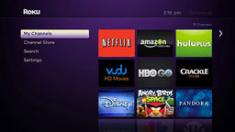 Major Software Update Finally Available for Roku 2 Models[teaser]Update brings the new Roku interface, redesigned channel store, and home screen themes. [/teaser] With the launch of the Roku 3 back in March, Roku introduced a number of new UI changes and features. That new design, which includes a built-in a search tool, was promised to come to Roku 2 models. Roku has now fulfilled that promise. While Roku has sent out a few test cases of model updates, starting today, owners of the Roku 2 XS (model 3100), Roku 2 XD (model 3050), Roku 2 HD (model 3000), Roku LT (models 2400 & 2450), Roku HD (model 2500) and the Roku Streaming Stick (models 3400 & 3420) can manually update their Rokus to version 5.0, build 804X. Earlier first generation Roku models are not part of the new UI update. Even without manually updating, those eligible Roku 2 models will be receiving the update automatically over the next two weeks. The new built-in search feature, which searches across channels for queried content, is available in the US only. The new UI design is more grid based than twin axis based, and makes browsing for new channels easier. Both the new search function and UI have been received positively on the Roku 3, but many may not enjoy the increased amount of advertising and promoting found around the new UI. Both the top-of-the-line Roku 3 and the formely top-of-the-line Roku 2 XS are available from Amazon. Source: Roku Author: Brian HossPosted Wed May 15, 2013 at 08:30 AM PDT by:
 -
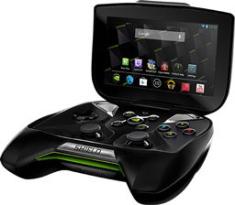 Nvidia Shield Priced and Dated[teaser]The Tegra 4-powered portable gaming system runs Android and streams PC Games. [/teaser] Nvidia's Project Shield is readying to ship and is now officially titled the Nvidia Shield. The device is focused on gaming, video streaming, and media playback and is capable of a variety of functions. The Nvidia Shield will be priced at $350 when it launches at the end of June. The main function of the device is to serve as a portable Android gaming platform. The 5 inch 720p multi-touch screen folds away for travel and pops up for use. In contrast to tablets and smartphones, the Shield uses a built-in dual analogue controller in addition to the touch screen, seemingly modeled after the Xbox 360 controller but with the left analogue stick and d-pad swapped, and Android specific buttons added. The device is built around Nvidia's Tegra 4 quad core mobile processor and is mated to 2GB of RAM. The device will ship with 'Sonic 4 Episode II THD,' 'Expendable: Rearmed,' Hulu Plus, and Twitch as well as access to both the Google Play store and Nvidia's Tegra Zone. This is fitting for a device that will ship with Android 4.2.1. Nvidia also has mentioned several games that will be coming to TegraZone, including Double Fine's 'Broken Age' and 'Costume Quest.' The Shield includes "better than tablet" speakers, a built-in microphone, 16GB of flash memory, a microSD expansion slot, GPS, and a gyro and accelerometer combo. Connectivity options include Wi-Fi, Bluetooth, a Micro-USB port and a Mini-HDMI port. The Mini-HDMI port opens up the system's secondary function, to be a portable console by connecting to a large external display. What may be the portable Android gaming system's most intriguing feature though, is its PC gaming streaming capability, which will be in beta at launch. A gaming PC with a GeForce GTX 650 or higher card can be set to wirelessly stream in playable form PC games to the Nvidia Shield. The concept involves the gaming PC in one room, with the player playing through the Shield in another room. From Nvidia, "Featuring a new and innovative PC game streaming capability available in BETA at launch*, SHIELD gives you the power to wirelessly access your GeForce® GTX-powered computer from the comfort of your couch. Play your favorite PC games and access Steam Big Picture, on a full-size controller with ultra-low latency thanks to SHIELD's game-speed Wi-Fi and the fast performance of GeForce GTX GPUs." Retailers are expected to begin accepting pre-orders for the Shield on May 20th. Source: Joystiq Author: Brian HossPosted Wed May 15, 2013 at 05:30 AM PDT by:
 -
 Netflix Taking Steps to Avoid Another Expiring Title Freak-out[teaser]The Netlfix public API will no longer have title expiration dates. [/teaser] With sites all over the internet publicizing numbers involving Netflix's recent content expiration, Netflix has made a change to its public API. Previously, using Netflix's public API gave the user access to functionality beyond what official Netflix apps provide, including sorting out expiring titles. This led to sites like instantwatcher.com to maintain a list of Netflix titles that are designated to expire. As Netflix licenses content from major studios, titles are frequently added and removed as those deals are renewed, modified, or allowed to expire. Sometimes the content comes back, and often times, titles set to expire end up staying. With instantwatcher.com supplying an alarming 1,800 titles set to expire, sites all over the internet made the number go viral. A few examples include: Engadget used the term "Streampocalypse." Slate referred to the expiring titles as "The Great Netflix Purge." And the Huffing Post just round up the expiring number to 2,000 titles. The high number of expiring titles would seem to coincide with the expansions of Warner Instant and Epix, but Netlfix has remained mum on the specifics. In what seems like a direct result to the negative publicity, Netflix made a change, "Starting today, we will no longer provide expiration dates for any of our titles in the public API... We are making this change because the expiration date can be inaccurate as a result of frequent, often last minute, changes in content flow. "Netflix members will still be able to see the listed title expirations on Netflix.com on each individual title page." In essence, the next time some sort of Netflix expiring content panic is spurred on, Netflix's public API won't be there to supply the number of titles, and a manual search of Netflix will be necessary. Source: Engadget Author: Brian HossPosted Tue May 14, 2013 at 09:30 AM PDT by:
 -
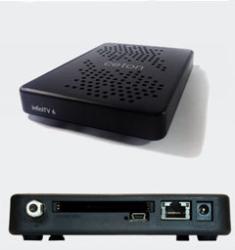 Ceton InfiniTV 6 Takes One CableCARD to Record Six HD Channels[teaser]The six tuners can be accessed by networked PCs and media extenders. [/teaser] At $300, the Ceton InfiniTV 6 brings home six QAM 64/256 tuners. Once combined with a CableCARD and possible switched digital video tuner from a cable company, the Ceton InfiniTV 6 brings both live TV and DVR capability to the user's home PC network. Right now, the Ceton InfiniTV 6 supports assigning tuners to PCs, but the box also offers as a beta feature dynamic pooling between PCs. For those willing to tackle what is likely and arduous set-up requiring assistance from the cable company, freedom from cable boxes, cable box DVRs, and their associated fees can be achieved. The Ceton InfiniTV 6 hooks up either directly to your coaxial connection or to a tuning adapter if necessary, and houses a CableCARD. The box then needs a wired Ethernet connection to your home network. The supported PC requirements fall between the narrow lines of Windows 7 or Windows 8 Pro with Media Center. One of the common media extenders known to work with the device is the Xbox 360. Source: Engadget Author: Brian HossPosted Tue May 14, 2013 at 09:00 AM PDT by:
 -
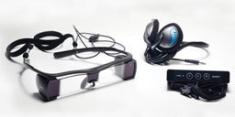 Regal Expanding Sony Entertainment Access System Capability to 6,000 Screens[teaser]Personal captioning, descriptive video, and audio assistance available for Regal moviegoers.[/teaser] Regal Entertainment Group's deployment of the Sony Entertainment Access System is expanding. Already it has reached 400 theaters in the US, and the plan is to bring the system to 6,000 screens by the end of the month. In contrast to the very limited offerings of open captioned film showings, the Sony entertainment Access System utilizes a set of glasses, headphones, and a wireless receiver to offer multiple forms of assistance for movie goers. The system can be used to display closed captions on glasses, and captions that describe the film's audio. By plugging the headphones into the receiver, the system can also increase the volume for the listener or even provide an audio description of the on-screen action. The system works for both 2D and 3D films with one caveat. The system is dependent on the movie-makers for providing the captions. As Regal continues to roll out the system by pairing a Sony Entertainment Access System with each theater's projection system, moviegoers need only request an Accessibility Device at equipped theaters. Viewers can then use the system without the need to affect others and without requiring a special screening. Regal maintains a list of theaters and showings with their accessibility options at their website. Source: The Verge Author: Brian HossPosted Thu May 9, 2013 at 08:30 AM PDT by:
 -
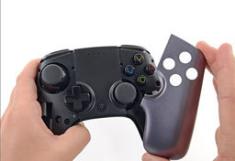 OUYA Launch Date Slips Three Weeks[teaser]The system is also getting a controller fix and $15 million in new funding.[/teaser] OUYA CEO Julia Uhrman announced today that the OUYA's launch date is being pushed pack from June 4th to June 25th. While many backers are still awaiting their units, the reason cited for the delay is unforeseen demand. "The demand we’re seeing from gamers and our retailers is beyond our expectations, so, to meet all this demand, we are shifting our launch date by three weeks to give us time to make more OUYAs. Our official launch date will be June 25th. This change in ship date does not affect backer shipments." In the same announcement, Julia Uhrman revealed that OUYA, Inc. had raised $15 million in funding from new investors. Those investors include Kleiner Perkins Caufield & Byers, known for their tech focus, and NVIDIA among others. The funds will help to up production and to extend further support to developers. Along with the funding, Bing Gordon will join OUYA's board. Bing Gordon spent twenty-six years at EA before moving to Kleiner Perkins Caufield & Byers, and now sits on the board of multiple hot companies in the digital space. "I am thrilled to share that OUYA has raised $15 million in funding from new investors. This is a really important step towards being around for the long haul... It means we’ve got additional resources to make OUYA everything it can be." One footnote to the OUYA's development is a fix for the controller. The OUYA's controller features removable faceplates for battery access, but backers have found that the OUYA's buttons occasionally get stuck behind those plates. The production fix has apparently been in the pipeline for months, but was mentioned now just as the controller's issues have become for public. The OUYA is now expected to be released on June 25th, and is available for pre-order. Source: OUYA Author: Brian HossPosted Thu May 9, 2013 at 07:30 AM PDT by:
 -
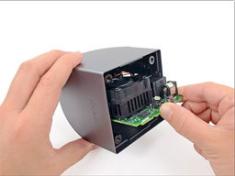 The OUYA Scores a 9 Out of 10... for Repairability[teaser]System teardown shows that most of the usual suspects are easy to replace.[/teaser] As the OUYA floats around ahead of its scheduled June 4th launch, the little $99 open-source, Android-based home console is under quite a bit of scrutiny. Fortunately, one area where the little system has scored weal is in repairability. iFixit has posted a teardown of the system, and the results reveal a system that is easy to disassemble. A few Hex screws allow access the main system, and the motherboard then slides out easily. The system is so simple that 2 ounces of weights are mounted to the inside bottom of the OUYA cube to help seat the system. A SUNON MagLev HA40101V4 DC brushless fan is the system's only fan and is ready to be replaced with a few moment's effort if need be. Taking out the heat sink is a tougher prospect requiring desoldering, but likely will only be necessary for the more curious user. Likewise, the controller is much simpler to dissemble than the standard console controllers. One issue though is the analog sticks, which are soldered to the circuit board. Unfortunately, replacing a analog stick would be very difficult without replacing the controller's main board. Ultimately, the system scored a 9 out of 10 for ease of repairability. Of course the system's low price point and simple construction should minimize the need to ever crack open the OUYA case. Source: ifixit via Gamasutra Author: Brian HossPosted Wed May 8, 2013 at 09:00 AM PDT by:
 -
 See 'Iron Man 3' in 4DX... in Tokyo[teaser]The motion, the smells, the moisture, the 3D, and the hot air of 'Iron Man 3' in 4DX.[/teaser] 4DX, the amalgam of gimmicks that are unlikely to make it to home theater anytime soon state their case with 'Iron Man 3.' In an article on the Verge, the sensory overload available only in the near Tokyo city of Nagoya is related in full detail. The verdict not unsurprisingly is that some gimmicks work better than others. For 'Iron Man 3' it starts with 3D conversion, a feature which is aided by the motion sensation derived from moving seats. The immersion felt from the "seats' movement is surprisingly high, and in scenes where Iron Man soars through the air it lends an appreciable level of immersion." The theater's colored strobe lights also receive high marks and seem to add a little visual shock to each explosion. On the other hand, haptic feedback receives little love. "One of the first 4DX-enabled events sets the tone: a mysterious plant smolders on screen, and you feel a vibration in your back. This is weird and off-putting, and highlights a major limitation of 4DX — its haptic feedback comes from behind, but all the action happens in front of you." With the viewer's behind feeling the vibration, the front is left to be blasted with water. That's right, a bar in front of the viewer sprays water in sync with (loosely) aquatic situations onscreen. "Does it really add to the moment to get a faceful when Iron Man falls into the ocean following a helicopter attack?" The 4DX aroma array is likewise less loved. Regardless of the system's library of scents, the viewer "was only able to distinguish a single one during the entire film, a chemically sweet, metallic odor that seemed to pop up at random." More effective than water is air, and when timed with onscreen gunfire can be interesting but at a cost. The air jets, situated on either side of the headrest, tend to drown out sound when activated, which quickly hurts any onscreen action. Ultimately, it would seem that 4DX is a mixed bag, and when considering how appropriate 'Iron Man 3' is, with so much action and cool onscreen suit experiences, "4DX is (still) going to come off to you as little more than a Disneyland ride... If a blockbuster like this isn’t the perfect use case, what is?" Source: The Verge Author: Brian HossPosted Fri May 3, 2013 at 08:30 AM PDT by: