-
 LG Announces its First Flat Screen OLED TV[teaser]Joining its recently released curved screen display, LG will be showing off a new flat screen OLED in Germany later this week. [/teaser] LG has revealed details on its latest 55-inch OLED display. Unlike its currently available 55EA9800 curved screen TV, the new 55EA8800 will feature a more traditional flat screen design that enables wall mounting. The set also comes with LG's new Canvas Speakers. The 2.2 audio system offers powerful sound and is elegantly hidden in the TV's art frame inspired bezel. Like its curved screen counterpart, the display uses OLED (organic light-emitting diode) technology and comes complete with full 1080p resolution and LG's proprietary WRGB four-color pixel system. In addition, the television includes a special Gallery Mode that enables users to view HD images of famous paintings by artists like Van Gough, or personal photos in a digital slideshow. Exact pricing and availability have not been announced yet, but the Gallery OLED will be on sale in Germany later this month, and will then expand to other markets. Full details are expected to be released at the IFA trade show in Berlin later this week where the TV will be on display. Source:Posted Tue Sep 3, 2013 at 09:00 AM PDT by:
 -
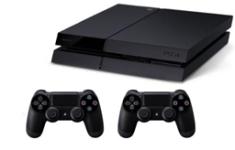 PSA: New Amazon PS4 Launch Day Bundle Available[teaser]Bundle includes system and second controller.[/teaser] Amazon is offering a new PlayStation 4 launch day bundle that promises to reach customers the day of, which means getting the console before customers who pre-ordered the standard edition months ago. Prior launch day bundles have included one of the various launch games, but this bundle is paired with a second Dual-Shock 4. A DS4 retails for $60, so the bundle's $460 price is the same as cost of the console and second controller separately. The launch day PS4 and second controller bundle is available now. Source: Amazon Author: Brian HossPosted Sun Sep 1, 2013 at 09:30 AM PDT by:
 -
 The Future of TV: OLED vs. Ultra HDby Steven Cohen [teaser]We break down the pros and cons of both burgeoning display technologies along with eyes-on impressions! [/teaser] With the recent release of large-screen OLED displays from both LG and Samsung, and the continued push for 4K adoption from home theater manufacturers, the entire landscape of television is starting to change, offering more pixels, better colors, and deeper blacks. But just what are the differences between these two new innovations? Is Ultra HD better than OLED? Does increased resolution offer more of a benefit than improved contrast? Are the two technologies even mutually exclusive? Well, fret not, we here at High-Def Digest are going to answer your questions, providing a rundown of the general strengths and weaknesses that face current OLED and 4K displays. Is there actually a clear winner between the two? Let's find out... OLED: The Pros and Cons Long heralded as the holy grail of future display technologies, OLED televisions have been teased and demoed for years, but it wasn't until earlier this month that Samsung and LG finally started selling their first large-screen OLED sets to American consumers. Standing for Organic Light-Emitting Diode, OLED displays offer a notable break from traditional LCD, LED, and plasma televisions. In contrast to LCDs which use liquid crystals or plasmas which use ionized gases, OLEDs use organic compounds to produce light when charged by an electric current. Because the pixels emit light on their own, there is no need for an additional backlight, resulting in truly inky black levels and far superior contrast ratios. Likewise, OLED displays can achieve higher brightness than plasmas. Coupled with excellent viewing angles and fast response times, the technology essentially promises all of the strengths of LCD and plasma sets without many of their weaknesses. While that's a very lofty claim, current OLEDs are not without their potential problems. For starters, much like plasmas, the TVs are still susceptible to temporary image retention and, under extreme conditions, even burn-in. Plasmas have come a long way in regards to this issue, however, and it remains to be seen how OLEDs will compare. The lifespan of an OLED set is also a potential stumbling block. The degradation rates of blue, red, and green pixel luminance have revealed shorter display lifetimes than LCD or plasma sets, and blue pixels are especially troublesome. This could also lead to color balance issues over time as the blue pixels fade quicker than red and green. Advances have been made to help combat this problem, but only long term testing with the current crop of displays will really let us know how serious the issue is. Though this next quirk could be considered a pro or a con depending on personal taste, both LG and Samsung's 55-inch OLEDs feature a curved screen design. It's not entirely clear why the companies decided to go in this direction, but speculation is that the curved look was chosen to help further differentiate the sets from current LCDs and plasmas. Regardless, the curve makes it impossible to mount the TV on a wall which might be a point of contention for potential buyers. Of course, the most obvious con to current OLED displays is their resolution. For the time being, all OLED sets are only being offered in regular old 1080p. While that might be perfectly fine for most users, particularly at current display sizes, it could offer some problems down the road, especially when 4K content eventually becomes the norm. We've yet to get any one-on-one time with Samsung or LG's OLED TVs, but I did recently get to check out one of LG's 55EA9800 curved screen sets at a Best Buy Magnolia store. Unfortunately, the lighting conditions in the room and the heavily compressed demo reel on display didn't really show off the technology's trademark benefits. With that said, I was pleasantly surprised by how subtle the curve seemed in person. I was expecting to be irritated by the arching screen, but I actually found the curve to be quite subtle, and viewing angles seemed to hold up very well despite the slight bend. Beyond lifespan and design quirks, current prices for OLED displays are definitely a hindrance as well, but that's to be expected with any new technology. The Samsung KN55S9C is currently available for a suggested retail price of $9,000, and the LG 55EA9800 is currently available exclusively at Best Buy Magnolia stores for $15,000, though rumors suggest LG might soon match Samsung's lower price. Ultra HD: The Pros and Cons Offering four times the pixels of standard 1080p televisions, Ultra HDTVs provide a resolution of 3,840 × 2,160 (though full 4K resolution for cinema exhibition is actually 4096 × 2160). This results in a much sharper and more detailed image. The only real catch is, in order to see the full benefits from this increase in resolution, one is said to need a very large screen and a relatively short viewing distance. With that in mind, I've actually remained pretty skeptical about the advantages of 4K resolutions for 55-inch or 65-inch TVs, but I recently got to check out Sony and Samsung's 55-inch offerings at a Best Buy Magnolia store, and that skepticism is starting to melt away. The Samsung UN55F9000 ($4,498) had a single demo playing on repeated loop that featured breathtaking shots of a cityscape. From a comfortable distance of about 7 feet, the image looked incredibly detailed, making it possible to clearly make out every window on each towering skyscraper. Was the picture actually appreciably better than a 1080p set? Well, it's hard to truly say without seeing the exact same content being played on a standard HDTV side by side, but the image was certainly eye-catching and stood out much more than any other regular 1080p display in the room. The Sony XBR-55X900A ($3,998) actually had a much more varied demo on display, offering beautiful nature shots, a soccer game, a clip from 'Total Recall (2012),' and a particularly striking sequence involving a cornucopia of red desserts and strawberries. Detail was simply jaw-dropping and colors were incredibly rich and vibrant. Again, while I didn't have a 1080p set with the same content to make direct comparisons to, the picture was very impressive, even from a reasonable distance -- and again, this is coming from someone who has remained fairly skeptical about 4K sets. In addition to the demo reel, I also got to play around a bit with the display's settings, opting to quickly disable the default vivid mode for the far more natural and accurate cinema setting. I was also able to sample the TVs upscaling features, and considering the fact that 4K content is still rare, this is a pretty big selling factor for early adopters. First I viewed scenes from the standard release of 'The Amazing Spider-Man' with the Sony Blu-ray player set to upconvert to 4K. While it's hard to truly judge the picture under retail store conditions, my initial impressions were very positive. Likewise, I also got to sample scenes from 'Spider-Man (Mastered in 4K),' a release that is specially optimized for upscaling on this Sony TV and a disc that I've previously reviewed myself on a standard 1080p display. With the TV set to its "Mastered in 4K" setting, the film looked very good, and while I can't make a firm judgment without seeing direct comparisons under proper home theater conditions, the upscaling definitely offered improvements. As impressed as I was with the TVs in person, current Ultra HD sets still have several notable drawbacks. For one, they're all still based on traditional LCD LED backlit technology and are all still prone to their same nagging weaknesses -- most notably lighter black levels, uneven backlighting, and less than ideal viewing angles. Good black levels are particularly integral for a display's overall image performance, and even with local dimming capabilities, LCDs just can't compete with OLEDs, which offer the best black levels of any current display type. Another potential snag standing in the way of the 4K revolution, is the current lack of a universal Ultra HD standard. This means exact specifications for color gamuts, frame rates, compression, and support for future HDMI revisions have yet to be set. In contrast, OLED televisions won't have this problem since they adhere to the standard HDTV spec. With that said, Samsung has stated that there will be some form of upgrade available to make their current sets compliant with any new HDMI revisions and Sony has hinted at similar options. At the end of the day, an overall lack of actual 4K content might be the most notable problem. In fact, both Samsung and LG really don't have a 4K media delivery system yet, making it difficult to truly show off the advantages of an Ultra HDTV, while the benefits of an OLED will be readily apparent with all current content. Sony, however, does have the FMP-X1 4K Ultra HD Media Player which offers a library of downloadable 4K films, including 10 preloaded titles that feature a decidedly eclectic mix of films like 'The Amazing Spider-Man,' 'Taxi Driver,' and 'That's My Boy.' While the media player is definitely a step in the right direction, it only works with Sony's 4K sets and can't compete with a true 4K media format, which has still yet to be announced. Much like OLEDs, prices are quite high compared to traditional 1080p displays, but this is thankfully starting to change, and a recent wave of price cuts from Sony and Samsung just went into effect with LG planning to follow suit as well. The XBR-55X900A is now listed at $3,998 and the XBR-65X900A is selling for $5,498. Samsung's UN55F9000 is retailing for $4,498 and its UN65F9000 is now available for a suggested retail price of $5,998. LG also has their own 4K lineup, which includes the 55LA9700 and the 65LA9700 which will feature reduced prices of $4,999 and $6,499 respectively starting September 1st. Conclusion: Can't we all just get along? Though 4K and OLED sets are poised to compete with each other for the time being, the reality is, neither technology is mutually exclusive and there is no clear "winner" between the two. In fact, they really shouldn't be fighting at all -- they should be joining forces. While not commercially available yet, Ultra HD OLED displays have been demoed before and are perfectly feasible. The main roadblocks are of course price and manufacturing challenges. Right now, Ultra HD and OLED sets are expensive enough on their own and OLED TVs have especially low yields, so merging the two would simply prove to be cost prohibitive. Of course, this will change in the coming years as manufacturing expenses go down and market adoption increases, and it's very likely that the true future of television won't rest in either technology alone. It will rest in their combination -- a prospect that should leave any home theater enthusiast foaming at the mouth. We'll try to get some true one-on-one time with these Ultra HD and OLED televisions in the near future, but for now, we hope this break down has been helpful. And if you'd like to check out 4K TVs in person, you can see them demoed at several Sony Stores and Best Buys. Likewise, the LG OLED is currently on display in select Best Buy Magnolia stores, and Samsung's OLED should start showing up in limited retailers as well.Posted Fri Aug 30, 2013 at 11:45 AM PDT by:
 -
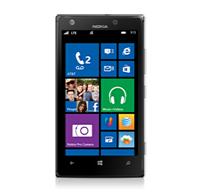 Nokia Lumia 925 up for Pre-Order at AT&T[teaser]The Windows smartphone will be available on September 13. [/teaser] AT&T is now taking pre-orders for the Nokia Lumia 925 for a September 13 release. The wireless provider is offering a bevy of buying options, including an AT&T Next plan with 20 monthly payments of $21. In addition, the phone will cost $99.99 with a standard two year contract and $349.99 with a one year contract. The retail price with a month to month plan is set at $429.99. The Lumia 925 features a 4.5-inch PureMotion HD+ display with Gorilla Glass 2. The phone is powered by a Qualcomm Snapdragon S4 Dual-core 1.5 GHz processor with 1GB of ram, and runs on Windows Phone 8 and AT&T's 4G LTE network. An 8.7MP rear camera and a 1.2MP front camera are also included, along with an assortment of advanced shooting options and low light capabilities. In addition to AT&T, the Windows phone is already available from T-Mobile for $480, payable in 24 monthly installments of $20. Sources: Engadget, T-MobilePosted Fri Aug 30, 2013 at 11:00 AM PDT by:
 -
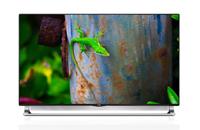 LG Matches Sony and Samsung's Ultra HDTV Price Reductions[teaser]LG will follow Sony and Samsung's lead, cutting the price of its own 4K TV lineup. [/teaser] In the wake of a substantial price cut for Sony and Samsung's 55-inch and 65-inch Ultra HDTVs, competitor LG has also announced plans for a similar discount. Starting September 1, the Korean manufacturer will reduce the price of its 55LA9700 by $1,000 and its 65LA9700 by $1,500. The updated pricing will place the 55LA9700 at $4,999 and the 65LA9700 at $6,499. While the company's price change matches the amount of Sony and Samsung's reductions, it still leaves their 4K offerings at a full $1,000 higher than Sony's and $500 higher than Samsung's. Sony currently has the cheapest prices with its XBR-55X900A now listed at $3,998 and its XBR-65X900A selling for $5,498.Though Samsung was initially expected to match Sony's pricing, their Ultra HDTVs are currently selling for about $500 more, with the UN55F9000 retailing for $4,498 and the UN65F9000 now available for a suggested retail price of $5,998. All four models feature 3,840 x 2,160 displays, giving them about four times the resolution of a traditional 1080p HDTV. In addition, the televisions offer similar Smart TV functions and are based on LED technology with local dimming capabilities. Source: CNETPosted Fri Aug 30, 2013 at 05:00 AM PDT by:
 -
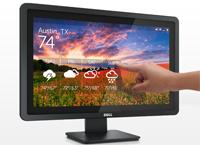 Dell Details New Touchscreen Monitors[teaser]Three new touchscreen monitors are now available from Dell, offering intuitive multi-touch features and HD resolutions. [/teaser] Dell has announced three additions to its computer monitor lineup. The new displays include the Dell 20 E2014T, the Dell 23 P2314T, and the Dell 27 P2714T. All three are touchscreen displays and offer MHL connectivity for viewing media from smartphones and tablets. The Dell 20 Touch Monitor is 19.5 inches and features a resolution of 1600 x 900, along with a 2ms response time and a dynamic contrast ratio of 8 million:1. In addition to the aforementioned MHL support, the display also includes DisplayPort, HDMI, VGA and USB connections. The 23-inch Dell 23 and the 27-inch Dell 27 Touch Monitors both offer 1920 x 1080 resolutions, 10-point touch capabilities, and wide 178-degree viewing angles. The displays also include adjustable stands that are designed to slide and tilt for more comfortable touchscreen access. The E2014T is currently available from Dell for $249.99. The P2314T and the P2714T are also available now for a retail price of $449.99 and $699.99 respectively. Source:Posted Thu Aug 29, 2013 at 11:00 AM PDT by:
 -
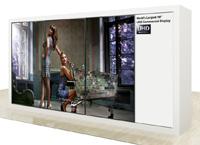 Samsung to Unveil Ultra HD Video Wall[teaser]A gigantic Ultra HD video wall and a new 4K computer monitor will be among the company's latest innovations at the IFA 2013 trade show. [/teaser] Samsung has started to tease its lineup for next week's IFA 2013 electronics show. One of the highlights from the company will be an extra-large 98-inch Ultra HD video wall. The gigantic 4K display is designed for commercial use and is said to be the world's largest screen of its type. In addition, Samsung has also revealed plans to debut a new 31.5-inch Ultra HD computer monitor. Full details on the display are still forthcoming, but the monitor is expected to feature a resolution of 3840 x 2160 and will support 99 percent of the Adobe RGB color space. Likewise, the device will also feature robust calibration options, gearing it more toward professional use. Both Ultra HD displays will be shown off at IFA 2013. The electronics trade show will kick off in Berlin on September 6 and will run through the 11th. Source:Posted Thu Aug 29, 2013 at 09:00 AM PDT by:
 -
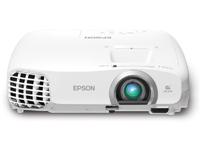 Epson Announces New Projector Geared Toward Families[teaser]The Epson Home Cinema 2030 1080p projector promises performance and value for households. [/teaser] Epson has detailed its new PowerLite Home Cinema 2030 projector. The device offers 1080p video in 2D and 3D at up to 300" and also features a more compact design. In addition, the Home Cinema 2030 uses 3LCD, 3-chip technology that provides 2,000 lumens of color brightness and 2,000 lumens of white brightness, creating a vibrant, detailed image. The projector also includes a built-in speaker for internal sound, and supports MHL devices through its HDMI port, allowing users to transmit and stream media from their MHL enabled smartphones, tablets, and other mobile gadgets. "We are very excited to release Epson's most compact 1080p projector under $1,000, offering customers not only impressive image quality in both 2D and 3D but at a great price," said Jason Palmer, marketing manager, Epson America. "This is Epson's first-ever MHL-enabled home cinema projector, giving users the ability to instantly access their favorite HD content from an MHL-supported device – you can easily stream Netflix from a Roku stick and watch the latest blockbuster movie on the big screen for the ultimate entertainment at home on the big screen." The PowerLite Home Cinema 2030 is currently listed on Amazon for a suggested retail price of $999 and should be available at the beginning of September. Source:Posted Wed Aug 28, 2013 at 11:00 AM PDT by:
 -
 Nintendo Officially Drops the Price of the Wii U Deluxe[teaser]Limited Edition Wii U bundle featuring 'The Legend of Zelda: The Wind Waker HD' also officially announced.[/teaser] Nintendo has announced that starting on September 29th, the Wii U Deluxe's official suggested retail price will be $299.99, down $50 from last year's launch price. No price cut was mentioned for the basic bundle, which Nintendo seems to be phasing out by allowing stock to diminish. The Deluxe bundle has been discounted by retailers often in the past, and this new suggested price may mean those same retailers drop their prices even further. From Nintendo, "Starting Sept. 20, the Deluxe version of Nintendo’s Wii U system will be reduced in price by $50, to a new suggested retail price of just $299.99. The new price makes Wii U an even greater value, particularly with the strong lineup of Wii U games available and on the way for the system in 2013. These include Pikmin 3, The Wonderful 101, EarthBound, New Super Luigi U, The Legend of Zelda: The Wind Waker HD, Super Mario 3D World and Donkey Kong Country: Tropical Freeze." Meanwhile, Nintendo officially announced the Wii U Bundle featuring 'The Legend of Zelda: The Wind Waker HD,' the existence of which leaked last week. The bundle will be released on September 20th, and features a Wii U Deluxe system with 'Legend of Zelda' accents on the Game Pad, a digital copy of ' The Legend of Zelda: The Wind Waker HD' and a digital copy of the 'Hyrule Historia' book. "A new limited-edition Wii U bundle featuring The Legend of Zelda: The Wind Waker HD launches on Sept. 20 at a suggested retail price of $299.99. The bundle includes a black Deluxe Wii U console; a GamePad controller adorned with gold lettering, a gold Hyrule crest and gold symbols from the game; a download code for the digital version of Hyrule Historia, a book that details the chronology, history and artwork of The Legend of Zelda series; and a code that can be used to download The Legend of Zelda: The Wind Waker HD from the Nintendo eShop immediately at no additional cost." "The digital version of The Legend of Zelda: The Wind Waker HD will also launch on Sept. 20, while the packaged version launches Oct. 4 with distinctive gold-foil packaging, both at a suggested retail price of $49.99. GameStop is also offering an exclusive Ganondorf figurine bundled with the packaged game at a suggested retail price of $54.99." Source: Nintendo Author: Brian HossPosted Wed Aug 28, 2013 at 09:30 AM PDT by:
 -
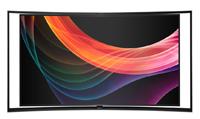 Samsung OLED TV Hits European Market[teaser]Following LG's recent announcement, Samsung has also detailed plans to bring its OLED display to Europe. [/teaser] Samsung will release its 55-inch curved-screen OLED in several European markets. The display should be available now in Germany and will expand to the United Kingdom, France, Austria, Switzerland, The Netherlands, Italy, and Belgium in the coming weeks. Suggested retail price is set at €7,999 (about $10,671), which is €1,000 less than LG's competing OLED model. Like its U.S. counterpart, the KE55S9C features OLED technology (organic light-emitting diode) with self-emitting RGB sub-pixels and no backlight, resulting in superior black levels. The TV also comes complete with full 1080p resolution, 3D capabilities, Smart TV features, and support for Samsung's Evolution Kit. Also new to this model, is the introduction of Samsung's Multi View mode. Using the company's 3D Active glasses, two individual users are now able to simultaneously view different HD content in 2D or 3D on the same display. Built-in speakers on the 3D glasses will provide the appropriate audio content to each user, creating a seamless experience. Released earlier this month in the United States, the KN55S9C is currently available in America for a suggested retail price of $9,000. Source:Posted Wed Aug 28, 2013 at 05:00 AM PDT by: