-
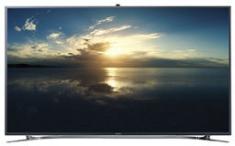 Samsung's Two New UHD TVs Priced for Korea[teaser]Pre-orders begin June 1st for Samsung's cheapest 4K models. [/teaser] 4K UHD TV prices continue to tumble. Earlier this year Samsung introduced its first Ultra HD set, the 85 inch S9, which came with a $40,000+ price point. Now Samsung follows up with a pair of F9000 models in both 65 and 55 inch models. The models will be available first in Korea, and the pricing is considerable more accessible than the S9. The 65F9000 is being priced at close to $8,000 while the 55F9000 is priced at roughly to $5,700. Both sets include Samsung upscaling technology, a must at this stage of the new format. More intriguingly though is the inclusion of a voucher for free 2014 upgrade kit. That upgrade possibility leaves the door open for these sets to be better than HDMI 1.4 capable and eventually being part of what must be the newer standard necessary to get higher frame rate 4K content. That outside hope may be just enough to get some potential early adopters onboard. The new models are also a bit more traditional in design when compared with the 85 inch S9 and its easel-like frame. With both Sony and Samsung positioning sub $10K UHD TV sets, the new format seems well on its way towards accessibility. Ultimately, combining affordable sets with just about any kind of semi practical UHD content delivery method seems to be the foregone conclusion expected by many. Source: Engadget Author: Brian HossPosted Fri May 31, 2013 at 07:30 AM PDT by:
 -
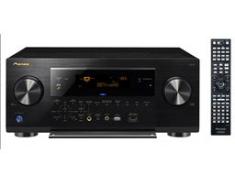 Pioneer Introduces Two New Class D3 7.2 Receivers[teaser]Pioneer angling to power the whole home with multi-zone network feature sets.[/teaser] Pioneer as just introduced two new receivers, the SC-71 and SC-72. These models are positioned as home theater-centric, but with one of the more affordable Class D3 amplifier cores. Both amplifiers offer 7.2 configurations, 4K UHD upscaling, 3D support, multi-zone configurations, and control via iOS and Android devices. Playback capabilities include MHL, Airplay, DLNA connectivity as well as built-in Pandora and vTuner playback. The 7.2 SC-71 is priced at $1,100 and offers 120 Watts per channel. The 7.2 SC-72 is priced at $1,400 and offers 130 Watts per channel. From Pioneer, "First introduced in a $7,000 Elite AV receiver, Pioneer’s ultra high performance Class D3 amplifier technology is now integrated in both SC-71 and SC-72 models. Class D3 is engineered to operate at extremely high output levels with virtually no distortion and no loss in performance, even when all channels are simultaneously driven at full volume, making the SC line of receivers one of the most efficient and most powerful amplifiers on the market. The amp technology delivers the true audio potential of high-resolution audio content as well as other high-definition uncompressed sources such as Blu-ray Disc™ titles." The SC-72 offers four zones of output with full 2.1 support for Zone 2. The SC-72 also "utilizes an aluminum panel and insulated dual chassis to reduce noise and improve audio quality output." Both new models are expected in June. Source:Posted Thu May 30, 2013 at 09:00 AM PDT by:
 -
 High-Def Digest's Essential Picks: May 2013by Steven Cohen Every month, dozens of Blu-rays hit shelves, littering stores with high-def temptation. New releases, catalog titles, complete TV seasons, and elaborate box-sets all vie for affection, and with so many worthy releases targeting our wallets, choosing which discs to spend our hard earned cash on can be rather tricky. To make things a little easier, we here at High-Def Digest thought it might be helpful to bring you our top three must own recommendations for the month. From important classics to contemporary blockbusters, these are the discs that we consider to be the absolute cream of the crop. High quality releases with great video, audio, and supplements, these are the Blu-rays that are truly worth every penny. Last month we spotlighted an unconventional romance, a revisionist "spaghetti southern," and a harrowing story about familial bonds and hope. If you haven't already, be sure to check out the Essential Picks for November, December, January, February, March, and April. [teaser]This month, we're covering a well crafted Hollywood action thriller, a spooky contemporary horror flick, and an esoteric excursion into experimental science fiction.[/teaser] Please be aware, that if you haven't already seen them, there might be some spoilers for the films listed. If you can only buy three titles that hit Blu-ray in May, here's what we suggest you pick up, starting with the most essential... 'Jack Reacher' - Despite the genre's many formulaic conventions, there is a real underappreciated art to creating a genuinely engaging action thriller. With 'Jack Reacher,' writer/director Christopher McQuarrie has demonstrated a true mastery of this increasingly neglected craft. Exciting, entertaining, and surprisingly engrossing, the Tom Cruise starring vehicle is a damn fine piece of Hollywood moviemaking that draws you into its story through solid scripting, carefully staged visuals, and a charismatic lead performance. After a powerfully unsettling, dialogue free and economically constructed opening, McQuarrie perfectly establishes the film's escalating mystery, fueling anticipation for Reacher's inevitable introduction. Spoken of like a ghost, the man is built up to almost impossible levels, and when he finally does appear on screen his initially effortless, nearly anticlimactic arrival only serves to enhance the character's mystique. And as we get to know him more and more, Cruise goes on to paint the portrait of a classic silver screen badass full of tough-guy wit and a sizzling larger-than-life presence. He's moral, determined, deadly, and more than a little bit smug, and despite having played many different variations of similar characters in the past, Cruise actually seems to be reinvigorated by the role, bringing a sense of concentrated personality and enthusiasm that has been missing from some of his other recent outings. Reacher is the kind of mythic motion picture hero that can not only boast about his incredible skills but actually back them up. In fact, his bite might be even worse than his already intimidating bark. Mixing elements of a high-stakes procedural with bombastic Hollywood spectacle, the filmmakers weave a thoroughly engaging conspiracy that balances investigative plot twists with intense set pieces. Hand-to-hand brawls, shootouts, and a particularly thrilling car chase are all brought to the screen with a real eye for pulse-pounding visuals and an impressive sense of pace and cinematic grammar. The plot itself does get rather convoluted in the third act, but that's par for the course for this type of storytelling, and the execution remains exhilarating throughout. Throw in an icy cool villain played perfectly by legendary German director and apparent superhero, Werner Herzog, and it all simply adds up to a recipe for big screen awesomeness. Though the movie garnered some mixed critical reactions and wasn't a huge box office success, I was really pleasantly surprised by how much I enjoyed it, especially considering how terrible many similar efforts have panned out in recent years (this is the movie 'Alex Cross' wishes it could be). This Blu-ray disc from Paramount is absolutely incredible, with truly jaw-dropping video, room shaking audio, and a welcome assortment of bonus features. With its broad appeal, demo worthy technical presentation, and commendable ability to channel Cruise's trademark obnoxious persona into something genuinely charismatic, the film squeaks by the competition to take the top spot on May's must own list. 'Mama' - "Once upon a time." That's how director Andrés Muschietti decides to open his spooky horror tale 'Mama,' and really, I can't think of a more appropriate introduction. A dark, contemporary fable about motherhood and devastating trauma, the Guillermo del Toro produced ghost story is creepy in all the right ways. Staying true to the classic elements that make its genre so fun and affecting, the movie blends supernatural thrills with human drama, offering scares and genuine emotion in equal abundance. Packed with eerie effects, flickering lights, creepy insects, frightening nightmares, disappearing reflections, creaking sounds, feral children, shadowy closets, spectral creatures, and requisite startling music cues, the film covers quite a bit of horror movie ground, following many tried-and-true conventions with just enough originality to make the execution memorable and distinct. Muschietti establishes the spooky premise well and gradually forms a solid otherworldly mythology while maintaining a simple but effective emotional story beneath the paranormal thrills. As the supernatural happenings ramp up, the director stages his set pieces with thoughtful, multi-layered compositions, and shows us just the right amount of the title character, clearly making her threatening presence known while still leaving plenty to the audience's imagination. And even when the ghostly Mama is finally exposed in all her glory, the character still remains terrifying, revealing some wonderfully horrific design work. Perhaps even more disturbing than her distorted appearance, is her devastating weeping howl which might be one of the most unsettling sounds I've heard in quite some time. Trading in her trademark red locks for short black hair, a punk rock demeanor, and prickly attitude, Jessica Chastain becomes a typical self-absorbed adult turned reluctant mother, fueling the movie's main narrative arc. Admittedly, it's not the most unique plot point, but the actress does a great job of selling the character's inevitable transformation, and the bond she slowly develops with her adopted children is ultimately powerful. The Kingslayer himself, Nikolaj Coster-Waldau, is also good in his somewhat marginalized role, and the two child actresses, Megan Charpentier and Isabelle Nélisse, are very impressive as the two young girls who were stranded in the woods and raised by… something. Their animalistic behavior is very disquieting and their torn loyalty and oscillating fear/affection for the creature that saved them is fascinating to watch. This complicated gray area tied to Mama's intentions and actions helps to enhance the film's themes and set it apart from many similar efforts. While it might start with a classic fairy tale preamble, like any good horror story, there is no true "happily ever after" here -- at least, not in the traditional sense. With an ending that lingers long after the credits role, Muschietti succeeds in making us care for these characters, giving their triumphs and tragedies a lasting impression. There are occasional shades of an inferior movie peppered throughout the runtime, but the talented cast and strong visual direction end up elevating the material. A chilling and heartfelt horror flick, 'Mama' stands above its many underwhelming contemporaries, and coupled with great audio, video, and supplements, this disc easily earns a place among this month's essential picks. 'Upstream Color' - Though I love a well told traditional story as much as anybody, I'm also a huge fan of experimental forms of cinematic expression and/or narratives -- including the works of Stan Brakhage, Hollis Frampton, Maya Deren, Chris Marker, Alain Resnais, Luis Bunuel, David Lynch, Wong Kar-wai, and Terrence Malick. With that said, I can be oddly particular about what kinds of avant-garde efforts I end up connecting with, and under the wrong hands, "experimental" cinema can be just as guilty of being soulless and superficial as any standard Hollywood misfire. Instead of providing true substance, some of the art form's less successful endeavors simply mask a lack of vision or cohesion through empty oblique flourishes and tedious style. Shane Carruth's daring and hypnotic 'Upstream Color,' however, completely avoids any of these potential pitfalls. The long-awaited follow-up to the director's impressive debut feature, 'Primer,' the movie is an utterly intoxicating journey into filmic ambiguity that engages the viewer on all levels, offering a formalistically, intellectually, and emotionally stirring experience. Awash in a glowing haze of dreamy visuals, the film's style is both free-flowing and tightly precise, mixing methodical construction with ethereal execution. Breaking traditional narrative conventions, Carruth eschews typical exposition in favor of something much less overt, revealing story beats in an almost subconscious manner. Traditional scenes where characters sit around and talk about their predicament, working through the plot for the audience's sake, are nearly nonexistent, forcing visceral experience to be our only window into the protagonists' world. Scenes will often cascade upon one another in isolated fragments, forming an escalating current of bending space and time. Through close-ups and meticulous camera movements, Carruth creates an almost unprecedented sense of texture, using sight and sound to convey the very touch of his images. Audio also plays an invaluable role in the overall mood and structure, bridging connections between characters and sequences through aural associations. Every element of filmmaking is used to its fullest, creating an experience that does not attempt replicate the tempo of reality, but instead engenders a cinematic language and rhythm all its own. As esoteric as the presentation can be, there really is an intelligent and thought provoking story here, touching upon deep themes of control, exploitation, free will, identity, compulsion, human connection, and even love. Actress Amy Seimetz does an exceptional job of grounding the bizarre science fiction story in an affecting emotional space, and the central romance that develops at the core of the film is surprisingly resonant. Taken at face value, the plot really is quite strange, featuring mind control, parasite worms, and psychic connections to pigs, but as silly as some of that might sound, under Carruth's hands it becomes legitimately fascinating and, in its own way, believable. Showing us just enough (or sometimes just not enough), to connect with the narrative, the director's storytelling approach is deliberately vague but far from truly impenetrable. In fact, some elements of the plot are actually unexpectedly straightforward while others remain tantalizingly elusive. The actual form of the story's unconventional cinematic shape complements the script itself, fusing style and content in such an assured, effortless, and natural manner that the two essentially blur together. Analytical but emotionally powerful, the film is experimental science fiction at its very best. It's certainly the least accessible title on this list, but the challenging experience is wholly rewarding. One of the most daring and hypnotically engrossing pictures I've seen all year, it's by far the month's most original release, and while it's demanding style won't be for everyone, it's an absolute must own for those open to alternative forms of visual storytelling. So, there you have it. While there are many titles worth picking up this May, those are our top three must own recommendations. We'll be back next month with three more essential picks, but for now, what do you think of our selection? What are your choices for May's must own titles?Posted Wed May 29, 2013 at 04:00 PM PDT by:
 -
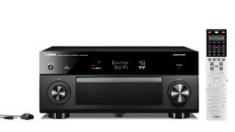 Yamaha Adding Three More AVENTAGE Models[teaser]Two new 9.2 channel receivers and one 7.2 channel receiver top the line.[/teaser] Yamaha's line of AVENTAGE networked AV receivers just received three new models, and the company is high on the quality of the line. Introduced in 2010, Yamaha has pushed the AVENTAGE models as a combination of studio quality parts with obsessive finish and a mass of techie features. Currently, Yamaha is touting the line's ESS DACs, the SABRE32 ES9016 and SABRE ES9006. Their essential function is often overlooked by other tech-heavy receiver offerings. From Bob Goedken, general manager of Yamaha's AV Division, "Album after album, film after film, AV professionals say how much they appreciate the clean, detailed and powerful sound, and the highly convincing sense of ‘being there' that embody our AVENTAGE receivers. We can give all the credit to our engineers, who obsessed over every last detail, making subtle refinements and tweaks that mean the difference between good and great. Ultimately, we have one-upped ourselves, achieving the purest, best-sounding audio and best video reproduction possible." " The three new models of the AVENTAGE line offer HDMI zone switching in order to display two HD sources simultaneously to different rooms in the home with Yamaha at the center and include full UHD upscaling and support. 3D support is also part of the package. Connectivity includes AirPlay, MHL, DLNA, internet radio, Pandora, Rhapsody, and HD Radio and control options extend to smart devices including iOS and Android devices. The new 7.2 RX-A1030 is priced at $1200 and offers 120 Watts per channel. The 9.2 RX-A2030 is priced at $1700 and offers 155 Watts per channel. Finally, the 11.2 capable RX-A3030 is priced at $2200 and offers 165 Watts per channel. All three models are expected in June from authorized Yamaha dealers. Source: Yamaha Author: Brian HossPosted Wed May 29, 2013 at 09:30 AM PDT by:
 -
 'Evil Dead' Remake Dated for Blu-ray[teaser]The hit remake of Sam Raimi's cult classic will be summoned to Blu-ray in July. [/teaser] In an early announcement to retailers, Sony will be releasing 'Evil Dead' on Blu-ray on July 16. The story follows Mia, a young woman struggling with sobriety, who heads to a remote cabin with her brother and a group of friends where the discovery of a Book of the Dead leads to danger and horror. Specs haven't been revealed yet, but supplements include: Cast and Crew Commentary, Directing the Dead, Evil Dead the Reboot, Making Life Difficult, Unleashing the Evil Force, and Being Mia. Suggested list price for the Blu-ray/Digital Copy combo is $35.99. You can find the latest specs for 'Evil Dead' linked from our Blu-ray Release Schedule, where it's indexed under July 16.Posted Tue May 28, 2013 at 12:00 PM PDT by:
 -
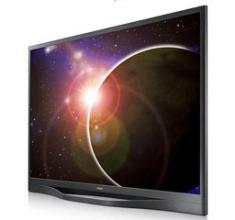 Forget OLED & 4K UHD, The Samsung F8500 is the Best TV Set This Year[teaser]Digital Trends praises the plasma-powered, gimmick-filled set.[/teaser] Nearly half way through 2013 and 4K UHD sets have made steps towards affordability and content delivery, while OLED remains almost as elusive as ever. In this light, Digital Trends has declared that the Samsung F8500 and its three screen sizes is likely the TV of the year. The conclusion, which gives the PNF8500 the edge over Panasonic's VT60 and ZT60, precisely echoes the recent Value Electronics Flat Panel Shootout . In both cases the message is clear, and Plasma sets remain critical darlings. For Digital Trends, the F8500 is "the brightest plasma" ever seen, and the overall display quality trumps the myriad of gimmicks that have been shoved into the TV. The TV's bezel and stand were also praised by Digital Trends, as was the backlit Bluetooth remote control. The TV's gesture and voice control actually received high marks. The TV's remote's trackpad received less love, much like the TV's set of apps that are said to be less enjoyable than Roku's offerings. The TV's attempt at displaying a program guide and controlling an external cable box seem less than useful as did the TV's "social" features. The poor sound quality for the set was attributed to speaker placement in the rear in order to support a cleaner overall look. Those issues paled in importance though when the set was described as not needing any kind of picture calibration out of the box. Time will tell if 2014 can yield a better plasma, but in the meantime it seems that F8500 is the set of choice. Discerning viewers can find the 60 inch PN60F8500 at Amazon. Source: Digital Trends Author: Brian HossPosted Tue May 28, 2013 at 09:30 AM PDT by:
 -
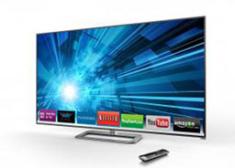 Vizio Now Shipping Latest M-Series of TVs[teaser]Ultra-thin bezel leads a packed list of features for Vizio's latest.[/teaser] Vizio is now shipping its new M-series, which consists of a whopping nine models ranging from 32 inches all the way up to 80 inches. The edge-lit LCD/LED sets include Vizio's new and improved Internet App Plus technology, which supports a list of usual suspects such as Netflix, Amazon Instant, HuluPlus, Vudu, YouTube, and Pandora. Scott McManigal, Vizio industrial design VP, "The new Vizio M-series televisions represent a significant step forward in terms of design, picture quality and connectivity. Our smart-TV platform has been upgraded with new apps, new features and new experiences such as dual-screen control from smartphones and tablets. We also focused on the basics that matter to every consumer such as a newly designed remote control and class leading picture quality." The sets are visually characterized by an ultra-thin bezel and screen, as well as a silver finish on the bezel and stand. The M series models starting at 50 inches and larger feature Vizio's passive 3D technology. The M-series line-up starts at the 32 inch M321li32 at $400, the 40 inch M401i at $530, 47 inch M47i at $730, the 50 inch M501d at $800, the 55 inch M551d at $1,200, the 60 inch M601d at $1,600, the 65 inch M651d at $2,000, the 70 inch M701d at $2,500 and the 80 inch M801d at $4,000. Models include a double sided remote, Wi-Fi, and a touted 240Hz refresh with SPS frame interpolation smoothing. Vizio sales partners include Walmart, Best Buy, and Amazon. Source: TWICE Author: Brian HossPosted Tue May 28, 2013 at 09:00 AM PDT by:
 -
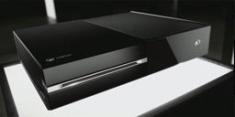 Xbox One Unveiled as the Ultimate All-in-One Entertainment System[teaser]The unveiling was streamed live from Microsoft's Redmond campus.[/teaser] Today, Don Mattrick announced the XBOX ONE. After nearly eight years of the 360 and the emergence of Xbox LIVE as an entertainment and social platform, Microsoft was quick to pitch the new system as the future of living room. The new Xbox One was presented with a list of specs including 8GB RAM, an 8 Core CPU, a Blu-ray drive, USB 3.0 and a 500GB Hard Drive. The system was described as being controlled through three different means, including the new Kinect sensor, the new controller, and SmartGlass. The system contains a hybrid operating system whose upswing is said to allow for instantaneous switching between games and other applications. Also, applications can be developed without the need to adhere to the gaming OS, a distinction for the new system that makes app development seem closer to a Windows like experience. The new controller sticks close to the 360 controller design, but with an internal battery, corrected d-pad, and app-switching buttons in place of the back and start buttons. According to Microsoft, the changes are among some 40 overall design changes to the controller. The entire event preceded promised E3 reveals, and had a lot of time focused on entertainment options like instant on Kinect controls, and user-specific game and entertainment selection derived from user habits. The system was described as a way to make the TV more intelligent and make the living room experience "simple, instant, and complete." The system contains both an HDMI out and HDMI in, and has the ability to DVR games. The new achievement system was described as dynamic. Some of the games featured for the system include EA Sports' 'FIFA', 'Forza 5', 'Quantum Break' (a new title from Remedy), and of course the highlight, 'Call of Duty: Ghosts.' The 'Ghosts' footage was important enough to preclude any sort of conclusion for the briefing, and the sudden ending was less than ideal. A new HALO TV series involving Steven Spielberg was teased, but more importantly, Microsoft promised that the new system would get 15 exclusives with 8 new franchises in the first year. This system was described as being available "later this year," presumably during the holiday period. System pricing was not mentioned. Source: Xbox Author: Brian HossPosted Tue May 21, 2013 at 01:00 PM PDT by:
 -
 "Mastered in 4K" and the Road to Ultra HDby Steven Cohen This week saw the release of Sony's new "Mastered in 4K" line of Blu-rays, and with them has come plenty of speculation, a bit of controversy, and quite a few questions. Questions like, "Are these discs actually in 4K?" and if not, "What benefits do they offer?" Also, "What do these have to do with Ultra HD?" and even more importantly, "What is Ultra HD?" Well, those are all great questions, and great questions of course deserve answers! [teaser]We'll break down all this recent 4K hoopla step by step, detailing exactly what these "Mastered in 4K" discs are and what they aren't. We'll also discuss how they relate to real Ultra HD and highlight what's currently available and on the horizon for the burgeoning Ultra HD format.[/teaser] "Mastered in 4K" Before going any further, I think it's important to immediately make this one point very clear: These new discs from Sony are not actual 4K Blu-rays. I repeat, the films on these discs are still presented in 1080p resolution not 2160p, and they will play on all standard Blu-ray players. So, with that out of the way, let's now address what this new line of releases actually offers. Though the series doesn't present any of its films in 4K resolution, the video presentations are all sourced from 4K masters. They were then downconverted to 1080p. In addition, due to the lack of special features on these releases, the entire discs are being dedicated to the films' technical presentations allowing for higher video bitrates. In theory, this should all provide the best possible picture quality for the movies in question. That might all sound fancy on paper, but in practice all this really amounts to is something very similar to the studio's previous "Superbit" line of high bitrate DVDs from back in the standard definition days. While these releases all provide great picture quality, there really isn't a whole lot that truly separates them from other "non-mastered in 4K releases." In fact, many existing releases from the studio (and other studios) have already been sourced from 4K masters (including several that are now being rereleased under this new label), making the distinction here even more irrelevant. Furthermore, there is some debate about whether 4K versus 2K mastering for 1080p transfers really makes much of a difference to begin with. With all that said, there are still some subtle distinctions about these discs that are worth noting. First, these releases are all "optimized" for 4K upscaling and there are some claims that they even contain special upconversion protocols that will work in conjunction with Sony's new line of 4K Ultra HD displays. This proprietary algorithm will ostensibly provide the best possible upconverted picture. Of course, you need to have a Sony 4K display to take advantage of this and, for the time being, few of us are quite so lucky. For those with regular 1080p TVs, the higher bitrate video could still conceivably improve stability in fast moving scenes, especially on large projector screens. Lastly, the "Mastered in 4K" line is also said to feature an expanded color gamut that is designed to improve color reproduction. The packaging indicates that the expanded colors can be enabled through any xvYCC-compatible TV and Blu-ray player, but my testing with this feature yielded rather underwhelming results. Using a Samsung LN46a650 TV, and both a Sony Playstation 3 and Sony BDP-S570 (all said to support the xvYCC color gamut) with the appropriate settings activated, the colors on screen became ever so slightly subdued rather than expanded. I'm not sure if this mode was being engaged properly or not, but if that's the intended result, then I don't really see a benefit to this feature. Though the packaging doesn't specify this, there is some speculation that in order for this feature to work correctly viewers actually need a Sony TV and Blu-ray player that support the company's proprietary Triluminos technology. Those with that capability might find better results with the disc's claims of "expanded color," but based on my experience with my equipment, it seems like this feature is a bit of a waste. This initial wave of 'Mastered in 4K" titles includes ten films: 'Ghostbusters,' 'Spider-Man,' The Amazing Spider-Man,' 'Total Recall (2012),' 'Angels & Demons,' 'Battle: Los Angeles,' 'Glory,' 'The Karate Kid (2010)' 'The Other Guys,' and 'Taxi Driver.' Based on the discs we've covered so far, despite the flashy new branding, several of these movies appear to feature nearly identical transfers as their previous releases. 'Ghostbusters' and 'Spider-man,' however, have been given more apparent upgrades, and the results are certainly an improvement, though it's not really clear if these benefits are actually an outcome of the 4K mastering itself. For all intents and purposes, the improvements offered to their picture quality simply represent the type of transfers they should have received in their original Blu-ray releases. As we continue to review some of the remaining titles, we'll point out any other minor or major improvements we come across, so be sure to check out the individual reviews for more updates. All things considered, this new "Mastered in 4K" branding appears to be little more than a marketing tool aimed at promoting Sony's new 4K TVs -- but the discs themselves are still high quality and technically offer the best video transfers available for the titles included. Few will likely see much (if any) difference on the more recent films, but those with 4K displays or large projector screens might find some value in the increased bitrates and supposed upscaling benefits. Ultra HD These new discs might not offer true 4K content, but their release does coincide with the introduction of genuine 4K displays, also called Ultra HD. At 3840 × 2160 pixels (four times the resolution of standard 1080p), Ultra HD 4K displays can produce a much more detailed image than traditional HDTVs. With that said, screen size and viewing distance also play a large factor in how discernible these differences between resolutions really are. I haven't seen an actual 4K display in person yet (HDD's Michael S. Palmer had a chance to check them out last October), but it's likely that one would need a screen larger than 80 inches to gain the full benefits of Ultra HD from a reasonable viewing distance. Improvements will be readily apparent up close, of course. As far as 4K displays go, Sony's XBR-65X900A 65-Inch 4K Ultra HD television is set for release on May 19 at a MSRP of about $7,000. The display is also available in a smaller 55-inch model ($5,000) and a much larger 84-inch variant (for a whopping $25,000) which should more readily show off the improvements in resolution. LG also has their own 84-inch 84LM9600 up for purchase ($20,000) and Seiki Digital has a very affordable SE50UY04 50-inch 4K set ($1,500) available as well. The Samsung S9 85-inch Ultra HDTV ($40,000) is also an option for those with an exorbitant amount of cash to spend. But again, despite the obvious increase in resolution, even this 85-inch set will likely only offer marginal improvements over 1080p at normal viewing distances, and all of these displays are still based on tried-and-true LCD technology which will probably suffer from the same old weaknesses of that format (most notably less than stellar black levels, uniformity, and viewing angles). Much more enticing, however, is the prospect of true 4K projectors. Currently, Sony offers the VPL-VW1000ES which features a native 4K resolution. While it costs about $25,000, if you're going to actually invest in Ultra HD, projectors are likely the best route to go since they will allow for the largest screen size and thus show off the most improvement in visual quality. It should also be noted that while Ultra HD displays are currently available, there is still no official standard for the technology with regard to color gamuts, frame rates, compression, and support for future HDMI revisions, which means that current displays might not actually be compatible with final specifications. This makes early adoption a bit risky. 4K Content Unfortunately, when it comes to genuine 4K content, things get a little tricky. No specific Ultra HD disc medium currently exists, but the Blu-ray Disc Association is considering extending the Blu-ray format to include support for 4K video. A decision will likely be made later this year. Outside of discs, downloadable or streaming digital files are also a viable content delivery system (YouTube has actually had support for 4K video clips for several years now), though they usually lead to much more apparent compression issues and connection speeds will obviously be a factor. Regardless, Sony is releasing the puck-shaped FMP-X1 4K media player for $699 to support its new Ultra HD displays. The media player comes preloaded with ten films from the studio in true 4K resolution. A pay service for more downloadable 4K Sony movies using the media player is also scheduled to launch in the fall. Though decisions regarding how we'll receive genuine 4K content are still being made (further complicating the current release of 4K displays) many feature length movies shot on film should benefit nicely from 4K transfers when they do eventually hit the market. Sadly, there is one notable snag when it comes to 4K and some specific film-based/digital movies. Over the past decade or so, digital intermediates have become the standard for post production work on all major releases. In several cases, only 2K scans of the original film elements have been used to complete many movies. Likewise, some digitally shot movies are only captured in 2K resolution to begin with. In these instances, the finished products are all limited to 2K. This means that any potential 4K releases of such titles will simply be upconverts. Thankfully, some contemporary films are now using 4K digital intermediates and several digital movies are now being shot natively in 4K (or even 5K), which will make their future transition to Ultra HD very smooth. There are several kinks that need to be worked out when it comes to content and displays, and a true standard still hasn't been decided upon, but manufacturers are actively pushing for Ultra HDTVs to catch on with consumers. Hopefully true 4K media will become more readily available as the year goes on to give early adopters something to properly show off their expensive new gear. As always, we'll be sure to cover the latest developments and keep you posted on all HD and Ultra HD related news and products.Posted Fri May 17, 2013 at 02:00 PM PDT by:
 -
 A Flaw and a Fix for OLED Brightness[teaser]NHK has theorized a way to fix an OLED exposure issue with iOLED.[/teaser] The National Broadcasting Corporation of Japan, NHK, is troubled by one aspect of OLED. But rather than introduce a problem, NHK has theorized a solution. OLED pixels, when exposed to open air, can suffer a quick and severe degradation of brightness. In one example from NHK, the OLED pixels fell to 50% of original brightness in just 100 days. Naturally, part of the current challenge for OLED production is to prevent this kind of open air exposure by ensuring that OLED products are correctly sealed. In contrast, NHK's solution is a two-step shift in OLED design. First the cathode layer needs to be covered with a new material that is less susceptible to moisture and oxygen. This new cathode layer then needs to exchange position with the anode layer in order to display correctly. This exchange in positions is referred to as an inversion, for which NHK has dubbed the design iOLED. NHK has promised to release full report on its findings at the end of the month, at which time critical analysis by engineers the world can be applied. Source: Engadget Author: Brian HossPosted Thu May 16, 2013 at 09:30 AM PDT by: