-
 Sharp Bringing a 70 Inch Aquos UHDTV to Market in August[teaser]It is the first set to cite THX 4K certification. [/teaser] Today, Sharp announced the latest entry in the young and burgeoning UHDTV market. Along with the set comes a pair of firsts, as in the first 70 inch UHDTV and the first TV to boast of THX 4K certification. The new Aquos LED LCD should arrive in mid-August at a cool $8,000. Interestingly enough, the scarcity of 4K content is underlined by the emphasis on THX 4K certification with regards to the sets' upscaler. Sharp has coupled a six speaker sound system with the 70 inch display. Along with twin subs, Sharp promises clear dialogue and rich bass for the $8K set. Connectivity and smart features remain unknown, but those details should surface in July. With Sharp and THX plunging into the UHD market, the trend of lower continues. Whether its Sharp, Samsung, LG, Sony, or even Seiki, the models continue to appear and with than five digit prices. The rapid progress of the market still has much of the year left to blossom, and this is without a proper 4K pipeline. Source: Sharp Author: Brian HossPosted Wed Jun 26, 2013 at 07:30 AM PDT by:
 -
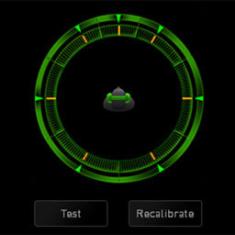 Razer Releases 7.1 Gaming Surround Software for Free[teaser]Software designed for any stereo headphones and is free until the end of the year. [/teaser] Razer, the maker of gaming peripherals and more recently PC gaming hardware is now offering a "Personalized 7.1 Gaming Surround Sound" software bundle. The software is designed to localize sounds in a 7.1 gaming mix on a Windows PC and is for use with any set of stereo headphones. Once the software has been downloaded from Razer and installed, the user gains the ability to tweak and arrange the faux 7.1 speakers within the stereo set-up. The software is available free for users once they register with Razer. Next year, the software will be a $20 download for new users. In the meantime, Razer hopes that the free download will encourage users to donate to the Razer Surround for Child's Play Charity. Source: Razer Author: Brian HossPosted Tue Jun 25, 2013 at 09:30 AM PDT by:
 -
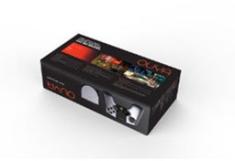 OUYA Both On-sale and Sold-out Today[teaser]"It's incredible to think that a little under a year ago OUYA was just an idea."[/teaser] The OUYA, the tiny 3" x 3" Android powered, open-development console, has gone from crowd-funding king to troubled pre-release device to actually hitting the store shelves. Although, "store shelves" might be an exaggeration. Retailers of the new console include Amazon, Best Buy, GAME, GameStop, and Target. Reports of limited stock and unavailability have already surfaced with Amazon showing both the console and optional second controller sold out. The OUYA's reception has been tough. In pre-release, the $99 console was found to be less powerful than considerably more expensive Android phones and tablets. The unfinished interface was perceived as rough, buggy, and unresponsive. The controller, which had gained a touchpad since its design was introduced, met was issue due to its removable face plates. Ultimately, most of these issues seem to be well-known and are things that the OUYA people are focusing on. Of bigger concern are the new system's games. The hope has been that the system would receive better than Angry Birds and ports of other smartphone games. As of now OUYA is sighting 17,000 developers working on OUYA software with 175 games already ready for free-to -try. From OUYA, "OUYA is building a new kind of video game experience for the television. Created in 2012 by video game industry veteran Julie Uhrman, OUYA is enabling any game developer to bring their most exciting, creative, and inventive game play experiences to life – in 1080p HD – for $99, and all games are free-to-try for consumers. Uhrman and an initial team of game developers and industry advisors brought the concept to life with the help of award-winning designer Yves Behar. OUYA is available in the U.S., U.K., and Canada. Visit ouya.tv for more information." Source: Joystiq Author: Brian HossPosted Tue Jun 25, 2013 at 08:30 AM PDT by:
 -
 Seiki Introducing a 39 inch UHDTV at $699[teaser]Seiki 65 inch UHDTV follows this fall.[/teaser] Seiki, known for their no-frills approach to TVs, has already made big waves in UHD with their sub $1500 50 inch SE50UY04. The company is now moving ahead with two additional UHDTV LED LCD models. First, there is the 39 inch SE39UY04. Pre-orders for the new UHD set begin on June 27th with a suggested price point of $700. From Seiki, "Targeting smart, savvy Ultra High-Definition television (Ultra HDTV) and PC monitor buyers ready to experience 4K digital entertainment, SEIKI Digital, Inc. introduces its 39-inch LED 4K Ultra HDTV and adds to its 4K lineup. The new model (SE39UY04) features a panel resolution of 3,840-by-2,160, and an input refresh rate of 120Hz on a 1080p signal and 30Hz on a 4K signal." The size of the 39 inch is indeed in line with a size appropriate for usage as a monitor. Likewise, as a desktop monitor it is quite likely that the viewer will be close enough to the screen to take advantage of the extra resolution. Unfortunately, with the current HDMI 1.4 standard limiting resolutions above 1080p to 30Hz, the model's potential as game-changing monitor is far from ideal. Seiki has also announced that the 65 inch UHDTV model will follow by this fall. Presumably, the 65 inch model will carry over the same basic feature set. Source: PC Perspective Author: Brian HossPosted Tue Jun 25, 2013 at 07:30 AM PDT by:
 -
 Sony and Disney Offering On-demand for Some In-theater Movies in South Korea[teaser]The trial has included 'Django Unchained,' 'Wreck-It-Ralph,' and 'Brave.' [/teaser] According to the Wall Street Journal and the Verge, Sony and Disney are the first US studios to attempt day-and-date on-demand offerings for movies on their theater release date. The cited examples, 'Django Unchained,' 'Wreck-It-Ralph,' and 'Brave' have been part of a new on-demand service in Korea. The service, which is described as part of a trial, has been available through cable, internet, and satellite TV offerings. The entire endeavor is part of move to curb loses due to film piracy. Naturally, the hope is that if studios like Sony and Disney can see the logic of offering new releases at home in one market, the why not others. Such a strategy would of course be seen as a threat to movie theaters. Disney has run into resistance before with Tim Burton's 'Alice in Wonderland.' By shortening the theater to home video release window from 17 weeks to 12 weeks, several theater chains in Europe threatened to bypass showing the movie entirely. With nine digit box office numbers routinely targeted by studios, theater chains will continue to flex their position in the media delivery system. But should the day come when more money could be made by studios targeting the home directly, it may start with one or two before all studios make the jump. Source: The Verge Author: Brian HossPosted Mon Jun 24, 2013 at 10:30 AM PDT by:
 -
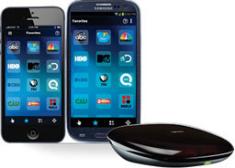 Logitech Harmony Hub Coming in August[teaser]Logitech has also decided not to sell off the Harmony line.[/teaser] Logitech has finally followed up on plans to offer the Harmony Ultimate Hub as a stand-alone purchase. From Logitech, "Today, we’re excited to announce that the Logitech Harmony® Ultimate Hub – an appcessory that turns your smartphone into a powerful, personal universal remote – will be available for purchase as a standalone product. "As you may know, the Harmony Hub is included with the Logitech Harmony Ultimate and Logitech Harmony Smart Control, our two newest universal remotes. However, with the standalone Harmony Ultimate Hub, everyone in the house will be able to download the free Harmony Smartphone App, and turn their smartphone into a personal universal remote. You’ll be able to customize activities and choose your own set of favorite channels icons for your very own experience." The Logitech Harmony Ultimate Hub should hit the streets in August and is being priced at $100. Along with the news of the stand-alone Harmony Hub, Logitech has also shared plans to no longer seek a buyer for the Harmony division. According to Business Wire, "The company has determined that retaining ownership is in the best interest of its shareholders. The Harmony product line has gained momentum following the April introduction of the Harmony Ultimate product, which is available in major retail locations including select Apple stores in the U.S., and has exceeded the company’s expectations for customer connections." With Logitech retaining control, it will be interesting to see how the company maintains a balance of products aimed at traditional Harmony customers and those wanting Harmony capabilities on smart phones and tablets. Source: Logitech Author: Brian HossPosted Thu Jun 20, 2013 at 09:00 AM PDT by:
 -
 Microsoft Reverses Course on the Xbox One's New DRM Schemes[teaser]Dubbed the "Xbox 180," the Xbox One will not require 24-hour online check-ins and there will be "no regional restrictions" for games.[/teaser] Microsoft has elected to face the furor over their proposed Xbox One's dependence on online check-ins by reversing course. In a statement from Don Mattrick, Microsoft has described that they "believe in the benefits of a connected, digital future," but that they "have heard directly from many of you." Ultimately, "the ability to lend, share, and resell these games at your discretion is of incredible importance to you. Also important to you is the freedom to play offline, for any length of time, anywhere in the world." Formerly, the idea for the Xbox One seemed to be that users would buy disc-based games that on first use were installed on the Xbox One's hard drives, and tied to their accounts. Those accounts would have the ability to be shared with family members, and there was some kind of plan to allow games to be resold digitally. Not only did systems need to be connected to the internet at least once in a 24 hour period to prevent games free being locked out, but there was also some severe regional limitations. With the system set to only launch in 21 countries, much of the world would not have been able to use the Xbox One. Likewise, within the launch territories, games and systems would need to be from the same region to work. Unfortunately, in order to enable the new, more traditional set-up of the Xbox One, the system will need a day one patch. Naturally, the rumors of Microsoft's DRM plans have been surfacing for months and once they were confirmed, the outcry was both severe and derisive. Sony's E3 conference capitalized on this, and the distinction between the PS4 and Xbox One's DRM was even remarked at by Jimmy Fallon just days ago on his late night show. What's worse is that Microsoft's clear statement announcing the reversal of their DRM plans is presented in a much clearer manner than whatever they had originally planned. When faced with questions about various situations such as how would US military personnel stationed around the world be able to use the Xbox One under their proposed restrictions, Microsoft rarely had good answers and even famously recommended the Xbox 360. Still, there as those who apparently embraced what Microsoft had in mind in the hopes that requiring an online connection would enable cloud functionality worthy of a new generation of games, and many of those people have now seemingly had their hopes deleted. More importantly, Microsoft can now begin to work through their former, self-created impasse. From Don Mattrick, President of the Interactive Entertainment Business at Microsoft, "Last week at E3, the excitement, creativity and future of our industry was on display for a global audience. "For us, the future comes in the form of Xbox One, a system designed to be the best place to play games this year and for many years to come. As is our heritage with Xbox, we designed a system that could take full advantage of advances in technology in order to deliver a breakthrough in game play and entertainment. We imagined a new set of benefits such as easier roaming, family sharing, and new ways to try and buy games. We believe in the benefits of a connected, digital future. "Since unveiling our plans for Xbox One, my team and I have heard directly from many of you, read your comments and listened to your feedback. I would like to take the opportunity today to thank you for your assistance in helping us to reshape the future of Xbox One. "You told us how much you loved the flexibility you have today with games delivered on disc. The ability to lend, share, and resell these games at your discretion is of incredible importance to you. Also important to you is the freedom to play offline, for any length of time, anywhere in the world. "So, today I am announcing the following changes to Xbox One and how you can play, share, lend, and resell your games exactly as you do today on Xbox 360. Here is what that means: "An internet connection will not be required to play offline Xbox One games – After a one-time system set-up with a new Xbox One, you can play any disc based game without ever connecting online again. There is no 24 hour connection requirement and you can take your Xbox One anywhere you want and play your games, just like on Xbox 360. "Trade-in, lend, resell, gift, and rent disc based games just like you do today – There will be no limitations to using and sharing games, it will work just as it does today on Xbox 360. "In addition to buying a disc from a retailer, you can also download games from Xbox Live on day of release. If you choose to download your games, you will be able to play them offline just like you do today. Xbox One games will be playable on any Xbox One console -- there will be no regional restrictions. "These changes will impact some of the scenarios we previously announced for Xbox One. The sharing of games will work as it does today, you will simply share the disc. Downloaded titles cannot be shared or resold. Also, similar to today, playing disc based games will require that the disc be in the tray. "We appreciate your passion, support and willingness to challenge the assumptions of digital licensing and connectivity. While we believe that the majority of people will play games online and access the cloud for both games and entertainment, we will give consumers the choice of both physical and digital content. We have listened and we have heard loud and clear from your feedback that you want the best of both worlds. "Thank you again for your candid feedback. Our team remains committed to listening, taking feedback and delivering a great product for you later this year." Source: Major Nelson Author: Brian HossPosted Thu Jun 20, 2013 at 07:30 AM PDT by:
 -
 REDRAY PLAYER Pre-orders Now Shipping[teaser]The first batch of the 4K playback solution is on its way.[/teaser] As UHD displays and projectors continue to appear, the obvious lack of an immediate way to playback 4K content has left many early-adopters in a lurch. REDRAY, one the biggest cogs in the leading edge film-production, has been teasing consumers with a home player and projector solution for months. And now, the word over in the REDRAY forums is that the first batch of players have begun to arrive. From REDRAY, "The REDRAY PLAYER is the first plug-and-play friendly device capable of providing 4K content to 4K displays. REDRAY features the ability to play 4K files as well as upscale HD files to Ultra High-Definition resolution (4096×2160). REDRAY connects to 4K displays using 1x 1.4 HDMI output or 4x HDMI 1.3 outputs, with an additional HDMI output for 7.1 channel audio (for HD displays, REDRAY uses 1x HDMI 1.3 output). REDRAY also supports 3D playback at high frame rates (48-60fps) — more than twice that of traditional HD plug-and-play 3D devices. Use your REDRAY iPad app or included IR remote to control your REDRAY and connect to your content like never before. "To convert your HD or 4K content to REDRAY compatible .RED files, REDCINE-X PRO and the RRENCODE plugin are required. 1x RRENCODE license is included with each REDRAY purchase." When the player was initially available for pre-order, many balked at the player's $1500 price tag. Ans surprisingly enough, the current price has risen to $1750. If UHD is destined for a niche user base, as so many keep predicting, than REDRAY may become that user base's leader. UHD displays will continue to appear at lower and lower prices, while high-end products will need to support higher resolutions as well as greater color depths to help justify prices. If REDRAY can manage a 4K content delivery system, then their players may become must-have for 4K enthusiasts. Source: Endadget Author: Brian HossPosted Wed Jun 19, 2013 at 09:00 AM PDT by:
 -
 New Pioneer AVR the First to Feature HDBaseT Connectivity[teaser]"HDBaseT enables a single LAN cable to replace multiple cables in the home theater and business environment." [/teaser] According to TWICE, Pioneer will bring to market this year a new audio/video receiver with built-in HDBaseT capability. Such a receiver would be expected to pass along self-powered HD signals to a distance of a 100 meters over simple Cat 5 or Cat 6 cable. Products capable of receiving such a signal include models like the EPSON PL Pro G6800 projector, and that is in addition to several extender and matrix devices that can work with the few year old connectivity standard. From the HDBaseT Alliance, "HDBaseT technology is optimized for whole-home distribution and can connect all the entertainment devices in the home through its 5Play™ feature set, converging uncompressed full HD digital video, audio, 100BaseT Ethernet, Power over HDBaseT (POH) and various control signals all through a single 100m/328ft CAT5e/6 cable." Adoption of the HDBaseT standard in off-the-shelf components is the breakthrough needed to make the interface cost effective as well attractive for customers. The alliance recently announced plans for a revision of the standard that will incorporate 4K standards beyond the current HDMI 1.4 set. Other members of the alliance include Samsung, Hitachi, LG and Sony. According to HydraConnect, the estimated manufacture cost for HDBaseT is around $50 per unit. While the long term possibilities for HDBaseT may amount to minor section of the market, it seems that it will appear in at least a few more devices as an option before that outcome can be determined. Source: TWICE Author: Brian HossPosted Tue Jun 18, 2013 at 09:30 AM PDT by:
 -
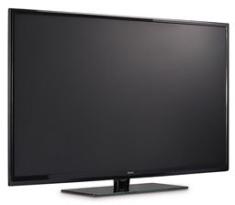 Ultra HD at a Bargain Price: Seiki 50 inch UHD for $966 at Amazon[teaser]Seiki's 4K entry over $500 off. [/teaser] Seiki Digital's SE50UY04, the 50 inch UHD LED LCD set, is currently selling for $966 on Amazon. The normal price of industry's most accessible UHD set is $1500. Reception for Seiki's 4K set has been mostly positive, with the grand caveat of it being a UHD set without a UHD content pipeline. Multiple 4K devices are inbound, however, including Sony's FMP-X1, the Sony PS4, and Microsoft's Xbox One. Ultimately, for most people a UHD set without UHD content makes little sense. Some would prefer to at least have a new HDMI spec or DisplayPort before jumping in, still even more people swear that UHD is merely the most marketable snake oil to date. Nevertheless, in June of 2013 Seiki is offering a UHD set for less than a $1000, making their set the cheapest early adopter option by far. Source: Amazon Author: Brian HossPosted Mon Jun 17, 2013 at 07:30 AM PDT by: