-
.jpg) HDD Gear Deal Spotlight: Bluetooth Speakers[teaser]For a limited time, Amazon is offering up to 53 percent off select portable speakers! [/teaser] As part of the online retailer's ongoing electronics sales and promotions, Amazon is running limited time deals on select Bluetooth speakers from Creative, TDK, and Jawbone. Creative D100 Bluetooth Speaker - Currently $38 (53 percent off). Creative D200 Bluetooth Speaker - Currently $69 (47 percent off). Creative D80 Bluetooth Speaker - Currently $39 (22 percent off). TDK Life on Record A33 Wireless Speaker - Currently $120 (52 percent off). Jawbone JAMBOX Bluetooth Speaker - Currently $90 (40 percent off). As always, these deals will only be active for a limited time while supplies last. Make sure to stay tuned to High-Def Digest for more sales and special promotions!Posted Tue Sep 30, 2014 at 07:30 PM PDT by:
HDD Gear Deal Spotlight: Bluetooth Speakers[teaser]For a limited time, Amazon is offering up to 53 percent off select portable speakers! [/teaser] As part of the online retailer's ongoing electronics sales and promotions, Amazon is running limited time deals on select Bluetooth speakers from Creative, TDK, and Jawbone. Creative D100 Bluetooth Speaker - Currently $38 (53 percent off). Creative D200 Bluetooth Speaker - Currently $69 (47 percent off). Creative D80 Bluetooth Speaker - Currently $39 (22 percent off). TDK Life on Record A33 Wireless Speaker - Currently $120 (52 percent off). Jawbone JAMBOX Bluetooth Speaker - Currently $90 (40 percent off). As always, these deals will only be active for a limited time while supplies last. Make sure to stay tuned to High-Def Digest for more sales and special promotions!Posted Tue Sep 30, 2014 at 07:30 PM PDT by: -
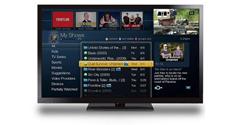 TiVo Streaming Comes to Android[teaser]The company's Android app now supports streaming. [/teaser] TiVo has finally launched a video streaming feature for its Android app. With this new update users can now stream live and recorded programming to their mobile devices. The app offers support for Android 4.1 devices and above with non-Intel or AMD chipsets. Likewise, while most live and recorded content from over-the-air antenna broadcasts or cable TV will be streamable in and out of the home, certain programming may be restricted due to copy protection and other limitations. In addition to TV streaming, the updated app can also stream content from Netflix, Hulu Plus and Amazon Instant Video. Other features include cast & crew info for shows, the ability to tap between mobile and TV playback, and the option to use your mobile device as a remote control for your TiVo DVR. TiVo's new Android app is now available for download from the Google Play Store. An iOS version is also available. The TiVo Roamio is currently on sale for $170, the TiVo Roamio Plus is on sale for $335, and the TiVo Roamio Pro is on sale for $499. Source: TiVoPosted Tue Sep 30, 2014 at 03:30 PM PDT by:
 -
 Hands On with Pioneer's Dolby Atmos Speakers and AVRNOTE: [teaser]This article covers Dolby Atmos for the home, the new Dolby Surround up-mixing, and a few different Pioneer products. It's designed to recreate what it would be like to test out Atmos in your home for the very first time after purchasing the necessary gear upgrades. [/teaser] If you are not already up to speed on the Atmos basics -- no worries at all -- just make sure to read these articles first: High-Def Digest's Dolby Atmos Home Theater Guideby Steven Cohen Dolby Atmos Demo + Q&A (and Follow-Up Answers)by Josh Zyber Chapter One:The Warehouse Three weeks ago, I was in a bit of a pickle. Supposed to review the very first Blu-ray disc encoded with the all new home theatre version of my favorite theatrical surround sound format, Dolby Atmos. One problem. I haven't been able to upgrade my home theatre yet. Luckily, Dolby put me in touch with Pioneer to set up a demo to watch 'Transformers: Age of Extinction - 3D' in Dolby Atmos for the first time. Down in the port city of Long Beach, tucked in behind a sea of corporate cubicles, lies a warehouse reminiscent of the closing shot from 'Raiders of the Lost Ark'. Here too you will find relics... of things no longer sold in stores. Apparently, replacement units and spare parts must be kept seven or eight years after any product is sold. It was like walking into mad scientist's genetic experiment where he crossed a Best Buy with a Home Depot. And there they were -- shelves and shelves teaming with infamous KURO plasma HDTVs. [note: if there's a "heist" at this warehouse in the not too distant future, it totally wasn't me, I swear]. If you're into Pioneer gear, this would have been your elysium. Chapter Two:The Elite System In the back of the warehouse, Pioneer has a few demo rooms. Mine was a rectangular space about twelve feet wide by twenty or so feet long with a ten-foot flat ceiling and a few base traps other acoustic panels on the walls. While much more of a dedicated home theatre space, it was quite close in dimensions to my apartment's living room. Other than the display -- a 65-inch Panasonic TC-L65WT600 LED 4K UHDTV -- the rest of the gear was, of course, all Pioneer Elite. The only difference between what I used and what you can purchase is the AVR firmware wasn't the final version that will be released shortly (I believe in time for 'Age of Extinction'). Pioneer set up a 5.1.4 system to demonstrate the maximum capabilities of their nine-channel Atmos AVRs. The flagship $2,999 Elite SC-89 9.2 channel AV Receiver powered the system. It features 8 HDMI 2.0 inputs (2 outputs), dual subwoofer outs, MCACC Pro calibration, 140 watts of power for all nine channels, and is capable of being set up in more traditional 5.1, 7.1, or 9.1, as well as 5.1.2, 5.1.4, or 7.1.2 Dolby Atmos and DTS Neo:X configurations. While the SC-89 is the most powerful and most expensive in the series line, the $1,599 SC-85 and the $1,999 SC-87 use the exact same Texas Instruments processor to decode Atmos. As Pioneer's most affordable Atmos AVR, the SC-85 provides seven channels of amplification, allowing for a 5.1.2 Atmos configuration. The company hopes to get down to the sub-$1000 price point for next year, as some of its competitors are offering seven-channel Atmos AVRs at around $600. Speakers included one SP-EC73 Elite Center Channel Speaker ($399), one SW-E10 Elite Subwoofer ($599), and four Dolby Atmos enabled SP-EFS73 Elite Floorstanding Speakers -- two up front and two behind my seating position. The EFS73s cost $699 each and consist of three 5 1/4" aluminum woofers and one 4" concentric alumni mid-range with a 1" tweeter, as well as one top-firing 4" concentric alumni mid-range with a 1" soft dome tweeter. The two mid-range/tweeter combos use the same driver with slightly different crossovers. The vertically firing Dolby speaker cuts off everything below 180hz. However, while most of the other manufacturers' AVRs apparently route these lower frequencies to the subwoofer, Pioneer AVRs route them into the non-Atmos part of the same speaker. Smart. This demonstration 5.1.4 setup would cost you -- not including a display, necessary cables, and BD Player -- just under $6800. Swap in an SC-87 and one pair of SP-EBS73-LR Elite Concentric Bookself Speakers ($749/pair), and you have a 5.1.4 Atmos surround experience for just under $5150. Stick to four ESBS73-LR bookshelves and you're good to go for under $4,700. I don't know if I'd trade in my KEF iQ-series speakers just yet, even though Andrew Jones also designed these, but overall this systems sounds terrific. The sub produced voluminous and punchy bass, while the towers admirably handled decent low notes, clean mid tones, and screaming highs. I've always wanted to do an all-floorstanding surround set up, and we played this system at just under reference. They handled it easily. My only thought is that some folks may find them a wee bit on the bright side of things. I did not review Atmos with any in-ceiling speakers. Chapter Three:The CEDIA 2014 Demo Disc I popped in a new Dolby Atmos demo disc, which some of you may have seen at this year's CEDIA. We started with a few Dolby Atmos trailers, including 'Amaze', 'Leaf', 'Conductor', and the original 'Unfold'. 'Amaze' instantly proved the potential Dolby Atmos in the home using upwards firing speakers, transporting me into the heart of a stormy rain forrest. 'Leaf' is, oddly enough, my least favorite Atmos trailer when it plays in my local Atmos auditorium, but with the Pioneer 5.1.4 set up, it came alive, revealing nuances and details I had never noticed before. As we rolled through the other trailers, and an on/off comparison (Atmos vs. No Atmos) of a thunder storm, I was pretty excited. But my hosts had saved the best for last. No, not the movie tracks. The Enrique Iglesias music video, 'Bailando'. Hearing multi-channel Dolby remixes is always a pleasure -- they alter the music only slightly while enhancing the arrangement to reveal surround sound flourishes. 'Bailando' is a catchy tune with spanish guitars, a heavy beat, and even a choral element. The song soared in Atmos, enveloping the entire room, creating an ultra wide soundstage. Simply put, Dolby along with its content and hardware partners like Pioneer have managed to make Atmos for the home an identical experience to it theatrical ancestor. In fact, for some of you with high-end gear, Dolby Atmos for the home may even surpass some professional auditoriums. As such, I don't feel the need to qualify Dolby Atmos "for the home" anymore. Let's call it what it really is and aspires to be: Dolby Atmos. Chapter Four:The First Dolby Atmos Blu-ray After the CEDIA 2014 Demo Disc, I watched 'Transformers: Age of Extinction' (again). As a bonus, Pioneer had the 3D IMAX cut I had not yet received. Skip over to the Atmos portion of the review to get the full details, but it boils down to this: 'Transformers: Age of Extinction' sounds wonderful in Dolby Atmos and even improves on the 7.1 mix in a few places. But it isn't an overwhelmingly different surround experience. Seeing how capable Atmos is at recreating a theatrical experience, and since I've heard better Atmos theatrical mixes, I'm going to assume Atmos on Blu-ray can do a little better. However, in the review, what I did not say was that I'm open to being proven wrong. How, you ask? Atmos is so new and so customizable, there are a few variables at play. First, what would a 7.1.4 configuration sound like? After spending four hours listening to Atmos in 5.1.4, I began to miss my 7.1 system's side surrounds, which I feel close the sonic gap from front to rear channels. Second, what would this mix have sounded like with in-ceiling overhead speakers (I'm less concerned with this variable as the Atmos Trailers proved enveloping)? Perhaps the experience would be more precise. It should be the same, but I'm not sure. Chapter FiveAtmos 5.1.4 vs. 5.1.2 After finishing the film, I compared 5.1.4 and 5.1.2 to contrast the potential benefit of four height channels over two channels. Tucked into the menu (pictured above and below), under speaker settings, Pioneer AVRs allow you to choose between Top Front (TF), Top Middle (TM), and Top Back (TB) height channels. In each of those areas, you can choose either in-ceiling or Dolby Atmos enabled Speakers ("Dolby Sp"). If you select Dolby Speakers, you will also be prompted, during EQ, to tell the AVR how tall your speakers are and your ceiling's height. My two takeaways... 1. you can mix and match pairs in-ceiling and Dolby Speakers if you so choose (or need). 2. To activate 5.1.2, even when using Atmos enabled front channel speakers, you turn those on by selecting Top Middle. To my ears, dropping down from 5.1.4 to 5.1.2 (utilizing the front floorstanders' top-firing speakers) was a bit of a let down. Again, I can't speak to what it would be like to have in-ceiling speakers directly over your seating position (I suspect it would work quite well), but it definitely reduced immersion. The leaf in 'Leaf' didn't swirl as high; the thunder in 'Amaze' didn't boom as loudly behind. I'll have to conduct a few more demos (Onkyo, Denon, Marantz, Yamaha, Integra -- if you're reading this and can help, please reach out to say hello), but after a few quick comparisons, I can see why Dolby calls 7.1.4 an optimum Atmos configuration. That said, stepping up to a nine-channel AVR is expensive enough, let alone an eleven-channel model (or a nine-channel AVR with pre-outs to an extra amplifier). Basically, those who go to the full 5.1.4 and 7.1.4 are more likely to be a niche market unless prices drop. I can't specify to what degree, but I know Pioneer is looking to get prices down on their AVRs for next year, though they will be sticking with nine-channel AVRs due to size and weight considerations. Chapter Six:Atmos vs 7.1 For various reasons like cost, layout, and room size, many people currently have 5.1 setups. If I didn't already own (and love) a 7.1 system, I'd probably be asking myself this: entry-level Atmos AVRs have seven channels of amplification, so what's a better home cinema experience -- 7.1 or 5.1.2? I honestly don't have a recommendation yet. Still need to spend more time with the format. Height channels are exciting and new, but having been less impressed by 5.1.2 than 5.1.4, I wonder if it's worth it with only two height channels. From my very first 7.1 demo, I felt the four rear channels pulling me closer to the screen. Atmos has a provable wow factor, but I'm reticent to trade down from 7.1 ear-level channels. Hopefully some of you will try out 5.1.2, or maybe I'll get a chance to hear some 7.1.2 to get a sense of what that sounds like. Still, to make that jump up to a nine-channel AVR, it's going to raise costs. One option to get an entry level AVR and Atmos enabled speakers, and wire it BOTH for 7.1 and Atmos 5.1.2, though that could be annoying, having to change menu settings (and possibly recalibrating the room?) and plug and play wires every time you swap formats. I wish I had an exact answer on this one, but I think it's going to be dependent on individual listeners and home theatre environments for me to say what's Best (money not withstanding). Chapter Seven:Dolby Surround ~ Atmos Up-Mixing I was pretty thrilled to test out Atmos in the home, but to be honest, I was even more excited to demo the new post-processing element built into Atmos enabled AVRs -- "Dolby Surround." I know the Pioneer team tested 'Captain America: The Winter Soldier' at CEDIA 2014, but I don't think anyone has reviewed this feature yet. First, I can confirm that Dolby ProLogic IIx / IIz has been put to pasture (on Pioneer gear), along with its ability to select variations of the mode for music, movies, or gaming. In Pro Logic's place, Dolby Surround turns stereo, 5.1, or 7.1 mixes into full fledged Dolby Atmos. Or, at least, it's supposed to. I hit a couple snags here. As mentioned, I wasn't using the final firmware on this AVR and while Dolby Surround does work with non-Dolby codecs, in a masterstroke of corporate sabotage a stroke of bad luck, my SC-89 would not play any DTS-HD MA titles. So I wasn't able to find out if 'Gravity' could be turned from 5.1 back into Atmos by up-mixing alone. Boo. Luckily, I had a TrueHD demo disc with 5.1 and 7.1 clips from 'The Dark Knight', 'Batman Begins', 'Star Trek', and 'Super 8'. I immediately selected 'Super 8' for its absolutely epic train crash, listening with and without Dolby Surround while walking around the room to hear the top-firing speakers at work. Sadly, the rail disaster didn't sound any better in Dolby Surround; in fact, on this 5.1 system, it may have sounded a little weaker compared to native 7.1. Trying out a few other movie selections, Dolby Surround didn't alter the mixes in a big way (a good thing, for sure), but didn't live up to it to the potential hype (a disappointment, for sure). Though not all hope is lost. Thanks to the DTS-HD MA snafu, I wasn't able to pop in 'Jurassic Park' or 'Road to Perdition' to check out some stormy, rainy scenes that should work pretty well in Dolby Surround. My last demo was multichannel (Dolby TrueHD) and stereo (CDs) music piped through Dolby Surround. The results here were more obvious, definitely making the music taller, but the center channel was a little loud for my liking. Dolby Surround treated the music more like Dolby ProLogic IIx: Cinema than my prefered music Pro Logic IIx: Music, which prioritizes front left and right channels (as they would for a stereo recording). It's a shame to see the Music option gone, as the DTS Neo: Music clearly adds too much extra bass. ~~~~~~ EDIT (9/30/2014): Dolby sent me a small correction. Dolby Surround does, in fact, include "a control known as Center Spread, which will soften the center speaker focused content, as is often desirable when listening to musical content. Center Spread can also be of benefit for enthusiasts that have a large wide screen display (think projection screen) and seek to spread the dialogue and center channel effects wider across the sound stage for a more natural presentation." Clearly I did not find this feature in my limited time with the product. Thanks to Dolby for the clarification. ~~~~~~ From this very short demo with limited material, Dolby Surround is much less impressive in the way it adds height than what Pro Logic IIx does when adding extra rear channel speakers, but it's probably an upgrade over Pro Logic IIz's height channels. I look forward to more, long-term testing. Chapter Eight:The Final Chapter There we have it, dear readers. My first dive into what I used to call Dolby Atmos in the home, but will now only call Dolby Atmos. Bottom line: with the right mix, Dolby Atmos has the demonstrable ability to treat home cinema enthusiasts to an experience identical to the one we have in our favorite commercial theatres. Customizable to almost every listening environment, with options for all sorts of budget ranges, some of us will be configuring Atmos with seven-channels of processing and amplification; others will be reaching towards 32 channels... All from the same disc or digital stream. Thanks again to Pioneer and Dolby for arranging this demo. It was tons of fun and only fanned the flames of my enthusiasm, even if Dolby Surround wasn't able to create Atmos-quality mixes out of thin air. I just don't know if anything less than 7.1.4 will work for my ears even though wiring / powering eleven channels may prove to be a significant financial hurtle. Hopefully prices will come down, and I look forward to testing out 7.1.2 as well. What about you? Have you gotten to hear any Dolby Atmos Demos? Are you already planning to upgrade? If so, have you decided on in-ceiling speakers, or are you waiting to hear the Atmos-enabled speakers? Showrooms will be rolling the format out to public ears in the coming weeks and months as studios begin to announce more Blu-ray and HD streaming titles (I can't say what rumors I've heard, but I think we're going to see some BIG titles). I highly suggest listening to Atmos for yourself and let us know what you think in the forums. Cheers and thanks for reading.Posted Mon Sep 29, 2014 at 02:20 PM PDT by:
 -
 Onkyo Dolby Atmos Update Now Available[teaser]The company has released its Atmos firmware upgrade. [/teaser] As promised, Onkyo has launched its Dolby Atmos firmware upgrade. The free update is now available for the company's TX-NR636, TX-NR737, and TX-NR838 receivers through a network connection or USB download, just in time for the release of 'Transformers: Age of Extinction,' the first Blu-ray to support an Atmos mix. "We are excited to provide this free update to owners of our 2014 network receivers beginning with TX-NR636," says Onkyo Corporation General Manager, Kevin Miyagi. "Our Dolby Atmos enabled receivers allow Onkyo customers to enjoy not only new content that will be released in Dolby Atmos but will also provide an enhanced experience of their current Blu-ray libraries through Dolby Surround." Dolby Atmos home theater technology uses object-based mixing to expand audio design beyond the traditional limitations of channel-based systems, and incorporates the inclusion of overhead sound. In addition to the aforementioned devices, Onkyo is also releasing the high-end TX-NR1030 ($1,599) and TX-NR3030 ($2,299) receivers, and the PR-SC5530 Network A/V Controller ($2,499) with Atmos support built-in this October. Likewise, the HT-S7700 Network Home Theater System will also feature integrated Atmos support and will ship at the end of September. For more details on Dolby Atmos, check out our Dolby Atmos Home Theater Guide. The TX-NR636 ($530), TX-NR737 ($795), and TX-NR838 ($826) receivers are all available for purchase now. Source: OnkyoPosted Mon Sep 29, 2014 at 02:00 PM PDT by:
 -
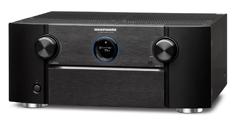 Marantz Details New Atmos Pre-Amp[teaser]The company has announced its latest Atmos-enabled audio component. [/teaser] Marantz has revealed pricing and availability for its upcoming AV7702 preamplifier. The device includes support for Dolby's new Atmos audio technology, allowing users to add overhead audio to their surround sound setups. The 11.2 channel AV7702 offers compatibility with 5.1.2, 5.1.4, 7.1.2, 7.1.4, and 9.1.2 Atmos configurations. Likewise, the preamp includes Wi-Fi, Bluetooth, 4K passthrough, and high-res audio streaming. Finally, the device also comes complete with eight HDMI 2.0 inputs (one in front) and internet radio apps like Spotify Connect, Pandora, and Sirius XM. Dolby Atmos is a home theater technology that uses object-based mixing to expand audio design beyond the traditional limitations of channel-based systems, and incorporates the inclusion of overhead sound. For more information, check out High-Def Digest's Dolby Atmos Home Theater Guide. The Marantz AV7702 will be available in October for a suggested retaile price of $2,000. Source: Digital Trends, MarantzPosted Fri Sep 26, 2014 at 01:30 PM PDT by:
 -
.jpg) High-Def Digest Attends VIZIO P-Series Ultra HD Launch Event[teaser]With their affordable pricing and solid features, VIZIO's P-Series has been getting quite a bit of attention from home theater enthusiasts still on the fence about 4K. The Ultra HD TV line places an emphasis on picture quality without breaking the bank, fully bringing 4K technology to the mainstream. [/teaser] But just how good do these sets look in person? Has VIZIO really found the perfect balance between cost and performance? Well, High-Def Digest was recently invited to the company's P-Series Launch Event where we were treated to several eyes-on demos, highlighting different aspects of the displays -- and while a definitive verdict will have to wait until a full review, the presentation was certainly impressive. Held at the Bertrand Delacroix Gallery in New York City, VIZIO presented its products as flat panel works of art, hanging the beautiful new TVs on the walls of the gallery like priceless paintings. And though 4K screens with full-array local dimming might not equal the majesty of a Picasso or a Rembrandt... they're pretty damn close. Each room of the gallery was charged with spotlighting different features of the TVs along with a few side-by-side comparisons with the competition. So, how did the P-Series stack up? Were these Ultra HD displays truly worthy of their place on the wall? Read on to find out! "Moving Art" Presentation The first demo offered in the event was dubbed "Moving Art" and was aimed at giving viewers an overall impression of the P-Series' picture quality. Models ranging from 50-inches to 70-inches were hung in the main gallery room, and each set featured nature footage shot by award-winning filmmaker Louie Schwartzberg. Schwartzberg's movies rely on a heavy use of time lapse and macro photography, and the intricate close-up footage of flowers and majestic wide shots of cascading mountain vistas really did a great job of showcasing the benefits of a 4K display. Detail was fantastic, depth was lifelike, and colors were absolutely sumptuous, giving the TVs a vivid, window-like quality. With that said, the displays were set to their default out-of-box settings, and it was clear that this pre-set was not especially accurate, leading to boosted contrast and oversaturation. Still, the images looked quite striking regardless, and managed to maintain their detail up close and personal, offering a great introduction to the collection. Motion Processing Moving from the main gallery to an adjacent room, VIZIO had two displays set up side-by-side in a demo designed to test the P-Series' Clear Action 960 motion processing and 240Hz refresh rate. On one side was the 50-inch P-Series display, and on the other side was a Samsung 50-inch 8550 series Ultra HD TV. Both TVs were displaying the same motion test slide -- which presented several horizontally scrolling patterns, words, and images. Likewise, both TVs were set to their default movie-mode settings. Based on this particular comparison, it was immediately clear that the VIZIO TV's handling of motion was superior. All of the scrolling slides moved by smoothly without any artifacts or anomalies. On the other hand, the Samsung display was riddled with odd motion artifacts and blurring. While it's likely that further adjustments in the settings would have brought out different results, and test slides aren't always indicative of real-world performance to begin with, the VIZIO certainly had an edge here. Black Levels The next demo was focused on the P-Series' black levels. Once again, we were escorted to another room in the gallery, and once again the VIZIO was placed side-by-side with a Samsung 8550 display. This time, both models were 65-inches. For testing purposes, the TVs were playing back scenes from 'Harry Potter and the Deathly Hallows: Part 2,' presumably on Blu-ray being upscaled to 4K through each TV's scaling tech. The purpose of the demo was to reveal the superior blacks, contrast, and uniformity that VIZIO's full-array LED backlight and Active Pixel Tuning can achieve. With 64 active-zones (and 72 on the 70-inch model), the panel is able to dim its backlight in specific portions of the screen based on the content being displayed. This lets black actually appear black in dark scenes. In contrast, the Samsung model only features edge-lit dimming from the sides of the screen, which offers far less precise results. In practice, this led to some notable differences between both sets. While the Samsung appeared to have more accurate colors out-of-the-box, the VIZIO's black levels were the clear winner. Backlight bleeding was visible toward the corners of the Samsung unit, causing these portions of the screen to veer toward a bluish gray. The VIZIO, however, had essentially perfect uniformity from a central viewing position. Likewise, blacks were deep and inky and the bars on top of and below the 2.35:1 frame almost disappeared into the dark of the room. Shadows throughout the image also maintained a deep appearance without losing detail. Off angle, the TV held its own decently, but blacks and colors did wash out noticeably when viewing the screen from the side. While the Samsung had relatively deep blacks in its own right, the VIZIO demonstrated superior contrast between dark and light portions of the picture. On the Samsung, the image had a predominantly dim quality throughout, but on the VIZIO, bright portions of the screen had more pop. For instance, one scene featured a close-up of glittering jewelry. The 8550 series TV had a dull cast, while the P-Series had deep blacks in the shadows while also maintaining a radiant sparkle on the jewels without blooming, making the most out of its precision local dimming technology. Though I've seen better overall black level performance on some high-end plasmas and OLED models, for an LCD, the P-Series was definitely toward the top of the pack. Ultra HD Gaming In the final gallery room, VIZIO had a few more demonstrations focused on the different types of content available for 4K TV owners. First up, was a demo featuring the PC game 'Skyrim.' Running in native Ultra HD resolution, the game looked rather stunning, with no artifacts or aliasing. With that said, there wasn't much interactivity available, but we were able to move the mouse around the character and zoom in and out. This wasn't especially exciting, but the display certainly shows a lot of promise for gaming applications. Upscaling Comparison Next, was another side-by-side comparison with a Samsung model. The purpose of this test was to reveal the benefits of VIZIO's Spatial Scaling Engine for upscaling HD content to 4K. Both units were playing scenes from 'The Hobbit: The Desolation of Smaug' on Blu-ray being upscaled to 4K in each TVs' default modes. As presented, the VIZIO TV had a sharper and smoother appearance with slightly more pop. The Samsung also looked pretty good, but had a comparatively muddy appearance. In addition, there were some notable motion artifacts. These anomalies were also present on the VIZIO set from time to time, but to a lesser degree. Unfortunately, there was no direct comparison between HD material, upscaled material, and native 4K material, so I can't speak to how much of an improvement the upscaling really makes. Still, with the exception of the occasional artifacts, the footage looked impressive. Ultra HD Streaming Finally, VIZIO had two 65-inch P-Series TVs set up to show off samples of 4K streaming. One TV played scenes from Amazon's original series 'Alpha House.' Despite the inaccurate settings on the display, the show looked pretty good, but I honestly didn’t notice much of an improvement over what I'm used to seeing in 1080p material on my HDTV. Likewise, it should be noted that the show was not actually being streamed live to the TV. Instead, a pre-recorded clip provided by Amazon was being played. Regardless, it was still nice to actually see an example of 4K programming that's on the way, and VIZIO customers can expect to start streaming select Amazon Instant Video content in Ultra HD by the end of the year. Much more impressive, however, was the demo featuring NBC's 'The Blacklist.' The show is shot natively in 4K and was being streamed live through Netflix to the television, and the results were really very striking. It's hard to make much of a judgment without a true 1080p VS Ultra HD side-by-side comparison, but the image did appear to offer an extra layer of detail not found in usual Netflix HD streams. One could make out every pore on James Spader's face and dimensionality was impeccable. There were a few odd motion anomalies here and there, but I did not detect any traditional compression artifacts usually associated with streaming video, highlighting the benefits of the new HEVC H.265 codec. The connection in the gallery was offering a steady 15Mbps, which appeared to be more than sufficient. 'The Blacklist' now joins other series available for Ultra HD streaming through Netflix like 'House of Cards' and 'Breaking Bad,' and the service will be adding more content throughout the coming year. In addition to Netflix and Amazon Instant Video, VIZIO also confirmed that Ultra Flix will be available on the P-Series by the end of the year as well. Unlike other companies such as Sony and Samsung, VIZIO does not have any plans for a proprietary 4K video player, and will instead rely on existing streaming services, potential cable/satellite options, upscaling, and the upcoming 4K Blu-ray format to deliver Ultra HD content to its consumers. In order to offer the widest level of compatibility for current and future services and components, the TVs come equipped with 802.11ac Wi-Fi and HDMI 2.0 connections with HDCP 2.2 compliancy. Pricing and Availability VIZIO's P-Series is now shipping to stores nationwide. The full lineup includes the 50" P502ui-B1 ($999.99), the 55" P552ui-B2 ($1,399.99), the 60" P602ui-B3 ($1,699.99), the 65" P652ui-B2 ($2,199.99), and the flagship 70" P702ui-B3 ($2,499.99). Despite our relatively brief time with the P-Series, we were left with a very positive impression. While some users might be turned off by the lack of 3D, others will likely be won over by the TVs' simplified focus on features that matter (full-array backlighting, smart TV functions) without resorting to what some may perceive as gimmicks (there are no curved-screens here… yet). For those still unsure about Ultra HD, these sets make for an undeniably attractive and affordable 4K option. We're hoping to get our hands on a review unit soon and will report back with more details and impressions. For now, though, what do you think about VIZIO's latest Ultra HD offerings? Are the P-Series' enticing prices and picture quality features enough for you to make the jump to 4K?Posted Fri Sep 26, 2014 at 07:00 AM PDT by:
High-Def Digest Attends VIZIO P-Series Ultra HD Launch Event[teaser]With their affordable pricing and solid features, VIZIO's P-Series has been getting quite a bit of attention from home theater enthusiasts still on the fence about 4K. The Ultra HD TV line places an emphasis on picture quality without breaking the bank, fully bringing 4K technology to the mainstream. [/teaser] But just how good do these sets look in person? Has VIZIO really found the perfect balance between cost and performance? Well, High-Def Digest was recently invited to the company's P-Series Launch Event where we were treated to several eyes-on demos, highlighting different aspects of the displays -- and while a definitive verdict will have to wait until a full review, the presentation was certainly impressive. Held at the Bertrand Delacroix Gallery in New York City, VIZIO presented its products as flat panel works of art, hanging the beautiful new TVs on the walls of the gallery like priceless paintings. And though 4K screens with full-array local dimming might not equal the majesty of a Picasso or a Rembrandt... they're pretty damn close. Each room of the gallery was charged with spotlighting different features of the TVs along with a few side-by-side comparisons with the competition. So, how did the P-Series stack up? Were these Ultra HD displays truly worthy of their place on the wall? Read on to find out! "Moving Art" Presentation The first demo offered in the event was dubbed "Moving Art" and was aimed at giving viewers an overall impression of the P-Series' picture quality. Models ranging from 50-inches to 70-inches were hung in the main gallery room, and each set featured nature footage shot by award-winning filmmaker Louie Schwartzberg. Schwartzberg's movies rely on a heavy use of time lapse and macro photography, and the intricate close-up footage of flowers and majestic wide shots of cascading mountain vistas really did a great job of showcasing the benefits of a 4K display. Detail was fantastic, depth was lifelike, and colors were absolutely sumptuous, giving the TVs a vivid, window-like quality. With that said, the displays were set to their default out-of-box settings, and it was clear that this pre-set was not especially accurate, leading to boosted contrast and oversaturation. Still, the images looked quite striking regardless, and managed to maintain their detail up close and personal, offering a great introduction to the collection. Motion Processing Moving from the main gallery to an adjacent room, VIZIO had two displays set up side-by-side in a demo designed to test the P-Series' Clear Action 960 motion processing and 240Hz refresh rate. On one side was the 50-inch P-Series display, and on the other side was a Samsung 50-inch 8550 series Ultra HD TV. Both TVs were displaying the same motion test slide -- which presented several horizontally scrolling patterns, words, and images. Likewise, both TVs were set to their default movie-mode settings. Based on this particular comparison, it was immediately clear that the VIZIO TV's handling of motion was superior. All of the scrolling slides moved by smoothly without any artifacts or anomalies. On the other hand, the Samsung display was riddled with odd motion artifacts and blurring. While it's likely that further adjustments in the settings would have brought out different results, and test slides aren't always indicative of real-world performance to begin with, the VIZIO certainly had an edge here. Black Levels The next demo was focused on the P-Series' black levels. Once again, we were escorted to another room in the gallery, and once again the VIZIO was placed side-by-side with a Samsung 8550 display. This time, both models were 65-inches. For testing purposes, the TVs were playing back scenes from 'Harry Potter and the Deathly Hallows: Part 2,' presumably on Blu-ray being upscaled to 4K through each TV's scaling tech. The purpose of the demo was to reveal the superior blacks, contrast, and uniformity that VIZIO's full-array LED backlight and Active Pixel Tuning can achieve. With 64 active-zones (and 72 on the 70-inch model), the panel is able to dim its backlight in specific portions of the screen based on the content being displayed. This lets black actually appear black in dark scenes. In contrast, the Samsung model only features edge-lit dimming from the sides of the screen, which offers far less precise results. In practice, this led to some notable differences between both sets. While the Samsung appeared to have more accurate colors out-of-the-box, the VIZIO's black levels were the clear winner. Backlight bleeding was visible toward the corners of the Samsung unit, causing these portions of the screen to veer toward a bluish gray. The VIZIO, however, had essentially perfect uniformity from a central viewing position. Likewise, blacks were deep and inky and the bars on top of and below the 2.35:1 frame almost disappeared into the dark of the room. Shadows throughout the image also maintained a deep appearance without losing detail. Off angle, the TV held its own decently, but blacks and colors did wash out noticeably when viewing the screen from the side. While the Samsung had relatively deep blacks in its own right, the VIZIO demonstrated superior contrast between dark and light portions of the picture. On the Samsung, the image had a predominantly dim quality throughout, but on the VIZIO, bright portions of the screen had more pop. For instance, one scene featured a close-up of glittering jewelry. The 8550 series TV had a dull cast, while the P-Series had deep blacks in the shadows while also maintaining a radiant sparkle on the jewels without blooming, making the most out of its precision local dimming technology. Though I've seen better overall black level performance on some high-end plasmas and OLED models, for an LCD, the P-Series was definitely toward the top of the pack. Ultra HD Gaming In the final gallery room, VIZIO had a few more demonstrations focused on the different types of content available for 4K TV owners. First up, was a demo featuring the PC game 'Skyrim.' Running in native Ultra HD resolution, the game looked rather stunning, with no artifacts or aliasing. With that said, there wasn't much interactivity available, but we were able to move the mouse around the character and zoom in and out. This wasn't especially exciting, but the display certainly shows a lot of promise for gaming applications. Upscaling Comparison Next, was another side-by-side comparison with a Samsung model. The purpose of this test was to reveal the benefits of VIZIO's Spatial Scaling Engine for upscaling HD content to 4K. Both units were playing scenes from 'The Hobbit: The Desolation of Smaug' on Blu-ray being upscaled to 4K in each TVs' default modes. As presented, the VIZIO TV had a sharper and smoother appearance with slightly more pop. The Samsung also looked pretty good, but had a comparatively muddy appearance. In addition, there were some notable motion artifacts. These anomalies were also present on the VIZIO set from time to time, but to a lesser degree. Unfortunately, there was no direct comparison between HD material, upscaled material, and native 4K material, so I can't speak to how much of an improvement the upscaling really makes. Still, with the exception of the occasional artifacts, the footage looked impressive. Ultra HD Streaming Finally, VIZIO had two 65-inch P-Series TVs set up to show off samples of 4K streaming. One TV played scenes from Amazon's original series 'Alpha House.' Despite the inaccurate settings on the display, the show looked pretty good, but I honestly didn’t notice much of an improvement over what I'm used to seeing in 1080p material on my HDTV. Likewise, it should be noted that the show was not actually being streamed live to the TV. Instead, a pre-recorded clip provided by Amazon was being played. Regardless, it was still nice to actually see an example of 4K programming that's on the way, and VIZIO customers can expect to start streaming select Amazon Instant Video content in Ultra HD by the end of the year. Much more impressive, however, was the demo featuring NBC's 'The Blacklist.' The show is shot natively in 4K and was being streamed live through Netflix to the television, and the results were really very striking. It's hard to make much of a judgment without a true 1080p VS Ultra HD side-by-side comparison, but the image did appear to offer an extra layer of detail not found in usual Netflix HD streams. One could make out every pore on James Spader's face and dimensionality was impeccable. There were a few odd motion anomalies here and there, but I did not detect any traditional compression artifacts usually associated with streaming video, highlighting the benefits of the new HEVC H.265 codec. The connection in the gallery was offering a steady 15Mbps, which appeared to be more than sufficient. 'The Blacklist' now joins other series available for Ultra HD streaming through Netflix like 'House of Cards' and 'Breaking Bad,' and the service will be adding more content throughout the coming year. In addition to Netflix and Amazon Instant Video, VIZIO also confirmed that Ultra Flix will be available on the P-Series by the end of the year as well. Unlike other companies such as Sony and Samsung, VIZIO does not have any plans for a proprietary 4K video player, and will instead rely on existing streaming services, potential cable/satellite options, upscaling, and the upcoming 4K Blu-ray format to deliver Ultra HD content to its consumers. In order to offer the widest level of compatibility for current and future services and components, the TVs come equipped with 802.11ac Wi-Fi and HDMI 2.0 connections with HDCP 2.2 compliancy. Pricing and Availability VIZIO's P-Series is now shipping to stores nationwide. The full lineup includes the 50" P502ui-B1 ($999.99), the 55" P552ui-B2 ($1,399.99), the 60" P602ui-B3 ($1,699.99), the 65" P652ui-B2 ($2,199.99), and the flagship 70" P702ui-B3 ($2,499.99). Despite our relatively brief time with the P-Series, we were left with a very positive impression. While some users might be turned off by the lack of 3D, others will likely be won over by the TVs' simplified focus on features that matter (full-array backlighting, smart TV functions) without resorting to what some may perceive as gimmicks (there are no curved-screens here… yet). For those still unsure about Ultra HD, these sets make for an undeniably attractive and affordable 4K option. We're hoping to get our hands on a review unit soon and will report back with more details and impressions. For now, though, what do you think about VIZIO's latest Ultra HD offerings? Are the P-Series' enticing prices and picture quality features enough for you to make the jump to 4K?Posted Fri Sep 26, 2014 at 07:00 AM PDT by: -
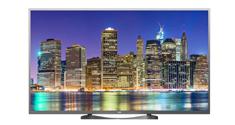 JVC Prepares to Ship 65" 4K TV[teaser]The 65-inch Ultra HD display will be available later this month. [/teaser] AmTran Video has announced a release window for its upcoming JVC Diamond Series Ultra HD TV. The 65-inch DM65USR will hit stores by the end of September for a suggested retail price of $1,999. With a resolution of 3840 X 2160, the DM65USR offers four times the detail of a traditional 1080p TV. In addition, the display uses an LCD panel with direct LED backlighting and local dimming for superior black levels. The TV also offers 10-bit color depth, advanced dynamic contrast, 4K upscaling, a 240Hz refresh rate, CrystalColor XD circuitry, and an integrated XinemaSound 3D system. HDMI 2.0 connections with HDCP 2.2 copy protection are included too. Exact release dates and pricing have not been announced, but 55-inch and 85-inch JVC Diamond Series Ultra HD TVs will be available in the coming weeks as well. Source: TWICEPosted Thu Sep 25, 2014 at 05:30 PM PDT by:
 -
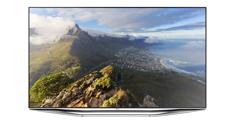 HDD Gear Deal Spotlight: HDTVs & Blu-ray Players[teaser]For a limited time, Amazon is offering up to 31 percent off select home theater gear! [/teaser] As part of the online retailer's ongoing electronics sales and promotions, Amazon is running limited time deals on select gear items from Samsung and oCOSMO. Samsung BD-F5700 Wi-Fi Blu-Ray Player - Currently $78 (22 percent off). Samsung BD-H6500 3D Smart Blu-ray Player - Currently $146 (31 percent off). Samsung UN55H7150 55-Inch 1080p TV - Currently $1,398 (26 percent off). oCOSMO 40-inch 1080p 60Hz Roku-Ready TV - Currently $280 (30 percent off). As always, these deals will only be active for a limited time while supplies last. Make sure to stay tuned to High-Def Digest for more sales and special promotions!Posted Wed Sep 24, 2014 at 02:30 PM PDT by:
 -
 AT&T Offers Cord-Cutting U-Verse Plan[teaser]The cable provider is now offering special U-Verse bundles aimed at cord-cutters. [/teaser] In an effort to appeal to customers looking for a more lean and simplified cable package, AT&T is now providing a U-Verse TV, HBO, and Amazon Prime bundle. The plan emphasizes online streaming options and comes in at just $39 a month for the first year of service (standard rates will apply after the 12-month period). The online exclusive bundle includes U-Basic TV, U-Verse Internet Max Plus (18Mbps), HBO, HBO Go, and one free year of Amazon Prime (a $99 value), giving customers access to Prime Instant Video streaming. In addition, AT&T is also testing an even leaner plan that simply offers broadband internet and free Amazon Prime for $29 a month, giving cord-cutters a perfect streaming only option. For now, this trial package is only available in Atlanta, Chicago, Houston and San Francisco. Customers can check availability for AT&T's new plan at the U-Verse website. The special offer ends on December 13. Source: AT&T via EngadgetPosted Wed Sep 24, 2014 at 11:00 AM PDT by:
 -
 LG & Amazon Team Up for Lady Gaga & Tony Bennett 4K Concert[teaser]Amazon and LG will stream the musicians' recent concert collaboration in 4K. [/teaser] LG and Amazon have announced plans to stream Tony Bennett and Lady Gaga's "Cheek to Cheek LIVE!" in 4K. The concert event was recorded in Ultra HD this summer and will debut on Amazon Instant Video later this year. "We couldn't think of a better way to enhance the LG 4K Ultra HD experience than by teaming up with Amazon and such iconic and such extraordinary performers as Tony Bennett and Lady Gaga," said David VanderWaal, head of marketing for LG Electronics USA. "Literally hundreds of thousands of Americans are purchasing LG 4K Ultra HD TVs this year, and they're clamoring for more Ultra HD content. We hope they enjoy this experience as much as we enjoy bringing it to them." "Cheek to Cheek LIVE!" was filmed at the Lincoln Center's Frederick P. Rose Hall in New York and features Tony Bennett and Lady Gaga performing classics off of their new album of jazz standards. The concert will be available on Amazon Instant Video in 4K through the Instant Video app on supported Ultra HD displays. This includes LG's current lineup of 4K TVs. An exact release date has not been announced, but "Cheek to Cheek LIVE!" is expected to debut in 4K through Amazon Instant Video in October. According to LG, this will make it "the world's first 4K streamed concert ever." Source: LGPosted Tue Sep 23, 2014 at 08:00 PM PDT by: