-
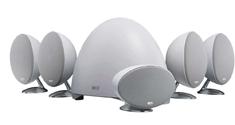 HDD Gear Deal Spotlight: Up to 33% off Speakers & Soundbars![teaser]For a limited time, Amazon is offering big discounts on select home audio gear! [/teaser] As part of the online retailer's ongoing sales and promotions, Amazon is running limited time deals on speakers and soundbars from KEF, Polk Audio, and Yamaha. KEF E305WH 5.1-Channel Speaker System - Currently $800 (33% off). Polk Audio Magni-Fi Soundbar with Wireless Subwoofer - Currently $350 (30% off). KEF X300A Digital Hi-Fi Speaker System - Currently $600 (25% off). Yamaha YST-SW012 8-Inch Subwoofer - Currently $100 (23% off). Polk Audio Omni SB1 Wireless Sound Bar - Currently $550 (21% off). As always, these deals will only be active for a limited time while supplies last. Make sure to stay tuned to High-Def Digest for more sales and special promotions!Posted Wed Sep 23, 2015 at 08:00 PM PDT by:
 -
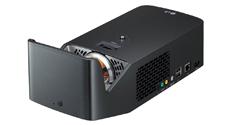 LG Readies PF1000U Full HD Minibeam Ultra Short-Throw Projector[teaser]The new short-throw projector will hit stores in October. [/teaser] LG has announced the latest addition to its Minibeam projector lineup. The upcoming PF1000U is a compact ultra short-throw model. "LG's new Minibeam UST projector delivers a 100-inch Full HD picture in a package that is easy to transport from room to room," said Lee In-kyu, senior vice president and head of the TV and monitor division at LG’s Electronics Home Entertainment Company. "LG Minibeam UST makes it possible for every home and every room to replicate a real theater-like experience." The 1080p DLP projector features LG's Triple XD Engine and uses a self-emitting RGB LED illumination system for a lifespan of up to 30,000 hours. Likewise, the device has a contrast ratio of 150,000:1 and is rated for up to 1,000 lumens of brightness. Thanks to the model's ultra short-throw technology, the PF1000U is capable of projecting a 60-inch image from just 4.3-inches away from a surface or up to a 100-inch image from just 15-inches away. Finally, the projector also includes HDMI connectivity, an integrated TV tuner, WiDi support, USB, Smart TV features, and Bluetooth audio out for pairing with wireless speakers. LG's PF1000U Minibeam Ultra Short-Throw Projector is expected to start shipping in October for $1,400. Sources: LG 1, LG 2Posted Wed Sep 23, 2015 at 01:45 PM PDT by:
 -
.jpg) LG & SBS Transmit First Live 4K Ultra HD Test Broadcast with ATSC 3.0 Tech in Korea[teaser]An OTA Ultra HD test transmission has been conducted. [/teaser] LG and Korean broadcaster SBS have partnered to broadcast a 4K Ultra HD test signal. This marks the first successful 4K test transmission in Korea to use the new ATSC 3.0 technology. Dr. Skott Ahn, President and CTO, LG Electronics, said, "LG is leading the way in development and commercialization of ATSC 3.0. Test broadcasts like this show how we are partnering with broadcasters around the world to drive adoption next-generation broadcasting technology." The test demonstrated transmission and reception of 4K and HD mobile signals simultaneously in a single 6-MHz channel. Likewise, HD mobile signals were also received in a fast-moving vehicle using new tech that is expected to be part of the ATSC 3.0 physical layer. Previous test broadcasts were also recently conducted in the US, including field tests in Ohio and Wisconsin. The ATSC 3.0 broadcast system is currently being standardized by the Advanced Television Systems Committee. Reports indicate that the group is working toward a final standard for the first half of 2017. Source: LGPosted Tue Sep 22, 2015 at 05:30 PM PDT by:
LG & SBS Transmit First Live 4K Ultra HD Test Broadcast with ATSC 3.0 Tech in Korea[teaser]An OTA Ultra HD test transmission has been conducted. [/teaser] LG and Korean broadcaster SBS have partnered to broadcast a 4K Ultra HD test signal. This marks the first successful 4K test transmission in Korea to use the new ATSC 3.0 technology. Dr. Skott Ahn, President and CTO, LG Electronics, said, "LG is leading the way in development and commercialization of ATSC 3.0. Test broadcasts like this show how we are partnering with broadcasters around the world to drive adoption next-generation broadcasting technology." The test demonstrated transmission and reception of 4K and HD mobile signals simultaneously in a single 6-MHz channel. Likewise, HD mobile signals were also received in a fast-moving vehicle using new tech that is expected to be part of the ATSC 3.0 physical layer. Previous test broadcasts were also recently conducted in the US, including field tests in Ohio and Wisconsin. The ATSC 3.0 broadcast system is currently being standardized by the Advanced Television Systems Committee. Reports indicate that the group is working toward a final standard for the first half of 2017. Source: LGPosted Tue Sep 22, 2015 at 05:30 PM PDT by: -
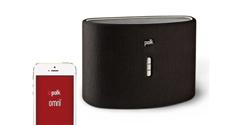 Polk Audio Releases Omni S6 Wireless Speaker with DTS Play-Fi for $350[teaser]The new music streaming speaker is now available. [/teaser] Polk Audio has announced a new addition to its Omni Collection of wireless speakers. The new Omni S6 is designed to deliver high quality, room-filling sound "The Omni S6 gives our customers an easy way to listen to all the music they love from a beautifully-designed wireless speaker that incorporates the same build quality and sound engineering found in our core audio line of high performance products," said Michael Greco, global brand director for Polk Audio. "To develop the Omni S6, we took our expertise in component speakers and combined the sound we're famous for into the format of a single stereo-powered speaker. This speaker will truly surprise and delight listeners with its immersive and transparent sound." The Wi-Fi speaker features two 4-inch drivers, two 0.75-inch tweeters and a dedicated four-channel, 100-watt digital amplifier. In addition, the Omni S6 uses Polk Audio's Dynamic Balance technology to enhance sound output and minimize distortion. The model also supports a stereo pairing mode that allows users to connect two units to create dedicated left and right channel. Likewise, customers can connect the speaker to other products in the Omni Collection as well. DTS Play-Fi tech is also integrated, providing access to popular streaming music services like Spotify Connect and Pandora, and personal music libraries and Internet radio stations. Finally, music can also be played via a 3.5mm jack directly to the speaker and then re-streamed to other Omni wireless speakers. Polk Audio's Omni S6 is now available in black or white for $350. Source: Polk Audio via PR NewswirePosted Tue Sep 22, 2015 at 04:30 PM PDT by:
 -
 An Introduction to HyperSound Clear, the Home Theater Tech Most Needed by Someone In Your Family[teaser]Because we all like to hear what we watch.[/teaser] Consumer electronics have been and will continue to be, part of an industry built on hit products. There are products that catch fire overnight, and there are products that sneak in but prove to be indispensable. HyperSound technology has serious potential in the latter category -- the potential to be that one-way adoption product. HyperSound technology is complex, but the concept can be related using the very easy 'Star Trek' method of simplification. HyperSound speakers (or really, emitters) create directed sound. As opposed to the traditional cone-shaped sound that expands conically as it travels, HyperSound emitters direct sound similar to how a flashlight directs a beam of light. For a listener in HyperSound's directed audio beam, there is sound. For listeners outside of the beam, there isn't sound. After my first few demonstrations of HyperSound, I began to see the potential in the tech. In my case, I'd love to be able to use the speakers in my home office. As it is, when my significant other is around, I am often relegated to using a headset. (My office isn't sound proof, and neither is her adjoining home office.) With HyperSound in the mix, the idea that I could direct sound at my desk without bothering anyone not in the beam is altogether compelling. (Sure, there would likely be some sound bounce off of the walls, but nothing as intense as being in the beam.) However, HyperSound as a home office product isn't ready yet, as that part of the tech is still on the drawing board. There is though, a commercial version of HyperSound directional audio already being used at retail for in-store kiosks inside of places like Best Buy. How do these HyperSound enabled kiosks work? Well, one need look no further than the 'Call of Duty' kiosks currently inside of Best Buy. Say you're shopping at Best Buy, and you see the 'Call of Duty' video game kiosk at the end of a row. While you're standing in front of said 'Call of Duty' kiosk, you see a screen showcasing some of the game's prime gameplay trailers (right now, it is 'Call of Duty: Advanced Warfare'), with audio coming from HyperSound commercial emitters pointing at the person experiencing the game demo. (The emitters are near the ground and angled up.) But, once you walk past the 'Call of Duty' demo kiosk, you can't hear the audio anymore. This allows for a retailer like Best Buy (or whomever) to have audio-enabled product demo kiosks that project audio at interested consumers without overwhelming other shoppers and the store with audio blaring all over the place. This hiding in plain sight technique has a cunning merit, and it's honestly impressive in person to be right next to the kiosk without any audio bleed. (According to a recent study conducted by the HyperSound team, this HyperSound and kiosk pairing is pretty effective, and shows a near 50% sales increase in a retail environment via HyperSound-enabled in-store signage and displays. That study can be found here.) Of course, those kiosks aren't what has me so intrigued; I want to see HyperSound working inside the home office and home theater. I can see a future where directed sound speakers will allow me to use a home theater system even while guests sleep in the next room. Right now, I have to use headphones, but I suspect that will change eventually. In fact, it's that enthusiast space I'm imagining, that was the main focus when the original developer Parametric sound pitched the technology to Turtle Beach. Parametric Sound originally pitched HyperSound to Turtle Beach with the goal of licensing the tech to them and leveraging Turtle Beach's audio muscle to create a gaming soundbar. In that same pitch meeting, Parametric also let Turtle Beach's CEO, Juergen Stark, know about another interesting finding – that HyperSound improved sound clarity and speech intelligibility for people with hearing loss (i.e. – With HyperSound connected to their TV, people with hearing loss could better hear and understand the TV again without having to turn the volume way up.). So while HyperSound tech's future is bright for enthusiasts such as myself, Turtle Beach immediately saw significant potential for HyperSound Clear as a hearing healthcare device. Once Turtle Beach's CEO experienced Parametric's pitch/demo of HyperSound as a technology to help those with hearing loss, Turtle Beach began taking steps to not merely license HyperSound but to acquire it outright. Ultimately, Turtle Beach bought Parametric Sound in January 2014, and HyperSound is now a brand and business unit product of the Turtle Beach Corporation. You see, Turtle Beach saw HyperSound as a difference maker, something that could improve the quality of life for people suffering from hearing loss. One potential user that immediately comes to mind is my mother. Whenever I go to visit my mom's house, I'm typically greeted at the front door by the sound of the TV from across the house. My mother enjoys watching TV ('CSI,' 'Modern Family,' and whatnot) most of the time, but every year, she raises the volume. She also insists on having the TV in the corner of the room, which makes those TV speakers even more diffuse. The trouble is multi-stage. She can't hear the dialog without cranking up the TV, but then it gets so loud that anyone else in the room or nearby rooms, can't hear anything else. She does have a hearing aid, but she doesn't wear it when she's home. (Or really, when she's out, as she's still only in the beginning phases of notable hearing loss.) Unfortunately, I have to imagine that straining to hear dialog while cranking up the sound is a harmful dynamic that gets worse and worse. Which brings me to the first consumer HyperSound product, HyperSound Clear. It's a four piece product: two HyperSound emitters, a HyperSound amp, and a remote. The idea is that a listener, like my mother, has lost some hearing, and that's what's making TV dialog so hard to hear and understand. Early hearing loss is exhibited through the progressive loss of higher frequency sound, which unfortunately, is where peoples' voices reside. For example, take the noisy setting of a busy restaurant. In such a setting I frequently cannot make out what someone sitting across the table from me is saying. Their voice is getting drowned out and lost against all the ambient background noise from the restaurant (i.e. – people talking, plates and silverware clanking, etc.). It's a similar situation when watching TV. As the user's hearing declines, they tend to turn the TV volume up to compensate. But the problem isn't one of volume, it's understanding what's being said on TV. The words are heard, but not understood clearly. An example related to me by Turtle Beach's MacLean Marshall compares this kind of unintelligible dialog with reading text. Just imagine that you are reading this paragraph, and every other letter of every word is missing. It's not that you can't see the paragraph, but with only bits and pieces to go on, it would become challenging to puzzle out the words. Now, with HyperSound Clear connected to the TV (or home theater) and the HyperSound emitters pointed at the listener, the situation changes. Instead of cranking the TV volume towards the max, the formerly muddled dialog becomes clear via the HyperSound emitters, and that's without affecting anyone else in the room or resorting to crazy high volume. HyperSound Clear is a not a full audio system. It doesn't handle low frequencies at all, and is meant to be used with an existing, conventional sound setup -- whether that's TV speakers, a sound bar, or full surround sound system. In my example, my mom's TV speakers would handle the lower frequencies and also play back audio normally for anyone else in the room. HyperSound Clear, with its directed sound, would be directed toward my mom's listening position. (In her case, her favorite chair.) The HyperSound Clear emitters have a reflective surface behind their mesh covering. If the listener can see their reflection in the emitter, then they are right in the HyperSound audio beam. Thereby, setting up the emitters is (theoretically) easy enough for my mom to do... say, after knocking one over a few times. I of course would hook the system up. It's just power, audio out from the TV, connecting the speakers, and putting batteries in the remote. With HyperSound Clear in place, my mother wouldn't have to strain to hear, and neither would anyone else be subjected to a crazy loud volume (whether they were in the beam or not). Where it gets tricky, however, is purchasing it. HyperSound Clear is meant to be programmed to redirect the listener's lost frequencies. That means seeing a healthcare type, like a hearing professional, who can diagnose the kind of hearing loss and program for HyperSound Clear to meet those needs. HyperSound Clear is meant to be programmed by an Audiologist or hearing healthcare provider to a listener's specific hearing loss profile. This means that anyone interested in HyperSound Clear, will need to go see a hearing healthcare provider because they'll be the one to recommend and sell the HyperSound Clear system. They'll administer an audiogram to measure specific hearing loss, and then be able to program the HyperSound Clear system to fit the user's specific hearing profile. Unfortunately, you won't be able to wander into a retailer and purchase HyperSound Clear on your own, at least not initially. After receiving FDA (501K) clearance to market HyperSound Clear in 2014, Turtle Beach has moved forward and gained important partners in the hearing loss business, with deals already announced with prominent hearing healthcare companies like AHAA, AMG, ARG, AuDConnex and Fuel Medical, Battery Benelux and more expected before the debut of HyperSound Clear later this year. Manipulating sound to be directed and making it frequency-specific requires that the thin panel HyperSound emitters make use of ultrasonic frequencies to carry sound. (i.e. HyperSound Clear turns source audio into ultrasound.) All of this circumventing of traditional speaker design and conventional playback frequencies comes with a cost as well. HyperSound Clear will check in somewhere around $1,500. Less expensive in terms of hearing aids, which start around $2K and range upward to $10K, but likely to prompt sticker shock from anyone who doesn’t have experience with hearing loss or hasn't experienced what the product can do. My mother's idea of a home theater is a TV, cable box, and lamp for doing crosswords. HyperSound Clear might be the biggest home theater assistance I can offer her since I replaced her old CRT television with an LCD. Meanwhile, while I look forward to a HyperSound product that I can use in my home office, I do recognize that my own hearing is likely to need help in the next 20 years. I've seen companies like Dolby and DTS specifically try to ensure that listeners can hear dialog, but the HyperSound approach is meant to support different levels of hearing in the same room. That's a big deal for people with hearing loss, their loved ones, family, and friends. HyperSound Clear is meant to make the home theater enjoyable again by re-creating a listening environment that everyone can share. It's a product that hopes to improve the quality of life for the listener, as well as their family and friends. It's also a product that really needs the home theater audience, the users who can handle speaker connections and are given to early adoption. Additional information on HyperSound used in this article can be found here and here.Posted Mon Sep 21, 2015 at 05:00 PM PDT by:
 -
 Samsung Emphasizes Design with new Serif HD & Ultra HD TVs[teaser]The new displays feature a unique design that moves away from traditional flat-screen models. [/teaser] Samsung has revealed a new addition to its TV lineup. Created in collaboration with designers Ronan & Erwan Bouroullec, the Serif TV is made to fit into a user's home like a piece of furniture. "Many attempts were explored in our workshop, and step-by-step we approached the logic of SERIF TV: a TV defined by a frame that outlines the screen," said Ronan & Erwan Bouroullec. "Like typographers designing a letter, we studied both the object and its interaction with the space around it." The Serif TV will be released in Large (Ultra HD, about 40-inches), Medium (Full HD, about 30-inches), and Mini (HD, about 24-inches) models. The displays all feature an unconventional frame design that resembles a capital "I" when viewed in profile, complete with a small, shelf-like surface at the top. The TVs can be positioned on existing furniture or propped up on their own included legs (Large and Medium models). In addition to their unique appearance, the sets also use a re-designed Samsung smart TV interface that includes a "curtain mode" which allows customers to access services like a clock, Bluetooth speakers, apps and photo galleries while a curtain-like filter is placed over the display content. Samsung's Serif TV lineup is set to launch in the UK, France, Sweden, and Denmark on November 2. Color options include white, dark blue and red. The company has made no mention of a US release at this time. Sources: Samsung, Gizmodo, EngadgetPosted Mon Sep 21, 2015 at 04:30 PM PDT by:
 -
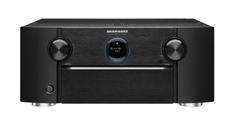 Marantz Details AV7702MK2 Pre-Amp with DTS:X, Dolby Atmos, and HDCP 2.2, Price Set for $2,199[teaser]The company's latest audio component has been announced. [/teaser] Marantz has revealed the successor to its previously released AV7702. The upcoming AV7702MK2 adds support for new tech like DTS:X and HDMI 2.0a. The 11.2 channel Preamp/Processor uses the company's HDAM (Hyper Dynamic Amplifier Module) system for optimum quality with high-res audio. Likewise, the device offers integrated support for Dolby Atmos, along with Wi-Fi and Bluetooth connectivity for music services like SiriusXM, Spotify, Pandora, Deezer and QQ music. In addition, the new model features HDMI 2.0a support with HDCP 2.2 compliancy for 4K Ultra HD video and HDR content from streaming and external products (like Ultra HD Blu-ray). Finally, the AV7702MK2 will also support DTS:X through a future firmware upgrade (a $199 upgrade is also available for Auro-3D support at up to 10.1 channels). The Marantz AV7702MK2 will start shipping in October for $2,199. Source: TWICEPosted Mon Sep 21, 2015 at 01:00 PM PDT by:
 -
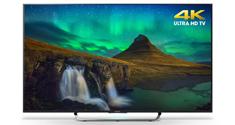 HDD Gear Deal Spotlight: Up to 53% off 4K Ultra HD TVs![teaser]For a limited time, Amazon is offering big discounts on select 4K TVs! [/teaser] As part of the online retailer's ongoing sales and promotions, Amazon is running limited time deals on Ultra HD TVs from Sony, Samsung, LG, and Sharp. Sharp LC-60UD27U 60-Inch Aquos 4K Ultra HD TV - Currently $1,500 (53% off). Samsung UN55JS9000 Curved 55-Inch 4K Ultra HD TV - Currently $2,498 (38% off). LG 65UF9500 65-inch 4K Ultra HD 3D TV - Currently $2,798 (38% off). LG 65UF7700 65-Inch 4K Ultra HD TV - Currently $1,898 (37% off). Sony XBR55X850C 55-Inch 4K Ultra HD 3D TV - Currently $1,498 (32% off). Samsung UN65JU7100 65-Inch 4K Ultra HD 3D TV - Currently $2,298 (23% off). Sony XBR75X940C 75-Inch 4K Ultra HD 3D TV - Currently $6,998 (13% off). As always, these deals will only be active for a limited time while supplies last. Make sure to stay tuned to High-Def Digest for more sales and special promotions!Posted Sat Sep 19, 2015 at 11:45 AM PDT by:
 -
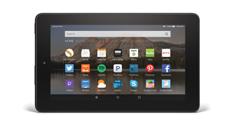 Amazon Introduces New 7-Inch Fire Tablet for Just $50![teaser]The new budget tablet offers advanced features. [/teaser] Amazon has detailed a new addition to its tablet lineup. The Fire tablet ($50) is a low cost tablet with premium performance. "Today, we're taking another step in our mission to deliver premium products at non-premium prices," said Jeff Bezos, Amazon.com Founder and CEO. "The all-new Fire features a quad-core processor, is incredibly durable, and is backed by the Amazon content ecosystem, the new Amazon Underground, and Amazon customer service with Mayday Screen Sharing. Fire sets a new bar for what customers should expect from a low cost tablet." The Fire features a 7-inch IPS display with a resolution of 1024x600 and 171ppi. Under the hood, the device is powered by a Quad-Core 1.3 GHz CPU with 1 GB of RAM. A 2MP rear camera and a VGA front camera are integrated as well. In addition, the tablet includes 8GB of internal storage and offers up to seven hours of battery life. Finally, the tablet uses the new Fire OS 5 "Bellini" and includes Amazon Underground support for "a one-of-a-kind app store experience where over $10,000 in apps, games and even in-app items are actually free—including extra lives, unlocked levels, unlimited add-on packs, and more." Amazon's Fire tablet ($50) is now available for pre-order, and is also available as a buy five, get one free six-pack for $249.95. The device will start shipping on September 30. Source: AmazonPosted Thu Sep 17, 2015 at 02:00 PM PDT by:
 -
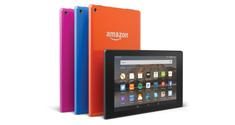 Amazon Readies New Fire HD 8 & Fire HD 10 Tablets, Prices Start at $150[teaser]The latest Fire HD tablets have been detailed. [/teaser] Amazon Fire OS 5 “Bellini,” has revealed the newest additions to its Fire HD tablet lineup. The Fire HD 8 and Fire HD 10 are designed for entertainment in mind with the latest Fire OS 5 and access to over 38 million movies, TV shows, songs, books, magazines, Android apps and games, and more. "Fire HD combines an incredibly thin and light design with powerful performance to deliver the best entertainment experience available on a tablet," said Jeff Bezos, Amazon.com Founder and CEO. "A beautiful widescreen HD display, fast quad-core processor, expandable storage, Fire OS 5, exclusive features, and the Amazon content ecosystem of more than 38 million movies, TV shows, songs, books, apps, and games." The Fire HD 8 features an 8-inch IPS display with a resolution of 1280x800 and 189ppi. Meanwhile, the Fire HD 10 features a 10.1-inch IPS display with a resolution of 1280x800 and 149ppi. Under the hood, both tablets are powered by a MediaTek Quad-Core CPU (2 @ 1.5 GHz + 2 @ 1.2 GHz) and 1 GB of RAM. A 5MP rear camera and a 720p front camera are included as well. In addition, the tablets feature stereo speakers with Dolby audio technology, up to eight hours of battery life, and thin designs that measure just 7.7mm thick. Finally, the new Fire HD models are the first tablets to include Amazon Underground, "a one-of-a-kind app store experience where over $10,000 in apps, games, and even in-app items are actually free -- including extra lives, unlocked levels, unlimited add-on packs, and more." The Fire HD 8 is now available for pre-order with prices starting at $150. The Fire HD 10 is now available for pre-order as well, with prices starting at $230. Both models will begin shipping on September 30. Source: AmazonPosted Thu Sep 17, 2015 at 01:00 PM PDT by: