-
 Samsung Offers Free Gear VR Promotion for Father's Day[teaser]Buyers of select Galaxy smartphones can now claim a free Gear VR for a limited time. [/teaser] Following a similar promotion back in March, Samsung is once again running a limited time deal for buyers of select Galaxy smartphones. From 6/1/16 through 6/19/16 customers who buy a Galaxy S7 edge, Galaxy S7, Galaxy S6 edge+, Galaxy S6 edge, Galaxy S6, or Galaxy Note5 from a participating retailer can also receive a free Gear VR headset and free VR content experience download (estimated $150 total value). Qualified retailers include AT&T, Best Buy, Costco, Metro PCS, Sam's Club, Sprint, Target, T-Mobile, US Cellular, Verizon, Walmart, and more. The Galaxy S7 features a 5.1-inch screen while the S7 Edge features a 5.5-inch dual edge screen. Both displays use Quad HD Super AMOLED panels with a resolution of 2560x1440. Likewise, the smartphones now incorporate Always-On displays for easy zero touch access to notifications. The devices are constructed of 3D glass and metal and use an ergonomic design with IP68 water and dust resistance. Under the hood, the phones are powered by Octa core (2.3GHz Quad + 1.6GHz Quad) or Quad core (2.15GHz Dual + 1.6GHz Dual) processors with 4GB of RAM running Android 6.0. A rear Dual Pixel 12MP camera and a front 5MP camera are integrated as well. In addition, the smartphones include a hybrid SIM card tray that allows users to insert a microSD card for up to 200GB of additional storage. Finally, the S7 uses a 3,000mAh battery and the S7 Edge uses a 3,600mAh battery -- both with fast wired and wireless charging technology. Meanwhile, the Gear VR is a virtual reality headset that weighs just 318g and offers an FOV of 96 degrees. In addition to the Galaxy S7 and S7 Edge, the Gear VR is compatible with the Galaxy Note 5, S6 edge+, S6, and S6 edge smartphones, using each device's super AMOLED display to help create an immersive VR experience. Suggested retail price for the Gear VR is $99. Customers can claim their free Gear VR by clicking here. Source: Samsung via EngadgetPosted Thu Jun 2, 2016 at 04:15 PM PDT by:
 -
 Netflix Reveals Trailer for 'The Fundamentals of Caring,' Streaming Preimere Set for June 24[teaser]A trailer has been released for the film starring Paul Rudd and Selena Gomez. [/teaser] Netflix has unveiled a trailer for its latest movie. 'The Fundamentals of Caring' will be available for streaming exclusively through Netflix on June 24. The film follows the story of Ben, a retired writer who becomes a caregiver after suffering a personal tragedy. After 6 weeks of training, Ben meets his first client, Trevor, a foul-mouthed 18-year-old with muscular dystrophy. One paralyzed emotionally, one paralyzed physically, Ben and Trevor take an impromptu road trip to all the places Trevor has become obsessed with while watching the local news, including their holy grail: the World's Deepest Pit. Along the way, they pick up a sassy runaway and a mother-to-be who help test the pair’s survival skills outside of their calculated existence as they come to understand the importance of hope and true friendship. Check out the trailer below! 'The Fundamentals of Caring' is based on the novel by Jonathan Evison, and the film is written, directed, and produced by Rob Burnett. The cast includes Paul Rudd, Craig Roberts, Selena Gomez, Jennifer Ehle, Megan Ferguson, and Frederick Weller. After SVOD rights were acquired by Netflix, the movie premiered at the 2016 Sundance Film Festival in January as the Closing Night film. In addition to streaming, the movie will also get a theatrical awards qualifying run. Other upcoming Netflix premieres include 'Voltron: Legendary Defender' on June 10, season four of 'Orange is the New Black' on June 17, 'Marco Polo' season two on July 1, the documentary 'Tony Robbins: I Am Not Your Guru' on July 15, season three of 'BoJack Horseman' on July 22, 'The Little Prince' on August 5, 'Project Mc2' season two on August 12, and 'The Crown' on November 4. Likewise, the streaming platform is also prepping a new sci-fi series called 'Travelers' from writer Brad Wight. A current Netflix subscription starts at $10 for HD streaming and $12 for Ultra HD streaming. Source: NetflixPosted Thu Jun 2, 2016 at 01:30 PM PDT by:
 -
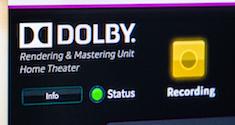 Dolby Atmos Designers: Formosa GroupWalking into Formosa Group's loft-like Santa Monica offices is a bit of a homecoming. I haven't worked here, personally, but a few years ago I formed a friendship with Formosa employee Tim Hoogenakker, who is not only one of the preeminent Dolby Atmos re-recording mixers in Los Angeles, but also one heck of a nice guy. When we first met, Tim was re-recording stereo mixes into 5.1 (the DVD days) before seguing into 7.1 mixes for Blu-rays. More on all of this in a minute.Formosa Group offices feel like the genetic coupling of a Silicon Valley startup and a Hollywood Studio. An ivy-strewn entrance leads to the vaulted ceiling reception area and a kitchen with beer on tap. The beating heart of a busy building. Hallways meander off in all directions to meeting rooms, office spaces, a server farm and, of course, dozens of sound mixing and recording environments. In each of these environments, here in Santa Monica as well as across their four other Los Angeles locations, Formosa Group has in-house professionals ready work with various feature film, television, musical score, video game, and commercial productions. [Teaser]If you've watched ANY movies and TV, or played video games, in the last few years, there's a significant chance you've heard sound mixes and music that were created, edited, recorded, and/or finalized within the Formosa family.[/Teaser]'Star Trek: Beyond', 'The Revenant', 'Mad Max: Fury Road', 'Game of Thrones', 'Ballers', 'Jason Bourne', 'The Secret Life of Pets', 'Uncharted 4', and 'Call of Duty Black Opps III' are just the tip of the iceberg.The reason I'm at Formosa Group today is to demo Dolby Atmos (to be fair, that's usually why I'm anywhere). I write about the technology a lot, but if you haven't been following along at home, here's a quick recap: DOLBY ATMOS EXPLAINED Dolby Atmos redefined home and theatrical surround sound, taking conventional surround mixes, which were built for a specific number of "channels" in hopes of creating 360-degree immersion, and adding individual sound OBJECTS to the mix as well as OVERHEAD SPEAKERS.The result is an enveloping HEMISPHERE of sound.The home entertainment version of Dolby Atmos works by adding height channels to traditional 5.1 or 7.1 configurations. And, because customers don't always want to cut holes, Dolby partnered with speaker companies like Klipsch, KEF, Definitive Technology, Pioneer, and Onkyo to make Atmos-enabled speakers and add-on modules, which bounce height sound elements off your ceiling, tricking your ears into believing you have in-ceiling speakers. Cool, right? As of May, 2016, Dolby Atmos is built into 67 AVR and Home Theater-in-a-Box systems, not to mention 29 different speaker models. With support from every major studio home entertainment division, except Disney, you can find (or will soon be able to find) Dolby Atmos on 43 Blu-ray titles, 17 Ultra HD Blu-rays exclusives (won't release on Blu-ray), and 6 OTT streaming exclusives on VUDU UHD. Looking at global availability, or announcements, that title-count jumps from 66 to 100+.Of those 100+ titles announced, around one third of all of them, have passed through the hands of the folks at Formosa Group. Which brings us back to my buddy Tim Hoogenakker. DOLBY ATMOS AT FORMOSA GROUP Tim works with Dolby Atmos soundtracks every day (almost as much a me!), dividing his work between two main jobs: up-mixing to Dolby Atmos, and near-field re-recording for Dolby Atmos.Near-field re-recording is a process where artisans like Tim get all the elements from a recent theatrical mix (like say the 'The Expendables 3', another Atmos event where you might have read about Tim's work) and tweak it for the home experience. Granted, it's possible to plug-and-play Atmos mixes into the home environment (Dolby's that good), but there's a chance this experience may be affected by the volume differences between large cinema auditoriums and homes.Theatrical mixes need to move a LOT of air. Tim, for his part, adjusts near-field mixes for our smaller home environments, ensuring levels are consistent and pans stay true. Basically, it's Tim's job to retain the original Dolby Atmos theatrical mix as much as possible. It's actually fascinating to watch this process in-person, as the Dolby Atmos mixing suite includes a visual representation of all the sound objects in 3D space (pictured above).Tim's other main job is to up-mix older 5.1 or 7.1 mixes into Dolby Atmos. Tim hates to brag, but he's the mad scientist responsible for the titanically awesome work done for 'Bram Stoker's Dracula', 'The Fifth Element', and 'Game of Thrones' Seasons One, Two, Three, Four, and Five... All of which prove Dolby Atmos is a fantastic option for many different types of content, old and new. DOLBY ATMOS DEMOS Tim's Formosa Group Demo was a special treat. Not only did we revisit Tim's work that you can buy right now, but Formosa received special permission to have Tim do one-off Dolby Atmos up-mixes for three clips just to show off the format's capabilities to press and filmmakers, demonstrating how hemispherical, object-based sound mixing is the best of the best.With clips from 'The Hunger Games: Mockingjay Part 2' (available commercially) and 'The Hunger Games' (unavailable), we were treated to the delicacy of object sound placement -- trackerjackers everywhere! -- as well as Dolby Atmos' ability to world build, evoking a cavernous hangar as well as a cramped aircraft interior. But Dolby Atmos is more than just for action movies, as demonstrated by a clip from Eric Claptain's 2013 'Crossroads' guitar festival. As John Mayer & Keith Urban perform "Don't Let Me Down", Dolby Atmos was less about cinematic immersion than it was placing listeners in a stadium to recreate the CONCERT EXPERIENCE -- music heavily in the front, with crowd atmospherics and reverb overhead and around.Next, we turned to TV, which these days is often more cinematic and character-focused than feature films. For this demo, we heard an exclusive-to-the-event mix from Showtime's 'The Affair', which featured a pool scene and rain. Submerging and popping out of the water, walking through the deluge, we were laser focused into the main character's POV. In that sense, Dolby Atmos is less look at me! and more putting the audience into the mind of a character so we get to feel what he is feeling in ways that were previously impossible. Lastly, we were treated to a dragon-enhanced gladiator battle from Season Five of 'Game of Thrones'. Fortunately, you CAN buy this one, and you should, because this sequence of dragon roars and flapping wings is only one of many demo-worthy moments in this multi-disc set.Damned impressive is the only way to describe it. FIRST LOOK: YAMAHA YSP-5600 DOLBY ATMOS SOUNDBAR We were also able to demo the same clips from 'The Hunger Games', 'Crossroads', and 'Game of Thrones' on the new Yamaha YSP-5600 Dolby Atmos soundbar, which helped us compare and contrast the full mix in a 7.1.4 environment to a soundbar-sub combo that sells itself as 7.1.2... I won't say too much about that just yet because I actually have the YSP-5600 in for review right now, so I'd like to spend a little more time with it before making full conclusions.But I will say two things: YES, it does an admirable job recreating the side surrounds as well as the overhead experience -- which for me is the main reason in adding Dolby Atmos to a home cinema or soundbar -- but NO, it doesn't quite recreate the sensation of rear surrounds. To me, it's more like a 5.1.2 system. More on that another day. FINAL THOUGHTS Thanks again to Formosa Group, and Tim, for inviting me and others to visit your Santa Monica offices. As a home cinema geek, it's beyond cool to meet the people and get a sense of the facilities (at least partly) responsible for the Dolby Atmos mixes we experience in our home theatres.If you're a producer looking for a place to finish your sound mix, or re-record an older title, in Dolby Atmos, I can't recommend Formosa Group enough.And if you're like me a few years ago, where you love surround sound because of how it envelops and pulls you into your favorite stories, then it's time for you to start picking out some new gear. There's an Atmos budget for almost everyone, from sub-$500 home theatre-in-a-box systems to money-no-object premium speakers. And with new gear you can even listen to NON-Atmos mixes in the Atmos-esque Dolby Surround (although Dolby's up-mixer not quite as talented as Tim). For more info, here's a semi-up-to-date GUIDE Steven Cohen put together last year. WHAT'S YOUR FAVORITE ATMOS MIX? I know I have my personal favorites, but if you're already a Dolby Atmos adopter, what's your favorite mix so far and why? Hit us up in the forums or the comments down below. Cheers!Posted Thu Jun 2, 2016 at 01:02 PM PDT by:
 -
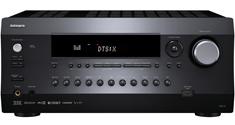 Integra Releases DRX Series AV Receivers with Dolby Atmos & DTS:X[teaser]Four new 7.2 channel receiver models with immersive audio support have been detailed. [/teaser] Integra has announced the latest additions to its AV receiver lineup. The DRX series is geared toward custom installers and includes four 7.2 channel receivers, the DRX-2 ($800), DRX-3 ($1,000), DRX-4 ($1,300), and DRX-5 ($1,700). The DRX-2 is a 7.2 channel receiver with 80W/ch (@8 ohms) and 25 amps of high instantaneous current capability (HICC). Meanwhile, the DRX-3 features 100W/ch (@8 ohms) and 30 amps of HICC. The DRX-4 offers 110W/ch (@ 8 ohms) and HICC at 35 amps. Finally, the DR-5 features 130W/ch (@ 8 ohms) and 40 amps of HICC. All four models feature integrated Dolby Atmos support and future support for DTS:X through an upcoming firmware update. Likewise, support for MQA decoding, Tidal, and Google Cast for audio will also be enabled through future updates. The receivers all use a 384k/32-Bit (AKM 4458) DAC, Vector Linear Shaping Circuitry (VLSC) for noiseless signal processing, and the latest generation of Integra’s AccuEQ featuring AccuReflex Phase Alignment Technology. HDMI 2.0a connections with HDCP 2.2 compliancy, Ultra HD 4:4:4@4K/60 pass through, HDR (high dynamic range) support, and 4K upscaling for 1080p sources are included as well. In addition, the step up DRX-4 and DRX-5 models offer THX Select2 Plus certification for theater grade performance, Zone 2 HDMI and matrix switching, and HDBaseT output. Integra's DRX-2 ($800), DRX-3 ($1,000), DRX-4 ($1,300), and DRX-5 ($1,700) 7.2 channel receivers are now available. Outside of Integra, Yamaha recently announced the RX-A660, RX-A760, RX-A860, RX-A1060,RX-A2060, and RX-A3060 receivers with Dolby Atmos and DTS:X support. Likewise, Denon announced the AVR-X1300W and AVR-X2300W receivers with Dolby Atmos and DTS:X. Source: IntegraPosted Thu Jun 2, 2016 at 12:30 PM PDT by:
 -
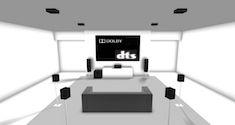 Up-mixed: Dolby Surround v DTS:Neural:XI was mid-review on the outstanding Denon AVR-X6200W 9-Channel AV Receiver when I came upon the topic of AVR sound processing, or up-mixing, and realized it might make a better standalone piece where we could talk about the sound processing outside the confides of a single product review.Before we dive in, I want to make it very clear: Dolby and DTS fandom can run a little hot 'round the collar, but I'm not setting out to crown a winner here. Rather, my intention is to give you a baseline of expectations when comparing the two technologies and how they perform in adding height sounds to traditional surround experiences, be they stereo, 5.1 or 7.1 sources.Also, my apologies for not including AURO 3D, which has also become available as a $150 firmware upgrade on some Denon AVRs, but my living room layout makes properly configuring AURO a bit of a headache, so I'm gonna have to sit that format out until further notice. For the purposes of our discussion today, let's get really simplistic and say there are two types of sound experiences for the home cinema environment: DIRECT & UP-MIXED DIRECT experiences are simply when your AV Receiver DECODES a particular mix, be it stereo or 5.1 or Dolby Atmos. Outside of compression issues and speaker variances, you're hearing exactly what the filmmakers want you to hear.Take me for example. I'm currently rocking a 7.2.4 KEF R Series speaker configuration capable of reproducing DIRECT sound mixes like Dolby Atmos and DTS:X. With these tracks, the Denon AVR-X6200W simply places certain sounds in certain speakers per the decoding algorithms built into Atmos and X.When you, an avid home cinema enthusiast, end up with more speakers than a particular sound mix offers, in terms of channels or objects, you've entered the realm of UP-MIXING. Up-mixing isn't new, of course. Dolby Pro Logic and DTS:Neo were likely part of many home surround experiences long before the prevalence of multi-channel surround sound. In addition to Dolby and DTS technologies, many AV Receivers also come with their own proprietary up-mixing modes. All of these up-mixing processors transformed 2.0-5.1 mixes into 5.1-9.1 experiences. DOLBY SURROUND & DTS:NEURAL:X [teaser]Dolby Surround and DTS:Neural:X are the latest generation up-mixing processors to land in 2015+ AVRs, offering not only surround performance upgrades for stereo and 5.1 mixes, but also height channel atmospherics for stereo, 5.1 and 7.1 mixes.[/teaser] UPDATE 1/30/17: The original version of this article was written at a time when DTS:X and DTS:Neural:X were semi-rare features on AVRs. Further, there was a complication with the way Denon/Marantz implemented Dolby Surround and DTS:Neural:X. Last fall, Denon updated the firmware for early 2016 model AVRs, and they can now apply Dolby Surround to DTS codecs as well as DTS:Neural:X to Dolby codecs. Also, as manufacturers revise and replace model lines, most AVR brands now offer a complete range of Dolby, DTS, and brand-based proprietary decoding and up-mixing capabilities. In other words, what was "semi-confusing" six or seven months ago is now exceptionally simple. SET UP Since surround sound up-mixing has been around for a decade or so, we're going to focus mainly on height speaker performance to investigate how Dolby Surround and DTS:Neural:X create full hemispherical surround immersion. To do this, I took three Blu-rays with terrific multi-channel soundtracks and set them to output via multi-channel PCM, then watched MLB baseball on ESPN with my DVR outputting two-channel PCM, all while toggling back and forth between to get a sense of how these two up-mixers each sounded in full 7.2.4 KEF glory... Then I unplugged all my ear-level speakers.Using ONLY my four KEF Ci200RR-THX in-ceiling speakers, I listened to what Dolby Surround and DTS:Neural:X isolated as "height sound" and tossed upwards.The results were fascinating. DEMOS If you want to play along at home, my first demo is 'Seven', Chapter 35. As the film's insanely tense climax builds, Dolby and DTS both pushed skyward the droning musical score, helicopter rotors, and the echo of a gunshot. Outside those elements, dialog and most sound effects remain ear level (effectively invisible to me).On this track, Dolby and DTS did very similar things, sonically, but measurements demonstrated DTS:Neural:X to be approximately 2-4dB more aggressive with height speaker volume levels, a measurement that was pretty consistent across the remainder of this experiment. An interesting choice, for sure. I know when I calibrate my speaker configuration, I personally to bump up height speakers about 2dB for a greater sense of immersion. In that sense, I definitely see how some listeners will flock to Dolby's more balanced approach, while others might enjoy DTS' more aggressive one.Important to note: in casual listening, when all the ear-level speakers are running too, it's MUCH harder to hear the volume difference between Dolby Surround and DTS:Neural:X, but it might be important to you, so I thought it worth mentioning. Next I moved to 'Road to Perdition', Chapter 4. Right about the 24 minute mark, Tom Hanks' son, standing outside a warehouse in the pouring rain, peeks in at the gangsters who are questioning a man in a chair. The rain is obviously the star of this sequence and both up-mixers crush it. But that changes when the characters start talking. Voices reverberate upwards in both up-mixers, but when you listen closely at the word "liar", the up-mixer react in strikingly different ways.Dolby Surround produces cleaner reverb and the entire word -- liar -- is crisply audible, creating a much more lifelike warehouse echo. DTS:Neural:X, on the other hand, stumbles on individual voices, the world "liar" warbling between front and rear height speakers, revealing an obvious sense of digital processing.This "warbling" was confirmed during MLB Baseball. Both DTS:Neural:X and Dolby Surround placed extra stadium crowd noise in the height speakers (and in the surround when those are plugged in). It's a fantastic effect; all sports should be watched this way. However, in the DTS version, announcer voices kept flitting in and out of the front height channels, almost like a radio signal coming in and out of range. I suspect the cause here is a less-than-elegant stereo PCM downmix my DVR was outputting at the time, but it still reveals a little more about how these two up-mixers do what they do. Unfortunately, I was unable to examine the baseball's native 5.1 mix because DTS:Neural:X is not an option on the X6200W when Dolby Digital is detected. For my last demo, I went with 'Top Gun', Chapter 1. In your height speakers, you will hear elements of Kenny Loggins' Danger Zone as well as various roaring jet effects. Once again the results surprised.DTS:Neural:X was not only louder, but also more accurate in its height channel panning. There's a fantastic moment where a fighter jet takes off towards camera. With your entire sound system engaged, there's a tremendous whoosh as it screams past the right side of your listening environment and out to the rears. DTS:Neural:X mimics this screaming whoosh from front-right-height to rear-right-height speakers in a very dramatic fashion. Dolby Surround, by contrast, offered no such panning for this one effect, but instead ramped up front and rear rightside height channels equally, and in a much less dramatic fashion. This is something I did not notice with the entire system engaged. FINAL THOUGHTS At this point it was time to put my system back together for a review. It's fair to say, for more thorough and conclusive results, we'd probably want to check a hundred hours of content, but after these four demos and dozens of hours enjoying each up-mixer with a full 7.2.4 system engaged, I have a pretty good handle of how they each peform (from an audience perspective). More important than finding a "winner" is that we enthusiasts get to have an utterly smile-inducing surround sound experience whenever we want. In that sense Dolby Surround and DTS:Neural:X perform remarkably well (they also each have MUSIC modes). What can we take away from this and similar experiements? For the most part you could leave your AVR in one format or the other and never notice; that's what I did back in the Pro Logic IIx days. Likewise, if your first generation DTS:X-capable Denon or Marantz AVR is temporarily locking each up-mixer to its own branded codecs, you'll enjoy the results, but you might notice variances in the way your system sounds depending on content. However, assuming you have a choice between the two, Dolby Surround excels at spacial recreation and voice placement. It's more refined and delicate. If you feel as though you need more oomph overhead, DTS:Neural:X is a little louder and I also enjoyed the way it panned aggressive sound effects. Thanks again to Denon for loaning us the fantastic AVR-X6200W. A full review will be up shortly. WHAT ABOUT YOU? Does your AV Receiver offer both Dolby Surround and DTS:Neural:X? Do you have a preference? Why? Is this preference for all content, or some? Jump into the FORUMS (link below) to let us know. Cheers.Posted Wed Jun 1, 2016 at 02:48 PM PDT by:
 -
 Amazon Orders 'Transparent' Season Four, Streaming Premiere Set for 2017[teaser]The award-wining series will return for a fourth season next year. [/teaser] Ahead of its third season premiere, Amazon has already announced the renewal of its original series, 'Transparent.' The fourth season will stream exclusively through Amazon Prime Video in 2017. In addition, the upcoming third season is set to debut this fall on Prime Video in the US, UK, Austria, Germany and Japan. "As the quality of television rises to new heights, Transparent continues to stand out for its depth of character, compassionate storytelling and its infinite creative risk-taking," said Joe Lewis, Head of Half Hour TV at Amazon Studios. "We're grateful that customers have responded so enthusiastically to the Pfefferman family and we’re excited to bring them another chapter of their story." Written, directed and executive produced by multi-award winner Jill Soloway, 'Transparent' is a half hour novelistic series that explores family, identity, sex, and love. The series stars Jeffrey Tambor as Maura. When she reintroduces herself to her family, everyone else’s secrets finally start to come out. This includes her ex-wife Shelly (played by Judith Light), and their children—meandering Ali (played by Gaby Hoffmann), music producer Josh (played by Jay Duplass), and sexually conflicted Sarah (played by Amy Landecker). Each family member spins in a different direction as they figure out who they won’t become. "Amazon's explosive freedom and revolutionary thinking has given birth to this show," said Soloway. "It's so much more than TV to us, it’s our version of the most ambitious streaming art we can conjure. We're having the time of our lives sharing season two for the awards season hoopla, and editing and finishing up season three for a fall release. This news of an order for season four is so so sweet. The Pfeffermans have many more stories to tell and we can’t wait to keep making them." Seasons one and two of 'Transparent' are now available to stream on Amazon Prime Video. A current Amazon Prime subscription costs $99 per year or $11 per month. Likewise, Prime Video is available as a standalone service for $8 per month. Source: AmazonPosted Wed Jun 1, 2016 at 01:00 PM PDT by:
 -
 Coloud Launches New Headphone Lineup, Prices Start at $20[teaser]Three new headphone models have been detailed. [/teaser] Coloud has announced the release of its latest headphones. The new lineup includes two on-ear headphone models, the No. 16 ($40) and the No. 8 ($30), and one earbud model, the No. 4 ($20). "These headphones are built for constant everyday use," says Sofia Hjelm, brand manager at Coloud. "And this is what the film seeks to capture through the lives of young people across the world – always on the go, always connected, and always exploring." Made with the active youth market in mind, the lineup features durable and lightweight designs with 40mm dynamic drivers, 32ohm impedance, and a frequency range of 20Hz - 20kHz. The No. 16 on-ear headphones offer a tough construction with an ultra flexible, cushioned headband. In addition, the headphones include a built-in mic and remote for calls and integrated hinges that allow them to fold up for extra portability. Meanwhile, the No. 8 on-ear headphones feature a 3-D ergonomic design for comfort, along with a tangle free cable with mic and remote, and a ZoundLasso for easy storage. Finally, the No. 4 earbuds offer an angled earbuds design with multi-sized replacement caps for the perfect in-ear fit, direct sound, and powerful bass. Likewise, the No. 4 includes a tangle free cord with clip, and magnetized earbuds that can snap together around a user's neck. The new Coloud No. 16 ($40), No. 8 ($30), and No. 4 ($20) headphones are now available at select stores and online at coloud.com. The collection joins the company's previously released audio products, including The Hoop and The Boom Kids headphones, and The Bang portable speaker. Source: ColoudPosted Wed Jun 1, 2016 at 12:30 PM PDT by:
 -
 Netflix Announces New Original Series 'Edha' From Argentina[teaser]The streaming network's latest series will be shot in Argentina. [/teaser] Netflix has revealed its newest original show. 'Edha' is set to begin production in Buenos Aires. The series is created by film and TV director Daniel Burman ('El Abrazo Partido,' 'El Rey del Once,' 'Supermax'). "Netflix's invitation to create its first original series in Argentina represents one of the largest opportunities in my career. We are creating a project with a strong local identity to reach a global audience. In one platform, more than 81 million people will have the chance to establish an intimate connection with our story," said Daniel Burman, creator, director and showrunner. The show will follow the life of Edha, a young, successful fashion designer and single mother who is at a crossroads that could change her life forever. As she struggles to make a decision that will take her to a whole new level in the fashion world, she meets a handsome immigrant turned model. Their savage passion is mingled with his profound desire for revenge. The one hour 13 episode first season will be written by Daniel Burman, Mario Segade and Oficina Burman's writers room. Shooting is expected to begin early next year. "The fashion and music scene in Buenos Aires is unique, sexy and exciting and Daniel Burman and his team are among Argentina's most gifted creators," said Erik Barmack, vice president of international original series at Netflix. "We can't wait to present Edhaand her dramatic story to Netflix members around rest of the world." An exact release date has not been announced yet, but the show will premiere exclusively on Netflix in 2017. A current Netflix subscription starts at $10 for HD streaming and $12 for Ultra HD streaming. Source: NetflixPosted Tue May 31, 2016 at 05:00 PM PDT by:
 -
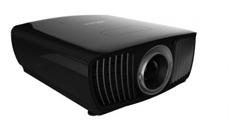 Acer Details V9800 4K Ultra HD Home Cinema Projector[teaser]A new Ultra HD projector has been revealed. [/teaser] Acer has announced the latest addition to its home theater projector lineup. The upcoming V9800 is a native 4K Ultra HD projector. The projector features a UHD resolution of 3840 x 2160 and is powered by a Texas Instruments 4K DMD (digital micromirror device) processor to deliver more than eight million pixels. In addition, the device uses a super-resolution video engine to enable upscaling capabilities for lower resolution content. Likewise, the V9800 follows the Rec 709 color spec and includes an industry-standard sRGB mode. Acer's ColorPurity technology is also integrated, which combines a RGBRGB color wheel with unique lamp control techniques to create a wider color gamut and reduced rainbow effects. Here's a full rundown of key features per the press release: - The Acer V9800 projector with UHD resolution makes images come to life on the big screen by projecting movies in incredibly fine detail - The inclusion of Rec 709 means the V9800 is able to reproduce faithfully the original colors and tones to give viewers an authentic movie-watching experience - Operating at an extremely low noise level of 20 dBA, the V9800 allows movie aficionados to hear even the quietest whispers Full specs and details on pricing and availability have not been announced yet. Beyond the Acer V9800, Sony also offers several 4K Ultra HD projectors. Models include the VPL-VW365ES ($9,999) and the VPL-VW665ES ($14,999). The VPL-VW365ES is a native 4K projector with an SXRD panel, Sony’s proprietary TRILUMINOs engine, Motionflow picture technology, and a built-in RF 3D transmitter. Likewise, the projector includes HDMI connectivity with HDCP 2.2 compliancy and a long-lasting lamp for up to 6,000 hours of performance. In addition, a recent HDR update will allow the projector to display supported high dynamic range content, offering superior contrast, highlights, and shadows. Likewise, the VPL-VW665ES includes integrated HDR support. Sources: Acer, TWICEPosted Tue May 31, 2016 at 11:30 AM PDT by:
 -
 Netflix Unveils Trailer for 'The Little Prince,' Streaming Premiere Set for August 5[teaser]The new film adaptation of Antoine de Saint-Exupéry's book is heading to Netflix in August. [/teaser] Netflix has released a trailer and announced a premiere date for 'The Little Prince.' The film was previously scheduled to make its domestic theatrical debut on March 18 through Paramount, but will now instead stream exclusively through Netflix in the US on August 5. From Mark Osborne comes the first-ever animated feature film adaptation of Antoine de Saint-Exupéry's iconic masterpiece, The Little Prince. At the heart of it all is The Little Girl, who's being prepared by her mother for the very grown-up world in which they live - only to be interrupted by her eccentric, kind-hearted neighbor, The Aviator. The Aviator introduces his new friend to an extraordinary world where anything is possible. A world that he himself was initiated into long ago by The Little Prince. It's here that The Little Girl's magical and emotional journey into her own imagination - and into the universe of The Little Prince - begins. And it's where The Little Girl rediscovers her childhood and learns that ultimately, it's human connections that matter most, and that what's truly essential can only be seen with the heart. The cast includes Jeff Bridges, Rachel McAdams, Paul Rudd, and James Franco. The film initially premiered out of competition at the Cannes Film Festival. It is not clear why Paramount decided to transfer US rights to Netflix, but the movie has already grossed $100 million internationally. Check out Philip Brown's review on the Bonus View! Other upcoming Netflix premieres include 'Voltron: Legendary Defender' on June 10, season four of 'Orange is the New Black' on June 17, 'Marco Polo' season two on July 1, the documentary 'Tony Robbins: I Am Not Your Guru' on July 15, season three of 'BoJack Horseman' on July 22, 'Project Mc2' season two on August 12, and 'The Crown' on November 4. Likewise, the streaming platform is also prepping a new sci-fi series called 'Travelers' from writer Brad Wight. A current Netflix subscription starts at $10 for HD streaming and $12 for Ultra HD streaming. Source: NetflixPosted Fri May 27, 2016 at 01:15 PM PDT by: