-
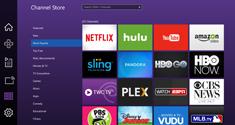 Roku App Heads to Windows 10 Tablets and Laptops[teaser]Windows 10 users can now control their Roku devices through their tablets and laptops. [/teaser] Roku has announced the launch of its Roku App on Windows 10 tablets and laptops. With the Windows 10 Roku app, customers can now control their Roku devices and navigate through 3,000 channels and 300,000 movies and TV episodes directly through a Windows 10 laptop or tablet. The app has been designed specifically to work with the larger screens found on tablets and laptops, and features a new Homepage with quick access to a user's "My Channels" list. Likewise, the app provides standard playback controls and includes Roku search with Cortana integration, allowing users to easily find streaming content through voice control. In addition, "Play on Roku" support is also featured, letting customers view their photos or listen to music stored on their laptops and tablets through their TV. Roku currently offers a variety of media players and streaming sticks, including the flagship Roku 4. The Roku 4 is powered by a Quad-Core processor and features support for 4K Ultra HD playback at up to 60 fps, 4K upscaling of HD content, and audio support for up to Dolby Digital Plus 7.1 surround sound. HDCP 2.2 compliancy is integrated as well, along with 802.11ac MIMO dual-band wireless, 10/100 Base-T Ethernet, an Optical Audio Out, a microSD slot, and a USB port. Likewise, the device includes an enhanced remote with voice search, point anywhere use, a headphone jack, motion-control for gaming, and a speaker for Remote Finder alerts. The Roku 4 is now on sale for a suggested retail price of $130. The Roku Windows 10 app is now available in the US through the Windows App Store. The app will expand to international markets soon. Source: RokuPosted Mon Jun 27, 2016 at 11:30 AM PDT by:
 -
 Amazon Launches Dolby Vision Streaming -- LG 2016 SUPER UHD & OLED TVs First to Offer Dual HDR10 & Dolby Vision Amazon Support[teaser]The streaming platform now offers titles in Dolby Vision. [/teaser] Amazon has announced the arrival of Dolby Vision HDR support for select streaming titles. Currently, LG's SUPER UHD TVs and 2016 OLED TVs are the first to include support for both HDR10 and Dolby Vision Amazon playback. "The Dolby Vision ecosystem is garnering momentum, affirming that the best way to enjoy stunning content with expanded dynamic range and ultra-vivid colors is with Dolby Vision," said Curt Behlmer, SVP, Content Solutions and Industry Relations, Dolby Laboratories. "With the increased number of Dolby Vision enabled TVs now in market, Amazon's commitment to deliver Dolby Vision content to consumers marks another leap forward in providing viewers around the world with access to exceptional movies and original content that come to life on screen." Dolby Vision is an end-to-end video technology that uses high dynamic range and wide color gamuts to create and display content with superior brightness and contrast, resulting in more realistic highlights and shadow detail on supported TVs. The process is currently integrated into several display lines, including LG's SUPER UHD TVs and 2016 OLED TVs -- which also include HDR10 support. The initial lineup of Dolby Vision Amazon titles includes the second season of the Amazon Original Series 'Bosch,' and several Sony Pictures Home Entertainment films like 'The Smurfs 2,' 'After Earth,' 'Men in Black 3,' 'Hancock,' 'Salt,' 'Pineapple Express,' 'Fury,' 'The Amazing Spider-Man 2,' 'Chappie,' and 'Elysium.' "We're thrilled that starting today customers have access to titles, including our binge-worthy Amazon Original Series, in Dolby Vision HDR," stated Jim Freeman, Vice President of Amazon Video. "Today is just the beginning. We will continue to expand our selection, adding more movies and TV series for our customers to watch and enjoy in the premium picture quality of HDR." In addition to Amazon titles in Dolby Vision and HDR10, LG SUPER UHD TVs and 2016 OLED TVs also offer playback support for HDR10 and Dolby Vision Netflix titles, and Dolby Vision HDR content from VUDU. Sources: Dolby, LGPosted Mon Jun 27, 2016 at 10:30 AM PDT by:
 -
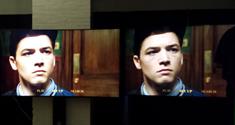 HDD Attends Value Electronics 2016 Ultra HD TV Shootout at CE Week[teaser]All hail the new "King of TV!" [/teaser] How does the idea of being holed up in a dark room for hours while the industry's best TVs are tested against each other with various patterns and clips in order to crown a winner sound? Well, if you answered "awesome," then you just might be a true AV enthusiast... and my new best friend! Earlier this week, High-Def Digest was invited to attend the 2016 Value Electronics TV Shootout held at CE Week in New York City. The annual event, put together by Value Electronics, a leading independent audio video retailer in Westchester County, NY, places the year's top TVs side by side in order to choose the new "King of UHD TV." The four selected Ultra HDTV models were measured and compared against each other based on various display aspects, including black level, perceived contrast, color accuracy, motion resolution, HDR/WCG, and more. The audience then voted on the different picture quality attributes to determine a winner. Joel Silver of the Imaging Science Foundation hosted the event, along with remarks from Value Electronics owner, Robert Zohn, and special guest speakers from LG and various AV websites. Likewise, several more professional TV reviewers, professional ISF certified calibrators, product specialists, industry analysts, and AV enthusiasts were also on hand. Preview sessions were conducted on June 22 and two full sessions were held on June 23. I attended the first preview session on June 22 and the concluding afternoon full session on June 23. Below, I'll offer details on the competing displays used and the tests conducted, along with my own impressions of each TV and my feelings on the winners. Let the shootout begin! The Tests To properly test and compare the competing displays, each TV was calibrated to SDR standards using high-end meters and software. Unfortunately, HDR calibration tools are still being finalized and are not available for each television (the very first HDR calibration software option was actually launched during the show), so each display used its manufacturer defaults for HDR testing. The four competing displays included: - LG 65-inch G6 OLED - Samsung 78-inch KS9800 FALD LCD - Sony 75-inch X940D FALD LCD - VIZIO 65-inch Reference Series FALD LCD All of the Ultra HDTVs were placed side-by-side in alphabetical order from left to right. And as an added point of reference, a Pioneer Kuro plasma HDTV (once hailed as the absolute best TV on the market) was placed all the way to the left of the Ultra HD TVs. Throughout the shootout, various test patterns were used to judge the different voting categories, including: - Black Quality - Perceived Contrast - Color Accuracy - Moving Resolution - Off-Axis Performance - Screen Uniformity - HDR/WCG Likewise, several tests were conducted with the lights on and then with the lights off in order to determine which display had the best Overall Day and Overall Night performance. Each category was rated on a scale of 1-10 for each TV and voters could also list their overall pick for best TV. All tested panels were concurrently fed through a professional HDMI distribution amp from a 4K media server, 4K streaming, USB, and the latest 4K signal generator for test patterns. Ultra HD Blu-ray material was played back through the upcoming Panasonic DMP-UB900. Those familiar with typical display calibration software should have a good idea of what the process was like. Host Joel Silver walked us all through the different test patterns -- including numerous pluges, an 8-bit Ramp, checkerboards, and color bars -- pointing out what we should look for while occasionally bringing out the meters to indicate specific results. Likewise, tests for local dimming (a thin white line scrolled across a black background) and 1080i deinterlacing were employed as well. As the various tests were conducted, Silver encouraged all of the voting participants to get up close and personal with each TV, and so we all took turns walking down the display line to fully evaluate their performance. In addition to SDR, the TVs were all placed in their HDR mode as well for several test patterns, allowing them to really strut their stuff while letting us see how each display handled the enhanced color gamuts, brightness, and contrast. Unfortunately, since the VIZIO Reference Series display doesn't support HDR10, it was not able to show the test patterns in HDR. Finally, after all the charts and bars and pluges were done, we got to see clips from the Ultra HD Blu-ray release of 'Kingsman: The Secret Service' playing side-by-side in HDR. Once again, since the VIZIO isn't capable of HDR10 Ultra HD Blu-ray playback, clips from Netflix's 'Marco Polo' were demoed in Dolby Vision on that display instead. And to cap the shootout off, we were treated to one final clip, this time from a standard Blu-ray concert disc featuring B.B. King, giving us a great comparison of how each TV handles SDR content and 4K upscaling. Impressions Before going into my individual impressions for each display, I do think it's important to note just how impressive and similarly well performing each of the competing models really was. At times, it was actually quite hard to spot specific differences or true weaknesses between the TVs. With that said, the test patterns and demo material did reveal a few key pros and cons, and ultimately there was a fairly clear overall winner. So, without further ado, let's weigh in the contenders and detail my personal results from the fight! LG 65-inch OLED65G6P OLED ($8,000) - LG's flagship Signature Ultra HD TV features an OLED panel to deliver perfect blacks and wide viewing angles. Likewise, the model includes an integrated soundbar speaker system, 3D playback, and a thin Picture-on-Glass design. In addition, the TV has been certified as "Ultra HD Premium" and includes wide color gamut support and full HDR compatibility with support for HDR10 and Dolby Vision (the only display in the shootout to support both formats). Pros - Thanks to its OLED screen, the LG had a rather sizable advantage over its competitors when it came to black levels. As the only TV capable of displaying true black on a pixel by pixel level, the G6 was the clear winner for that deep inky look. To this end, the local dimming test was one of the most telling. Since the G6 doesn't have a backlight or have to rely on local dimming it passed this test perfectly, making the others look like amateurs. Likewise, the TV offered very strong performance for perceived contrast in a dark room, uniformity, off-axis viewing, and HDR. With all of these attributes combined, the LG offered the most balanced performance for actual content in a dark setting. Cons - As impressive as the OLED was, the display was not without a few quirks of its own. Despite all of the competing displays achieving (roughly) the same color and grayscale measurements after calibration, the LG set had a comparatively cool cast to it during some test patterns that the other models did not exhibit. This slightly teal tinge was not really apparent during actual content, however. Likewise, though all of the other colors looked great on the color bar test, yellow did have a faintly green tinge to it. Finally, though uniformity and off-angle viewing were noticeably superior to the LCD models, both still weren't quite up to par with some of the best plasmas (RIP) that I've seen. Samsung 78-inch KS9800 FALD LCD ($10,000) - Samsung's flagship LCD Ultra HD TV features a cadmium free 10-bit, curved-screen Quantum Dot Display with 1,000-nits and full-array local dimming. In addition, the display meets the "Ultra HD Premium" specs and includes support for HDR10 and 96% of the DCI-P3 color gamut. Sadly, however, like all of Samsung's new displays, the TV does not include 3D. Pros - The Samsung really excelled when it came to bright room viewing, and offered the best perceived contrast for daytime watching. To this end, the set also provided the punchiest HDR playback (with the lights on) and rendered very impressive and accurate colors when viewing from the center. Cons - Unfortunately, as jaw-dropping as the Samsung display was with the lights on, the set suffered in a dark room, leaving a bit to be desired when it came to black level performance. The local dimming test also produced the most egregious and wide ranging blooming. Likewise, though decent, off-angle viewing was among the worst of the bunch, and while colors were fantastic from dead on, they tended to wash out quite strongly from the side, especially red which veered more toward orange. Sony 75-inch X940D FALD LCD ($8,000) - Sony's flagship LCD Ultra HD TV features slim full-array direct backlight local dimming. Likewise, the display supports TRILUMINOS tech for wide color gamut playback, 3D, and comes branded with the company's "4K HDR Ultra HD" logo ensuring compliance with the Consumer Technology Association's (CTA) HDR definition with HDR10 support. Pros: The Sony display was among the strongest overall performers, and it managed to almost always stay near the top of the pack for every test. To this end, the Sony produced an even grayscale, accurate colors, great HDR performance, and solid black levels. Likewise, the set offered better local dimming implementation than the Samsung with less blooming during the torture test. Viewing angles and uniformity were also quite good for an LCD, though not on par with the LG. Cons: Like all LCDs, colors and contrast did still suffer from off-axis and the panel had some issues with the Red Blue Color Multiburst test, offering the worst performance of the group. And, as pleasing as the picture was, the LG still bested the TV with the lights off and the Samsung had a slight edge with the lights on (but only from a centered position). VIZIO's 65-inch Reference Series FALD LCD ($6,000) - VIZIO's premium LCD Ultra HD TV features an 800-nit panel and full-array local dimming with 384 active zones. Likewise, the display uses quantum dot technology for wide color gamut support and comes equipped with Dolby Vision High Dynamic Range playback (but not HDR10). In addition, the TV incorporates an integrated 3-channel soundbar with separate rear satellites and a wireless subwoofer. Pros: For an LCD set, the VIZIO really excelled when it came to black levels. With that in mind, the results from the local dimming test were especially eye-opening. While the Sony and Samsung both produced a relatively wide dispersion of blooming, the VIZIO managed to maintain comparatively small light bleeding localized to just around the scrolling line. Colors, grayscale, uniformity, and off-angle viewing were also very solid in most instances. And though HDR10 material could not be played, the Dolby Vision clips of 'Marco Polo' looked absolutely spectacular. Cons: Sadly, since the VIZIO doesn't support HDR10 it made some comparisons for color and perceived contrast rather hard (though SDR performance was about on par with the pack). And while off-angle viewing was decent, a red test pattern quickly became orange from off-axis -- much more so than the other displays. Furthermore, the TV was not capable of displaying above white. Final Thoughts Once the dust settled, LG's 65-inch G6 OLED was crowned the winner for "Best Overall Night" and "Best Overall" performance, making it the new "King of TV" -- a result I fully agree with. Meanwhile, Sony's 75-inch X940D FALD LCD snagged the highest score for "Best Overall Day," and though I do think the Samsung was punchier in a bright room, when factoring in uniformity and off-angle viewing, I also completely agree with this result. With that said, I do think some of the scoring for the VIZIO display is a little low compared to my own impressions, and I can't help but feel like the set's inability to play HDR10 content made it difficult to fully judge its picture quality against the other sets. To view the full results from the Value Electronics 2016 TV Shootout, click here! High-Def Digest would like to extend a big thanks to Robert Zohn and Joel Silver for hosting the event and inviting us to participate! While I would have preferred a little more focus on actual content comparisons from movies and TV shows, the shootout was an enlightening experience and an overall great time for any AV geek like myself. We're looking forward to seeing what next year's shootout has in store, but for now, the LG G6 is definitely the Ultra HD TV to beat. What do you think about the Value Electronics 2016 TV Shootout results? Do you own or plan to buy any of the participating displays? Let us know your thoughts in the forums!Posted Fri Jun 24, 2016 at 01:30 PM PDT by:
 -
 Netflix Sets August 26 Premiere Date for Original Film 'XOXO'[teaser]The upcoming film will make its streaming debut in August. [/teaser] Netflix has announced a release date for its latest original movie. 'XOXO' will premiere exclusively through Netflix on August 26 at 12:01am PST. The film was directed by Christopher Louie and written by Dylan Meyer 'XOXO' is an ensemble comedy about a group of 20-somethings on a crazy adventure to the biggest EDM festival in America, XOXO. The film follows six strangers whose lives collide in one frenetic, dream-chasing, hopelessly romantic night. At the center is Ethan, a young DJ who gets a last minute slot to perform after his tracks go viral online days before the festival. This is a huge opportunity… if he can just make it there in one piece. The cast includes Sarah Hyland ('Modern Family'), Graham Phillips ('The Good Wife'), Brett DelBuono, Chris D’Elia ('Undateable'), Haley Kiyoko ('Jem & The Holograms'), Colin Woodell ('Masters of Sex'), Ryan Hansen ('Party Down,' '2 Broke Girls'), Ian Anthony Dale ('Hawaii Five-0') and Ione Skye ('Say Anything'). Max Leitman, Joe Russell p.g.a., Christopher Louie p.g.a., Pete Tong, and Dan Shafer are all on board as producers. In addition, Pete Tong is also serving as Music Supervisor. Other upcoming Netflix premieres include 'Marco Polo' season two on July 1, the documentary 'Tony Robbins: I Am Not Your Guru' on July 15, season three of 'BoJack Horseman' on July 22, 'The Little Prince' on August 5, 'Project Mc2' season two on August 12, and 'The Crown' on November 4. Likewise, the streaming platform is also prepping a new sci-fi series called 'Travelers' from writer Brad Wright. A current Netflix subscription starts at $10 for HD streaming and $12 for Ultra HD streaming. Source: NetflixPosted Fri Jun 24, 2016 at 01:00 PM PDT by:
 -
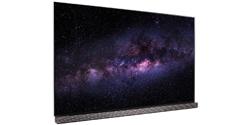 LG Signature OLED 4K Ultra HD TV Wins Value Electronics 2016 TV Shootout[teaser]The new "King of TV" has been named. [/teaser] LG's 65-inch G6 OLED has been crowned the winner of the Value Electronics 2016 TV Shootout at the CE Week tradeshow in New York City. The display was judged in competition against other flagship models from Sony, Samsung, and VIZIO. High-Def Digest was on hand at the event and participated in the vote, so stay tuned for in-depth impressions from the shootout! "This is the third consecutive year LG OLED TV has won the TV Shootout, and it's because LG continues to make the best TV technology in the industry even better," said Tim Alessi, Senior Director, Product Marketing for home entertainment at LG Electronics USA. "Our 2016 OLED TVs not only deliver perfect blacks and infinite contrast, but also offer stunning high dynamic range images as the first to support both Dolby Vision™ HDR and HDR10 with 'Ultra HD Premium' certification by the UHD Alliance. We're thrilled to add the Shootout recognition to the growing list of accolades that LG OLED TV receives from experts, Academy-Award-winning filmmakers, and consumers alike." The Value Electronics TV Shootout placed the industry's best TVs side by side in order to choose the new "King of UHD TV." The selected TV models were measured and compared against each other based on various display aspects, including black level, perceived contrast, color accuracy, motion resolution, and more. The audience then voted on the different picture quality attributes to determine a winner. To earn the top prize, LG's 65-inch G6 OLED competed against Sony's 75-inch X940D FALD LCD, Samsung's 78-inch KS9800 FALD LCD, and VIZIO's 65-inch Reference Series FALD LCD. "LG, for three years in a row, has bested its competitors to take home the crown in an intense side-by-side comparison," said TV Shootout organizer Robert Zohn, owner of Value Electronics, a leading specialty retailer based in Scarsdale, N.Y. "The experts and CE Week attendees have spoken: LG OLED TVs continue to deliver superior picture quality for an unparalleled viewing experience that no other technology can offer." Be sure to check back soon for detailed impressions from the shootout along with more highlights from CE Week 2016! Source: LGPosted Thu Jun 23, 2016 at 04:15 PM PDT by:
 -
 NASA Launches Streaming App for Apple TV[teaser]The NASA app is now available on Apple's set-top box. [/teaser] NASA has announced the release of its media app for the fourth generation Apple TV. The app now joins previously available versions for iPhone, iPad, Android and Fire OS devices. "The NASA app has been a fantastic way for the public to experience the excitement of space exploration from their mobile devices," said David Weaver, NASA associate administrator for Communications. "Now, users with the latest Apple TV can explore and enjoy our remarkable images, videos, mission information, NASA Television and more on the big screen with the whole family." NASA's app is now available free of cost through the App store on fourth generation Apple TVs. Including all platforms, the popular app has been downloaded more than 17 million times, and offers a variety of streaming videos and images related to the agency and space exploration. Here's a full rundown of features per the press release: - Watch live streaming NASA TV, and get a real-time view of the Earth from the International Space Station - View more than 15,000 images individually or as a continuous slideshow - Play on demand NASA videos - Find the next opportunity to view the International Space Station and other NASA satellites pass overhead, based on your location. - Display 2-D and 3-D satellite tracking maps - Discover the latest NASA mission information - Listen to Third Rock internet streaming radio - View the Earth as Art image gallery The fourth-generation Apple TV uses the company's new tvOS designed specifically for the living room with access to a wide array of apps and games. Under the hood, the player is powered by a 64-bit A8 chip with Bluetooth 4.0 and Wi-Fi. Likewise, the set-top box is capable of full HD playback at 60 frames per second. In addition, the device comes with an advanced remote with Bluetooth 4.0, an accelerometer, a gyroscope, a glass touch surface for intuitive navigation, and a Siri voice search feature for comprehensive voice search results. Prices start at $149. Source: ApplePosted Thu Jun 23, 2016 at 03:00 PM PDT by:
 -
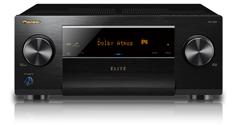 Pioneer Unveils Elite SC-LX501 Dolby Atmos & DTS:X Ready AV Receiver, MSRP Set at $1,000[teaser]The company's newest Elite receiver has been detailed. [/teaser] Pioneer has announced its latest AV receiver. The Elite SC-LX501 7.2 Channel Network AVR ($1,000) is set to start shipping next month. Like all 2016 Elite AV receivers, the model will come with a three-year warranty The Class D3 7.2 channel receiver features 560W multi-channel simultaneous drive (8 ohms, 1 kHz, THD 1.0 %) / 180W/ch (6 ohms, 1 kHz, THD 0.9 %, 1ch Driven FTC) / 120W/ch (8 ohms, 20 Hz-20 kHz, THD 0.08 %, 2ch Driven FTC). Likewise, the device uses a high grade 384 kHz/32 bit DAC (AK4458) produced by AKM. Dolby Atmos support is integrated out of the box and DTS:X support will be added through an upcoming firmware upgrade, offering support for 5.1.2ch/5.2.2 immersive audio configurations with Reflex Optimizer tech for Atmos enabled speakers. Multiroom audio, a new user friendly GUI, MCACC automatic room calibration technology, Wi-Fi, Bluetooth, and AirPlay are all included as well, and the unit is Google Cast and TIDAL ready. In addition, the receiver can pass 4K/60p/4:4:4 24-bit video signal transmissions with HDCP 2.2 technology, HDR, and BT.2020. Pioneer's "Super Resolution" tech is also incorporated, allowing users to upscale HD content to 4K. Finally, high-resolution audio playback is supported as well, including (192 kHz / 24-bit) in FLAC, WAV, AIFF and Apple lossless file formats, and DSD (2.8/5.6/11.2 MHz). Pioneer's Elite SC-LX501 7.2 Channel Network AVR is now on hand at CE Week booth #118 at the Metropolitan Pavilion in New York City. In addition, the company is showcasing several other audio products, including receivers, headphones, and speakers, along with a portable audio player and turntable. Source: PioneerPosted Wed Jun 22, 2016 at 05:30 PM PDT by:
 -
 Netflix Preps 'Alias Grace' Miniseries from Writer Sarah Polley & Director Mary Harron[teaser]The upcoming miniseries will begin production in August. [/teaser] Netflix has announced its latest streaming show. 'Alias Grace' is based on the award-winning novel by Margaret Atwood. The six hour miniseries will be written and produced by Sarah Polley ('Looking for Alaska,' 'Take this Waltz,' 'Away from Her') and directed by Mary Harron ('American Psycho,' 'I Shot Andy Warhol'). "I first read Alias Grace when I was 17 years old and throughout the last 20 years I have read it over and over, trying to get to the bottom of it," said Polley. "Grace Marks, as captured by Margaret Atwood, is the most complex, riveting character I have ever read. I'm thrilled that Mary Harron has taken the project on. I know that her ability to create suspense, tension, and delve into the dark, unknowable aspects of her characters will bring this piece alive. I can't wait for us to bring the many versions of Grace’s gripping story, and the questions they raise, to television audiences." The story of 'Alias Grace' follows Grace Marks, a poor, young Irish immigrant and domestic servant in Upper Canada who, along with stable hand James McDermott, was convicted of the brutal murders of their employer, Thomas Kinnear, and his housekeeper, Nancy Montgomery, in 1843. James was hanged while Grace was sentenced to life imprisonment. Grace became one of the most enigmatic and notorious women of 1840s Canada for her supposed role in the sensational double murder, and was eventually exonerated after 30 years in jail. Her conviction was controversial, and sparked much debate about whether Grace was actually involved in the murder, or merely an unwitting accessory. An exact release date has not been announced yet, but 'Alias Grace' will be broadcast in Canada through CBC and streamed globally through Netflix. A current Netflix subscription starts at $10 for HD streaming and $12 for Ultra HD streaming. Source: NetflixPosted Wed Jun 22, 2016 at 03:30 PM PDT by:
 -
 Epson Reveals New Home Cinema Projectors with 4K Content Support & HDR[teaser]Two more projector models with 4K signal input and HDR have been detailed. [/teaser] Epson has announced the addition of two new projectors to its home theater lineup. The Home Cinema 5040UB ($2,999) and wireless Home Cinema 5040UBe ($3,299) are expected to start shipping in August. "These new projectors are a breakthrough in projection technology, engineered to handle 4K UHD content for under $3,000," said Rodrigo Catalan, senior product manager, Projectors, Epson America. "With HDR support, it's easier than ever for consumers to enjoy the latest content with high dynamic range to create an amazing cinematic experience." The projectors are the first 3LCD models with 4K UHD signal input and high dynamic range (HDR) support. Both projectors offer HDMI 2.0a and HDCP 2.2 compatibility, and both units feature 4K Enhancement Technology to shift each pixel diagonally by 0.5 pixels, effectively doubling their Full HD resolution to 3840 x 2160 (resolution remains 1080p in 3D Mode). Likewise, the projectors provide support for the full sRGB color space, even in the brightest mode, along with the entire DCI color gamut in Digital Cinema Mode. Color brightness and white brightness are each rated for 2,500 lumens, and the projectors offer up to a 1,000,000:1 dynamic contrast ratio. Finally, the Home Cinema 5040UBe also allows users to wirelessly stream 4K, HDR and Full HD 1080p content with WirelessHD. Here's a full rundown of additional features per the press release: - Powered Lens Position Memory: Preset up to 10 positions for zoom, focus and lens shift for both standard and wide cinema ratios - Installation Flexibility: Equipped with a wide range of lens shift capabilities, including a super-wide range of up to ± 96.3 percent on the vertical axis and ±47.1 percent on the horizontal axis - Image Enhancement Features: Super-resolution delivers defined edges and rich image quality, making content come alive; Detail Enhancement refines surface detail for true-to-life images; users can adjust levels of sharpness and detail enhancement - New Optical Engine: Non-inverting optical engine design utilizes an additional high-quality relay lens for Epson's best color field uniformity to date - Frame Interpolation: Generates multiple new frames between the originals, reducing motion blur and providing a smoother, theater-like experience - Auto Iris Technology: Adjusts the aperture to provide the optimum contrast and brightness for each scene - Centered Lens Design: Makes installation easy to plan and carry out with simpler lens-to-screen alignment - Color Brightness Specification: Brilliant image quality requires high color brightness; Epson projectors utilize 3LCD, 3-chip technology and offer up to 3x higher color brightness than leading competitive projectors The new Home Cinema projectors are now on display at Epson's booth #116 at CE Week June 21-23 in New York City. The company also recently announced two new Pro Cinema Projectors with HDR and 4K content support.Posted Wed Jun 22, 2016 at 10:30 AM PDT by:
 -
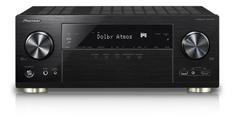 Pioneer Details CE Week 2016 Audio Lineup, Including Receivers, Headphones, Speakers, and More[teaser]The company is showcasing several audio products at the tradeshow this week. [/teaser] Pioneer has revealed its CE Week 2016 lineup. The collection on display includes several receivers, headphones, and speakers, along with a portable audio player and turntable. First up, is Pioneer's recently released VSX-1131 7.2 Channel Receiver ($599, full review coming soon!). The VSX-1131 is a 7.2 channel receiver with 170 W/ch and a high-grade 384kHz/32bit DAC (AK4458) produced by AKM. Likewise, the unit features integrated support for Dolby Atmos and future support for DTS:X via a firmware update coming in the fall. In addition, Pioneer will also have the newly announced SC-LX501 Elite 7.1 Channel Network AV Receiver on hand at the show. Moving on to headphones, the company is highlighting the SE-MASTER1 ($2,500) and the SE-MHR5 ($300). The SE-MHR5 headphones feature a large 40mm driver with a wide range 7Hz-50,000Hz frequency response and memory foam urethane cushions for added comfort. Meanwhile, the SE-MASTER1 headphones are handcrafted, reference-grade headphones with 50 mm driver units with a 25 µm aluminum diaphragm finished with a Parker Ceramic Coating. Pioneer is showcasing several speaker models as well, including the SP-EBS73-LR Dolby Atmos-enabled Elite Concentric Compact Speakers ($749 per pair), the SP-T22A-LR Dolby Atmos-enabled add-on speakers ($200 per pair, full review coming soon!) and the compact SP-BS22-LR Bookshelf Speakers ($130 per pair). In addition, the company is displaying the XDP-100R Digital Audio Player ($669), the SX-N30 Network Stereo Receiver ($600), and the PL-30-K Turntable ($297), rounding out an extensive audio lineup. And as an added bonus, Pioneer will be providing a "sneak-peek" at two previously unannounced products at the show (more details coming soon). Pioneer's audio collection is now on hand at CE Week booth #118 at the Metropolitan Pavilion in New York City. Source: PioneerPosted Tue Jun 21, 2016 at 06:30 PM PDT by: