-
 Guardians of the Galaxy Vol. 2 in Dolby CinemaLast week, I had the extraordinary privilege of attending the Guardians of the Galaxy Vol. 2 world premiere at The Dolby Theatre in Hollywood, CA. As I've written before, Hollywood premieres are a unique because they are a few hours where the magic of Hollywood, rather than the often mundane business aspects, shine brightest. There are screaming fans, stars on the red (or in this case purple) carpet, free concessions, and a cavernous auditorium where filmmakers, performers, and craftsmen also gather for the Academy Awards. On top of all of this generally good buzz, we had a ginormous laser Dolby Vision projection system with its 1,000,000:1 contrast ratio with one of the most expansive Dolby Atmos configurations in the world. So technically, The Dolby Theatre isn't a true Dolby Cinema (or Dolby Cinema at AMC), but for you to experience the movie like I did, you'll need to see out the Dolby Cinema format. THE MOVIE ITSELF With the original Guardians of the Galaxy -- heretofore known has Vol. 1 -- director/co-writer James Gunn and his creative collaborators put a fresh spin on the comic book and space opera genres. Fusing together meta-comedy, a band of rogues, '70s rock music, a neon color palette, and a unique tonal balance, the filmmakers arguably produced one of Marvel's best pictures in its growing canon. This week sees the release of Guardians Vol. 2, which is a rare comedy sequel -- like 22 Jump Street -- that stands shoulder to shoulder with its predecessor. I'll leave our full in-depth review to Phil Brown over in the Bonus View, but, for me, Vol. 2 feels as fresh as the original while simultaneously giving you a heaping serving of the elements that worked so well the first trip 'round the galaxy. Much of this is due to the way Gunn and team give the story time to breathe. In place of the now-standard bloated, overly plotted "turn off your brain" blockbuster, Vol. 2 focus on its characters and thematics, pairing people (and aliens) off to deal with their fears and flaws... all while making the audience laugh themselves silly and -- somehow -- feel a genuine connection to main, CGI, and secondary characters alike. (#BabyGroot4Ever) In other words, if you enjoyed Vol. 1, get your walkman ready because Vol. 2 is gonna be on repeat for a long time. DOLBY VISION You know how there are movies like Gravity or The Jungle Book that define a premium technology? Guardians of the Galaxy Vol. 2 is the single most vibrant and resplendent Dolby Vision title to date. Projected on a large screen with a proprietary, dual-4K laser projection system, Dolby Cinemas boast more brightness, wider color capabilities, and the best contrast ratio of any commercial cinema experience today (IMAX Laser is also all kinds of wonderful). Guardians Vol. 2 is simply glorious in Dolby Vision, offering start-to-finish eye-candy that is colorful and sharp with pure black levels. Not only are there moments where the screen simply vanishes, plunging the auditorium into darkness, but I'm fairly certain there are extended sequences that feel like they've been graded to the wider Rec.2020 color space (I'll make sure to update this when I confirm). If that's true, it's only the fourth production to do so since Pixar's Inside Out. (the sub-conscience scene) & The Good Dinosaur (the bad fruit scene), and the entirety of The LEGO Batman Movie. If I'm wrong, then this is one of the most visually stunning uses of the DCI P3 color space I've ever seen. My comments must sound like hyperbole -- and, make no mistake, the tech geek in me is genuinely excited -- but, sincerely, this movie is a visual stunner. Play close attention to the fauna of Kurt Russel's planet, or to the exotic worlds and planets visited as Rocket space-jumps between them all, or to what's best described as celestial fireworks near the film's final moments. I very much enjoyed the movie along, but couldn't help but sit back at least once a scene to marvel at all the digital artistry on display. Jaw... dropped. Since Disney has yet to support Dolby Vision or HDR10 in the home entertainment landscape, if you get a chance to see Vol. 2 in a Dolby Cinema, take it. It's quite honestly the best HDR/WCG I've ever seen, sitting next to Pacific Rim for pure eye-candy glory. Let's just hope we get to take this one home someday. [4/26/17 RUMOR UPDATE: there are rumors going around saying James Gunn was SO impressed by releasing Vol. 2 in Dolby Vision and Atmos that he's pushing Disney to release this movie on Ultra HD Blu-ray with both technologies. So will Guardians Vol. 2 be The Very First Disney UHD title??? Gosh, I have no idea, but I sure hope so.] DOLBY ATMOS While Vol. 2 doesn't define Dolby Atmos in the same way Mad Mad Fury Road or Gravity did, the latest Marvel adventure uses the object-based surround format in consistently engaging ways, proving filmmakers are thinking about sound mixes as Atmos-first rather than multi-channel affairs that get an Atmos upgrade. Vol. 2 in Dolby Atmos offers an ultra dynamic and immersive aural experience that surround geeks will be drooling over. Dialog is spectacularly clear, even when characters are off screen -- there's a terrific demo moment where Chris Pratt is trying to find tape, his voice bouncing around up and down and behind the audience left ear. LFE levels are also on point, providing heart-pounding heft to gunfire, explosions, and crashing ships. The classic rock tracks have never sounded this clear. And the effects themselves range from whole room immersion down to, as describe above, smaller little Atmos moments. I wasn't in the Dolby Theater's sweet spot, but from where I was sitting, the whole thing was impressively technical but never exhausting. I look forward to revisiting it from my favorite dead-center seating in the next week or two. FINAL THOUGHTS Guardians of the Galaxy Vol. 2 is a fun and fantastic example of how modern blockbusters can be clever and dramatic and laugh-out-loud funny all while delivering compelling character arcs and thrilling action set-pieces. In other words, you need not turn off your brain to enjoy this one, but you'll probably want to check out Vol. 1 to get the most out of Vol. 2. Even if the movie weren't enough to warrant a recommendation all on its own, Vol. 2 features one of the most jaw-droppingly beautiful Dolby Vision HDR wide color gamut gradings I've ever seen, right up there with Pacific Rim, The Jungle Book, and Inside Out (which featured one scene in Rec.2020). In all my years of cinema-going, I've never seen colors as vibrant. The Dolby Atmos mix is also brimming with immersive spectacle and quieter moments making use of pinpoint precision. There will be many fantastic ways to see Guardians of the Galaxy Vol. 2 when it opens May 5th (well, May 4th the night before), but there won't be a truer way to experience it than a Dolby Cinema. I know I'll be going again and I hope to see you there too. To find a Dolby Cinema at AMC location near you, click HERE. Thanks again to everyone at Dolby for such an amazing night.Posted Mon Apr 24, 2017 at 11:32 AM PDT by:
 -
 What is DTS:X?Keeping track of the latest audio and video tech can be daunting. Thankfully, High-Def Digest has you covered. Welcome to our new Home Theater 101 series, where we'll be explaining emerging technologies while also recommending the very best possible A/V gadgets n' gear you can buy at your particular budget level. And when it comes to recent audio advancements, few are as buzzworthy as the new DTS:X and DOLBY ATMOS immersive surround sound formats. But just what exactly is DTS:X and how does it work? And what do A/V enthusiasts mean when they throw around terms like 5.1.4 or 7.1.2? Fret not! [teaser]If you don't know the difference between a channel-based mix and an object-based mix, this guide is here to breakdown the ins and outs of the DTS:X format.[/teaser] So, without further ado, let's dive right into... HOME THEATER 101WHAT IS DTS:X? THE BASICS At its core, DTS:X is an immersive surround sound format that utilizes object-based mixing over traditional channel-based mixing. But what's the difference between the two methods? With channel-based mixing, movie tracks are designed with audio designated directionally to specific speakers through a predetermined number of discrete channels. For instance, in a 5.1 setup, all sound placement is limited to specific left, center, right, left surround, and right surround channels, plus LFE (the ".1"). But with DTS:X object-based mixing, core channels are now joined by individual audio objects (sound effects, dialogue, etc.). These objects are mixed in a virtual environment using the MDA Creator (DTS' license fee-free, open platform for the creation of object-based immersive audio), allowing sound designers to place separate sounds anywhere in the space at any given time -- not just within a select number of fixed locations. For instance, if a mixer is placing a buzzing bee into a movie soundtrack, they can now move that sound anywhere within the environment, not just between specific speakers. Special metadata is then paired with each sound, giving information about its location and movement throughout the room. A DTS:X-enabled A/V receiver will then take that metadata and place the sounds exactly where they are supposed to go as scaled to a user's specific speaker setup. And because mixers now have expanded freedom when it comes to sound placement, this also means that audio can now come from locations previously unavailable in traditional surround sound setups -- most notably from above. With that in mind, the most substantial benefit of DTS:X in the home is the addition of overhead audio. While the DTS:X spec can technically support up to 32 speaker locations, most current consumer products offer support for up to eleven speakers. Unlike Dolby and its Atmos format, DTS has a less rigid take on speaker placement and configurations. Rather than emphasize specific recommended setups, DTS has chosen to highlight their object-based system's extreme scalability, placing layout decisions squarely in the hands of consumers and manufacturers. In other words, there are no official DTS:X speaker arrangements at this time. That said, it is up to manufacturers to implement their own calibration systems and to decide if they want to design their gear to suit pre-established immersive audio setups. And in that regard, typical Dolby Atmos configurations are still your best bet for a DTS:X system with overhead audio. These include 5.1.2, 5.1.4, 7.1.2, 7.1.4, and 9.1.2 setups -- with the first number representing the amount of ear-level surround sound speakers, the middle number designating a subwoofer or two, and the last number signifying the number of height speakers. DTS:X also differentiates from Dolby Atmos with a potentially handy or controversial new feature: the option to completely isolate dialogue as a separate object in a soundtrack. This means that users can adjust the volume of speech independent from the rest of the track, alleviating some customers' issues with pesky hard to hear dialogue. It's up to content creators to decide whether this option can be used, however, and as of press time, I'm not aware of any discs (outside of demos) that actually offer this feature. REQUIREMENTS FOR DTS:X In order to properly play a DTS:X encoded soundtrack, users will need an A/V receiver with DTS:X support connected via HDMI to a Blu-ray player, Ultra HD Blu-ray player, or other media device capable of bitstreaming the DTS:X track to the receiver. Meanwhile, though users can technically listen to a DTS:X track with any speaker layout, in order to actually add overhead sound to a home theater setup, they will need to resort to one of several options. First, customers can simply install traditional in-ceiling speakers or mount speakers on their ceilings. While this is the most effective method, it won't be suitable for everyone's home and setup. While DTS has not partnered with any manufacturers to develop up-firing speakers of their own, DTS:X tracks are compatible with Dolby Atmos-enabled speakers. These speakers feature an additional up-firing driver positioned on top in order to reflect sound off of the ceiling. This simulates the effect of audio coming from above without the hassle of actually mounting a height speaker. In addition, some companies have even released separate Dolby Atmos modules that can be placed on top of current floor-standing and bookshelf speakers, giving them an upward firing driver without having to buy a whole new speaker. Finally, there are a few DTS:X sound bar options on the market now as well, offering a simpler, all-in-one solution for simulated overhead audio. DTS:X CONTENT DTS:X soundtracks are now featured on a growing collection of Blu-ray and Ultra HD Blu-ray discs, including titles from studios like Lionsgate, Paramount, Universal, and Warner Bros., covering major releases like Furious 7, Ex Machina, Jason Bourne, the Harry Potter films, and more. And in addition to native DTS:X content, DTS:X receivers also offer a mode called DTS:Neural:X. This option allows users to up-mix stereo, 5.1, and 7.1 soundtracks to create DTS:X-like effects with simulated overhead audio objects. DTS Headphone:X Complementing the company's DTS:X surround sound format, DTS has also launched Headphone:X for personal listening. DTS Headphone:X simulates the 3D environment of an audio track's original mixing stage, providing an immersive 360-degree surround sound experience with 11.1 support and overhead audio through any pair of headphones or earbuds on any device. Check out the demo below with your headphones on to hear the tech for yourself! DTS Headphone:X audio tracks are available on titles from several content providers, including some Blu-ray and Ultra HD Blu-ray home entertainment releases from Paramount, Lionsgate, and Universal. Likewise, the tech is also built into select headphones and several mobile devices from manufacturers like ASUS and Acer. RECOMMENDED GEAR There's currently a wide variety of DTS:X-enabled gear on the market, including products from Denon, Onkyo, Marantz, Yamaha and more. Here's a rundown of some recommended DTS:X components available now... 5.1.2 Onkyo HT-S7800 All-In-One Home Theater System ($899.99) - Perfect for customers looking for a complete DTS:X package on a budget. Includes 5 surround speakers and 1 subwoofer (with 2 Dolby Atmos-Enabled height speakers), and a 5.1.2 AV receiver with DTS:X and Dolby Atmos support. Full review here! Yamaha RX-A3060 9.2 Channel AVR ($1,999.95) - Geared toward users who want to setup more extensive DTS:X configurations with expandable support for up to 7.1.4 or 9.1.2 speaker layouts. 9.2 channel AV receiver (11.2-ch expandability with 2-ch amplifier) with 150 W (8 ohms, 20Hz-20kHz, 2ch driven, 0.06% THD), MusicCast technology, DTS:X, and Dolby Atmos. Full review here! SVS Prime Elevation Speakers ($399.98 per pair) - Designed to serve as a versatile DTS:X or Dolby Atmos height speaker with flexible placement options. Likewise, the unit can also be used as a center, front, LCR, side surround and/or rear surround speaker when ideal placement in a room isn't possible. Full review here! So, there you have it. Those are the basics of the DTS:X immersive audio format. If you still have any questions about DTS:X, please let us know in the forums! MORE HOME THEATER 101 ARTICLES -What is Dolby Atmos?-Best Sound Bars-Up-mixed: Dolby Surround vs DTS:Neural:XPosted Mon Apr 24, 2017 at 10:55 AM PDT by:
 -
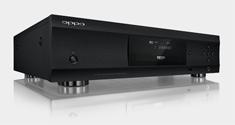 Oppo Launches UDP-205 4K Ultra HD Blu-ray Disc Player for $1,299[teaser]The company's latest UHD Blu-ray player is now shipping.[/teaser] Oppo has announced the release of its UDP-205 4K Ultra HD Blu-ray Disc Player. The new premium audiophile model now joins the previously released UDP-203 Ultra HD Blu-ray player. The device is capable of playback for 4K Ultra HD Blu-ray, Blu-ray, Blu-ray 3D, DVD-Video, DVD-Audio, SACD, Audio CD, and many other formats, including HEVC, H.264, VP9 4K, and Hi10P video codecs. In addition, the UPD-205 includes High Dynamic Range (HDR10) and Wide Color gamut support and upgradeable Dolby Vision support via a future firmware update later this year. Dual HDMI outputs with HDMI 2.0 for UHD and HDMI 1.4 for audio, and an HDMI 2.0 input port for external streaming devices or set-top boxes are integrated as well. Meanwhile, the UDP-205 also provides an upgrade in audio performance over the UPD-203 model, offering dedicated stereo output, 7.1-channel analog audio output, improved clock precision of the HDMI audio output, and increased power for the built-in headphone amplifier. Analog output stages are handled by two ES9038PRO DACs, and the unit's audio circuitry is powered by a massive toroidal power supply. In addition, the player also features a USB DAC along with a coaxial and an optical digital audio input for other sources. The asynchronous USB DAC input supports sample rates up to 768 kHz PCM and DSD 512. Two USB 3.0 ports are included on the back and another USB port is included on the front. Finally, the player comes complete with Built-in 802.11ac Wi-Fi or Gigabit Ethernet for access to media files stored on computers and home servers. The Oppo UDP-205 4K Ultra HD Blu-ray Disc Player is now available directly at oppodigital.com for $1,299. Availability will expand to specialty retailers and custom installers soon as well. Beyond Oppo, other 2017 Ultra HD Blu-ray players include the recently released Samsung M9500 ($398) and Sony UBP-X800 ($300), and the upcoming LG UP970, Philips BDP7502, and Panasonic DMP-UB400, UB310 and UB300. Of the Ultra HD Blu-ray players announced so far, only the LG UP970, Philips BDP7502, and Oppo models have confirmed plans for Dolby Vision support. Source: OppoPosted Mon Apr 24, 2017 at 08:50 AM PDT by:
 -
 One Day Only: Get an NES Classic Edition at Best Buy Before They're GoneExciting news, Gamers. As our recent Bonus View Poll showed, many of you were disappointed to miss out on the now-discontinued Nintendo NES Classic Edition, which jerk-bags are currently scalping on eBay and the Amazon Market Place for close to $300. [Teaser]If you missed out and are anything like me -- you'll only pay MSRP or lower for a novelty gaming system -- Best Buy may be your last chanced to pick up an NES Classic Edition before they're gone foooooreeeeverrrrrr!*[/Teaser] According to an email sent out early Sunday morning, Best Buy is going to have the NES Classic Edition Monday, April 24th Available in-stores only and with limited quantities. Does that mean one or two per store, or twenty? I have no idea. But if you're looking to buy the NES Classic Edition without breaking the bank, it might be worth checking out your local store. For more information or to find a Best Buy near you, click HERE. ```````*Yeah, I don't really believe they'll be gone forever, but there are no specific plans to bring them back yet, so take that for what you will.Posted Sun Apr 23, 2017 at 12:31 PM PDT by:
 -
 What is Dolby Atmos?Keeping track of the latest audio and video tech can be daunting. Thankfully, High-Def Digest has you covered. Welcome to our new Home Theater 101 series, where we'll be explaining emerging technologies while also recommending the very best possible A/V gadgets n' gear you can buy at your particular budget level. When it comes to recent audio advancements, few are as buzzworthy as the new DOLBY ATMOS and DTS:X immersive surround sound formats. But just what exactly is Dolby Atmos and how does it work? And what do A/V enthusiasts mean when they throw around words like object-based mixing and up-firing drivers? Well, fret not! [teaser]If you don't know the difference between a 5.1 setup and a 7.1.4 configuration, this guide is here to breakdown the ins and outs of the Dolby Atmos format.[/teaser] So, without further ado, let's dive right into HOME THEATER 101WHAT IS DOLBY ATMOS? THE BASICS At its core, Dolby Atmos is an immersive surround sound format which utilizes object-based mixing over traditional channel-based mixing. But what's the difference between the two methods? With channel-based mixing, movie tracks are designed with audio designated directionally to specific speakers through a predetermined number of discrete channels. For instance, in a 5.1 setup, all sound placement is limited to specific left, center, right, left surround, right surround, and LFE speaker channels (the .1). But with Dolby Atmos object-based mixing, core channels are now joined by individual audio objects (sound effects, dialogue, etc.). These objects are mixed in a virtual environment, allowing sound designers to place up to 128 separate sounds anywhere in the space at any given time -- not just within a select number of fixed locations. For instance, if a mixer is placing a buzzing bee into a movie soundtrack, they can now move that sound anywhere within the environment, not just between specific speakers. This allows the mix to organically scale up or down to a wide variety of speaker setups and locations, mapping the sounds to the appropriate speaker based on where the effects should be in the movie's virtual environment. Dolby Atmos first debuted in theaters with the 2012 release of Disney•Pixar's Brave. Since then, over 2,000 Dolby Atmos enabled theater screens have been installed and over 500 theatrical movie titles have been mixed in the format. Likewise, Dolby Atmos is now an integral part of the Dolby Cinema process, which also incorporates the Dolby Vision laser projection system to deliver high dynamic range images with expanded colors and enhanced contrast. Currently, there are more than 50 Dolby Cinema locations around the globe (HERE is a list of Dolby Cinema at AMC locations here in the US). IN THE HOME THEATER Building off of Atmos' initial cinema success, Dolby launched Atmos support for the home theater in September of 2014. Much like the format's cinema implementation, Dolby Atmos for the home theater uses the same object-based mixing tech, allowing sound designers to position individual effects and groupings of sounds anywhere they desire -- free from conventional channel restrictions. Special metadata is then paired with each sound, giving information about its location and movement throughout the room. The Dolby Atmos renderer built into an Atmos A/V receiver then takes that metadata and places the sounds exactly where they are supposed to go as scaled to a user's specific speaker setup. And because mixers now have expanded freedom when it comes to sound placement, this also means that audio can come from locations previously unavailable in traditional home theater surround sound setups -- most notably from above. With that in mind, the most substantial benefit of Dolby Atmos in the home is through the addition of overhead audio. While the Atmos home theater spec can technically support up to a 24.1.10 speaker configuration, most current consumer products offer support for 5.1.2, 5.1.4, 7.1.2, 7.1.4, and 9.1.2 configurations -- with the first number representing the amount of ear-level surround sound speakers used, the middle number designating a subwoofer or two, and the last number signifying the amount of height speakers used. REQUIREMENTS FOR DOLBY ATMOS In order to properly play a Dolby Atmos enabled soundtrack, users will need an A/V receiver with Dolby Atmos support connected via HDMI to a Blu-ray player, Ultra HD Blu-ray player, or other media device capable of bitstreaming the Dolby Atmos track to the receiver. Meanwhile, in order to actually add overhead sound to a home theater setup, users have several options. First, customers can simply install traditional in-ceiling speakers or mount speakers on their ceilings. While this is the most effective method, it won't be suitable for everyone's home and setup. Thankfully, Dolby has teamed up with several manufacturers to release Dolby Atmos-enabled speakers. These speakers feature an additional up-firing driver positioned on top in order to reflect sound off of the ceiling. This simulates the effect of audio coming from above without the hassle of actually mounting a height speaker. In addition, some companies have even released separate Dolby Atmos modules that can be placed on top of current floor-standing and bookshelf speakers, giving them an upward firing driver without having to buy a whole new speaker. Finally, there are several Dolby Atmos sound bar options on the market now as well, offering a simpler, all-in-one solution for simulated overhead audio. For a detailed rundown of recommended Dolby Atmos speaker configurations and installations, check out Dolby's Official Atmos Speaker Setup Guide. DOLBY ATMOS CONTENT Dolby Atmos soundtracks are now featured on a growing collection of Blu-ray and Ultra HD Blu-ray discs, along with streaming services like VUDU, and even video games. In total, there are now over 150 home titles available with Atmos, including movies and TV shows from studios like Lionsgate, Warner Bros., HBO, Universal, and Paramount, covering major releases like La La Land, Game of Thrones, Mad Max: Fury Road, Gravity, and more. And in addition to native Dolby Atmos content, Atmos receivers also offer a mode called Dolby Surround. This option allows users to up-mix standard stereo, 5.1 and 7.1 soundtracks to create Atmos-like effects with simulated overhead audio objects. RECOMMENDED GEAR There's currently a wide variety of Dolby Atmos-enabled gear on the market, including over 75 A/V components and over 45 sound bar and speaker models. Here's a rundown of some recommended Atmos products available now. 5.1.2 Onkyo HT-S7800 All-In-One Home Theater System ($899.99) - Perfect for customers looking for a complete Atmos package on a budget. Includes 5 surround speakers and 1 subwoofer (with 2 Dolby Atmos-Enabled height speakers), and a 5.1.2 AV receiver with Dolby Atmos and DTS:X support. Full review here! Yamaha RX-A3060 9.2 Channel AVR ($1,999.95) - Geared toward users who want to setup more extensive Atmos configurations with expandable support for up to 7.1.4 or 9.1.2 speaker layouts. 9.2 channel AV receiver (11.2-ch expandability with 2-ch amplifier) with 150 W (8 ohms, 20Hz-20kHz, 2ch driven, 0.06% THD), MusicCast technology, Dolby Atmos, and DTS:X. Full review here! SVS Prime Elevation Speakers ($399.98 per pair) - Designed to serve as a versatile Dolby Atmos or DTS:X height speaker with flexible placement options. Likewise, the unit can also be used as a center, front, LCR, side surround and/or rear surround speaker when ideal placement in a room isn't possible. Full review here! So, there you have it. Those are the basics of the Dolby Atmos immersive audio format. If you still have any other questions about Atmos, please let us know in the forums! MORE HOME THEATER 101 ARTICLES -What is DTS:X?-Best Sound Bars-Up-mixed: Dolby Surround vs DTS:Neural:XPosted Fri Apr 21, 2017 at 02:29 PM PDT by:
 -
 HD Gear News Roundup: LG 5K Monitor, Amazon Echo Tech, and More[teaser]This week's roundup includes an award-winning monitor, voice processing tech, expanded Sling TV support, and more![/teaser] From product announcements and streaming app updates to general industry news and recent gear trends, keeping up with the latest tech news can be a daunting task. With that in mind, we're here to offer you a weekly roundup of some of the latest gear and consumer electronics news that you may have missed. This week, we're covering a new honor awarded to LG's 5K monitor, the expansion of Amazon's far-field microphone array and voice processing technology, the arrival of Sling TV on LG displays, and new options for Screen Innovations (SI) Zero-G projector screens. So, without further ado, here's a rundown of the latest gear and tech news for the week of April 16, 2017: LG 5K Monitor Receives 2017 TIPA Award for Best Photo Monitor LG has announced that its 27-inch UltraFine 5K display (27MD5KA) has earned the 2017 "Best Photo Monitor" award from the Technical Image Press Association (TIPA). The display has the distinction of being the only monitor to receive a 2017 TIPA Award and is geared toward Mac video editors and other creative professionals. The LG UltraFine 27-inch 5K monitor features an IPS panel with a resolution of 5120 x 2880 and 218 pixels per inch (ppi). In addition, the display offers wide viewing angles and support for 99 percent of the P3 color space. Likewise, the monitor has been optimized for the new MacBook Pro with Thunderbolt 3 running macOS 10.12 and later, allowing the display to receive and transfer 5K video, audio, and data from the new MacBook Pro while simultaneously charging it through a single Thunderbolt 3 cable. Three downstream USB Type-C ports, a front-facing camera, a microphone, and high fidelity speakers are integrated as well. To receive a TIPA Award, products must undergo rigorous testing by TIPA's technical committee and magazine editors. The organization consists of 27 leading photo and imaging magazines from the United States, Canada, and 13 other countries on five continents. LG's UltraFine 27-inch 5K monitor is now available for a suggested retail price of $1,299.95. Source: LG Amazon Alexa Microphone and Voice Processing Tech Expands to Third-Party Device Makers Amazon has announced availability for its new Amazon Alexa 7-Mic Far-Field Development Kit for third party manufacturers. With the development kit, commercial hardware makers will now be able to build Alexa support into their products. "Since the introduction of Amazon Echo and Echo Dot, device makers have been asking us to provide the technology and tools to enable a far-field Alexa experience for their products," said Priya Abani, Director, Amazon Alexa. "With this new reference solution, developers can design products with the same unique 7-mic circular array, beamforming technology, and voice processing software that have made Amazon Echo so popular with customers. It’s never been easier for device makers to integrate Alexa and offer their customers world-class voice experiences." The Amazon Alexa 7-Mic Far-Field Development Kit will be available to commercial device manufacturers through an invite-only program. OEMs can request an invite at developer.amazon.com/alexa-voice-service/dev-kits/amazon-7-mic. The development kit will be supported by leading chipset providers. Here's a rundown of features per Amazon: - The same 7-microphone array found in Amazon Echo- Amazon’s proprietary software for wake word recognition, beamforming, noise reduction, and echo cancellation- Reference client software for local device control and communication with the Alexa Voice Service Meanwhile, Amazon's own lineup of Alexa-enabled products includes the Amazon Echo ($180), the Amazon Echo Dot ($50), and the Amazon Tap ($130). Source: Amazon Sling TV Adds Support for LG Smart TVs Sling TV has announced the arrival of its streaming app on LG's lineup of smart TVs. The launch now makes Sling TV the first live over-the-top (OTT) service to arrive on LG webOS 3.0 and 3.5 Smart TVs. "Even with today's 'always on-the-go' lifestyle, we know watching TV from the living room is still as important to our customers as ever," said Ben Weinberger, chief product officer of Sling TV. "Offering Sling TV on LG's award-winning, top-of-the-line smart TVs gives viewers more control over how they watch Sling TV so they can view their favorite programs without the need for additional devices or unnecessary input-switching." Current Sling TV subscribers can now access their accounts on most 2016 LG Smart TVs with webOS 3.0. Likewise, new customers can also download the app and sign up for the service through their supported displays. To add Sling TV to a compatible LG Smart TV, users can locate Sling TV in their LG launcher bar or press "Home," select "Go to LG Content Store," and then search for "Sling." And beyond 2016 LG display models, Sling TV support will also be added to LG's 2017 webOS 3.5 enabled-models in the coming months. Sling TV offers a variety of live streaming and on-demand programming packages. The base Sling TV Orange plan currently costs $20 per month and features more than 30 channels, including Disney/ESPN stations. Meanwhile, the base Sling TV Blue plan costs $25 per month and features more than 40 channels, including FOX and NBC stations. Finally, customers can also opt to combine both plans for $40 per month. "Joining forces with Sling TV to include their robust slate of live TV and on-demand content further expands the offerings in our webOS 3.5 and 3.0 Smart TVs," said Matt Durgin, Director of Content Innovation, LG Electronics USA. "The addition of Sling TV to our strong line-up of premium content apps on our webOS platform gives consumers an incredibly wide range of content options to enjoy on our critically-acclaimed LG Smart TVs led by LG OLED and LG Super UHD." Source: Sling TV Screen Innovations Introduces New Options for Zero-G "Rollable TV" Projector Screen Screen Innovations has announced new cable color options for its Zero-G projector screen. Unlike most projector screens, The Zero-G (described by the company as a "Rollable Television") does not feature a black mask in between the top of the viewing surface and the case. Instead, the screen is suspended by Ultra-High Molecular Weight Polyethylene (UHMwPE) cable. "We ran Zero-G through an extensive destructive testing cycle, and standard aircraft cable continued to have metal failure due to friction created in each individual stainless strand. We moved to UHMwPE cable because it is 80% lighter than a comparably-strong steel cable, far more flexible, longer-lasting, and it maintains its strength and flexibility in all conditions," said Ryan Paul, Director of Design at SI. "On top of that, it has the lowest carbon footprint across its service life of any comparable alternative. At SI, it takes the best to make the best." And now SI is offering the cables in new color options, including Sky Blue, Forest Green, and Warm Gray (beige). These new colors join the existing White, Gray, and Black versions already available, giving integrators more options to match the existing color (wall, window, or art-deco piece) behind a customer's screen. "When you match our Zero-G cord colors to the wall, or window behind the screen, it looks as though they completely disappear. It’s incredible." Says Skyler Meek, Director of Marketing for SI. "SI has always been about the complete experience, encompassing both the image on the screen and how the screen is presented in the room. This is another link in the chain that separates SI from all the noise." The new Zero-G cord colors are now available for no extra cost. Source: Screen InnovationsPosted Thu Apr 20, 2017 at 05:15 PM PDT by:
 -
 Samsung & Amazon Video Announce HDR10+ Support with Optimized High Dynamic Range Performance[teaser]The enhanced HDR format is coming to Amazon streaming content through Samsung displays.[/teaser] Samsung and Amazon have announced plans to introduce support for HDR10+. Serving as an updated version of the HDR10 open standard for high dynamic range content, HDR10+ uses dynamic metadata to create improved contrast and colors. "As an advanced HDR10 technology, HDR10+ offers an unparalleled HDR viewing experience — vivid picture, better contrast and accurate colors — that brings HDR video to life," said Kyoungwon Lim, Vice President of Visual Display Division at Samsung Electronics. "We're excited to work with world-class industry partners, including Amazon Video, to bring more amazing HDR content directly to our 2017 UHD TVs, including our QLED TV lineup." Currently, the standard HDR10 format uses static metadata that does not change during playback. This can lead to inconsistent HDR quality in certain scenes, especially if a movie has an overall bright color palette mixed in with a few dimly lit sequences. In these instances, dim scenes tend to look significantly darker than they were originally intended by the director. But with HDR10+, the format is now introducing dynamic metadata which will allow a compatible display to adjust brightness levels on a scene-by-scene or even frame-by-frame basis, producing images that are closer to the director's intent. Likewise, this upgrade makes the new HDR10+ open standard more in line with the competing Dolby Vision HDR process, which already incorporates dynamic metadata along with higher specs for max color and brightness performance over HDR10. "Together with Samsung, we are excited to offer customers an enhanced viewing experience on a broad range of devices," said Greg Hart, Vice President of Amazon Video, worldwide. "At Amazon, we are constantly innovating on behalf of customers and are thrilled to be the first streaming service provider to work with Samsung to make HDR10+ available on Prime Video globally later this year." HDR10+ is now supported by all of Samsung's 2017 UHD TVs, including its premium QLED TV lineup. In addition, Samsung's 2016 Ultra HDTVs are also set to receive HDR10+ support through a firmware update during the second half of 2017. Meanwhile, Amazon is poised to launch support for HDR10+ content through Prime Video later this year. The 2017 Samsung QLED TV lineup with HDR10+ support includes: 55" Class Q7F QLED 4K TV - $2,500 65" Class Q7F QLED 4K TV - $3,500 75" Class Q7F QLED 4K TV - $6,000 55" Class Q8C Curved QLED 4K TV - $3,500 65" Class Q8C Curved QLED 4K TV - $4,500 Source: SamsungPosted Thu Apr 20, 2017 at 09:00 AM PDT by:
 -
.jpg) HDD Gear Deals: Up to 55% off 1080p & 4K Ultra HD Projectors[teaser]Amazon is offering big discounts on select HD & Ultra HD projectors! [/teaser] As part of the online retailer's ongoing deals, Amazon is running a sale on 1080p and 4K projectors from Sony, BenQ, Epson, and Optoma. Sony VPLVW365ES Native 4K HDR 3D SXRD Projector - Currently $7,998 (20% off). BenQ MH741 1080p DLP 3D Projector - Currently $849 (55% off). Optoma HD142X 1080p 3D DLP Projector - Currently $550 (45% off). Epson HC 3020 Home Cinema 3D 1080p Projector (Certified Refurbished) - Currently $699 (30% off). BenQ W1070 DLP 1080p 3D Projector - Currently $520 (26% off). Epson Home Cinema 3000 1080p 3D 3LCD Projector - Currently $900 (25% off). BenQ TH670 DLP HD 1080p 3D Projector TH670 - Currently $499 (15% off). Epson Home Cinema 2040 1080p 3D Projector - Currently $689 (14% off). These deals will only be active for a limited time while supplies last. Make sure to stay tuned to High-Def Digest for more sales and special promotions!Posted Mon Apr 17, 2017 at 03:15 PM PDT by:
HDD Gear Deals: Up to 55% off 1080p & 4K Ultra HD Projectors[teaser]Amazon is offering big discounts on select HD & Ultra HD projectors! [/teaser] As part of the online retailer's ongoing deals, Amazon is running a sale on 1080p and 4K projectors from Sony, BenQ, Epson, and Optoma. Sony VPLVW365ES Native 4K HDR 3D SXRD Projector - Currently $7,998 (20% off). BenQ MH741 1080p DLP 3D Projector - Currently $849 (55% off). Optoma HD142X 1080p 3D DLP Projector - Currently $550 (45% off). Epson HC 3020 Home Cinema 3D 1080p Projector (Certified Refurbished) - Currently $699 (30% off). BenQ W1070 DLP 1080p 3D Projector - Currently $520 (26% off). Epson Home Cinema 3000 1080p 3D 3LCD Projector - Currently $900 (25% off). BenQ TH670 DLP HD 1080p 3D Projector TH670 - Currently $499 (15% off). Epson Home Cinema 2040 1080p 3D Projector - Currently $689 (14% off). These deals will only be active for a limited time while supplies last. Make sure to stay tuned to High-Def Digest for more sales and special promotions!Posted Mon Apr 17, 2017 at 03:15 PM PDT by: -
 Streaming News Roundup: 'Master of None,' 'Sense8,' Catastrophe,' and More[teaser]Trailers, release dates, and season pick-ups have been revealed for various streaming titles.[/teaser] Netflix and Amazon have released new trailers for several of their upcoming shows and movies, including Master of None, Sense8, Dear White People, Cable Girls, Tramps, and Catastrophe. Likewise, Amazon has announced a two season pickup for its new series The Marvelous Mrs. Maisel from Amy Sherman-Palladino, and Hulu has announced a season three pickup for its original series The Path starring Aaron Paul and Michelle Monaghan. Check out a full rundown of the latest streaming news and trailers below: Master of None: Season Two (Netflix, May 12) - After traveling abroad, Dev (Aziz Ansari) returns to New York to take on challenges in his personal and family life, a new career opportunity, and a complex, developing relationship with someone very meaningful to him. Sense8: Season Two (Netflix, May 5) - From renowned creative geniuses Lana Wachowski, Grant Hill, and J. Michael Straczynski, Sense8 is centered around eight characters, from different parts of the world, who experience a violent vision, and soon find themselves mentally connected by the experience. They become connected, able to see and talk to each other as though they were in the same place, with access to each other's deepest secrets. Not only must the eight adapt to this new ability and to each other, they must figure out why their lives are now in jeopardy. In Season 2, dark forces continue to track the cluster of eight connected characters. The sensates will learn more about BPO, the secret organization searching for their cluster and others like them, and will work to protect themselves from this organization that is out to hunt and kill them. Dear White People (Netflix, April 28) - Set among a diverse group of students of color as they navigate a predominantly white Ivy League college where racial tensions are often swept under the rug, Dear White People is a send up of "post-racial" America that also weaves a universal story about forging one's own unique path. Cable Girls (Netflix, April 21) - Being a woman in 1928 was no easy task. Four women in search of independence are brought together through their work as telephone operators. Netflix's first original Spanish series is here and features Blanca Suárez, Ana Fernández, Nadia de Santiago, Maggie Civantos, Ana Polvorosa, Yon González, and Martiño Rivas, among others. Tramps (Netflix, April 21) - In Tramps, Danny is an aspiring chef whose hustler brother asks him to complete a job for him. It all seems simple enough: meet a driver with a briefcase, proceed to a rendez-vous spot and exchange one briefcase for another. But Danny swaps the wrong bag, sending him and the driver Ellie on a two-day odyssey through the boroughs and suburbs of New York City. The film was produced by Joshua Astrachan, David Kaplan, Andrea Roa and Jamund Washington. Director of Photography is Ashley Connor. Production Design by Erin Magill. Costume design is by Brooke Bennett. Original Music by Nicholas Britell. From Animal Kingdom and Beachside and Rooks Nest Entertainment. Catastrophe: Season Three (Amazon, April 28) - Rob Delaney and Sharon Horgan write and star in this R-rated comedy about a one-week stand between a Boston ad exec and a London schoolteacher that leads to an accidental pregnancy. When Rob moves to the UK to help figure things out, cultures clash and hormones flare as these two realize they don't know the first thing about each other. In the third season of this Emmy-nominated comedy, we pick up where we left off with Rob and Sharon on shaky ground following Rob’s discovery of a suspicious receipt. Their relationship will be put to the ultimate test as they tackle marriage, career and family. Will their love and laughter be enough to keep them together or are they too different to make it work? Meanwhile, Amazon has greenlit The Marvelous Mrs. Maisel for a two season order. The show is written and directed by Amy Sherman-Palladino (Gilmore Girls) and executive produced by Daniel Palladino (Family Guy) and Sherman-Palladino. It's 1958 Manhattan and Miriam "Midge" Maisel (Rachel Brosnahan, House of Cards) has everything she’s ever wanted—the perfect husband, two kids, and an elegant Upper West Side apartment perfect for hosting Yom Kippur dinner. But her perfect life suddenly takes an unexpected turn and Midge discovers a previously unknown talent—one that changes her life forever. She charts a course that takes her from her comfortable life on Riverside Drive, through the basket houses and nightclubs of Greenwich Village as she storms the world of stand-up comedy…a course that will ultimately lead her to a spot on Johnny Carson’s couch. The Marvelous Mrs. Maisel also stars Michael Zegen (Boardwalk Empire) as Midge’s husband Joel Maisel, Alex Borstein (Family Guy) as Susie Myerson, Golden Globe winner and three-time Emmy Winner Tony Shalhoub (Monk) as Midge’s father Abe Weinberg, and Marin Hinkle (Two and a Half Men) as Midge’s mother Rose Weinberg. Finally, per a story from Deadline, Hulu has announced a 13-episode season three renewal for The Path. The show follows a family at the center of a controversial cult movement as they struggle with relationships, faith and power. Each episode takes an in-depth look at the gravitational pull of belief and what it means to choose between the life we live and the life we want. The series blends elements of mystery-thriller, romance and the supernatural. - A current Netflix subscription starts at $10 for HD streaming and $12 for Ultra HD streaming. - A current Amazon Prime subscription costs $99 per year or $11 per month. Likewise, Prime Instant Video is available as a standalone service for $9 per month. - A current Hulu subscription starts at $8 per month with commercials. In addition, ad-free playback is available for $12 per month. Sources, Netflix (Youtube), Amazon (YouTube), Amazon, DeadlinePosted Fri Apr 14, 2017 at 02:15 PM PDT by:
 -
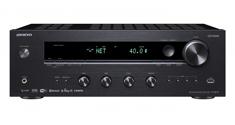 HD Gear News Roundup: Week of April 9th, 2017 – Onkyo Receiver, BenQ Monitor, and More[teaser]This week's roundup includes a new stereo receiver, a QHD monitor, and more![/teaser] From product announcements and streaming app updates to general industry news and recent gear trends, keeping up with the latest tech news can be a daunting task. With that in mind, we're here to offer you a weekly roundup of some of the latest gear and consumer electronics news that you may have missed. This week, we're covering a new Network Stereo Receiver from Onkyo, a BenQ 27-inch QHD monitor, the terminated LeEco/VIZIO merger deal, Showtime mobile downloads, and Sling TV Cloud DVR support. So, without further ado, here's a rundown of the latest gear and tech news for the week of April 9, 2017: Onkyo TX-8270 Network Stereo Receiver Onkyo has announced its latest home audio product, the TX-8270 Network Stereo Receiver. The 2-Channel stereo receiver is set for release later this month for a suggested retail price of $599. The TX-8270 is rated for 2 x 100 W (8 Ohms, 20 Hz–20 kHz, 0.08%, 2 channels driven, FTC), and features Dynamic Audio Amplification, non-phase-shift circuitry, and an AKM 384 kHz/32-bit DAC enhanced with VLSC (Vector Linear Shaping Circuitry) filtering technology. In addition, processing is optimized for Hi-Res Audio playback, including DSD 5.6 MHz/2.8 MHz and PCM formats up to 192 kHz/24-bit in popular file formats. Likewise, the device also includes Dolby Vision signal pass-through; four 4K High Dynamic Range HDMI inputs and one output with Audio Return Channel (ARC); a rear USB input (5V/500mA) with support for HDMI dongles that require power; a front-panel USB input for music playback from USB flash-memory devices; a moving magnet (MM) phono input; three line inputs; three digital audio inputs (two optical and one coaxial); speaker A/B outputs; and line outputs for Zone 2 (with separate DAC for distributed Net/USB/analog audio). The TX-8270 also incorporates robust wireless connectivity, including 5 GHz/2.4 GHz Wi-Fi supporting AirPlay and Spotify, along with Chromecast built-in and DTS Play-Fi capabilities through a firmware upgrade. FireConnect multiroom tech powered by Blackfire and Bluetooth wireless connectivity with Music Optimizer enhancement for compressed audio are integrated as well. Finally, the receiver features access to streaming services like TIDAL, Pandora, Deezer, and TuneIn directly through the device and Onkyo Controller app. Source: Onkyo BenQ PD2710QC QHD Designer Monitor BenQ has announced the release of its new PD2710QC monitor. The 27-inch display is geared toward creative professionals and is the world's first design monitor to include a USB-C(TM) Docking Station for MacBook and PC users. "The PD2710QC is engineered to meet the highest standards for color performance, ensuring the very best creation process for designers -- from start to finish," said J.Y. Hu, vice president, business line management at BenQ America Corp. "But we didn't stop there: The USB-C Docking Station is a one-of-a-kind innovation that makes the monitor a powerhouse of productivity to ease the creative process." The PD2710QC features a 27-inch QHD (2560x1440) IPS LED display with 100% sRGB and Rec.709 color accuracy, a wide viewing angle, and Technicolor Color-Certification. In addition, the monitor uses an anti-glare screen and includes BenQ's Eye-Care technology with Zeroflicker and Low Blue Light. Darkroom, CAD/CAM and Animation display modes are offered as well. The panel is rated for 350 brightness and a 1000:1 native contrast ratio. DisplayPort, Mini DisplayPort, and HDMI inputs are included as well. Finally, the monitor incorporates a USB-C Docking Station allowing users to charge devices (up to 61 watts of power to a laptop or mobile device), transfer data, transmit audio and video, and connect to the internet, all through a single cable. The BenQ PD2710QC is available for a suggested retail price of $599. Source: BenQ via TWICE LeEco and VIZIO Abandon Merger Agreement As previously reported, LeEco was set to acquire VIZIO in a $2 billion deal, but the merger agreement has now been called off due to "regulatory headwinds." Despite the setback, the companies have formed a new partnership. As part of the new agreement, LeEco and VIZIO will explore opportunities to incorporate the Le app and content within the VIZIO connected CE platform, and engage in a collaboration to use LeEco's EUI (Ecosystem User Interface) platform, along with the brand's exclusive content and distribution channels, to bring VIZIO products to the Chinese market. Outside of their partnership with VIZIO, LeEco recently announced a special Tax Refund Sales Event for its Ultra HD TV lineup. Meanwhile, VIZIO recently revealed its new 2017 D-Series HD and Ultra HD display collection. Sources: LeEco, VIZIO Showtime Adds Download Feature for Mobile Streaming App Showtime has announced the addition of a download feature for its Showtime standalone and Showtime Anytime mobile apps. With the new option, mobile users can now download content for offline viewing on smartphones and tablets at no extra cost to their subscriptions. "Making our wide variety of SHOWTIME content available to consumers at any time and any place has been a top priority for us," said Tom Christie, Chief Operating Officer, Showtime Networks Inc. "With our new download feature, subscribers now have the freedom to watch their favorite Showtime programming anywhere they are, regardless of the available Internet or wireless connection. We have truly become a network you can watch on the go." To start downloading Showtime content, mobile users simply need to update their Showtime or Showtime Anytime apps. Once updated, subscribers can download a program by tapping the "Download" button on the title's detail page. Smartphone users can select either standard definition (540p) or high definition (720p) quality, while tablet users also have the option for Full HD downloads (1080p). The Showtime downloads feature is now available on iOS devices (iPhone and iPad), Android phones and tablets, and Amazon Fire Tablets. The Showtime standalone streaming service is currently available through Apple, Roku, Amazon, Google and Samsung. Likewise, customers can also subscribe to Showtime through Hulu, YouTube TV, Sling TV, Sony PlayStation Vue, and Amazon Channels. Meanwhile, access to the Showtime Anytime app is available as part of a traditional authenticated Showtime cable or satellite subscription. Source: Showtime Sling TV Expands Cloud DVR Feature to Roku and Android Devices Sling TV has announced an expansion of its Cloud DVR First Look Program to Roku streaming players, Roku TVs, Android TVs, and Android mobile devices. Previously, the program was only available through Amazon devices. With the Sling TV Cloud DVR First Look Program, subscribers with a supported device can purchase 50 hours of storage for $5 per month with any Sling TV package. And in addition to Roku and Android, Cloud DVR support is set to arrive on Apple TV in the coming weeks. Here's a rundown of Sling TV Cloud DVR features: - Watch anytime, anywhere: Record your favorites and watch whenever you want across all Amazon Fire TVs and Fire tablets, Android mobile devices, Android TVs, Roku streaming players and Roku TVs. AirTV is not currently compatible with Cloud DVR. - Conflict-free recording: Record multiple programs simultaneously, and forget about recording conflicts. - Keep recordings as long as you want: With Sling TV, your recordings won’t expire as long as you remain a Sling subscriber with Cloud DVR. - Auto-managed recordings: Sling TV will make room for new recordings by deleting your old recordings as you reach capacity, starting with your oldest ‘watched’ recording, so you can binge on your new favorite show. Source: Sling TVPosted Thu Apr 13, 2017 at 03:00 PM PDT by: