-
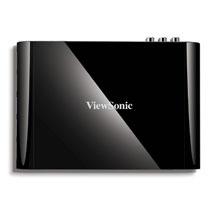 ViewSonic Announces New HD Media Player[teaser]The ViewSonic VMP70 is the latest media player from Viewsonic, a company better known for their monitors and projectors. Based on the specs though, they might have been better off sticking to what they know. [/teaser] The VMP70 is a high definition media player, and much like other similar media players, it plays a variety of media formats at a 1080p resolution. The VMP70 shows photos, plays a pretty strong range of video and audio formats, and even offers a pair of USB ports. What it doesn’t do is network. Coming soon at an estimated $99, ViewSonic’s media player may be a case of too little, too late. It supports a wide range of video formats, including Divx, Xvid, WMV, H.264, MKV, and Real Media. Viewsonic’s official website states “and more”, though there’s no clue as to what those additional formats are. From an audio standpoint, the VMP70 is decent. It’ll play back WMA and MP3 files, as well as OGG and ACC. Disappointingly, there’s no mention of FLAC. ViewSonic’s VMP70 offers HDMI and component output, as well as composite and SPDIF outs. A pair of USB ports sits on the back for attachment of various storage devices. Unfortunately for ViewSonic, the lack of network capability makes this a much less desirable device. Source: ViewSonicPosted Wed Nov 4, 2009 at 10:00 AM PST by:
 -
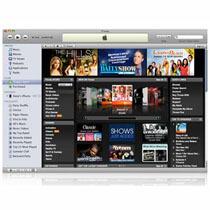 Apple Could Offer Unlimited TV at $30 a Month[teaser]Apple has been out talking to TV networks in recent weeks, trying to round up support for a subscription service which would deliver unlimited TV for only $30 monthly. [/teaser] Apple and TV are two words that just don’t seem to go together well. With the knowledge well in hand that their previous television integration just didn’t work out, Apple is looking to start something new. The service Apple is proposing is just what consumers have been wanting for a long time. The plan, according to Apple, is to offer television content through iTunes at a subscription rate, rather than making people pay per download. The structure would seem to be similar to that of the current Netflix arrangement, but the service would require iTunes. This would present a bit of a problem from the convenience side, especially if the files aren’t easily streamable or require a set-top to play on a TV. The other question from a consumer standpoint is that of fidelity. $30 for unlimited 1080p downloads/streams of television show would be well worth it if enough broadcasters were on board. $30 for unlimited standard definition content on the other hand doesn’t look quite as nice. Networks are hesitant to jump on board either way, as they see that this could be seen as a move away from cable services, which would certainly upset relationships with companies like Comcast. Additionally, the shows would be presented on iTunes in an ad free format, meaning a complete zero in advertising revenue. Source: All Things DigitalPosted Wed Nov 4, 2009 at 07:00 AM PST by:
 -
 Ultra-High Definition Television Coming as Early as 2017[teaser]In-Stat, a market research company that specializes in electronics, reports that Ultra-High Definition television could start broadcasting in as few as eight years. [/teaser] Back when television debuted for the home, many saw it as the death of the cinema, so theaters responded with a variety of tactics including new wide screen formats. Now with 16:9 high definition displays in homes, theater owners are stepping up their game by adding 2K and 4K projectors. In-Stat says television will be striking back with Ultra-High Definition programming in the next decade. Featuring a resolution of up to sixteen times that of current high def standards, and twenty two channel audio, UHD is the next step forward for television. UHD, like HD, will come in two different resolutions. The lower resolution of 4K – 3840 x 2160 – is four times that of 1080p, while 8K – 7680 x 4320 – offers sixteen times the resolution. While the projected date for five percent household penetration in Europe is as far off as 2021, In-Stat expects Ultra-High Definition television to be offered much sooner than that. They suggest that after consumers experience digital cinema for themselves, they’ll want it in their home and “ultimately, broadcasters will start offering UHD content to an addressable market of UHDTVs, between 2017 and 2022.” Source: Broadcast NewsroomPosted Tue Nov 3, 2009 at 03:00 PM PST by:
 -
 HD Advisor on 34th StreetEditor's Note: Each Friday, High-Def Digest's own HD Advisor will answer a new round of questions from our readers. If you have home theater questions you need answered, send an email to [email protected]. If you've already sent a question and don't see it answered yet, please be patient as we work our way through them. To browse through previously answered questions, visit the main HD Advisor page. Answers by Joshua Zyber THX Optimizer Revisited Q: I saw your post about THX Optimizer and wanted to clear up a popular misconception. The THX Optimizer settings are not unique to the discs that they are featured on. Optimizer patterns are set to SMPTE industry standards for color, black levels, etc. So, you don't have to tweak your TV when using Optimizer on different discs. Where did this rumor start? The Optimizer patterns are often used in the DVD/BD mastering process, traveling with the content throughout the production chain allowing mastering/QC houses to evaluate levels of specific discs/content. Somehow this message was lost in translation, prompting some reviewers to claim Optimizer is for calibrating specific discs, which it is not. Let me know if this helps. We are happy to answer any questions. THX Ltd. A: This may be THX Ltd.'s current approach to the THX Optimizer tool. If so, please accept my apologies for the confusion. However, respectfully, I can tell you exactly where this "rumor" started. It started from THX's own documentation. I see that the Optimizer page on the currently active official THX web site has been revamped. Using the power of the internet, we can take a look at the same site as it appeared in December of 2006. Doing so, I find that the Optimizer page states the following (emphasis mine): "THX Optimizer consists of a series of tests that make it easier to fine-tune the audio and video performance of a home theater system. But best of all is that the signals used are equal to the final reference levels set during the mastering of each individual release. Thus, the system's performance can be tailored to each specific movie. As a result, the movie is seen as the director intended. " This reads pretty clearly to me that Optimizer was intended to be used on each and every movie, and may result in different calibration requirements each time. If THX has changed its approach to how the Optimizer tool works, or if that original language was simply worded misleadingly, I am glad to hear that this is no longer the case. As I mentioned in my previous article, I feel that calibration should be a set-it-and-forget-it activity performed only periodically as needed by the aging characteristics of the user's hardware. A good calibration disc will allow a viewer to find the display's best settings for all discs he or she watches. Dolby TrueHD on 'Akira' Revisited Q: In reference to your article about the Dolby TrueHD soundtrack on the 'Akira' Blu-ray, I have a similar question. I have a first generation Playstation 3, which is connected via HDMI 1.3 to a Pioneer Elite VSX-03TXH. The PS3 displays the output signal as being 192 kHz, but the receiver reports the signal at 96 kHz. The PS3 is set to output all signals (from 192 kHz down), and the receiver is able to handle Dolby TrueHD at 192 kHz, according to the manufacturer's specifications. Is it possible that this just an inaccurate display from the receiver since the track is decoded by the PS3? Also, is there a difference in quality between the two kHz rates? Any insight and advice is greatly appreciated. A: My best guess is this is either just a display error on your receiver, or some sort of HDMI handshaking problem between the two units that's causing your receiver to downsample the audio to 96 kHz. I can understand that being frustrating. However, in reality, the difference between 96 kHz and 192 kHz is largely beyond the ability of human ears to detect. Most movie soundtracks are mastered at 48 kHz, and research has shown that higher sampling rates have diminishing returns, with 96 kHz being pretty much the upper limit. The 'Akira' disc authors chose to use the maximum sampling rate available on the format primarily just so that they could say they did for marketing purposes. So, when you watch the movie, if you don't hear anything wrong with the soundtrack, I wouldn't worry about it. Dolby TrueHD vs. DTS-HD Master Audio Revisited Q: There has been a debate concerning the issue of what's the better lossless audio codec: Dolby TrueHD or DTS-HD Master Audio. Most professionals claim that one isn't better than the other, that both are lossless soundtracks exactly how the source material was made. Despite this claim, the debate has raged with comparisons of discs that have these soundtracks. However, the problem is that it's like comparing apples to oranges. (Like comparing 'Iron Man' to 'The Incredible Hulk'.) The problem with this is that soundtracks aren't created equally, so you can't really discern any quality difference dealing with the codec, only the soundtrack. However, we do have a movie that includes both codecs on the disc: 'Top Gun'. I gave it a listen and without a doubt, I liked the DTS track over the TrueHD track. The DTS track was more immersive and fuller than the TrueHD track. Now how is this possible if both codecs are supposed to be accurate representations of the source? A: As I've mentioned in previous columns, both Dolby TrueHD and DTS-HD Master Audio are lossless compression codecs. They work similarly to a ZIP file. What you put into them is compressed, and then reconstructed exactly the same when you open the file. Because both are lossless, assuming all other factors are equal, there will be no quality differences regardless of which of these codecs you use. Lossless is lossless. No loss. 'Top Gun' is an interesting, but ultimately misleading, test case. Although the disc contains two copies of the movie's soundtrack, one in Dolby TrueHD format and one in DTS-HD Master Audio format, it turns out that the two tracks are actually not the same sound mix. If you take a look at the disc case (or your receiver's input display), you'll notice that the Dolby TrueHD option is a 5.1 audio track, while the DTS-HD Master Audio option is 6.1 track. Before releasing the movie on Blu-ray, Paramount had the movie's soundtrack remixed into 6.1 configuration for the DTS track. But they left the Dolby TrueHD track as the older 5.1 mix. As a result, this is really another apples-to-oranges comparison. In addition to the extra rear channel, there's no telling what other aspects of the sound mix the studio may have tweaked. Because the two codecs were each fed different sources, naturally the end results are also different. I have a couple more points to make here. First, please note that the Dolby and DTS companies have different philosophies in regard to the usage of Dialog Normalization. Dolby uses it, and DTS usually doesn't. Dialnorm sets the overall volume level of the soundtrack. (However, contrary to popular misconception, it does not in any way change the sound mix or boost the dialogue channel in relation to the rest of the audio.) Because of this, DTS tracks are almost always set louder than Dolby tracks by default. That doesn't make them "better" than Dolby tracks, just louder. I advise you to volume match the two with a sound level meter before attempting any comparisons. Even a small difference in volume can radically affect a listener's perception of audio quality. Secondly, it's worth noting that 'Top Gun' played in theaters originally with either Dolby Stereo (in the 35mm release prints) or 70mm 6-track audio. In 1986, there was no such thing as the 5.1 configuration as we now know it. Both the 5.1 and 6.1 soundtracks on the Blu-ray are remixes that have been tweaked and enhanced for home video. While both TrueHD And DTS-HD Master Audio will both losslessly represent the studio masters fed into them, those masters are not exactly 100% faithful to the way the movie was originally mixed back in 1986. As such, even if you do find differences between the 5.1 and 6.1 options, those differences do not necessarily mean that one is "better" than the other, just different. "Better" is subjective in this case. Homework Assignment: You Be the Advisor Some questions that the HD Advisor receives are best answered with a consensus of opinions from our readers. If you can help to answer the following question, please post your response in our forum thread linked at the end of this article. Your advice and opinions matter too! Blu-ray Players with Netflix Streaming Q: Simple question: What's the best Blu-ray player that also offers Netflix streaming? Check back soon for another round of answers. Keep those questions coming. Joshua Zyber's opinions are his own and do not necessarily reflect those of this site, its owners or employees.Posted Fri Oct 30, 2009 at 12:00 PM PDT by:
 -
 Broadcom Launches Ultra Capable DVR Chip[teaser]The new Broadcom DVR chip features compatibility for tru2way, MoCA, DNLA and more. [/teaser] Broadcom chips are used in a great number of DVRs on the market, and while DVRs may vary, the chip is at the very core of the functionality. If the chip can’t do it, the DVR can’t do it. So, while it may be a bit preemptive, we’re still fairly excited about Broadcom’s new BCM7125 SoC. The BCM7125 offers the expected, such as tru2way and cablecard compatibility, but it also offers a lot of things that we’ve been hoping to see in a set-top box for a long time such as Flash and a 3D graphics engine. Two things in particular, though, stand out among the rest. While DLNA support isn’t new in a set-top box, it certainly isn’t common enough. Having network media streaming functionality built into a DVR could save not only a little money, but some extra hassle as well. The second thing to get us all excited is of course, MoCA, which allows media to be streamed through coaxial connections at breakneck speeds. Just because the BCM7125 can handle all of this doesn’t mean that every DVR using the chip will take advantage of it, but we can sure hope. Source: BroadcomPosted Fri Oct 30, 2009 at 11:00 AM PDT by:
 -
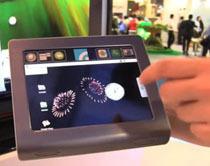 MTube Shows New Steaming Capable Mobile Internet Device[teaser]The new MID from MTube was shown recently at a Tapei tradeshow, and it carries a few surprises including streaming video to and from a TV. [/teaser] Though better known for their netbooks, MTube certainly stands a chance to make an impression with their new Mobile Internet Device. With a 7.6 inch capacitive touch screen and an ARM processor, MTube’s new MID doesn’t look all that much different from others on the market. Thanks to its Android architecture, the MTube MID is an impressively capable machine. It can browse the internet, view pictures and run various applications. Most importantly, it can stream video both to and from your television. While no information is available on the streaming method – WiFi seems most likely – users only have to select a video, drag it to the appropriate spot on the screen and it pops up on your connected HDTV. Similarly, video can be streamed directly from a TV to the MID’s 800x480 OLED screen. The MID is still in development and as such, price and availability are unknown at the moment. We’ll certainly be looking forward to more on this from MTube. Source: Netbook NewsPosted Fri Oct 30, 2009 at 09:00 AM PDT by:
 -
 ATSC Agrees – No More Loud Commercials[teaser]The ATSC will meet next week to approve recommended practices for commercial loudness. [/teaser] We’ve all had that experience. It’s one of those lazy Sundays where you’re too lethargic to get up and pop in a Blu-ray so you end up watching Shawshank Redemption on TNT for the hundredth time. The movie finds its way to the parole hearing of Brooks, the elderly librarian who is finally set free. Unable to cope with life on the outside he tragically decides to take his own life. The last few tender notes of the score fade, and bam, you’re hit with a ShamWow! commercial twice as loud as the movie. Thankfully, the ATSC is going to be providing guidance for television stations with a set of practices dubbed A/85. The effort was created with not only the intent of helping the consumer, but to avoid dealing with the federal regulation which is currently in the works. The ATSC standard will not only ensure that commercials stay at the same volume as programming, but that each channel has the same volume. The ATSC will require that all programming be submitted at -24dB, plus or minus 2dB. NBC Universal states that they have already adapted to the new standards, and other broadcasters will be following in their footsteps shortly. Source: Sports Video GroupPosted Fri Oct 30, 2009 at 09:00 AM PDT by:
 -
 'District 9' Blu-ray Includes 'God of War III' Demo for the PS3[teaser]As previously reported, Neill Blomkamp's 'District 9' will hit stores on December 29, and the release will reportedly include a playable demo for 'God of War III.'[/teaser] According to the folks at Game Informer, the Blu-ray will include the PlayStation 3 demo on the disc. After completing the demo players will have access to a behind-the-scenes featurette on the making of the game. Suggested list price for the Blu-ray is $39.95. You can find the latest specs for 'District 9' linked from our Blu-ray Release Schedule, where it is indexed under December 29.Posted Fri Oct 30, 2009 at 08:00 AM PDT by:
 -
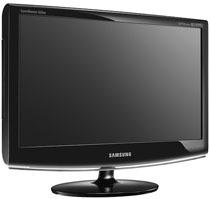 Samsung Releases Two New HDTV Ready LCD Monitors[teaser]Samsung announced the availability of a pair of HDTV ready monitors today, a 19” model with a 720p resolution and a 23” model with a full HD 1080p resolution. [/teaser] With up to two HDMI inputs on the back and an integrated digital tuner, these monitors can be used for more than just the computer. Samsung’s Young Bae, director of Information Technology, says that these monitors were made especially for those with space restrictions. “With more users viewing HD broadcast, watching Blu-ray movies and playing video games on their monitors, the [19”] 933HD+ and [23”] 2333HD are space savers for those looking for a multi-purpose monitor to place in a tight space, like a studio apartment or dorm room.” Both monitors come with built-in stereo speakers and component inputs. The 2333HD sports a pair of HDMI inputs while the 933HD+ only has one. They each feature a dynamic contrast ratio of 10,000:1 and a 5 millisecond response time. Available now online and in stores, the 933HD+ can be had for $249 and the 23” 2333HD for $329. Source: Press ReleasePosted Thu Oct 29, 2009 at 01:00 PM PDT by:
 -
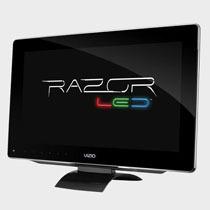 Vizio Brings LED Backlighting to Small Screen LCDs[teaser]A pair of backlit LCDs in 19” and 23” models will be hitting stores soon. [/teaser] Let’s face it, small screen HDTVs don’t get a lot of love (unless they’re OLED anyway). They’re equipped with the absolute cheapest options available and marketed towards a user base that is looking for the cheapest possible way to get a small HD set. Anyone that wants a smaller set with big set features is out of luck. Vizio is banking on there being a lot of these people with the announcement of the VM190XVT and VM230XVT LED backlit LCD televisions. Both of Vizio’s backlit LCDs feature a thin design, with a profile of less than an inch. Both offer contrast ratios of 20,000:1 and SRS TruVolume and TruSurround HD as well as a response time of only 5ms. The primary difference between the two televisions is that, although it may be too small to be noticed anyway, the 19” VM190XVT is 720p, while its 23” bigger brother offers a full 1080p picture. Interestingly, according to Vizio’s site, the 19” model also lacks a remote. The VM190XVT will run $349 when it is released, and the VM230XVT will sell for $399. No release date has yet been announced. Source: VizioPosted Thu Oct 29, 2009 at 11:00 AM PDT by: