-
 Netflix HD Streaming Available for Some Subscribers on PC and Mac[teaser]It's a bit limited at the moment, but a full release and official word from Netflix are expected soon. [/teaser] At the end of last week, there was a sort of false alarm in regards to Netflix HD streaming. It was unclear at the time whether it was just a misunderstanding or if it was something else entirely. As it turns out, Netflix has been slowly but surely rolling out high definition streaming to computers. There hasn't been an official announcement yet, but thankfully, it's all starting to shake out. If you go to the instant streaming menu, you'll notice an HD selection in the genre dropdown. It's something that's been there for a while, but there's a new button in the interface. Once you get to the HD genre, you'll see the options "Gallery View," "Sortable List," and the new options "Show All HD," and "Show HD for PC/Mac." At least, you should. Some users are still reporting that the sort option isn't available for them. Don't worry if you're not seeing it yet. It seems like it's being rolled out pretty slowly, perhaps to test the servers. We expect to hear something official from Netflix within the week. Hacking NetflixPosted Mon May 17, 2010 at 12:00 PM PDT by:
 -
 MusicLites – The Wireless Speaker Lights[teaser]It's a Light, it's a Receiver, it's a Speaker! [/teaser] Alright, so this one's a little strange. Imagine, if you will, a room full of sound, but no evident sources. There aren't any speakers visible, and there aren't any mounted in the ceiling or buried in the walls. Imagine instead that all the sound is coming from the lights. It sounds bizarre, and a little silly, but it's a reality thanks to Osram Sylvania and Artison. The Musiclite fits into standard 6" recessed lighting cans, and screws in like any other bulb. It'll kick out light equivalent to that of a 65-watt reflector bulb with the use of only 10 watts. It's got a 70mm speaker built right in, along with a receiver for wireless audio signals. It can grab them from a variety of sources, including mobile devices. That means you could potentially just walk on in to a room with your iPhone, hit play, and music starts coming from out of nowhere. The lights are sold in pairs along with a controller that handles dimming, on/off functionality and music selection. There's no pricing info yet, but you can expect it when these come out in the fall. Source: eCousticsPosted Mon May 17, 2010 at 09:00 AM PDT by:
 -
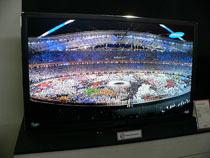 Samsung to Start Production of 42 Inch OLED[teaser]OLEDs move ever closer to reality. Hopefully.[/teaser] It looks like Samsung might be the first to produce an OLED screen that people might actually want to watch. While 11 and 17 inch displays are great tech demos, they're not something people are going to be hanging on their walls. 42 inches is a bit more reasonable. And that's what Samsung is working on. An actual 42 inch OLED screen, or to be more accurate, a lot of 42 inch OLED screens. In the third quarter of 2010, they'll start pumping them out as a trial production. In early 2011, Samsung will start mass production. Pricing is, of course, an issue. There's no telling just how much we'll have to shell out for what will undoubtedly be a stunning display. Once the date rolls closer though, you can expect to start hearing estimates. Source: OLED NetPosted Mon May 17, 2010 at 07:00 AM PDT by:
 -
 '58 HD Advisor FuryEditor's Note: Each Friday, High-Def Digest's own HD Advisor will answer a new round of questions from our readers. If you have home theater questions you need answered, send an email to [email protected]. If you've already sent a question and don't see it answered yet, please be patient as we work our way through them. To browse through previously answered questions, visit the main HD Advisor page. Answers by Joshua Zyber Early Adoption of 3-D Q: I was wondering if it makes any sense to wait a while before I buy 3-D hardware. I was one of the first to buy an "HD ready" TV, only to buy a "Full HD" TV two years later. Is there a chance the same thing might happen again technically? I mean, can they make 3-D "more 3-D" in a few years with certain techniques like they HD went from 720p to 1080p? A: Early adoption of any new technology is always a risky proposition. Some people are more eager to live on the bleeding edge than others. If you're feeling skeptical about the new 3-D technology and have the patience to wait a bit, it may be a good idea to hold off buying a new 3-D TV for a product generation or two. I certainly don't see any harm in waiting… other than that you won't be able to watch 3-D content for a while, of course. I don't think that 3-D TVs will become "more 3-D" in the same sense that HDTVs transitioned from 720p to 1080p. It looks to me like the industry has settled on the 1080p 3-D standard and plans to stay there for a while. In that respect, the 3-D rollout is likely to be much smoother than HDTV initially was. Even Blu-ray suffered the quagmire of its "Profiles" in early generation players. On the other hand, the proper technology for 3-D appears to be in place from the start for this launch. However, any new product runs the risk of bugs and glitches, and general performance quality issues, while the manufacturers work out the kinks. As I wrote in a recent blog post, I find it troubling that Samsung has been leading the way with 3-D LCD hardware. I've had my share of problems with that manufacturer over the years, and am personally planning to wait for a better brand. Black Levels on Digital HDTVs Q: Let me start by saying I'm behind the times. I have been wanting a new TV for quite awhile, but each time I am nearly ready to pull the trigger, a question is raised or new product is announced. So I decided to wait . How do newer plasma and LCD televisions stack up to old CRTs in black levels? I have a 36" Sony Trinitron 4:3, 1080i, 200lb set that has a great picture, deep blacks, and looks really great with standard broadcast TV. Of course, I lose half the picture when something is widescreen and there is no HDMI input. (I use DVI). I like plasma blacks but prefer the non-reflective screen of LCD. Are the black levels as rich as my tried and true CRT? What about the standard definition picture? I would love to go to about a 55" screen but I just can't decide which option to pursue and if I will gain the screen size but lose on the other options. Please help put my mind to rest so that I can move on with my life and see movies on a larger screen. A: Generally speaking, black levels have always been an area of concern on most digital displays. For all of its other shortcomings, CRT technology was capable of producing very deep, rich blacks. Digital TVs, especially LCD TVs, have struggled to keep up. In most cases, plasma does better in this area than LCD. The best plasmas (such as the recently-discontinued Pioneer Kuro line) can produce as inky a black as you might ever want. Since Pioneer pulled the plug on plasma production (try saying that three times fast!), Panasonic has stepped in as the next-best successor. However, some consumers have recently discovered that the contrast ratios on Panasonic plasmas decrease over time. And, apparently this was done on purpose. LCDs have an inherent disadvantage in black level reproduction. To compensate for this, most newer models have implemented a dynamic contrast feature that automatically dims the picture during predominantly dark scenes, and raises the brightness level during brighter scenes. This has its benefits and weaknesses. If done well, and quickly enough, you may never notice it. If not done well, or if subjected to tricky video content, you may notice a "pumping" of the picture brightness as the TV tries to calculate the appropriate setting. For example, the opening of the first 'Star Wars' is a good test for this. The movie starts with a dark star field. Then a large spaceship flies overhead, filling more and more of the screen as it goes. As the average picture brightness of the shot increases, you can often witness the star field in the background lightening while the dynamic contrast filter adjusts. At its worst, these artifacts can be pretty annoying. Any contrast ratio specs that a manufacturer may advertise for its TV should be taken with a grain of salt. The way these numbers are measured is often very misleading. You'll be very unlikely to achieve the same results in normal viewing at properly calibrated video settings. I advise checking reviews at a reputable and qualified publication that will give you a more realistic description of what to expect. (In one of my other jobs, I also work at Home Theater Magazine. Although I don't do any TV reviews myself, I know the people who do, and trust them implicitly.) With all that said, you'll need to accept that any new product you purchase will have its compromises. While black level is an important aspect of picture quality, it is certainly not the only important aspect of picture quality. I have a feeling that, when you do finally upgrade to a newer model, you'll find that so the picture is so much better in so many other ways, that you'll be willing to cut the new set some slack on its black levels. And frankly, things are much better now than they were a few years ago. I'm sure you can find something that will make you very happy. Why Haven't You Reviewed Movie XYZ? Q: I just want to know how you guys can review 'The Karate Kid', but not one the most anticipated Blu-rays of 2010, 'Saving Private Ryan'? A: Before I start, I just need to clarify that our review of 'Saving Private Ryan' was published on May 11th. This reader's question was sent in before that article was published. With that noted, I'd like to address this as a general topic. We here at High-Def Digest are often asked this same sort of question: Why haven't you reviewed such-and-such movie yet? I wrote up a response to this same basic question last year, and will ask that you read that. The same conditions still apply. We review what we can as soon as we can, based on when we receive the disc and when we have time to do it. These reviews are often very difficult and time-consuming to write. I'll be honest, I've had a copy of 'Minority Report' in my hands for a couple weeks now. I've watched the movie, and have written the film, video, and audio portions of the review. But this disc has a ton of bonus features on it. Between my three jobs and my work on the Bonus View blog here, I have simply not have the time to dig through all those supplements. I am continuing to work on it, though, and plan to have it finished soon, hopefully around the same time or not long after this column is published. All of us here are busy people with a lot on our plates. As far as I'm aware, none of the reviewers on staff write Blu-ray reviews as a primary means of employment. (And if anyone did, he'd likely soon find himself living in a cardboard box on Skid Row!) We have day jobs too, just like most of you do. Please bear with us as we try to keep up with the ever-escalating flood of new releases that land on our doorsteps. As for 'Saving Private Ryan' being "one the most anticipated Blu-rays of 2010," I have to point out that, although 'SPR' was undeniably a popular movie in its day, it's also a catalog title of a movie that's been available on DVD for over a decade and airs on television regularly. As a general rule, catalog titles on Blu-ray don't often sell in big numbers, no matter how popular the movie. When we reviewers find ourselves backlogged, it is always our responsibility to prioritize new day-and-date releases first. How does that explain why 'The Karate Kid' got reviewed before 'Saving Private Ryan'? Quite simply, they were each reviewed by different staff members. One had more time in his schedule to tackle a catalog title review than the other. (Editor's Note: Just as importantly, Sony mailed us the review copy for 'The Karate Kid' much earlier than Paramount sent us 'Saving Private Ryan.' In a situation like this it could be in a studio's best interest to send review copies out far earlier, in order to save themselves a very costly recall. As for Fox, who have made it standard practice to send out review copies after movies have already hit shelves, well, we can only speculate as to their motivations.) Homework Assignment: You Be the Advisor The HD Advisor knows many things, but he doesn't know everything. Some questions are best answered with a consensus of opinions from our readers. If you can help to answer the following question, please post your response in our forum thread linked at the end of this article. Your advice and opinions matter too! Adding an LP Turntable to the Home Theater Q: I have a home theater system that I mainly use for Blu-rays with my PS3 and Samsung TV. I want to know if I can plug a turntable into it? I am unclear on what devices I can connect to the receiver. Specifically, I have a Sony HT-SS2300 Component Home Theater System and want to know if I can plug a Sony PSLX250H turntable into it. Check back soon for another round of answers. Keep those questions coming. Joshua Zyber's opinions are his own and do not necessarily reflect those of this site, its owners or employees.Posted Fri May 14, 2010 at 11:30 AM PDT by:
 -
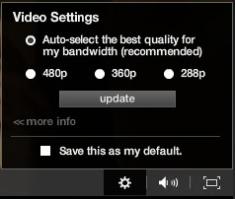 Hulu Gets an Update and a Much Improved User Experience[teaser]But sadly, there's still no HD streaming. [/teaser] Hulu's been behind the times for a while when compared to other streaming services, but the new update finally brings them up to snuff, as long as you're not hoping for high definition video. One of the most welcome changes in the update is adaptive bitrate streaming. It's one of the things that makes Netflix so nice. When you're watching a video and your connection slows, the video quality adapts. With the old Hulu, the video would just stop and wait. They've also, thankfully, introduced ad volume normalization. No more having your ear drums blasted by commercials at higher volumes than the show you're watching. It's something regular TV is still working on, so Hulu's got one up over cable. Speaking of Ads, the Ad Customization feature is pretty cool. You can complete a quick survey to watch commercial free for a bit, and when you do get ads back, you can select whether or not you found them relevant. Hulu will then attempt to show you only ads that you consider relevant. You're going to see ads either way, so they may as well be for something you care about. Source: HuluPosted Fri May 14, 2010 at 11:15 AM PDT by:
 -
 WirelessHD 1.1 Spec is 3-D Capable[teaser]The new standard also ramps up support for portable devices. [/teaser] The problem with the whole idea of wireless high-definition video is that it will always be ever so slightly behind the times. Until it's the standard, anyway. So while the HDMI 1.4 standard has been around for months, the WirelessHD 1.1 spec has just been announced. WirelessHD 1.1 throws the old 4Gbps bandwidth out the window in favor of a new 15Gbps minimum. The theoretical maximum is 28Gbps. So what does all that extra bandwidth get you? For starters, it's enough to support 3-D in high definition. The 1.1 standard is compatible with all forms of 3-D on the market today. It's also compatible with 2K and 4K signals, but it'll only send them at 1080p. There's also support for portable devices. When unplugged, portables using WirelessHD 1.1 have to stream at 1Gpbs and when connected to power they're required to stream at 4Gbps. That means there's potential for 1080p video streaming from a phone or MP3 player in the future. Source: TWICEPosted Fri May 14, 2010 at 10:30 AM PDT by:
 -
 ESPN 3-D Hits Comcast June 11th[teaser]The channel will make its Comcast debut just in time for the World Cup. [/teaser] What's the fascination with showing soccer in 3-D? It's not that soccer is bad, mind you. It's a fine sport. But the big broadcasting companies seem to be obsessed with providing the FIFA World Cup in 3-D. Comcast is no different. They'll be bringing ESPN 3-D to their customers just in time for the first match of the World Cup. But that won't be the only thing coming to you in beautiful 3-D. If soccer's not your thing, don't worry. College football games (including the BCS Championship game in January) will all be shown in 3-D. The same goes for NBA basketball and next year's college basketball Big East tournament. And of course, what would 3-D be without things getting a little extreme? The summer and winter X Games will be broadcast in full 3-D. Say what you will about the relevance of the X Games, they'll be great to watch. Source: ComcastPosted Fri May 14, 2010 at 09:00 AM PDT by:
 -
 Verizon Takes TNT and TBS Shows Online[teaser]They're also working on CBS, MTV, and FOX News. [/teaser] Verizon has announced that they're bringing two more channels Online. Starting in June, FiOS cable and internet subscribers will be able to jump onto FiOS TV Online and check out shows like 'Lopez Tonight,' 'The Closer,' and 'Southland.' Episodes will all be available within 24 hours of their original air date, according to Verizon. And from the sound of things, all the major shows for each network will be covered. Hopefully that includes Conan's new show this November. Verizon is working with other content providers as well. You'll soon be able to get your FOX News fix any time you want it. The same goes for CBS, MTV, Hallmark, The Smithsonian Channel and The Tennis Channel. Source: VerizonPosted Fri May 14, 2010 at 07:00 AM PDT by:
 -
 Fujitsu Develops Curved Plasma Tube Array[teaser]Pillar and corner mounted plasma advertizing (plasmertizing?) is on the way. [/teaser] It's hard not to envision 'Blade Runner' while thinking about Fujitsu's new curved plasma display. It's designed for advertizing after all, and that was one of the most memorable things about the film. But it's such an overused comparison so we'll go with 'The Fifth Element.' Either way, Fujitsu's display is a very cool step forward. It uses the display technology created by Shinoda plasma that was demonstrated a few years back. Millimeter high plasma tubes are stacked tightly in batches of red, blue, and green. That allows the display to be not only flexible, but thin as well. The displays are a meter square, and can be curved to fit different structures. You won't be able to get the full 90 degree bend, but a nice gentle curve on a large pillar works out nicely. Fujitsu's new screens won't be available until later in the year, and there's no telling when we'll start seeing them out in public. Source:Posted Thu May 13, 2010 at 11:00 AM PDT by:
 -
 Kaleidescape Intros Two New Server Based Blu-ray Players[teaser]But just because your Blu-rays are stored digitally doesn't mean you can ditch the disc. [/teaser] Blu-ray servers are a really cool idea, but they're just not practical for most users yet. The Kaleidescape servers and players are no exception. They seem interesting enough, but the price and limitations really call the whole thing into question. The Kaleidescape M300 and M500 can both play back Blu-ray content from a Kaleidescape server. The movies stream at 1080p, 24 frames per second, and with bitstream pass-through Dolby TrueHD and DTS-HD Master Audio. On the downside, you've got to have the appropriate Blu-ray disc in your player in order to do this. It's a bow to studios, who are concerned about piracy. So while the idea of a centralized storage area for movies is cool, it doesn't actually change the viewing experience in any fundamental way. The folks at Kaleidescape are working on it though. They're developing a multi-disc loader that should change things up a bit. Until then, you can pick up the M300 and the Blu-ray copying M500 for $2,495 and $3,995 respectively. Source: KaleidescapePosted Thu May 13, 2010 at 09:00 AM PDT by: