-
 Paradigm Announces New Value Based Speakers[teaser]The newest Cinema series from Paradigm features tech from high-end speakers at an affordable price. [/teaser] Paradigm's latest series of speakers are designed for folks who want good quality sound that doesn't cost an arm and a leg. The speakers have been completely redesigned and feature what Paradigm calls "trickle-down technologies" from their higher end speaker lines. All of the new speakers utilize reference quality crossovers, satin-anodized aluminum-dome tweeters, and mesh-wire tweeter guards that use the same WaveGuide technology you'll find in the Reference Signature series. The cinema series also features a sub with increased dynamic range over the previous model. It boasts an 8 inch driver made of polymer composite and can produce 300 watts peak and 100 watts sustained. It comes with the Cinema 100 CT system and is available separately as well. Source: eCousticsPosted Mon Aug 29, 2011 at 07:00 AM PDT by:
 -
 Bonus View Digest - August 26, 2011[teaser]This week we debuted a new feature or two. We covered everything from the latest television news to what you should see at the movies this weekend. In short, just another day at the office for The Bonus View. You're one-stop blog for everything relating to high-def entertainment.[/teaser] Blu-ray News Along with Josh's extensive weekly release list of Blu-ray titles hitting retail stores everywhere, we debuted a new feature called Off the Shelf. Aaron Peck thought that revisiting his Blu-ray collection would be fun. So, come along as we bust out movies that have been sitting on our shelves for months or years. This week Aaron remembers how funny 'Easy A' was and how great Emma Stone is in it. Theatrical News Along with his Weekend Box Office and Weekend Movies update Luke Hickman reviewed the surprisingly good vampire movie 'Fright Night' that may have snuck into theaters under everyone's radar. E also provided another wonderful Trailer Park post, where he discussed the trailers for 'Red Tails,' 'Tower Heist,' 'Battleship,' and 'The Ides of March.' Home Theater News Wondering what you can watch in the comfort of your own home? Well, we have your streaming covered. Dick Ward covers what's new on the Netflix Stream while Josh lets you know exactly what you can watch on the Vudu Network. If you're looking for an old movie you might have forgotten about, check out One from the Vault as Wayne Rowe takes a look back at the 80s sci-fi horror comedy 'Night of the Comet.' Video Game News Wayne wrote up a couple great pieces this week. Want to know what to expect with PS3's new 'Dead Island?' How about the news that the Red Hot Chili Pepper songs are now downloadable on 'Rock Band'? Oh, you just wanted to know what video games you should look forward to this week? Well, we've got you covered there too. TV Recaps This week we have recaps for all the popular summer shows. Join the conversations on 'True Blood,' 'Burn Notice,' 'Curb Your Enthusiasm,' 'Wilfred,' 'Project Runway,' 'Haven,' and 'Alphas.' Special Features This week on the Weekend Roundtable the collective writers at The Bonus View discussed which actors in Hollywood were their favorite character actors. Continuing on with that idea – and the love that was shown to Gary Oldman during the best character actor discussion – our Mid-Week Poll asked you what was your favorite Gary Oldman performance. If you haven't yet joined us over on The Bonus View do it now! We'd love to hear your opinions on all things high-def. Have a great weekend everyone!Posted Fri Aug 26, 2011 at 11:00 AM PDT by:
 -
 Panasonic is Building a Sustainable Smart Town[teaser]Not content with just building electronics, Panasonic is making its own city. [/teaser] The folks at Panasonic are big believers in devices that save energy and alternate solutions to providing power, but up until now that belief has mainly been represented with their electronics. Things are about to change though, as Panasonic is helping to create an entire city. Panasonic and a handful of other companies are teaming to make the Fujisawa Sustainable Smart Town (SST) which will utilize energy saving devices and plenty more. The thousand homes in the town will all have solar panels that don’t interrupt the look of the place, home fuel cells and networks laid out in the most efficient way possible. “After the Great East Japan Earthquake, there is renewed attention for energy infrastructures that are safe and secure with solar power generation systems and storage battery systems installed on a community basis,” says Panasonic. Source: Home Entertainment MagazinePosted Fri Aug 26, 2011 at 09:30 AM PDT by:
 -
 Sony Launches and Augmented Reality TV Picking Tool[teaser]Want to see what a huge TV would look like in your living room without shelling out the big bucks? Now you can! [/teaser] It’s the age old problem with picking TVs. You want something that’s nice and big, but not something that’s going to fill your whole room. You also want to make sure you’re not grabbing something that sounds big but ends up looking tiny when set up. Sony has a new tool out for those that want to try out a few sizes without having to bring an actual TV into the house. It’s not the quickest process, but it’s simple enough to do. You’ll have to print out a symbol on a piece of paper and attach it to the wall where you’d like your new TV to go. Then you take a photograph of the location and upload it to Sony’s site. From there you can play with different TVs and find the one that works best for you. Source: EngadgetPosted Fri Aug 26, 2011 at 09:00 AM PDT by:
 -
 LCD Shipments Stable Last Quarter - Big Companies Post Big Losses[teaser]It was a pretty dire quarter for everyone, except for Panasonic, who cleaned up quite nicely. [/teaser] Samsung is at the top of the heap for LCD shipments in the last quarter. They've still got a 22 percent share of the LCD market, but they ended up shipping 10 percent fewer sets than they did last year. It's a pretty big blow that's on par with Sony's 11 percent loss this quarter. LCD sets in general are sitting at a one percent growth over last quarter and a six percent increase over last year. It's not a huge increase, but it's headed in the right direction which is the big thing. A few of the individual companies were up too. Sharp is looking at a six percent increase year to year. Panasonic is up significantly over last quarter - a total of 55 percent. It's only a two percent year-to-year increase though. Source: TwicePosted Fri Aug 26, 2011 at 07:30 AM PDT by:
 -
 Time Warner Offers Free Slingbox to Subscribers[teaser]Well, free after a mail-in rebate, but that's still pretty free! [/teaser] If you're the kind of person who likes their internet to be fast - and we're talking crazy fast here - Time Warner has a pretty sweet deal for you. For $99 a month, you'll get their Wideband Internet with download speeds of up to 50 mbps and uploads of around five. As a special promotion, you'll also qualify for a free Slingbox that allows you to watch your content anywhere you have internet access. You'll have to shell out the $300 up front, but you'll get a mail-in rebate for the same amount, making the Slingbox essentially free. Not only is that a pretty sweet deal for customers, it's a good setup for Time Warner, since the Slingbox bypasses the whole issue of licensing content for different mediums. If folks are using a Slingbox, Time Warner doesn't have to pay a dime to content owners. Pretty slick Time Warner. Source: EngadgetPosted Fri Aug 26, 2011 at 07:00 AM PDT by:
 -
 HDD Study Hall: Paul Ruddby Luke Hickman [teaser]This week we're taking a look back at the impressive and diverse career of Paul Rudd. He can currently be seen in 'Our Idiot Brother,' a hilarious, heart-felt, R-rated indie comedy that premiered at the 2011 Sundance Film Festival.[/teaser] Rudd is one of those rare actors that cannot be pegged to just one genre. Sure, he's best known for his comedic roles – because he's just so good at them – but he's just as fantastic at dramatic and romantic roles as he is comedies. From performing Shakespeare in Baz Luhrmann's 'Romeo + Juliet' and horror in 'Halloween: The Curse of Michael Myers' to character turns in films like 'Forgetting Sarah Marshall' and the romantic lead in 'How Do You Know,' Rudd has done it all. In many ways, Rudd is like John Cusack (By the way, where has he be lately?): both are great at comedy, great at drama, play perfectly convincing leading men, and they're completely charming. Personally, when playing love-lorn leads in romantic roles, each portrays the type of guy I feel like deep down inside, making it very easy to connect with them. I know I'm not the only guy who feels this way. Listed below are five of Paul Rudd's credits that exemplify why he's so lovable, and why we never want him to disappear. 'Anchorman: The Legend of Ron Burgundy' Playing field reported Brian Fantana, Rudd got everyone's attention with his sleazy mustached character. As a character actor, it feels like the role came naturally to Rudd as he grew out his chops, glued on the mustache, and donned the vintage suit and greasy long wig. Perhaps his most notorious scene from 'Anchorman' is the one in which he convinces Ron that his Sex Panther cologne will win over new office hottie Veronica Corningstone. It's “illegal in nine countries,” is “made with bits of real panther,” and “60 percent of the time, works every time.” But let us not forget his fourth wall-breaking introduction, his tighty-whitey distraction dance, and his office freakout scenes. Not only does Rudd take the cake for his character piece in 'Anchorman,' but also 'The 40-Year-Old Virgin,' 'Night at the Museum,' 'The Ex,' 'Walk Hard' and 'Forgetting Sarah Marshall.' 'I Love You, Man' 'I Love You, Man' just might be Rudd's funniest film to date. Perhaps it's the way that the script is written like a standard male/female romantic comedy, yet filled with two completely heterosexual grown adult males. If you were loosely paying attention to the film, you'd believe that it was about two gay men. Coming off the success of 'Forgetting Sarah Marshall,' you'd think that 'I Love You, Man' was another Jason Segel-penned screenplay. The comedy lies within the same vein, it's just as witty and non-stop hilarious. You'd never guess that it was written by two guys who also wrote terrible films 'Little Fockers,' 'Doctor Dolittle,' and 'Along Came Polly.' For those lucky enough to catch a Rush show last summer, you got to see Rudd and Segel reprise their roles as Peter Klaven and Sydney Fife in an on-stage extra. To this day my poor wife is driven crazy be me telling her all of her accents sound like leprechauns and that I like to “slappa da bass, mon.” 'Role Models' At first glance, Rudd's character in 'Role Models' isn't all that different from the one in 'I Love You, Man,' but when you put a little more thought into it, they're quite a bit different. In 'I Love You, Man,' Rudd played a genuinely nice, somewhat effeminate guy looking to gain a male best friend. In 'Role Models' he's quite a selfish prick. But that's not the reason 'Role Models' makes this list. 'Role Models' is worth noting because this is the first screenplay that Rudd wrote (with friends). Not only is the comedy up to par with that of seasoned writers, but it lets the inner geek shine. Is it odd to anyone else that movie dives deeply into live action role playing – so much so that one would have to participate in it to write about it in such detail? If you've ever known anyone involved is such highly nerdy associations, you know that 'Role Models' nailed its portrayal of the geek culture. One of the best payoffs and climaxes to a film, there aren't many other comedies that get you so ramped up and excited as when Rudd puts on the costume and make-up and dives into the live-action battle, completely playing along with the part. No wonder Elizabeth Banks' character changed her opinion of him – he's geektastically awesome by the end! 'How Do You Know' While everyone is quick to jump on the hate train when it comes to 'How Do You Know,' I truly believe that most people are judging it without having seen it. Not being a big fan of James L. Brooks, 'How Do You Know' is actually my favorite of his films. If every romantic comedy was written with the style of humor, the genuine heart and characters of 'How Do You Know,' I'd be a huge fan of the genre. It steers clear of cliché and isn't predictable in the slightest. It never feels the need to rush, it takes its time, naturally building up to a believable finale. In 'How Do You Know,' Rudd plays an average nice guy subpoenaed for corporate fraud. The problem is that he has no idea what he has done and how to correct it, but because of legal requirements, he's forced to leave his job – the one place that can offer answers. As his entire life crumbles around him, he meets a charming girl (Reese Witherspoon) whose life is also falling apart. The two would make a perfect couple, only she's already taken. 'How Do You Know' is the prefect film to exemplify my idea of Rudd playing a character that any guy can connect with. Watching films like this, it's easy to place one's self in his shoes, often rhetorically making the same decisions that he makes. Along with John Cusack, Joseph Gordon-Levitt has this same ability. If you fall into the category of people who have not seen 'How Do You Know' (which, judging by box office numbers, is most of you), do yourself the favor of checking it out. It will pleasantly surprise you – especially as Rudd charms his way through another fantastic role. 'Our Idiot Brother' 'Idiot Brother' director Jesse Peretz must enjoy working with Rudd, for this is their third time working together. The first was an indie flick called 'The Château' and the second was a cameo role in Zach Braff/Jason Bateman vehicle 'The Ex' as an uptight, greasy fine dining kitchen manager. Watching the trailer, one could jump to the conclusion that Rudd simply plays a hippy version of dummy Brian Fantana – but one would be wrong to assume such a thing. Sure, he's kind of a dummy, but his 'Idiot' character Ned has nothing but great intentions. If you assume that the stupidity and naivete of Ned is nothing but a gag to create comedy, you're wrong. By the end of 'Our Idiot Brother,' Ned shows his true colors. Again, Rudd is joined by a stellar supporting cast. With Elizabeth Banks, Zooey Deschanel, Emily Mortimer, Steve Coogan, Rashida Jones, Adam Scott, Kathryn Hahn and T.J. Miller supporting you, it would be hard to fail. If you're as much of a Paul Rudd lover as I obviously am, go check out 'Our Idiot Brother' this weekend. I promise it will win you over from the very first scene. By the end, you'll be fairly surprised by how well-rounded an R-rated comedy it is.Posted Thu Aug 25, 2011 at 05:00 PM PDT by:
 -
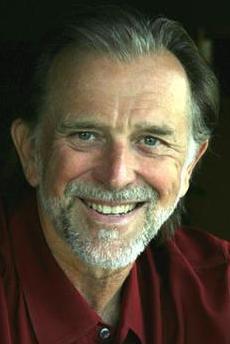 HDD's Exclusive Interview with Legendary VFX Designer John Dykstraby Luke Hickman [teaser]'X-Men: First Class' will soon be released on Blu-ray, and Fox has given us the opportunity to speak with 'First Class' visual effects designer and industry legend John Dykstra. Dykstra has worked on some of the biggest films of the last 30 years.[/teaser] From the original 'Star Trek' and 'Star Wars' movies to 'Spider-Man' and 'Inglourious Basterds,' Dykstra was a master of the trade in the purely mechanical effects days and is still at the top of the game with modern computer generated effects. In the following conversation, Dykstra defines the role of visual effects designer, explains the evolution of the job, talks 'X-Men,' Michael Fassbender, Matthew Vaughn, and inspiration. Enjoy! High-Def Digest – Luke Hickman: Can you give us a quick description of what exactly you do as a visual effects designer? John Dykstra: Well, it's sort of been an evolution. Visual effects design … is the integration of the technologies that constitute visual effects into the execution of a movie – that could be anything from doing simple composites or the removal of something in a scene that didn't want to be there to the complete creation of scene and all of its components from scratch. Examples of all the components from scratch would be something like 'Avatar.' The other end of the scale is something you've seen a million times but didn't realize you've seen it because there was no artifact left - usually it's something like they left the catering truck in the shop and we had to paint it out. So, that's sort of the spectrum. When you go to work, what you do is you take the written page, interpret it into a sketch of some kind which you can express to the director what it is you're trying to create for him to get across what's on the written page, and then you generate those sketches into more specific and more sophisticated artwork all the way through animation as tools to communicate with others who are department heads on the production – the art department, the mechanical effects department, the director of photography, etc. - so that everybody is working from the same visual script. Unfortunately, visual effects is [a] complex medium that invariably involves more than one element – in fact, a simple definition of visual effects is two or more elements executed in different times that are combined to appear as if they were executed in a single moment. As you can understand, the more pieces that you have to put together, the more complex the logistics is of capturing each of those individual pieces and keeping track of them, integrating them, into a final composite in a way that is believable. HDD: It sounds like your job sure keeps you busy. John Dykstra: Yeah, busy. Is that too convoluted an explanation? HDD: I watch plenty of Blu-ray special features, so we're on the same page. I'm with you. Does this job require you to be present during all phases of production? John Dykstra: Pretty much. … I have the good fortune of the kinds of movies that I work on to generally be involved as early as when the script is being generated and stay all the way through, one of the last people to finish up aside from the editor and director. … Because we touch so many of the shots, especially in the big feature films, and those shots have to be delivered and slotted in in the last minute because we always use up all of the time. HDD: I've noticed a gap in between all the films that you work on. Now I know that it's because you're constantly involved through the entire process. John Dykstra: You know, at this particular point I'm kind of picking and choosing the kinds of films that I work on. It would [be] okay to work all the time, but it's pretty innervating. It's a tough challenge and you need to regroup from time to time. And besides that, life is too short. HDD: And you've been doing this forever. Looking back at your credits, you've done lots of huge movies. You've got 'Star Wars' on your resume! As the industry and technology has changed, how has it been to change and learn along with it? John Dykstra: You have to really like to learn to be in this business. Part of the fun of it is going out and having someone say to you, “You have to make something that looks like an exploding galaxy,” or, “You have to figure out how to turn all of the people on the Sunset Strip into Irish setters.” Nobody knows how to do it, so they come to you and ask you this perverse or just totally ... undoable thing, and you have to figure out how to come up with an answer for it and you have to do it fairly quickly. And that's the fun of it – a different, new challenge every day, or multiple times a day. You have to like that to be in this business. Having said that, one of the things that came from 'Star Wars' was that in those days [you] had to actually photograph everything. Visual effects being, as I said, multiple elements combined to create a final image, you had to put those individual pieces in front of a camera, photograph them, then composite them in an optical printer. Because you physically had to photograph this stuff, you ended up with all of the constraints of the real world – cameras so big that you could only make the subject so small, otherwise you can't get the camera up to it. Or the camera wants to go through an opening, but the camera won't go through, so you have to build the subject over scale so that you can pass the lens through. Or you have to photograph things at an extremely high speed so the reduction in speed increases the sense of scale so the small chemical reaction can look like an expanding galaxy. That era was mostly about how you did it. You had to figure out what you wanted to do and you conformed what it was you wanted to do to what you discovered you could do. You spent most of your time discovering out how, and over the course of that, you spent some of your time figuring out the what. With the advent of digital imaging the ability to do virtually anything you can conceive of, it became much more of an issue – a responsibility – to spend more time figuring out what it was you were putting on screen that it was to figure out the how to do it. I think that has certainly changed the nature of visual effects and how it contributes to the filmmaking process. It's certainly contributes to how much visual effects you see in movie making these days. Some of the things done contemporarily simply could not be done mechanically. That's the advent of the mechanical solution, the analog solution, as opposed to the virtual or digital solution. The part that spans both of those from a visual effects designer's point of view is figuring out what it is you're going to put on screen – not just how, but what it is – and how that relates to the story. HDD: What were some of the things that they brought to you in beginning for 'X-Men: First Class?' Were there any unique things that come to mind? John Dykstra: Oh, yeah! And they had to be unique. Prerequisite is that it has to not offend the people who are advocates of the comic book and it has to not offend the people who are the advocates of the [movie series] and it has to unique, unlike anything they have ever seen before. A good example of that is Diamond Girl. She appeared in the movie and in the comic book, but we wanted to make a unique version of Diamond Girl – and I think we succeeded. That particular manifestation of her power is kind of unlike anything that I've seen before as a representation of what Diamond Girl looked like. That was Emma Frost, but another example of that is the Shaw character – Kevin Bacon. It's another example of getting to interpret a still image from a comic book and - he hadn't been shown in the movies so we had an open hand there – trying to figure out how the absorption of energy would manifest itself visually, which was really fun. It was totally informed by Kevin Bacon's performance. We had a time constraint that was significant on this movie and as a result we were developing the character's look while we were photographing them on stage. The actors themselves contributed significantly to what the final look of the character's power manifestation looked like. So the actors contributed significantly to the integration of their power into the telling of the story. HDD: So you work a lot with the actors? John Dykstra: Yeah. HDD: Then I've got to ask because I'm a big fan: You've done two films now with Michael Fassbender, 'X-Men' and 'Inglourious Basterds' - John Dykstra: Yeah, I like Michael. HDD: How is it working with him? John Dykstra: He's great! He's terrific! He's totally invested in the making of a movie. He puts the making of the movie first. He is a gentlemen. He's charming. And he's dangerous. (laughs) HDD: How was Matthew Vaughn? John Dykstra: Oh, he's great. I really enjoyed working with Matthew. The thing that's interesting about him to me is that he has both a tactical point of view and a strategic point of view. So often when you have tight time constraints, it will stress the director to the point where they will invest everything in one or two scenes and don't end up with enough scenes in total to make the movie complete or they go the other way, race through everything and end up with mediocre material. He seemed to have a very acute sense of how to pick out the stuff he focused on. Eddie Hamilton and Lee Smith, the editors, contributed significantly to how the visual effects and story integrated. HDD: With just a few minutes left, I want to ask you a few questions on the movie and TV series you worked on. Since you worked on both of the original films, are you a bigger 'Star Wars' or 'Star Trek' fan? John Dykstra: 'Star Wars,' by all means. HDD: What about 'Battlestar Galactica?' Did you watch the newer series? John Dykstra: I've watched it. It's funny – you know, it's completely different from what I worked on. HDD: Did you see J.J. Abrams reincarnation of Star Trek? John Dykstra: I watched it. But you know what – I don't spend a lot of time watching TV. I go and see movies occasionally, specifically movies that either contain stuff that I think is important of films that have been recommended to me by friends, but I don't see everything that's out there. HDD: You're too busy making them, right? John Dykstra: Sort of. What I want to do is save my moviegoing experiences for things that I can enjoy, as opposed to simply flooding my brain with movie images. HDD: Do you get a lot of ideas for visual effects by watching other movies? John Dykstra: Sure. But I get ideas from everything. I get ideas while walking the dog. There are ideas everywhere. In fact, that's part of the funnest things about being a visual effects designer - you can incorporate stuff from listening to some science broadcast where you hear about magma that forms tubes underwater and brings to mind an idea for the execution of some creature that you want to develop. The cross-fertilization that happens in everyday life and visual effects design is critical. In fact, people who come to me in the contemporary environment and say, “I want to become a visual effects designer. What should I do?” I say, “Get out more.” The tendency is for so many people to be involved with the box and their primary source of visual stimulation that you [must] get out, go, and do some hiking. Fly a plane. Ride a motorcycle. Do something where you come in contact with your environment in a much more aggressive, much more present way. I think that's critical to making stories and images that come off a two-dimensional screen in a way that affects people. HDD: Do you think you'll be back for more 'X-Men?' John Dykstra: I don't know. I'd like to. I don't know what they're doing now. HDD: I hope they keep it going. 'First Class' is my favorite of the bunch. John Dykstra: Good! I'm glad. It's my favorite of the bunch too, that's for sure. But it's the only one that I worked on. (Laughs)Posted Thu Aug 25, 2011 at 12:40 PM PDT by:
 -
 Over a Fifth of Homes with Broadband use Netflix[teaser]Of those, a good chunk cut back on their spending on traditional cable. [/teaser] Cable and satellite TV providers can poo-poo the numbers all they want, but cord cutting is happening, and it's becoming significant. Consumers who aren't as concerned about television or are comfortable using alternate sources to get it, are scaling back. According to a new study by New Parks Associates, twenty two of broadband connected homes in the US use Netflix to watch movies. It must be working out nicely for them, because 13 percent of broadband homes are cutting their cable or reducing their bundled channels. With increasing numbers of internet connected TVs, Blu-ray players and game systems popping up in houses across the country, it's worth thinking about just what this will mean for cable providers. Source: Home Media MagazinePosted Thu Aug 25, 2011 at 11:00 AM PDT by:
 -
 3D Kids Programming Coming to 3Net[teaser]Two original series are launching on the 3D channel, both aimed at younger audiences. [/teaser] When 3D programming first hit the airwaves - that's becoming a really inaccurate term, isn't it? - plenty of content was announced. When it comes to children's programming though, there was little to see. Since kids could be an essential market to keep 3D interest going, this seems like a pretty significant oversight. Two original series are debuting on September 25th - 'Bits and Bolts' and 'Dream Defenders.' More is on the way too, including exclusive 3D movies, the 3D exclusive 'Puppy Bowl,' and other titles. On October 1st, the "3net Three Dee Kids" Saturday and Sunday morning program block will launch. "The announcement of a dedicated programming block for kids 7-12 and their families marks another important step forward in our mission to provide compelling, diverse and original 3D television content," says 3net CEO Tom Cosgrove. "“It further underscores 3net’s on-going commitment to building upon our leadership position in the dynamic and ever-growing in-home 3D entertainment space." Source: Home Media MagazinePosted Thu Aug 25, 2011 at 09:30 AM PDT by: