-
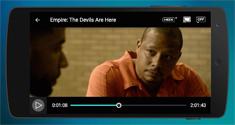 VUDU Updates Android App with 1080p HDX Video Support[teaser]High quality video playback is now available on select Android devices. [/teaser] VUDU has announced the release of its latest Android app. The update offers several new features, including HDX playback support. VUDU's latest Android app now uses a completely rebuilt and redesigned interface with faster performance. Likewise, the update provides a new navigation menu, auto-magic search suggestions, and a portrait mode for smartphones. Finally, the biggest upgrade involves added support for HD (720p) and HDX (1080p) playback on select phones and tablets with Android Lollipop or higher. HDX support is also available on PCs and via the Google Chromecast, but is not yet compatible with iPads or iPhones. Android users can now download the latest VUDU app from the Google Play store. Source: VUDU via EngadgetPosted Mon Oct 12, 2015 at 04:00 PM PDT by:
 -
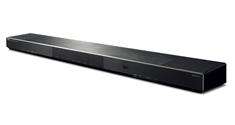 Yamaha Releases MusicCast YSP-1600 Soundbar & SRT-1500 TV Speaker Base[teaser]The first soundbar and speaker base models with MusicCast support are now available. [/teaser] Yamaha has announced the release of two new audio products. The YSP-1600 Soundbar ($500) & SRT-1500 TV Speaker Base ($600) both feature support for the company's MusicCast wireless multiroom audio system. "A great sound bar should make it easy to add amazing sound to your TV, and both of these models deliver on this front. However, what makes them especially remarkable is the integration of MusicCast," said Bob Goedken, general manager, AV division, Yamaha Corporation of America. "Now you can use the MusicCast Sound Bar in one room and link it to a MusicCast Wireless Speaker in another to listen to music or TV audio in both places—so you don't have to miss out on the game or news when you're away from the TV. Yamaha has finally made it a breeze to do this." The YSP-1600 Soundbar features a slim 2.5-inch tall design and eight speaker drivers to provide 5.1 channel surround sound. Meanwhile, the SRT-1500 TV Speaker Base is designed to sit under most 32-inch to 55-inch TVs and features ten speaker drivers. Both models include dual built-in subwoofers, Bluetooth connectivity, HDMI with HDCP 2.2 compliancy, and Digital Sound Projector technology. In addition, Yamaha's integrated MusicCast tech allows customers to stream music and link to other MusicCast speakers, AV receivers and Hi-Fi gear in other rooms via Wi-Fi. Yamaha's YSP-1600 Soundbar ($500) & SRT-1500 TV Speaker Base ($600) are now available from authorized dealers. Source: YamahaPosted Mon Oct 12, 2015 at 01:00 PM PDT by:
 -
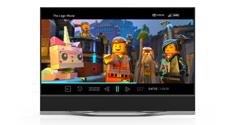 High-Def Digest Attends VIZIO's Fall Showcase with Dolby Vision Reference Series Ultra HD TVsAs we continue to watch the 4K Ultra HD market evolve, manufacturers have begun to move beyond mere improvements in resolution, offering several new display technologies that aim to deliver improved levels of contrast, detail, and color -- continuing the industry trend of not only adding more pixels, but better pixels. At the forefront of these advancements is Dolby Vision. An end-to-end imaging solution that covers content creation, distribution, and playback, Dolby Vision is designed to provide customers with an enhanced viewing experience through the combination of High Dynamic Range and Wide Color Gamuts. Though we've seen plenty of demos and pre-market displays that use the tech in the past, [teaser]Dolby Vision is now finally ready to make its official home theater debut with the release of VIZIO's Reference Series. [/teaser] As its name might imply, the Reference Series is designed with true videophiles in mind, and cements VIZIO's gradual expansion from the budget market into the genuine premium home theater sphere. At launch, the lineup includes an impressive 65-inch model and an absolutely mouth-watering 120-inch behemoth -- and earlier this week we were invited to demo both of these displays in action. The Basics The Reference Series is available in 65-inch ($6,000) and 120-inch ($130,000) models. Each Ultra HD panel features an 800-nit, full-array LED backlight with 384 active zones for superior black levels and brightness. Equipped with Dolby Vision, the displays also include support for Dolby Vision High Dynamic Range (HDR) content with wide color gamuts, providing enhanced contrast with more realistic highlights and shadow detail. The 65-inch model uses quantum dot technology while the 120-inch model uses phosphor coated LEDs (a 120-inch quantum dot sheet just isn't feasible yet). In addition, the 65-inch model includes an integrated 3-channel soundbar with separate rear satellites and a wireless subwoofer. HDMI 2.0 connections with HDCP 2.2 compliancy are integrated as well. Finally, the VIZIO Internet Apps Plus smart TV platform is also implemented, allowing customers to enjoy Dolby Vision HDR streaming content from services like VUDU and Netflix. Demos To show off the Reference Series' unique picture quality features, VIZIO set up a series of demos highlighting different aspects of the TVs, including streaming, local dimming, contrast, HDR, color, and audio. And to conclude the showcase, they even had a full home theater room set up with the massive 120-inch model, offering a taste of what lucky consumers (with $130,000 to spend) can come to expect from the wall-sized TV. First up, VIZIO had a series of 65-inch sets hung across the wall, all displaying various demo reels. Though most of these TV were playing content off of drives, the company did have one unit actually set to an active VUDU stream, offering a taste of Dolby Vision Ultra HD streaming with smooth playback over 15mbps. With content specially mastered in the Dolby Vision process, VUDU will be the first platform to provide Dolby Vision HDR movies. The initial lineup will feature 16 titles from Warner Bros., including 'The Lego Movie,' 'Edge of Tomorrow,' 'Into the Storm,' 'Man of Steel', 'San Andreas,' 'Mad Max: Fury Road,' 'Magic Mike XXL,' 'Jupiter Ascending,' 'The Great Gatsby,' and more. Likewise, Netflix will also be supporting the Dolby Vision process and will be offering the first and second season of 'Marco Polo' in Dolby Vision HDR. Moving away from specific content and on to specific picture quality features, VIZIO spotlighted the TV's impressive full-array local dimming. To demonstrate the display's 384 active zones, the company brought back a special demo that it previously included in its last launch event. This demonstration pitted the Reference Series against a competing edge-lit model, the Samsung UN65JS8500 SUHD TV. Both displays were hung side-by-side and each had their diffusers and light guides removed. A simple animation of fish and flowers played on both sets, revealing the many active zones lighting up in specific sections of the panel on the VIZIO, and the comparatively dim center and bright sides of the edge-lit model. Of course, as fun as a demo like this can be, it clearly does not offer a good comparison of real world performance. Thankfully, VIZIO also had the same Samsung model pitted against the Reference Series 65-inch TV under normal, dark room viewing conditions. Both TVs played a video reel full of detailed imagery (swirling cosmos, sparking lava, etc.) that really brought out the differences in the displays' backlight performance. The VIZIO set maintained a deep, inky shade of black without crushing details while the edge-lit Samsung demonstrated a more grey/blue shade of black. Likewise, the VIZIO had superior uniformity and viewing angles, while the competing set had some backlight bleeding around the edges and tended to wash out a lot more when viewing from the side. Though under these demo conditions the full-array Reference Series model easily bested the edge-lit Samsung, it should be noted that Samsung does indeed offer a full-array SUHD TV model of its own -- but since it is only available with a curved-screen panel, it was not used for this comparison. For the final head-to-head demo of the night, VIZIO had another room set up with three televisions on the wall. To the far right was the Pioneer Kuro plasma HDTV -- once widely regarded as the undisputed top-dog of the home theater display world. To the far left was the Samsung UN65JS8500. And finally, in the center was the 65-inch Reference Series display. Aimed at demonstrating the VIZIO TV's superior Dolby Vision wide color gamut, the demo shifted through a series of different tests patterns on all three televisions, displaying a series of colors. All three TVs were set to their factory "Movie Mode" and the VIZIO was dialed down to 50% brightness. Thanks to its expanded color gamut and quantum dot tech, the Reference Series offered punchier shades of red, blue, and green. By comparison, the Pioneer plasma and its standard Rec 709 color space looked noticeably dull and faded. Though the VIZIO and Samsung were much closer in color reproduction, the Reference Series did still have a slight edge, offering bolder and seemingly more pure colors, especially when it came to green and yellow. Far surpassing the current Rec 709 standard, the 65-inch Reference Series and its quantum dot panel offer support for 120% of the P3 color gamut and 87% of the Rec 2020 color gamut. Meanwhile, the 120-inch model offers 96% of the P3 color gamut and 73% of the Rec 2020 color gamut. Check out the above picture for a comparison the 65-inch VIZIO (left) and Pioneer (right), and the below picture for a comparison of the Samsung (left) and VIZIO (right) -- though I must stress that a camera is not a particularly good way to capture such a comparison, and I am only including these pictures to give readers a ballpark idea of what the demo was like. Taking away the competition to let the Reference Series shine by itself, the next demo room featured another reel of VUDU Warner Bros. titles playing in a completely dark room. This section was designed to show off all of the display's picture quality features -- combining local dimming, HDR, and wide colors to create a premium viewing experience. The results? Ultra HD bliss. Detail was strong, blacks were inky, colors were sumptuous, and the high dynamic range grading really did lead to an appreciable expansion of the image. Scenes from 'The Great Gatsby' were especially notable for their delectable eye-candy. While the Reference Series' picture quality might have been getting most of the attention at the event, VIZIO also made sure to spotlight the TV's audio as well. In an attempt to buck the subpar audio found in most big-screen TVs, the company is actually including a 5.1 soundbar system with the 65-inch model. The three channel soundbar sits right under the display, and though it can be disconnected from the TV, it can't be used with any other models. A separate wireless subwoofer and two rear satellite speakers are also included. For demo purposes, VIZIO played a scene from 'Star Trek' and 'The Art of Flight: Alaska' with the system set to 90% volume. The first sequence featured some immersive space action, and the compact 5.1 system did a great job of filling the relatively large demo room with enveloping sound and surprisingly full bass. The second clip featured a snowboarding adventure (giving me a quick PTSD flashback to my first attempts at skiing last winter… former Floridians should stick with beaches) with a low frequency heavy music soundtrack and some distinct surround cues that spread overhead helicopters around the soundfield. Though the 5.1 system wasn't as nuanced or crisp as more refined speaker systems, the experience was leaps and bounds better than any traditional integrated TV speakers could ever hope to be. Unfortunately, the soundbar system does not support any lossless or immersive audio sound formats. On that note, considering that the Reference Series is aimed at major home theater enthusiasts, it's likely that most potential customers will already have a dedicated surround sound system (or will be willing to spend the cash for one) -- so, as nice as the soundbar system is, I actually would have preferred for VIZIO to exclude it so that they could cut down the TV's MSRP a bit. Finally, it was time for the main event: the 120-inch monster. Set up in a cozy home theater room setting complete with leather seats, the mammoth-sized Reference Series display almost took up the entire wall. In other words, I was now in A/V heaven. For demo purposes, the TV was connected to the same 5.1 soundbar system that comes with its smaller 65-inch sibling, and we were treated to two Dolby Vision clips. The first sequence was from 'Man of Steel' and featured Russell Crowe being attacked on Krypton (you know, that scene where he rides a dragon… for some reason). Filled with sci-fi weaponry and various explosions, the scene offered some great specular imagery with intense highlights and detailed shadows -- showing off the HDR tech beautifully. The way the laser blasts seemed to pulse off the screen was particularly impressive. With that said, director Zach Snyder's stylized (i.e. drab) color palette wasn't terribly good for showing off Dolby Vision's wide color gamut. For the grand finale, however, VIZIO elected to play a scene from the hyper-saturated brilliance that is 'Mad Max: Fury Road.' The scene in question featured Immortan Joe's army in hot pursuit (wait, that basically describes every scene in the movie, doesn't it?) and provided a dazzling showcase for the Reference Series' unique strengths. Fire roaring from car engines sizzled off the screen with bright intensity that didn't become blown out, and the red costume on the guitar player was rich and bold without bleeding. As a whole, both scenes demonstrated the impressive versatility of both the Dolby Vision process and the Reference Series' picture quality attributes -- resulting in a display that is capable of intense brightness and deep blacks without crushing or clipping detail in either extreme. In practice, the local dimming, HDR, and wide colors really do lead to a rather breathtaking jump in realism. Well, maybe "realism" isn't the right word to use when describing scenes that feature a dying alien world and a post-apocalyptic wasteland, but I think you get the idea. A Word on HDR & Ultra HD Blu-ray Support There's been some confusion about the Reference Series' potential support for future Ultra HD Blu-ray discs/players and HDR content beyond Dolby Vision, so I reached out to VIZIO and Dolby for some clarifications. The Reference Series features HDMI 2.0/HDCP 2.2 compliant connections and will provide support for any Dolby Vision HDR content that is released on Ultra HD Blu-ray (the format is an option for the spec, but not a requirement) through a Dolby Vision-enabled Ultra HD Blu-ray player. Likewise, the TVs will support Dolby Vision HDR streaming content through services like VUDU and Netflix. On the topic of other possible HDR formats, VIZIO says that the company will evaluate future formats as they are finalized. Final Thoughts After witnessing the market-ready Reference Series TVs in person (and wiping the drool from my mouth), it's really hard not to be impressed by their premium picture quality features and Dolby Vision technology. Actually, it's really hard not to be blown away. Thanks to the displays' 384 local dimming zones, HDR, and wide color gamut, these models really are among the most advanced on the market. With that said, they do come with some equally advanced price tags. Though VIZIO is widely celebrated for its competitive pricing and best "bang for your buck" value with its other display lines, the Reference Series TVs don't exactly seem to be following this trend. At $6,000 for the 65-inch model and $130,000 for the 120-inch model, the company is clearly going after true home theater enthusiasts here. Still, while there are cheaper 65-inch Ultra HD TVs on the market with some form of HDR and wide color, this is the first and only display series that currently supports Dolby Vision -- a distinction that could prove to be worth the price increase if the format becomes widely adopted. Interested buyers can now submit special orders for the Reference Series displays at VIZIO.com. Customers will then be contacted by a local custom installer to arrange delivery and a white-glove setup service.Posted Fri Oct 9, 2015 at 05:00 PM PDT by:
 -
 HDD First Look: Dolby Cinema at AMC[UPDATE: AMC and Dolby originally called these auditoriums Dolby Cinema at AMC Prime, in an ode to the exhibition chain's previously established premium cinema auditoriums, but they've since been renamed Dolby Cinema at AMC, which I think is a smart choice.] A white dot pops up on a darkened, sixty-foot cinema screen. It looks like every movie you've ever seen projected digitally. Clear white encircled by black levels that are not only grey, but bright enough to partially illuminate the room. This test pattern represents the industry standard 2,000:1 contrast ratio at 14 foot-lamberts (fL). Then the image shifts so drastically an entire audience of A/V enthusiasts audibly gasps. The white dot now shining a bright 31 fL. As for the screen? Seemingly gone. Perfectly black. The auditorium plunged into total darkness. The contrast ratio a staggering million to one. Welcome to Dolby Cinema at AMC. More specifically, welcome to auditorium 14 at AMC Theaters' flagship Burbank 16 location where we are seated to demo a new premium large format theatre offering that's been rolling out at AMC since May of this year. AMC initially announced plans to first convert 50 Prime and ETX premium large format auditoriums to meet Dolby Cinema specifications by 2018 (and 50 more by 2024). However, early reactions by filmmakers and customers have been so positive, AMC hopes to have 50 Dolby Cinema at AMC Prime locations open by the end of 2016. What is Dolby Cinema at AMC? In the broadest sense, it's a premium movie-going experience designed to transport audiences into a film's universe using three components: 1) Dolby Vision -- a new dual-4K Christie laser projection system designed for films that have been color graded for Dolby Vision HDR (high dynamic range), giving content 500-times the contrast ratio of conventional projection systems. Pure black levels, expanded color gamut capabilities, and twice the brightness (up to 31fL). 2) Dolby Atmos -- a reference quality sound system capable of decoding object-based surround mixing. In Burbank's case, that's five in-screen speakers plus 48 surrounds, 4 ceiling-mounted subwoofers, and in-seat transducers for extra rumble. 3) Comfort & Aesthetics -- not only does the auditorium boast leather recliners facing a large screen, but the entire space has been painted matte black to control ambient light, color lights have been used to highlight the numerous speakers, and there's the Signature Entrance, an audio-visual pathway meant to evoke a journey into the mindset of watching a particular film. Demoing Dolby Cinema To show off the room's capabilities, we sampled five clips from four 2015 films that have be graded for Dolby Vision and mixed in Dolby Atmos. 'Tomorrowland' -- The first Dolby Vision title remains the only one I've seen all the way through. I can't comment on the HDR versus the standard color grading because I've only seen the Dolby Vision version, but we watched a vibrant one-take shot where Casey (Britt Robertson) gets an extended look at the Tomorrowland universe. Bright and sparkling with saturated colors, this demo felt exceptionally lifelike, with extra points awarded for its blue skies and cloud details when these things normally blow out. In short, this demo, much like the scene it depicted, offered a window into another world. It reminds me a bit of seeing HD for the first time back when SD was still the standard. 'Inside Out' -- I mistakenly assumed color grading was less essential to animated features. That assumption imploded the moment we watched two clips from Pixar's 'Inside Out', which I had seen earlier this year in non-HDR 4K digital projection. Pixar films are always cutting edge in terms of fine details, textures, and bold colors. But seeing 'Inside Out' in Dolby Vision is nothing short of a revelation. We began with the movie's opening scene, the birth of Riley and the four emotions who live inside her head -- Joy, Sadness, Disgust, and Anger. In this sequence, character designs boast much more dimension and more detail in their skin colors. Meaning, without Dolby Vision, they appear as yellow, blue, green, and red; in Dolby Vision, their skin textures are more present and include other shades in the same way that human skin textures flush or pale. It was like someone had upgraded my glasses prescription. Next we were treated to a sequence set in the part of Riley's mind where she locks up her fears and nightmares. Joy and Sadness must trudge deep into a dark cave tinged with fluorescent walls to rescue the missing Bing Bong. What's notable about this particular sequence is that, while the theatrical standard for color space is P3, this scene is the first in the history of digital projection to use the wider Rec.2020 (aka BT.2020) color gamut. It was, outside of 70mm or 70mm IMAX, possibly the best looking 2D projected imagery I've ever seen. 'Inside Out' benefits from the taller 1.85:1 aspect ratio, which makes the day and exterior sequences seem brighter, but this scene, set in a near-dark cave, was remarkable for its Kuro-quality black levels, shadow details, depth and resolution, and vibrate, fluorescent greens and purples. 'Inside Out' looked so good part of me is worried next month's Blu-ray release will feel a bit like a disappointment. 'Maze Runner: The Scorch Trials' -- Fox is currently touting the 4K Ultra HD Blu-ray release of the original film, but Maze Runner II was the first in the series to be Dolby Vision color-graded. We watched the opening sequence, which comprises of a nightmare/flashback of a military checkpoint and then Thomas (Dylan O'Brien) racing upwards in a freight elevator before waking in a helicopter and fleeing for the safety of a factory environment. Though I'm unable to personally compare the Dolby Vision 'Scorch Trials' to its standard color grading, I will say it offered tons of depth and shadow detail in what was very dark material with a muted color palette. However, this was my least favorite demo because the letterboxing at the top and bottom of the frame was not true black. Apparently, even though Dolby Vision is capable of that million-to-one contrast ratio, it's up to the filmmakers to decide how to use it. In this case, they might have selected less than true black levels for the letterboxing, or perhaps ambient light from the rest of the frame could have affected black levels. It's hard to say exactly what we experienced without talking to the actual folks who graded the film. Either way, I wish Dolby Cinema and AMC Prime auditoriums had moveable matte panels they could slide into place for 2.40:1 aspect ratio films, or that the letterboxing was a darker color. Granted, it's only possible to have such a complaint once you experience how amazing the black levels can be for other material. 'Everest' -- Our last demo featured a scene from 'Everest' where Beck Weathers (Josh Brolin) nearly falls to his death while crossing a crevasse on a rickety ladder bridge. It's a thrilling sequence that evokes a chilling sense of vertigo on larger screens. I recently saw 'Everest' in 3D at the TCL Chinese IMAX, which features 4K laser projection and the second-largest screen in North America. Without more time in each to compare and contrast, I can't say Dolby Cinema topped that experience in total -- they each have their own strengths -- but I prefer the film's Dolby Atmos mix (it is much more detailed and articulate), and Dolby Vision brought a lot more fine details to snow and ice. Also, my leather recliner was much more comfortable, so there's that. Hehe. Regardless, the point of this final demo was to go to the other end of the spectrum from the 'Inside Out' cave sequence. Dolby Vision will plunge you into darkness without crushing as easily, as it will display detailed spectral and highlights for objects that would normally bleed white. In short, this demo proved the Burbank 16 Dolby Cinema at AMC is easily one of the best looking and best sounding commercial digital cinema auditoriums I have ever experienced (and yes, that includes professional stages where they create Dolby Atmos sound mixes you hear in cinemas and at home). [teaser]Welcome to the future of cinema. [/teaser] 2D Exclusive Apart from the fantastic demonstrations, the other huge takeaway from this event was learning, much like Ultra HD Blu-ray, Dolby Cinema at AMC Prime auditoriums are going to be 2D exclusive. Turns out the Dolby Cinema projection system is only capable of 14fL in 3D and, since AMC already has 2,300 RealD and 150 IMAX screens capable of 3D, they want Dolby Cinema auditoriums to offer a different kind of premium experience. It's a bit of a shame to know we won't be getting 3D + Atmos ('Mad Max Fury Road' at a pre-Dolby-Vision AMC Prime was so good I saw it three times there), but at the same time this should appeal to many purists and I can't help but admire the notion of ensuring the customers only get to experience this remarkable projection system at peak output Where Can I Experience Dolby Cinema at AMC? There are currently eight locations in operation with four under construction. Keep your eye on THIS PAGE for an updated list. What Will Be Playing in Dolby Cinema at AMC? Nine films have so far been color-graded for Dolby Vision and mixed in Dolby Atmos this year —- 'Tomorrowland', 'San Andreas', 'Inside Out', 'Pixels', 'Mission Impossible: Rogue Nation', 'The Perfect Guy', 'Everest', 'Maze Runner: The Scorch Trials', and 'The Martian'. The next batch of titles will include 'Pan' (10/9/15), 'The Hunger Games: Mockingjay – Part 2' (11/20/15), 'In the Heart of the Sea' (12/11/15), and 'The Jungle Book' (2016) along with many others that have yet to be announced. In Summary I very much enjoyed my short time with Dolby Cinema at AMC. Dolby Vision plus Dolby Atmos plus the creature comforts of AMC Prime is an intoxicating mixture worthy of its premium surcharge (currently the same as IMAX). Together with the historic Chinese, this auditorium offers one of the two best cinema experiences in all of Los Angeles, and I'm very much looking forward to visiting more AMC Prime and/or ETX conversions (seriously, let's get the Century City location done ASAP) over the next few years. Had a chance to visit a Dolby Cinema at AMC? Hop over into the forums, or to the comments below, to let us know about your experience. Cheers.Posted Thu Oct 8, 2015 at 05:45 PM PDT by:
 -
 Netflix Raises Standard Streaming Plan Price to $10 Per Month for New Customers[teaser]The company has raised the price for its standard streaming plan. [/teaser] As reported by Bloomberg, Netflix has increased the price of its standard streaming plan by $1 per month. The standard plan was previously set at $9 per month but has now been raised to $10 per month. The company last raised its standard plan prices back in May 2014. Current customers who subscribed under the previous $9 per month fee will get to maintain their original pricing for one year. According to Netflix, the price increase is being made to help obtain more content and produce more original shows. The standard streaming plan offers HD playback for two screens. Meanwhile, the company's basic SD streaming plan remains set at $8 per month, and the premium Ultra HD streaming plan remains set at $12 per month. Netflix is currently available on a variety of smart TVs and media players, including the Fire TV, Fire TV Stick, Roku 3, Apple TV and Chromecast. The company also recently announced support for Virtual Reality headsets. Sources: Bloomberg, Engadget, NetflixPosted Thu Oct 8, 2015 at 12:45 PM PDT by:
 -
.jpg) Roku Adds HBO NOW to Streaming Channel Lineup[teaser]HBO's standalone streaming service is now available on Roku products. [/teaser] Roku has announced the addition of HBO NOW to its channel lineup. The premium streaming service initially launched exclusively on Apple devices. HBO NOW allows users to watch every episode of every season of HBO’s original programming, hit movies, documentaries, sports and exclusive comedy specials separate from a traditional cable or satellite subscription. The service offers more than 2,000 popular series and movies, including 'Game of Thrones,' 'True Detective,' 'Silicon Valley,' 'Girls,' 'Veep,' 'The Wire,' 'Divergent,' 'X-MEN: Days of Future Past,' 'Neighbors,' and 'Dawn of the Planet of the Apes.' Customers who own a Roku player or Roku TV can download HBO NOW from the channel store. An HBO Now subscription currently costs $15 per month and new users will receive a 30-day free trial offer. Source: RokuPosted Thu Oct 8, 2015 at 12:15 PM PDT by:
Roku Adds HBO NOW to Streaming Channel Lineup[teaser]HBO's standalone streaming service is now available on Roku products. [/teaser] Roku has announced the addition of HBO NOW to its channel lineup. The premium streaming service initially launched exclusively on Apple devices. HBO NOW allows users to watch every episode of every season of HBO’s original programming, hit movies, documentaries, sports and exclusive comedy specials separate from a traditional cable or satellite subscription. The service offers more than 2,000 popular series and movies, including 'Game of Thrones,' 'True Detective,' 'Silicon Valley,' 'Girls,' 'Veep,' 'The Wire,' 'Divergent,' 'X-MEN: Days of Future Past,' 'Neighbors,' and 'Dawn of the Planet of the Apes.' Customers who own a Roku player or Roku TV can download HBO NOW from the channel store. An HBO Now subscription currently costs $15 per month and new users will receive a 30-day free trial offer. Source: RokuPosted Thu Oct 8, 2015 at 12:15 PM PDT by: -
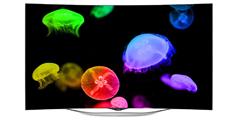 LG Cuts OLED Ultra HD TV Prices by up to 45%, 4K Models Now as Low as $2,999 & HD Models Now as Low as $1,799![teaser]The company is offering big discounts on its OLED displays. [/teaser] LG has announced an aggressive price cut for its OLED TV lineup. In an effort to bring the technology to the mainstream market, the manufacturer is enacting a 30 - 45% price reduction for its flat EF9500 series and curved EG9600 series 4K Ultra HD OLED TVs. In addition, the company is also releasing the new 55EG9100 1080p curved-screen OLED for just $1,999! "OLED TV is not just a new TV — it's an entirely new category of television that delivers what experts and consumers alike are hailing as the best picture ever, a clear indication that OLED is here to stay," said William Cho, President and CEO, LG Electronics USA. "LG is the first and only manufacturer to deliver OLED TV to U.S. consumers, and our vision is to make this revolutionary technology more attainable by more consumers at prices comparable to many LED TV models on the market." OLED technology offers superior contrast, black levels, uniformity, and viewing angles over traditional LCD panels. Though the tech was once notorious for its high costs and low yield rates, LG has now made significant stride in manufacturing efficiency, allowing them to now price their sets comparably to many of today’s premium LCD/LED TVs. Here's a rundown of the current LG OLED pricing, including instant rebates which will remain in effect for the rest of the year: EF9500 Series: Flat OLED 4K Ultra HD TVs with HDR (Streaming & External) · 55-inch class 55EF9500 (New net price – $2,999) - Price move from $5,499 to $3,999, and a $1,000 instant rebate. · 65-inch class 65EF9500 (New net price – $4,999) - Price move from $6,999 to $5,999, and a $1,000 instant rebate. EG9600: Art Slim Curved OLED 4K TVs with HDR (Streaming) · 55-inch class 55EG9600 (New net price – $2,999) - Price move from $5,499 to $3,999 and a $1000 instant rebate. · 65-inch class 65EG9600 (New net price – $4,999) - Price move from $6,999 to $5,999 and a $1000 instant rebate. 55EG9100: Full HD Curved OLED TV · New 55-inch class 55EG9100 (Net price – $1,999) - Priced at $2,499, with an instant rebate of $500, starting week of Oct. 18. 55EC9300: Full HD Curved OLED TV · Current 55-inch class 55EC9300 is now available at the record-low price of $1,799 while supplies last. Source: LGPosted Thu Oct 8, 2015 at 11:00 AM PDT by:
 -
 Everything We Know About Ultra HD Blu-rayAudio-visual entertainment is evolving at a mind-boggling pace. DVD. Blu-ray. Streaming. Downloads. Full HD. Ultra HD. MP3. FLAC. Dolby Atmos. DTS:X. 3D. LED. OLED. Laser Projection. Some bemoan the death of physical media and movie theaters -- the next generation only watches content on phones! -- while Blu-ray / DVD sales generate over $6 Billion dollars annually, vinyl record sales explode, and theatre chains expand premium auditoriums with large format screens, leather recliners, and seat-side food service. What does that mean for us? Burger King, baby. We can have it our way. Hate going to the movies because of other people? No problem, build a home cinema. Have no room for physical media? No worries, welcome to VUDU and iTunes. Tired of paying for cable TV channels you never watch? No sweat, here's a Roku or Apple TV. The home entertainment universe is ours to build as we see it. However, no matter how fast your internet is, broadcast and streaming have never surpassed the overall quality and data rates offered by Blu-ray (especially on the surround sound front). And Blu-ray's about to get a lot better. Dubbed Ultra HD Blu-ray, this next generation optical disc format is currently in the licensing and early-product development phase of its roll out. What is Ultra HD Blu-ray exactly? How will it compare to 4K streaming and the original Blu-ray? [teaser]We have a lot of questions, which is why we were excited to join an online roundtable with the Blu-ray Disc Association hosted by BDA board members Benn Carr, from DTS, and Ron Martin, from Panasonic Hollywood Lab. [/teaser] Ben and Ron weren't able to comment on specific content or hardware, as those things are out of the BDA's control, but we learned a great deal. Hopefully this article will serve as a guide for anyone wondering what the heck the next evolution of Blu-ray will be like. Let's begin. VIDEO UHD Blu-ray video will be encoded in HEVC H.265 at up to 100Mbps (compared to 5-15Mbps for streaming). It supports up to the Ultra HD 3840 x 2160 resolution as well as Full HD 1920 x 1080 at 24p, 25p, 30p, and 60p. Meaning, much like Blu-ray, UHD Blu-ray is a container with support for resolutions lower than maximum capability, but still offers features impossible on Blu-ray Disc -- ie, one could release 1080p (High Frame Rate) content if one so chooses. Content resolution identification will continue on the back of disc packaging. Many home theatre enthusiasts question the visual benefits of "4K", which is why the BDA is quick to point out that Ultra HD Blu-ray is much more than a resolution bump. It also offers 10-bit SMPTE 2084 HDR (High Dynamic Range), 4.2.0 chroma sub-sampling, and an expanded color gamut. Current Blu-ray discs are 8-bit and limited to the BT.709 color space. Ultra HD Blu-rays can still be graded in BT.709, but now add P3 (the theatrical color space) and BT.2020 (also called Rec.2020) capabilities. In other words, while Blu-ray is unable to accurately reproduce "firetruck red" or "highway sign green" and uses as much as 95% of its signal to produce bright white (in BT.709), Ultra HD Blu-ray will show you more true and life-like colors than ever before while setting the color white at a 50% level, leaving much more headroom to reproduce highlights and spectrals (think explosions and fireworks). Dolby Vision and other HDR formats are possible on top of SMPTE 2084, but not required. Those technologies will also be tied into specific displays, something the BDA does not control. We can also officially confirm that Ultra HD Blu-ray does not support 3D -- Ultra HD Blu-ray discs are 2D-only. However, hardware manufactures remain free to build Ultra HD Blu-ray players also capable of supporting current generation Blu-ray 3D (stereo 1080p for both eyes). Perahps this isn't that big of a deal in the sense that current gen Ultra HD displays aleady drop down to 1080p for 3D anyways (ie, we're not sure if this comments directly on 3D's viability, or if its simply a technological hurdle). Lastly, all Ultra HD Blu-rays are equipped with HDCP 2.2, so keep that in mind in regards to your AV Receiver and display -- all of your other gear will also need to be HDCP 2.2 compliant or the signal won't pass through. AUDIO Unlike the video, which has seen a resolution bump while adding 10-bit HDR and wider color gamuts, Ultra HD Blu-ray audio specifications remain unchanged from the Blu-ray format. Meaning, all Ultra HD Blu-ray players must decode both Dolby and DTS codecs to stereo, as well as be able to bitstream them out to external decoders via HDMI. This means Ultra HD Blu-ray remains fully compatible with lossless codes like Dolby Atmos/True HD and DTS:X/HD-MA as well as 8-channel LPCM. Auro3D remains a bit of a question mark; it is not part of the UHD BD specifications, but may be possible via an LPCM encode. COPY & EXPORT Initially named Digital Bridge, Copy & Export allows users to transfer a bit-for-bit identical copy of the disc content (including lossless surround sound) to your UHD BD player's internal hard drive so you can create a personal, instantly accessible library. The Export feature is more like Digital HD Copy or Ultraviolet; access your content via third party apps on portable devices. How exactly this works is still up in the air (do you need to use physical discs like the early iteration of Digital Copy, or is it more like Ultraviolet where you redeem a code?). Also, third-party partners like iTunes, VUDU, Amazon, etc. have not been announced; it will be up to them, as studio partners, to decide whether or not they will join Ultra HD Blu-ray for this feature. UHD BD DISCS Ultra HD Blu-ray are the same diameter as Blu-ray, DVD, and CD optical discs, but are capable of storing up to 100GB. You will not need an internet-connection to play UHD Blu-ray Discs, but there is a mechanism in place for such a requirement if content producers want to use them (perhaps as an activation key for pre-release review discs), though implementation will likely be rare. Ultra HD Blu-rays remain as shareable and re-sellable as Blu-rays with one extra benefit. Kiss Region Coding goodbye -- all UHD Blu-rays are region free. TITLES 20th Century Fox is the only studio to have officially announced Ultra HD Blu-ray titles. The first batch includes 'Kingsman: The Secret Service,' 'Exodus: Gods and Kings,' 'Fantastic Four,' 'X-Men: Days of Future Past,' 'Life of Pi,' 'The Maze Runner' and 'Wild.' The BDA is hopeful more announcements will come by or at CES 2016 (January 6-9). Many have wondered what studios will do with content that was originally produced in 2K (ie, there are no 4K assets). The BDA pointed out that those titles are free to be released in a sub-4K resolution on Ultra HD Blu-ray, still benefitting from HDR and the wider color space. My personal guess is that native-2K content will be up-rezzed to 4K as part of an HDR remastering process. PLAYERS Samsung announced the world's first Ultra HD Blu-ray Disc Player, the UBD-K8500, last month, but was mum on pricing, availability, and detailed specifications. Panasonic announced its first player, the DMR-UBZ1, this week. The UBZ1, intended for the Japanese market, will go on sale November 15, includes a 3TB internal HDD, and costs 400,000 yen ($3,327 USD). Ultra HD Blu-ray Disc Players must support all of the specifications mentioned above, from resolution to color space to audio formats. They must also be backwards compatible to Blu-ray Disc and, while there is no mandate in the specification, many manufacturers will likely opt to include support for 4K streaming services, Blu-ray 3D, DVD, and CD along with numerous other digital file formats (please make sure to examine any player's technical specifications before purchasing). The BDA says first generation Ultra HD Blu-ray Disc players should not suffer from the slow loading times of early Blu-ray Discs players. Expect more hardware announcements at CES 2016. Ultra HD Blu-ray Specifications Codec: HEVC H.265 @ up to 100MbpsResolution: Up to 3840 x 2160Frame rate: Up to 60pHDR: 10-bit SMPTE 2084Dolby Vision: PossiblePhilips HDR: PossibleColor Space: BT.709, P3, BT.2020Chroma Subsampling: 4:2:0UHDBD Disc Storage: Up to 100GB3D: NoRegion Coding: NoHDCP 2.2: Yes8-Channel LPCM: YesDolby Atmos, Dolby TrueHD, Dolby Digital: YesDTS:X, DTS-HD MA, DTS: YesAURO 3D: Maybe (if carried via LPCM)Posted Wed Oct 7, 2015 at 05:00 PM PDT by:
 -
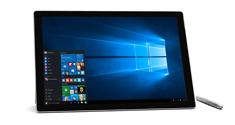 Microsoft Surface Pro 4 Tablets Up for Pre-Order, Prices Start at $899[teaser]The company's newest tablet has been detailed. [/teaser] Microsoft has announced the latest addition to its Surface Pro tablet lineup. The upcoming Surface Pro 4 uses Windows 10 Pro and is designed to be powerful enough to serve as a laptop replacement. The Surface Pro 4 is just 8.4 mm thin and features a 12.3-inch, 3:2 PixelTouch display with a resolution of 2736 x 1824 and 267ppi. Models will be available with 6th Gen Intel Core m3, i5, or i7 processors along with 4GB, 8GB, and 16GB RAM options. An 8MP rear camera and a 5MP front camera are integrated as well. Likewise, the tablet includes stereo speakers with Dolby audio, stereo microphones, and a Surface Pen. In addition, customers can also pick up the new Surface Pro 4 Type Cover, transforming the tablet into a laptop with a redesigned mechanical keyboard. The Microsoft Surface Pro 4 is now available for pre-order. Shipments are expected to go out on October 26. Here's a rundown of the listed models: Microsoft Surface Pro 4 (128 GB, 4 GB RAM, Intel Core M) - $899 Microsoft Surface Pro 4 (128 GB, 4 GB RAM, Intel Core i5) - $999 Microsoft Surface Pro 4 (256 GB, 8 GB RAM, Intel Core i5) - $1,299 Microsoft Surface Pro 4 (256 GB, 8 GB RAM, Intel Core i7e) - $1,599 Microsoft Surface Pro 4 (256 GB, 16 GB RAM, Intel Core i7e) - $1,799 Microsoft Surface Pro 4 (512 GB, 16 GB RAM, Intel Core i7e) - $2,199 Sources: Microsoft 1, Microsoft 2Posted Wed Oct 7, 2015 at 04:00 PM PDT by:
 -
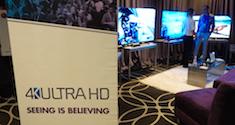 Luxury Technology Show Fall 2015 Roundup: 4K Ultra HD TVs, Bluetooth Speakers, and More![teaser]The Luxury Technology Show is an annual series of invitation-only showcases for high-end gear. [/teaser] Basically, it's a way to get media and potential customers in a room with a plethora of tech companies presenting all sorts of the latest and greatest gadgets, A/V electronics, and accessories. And while not everything applies for HDD readers, there are always a few new toys in attendance worth a look. 4K Ultra HD Displays I've been holding off on upgrading to 4K in hopes of the technology progressing far enough for prices to fall a bit and so as not to get stuck on the wrong side of a technological divide (looking at you HDCP 2.2). The 2015 Luxury Technology Show had five display brands and one projector company on hand for demos, mixing together OLED, LED, 4K and 1080p resolutions. [Please note that these event images should not be used to judge the performance of any of these displays] LG Wow. Just wow. It comes as no surprise that the most expensive TV was also the best looking. The curved LG 65EG9600 4K OLED (also available in the flat EF9500 series) is a visual stunner. Plasma-eating black levels give way to brilliant colors and what feels like infinite resolution. The secret behind this, LG claims, is the ability to illuminate (or turn off) individual pixels. In addition to 4K content, we also streamed a few minutes of 'Mozart in the Jungle' in 4K via Amazon Instant Video -- the production's muted color palette might not be the best demo material, but the image was clear and suffered from no banding or compression issues after a prolonged buffering period. However, I will say that sub-4K content did not upscale as well as I'd hoped, but further testing will be needed to get a better sense of this. As I write this article, the 65" 2015 9600 (curved) and 9500 (flat) series 4K OLEDs are currently selling for just under $5,000 on Amazon, while the 55" models (probably too small to benefit from 4K) will set you back just under $3,000. Prices be damned. If this is the future of TV, sign me up. Samsung Samsung's curved 65" S9500 Series 4K LED was streaming 'Maze Runner' and 'Exodus' in 4K HDR via the MGO app. If 4K streaming looks this good, 4K Blu-ray's increased bit-rate should prove spectacular. Overall, the display presented solid black levels, good color, but suffered from some motion judder and compression artifacts (likely more a source issue than a display problem). And, for some reason, Samsung likes to demo this TV with AutoMotion Plus in the on position, which does an okay job, but still looks fake. The movies looked much better with all of those settings off. This display MSRPs for just under $6000, but is currently available for less than $4,500 on Amazon. Sony Sony's Android-powered X900C Series 4K LED is available in a 55" or 65" versions. Let me say that this TV is shockingly thin at the edges, though the power and processing components protrude further in the back. This display does HDR, offers a variety of streaming and other built-in apps, and, if you purchase it right now via Amazon, includes a $100 credit towards the purchase of 4K movies (also via Amazon). In my short time watching this display, it offered strong color and image fidelity. Current Amazon pricing for the 55-incher is just shy of $2,000, while the 65" model is a hair or two under $3,000. Panasonic The Panasonic CX850 series 4K LED is available in 65" or 55" sizes. These models will get an HDR firmware upgrade once Ultra-HD Blu-ray launches, but already offer terrific colors and good contrast (it was playing 4K video from Panasonic's YouTube channel so the source material had some compression artifacts). Panasonic said they incorporate circuits from their pro-monitors to help with picture quality and upscaling non-4K content. As a VT series owner, I can't say this television matched the once-king-of-the-black-levels, but it was pretty darn close. Also, the Panasonic iOS and Android app is fantastic, allowing you to mirror your phone, throw content up to the display, and even calibrate your display on the fly without having any menus blocking a portion of the screen. The CX850 series is currently available from Amazon for just over $3,000 Mirage Vision Mirage Vision is less a display manufacturer and more of a display upgrader. They take panels from other companies like LG and prep them for living outside in all sorts of extreme temperatures and weather conditions. For example, they are building units for customers in Dubai where they will function amidst sweltering heat. Mirage makes a variety of products for businesses and homeowners, allowing each customer to wall mount as needed, or even tuck into a portable hideaway-stand finished in various rock surfaces. Mirage doesn't build a separate, bulky enclosure to protect its TVs. Rather, these panels remain nearly as slim as the original manufacturer versions, save for a few changes. Neoprene (think wetsuits) covers inputs, and specialized vent covers allow for the displays to breathe as needed. Basically, you get all the performance, style, and dimensions of a display you already know, but now it can live on your boat or in the outdoor bbq area or wherever you need an outdoor TV. The king daddy of the Mirage lineup is their Diamond E Series, which just added a new Ultra HD 4K OLED to its lineup. In fact, it's the aforementioned LG 65EG9600 4K OLED panel wrapped into a new body that's been completely weatherized, which raises the price to just under $12,000. Epson Prominent projector designer, Epson, brought two projectors to the party, though only one was running. The G6900WU series is available with up to 6,000 lumens (5,200 and 4,000 lumen versions are the other options) for just under $5,400 and is part of Epson's Ultra Bright Series of projectors. This Full HD 1080p model won't win any awards for black levels (the colors I saw projected on an off-white wall were dull and washed out with grey standing in for black), but this series is designed for rooms with more ambient light than many dedicated home cinemas. Epson also had the Pro Cinema LS10000 laser projector, which offers "4K Enhancement" pixel-shifting technology to up-rez 1080p sources to 3840 x 2160. This 3-chip LCD laser system is capable of 1500 lumens at full brightness as well as zero lumens for absolute black, and can zoom between 4:3, 16:9, and 2.35:1 aspect ratios with the push of a button. Sadly, the conditions weren't right for a demo, but with companies like Dolby and IMAX pursuing laser projection systems, I can't wait to see one of these in person. As for price, the Pro Cinema series should cost around $6500, which includes an extra 30,000-hour lamp and an extended warranty. Display Accessories While manufacturers are making their televisions and projectors smarter and more affordable every day, third-party devices continue to evolve in the ecosystem offering even more capabilities and functionality. 4SeTV Here's an interesting device for sports fans who also live in an area with strong OTA HD broadcast signals. The $179 4SeTV allows you to watch up to four live HD broadcasts on an iOS or Android device, or any big screen TV. The perfect scenario is the weekend filled with multiple sporting events on local channels. It starts with the free app. Users select four channels to monitor and then either throw one or all four of those channels onto the big screen. The app provides the ability to arrange your channels in different split-screen positions as well as to select the audio source. For those with DirecTV, 4SeTV is very similar to the SportsMix channel, but utilizes more of the display's screen area and is user-customizable. In the future, 4SeTV hopes to branch out into cable and satellite channels, but they are currently waiting for those companies to allow open access to their equipment. Either way, if you watch your local HD channels and find yourself constantly switching between sporting events, the 4SeTV might be a good fit for your man cave. Bluetooth Speakers Next let's turn our attention to audio. We didn't run into any traditional, multi-channel home cinema gear at the 2015 Luxury Technology Show, but there were a couple Bluetooth Speakers worth a mention. RIVA While we've already had our hands on the Highly Recommended Turbo X, premium wireless speaker-maker, RIVA, used the 2015 LTS to launch the new RIVA S Bluetooth speaker. "Designed to amaze", the S model is a compact, weather-resistant 30w speaker that weighs 1.5 lbs and can run up to 13 hours (@ 70 dB) on a single charge. In addition to music playback -- via 3.5mm, Micro-USB Type B, and Bluetooth -- the S also functions as a speaker phone and can be controlled with the free iOS/Android RIVA Audio App. There's even a Phono Mode that adds up to 9 dB of gain while bypassing the automatic gain control. And, it's possible to purchase two RIVA S speakers and wirelessly connect them for stereo sound. The RIVA S will debut later this month (October, 2015) with a $249 MSRP. BenQ Most of us know BenQ for their affordable home theatre projectors and computer monitors, but they've also launched the world's first electrostatic Bluetooth speaker -- the treVolo. Trading coil drivers for electrically charged diaphragms, electrostatic speakers are known for their accuracy and clarity, particularly in the vocal and higher end frequency ranges. The treVolo costs $299, weighs 2.6 lbs, and includes a noise-canceling microphone for use as a speaker phone, three color-coded sound modes, and a 12-hour battery. Input connections include Bluetooth 4.1, Micro USB, and 3.5mm. It was too noisy in the LTS to do any sort of in-depth testing, but despite the crowd noise, this elegant little box with two flip-out speakers produces a surprising amount of sound (and even a little bass, something all but the largest Bluetooth speakers lack). So, there you have it. These were some of the most impressive A/V products on display at this year's Luxury Technology Show. What do you think about the audio and video gear showcased? Will you be taking the 4K plunge with any of these new Ultra HD TVs? Could these high-end products really be worth their equally high-end price tags? Let us know your thoughts in the forum! And be sure to check out our previous coverage of the Fall 2014 Luxury Technology Show and the Spring 2015 Luxury Technology Show.Posted Wed Oct 7, 2015 at 06:00 AM PDT by: