-
 Klipsch Launches T5 Series Earphones[teaser]Four new earphone models have been detailed.[/teaser] Klipsch has announced the launch of its new T5 Series collection of earphones. The lineup includes the T5 True Wireless earphones, T5 Neckband earphones, T5 Sport earphones, and T5M Wired earphones. "Klipsch has been a leader in the speaker industry for more than 70 years, making products that deliver the experiences that allow you to be your true self. We are thrilled to offer the new Klipsch T5 Series of high-performance, kick-ass earphones suited for every individual, for every use case and lifestyle, at any budget," said Paul Jacobs, president and CEO for Klipsch Group, Inc. The T5 True Wireless earphones feature four Clear Voice Chat (cVc®) microphones for calls and ambient noise reduction, along with a Bluetooth 5 battery efficient chipset, snap-fit oval ear tips, and USB-C charging. In addition, the device is digital-assistant ready and is rated for up to eight hours of battery life from a single charge. The T5 True Wireless is set to start shipping in July for an MSRP of $199. Meanwhile, the wireless T5 Neckband earphones are rated for 15-hours of battery life. The device also includes dual cVc microphones for calls and ambient noise reduction, and Bluetooth 5 compatibility. In addition, the unit features a premium hand-stitched leather band, along with aluminum controls and a three-button remote. The T5 Neckband is set to start shipping in July in brown or black leather for an MSRP of $119. Designed for active users, the wireless T5 Sport earphones feature patented Klipsch oval ear tips, miniature drivers, flexible ear wings, integrated cable management, and a three-button remote. Likewise, the earphones use Comply Comfort Ts-100 memory foam ear tips to help ensure the units stay in a user's ears during workouts. In addition, the device is rated for 10-hours of battery life and has been IPX4 rated for sweat, moisture, and rain resistance. Eighth generation cVc technology for calls and ambient noise reduction is integrated as well, along with Bluetooth 5 connectivity. The T5 Sport is now available in black and white for an MSRP of $99. Finally, the T5M Wired earphones feature an all-new miniature aluminum single button-remote with braided fabric cabling to control music and calls. The earphones are available now in black and white for an MSRP of $59. Source: KlipschPosted Wed Jun 19, 2019 at 11:50 AM PDT by:
 -
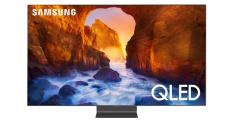 Samsung Reminds Users to Scan Smart TVs for Malware[teaser]Like most connected devices, smart TVs are not immune to malicious software.[/teaser] As reported by The Verge, the Samsung Support USA twitter account recently sent out a reminder to users about the importance of scanning their TVs for viruses. Though the tweet has since been deleted, the instructional video that it included is still viewable via the company's YouTube channel. Here's the text that was originally featured in the now deleted tweet: "Scanning your computer for malware viruses is important to keep it running smoothly. This also is true for your QLED TV if it's connected to Wi-Fi! Prevent malicious software attacks on your TV by scanning for viruses on your TV every few weeks." The tweet does not appear to have been related to any kind of specific threat (the YouTube video has actually been up since April 30), and instead simply looks like it was part of a series of @SamsungSupport tweets aimed at highlighting various maintenance, connectivity, and troubleshooting features available on Samsung products. But while there might not be an immediate danger, the post does serve as a telling reminder that all connected devices can be susceptible to viruses and malware. Likewise, the tweet's suggestion of scans every few weeks seems a bit alarming considering that most users probably aren't even aware that the feature exists. Thankfully, though Samsung's virus scan process is sadly not automated, the procedure is actually pretty simple. Customers just need to bring up the Settings menu, click General, navigate to System Manager, select Smart Security, and then click on Scan. I actually just tested the feature on a Samsung Q70R QLED TV that I'm reviewing and the scan took about a minute and came up with no infected files. Check out the video below for a quick look at the whole process via the Samsung Care YouTube channel: Sources: Samsung Care (YouTube), The Verge, @SamsungSupport, CNETPosted Mon Jun 17, 2019 at 03:10 PM PDT by:
 -
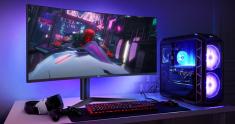 LG Details New UltraGear Nano IPS Gaming Monitors[teaser]The new displays offer super-fast response times.[/teaser] LG has announced its latest gaming monitor, the UltraGear Nano IPS. The display will be available in 38-inch and 27-inch models, and is set to become the world's first 1 millisecond (ms) IPS monitor. The 38GL950G model features a 38-inch Nano IPS panel with a WQHD resolution of 3840 x 1600 and a 21:9 curved screen design. In addition, the display offers support for a 144Hz refresh rate (overclockable to 175Hz) and NVIDIA G-SYNC tech for smooth gameplay without screen tearing or stuttering. VESA DisplayHDR 400 capabilities are included as well with 450 nits typical brightness, and the display is capable of covering 98 percent of the DCI-P3 wide color gamut. A Sphere Lighting 2.0 system is also integrated on the back of the monitor with RGB lights that can change color in tandem with on-screen action. Meanwhile, the 27GL850 features a 27-inch Nano IPS panel with a QHD resolution of 2560 x 1440. The display supports HDR10 with a typical brightness of 350 nits along with 98 percent of the DCI-P3 wide color gamut. In addition, the monitor offers a 144Hz refresh rate and is G-SYNC compatible. Here's a full rundown of specs for both models per LG: 38GL950G Size: 37.5-inch Resolution: WQHD (3840 x 1600) Brightness: 450 nits (Typical) Color Gamut: DCI-P3 98 percent (sRGB 135 percent) Color Bit: 1.07B Refresh Rate: 175Hz (OC) Response Time: 1ms GTG HDR: VESA DisplayHDR 400 Adaptive Sync: NVIDIA G-SYNC Connectivity: HDMI x 1, DP x 1 USB3.0 Hub: 1 up / 2 down Feature (Bias Lighting): Sphere Lighting 2.0 27GL850 Size: 27-inch Resolution: QHD (2560 x 1440) Brightness: 350 nits (Typical) Color Gamut: DCI-P3 98 percent (sRGB 135 percent) Color Bit: 1.07B Refresh Rate: 144Hz Response Time: 1ms GTG HDR: HDR10 Adaptive Sync: NVIDIA G-SYNC Compatible Connectivity: HDMI x 2, DP x 1 USB3.0 Hub: 1 up / 2 down Pricing has not been announced yet, but LG's new Nano IPS Monitors are set to start shipping in July. Source: LGPosted Mon Jun 17, 2019 at 10:00 AM PDT by:
 -
 Coming Soon to Streaming: VERONICA MARS, THE CHRONICLES OF NARNIA, and More[teaser]Private eyes, lions, witches, and wardrobes all headline this week's crop of streaming news and teasers.[/teaser] Netflix and Hulu have released new trailers and info for several of their upcoming shows and films. Here's a full rundown of titles scheduled to arrive on each service: Harlots: Season 3 (Hulu, July 10) - Margaret Wells struggles to reconcile her roles as brothel owner and mother to daughters Charlotte and Lucy. When her business comes under attack from Lydia Quigley, a rival madam with a ruthless streak, Margaret must fight back even if it means losing her family and possibly her life. Veronica Mars: Season 4 (Hulu, July 26) - Spring breakers are getting murdered in Neptune, thereby decimating the seaside town’s lifeblood tourist industry. After Mars Investigations is hired by the family of one of the victims to find their son’s killer, Veronica is drawn into an epic eight-episode mystery that pits the enclave’s wealthy elites, who would rather put an end to the month-long bacchanalia, against a working class that relies on the cash influx that comes with being the West Coast’s answer to Daytona Beach. The Amazing Johnathan Documentary (Hulu, August 16) - Begins as a seemingly ordinary profile following the final tour of a dying magician, but becomes an unexpected and increasingly bizarre journey as filmmaker Ben Berman struggles to separate truth from illusion. DARK: Season 2 (Netflix, June 12) - Jonas finds himself trapped in the future and desperately tries to return to 2020. Meanwhile, his friends Martha, Magnus, and Franziska are trying to uncover how Bartosz’ is involved in the mysterious incidents occurring in their small hometown of Winden. More and more people are drawn into the events orchestrated by an obscure figure who seemingly controls everything that is connected throughout different time zones. The Chosen One (Netflix, June 28) - Determined to bring a Zika vaccine to the remote Pantanal, three doctors clash with a faith healer and are pulled deeper into the mysteries of his cult. Authors Raphael Draccon ("Dragons of Ether") and Carolina Munhóz ("Keeping Up with Magic") wrote this adaptation of Mexico’s "Niño Santo." Starring Paloma Bernardi, Renan Tenca, and Gutto Szuster. Family Reunion (Netflix, July 10) - When the McKellan family moves from Seattle to Georgia to be closer to extended family, the transition is like being a catfish out of water. From three-hour church services and huge humidity hair to M’Dear’s home cooking and family bonding, the everyday ups and downs of Family Reunion are real, memorable, toe tapping, heart stopping, laugh out loud authentic moments. The series stars Emmy-Award winner Loretta Devine (Grey’s Anatomy, The Carmichael Show) and Tia Mowry (Sister, Sister, Instant Mom). My First First Love: Season 2 (Netflix, July 26) - Tae-o and his friends navigate the twists and turns of friendship and love, as they face new challenges in their relationships with one another. Starring Ji Soo, Jung Chae-yeon, and Jinyoung. The Naked Director (Netflix, August 8) - Profiles the unusual and dramatic life of Toro Murinaishi, the man who revolutionized the adult video industry in Japan. The 10 episode series will chronicle his rise to fame, filled with big ambitions as well as spectacular setbacks in his unflinching attempt to turn Japan’s porn industry on its head. It will also be a portrait of an ensemble of characters who experience success and failure in Japan’s "bubble" era of the 1980s, a time that gave rise to unprecedented splendor and excess. In addition, Netflix has announced that Matthew Aldrich will serve as the creative architect for the platform's upcoming live-action adaptation of C.S. Lewis' The Chronicles of Narnia series. Though exact details have not been announced yet, Netflix's multi-year deal includes the rights to develop shows and films based on the fantasy books, and Aldrich will now oversee creative development of all of the streaming service's projects related to the franchise. Aldrich's previous credits include co-writing duties on Disney and Pixar's Coco. Meanwhile, Netflix has also picked up the rights to the upcoming film adaptation of Tom Clancy's The Division video game series from director David Leitch (Deadpool 2). The movie will star Jake Gyllenhaal and Jessica Chastain, and the script is being written by Rafe Judkins (Agents of S.H.I.E.L.D.). Here's a logline for the film per Netflix: In the near future, a pandemic virus is spread via paper money on Black Friday, decimating the city of New York and killing millions. By Christmas, what’s left of society has descended into chaos. A group of civilians, trained to operate in catastrophic times, are activated in an attempt to save who and what remains. Finally, Netflix and Dreamworks Animation have announced a new animated show set in the Jurassic World franchise called Jurassic World: Camp Cretaceous. The series is set to debut in 2020 and comes from showrunners Scott Kreamer (Pinky Malinky) and Lane Lueras (Kung Fu Panda: The Paws of Destiny). Steven Spielberg, Frank Marshall, and Colin Trevorrow all serve as executive producers. Here's a synopsis per Netflix: Jurassic World: Camp Cretaceous follows a group of six teenagers chosen for a once-in-a-lifetime experience at a new adventure camp on the opposite side of Isla Nublar. But when dinosaurs wreak havoc across the island, the campers are stranded. Unable to reach the outside world, they’ll need to go from strangers to friends to family if they’re going to survive. - A current Netflix subscription starts at $13 per month for HD streaming and $16 per month for Ultra HD streaming. - A current Hulu subscription starts at $6 per month with commercials. In addition, ad-free playback is available for $12 per month and Live TV bundle is available for $45. Sources: Netflix (YouTube), Netflix, Hulu (YouTube)Posted Fri Jun 14, 2019 at 09:45 PM PDT by:
 -
 HDD Attends 2019 Value Electronics TV ShootoutFour 4K HDR TVs enter, but only one can leave victorious. Yes, it's that time of year again. The time to get holed up in a dark room for hours on end in order to watch the ultimate Ultra HD TV cage match. As part of CE Week at the Jacob K. Javits Convention Center in NYC, Value Electronics recently held its 15th Annual TV Shootout.[teaser] The event pitted the year's top displays against each other in a side-by-side competition in order to choose the new "King of TV." [/teaser] The lineup of opposing displays in 2019's Shootout included four flagship premium 4K HDR TVs: LG OLED65C9PUA OLED TV Samsung QN65Q90R LCD/LED TV Sony XBR-65A9G OLED TV Sony XBR-65Z9F LCD/LED TV In order to evaluate the displays, the competition placed the four TVs side-by-side as test patterns and demo content from a variety of films were used to judge various picture quality attributes, including dynamic range, color accuracy, color saturation, and motion resolution. A panel of professional video colorists, finishers, TV reviewers, and video scientists then scored all of the attributes from 1 to 10 to determine winners across four categories. Likewise, the display with the most overall total points was then named the "King of TV." All of the TVs were visually matched to and evaluated against a Sony BMV-X300 30-inch OLED Reference Monitor used for professional color grading applications. Demo material and calibration patterns were sourced from test generators, 4K Ultra HD Blu-rays, Kaleidescape digital downloads, and Spears and Muncil's new 4K HDR Demo Disc. Content was played from a Panasonic DP-UB9000 Ultra HD Blu-ray Player and a Kaleidescape Strato S 4K HDR Media Player. Switching, distribution, HDMI cables, and test equipment were supplied by AVProStore and Metra Home Theater. The Shootout was presented by Value Electronics' owner Robert Zohn. Scott Wilkinson served as moderator for the event, and the evaluation was guided by Joel Silver of the Imaging Science Foundation and Kevin Miller of ISFTV. And now that the dust has settled, here's a rundown of the winners in each category based on all the judges' scores: King of TV: Sony XBR-65A9G OLED TV Best SDR Reference Mode: Sony XBR-65A9G OLED TV Best SDR Day Mode: Sony XBR-65A9G OLED TV Best HDR TV: Sony XBR-65A9G OLED TV Best Streaming TV: Sony XBR-65A9G OLED TV and LG OLED65C9PUA OLED TV Below, I'll offer details on the tests conducted in each category, along with my own impressions on how each TV fared during the competition and my general feelings on the winners. Let the shootout begin! SDR Reference Mode For this category, the focus was on which display had the best SDR reference performance in a dark room. All of the TVs were calibrated for a home theater environment and all of the lights were turned off. A mixture of movie clips and test patterns were used for judging, and the TVs were evaluated based on how well they matched the professional BMV-X300 Reference Monitor. Key testing material included clips from The Art of Flight and Aquaman, along with color bars, ANSI checkerboards, pluges, and other calibration material. Right off the bat, it was clear that both OLEDs matched the colors and contrast of the Reference Monitor just a tad better than the LCDs. The Samsung Q90R LCD, in particular, carried a slightly magenta push compared to the other sets. Likewise, the reds looked just a hair washed out on the Samsung in the color bar pattern. Comparing colors and contrast between the two OLEDs, however, proved to be quite challenging as they were so incredibly close. Overall, I'd say the Sony OLED was a tad cooler than the LG. In some instances, this made it look a bit closer to the Reference Monitor, but in others, I actually think the LG had a closer resemblance. Both OLEDs also offered very similar black level and contrast performance in SDR mode, providing genuine blacks that disappeared into the room. With that said, the LG did offer a small, but still noticeable uptick in brightness over the Sony, giving it just a bit more luminance in brighter portions of the image. On the other hand, while both LCDs did look brighter, their contrast was comparatively washed out compared to the OLEDs. The Samsung Q90R did maintain impressive black levels, though, thanks to its full array local dimming. The Sony Z9F's local dimming was also solid, but light bleed into the letterbox bars was more visible. TV Shootout Winner - Sony XBR-65A9G OLED TV My Winner – LG OLED65C9PUA OLED TV Final Thoughts – This one was really tough and I can't really argue with the Sony OLED winning. To be honest, both OLED models were nearly identical during a lot of the material, but I thought that the LG's slightly superior brightness gave it just a bit more dimension which better matched the Reference Monitor's capabilities. SDR Day Mode This category was designed to determine which display had the best overall SDR daytime viewing in a bright living room setting with a lot of ambient light. All of the TVs were set to their brightest calibrated SDR mode with motion interpolation activated. Likewise, all of the lights were turned on in the room. Unlike most of the other tests, however, the Reference Monitor was not used for comparison here since it's not designed for bright room viewing. For testing purposes, several calibration patterns were displayed on all the TVs, including ANSI Checkerboards, brightness pluges, and color bars, along with demo clips from movies like The Art of Flight, which featured footage of skiers on a snowy mountain. While the ANSI Checkerboards were up, light readings were also taken from the white boxes on each TV to give the judges an idea of their luminance capabilities. Here's a rundown of the results: LG OLED65C9PUA OLED TV - 78.4 nits Samsung QN65Q90R LCD/LED TV - 115 nits Sony XBR-65A9G OLED TV - 64.6 nits Sony XBR-65Z9F LCD/LED TV - 155 nits As one might expect based on the numbers above, I found that the LCDs did indeed offer a perceivably brighter image that gave them an edge for standard dynamic range under daytime conditions. The Sony Z9F LCD, in particular, set itself apart from the rest with a punchier image. Meanwhile, motion remained superior on the Sony A9G OLED, offering a smoother look during pans and quick moves during the skiing clips. Likewise, colors appeared just a hair more accurate on both OLED sets. Meanwhile, all of the TVs struggled a bit to show darker shades of black with the lights on, but the Sony LCD managed to keep shadows visible at a step or two below the competition. TV Shootout Winner - Sony XBR-65A9G OLED TV My Choice - Sony XBR-65Z9F LCD/LED TV Final Thoughts - Though the OLEDs and Samsung's Q90R LCD all did quite admirably, I thought that the Sony Z9F LCD maintained a better overall picture with the lights on thanks in large part to its superior brightness and shadow detail. Motion and color were indeed a bit better on the A9F OLED, but considering the Day Mode designation of this category, the added luminance of the Sony LCD made a larger impression on me. HDR Reference Mode This category focused on which display had the best reference 4K HDR10 performance in a home theater environment. All of the TVs were calibrated for a dark room and all of the lights were once again turned off. Likewise, the professional BMV-X300 Monitor was used as an evaluation reference for the majority of the tests. With that said, the BMV-X300 is only capable of 1,000 nits and does not include tone-mapping support for scaling content beyond that. In other words, it completely clips out anything that's graded to be brighter. As a result, it was not used as a reference for specular highlights beyond 1,000 nits. For testing purposes, 4K HDR10 clips from Mad Max: Fury Road, The Revenant, Aquaman, 2001: A Space Odyssey, Planet Earth II, Baby Driver, and Mission: Impossible – Fallout were used, along with various calibration patterns. As a whole, all of the TVs really shined here, fully demonstrating why they're considered flagship models. But while the competition was very close, certain key quirks and limitations did arise in some material. As a whole, both OLED sets matched the Reference Monitor the best during the majority of the testing material with deep blacks and very similar colors. There were times, however, when the Sony OLED looked just a hair undersaturated compared to the LG OLED and the Reference Monitor. On the other hand, though, certain colors on the Reference Monitor, like the red used in a field of roses, ended up appearing much more in line with the Sony OLED. Meanwhile, green on the Sony LCD looked a bit washed out compared to the other sets, and blue on both LCDs veered more toward violet compared to the Reference Monitor and OLEDs. As one would expect, overall contrast and black levels were superior on the OLEDs. The LCDs and their full array local dimming backlights were also capable of achieving very deep blacks, but not at the same level of precision as the OLEDs. The Samsung LCD was actually able to get a bit deeper than the Sony LCD and produced far less booming. One test pattern that featured a small scrolling white square across a completely black background resulted in a lot of light bleeding to the surrounding areas on the Sony Z9F LCD. But while the square pulsated in intensity as it moved from zone to zone on the Samsung Q90R LCD, there was virtually no blooming. Unfortunately, the Samsung LCD was prone to its own troublesome local dimming quirk, this time related to crushed shadow detail. One clip of a starfield was darkened too much on the Samsung compared to the other TVs causing many stars to disappear. Likewise, a test pattern used for setting brightness levels was almost completely invisible on the Q90R as a result of its dimming process. The moderators actually had to pump up the brightness all the way to get it to show up. Of course, it should be noted that extreme local dimming issues like this did not occur during the demo material from real-world content. And though the OLEDs were nearly perfect performers when it came to black levels, the LG model did crush shadows a bit more than the Sony. The stargate scene from 2001 offered a perfect example of this. The black levels are actually intentionally elevated just a hair on the 4K HDR transfer during this scene, and the Sony OLED and Sony LCD both managed to match the Reference Monitor in this regard. The LG OLED and Samsung LCD, however, both crushed the blacks. Finally, HDR brightness performance was quite impressive across the entire lineup, though the Sony Z9F LCD definitely had the punchiest and most intense specular highlights. With that said, the Sony LCD's method of tone-mapping did result in more detail being lost in very bright objects. As calibrated here, however, the Samsung Q90R LCD didn't look quite as bright but usually ended up preserving more detail in highlights. Meanwhile, both OLEDs were a little less intense than the LCDs, but the LG had a small but noticeable edge over the Sony OLED in peak brightness. One shot of the sun peeking out behind a mountain ended up being one of the most telling images for HDR performance. The Sony OLED and LCD both came very close to matching the color tone, detail, and intensity of the highlight on the Reference Monitor. For whatever reason, however, both the Samsung LCD and LG OLED rendered the sun too red and less bright compared to the Reference Monitor. TV Shootout Winner - Sony XBR-65A9G OLED TV My Winner - Sony XBR-65A9G OLED TV and LG OLED65C9PUA OLED TV (tie) Final Thoughts – Wow, this one was really hard to determine. To be honest, the differences between the sets were often incredibly small and all of the TVs ended up displaying their own key strengths. But while the LCDs had a bit more kick in their highlights, the pixel-level contrast of the OLEDs once again won me over. Picking between the two models, however, ended up being a bit of a wash. The LG OLED could get a little brighter for a bit more intensity but it also crushed blacks a tad. Meanwhile, the Sony OLED's colors seemed to match the Reference monitor just a bit better in some scenes, but looked a little undersaturated in others. As a whole, I'd call this one a tie. Streaming For the final category, all of the TVs played back streaming clips from Netflix's Lucifer and Our Planet through their internal smart TV apps. The shows were played in HDR10 on the Samsung LCD, and in Dolby Vision via the LG OLED, Sony OLED, and Sony LCD. Since the Professional Monitor does not have streaming apps it was not used as a reference here. This one was incredibly close as well, and all of the TVs did a very similar job of streaming the material with no major discrepancies outside of the picture performance quirks already revealed in the other testing categories. With that said, the Sony Z9F LCD's superior brightness capabilities seemed to be more readily apparent here, producing noticeably richer highlights in the Lucifer clip while maintaining better detail than the Samsung LCD (perhaps thanks to the Dolby Vision encode here). The Samsung could get a little darker, however. Meanwhile, the OLEDs were similarly great, with better blacks and overall contrast but less intense highlights than the Sony LCD. TV Shootout Winner - Sony XBR-65A9G OLED TV and LG OLED65C9PUA OLED TV (tie) My Winner – Sony XBR-65A9G OLED TV and LG OLED65C9PUA OLED TV (tie) Final Thoughts – At the end of the day, I don't really think any of the TVs did a demonstrably better or worse job streaming the content played. Instead, they were all still prone to the same strengths and weaknesses found in the HDR Reference section. As such, this one was still an OLED tie for me. Conclusion I've been covering the Value Electronics TV Shootout every year since 2016, and this is by far the closest competition I've seen. In fact, I think it's important to stress just how close the picture performance was on all four of these displays. There were several shots and scenes that looked nearly identical across the entire lineup, with only extremely minor differences that would never be noticeable outside of a side-by-side comparison like this. Of course, that's what makes the TV Shootout so special. Getting to see the same content played back on four TVs right next to each other is the only way to truly judge which one is superior. And while picking a winner for different picture attributes was often like splitting hairs, some key strengths and weaknesses did arise. In the end, I agree with most of the judges' selections. Though I think the LG C9 OLED is pretty much tied for the overall top spot, the Sony A9G OLED definitely deserves recognition as the "King of TV" for 2019. We'd like to extend a big thanks to Robert Zohn (President of Value Electronics) and the rest of the Shootout's dedicated team for hosting the event and for setting up all of the tests! And for those interested in seeing a more detailed breakdown of the judges' scores, CLICK HERE to see the full results chart.Posted Thu Jun 13, 2019 at 05:25 PM PDT by:
 -
 Samsung Unveils The Wall Luxury MicroLED Modular Display With up to 8K Resolution[teaser]The company's latest MicroLED screen has been revealed.[/teaser] Samsung has debuted a new display model using its modular MicroLED technology. Dubbed The Wall Luxury, the customizable screen is geared toward the luxury consumer market and can be configured in a variety of sizes and resolutions. "Throughout the last twelve months, we've closely monitored interior design and technology trends to shape the product planning and development of The Wall Luxury," said Mark Quiroz, Vice President of Product Marketing for Samsung Electronics America. "We set out to create a product unlike anything else — matching the lifestyle and taste of those looking for the most exclusive and premium visual experiences in their homes." Like previous iterations of Samsung's The Wall, The Wall Luxury uses MicroLED technology with individual tiles made of self-emissive MicroLEDs. These MicroLEDs feature millions of inorganic red, green, and blue microscopic LED chips which are capable of producing their own light -- resulting in superior contrast ratio performance and near perfect color. In addition, the screen utilizes a 30mm slim, bezel-less infinity design with a modular construction, allowing users to configure the display in a variety of sizes and ratios from 73-inches in 2K resolution up to 292-inches in 8K resolution. Under the hood, The Wall Luxury is powered by Samsung's Quantum Processor Flex. The advanced AI picture quality engine uses machine learning to optimize images on a scene-by-scene basis, enabling lower res content to match the screen's resolution. Likewise, the display offers Quantum HDR technology with a peak brightness of 2,000 nits and support for a 120Hz video rate. A customizable décor frame is also included, allowing the screen to better match a user's particular room. Finally, The Wall Luxury also boasts a 100,000-hour lifetime thanks to its self-emitting diodes, resulting in a display that is designed to stay on. When not in use as a TV, the screen can switch to Samsung's Ambient Mode, turning the massive display into a digital canvas for paintings, photographs and video art. Pricing for The Wall Luxury has not been announced, but the display is set to launch globally in July. Source: SamsungPosted Thu Jun 13, 2019 at 09:20 AM PDT by:
 -
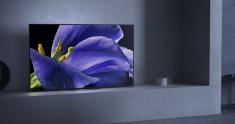 Sony XBR-65A9G OLED Wins 2019 Value Electronics TV Shootout[teaser]A new "King of TV" has been crowned![/teaser] Value Electronics has announced the winner of its 2019 TV Shootout event. The competition was held earlier today as part of CE Week at the Jacob K. Javits Convention Center in NYC. And now that the dust has settled, an overall winner has been named: the Sony XBR-65A9G OLED. The competition placed four flagship displays side-by-side as test patterns and demo content from a variety of films were used to judge various picture quality attributes, including dynamic range, color accuracy, color saturation, and motion resolution. A panel of professional video colorists, finishers, TV reviewers, and video scientists then voted on all of the categories to select 2019's "King of TV." Here's a rundown of the overall placing based on the judges' scores: Sony XBR-65A9G OLED TV LG OLED65C9PUA OLED TV Sony XBR-65Z9F LCD/LED TV Samsung QN65Q90R LCD/LED TV The 2019 competition was the event's 15th year and now marks the second year in a row that Sony's flagship OLED has come away with the top prize. TVs used in the competition were taken randomly from Value Electronics' inventory and no manufacturer supplied samples were used. The TV Shootout used switching, distribution, HDMI cables, and test equipment supplied by AVProStore and Metra Home Theater. Scott Wilkinson served as moderator for the event, and the tests were presented by Joel Silver of the Imaging Science Foundation and Kevin Miller of ISFTV. High-Def Digest was on hand to cover the competition, so make sure to check back soon for a more detailed rundown of the TV Shootout with full impressions on how each display stacked up! Source: Value ElectronicsPosted Wed Jun 12, 2019 at 03:45 PM PDT by:
 -
 Father's Day Gift Guide 2019: Home Theater Products & Gadgets[teaser]Father's Day is just around the corner, and you know what that means, right? Lots of great deals on TVs, sound bars, and other home theater products, gear, and gadgets![/teaser] And while all you hard-working dads out there are sure to get some great gifts from your kids and loved ones, sometimes it's just easier to go ahead and treat yourself. After all, it's your day, so why shouldn't you finally buy that big-screen TV you've been eyeing while it's still on sale? With that in mind, we've put together a roundup some of the best deals available right now on a variety of popular displays, sound bars, media players, Bluetooth speakers, and accessories. From more budget conscious 50-inch smart TVs and 2.0 audio systems to premium 65-inch OLEDs and Dolby Atmos sound bars, these gear suggestions should make a worthy purchase for any home theater-loving dad. Please note: below prices are subject to change, and do not include taxes or shipping. The Best 4K HDR TVs for Dads TCL 50S425 50-inch 4K Smart LED Roku TV (2019 Model) - $279.99 Samsung UN55RU7100FXZA 55-Inch 7 Series Ultra HD TV (2019 Model) - $497.99 TCL 65R617 65-Inch 4K Ultra HD Roku Smart LED TV (2018 Model) - $699.99 Sony XBR65X850F 65-Inch 4K Ultra HD Smart LED TV (2018 Model) - $998 VIZIO P-Series Quantum P659 65-inch 4K HDR TV (2019 Model) - $1,399.99 LG Electronics OLED65B8PUA 65-Inch 4K OLED TV (2018 Model) - $2,296.99 The Best Sound Bars for Dads VIZIO SB2920-C6 29-Inch 2.0 Channel Sound Bar - $78.99 Yamaha ATS1080-R Sound Bar - $99.95 Polk Audio Signa S2 Ultra-Slim Universal TV Sound Bar - $149 Samsung Harman Kardon HW-Q60R Sound Bar - $427.99 VIZIO SB46514-F6 46-Inch 5.1.4 Dolby Atmos Sound Bar System - $899.99 The Best Media Streaming Players for Dads Fire TV Stick 4K - $39.99 Roku Streaming Stick+ - $49 Roku Ultra - $79.99 Apple TV 4K 32GB - $179 The Best Bluetooth Speakers for Dads Sony SRS-XB12 Extra Bass Portable Bluetooth Speaker - $38 JBL Charge 3 Waterproof Portable Bluetooth Speaker - $95.50 Sonos Play:1 - $149 The Best Home Theater Accessories for Dads AmazonBasics High-Speed 6 Feet HDMI Cable (2-Pack) - $8.99 Screen Cleaner Kit - $19.95 VideoSecu ML531BE TV Wall Mount for Most 27"-55" TVs - $26.99 Amplified HD Digital TV Antenna 140 Miles Range - $27.90 AmazonBasics Articulating Wall Mount for 32" to 80" TVs - $49.99 So, there you have it, those are our top gear and gadget deal picks for dads to treat themselves to this Father's Day. What do you think about the selection? Do you have suggestions of your own? Let us know your thoughts in the forum!Posted Tue Jun 11, 2019 at 04:26 PM PDT by:
 -
 Disney+ Announces New CHIP 'N' DALE Series and MONSTERS AT WORK Details[teaser]The animated chipmunks are heading to Disney+.[/teaser] As reported by Variety, Disney has announced a new Chip 'n' Dale animated series for its Disney+ streaming service. In addition, the company has shared a new logo for its upcoming Monsters at Work show. The news was shared as part of the studio's recent presentation at the Annecy International Animation Festival in France. The Chip 'n' Dale show will focus on the studio's famous pair of chipmunks at they get into slap-stick adventures in the big city. The series will use a traditional animated style and is set to comprise of 39, seven minute episodes. Disney's London-based team is developing the show in co-production with Marc du Pontavice's Paris-based Xilam (Paprika, Mr. Magoo). Meanwhile, Monsters at Work will serve as a continuation of the Monsters, Inc. franchise. Billy Crystal and John Goodman are both returning to voice lovable monsters Mike and Sulley respectively. Other returning cast members from previous entries in the franchise will include John Ratzenberger as Yeti, Jennifer Tilly as Celia, and Bob Peterson as Roz. In addition, the show will also be home to new characters voiced by Ben Feldman, Kelly Marie Tran, Henry Winkler, Aisha Tyler, Lucas Neff, Alanna Ubach, and Stephen Stanton. The series will take place six months after the events of Monsters, Inc. and will focus on a monster mechanic named Tylor Tuskmon (Ben Feldman) who dreams about working with Mike and Sulley on the Laugh Floor. Disney Television Animation will produce the series along with Ferrell Barron. Bobs Gannaway serves as executive producer and Montpellier-based Dwarf Animation will produce the show's animation. An exact release date has not been announced yet, but Monsters at Work is set to premiere sometime in 2020. Disney+ is set to launch on November 12, 2019 for a monthly subscription price of $6.99 or an annual subscription price of $69.99. Source: VarietyPosted Tue Jun 11, 2019 at 01:25 PM PDT by:
 -
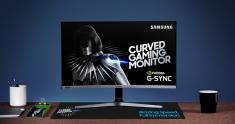 Samsung Details CRG5 Curved Gaming Monitor with NVIDIA G-SYNC Support[teaser]The company's newest curved monitor has been revealed.[/teaser] Samsung has announced the latest addition to its lineup of curved gaming monitors. The new 27-inch CRG5 (C27RG5) is set to launch in July for an MSRP of $399.99. "Samsung's delivering next-level gaming experiences with innovative curved displays using the latest graphics technology to immerse gamers like never before," said Seog-gi Kim, Executive Vice President of the Visual Display Business at Samsung Electronics. "Combining a 240Hz refresh rate with NVIDIA G-SYNC compatibility in Samsung’s new CRG5 curved gaming monitor gives gamers advanced performance for the most graphic-intense games." The CRG5 features a 27-inch curved VA LCD panel with a 1500R display curvature and a full HD resolution of 1920×1080. In addition, the monitor incorporates 240Hz RapidCurve technology to reduce screen lag time, along with NVIDIA G-Sync compatibility to reduce screen tearing for smoother gameplay. Typical brightness is rated for 300 nits and the contrast ratio is rated for 3,000:1. Meanwhile, when it comes to the monitor's external aesthetic, the unit features a minimal bezel design with a near edge-to-edge screen on three sides. A sturdy, ergonomic stand is included as well, and the screen includes several pre-set display options for different game genres via an on-screen digital menu. Likewise, users can also create up to three separate display profiles. Here's a full rundown of key specs per Samsung: Screen Size: 27-inches Aspect Ratio: 0.67291666666667 Flat / Curved: Curved Screen Curvature: 1500R Refresh Rate: 240Hz Panel Type: VA Contrast Ratio Static: 3,000:1(Typ) Viewing Angle (H/V): 178°(H)/178°(V) Response Time: 4ms (GTG) Resolution: 1,920 x 1,080 Brightness (Typical): 300cd/ ㎡ G-SYNC: G-SYNC Compatible Game Mode: Custom/FPS/RTS/RPG/AOS/Cinema/DCR Low Input Lag Mode: Yes Virtual Aim Point: Yes Black Equalizer: Yes Eye Saver Mode: Yes Flicker Free: Yes Easy Setting Box: Yes Windows Certification: Windows 10 Display Port: 1 EA Display Port Version: 1.2 HDMI: 2 EA HDMI Version: 2 Headphone: Yes Color: DARK BLUE GRAY Tilt: -2.0° (±2.0°) ~ 15.0° (±2.0°) Mount: VESA/ VESA Compatible Arm Source: SamsungPosted Mon Jun 10, 2019 at 11:20 AM PDT by: