-
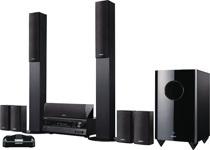 Onkyo Intros Two New Home Theater Systems[teaser]The new HTiBs from Onkyo include 3D capable AV Receivers with Faroudja processors. [/teaser] Home theater enthusiasts may scoff at the idea of purchasing a home-theater-in-a-box for your audio, but the latest offerings from Onkyo have a lot going in their favor. For starters, both the new HD-S6300 and HT-S7300 feature 3D capable receivers with four HDMI 1.4 inputs. Video can be upscaled all the way up to 1080p thanks to Faroudja DCDi Cinema processors, which also remove the 'jaggies' from your standard definition video of choice. Both systems come with a range of technologies from Audyssey built right in. They've got Audyssey Dynamic EQ, Dynamic Volume Processing and the 2EQ room acoustics correction tech. Both the 6300 and 7300 also include Dolby ProLogic IIz for height channel processing. The main difference between the two is in the speakers. The 6300 comes with six bookshelf speakers, one center channel and a 290 watt subwoofer. The 7300, on the other hand, switches a pair of those bookshelf speakers for floorstanding left and right speakers that ultilize dual woofers. You can pick up Onkyo's new line of HTiBs now. The HT-6300 runs $749 while the 7300 comes in at $899. Source: eCousticsPosted Fri Jul 9, 2010 at 11:00 AM PDT by:
 -
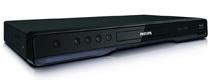 Blockbuster On Demand Makes its Way to Philips Blu-ray Players[teaser]You'll start seeing the service showing up on new Philips Blu-ray players right alongside CinemaNow and Netflix. [/teaser] Philips isn't a name anyone associates with high-end in the home theater world, but their latest Blu-ray players are full of features. The BDP5320 and BDP7320 can handle 1080p resolution at 24 frames per second, Netflix streaming, and now downloads from Blockbuster On Demand. "Philips Blu-ray players," says the company's own Todd Richardson, "combined with Blockbuster On Demand, offer consumers a one-of-a-kind home theatre experience with the added convenience of not having to run out to rent a movie." The addition of Blockbuster's download service rounds out the new players, which already include CinemaNow and Netflix. It's a big move for Philips, but it might end up being bigger for Blockbuster, who is struggling to find a foothold in the new rental landscape. Source: PR NewswirePosted Fri Jul 9, 2010 at 09:00 AM PDT by:
 -
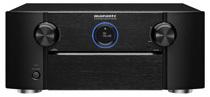 Marantz Announces the New SR7005 Flagship Receiver[teaser]The newest from Marantz features a classic look, streaming capabilities, and plenty of power. [/teaser] For a receiver to truly work, it needs a good mixture of brains and brawn, which is what Marantz is aiming for with the new SR7005. A 400Mhz, 32-bit Sharc DSP from Analog Devices provides the brainpower – taking on audio decoding, and the variety of Audyssey technologies built in. You can correct for room acoustics with MultiEQ XT PRO, keep sound at the right level at low volumes with Dynamic EQ and get rid of those loudness spikes with Dynamic Volume. The muscle of the 7005 is a current feedback amplifier circuit that uses Marantz HDAMs and an oversized low impedance transformer. The system was originally designed for SACD playback, and according to Marantz, it's ideal for DTS-HD Master Audio and Dolby True-HD. There's plenty more to the receiver, like Anchor Bay upconversion, a built-in digital media player that can pull audio from your PC or NAS drive, and a phono pre-amp made just for vinyl. You'll be able to pick up the Marantz SR7005 this August at a price of $1,599. Source: High Tech ReviewPosted Fri Jul 9, 2010 at 07:00 AM PDT by:
 -
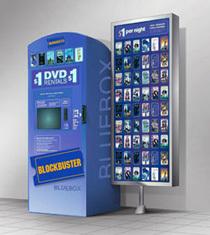 Blockbuster Kiosks are Heading to QuikTrip Stores[teaser]Over 500 kiosks will be erected in nine different states. [/teaser] Blockbuster has been struggling to compete in the video rental marketplace for a few years now, and they only just avoided bankruptcy this year. They've got to do something big if they hope to survive. The plan, as it stands, is to fight Redbox on its own turf. A total of 555 Blockbuster kiosks will be hitting QuickTrip stores across the US. That's a nice increase to the already existing 4,500 kiosks in operation now. According to analyst Michael Pachter of Wedbush Morgan though, it's not enough. He says that the addition of Blockbuster kiosks may actually cause more harm than good. "By putting kiosks in," says Pachter, "all it does is to help them cannibalize their own business." The $1 billion kiosk rental market is currently topped by Redbox, who holds 80 percent. It's a nice new market to get into, but whether Blockbuster can make a dent is anybody's guess. Dallas Business JournalPosted Thu Jul 8, 2010 at 11:00 AM PDT by:
 -
 Sony Launches Four New ES Receivers[teaser]Ranging from $800 to $2,000, Sony's new receivers will be available as early as next month through specialized retailers and custom installers only. [/teaser] The STR-DN2010 is the runt of the most recent litter of receivers from Sony, which is surprising considering its capabilities. For $800, the 2010 pushes 110 watts to 7 channels, integrates a four port Ethernet switch and sports wireless second zone audio. Sony's STR-DA3600ES adds second room audio and video distribution thanks to secondary HDMI and CAT5 outputs. It also includes a Faroudja chip which can upscale to 1080p in the first zone and 1080i in the second. It's launching in August for $1,100. Up another step is the STR-DA4600ES. It's got everything the 3600 does, but adds a second zone for CAT5 output. It also kicks the power up to 120 watts per channel. The 4600 can be yours this August for $1,500. The baddest receiver of the bunch is the STR-DA5600ES. It adds a DLNA Live Audio Server that can stream audio to clients, H.A.T.S. clock synchronization for HDMI and DCAC EX speaker calibration technology. You can nab it for $2,000 this September. Just like the rest of Sony's ES line, you won't find it in big box stores or online. It's available through specialty retailers and custom installers only. Source:eCousticsPosted Thu Jul 8, 2010 at 09:00 AM PDT by:
 -
 Hulu Plus on the PS3 Will Not Require a PlayStation Plus Subscrition[teaser]The Hulu Plus sneak preview, on the other hand, will. [/teaser] Hulu Plus has gotten a lot of press recently, especially since it's going to be coming so soon and to so many devices. You'll be able to nab it for you iPhone and your internet connected TV, but the largest install base (at least for 2010) is likely to be on the PlayStation 3. The initial belief was that accessing Hulu Plus on the PS3 would require a PlayStation Plus subscription, but an email to Hulu support finds that this isn't the case after all. "With the launch of Hulu Plus there have been many rumors started and we are trying our best to remedy the situation," writes the Hulu staffer. "Specifically to your question, the Playstation Plus service is only a requirement during the preview period."Posted Thu Jul 8, 2010 at 07:00 AM PDT by:
 -
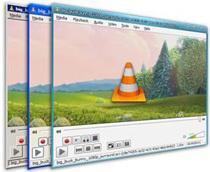 VLC 1.1 Adds Hardware Acceleration and 7.1 Channel Audio[teaser]Other additions for the free media player include better MKV compatibility and add-on support. [/teaser] If you have an extensive video collection on your computer, chances you've come across the VLC media player. It's one of the best media players around and with the 1.1 update, it's gotten even better. The first, and more exciting thing added to the program is hardware acceleration. No longer will VLC try to process all the video itself – the task will be unloaded to your video card. That means smoother movies and almost certainly a better viewing experience. The program is lighter on your CPU and, according to the developers, thousands of lines of code were cleaned up and removed to make the newest version of VLC a smooth running one. New codecs have been added, and Blu-ray subtitles are finally playable. Audio support has been increased, and there have been improvements to the streaming capabilities too. And, just like with all VLC releases, VLC 1.1 is absolutely free. VideoLanPosted Wed Jul 7, 2010 at 11:00 AM PDT by:
 -
 Sony Announces the BDP-S1700ES Blu-ray Player[teaser]Adds that the ES line will be available from specialty AV retailers only. No online sales. [/teaser] The BDP-S1700ES player from Sony is a slick looking player, and there's no doubt that the build quality is on par with that typically found in the Elevated Standard product line. On paper though, at least with what we know right now, it's a bit underwhelming. Sony boasts iPod and iPhone control options, with Android based phones getting the app soon. You'll be able to use your phone as a controller, but also as a device to view details about the movie or music that you're playing. There's also built-in WiFi capability, which lets you get on to the BRAVIA Internet Video service and to Sony's new premium service – the unfortunately named Qriocity. The new player is 3D capable, DLNA compliant and it does all the upscaling and HD audio decoding you'd expect. It's also got an IR jack on the back so you can integrate it into your system. It seems like a nice enough player, but it doesn't seem to do anything that makes it go above and beyond. Still, you can pick it up for $400 when it launches this August. You won't be finding this one on Amazon though, it will be available through specialty retailers and custom installers only, with no online sales allowed by Sony. Source: eCousticsPosted Wed Jul 7, 2010 at 09:00 AM PDT by:
 -
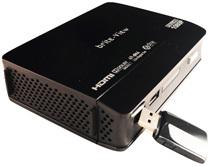 Xpike's New CinemaGo is an Inexpensive and Portable Digital Media Player[teaser]At $109 it may be the best player at the price-point. [/teaser] The CinemaGo is the follow-up to brite-View's CinemaTube media player. It keeps the functionality of the original, but shrinks everything down to a nice portable size at a nice affordable price point. Also known as the BV-5005HD Mini CG, the CinemaGo carries a few improvements as well. It still has USB ports on the front, but an eSATA interface has been added to the back for even faster transfer speeds. That's especially important when you're taking advantage of the device's torrent download feature or watching a Blu-ray backup. Another addition is access to MUZEE internet radio, which gives you access to thousands of stations streaming across the web. If you're traveling and you still want to hear your favorite morning show, the CinemaGo can make it happen. "A good digital media player can transform your TV into an entertainment hub," says Xpike's Robert Lo. "The CinemaGo does exactly that, and has the potential to do much more." You can pre-order the CinemGo now from Amazon for a price of $109.99. Source: eCousticsPosted Wed Jul 7, 2010 at 07:00 AM PDT by:
 -
 HD Advisor Limit: 65Editor's Note: Each Friday, High-Def Digest's own HD Advisor will answer a new round of questions from our readers. If you have home theater questions you need answered, send an email to [email protected]. If you've already sent a question and don't see it answered yet, please be patient as we work our way through them. To browse through previously answered questions, visit the main HD Advisor page. Answers by Joshua Zyber A/V Receivers and PAL Video Q: I'm originally from the UK, but I'm moving to the U.S. with all my PAL DVDs. I'm going to get a completely new home theater set-up and decided to go for a multi-region/multi-system Blu-ray player and a multi-system TV. I'm guessing the quality will be slightly better without being first converted to NTSC. However, I am unsure about the A/V receiver. I know it deals with the video signal as well as the audio. So would the A/V receiver also have to be multi-system, or would the signal just pass though to the TV? A: On most modern A/V receivers, if you route your video through the receiver, you have two options. You can set the receiver to simply pass through the video signal unprocessed. (Whatever you send in is what comes out the other end.) Or you can have the receiver deinterlace and/or scale the video. (For example, upconverting a standard-definition source to HD.) In most cases, I recommend simply passing through the video signal untouched. DVD upconversion is generally best performed at the disc player. However, it's been a recent trend for many receivers to include top-end scaling solutions such as Silicon Optix or Anchor Bay processing. So this may not necessarily be an inflexible rule. I can't speak for every receiver brand or model on the market, but in my experience, most receivers will pass through both NTSC and PAL without issue. PAL compatibility is a more critical issue in both the disc player and in the TV, either of which might reject the PAL signal. At the very least, all of the Denon receiver models that I've used in my own home theater have passed through native PAL successfully. If some of our other readers have experience with different receivers that aren't compatible with PAL video, I invite them to post those details in the forum thread linked at the bottom of this article. Keep in mind that even if you buy a multi-system capable Blu-ray player, you will still encounter the issue of region coding. Blu-ray players sold in North America are locked to Region 1 for DVD and Region A for Blu-ray. If the player is PAL-compatible, it may play European discs that are authored as region-free, but it won't play any DVDs that have been authored as Region 2, or any Blu-rays authored as Region B. To get around that problem, you'll have to specifically purchase a unit that's been modified to disable the region code restriction, or purchase a Do-It-Yourself modification kit. JVB Digital is a good source for either. I personally have an OPPO BDP-83 player that I modified with a DIY kit from JVB. The kit was relatively affordable, and very easy to install. The machine has successfully played any DVD or Blu-ray from anywhere in the world that I've thrown at it. What Happened to Dolby TrueHD? Q: Having upgraded my system to take full advantage of the lossless codecs from Dolby and DTS, it's been somewhat disheartening to see the number of titles available in Dolby TrueHD slow to little more than a trickle in 2010. Can we expect to see more Dolby TrueHD titles in the future or has DTS-HD Master Audio become the de facto standard for Blu-ray? Also, what is the likelihood of seeing both TrueHD and DTS-HD Master Audio as options on a single Blu-ray disc? A: It's true that there does seem to be a trend in recent months for home video studios to move away from Dolby TrueHD and toward DTS-HD Master Audio. TrueHD isn't completely being phased out, but the momentum in the market is with DTS. I suspect that this primarily has to do with the core+extension design of DTS-HD Master Audio, which incorporates a backwards compatible standard DTS soundtrack integrated as a "core" within the audio signal. Hardware not compatible with the full lossless sound format can simply ignore the MA extension and only read the core. This means that the studio only has to author one soundtrack on the disc for all purposes. Dolby TrueHD, on the other hand, requires that a separate backwards compatible DD 5.1 soundtrack must be added to the disc along with the lossless TrueHD track. (Sometimes it's "hidden," so you may not see it listed in the disc menus; but the player will fall back to it if your equipment doesn't support TrueHD.) This isn't to say that one lossless format is better than the other. The end result of either is the same bit-for-bit identical copy of the studio master. However, for backwards compatibility purposes, DTS-HD Master Audio may be more convenient. The lossy DTS core also tends to offer a higher level of fidelity than DD 5.1 for those listeners who can't take advantage of the full lossless track. As far as I'm aware, only two movie discs have been authored with both Dolby TrueHD and DTS-HD Master Audio options: 'Close Encounters of the Third Kind' and 'Top Gun'. [Correction: Reader Stephan has pointed out that 'The Final Countdown' does as well.] In the case of 'Top Gun', the two tracks come from different sound mixes. The DTS version was remixed for 6.1, while the TrueHD version is an older 5.1 mix. However, other than isolated examples like this, there is little reason for any Blu-ray to be authored with both lossless formats. TrueHD and Master Audio produce identical results. Lossless is lossless. The inclusion of both is just a waste of disc space that could be better utilized for other purposes, such as including bonus features or increasing the video bit rate. LFE Calibration and 'Digital Video Essentials' Q: I have a question regarding the LFE +10 dB boost that happens in equipment. I have a Sony BDP-S550 BD Player with the newest firmware, that is connected to an Onkyo 707 receiver. (The Sony can't be forced to output LPCM on encoded signals like DD, DTS, TrueHD and DTS-MA). Now that I calibrated the set through Audyssey automatic setup, I manually checked the calibration with 'Digital Video Essentials' and an SPL meter. Everything was fine except for the subwoofer. That spiked up like mad. Then I lowered the LFE volume setting in the Onkyo for all encoded signals with -10 dB and pronto, the subwoofer signal was dead on now! This makes me think that the Sony BDP-S550 player already does the +10dB boost on encoded signals (while this should only be done in the receiver). It doesn't happen on LPCM tracks. Am I right with this, or is something else going on? JZ: To get to the bottom of this issue, I sought assistance from my friend Chase, who knows a lot more about the nitty gritty of audio engineering than I do. In researching the problem, he made an interesting discovery. Chase: My initial thought was that the problem was misdiagnosed. Assuming he is connected via HDMI using bitstream, the BD player is not adding the +10 dB boost. This would only happen with analog or possibly native/decoded PCM. Even that's pretty rare. It's possible that Audyssey MultEQ missed the SPL for the subwoofer. It's also possible that he didn't account for all the variables involved in verifying SPL, such as the actual modulation level on the disc for LFE vs. mains, the DialNorm value, the frequency content of the LFE test noise, and the effect of the subwoofer low-pass filter(s) on that test noise. The Onkyo 707 is THX certified, which makes it especially tricky to verify levels using a test disc like 'DVE' that is encoded at DialNorm value -31. (Tests must be conducted with master volume at a confusing -4 dB from reference.) 'DVE' doesn't have a PCM track, so I'm not sure how he would verify that the problem doesn't occur with a PCM input. With that said, I ran some tests and it looks like your reader discovered something interesting. Let me start by saying that I verify channel levels using an excellent test disc distributed by Gold Line. I have never employed 'DVE' for that purpose. However, I got 'DVE' out today to see if anything interesting turned up, and it did. In a THX controller, channel levels should always be set using the internally generated noise, as it's accurate. If verification is needed, the standard procedure is to set the master volume to reference (0dB) and measure 500 Hz to 2 kHz narrowband pink noise at -30 dBFS for main channels and 40-80 Hz narrowband pink noise at -40 dBFS for LFE (DialNorm -27 for DD-encoded signals). This should produce 75 dB C-weighted at the listening position for all channels. (For a non-THX controller, use test noise encoded at DialNorm -31, or turn the master volume up 4dB.)Posted Fri Jul 2, 2010 at 11:45 AM PDT by: