-
 You May Want to Check Out the High-Def Digest Facebook Page Before Thanksgiving...[teaser]We're trying to keep this off the record, on the QT, and very hush-hush, but if you haven't visited recently, make sure you check out High-Def Digest's Facebook page and "like" us by... oh... Thanksgiving. Let's just say we'll be giving several lucky readers plenty to be thankful for![/teaser] As many of you know, our Facebook page is going strong, and we'd love you to join in the fun. In addition to our reviews, highlights from The Bonus View, and priceless witticisms, we use the page as one more way to share news and reviews about the best high-def releases on the market, and to sweeten the deal, from time to time we like to give away some prizes, a LOT of prizes. So really, if you haven't been checking out our Facebook page, you're missing out on half the fun! Now is the perfect time to join, cause with the holiday and shopping seasons kicking off next week, who knows what we might do next? If you haven't joined, you can check it out here, then, you know, stay tuned for a special announcement sometime next week. Hope to see you there soon! Oh, and only tell your closest friends. Shhhhhh.....Posted Mon Nov 22, 2010 at 12:30 PM PST by:
 -
 3DFusion Glasses-Free Displays Ready for Commercial Applications[teaser]We just might see 3D digital signage showing up soon. [/teaser] The folks at 3D Fusion are psyched about their new displays, which offer 3D without the need for glasses. "It took us four years to get here," says CEO Ilya Sorokin, "but we finally showing the world that 3D is not only beautiful and natural but it can be enjoyed without constrains and discomfort of the 3D glasses." After countless demonstrations, conferences and press meetings, they finally feel that 3DFusion displays are ready for the market. They're not aimed at home use though – glasses-free 3D isn't quite there yet. 3DFusion is hoping to find investors and strategic partners to get these new 3D displays into store windows, hotel lobbies and anywhere else that could benefit from a glasses-free 3D marketing message. Insight Media Analyst Matt Brenneshultz got to check out one of the new displays showing a Bon Jovi concert. "If 3DFusion AS-3D is good enough for Bon Jovi fans," he says "it is good enough for football fans and advertisers." Source: PR NewswirePosted Mon Nov 22, 2010 at 11:00 AM PST by:
 -
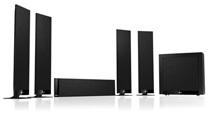 KEF Introduces New Flat Panel Speaker Systems[teaser]The company promises audiophile quality out of their unconventional speakers. [/teaser] You've got a nice thin flat screen television mounted on your wall, so why shouldn't your speakers match? The T-series from KEF is designed to do just that. The speakers pack a pair of innovations from KEF – an ultra low profile bass/midrange driver and a large fully-vented tweeter. Both of these are integrated into cabinets just 35mm deep. That’s less than an inch and a half of depth. One of the more interesting features of the KEF T-series is the Selecta-mount system. Using an internal connecting system, the crossover of your speakers will automatically be adjusted depending on how you've mounted them. Full systems start at $1,499 for a package including four satellites, one center channel and one sub. Both large and small satellite speakers are available separately, but the T-2 subwoofer is not. Source: eCousticsPosted Mon Nov 22, 2010 at 09:00 AM PST by:
 -
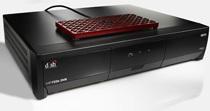 DISH Unveils a Sling Adapter for TV Everywhere[teaser]For $99 you can get TV anywhere you can get internet, including your phone. [/teaser] It's a future we've been looking forward to and DISH is the first to have it ready. With the new Sling Adapter, you can get enjoy TV from your DISH set-top box anywhere you've got an internet connection. If you're at the airport with your iPhone, you can enjoy live programming. Outside with your Blackberry? Scroll up something from your DVR. You can manage recordings, delete shows, and of course watch them on your Android, iPad, iPhone, Android, Windows PC, Mac, and even your Blackberry. Whether you're a current DISH subscriber or signing up for the first time, you'll need to shell out $99 for the device itself, which is compatible with ViP 722 or 722k HD DVRs. Source: eCousticsPosted Mon Nov 22, 2010 at 07:00 AM PST by:
 -
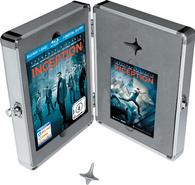 "High-Def Digest-Digest" - November 21, 2010[teaser]Hey, we get it. You don't always have time to sift through all the stories we put up in order to find the best bits. It's November after all, and that means if you're not out Christmas shopping or seeing 'Harry Potter' you're probably cooking a turkey, watching football, or eating maize on the cob. Don't worry, we've hand-picked all the best stories of the last two weeks and brought them your way.[/teaser] Blu-ray News: Inception - Limited Edition Briefcase Gift Set' Up For Preorder Couldn't get enough of 'Inception?' This combo pack gets you the Blu-ray, DVD and digital copies of the movie in addition to a 33 page comic, 10-page PASIV instruction manual, a metal top and comes in a metal briefcase. It's the ultimate collector's edition. Blu-ray Scores An 'Easy A' Emma Stone shines in this Ferris Bueller like comedy that's set to hit shelves on December 21st. 'Coraline - 3D' Blu-ray 3D Gets Retail Release None of that red/blue anaglyph this time. 'Coraline' finally gets a legitimate 3D release, but it's sadly coming just a bit late for the holidays – January 4. 'Howl' Blu-ray Announced It's James Franco's year. Not only has he starred in the critically acclaimed '127 Hours,' but his role as Allen Ginsberg in 'Howl' has been called out by many as Oscar worthy. The Blu-ray hits on January 4. Sneak Peek: Black Friday Week Sales at Amazon! The sale starts Monday, with DVDs as low as $2 and Blu-rays as low as $5. You won't want to miss these ridiculously good deals. Vizio Launches a Pair of 3D Blu-ray Players Once known as the best of the budget television makers, Vizio has been picking up the pace, even introducing 3D Blu-ray players. Oppo Reveals Official BDP-93 Specs – Discontinues Older Models We finally get the full scoop on the impressive BDP-93, but sadly we lose out on the legendary BDP-83 which is permanently discontinued. Amazon Talks Blu-ray's Ups and Downs Michael S. Palmer writes up a fascinating talk by Amazon execs about where Blu-ray is now, and where it needs to be before the format is truly dominant. Least Shocking Announcement Ever...James Cameron Hearts Blu-ray Second least shocking announcement follows… James Cameron Hearts 3D. Other News: Hulu Plus Launches At $7.99 a Month The long-awaited service finally launches officially and at $2 less than the originally stated monthly fee. But is this discount enough to get consumers on board? Vudu Comes to the PS3 – Interface Makeover on the Way The Sony PlayStation 3 gets yet another update that keeps it at the top of the Blu-ray player game, and Vudu boasts that a new interface will soon make movie selection easier than ever. Mitsubishi Updates 2010 3D TVs for Full 3D Compatibility No more worrying about compatible 3D formats or messing around with adapters. Mitsubishi's 2010 line of 3D capable TVs is now updated and ready to go for any format you can throw at it. Plasma Sales Outgrow LCD Sales in 2010 After a few years toiling under misinformation and some early issues, plasma sets are back on the rise. The biggest sellers? 720p screens over 50 inches. Netflix Accounts for Twenty Percent of Internet Use That's right, a whole fifth of the internet bandwidth currently used is Netflix, which accounts for almost half of all streaming media. The Bonus View: Where Netflix Fails: Foreign Films Some films are subbed, some are dubbed, and some just leave it up to the viewer to speak Korean. This is just one of those places where Netflix fails. Is the Internet Really Ready for Movie Streaming? Josh questions whether we're really able to handle all the streaming that's heading our way and one commenter lays down the hard numbers. Talk About 'Modern Times!' Josh muses on the "time traveler" found in an old Charlie Chapman movie and hilarity ensues. This May Be It for Music Games Viacom Sells Harmonix and music games on the whole see a downturn. Is this it for the once giant genre?Posted Sun Nov 21, 2010 at 05:30 PM PST by:
 -
 HD Advisor Nineteen Eighty-FourEditor's Note: Each Friday, High-Def Digest's own HD Advisor will answer a new round of questions from our readers. If you have home theater questions you need answered, send an email to [email protected]. If you've already sent a question and don't see it answered yet, please be patient as we work our way through them. To browse through previously answered questions, visit the main HD Advisor page. Answers by Joshua Zyber DVD Pixel Aspect Ratios Q: In HD Advisor 82, you answered a question about aspect ratios and said the following: "NTSC DVD has a resolution of 720x480 pixels, but those pixels are not square. Depending on the type of content on the disc, those same pixels can be used to create either a 4:3 image or a 16:9 image. In the case of the latter, the movie picture is authored in a vertically "squished" fashion, which a 16:9 HDTV will stretch horizontally after-the-fact to correct the picture geometry." This information would be true if you were talking about the MiniDV format, but this is not true of the DVD format. On an NTSC DVD, the video is encoded with SQUARE pixels, and the resolution is different depending on the selected aspect ratio. For a 4:3 DVD, the resolution is 640x480 while a 16:9 DVD has a resolution of 720x404. (To be truly 16:9, the vertical resolution should be 405, but alas, it is not.) You can confirm this easily using a program called bbDemux. Give it a VOB file from a (non-copy-protected) DVD and it will spit out the de-multiplexed MPEG-2 file. Open that with QuickTime to check resolution. A: Unfortunately, I believe that you've been mislead by the process you've used to check the resolution. NTSC DVD, whether 4:3 or 16:9, has a fixed resolution of 720x480 pixels. If these pixels were square, that would yield an aspect ratio of 1.5:1. However, DVD pixels are not square. DVD video is defined in two terms: Pixel Aspect Ratio (PAR) and Display Aspect Ratio (DAR). The PAR tells you the shape of the pixels themselves, while the DAR tells you the shape of the final image displayed on screen. For 4:3 imagery, the pixels in a DVD have a PAR of 10:11. For 16:9 content, the PAR is 40:33. PAL DVD has a fixed resolution of 720x576 pixels. The PARs are 59:54 and 118:81 for 4:3 and 16:9 display respectively. When output from a DVD player and viewed on a CRT television or monitor (remember that DVDs were originally designed with CRT display in mind), the pixels are stretched to the appropriate PAR to achieve the desired DAR. Fixed pixel display devices such as LCD computer monitors or digital HDTVs use square pixels. To watch a DVD on these, the original non-square pixels must be scaled to a 1:1 PAR for playback. Thus, a 4:3 image is scaled to 640x480 square pixels, and a 16:9 image is scaled to 720x404 pixels. (From there, the pictures may be upconverted to the screen's native resolution, such as 1920x1080 for a 1080p TV.) When you go through the process of demuxing a DVD on your computer and then playing the file in QuickTime, the QuickTime readout is only telling you the resolution after the image has been scaled for computer playback. It doesn't tell you the original resolution as the data was originally stored on the DVD. Uncompressed Audio in Theaters Q: As per my understanding and research, all the movie soundtracks in theatres are encoded on the CD-ROM (for DTS) at a 1.5 Mb/s bit rate. Since there is so much data during the sound mixing, it is compressed for convenience. I just want to understand why theatres don't get their soundtracks encoded on a higher capacity disc, such as a Blu-ray, so that we may get to hear much more clarity. A: What you say is correct (or close to correct) as it pertains to traditional 35mm theaters. However, modern digital projection theaters and IMAX theaters utilize uncompressed PCM audio for all movie soundtracks. In 35mm film-based projection houses, movie soundtracks are indeed compressed into any of three standard digital formats: Dolby Digital, DTS, or SDDS. Note that the versions of Dolby Digital and DTS used in theaters are different than the versions we use at home. The theatrical version of Dolby Digital is recorded onto the film print itself in between the sprocket holes, and runs at a fixed bit rate of 320 kb/s. The theatrical version of DTS is authored onto a CD-Rom that runs in sync with the film print, and is encoded at a fixed bit rate of 882 kb/s. Why such low bit rates? Both systems were developed in the early 1990s, long before the advent of Blu-ray. Dolby Digital is limited by the small physical space that it must be squeezed into on the film print. And DTS is limited by the storage capacity of the CD-Roms. Could either of these formats be updated at this point? I would say that's doubtful. The old equipment is standardized in far too many theaters to change now. Also, as theaters transition to digital projection and uncompressed PCM sound, there's little call to invest in the development of updates to the old formats. Expert Feedback This week, the Advisor received some feedback on an earlier column from Steve Venuti, president of the HDMI Licensing organization. I will therefore defer to a certified expert in the subject. The PS3 and HDMI 1.4 Feedback: I ran across a Q&A that you had written and wanted to provide you with a little more information. Each version of the HDMI standard contains options rather than requirements. So, a product can implement one feature and not another and be in full compliance with the HDMI specification. The PS3, as an example, can implement 3-D capabilities and not offer Audio Return Channel or HDMI Ethernet Channel, and be fully compliant. One other point of confusion that we constantly hear is how a legacy device (which obviously does not have a chip designed after the launch of the 1.4 version of the specification), can implement a feature based on the 1.4 standard. The confusion here is between the relationship of features and the requirements for new silicon. So, for example, the PS3 cannot implement the HDMI Ethernet Channel via a firmware upgrade since the silicon itself is not designed to handle this feature. However, 3-D capabilities CAN be handled by some silicon out in the field, so the PS3 can do a firmware upgrade and essentially bring that legacy silicon into compliance with the 3-D feature of the specification. There is not a 1-1 relationship between silicon and the features of a particular version. Sometimes new silicon is required and sometime the new feature can be implemented via a firmware upgrade. Sony's PS3 in this case could be marketed as a 1.4 product with 3-D capability. We no longer allow manufacturers to just say blanket 1.4 compliance, since it could also intimate that the device is capable of other features associated with the 1.4 specification. Check back soon for another round of answers. Keep those questions coming. Joshua Zyber's opinions are his own and do not necessarily reflect those of this site, its owners or employees.Posted Fri Nov 19, 2010 at 11:00 AM PST by:
 -
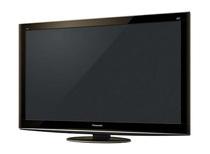 Panasonic Honored as "Best of What's New" by Popular Science[teaser]Both the VT25 3D TV and SDT750 3D camcorder are featured. [/teaser] The end of the year is a time that folks get together to give and receive gifts. Publications have their own end of the year traditions in the giving and receiving of awards. The folks over at Popular Science took a break from speculating about the amazing future in store for us and took a look at the most exciting and important products available now. Both Panasonic's 3D camcorder and VT25 3D plasma were honored, but it was the plasma that took the Grand Award. Panasonic's VT25 has already been hailed by critic and consumer alike for its lifelike picture, 3D accuracy and array of internet connection options, but an award from Popular Science means something different. It's a celebration of something that's not just a great product, but a step forward in technology. Source: PR NewswirePosted Fri Nov 19, 2010 at 10:15 AM PST by:
 -
 Roxio Streamer Lets You Enjoy Your Digital Content Anywhere[teaser]Want to access your massive movie collection on-the-go? You can, with Roxio Streamer. [/teaser] An 8GB MP3 player just won't do it for music fans. That's an absurdly small amount of space to store the best picks from a massive collection, and it's even smaller for movie lovers. Roxio's new streaming software lets you access your digital media no matter where you are. You don't need much to get to your movies and music, just an internet connection and a device that can handle Adobe Flash. Just browse on over to your collection and listen, watch, download and even share. That's right, share. If you've got a folder full of tunes that you want a friend to check out, or pictures of your trip for Mom to download, they can access it too. Roxio doesn't specify a resolution or bitrate for streaming video, unfortunately. You can pick up the Roxio Streamer now, directly from Roxio at a price of $49.99. Premium features are included free for the first year. Source: RoxioPosted Fri Nov 19, 2010 at 09:00 AM PST by:
 -
 Hulu Plus Launches At $7.99 a Month[teaser]A lower price for the official debut could make the service more attractive to consumers.[/teaser] The launch process for Hulu Plus has been a confusing one. The preview service was available upon request but only on certain devices and on the PS3 the market was further segregated by offering the service only to PlayStation plus subscribers. Now that things are official it gets a little easier. Hulu is now available on HDTVs, Blu-ray players, set-top boxes, mobile phones, game systems and tablets. There's no invitation needed, just download the app and get streaming. It's easier on the wallet too, since the price dropped from $9.99 a month to $7.99 a month. It's not cheap enough to make the service a must-have, but it's a little more reasonable at least. Source: SmartBriefPosted Fri Nov 19, 2010 at 07:00 AM PST by:
 -
 Vizio Announces a New 3D HDTV Line[teaser]You'll get full LED backlighting on the top two, and Razor lighting on the other. [/teaser] Vizio has made a name for itself with inexpensive TVs with surprisingly good build quality, but the XVT32S is a departure. It's not that they're not well made TVs, just that they can't exactly be considered low priced. The new XVT32S TVs are 3D ready sets that boast up to a 480Hz refresh rate, built-in Dual Band WiFi and a Bluetooth remote with a QWERTY keypad that slides out. The largest two sets in the line feature full LED backlighting with smart dimming while the smaller one uses Razor LED backlighting. Vizio's entire XVT32S line comes equipped with Vizio Internet Apps which gives you access to Netflix, Amazon Video on Demand, Pandora, Twitter, Facebook and more. Unfortunately, none of the sets in the line come with the needed Active Shutter glasses. The 42 inch set will run you $1,399, the 47 comes in at $1,799 and the 55 inch set sports an MSRP of $2,399. Source: eCousticsPosted Thu Nov 18, 2010 at 11:00 AM PST by: