-
 Anchor Bay President Bill Clark Talks 3D, Streaming, and Blu-ray[teaser]Though he's very excited about the future of Blu-ray, he's taking a wait-and-see approach to 3D content. [/teaser] The folks over at Home Media Magazine have a great mini-interview up in which they ask questions of Bill Clark, the president of Anchor Bay Entertainment. Many of his answers veer towards the expected, but he does reveal some interesting things about the strategy of the company moving forward. When asked about his opinion on the Blu-ray format, Clark answers that he doesn't see it slowing down any time soon. "The format is clearly well down the path of mass adoption," he says. Clark also has some interesting thoughts on waiting to go with Blu-ray 3D. "We’ll certainly utilize the format where it makes sense. Obviously, we will not be the first to market on BD 3D," says Clark, "but we will evaluate on a title-by-title basis and, where it makes sense, will release in this format." Source: Home Media MagazinePosted Tue Feb 15, 2011 at 07:00 AM PST by:
 -
 The 24/7 3D Channel 3net Launches on DIRECTV[teaser]February 13 marks the beginning of what may be a new era in television. That, or a fad that dies quickly and painfully. [/teaser] 3D is here, and from the look of things it just might be here to stay. Especially if IMAX, Discovery, and Sony have anything to say about it. Their 3D channel 3net hit the air on Sunday, February 13. DIRECTV is the first carrier to offer the channel and has high hopes for the content. "Quality 3D programming is vital to the success and increased adoption of the technology," says DIRECTV vice president Derek Chang. "It is clear that 3D is here to stay and is only going to get better." If you have DIRECTV and a 3D capable TV, you can switch on over to channel 107 to experience it for yourself. Source: DiscoveryPosted Mon Feb 14, 2011 at 11:00 AM PST by:
 -
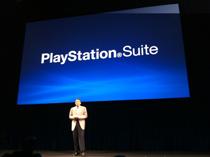 PlayStation Suite Could Hit Google TV[teaser]PlayStation games could soon be playable on your TV - no need for a system. [/teaser] Along with the announcement of the NGP - Sony's successor to the PlayStation Portable - the folks at Sony touched on the PlayStation Suite during a recent press event. The PlayStation Suite (PSS) is a software platform that's going to bring games from the original PlayStation to Android phones and tablets when it launches. It's exciting stuff for PlayStation fans. After all, having 'Final Fantasy 7' or 'Twisted Metal' available on the go is a very cool option. At a roundtable this week, Sony's Kaz Hirai dropped some hints on some very cool new developments with the PSS. Specifically, he said that the PSS could be the killer app for Google TV. The company has stated that they'll be focusing on mobile devices for the time being, but we're certainly expecting something Google TV related in the future. Source: EngadgetPosted Mon Feb 14, 2011 at 09:00 AM PST by:
 -
 HD Advisor Ninety 3DEditor's Note: Each Friday, High-Def Digest's own HD Advisor will answer a new round of questions from our readers. If you have home theater questions you need answered, send an email to [email protected]. If you've already sent a question and don't see it answered yet, please be patient as we work our way through them. To browse through previously answered questions, visit the main HD Advisor page. Answers by Joshua Zyber Before we start this week, I felt it worth pointing out that I've recently made the editorial decision to use the spelling "3D" (no hyphen) when referring to three-dimensional cinema, rather than my previous preference for "3-D." For more on why I made this change, see this blog post. Passive vs. Active Shutter 3D Q: With the different offerings of 3D sets out there (passive and active shutter), will any 3D Blu-ray I buy work properly on either set? Could something change with current or upcoming TV technology that will not allow current 3D disc offerings to play properly? A: The short answer here is yes. Blu-ray 3D will work with both types of 3D HDTV: those that require active shutter glasses or those that use passive glasses. The Blu-ray 3D signal is transmitted to either type of television as "packed" frames at a resolution of 1920x2205 (that's two 1080p pictures stacked one above the other). It's then up to the TV to separate out the left and right images and display them by whatever method the manufacturer has chosen. TVs that use active shutter glasses will display each eye's view in an alternating series: left, right, left, right, etc. The shutter glasses will sync to the TV signal and only allow the appropriate image to hit the intended eye. On the other hand, televisions of the passive type will display both the left and right eye views simultaneously with polarized light. Some will display them side-by-side, while other may use top-to-bottom or a "checkerboard" pattern. The glasses you wear have polarized lenses that redirect the light to the designated eyes. At the present time, the only way to get full 1080p imagery from both left and right eye views is to use a display with active shutter glasses. The passive displays, by necessity, reduce the resolution of each eye view in order to fit both into the same 1920x1080 pixel grid at the same time. In the future (perhaps even the near future), we may see higher resolution displays that have enough extra pixels to accommodate two full 1080p images side-by-side, but right now you'll have to compromise. Brand-Specific 3D Q: I am in the market for a 3D Blu-ray player. I have as my TV the Panasonic Viera TC-P50VT25. I also received Panasonic 3D glasses that came with the TV. Does this mean I have to get a Panasonic 3D Blu-ray player to watch 3D movies? I was looking to purchase the OPPO BDP-95. Is this 3d player compatible? A: You do not need to buy the same brand of Blu-ray player as your TV. Any Blu-ray 3D player will send the exact same signal to your 3D TV. The Blu-ray 3D spec requires universal compatibility in this regard. The 3D glasses you wear are a different story. In most cases, you must use glasses that are specifically designed to sync with your TV. Toshiba glasses will probably not work with a Panasonic HDTV, for example. However, some companies have marketed universal 3D glasses that will work across all brands. XpanD is currently the leader in this product category. Blu-ray 3D Backwards Compatibility Q: When the Blu-ray 3D spec was announced, 3D discs were meant to be backwards compatible with 2D Blu-ray players and equipment. However, with the majority of 3D discs, this is not the case. Separate 2D Blu-rays discs are usually included instead. Why is this? Is it down to compatibility issues with older players, or because of space constraints trying to fit a 3D picture, lossless soundtrack and extra features on a 50GB disc? A: A little over a month ago, I wrote up a blog post with the complete list of Blu-ray 3D titles available through the end of January of this year. (I'll try to update it with newer titles when I get a chance.) The list includes stats on whether and how each title is backwards compatible with 2D equipment. Of the 38 titles available, 23 of them are compatible with both 3D and 2D on the same disc. (One of these also includes a separate 2D disc anyway.) 7 titles achieve backwards compatibility only through the inclusion of a separate 2D disc. 2 titles have no compatibility with 2D at all, and 6 are still to be determined. So, it would seem that the most popular option is to include both 3D and 2D on the same disc. Those titles that require a separate 2D disc of course beg the question: Why? At least theoretically, this shouldn't be a disc storage space issue. A 3D image is created by displaying separate left eye and right eye views, each from a slightly different angle. To convert a 3D image to 2D, all the disc player has to do is turn off or ignore one of the views. The 2D version of the movie is already fully contained within the 3D version. It doesn't require a separate encode or more disc space. It's possible that some studios have had trouble authoring discs that will play properly on all existing 2D-only players without compatibility issues, and so have elected to split the 3D and 2D versions to separate discs. Another possibility might be that this is simply a marketing decision. Keeping the versions separate helps to avoid consumer confusion about how to access each. It also gives studios an excuse to charge more if there are more discs in the case. In almost all cases, the studios are going to author and release 2D-only copies of the movie anyway, so it could even be that this is simply a matter of laziness; they don't want to go to the effort or expense of programming and testing the 3D disc for 2D compatibility, and just decide to throw an already-existing 2D disc in the same case instead. Is Anaglyph 3D Dead? Q: I had a question regarding Blu-ray 3D. I think it's cool that they've been able to develop real 3D with fancy new TVs and such. But let's be honest, this is still a new technology and it's rather expensive for the average person (like me). I've noticed that ever since real Blu-ray 3D has been becoming more popular, 3D movies are being released in this new format and they're no longer releasing the cheesy red/blue 3D. Sure those cardboard glasses are kind of corny and the 3D doesn't look fantastic, but I really like it. Do you think they'll ever release any Blu-rays in this way anymore now that real 3D Blu-ray is becoming more popular? I like watching my 'Friday the 13th Part 3' and 'My Bloody Valentine' in corny red & blue 3D. I'd still like to watch other titles like 'Piranha' that way without having to spend $3,000 dollars. A: The old form of 3D that required colored cardboard glasses (usually red & blue, though other color combinations have also been used) was called "anaglyph." With the advent of the new Blu-ray 3D format, I'd say that there's very little call for anaglyph anymore, other than for nostalgic reasons. I'm sure even you'd have to admit that it looks pretty crappy. The advantages to anaglyph 3D are that it's compatible with any color television at all (no fancy equipment required) and it's cheap. I know of at least one upcoming Blu-ray title that will use anaglyph 3D: 'Scar 3D'. For the most part, however, it's going extinct – at least on Blu-ray. If you watch Blu-rays on your computer, PowerDVD 10 has the ability to convert movies to anaglyph 3D. Homework Assignment: You Be the Advisor The HD Advisor knows many things, but he doesn't know everything. Some questions are best answered with a consensus of opinions from our readers. If you can help to answer the following question, please post your response in our forum thread linked at the end of this article. Your advice and opinions matter too! Blu-ray 3D Rentals Q: I am trapped in an IFITL neighborhood that gets a maximum 1.5mbps connection, making HD streaming via Netflix/PSN/XBL/iTunes impossible. HD downloads take forever but are an option. Thankfully, I get Blu-ray discs via mail from both Netflix and Blockbuster. But we recently purchased a 3D TV and would like to watch some movies in 3D. Are there currently any services that either have 3D discs or 3D downloads (non streaming)? Or any services in the pipeline that may offer this service for people stuck in low-speed broadband areas? Buying 3D Blu-Rays are expensive! Check back soon for another round of answers. Keep those questions coming. Joshua Zyber's opinions are his own and do not necessarily reflect those of this site, its owners or employees.Posted Fri Feb 11, 2011 at 11:00 AM PST by:
 -
 Onkyo Unveils a Pair of Home Theater Systems[teaser]Both offer higher end features at an entry level price. [/teaser] Onkyo is all about value this year, and it's especially evident in their new HTiB systems, the HT-S5400 and HT-S3400. Both systems bring PLL jitter-cleaning circuitry to the table as well as TI Burr-Brown DACs and an Advanced Music Optimizer that brings your compressed audio files to life. They both feature Audyssey Dynamic EQ and Dynamic Volume as well. The HT-S5400 kicks things up a bit by offering 7.1 channel audio instead of the 5.1 of the 3400. It also includes Dolby ProLogic IIz for a vertical soundstage and a USB port that allows you to hook up your iPod or iPhone directly. You'll be able to pick the HTiBs up when they go on sale in April. The 3400 comes in at $379 while the 5400 retails at $599. Both systems come with speakers and subs for a complete audio solution. Source: Widescreen ReviewPosted Fri Feb 11, 2011 at 09:00 AM PST by:
 -
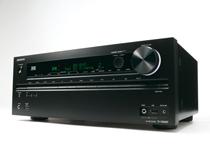 Onkyo Intros Entry-Level Receivers With High-End Features[teaser]The latest from Onkyo feature iPhone interfaces, networking capabilities and more at entry level prices. [/teaser] Onkyo is known for high quality receivers but, just as it is with all companies, the low-end entry- level product lines felt lacking. They were about as bare-bones as you can get, but this year that all changes. The TX-SR309, TX-NR509 and TX-NR609 bring higher end features to the common man. The 309 and 509 offer 5.1 channel sound while the 609 gives you 7.2, but all three give you a front USB port designed to offer a direct connection from your iPod or iPhone. The 509 and 609 bring some extra functionality to the table in the form of advanced networking options like the ability to control your receiver through an iPhone. For an extra $39 you can go wireless with the UWF-1 wireless adapter. The TX-SR309 will run you $299, while the TX-NR509 will come in at $399. At the higher end is the TX-NR609 which runs $599. All three receivers will be out in early April. Source: Pocket-lintPosted Fri Feb 11, 2011 at 07:00 AM PST by:
 -
 3LCD Hits the 70 Million Chip Mark[teaser]It's the first projector technology to make it to 70 million - not bad as far as bragging rights go. [/teaser] 3LCD was introduced back in 1988 and it's been going strong ever since. Incredibly strong in fact. As of the end of 2010, 3LCD is officially the most popular projector technology in the world, with over 70 million chips shipped. "This past year has been extremely active and exciting for us," says Rina Bhuva of 3LCD, "and we had the opportunity to make a number of major innovation announcements." Bhuva says that 3LCD isn't going anywhere thanks to new methods and technologies. "Earlier this year," says Bhuva, "we announced the world's first 3LCD LED projector and world's first Reflective HTPS liquid crystal chip for 3LCD, and this shipping milestone of 70 million chips is another testament to the support of our manufacturers and customers, without which we could not continue to thrive." Source: PR NewswirePosted Thu Feb 10, 2011 at 11:00 AM PST by:
 -
 Digiboo is Bringing Download Kiosks to Airports[teaser]You'll be able to download movies to a flash drive and watch them on your portable device. [/teaser] Redbox and Blockbuster Express kiosks have been doing incredibly well. You can find them, Redbox kiosks anyway, in just about any city by visiting the biggest store. If there's a Meijer or a Walmart nearby, there's probably a Redbox nearby. The one place they haven't managed to infiltrate yet is airports. One of the most obvious reasons why is that most people don't carry DVD players on the plane. Plenty carry netbooks, laptops, and portable devices that are capable of playing a digital file. A company called Digiboo is planning to install 7,000 digital movie kiosks in airports around the country. Each would offer over 1,000 movies and allow users to download movies to a USB 3.0 flash drive. Each download, says the company, would take around 30 seconds. Source: Home Media MagazinePosted Thu Feb 10, 2011 at 09:00 AM PST by:
 -
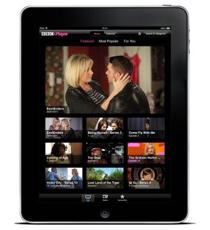 BBC iPlayer App Hits iPad and Android This Week[teaser]Of course, you'll need to either live in the U.K. or use some workarounds to get it up and running. [/teaser] The BBC's announcement of the iPlayer app coming to the iPad was a big one, but today they've revealed that Android devices will be capable of using the service as well. Android users will need the 2.2 "Froyo" operating system with Flash 10.1 installed in order to use the player, and it will only stream to devices connected via Wi-Fi. Still, it's a nice step in the right direction. The BBC has indicated that we'll be seeing a US release of the iPad version of the player this spring and it seems fairly likely that we'll see the Android app made available to international users as well. We know there's a subscription plan in mind as well, but the BBC has not yet said how much it will cost. Source: BBC (via Engadget)Posted Thu Feb 10, 2011 at 07:00 AM PST by:
 -
 Best Buy's Buyback Program - Not Such a Good Buy[teaser]Once the free trial ends, you could end up losing money on your TV. [/teaser] Best Buy is really excited about their new buyback program that offers up to 50 percent of your money back when you trade in an old TV for a new one. It seems like a pretty good deal too, until you look at it closely. The folks over at HD Guru have sifted through the contracts and it's not looking good. For starters, that 50 percent return only comes if you're trading in a TV in perfect condition that you bought six months ago. If it's in what Best Buy considers to be poor condition you'll get up to 25 percent and if it's substantially impaired you get nothing. As an example, if you buy a $2,500 TV and pay $349 to sign up for the buyback program - what, you thought it was free? - you have two years to trade the TV in for a gift certificate worth up to $500. Any later than that and you'll get up to $250. That's $100 less than you paid to sign up for the program in the first place. Source: HD GuruPosted Wed Feb 9, 2011 at 11:00 AM PST by: