-
 HD Advisor: Dogme 95 EditionEditor's Note: Each Friday, High-Def Digest's own HD Advisor will answer a new round of questions from our readers. If you have home theater questions you need answered, send an email to [email protected]. If you've already sent a question and don't see it answered yet, please be patient as we work our way through them. To browse through previously answered questions, visit the main HD Advisor page. Answers by Joshua Zyber Contrast on Digital Displays Q: What is your experience with films/scenes that are dimly lit, or have low contrast? I have found on several LCD TVs that this is a weak point. Pictures look stunning on well-lit blockbusters, but fail on the artier more natural lighting and low contrast. The night shots of 'Braveheart' look awful despite its sterling reviews. People's facial features trail the blacks. It would seem the gray to gray response is a little slow. My current set is a Sony 32EX503. It also received excellent reviews, but it fails in these areas. Have you found this to be a common problem with LCDs? Or is it an issue with certain brands? I would really appreciate some advice from the high def-experts. A: Contrast is a very common failing of digital display technologies, especially LCD. As you note, many LCD televisions look stunning in brightly-lit scenes, but turn into a murky mess in dark scenes. The black levels aren't particularly dark, and shadow detail is frequently crushed. Plasma and LCoS (Liquid Crystal on Silicon) are traditionally stronger in this area, but ironically still lag in contrast reproduction behind the old CRT technology that is virtually extinct in the modern market. (I must note, however, the most digital displays exceed CRT quality in many other respects.) In an attempt to improve the perception of contrast, many LCD televisions implement dynamic contrast adjustment features. The most common application of this is to add an automated iris in front of the lamp that will cut the brightness of light output during predominantly dark scenes. Less light equals a darker picture. While this helps to improve black levels, it does so at the expense of brighter portions of the image. For example, if a scene takes place in a dark room with one bright light in the far corner, a dynamic iris will close down to darken the picture, and thus will dim that bright light. In a worst case scenario, movie scenes that alternate or transition from dark to bright may exhibit a "pumping" of black levels as the dynamic iris struggles to find the right setting. I see this all the time on my living room television whenever a movie's end credits (small white text on a black background) come up. The iris immediately clamps down because it detects a predominantly dark picture, but then opens up again as more white text fills the frame. I also like to use the opening scene in the first 'Star Wars' movie as a torture test for a dynamic iris. The scene opens with a dark star field, and then brightens considerably as the Imperial Destroyer ship flies overhead and occupies more and more of the frame. As this happens, you can watch the darkness of space in the background turn into a milky shade of gray. Some (but not all) LCD televisions offer the ability to adjust the intensity of the dynamic iris or turn it off completely. The weaker setting (or off position) will reduce pumping artifacts, but at the expense of black levels. This is a trade-off you will have to judge for yourself based on the performance of each specific TV model. A better option than a dynamic iris is an LCD set illuminated by a full LED backlight with local dimming. In this type of television, the picture is divided up into sections that can be adjusted independently of each other. Rather than an iris closing down to dim the entire picture, the LEDs will manipulate brightness only to the portions of the image needed. In the 'Star Wars' example, the parts of the screen with the background of space in them can stay dark while the parts taken up by the spaceship brighten. However, even this is still a compromise. Although more precisely targeted than a dynamic iris, local dimming still works on the same principle of reducing light output to achieve a darker picture. This will continue to have the consequence of crushing shadow detail. In a science fiction film where you see the darkness of space with stars in the far background, reducing light output to darken the black level will inevitably dim the stars (possibly to the point of crushing them out completely). Dynamic contrast is essentially a trick. It can be an effective trick, but a display with high native contrast will always be superior. If contrast reproduction is a high priority for you, plasma or LCoS will probably be a better option than LCD. (Note that even plasma or LCoS may have dynamic contrast features enabled as well.) As a projector owner, my preference is for the D-ILA line from JVC (which is that company's variation on LCoS). D-ILA projectors have high native contrast without the need for dynamic enhancements. Whatever you shop for, be sure to read product reviews from trusted sources before purchasing anything. You cannot take the contrast specifications provided by manufacturers at face value. Those listed specs are almost always measured in unrealistic situations that cannot be reproduced in the home at proper calibration values. A good product reviewer will measure the actual performance under realistic viewing conditions. Homework Assignment: You Be the Advisor The HD Advisor knows many things, but he doesn't know everything. Some questions are best answered with a consensus of opinions from our readers. If you can help to answer the following question, please post your response in our forum thread linked at the end of this article. Your advice and opinions matter too! Finding a Job in the Home Entertainment Industry Q: Just before they went out of business, I was employed by Tweeter, selling high-def televisions and home entertainment systems. With the combination of dirt poor margins, the company's impending bankruptcy, and my generally crappy sales skills, I was unable to make a real living there. That lack of sales skill prevents me from attempting employment at other commission-based home theater companies. What I would like to do is find out how to gain employment in a different facet of the home entertainment industry. What kind of skills or degree would I need to look into a career in mastering or remastering movies or television shows for Blu-ray or streaming? Are there schools dedicated to training individuals on that career path? Is it even a career path that has the potential for future growth, considering the mainstream media's constant panic-stories concerning the decline in DVD sales? What of tangentially related careers, such as film restoration or the like, basically anything that wouldn't require sales skills on my part? Thank you for any information you can give on this! Check back soon for another round of answers. Keep those questions coming. Joshua Zyber's opinions are his own and do not necessarily reflect those of this site, its owners or employees.Posted Fri Feb 25, 2011 at 10:40 AM PST by:
 -
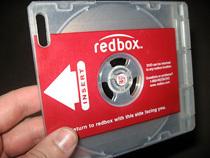 Redbox Leads in Rentals for January[teaser]This is the first time Redbox has been the number one source for rentals. [/teaser] Redbox has been making huge strides in the rental market with its kiosks, but up until now it had always come in second or third in the overall scheme of things. According to NPD Group, this changed in January. Not only did Redbox come out on top, but they came out with an impressive lead to boot. They accounted for 35 percent of DVD rentals, with Netflix trailing behind at 30 percent. Traditional brick-and-mortar stores still made up for 30 percent of rentals, showing that despite a growing trend towards online and kiosk rental plenty of people are still going to their local video store. Independent stores make up the rest. "Redbox has done an outstanding job of meeting consumer needs for a ‘blended’ shopping experience," says NPD's Russ Crupnick. "It saves an extra trip when I’m at Walmart or McDonalds, and the research shows that they are perceived as delivering a high value experience price wise." Source: Home Media MagazinePosted Fri Feb 25, 2011 at 10:00 AM PST by:
 -
 YouTube in Talks to Stream NBA to Asia[teaser]Google says they're working with most professional sports leagues. [/teaser] The folks over at Google are an ambitious bunch. Their plans don't always work out, but that doesn't mean they're not going to give it a go. The latest idea - streaming sports on YouTube. According to Brian Suh, who heads the YouTube Partership at Google Korea, the company is in talks with most pro-sports leagues including the NBA and NHL. That's a pretty huge deal, but there's just one thing you need to know before getting excited. The current plan is only to stream those games to Asia, which YouTube already does for Major League Baseball games not picked up by another network. Of course, there's no reason why popular Korean sports like soccer, baseball and StarCraft couldn't make their way to the states through YouTube streaming. Source: Bloomberg (via EngadgetPosted Fri Feb 25, 2011 at 09:00 AM PST by:
 -
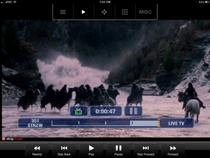 SlingPlayer Mobile for iPhone and iPad Gets Video Out Capabilities[teaser]Your Slingbox/iPhone combo just got that much cooler with the addition of the new feature. [/teaser] If you're using the SlingPlayer mobile app, you'll be happy to know that the latest update adds one very cool extra feature. In addition to a few bug fixes, the newest version of the player adds the ability to put video from your device to your TV via component cables. It may seem a bit redundant at first, since the Slingbox is essentially sending video from your TV to your iPad or iPhone. There are plenty of uses though. Take travelling for example. If you're in a hotel with a TV that has inputs free on the back, you'll be able to hook your iPad right up to it so you can enjoy your shows on a decent sized screen. Alternatively, if you're at a friend's house and he hasn't seen the latest episode of 'Community' or didn't see the Oscars, you can hook your iPhone right up to his TV and show him. Pretty slick. Source: EndgadgetPosted Fri Feb 25, 2011 at 07:00 AM PST by:
 -
 HDD's The Bonus View Is Live-Blogging The Oscars on Sunday![teaser]If you weren’t already aware, the 2011 Academy Awards will air this Sunday, February 27th. High-Def Digest will be live-blogging the entire event over at The Bonus View![/teaser] In case you missed it, we had a blast with our Golden Globes live-blog, and we expect this one to be even more fun. How so, you ask? This time, we’re running multiple Blu-ray give-away contests throughout the show!! The best part, even people who’ve won any of our previous contests will be eligible to win! We're busy sharpening our barbed observations and working our way through stacks of Blu-rays, ferreting out some great award winners and plenty of secret shame crowd-pleasers. We should have tons of high brow and low brow goodies to send your way! Check out The Bonus View on Sunday evening, and be sure to spread the word! We can’t wait!Posted Thu Feb 24, 2011 at 12:30 PM PST by:
 -
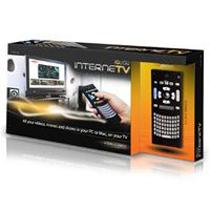 iGUGU Launches Internet TV Interface[teaser]The wireless solution allows you the functionality of an HTPC without the clutter. The wired solution is a little less impressive. [/teaser] One of the biggest problems with home theater PCs is trying to find a place to put one on your already full shelves. The other is practicality. Why dedicate a PC to being a media center in the living room when it could be a source of entertainment and productivity in your home office? The common solution has been to introduce a wireless link between your TV and your computer, but the folks at iGUGU take it a step further. They've introduced new software and hardware to make getting your content onto your TV more convenient and easier to use. iGUGU's Internet TV uses your PC to show content on your TV. It's helped along by the company's own media center software that includes the ability to set different user profiles so the kids and the grown-ups are greeted with different viewing options. It's a bit of a tough sell until reviews start coming in. The real difference between iGUGU and other options is the software, and without a good hands-on with the user interface it's difficult to judge. The wired version if the iGUGU Internet TV comes with the wireless remote, receiver and software and runs $99, while the wireless version that includes a receiver and transmitter to get video from your PC wirelessly comes in at $249. Source: iGUGUPosted Thu Feb 24, 2011 at 11:00 AM PST by:
 -
 Samsung is Number One in Revenue - Vizio Leads in Units Sold[teaser]A new report from DisplaySearch reveals some interesting statistics about the current worldwide market. [/teaser] There's no question about the success of Samsung in the worldwide marketplace. The most recent study from DisplaySearch puts the company in a strong lead for the number one spot. DisplaySearch says that Samsung owns a cool 21.4 percent share of global flat-panel TV revenues. That means a fifth of the money that's spent on LCDs and plasmas is going to Samsung. It's absolutely huge, especially considering that second-place Sony sits around seven percent lower. That's not to say Sony wasn't successful. Sony lead the 3D LCD category while Panasonic dominated 3D plasmas. Interestingly enough, when considering 3D as a whole the lead goes back to Samsung. One statistic of note is that Vizio doesn't make the top five list when it comes to revenue. They're still leading on the basis of volume in the US, just not in terms of money coming in. Source: TWICEPosted Thu Feb 24, 2011 at 09:00 AM PST by:
 -
 Star Trek, Twin Peaks, Cheers, Medium, and More Coming to Netflix Streaming[teaser]A new licensing arrangement with CBS adds these classic shows to the lineup as well as some newer ones. [/teaser] "More and more, people want to be able to access our programming on a wide variety of platforms," says CBS President of Distribution Scott Koondel in regards to the newest licensing deal between Netflix and CBS. The licensing arrangement brings a whole range of new content to the streaming service, including newer shows like 'Medium' and the summer hit 'Flashpoint.' There's plenty of older content too, like 'Cheers,' 'Frasier,' and episodes from every generation of 'Star Trek.' You'll be able to catch the new CBS shows starting in early April. Make sure you check out our regular feature The Netflix Stream for all the latest on what's coming to the service. Source: CBSPosted Thu Feb 24, 2011 at 07:00 AM PST by:
 -
 High-Def Digest Will Worship The Golden God (Oscar) on Sunday![teaser]If you weren’t already aware, the 2011 Academy Awards will air this Sunday, February 27th. High-Def Digest will be live-blogging the entire event over at The Bonus View![/teaser] In case you missed it, we had a blast with our Golden Globes live-blog, and we expect this one to be even more fun. How so, you ask? This time, we’re running multiple Blu-ray give-away contests throughout the show!! The best part, even people who’ve won any of our previous contests will be eligible to win again! We're busy sharpening our barbed observations and working our way through stacks of Blu-rays, ferreting out some great award-winners and plenty of secret shame crowd-pleasers. We should have tons of high-brow and low-brow goodies to send your way! Check out The Bonus View on Sunday evening, and be sure to spread the word! We can’t wait!Posted Wed Feb 23, 2011 at 01:10 PM PST by:
 -
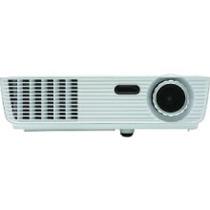 Front Projector Sales Expected to Grow This Year[teaser]Projectors are expected to sell well at all levels with an emphasis on entry-level. [/teaser] First plasmas and now projectors - it seems like non-LCD technologies are about to have themselves a very good 2011. Tamaryn Pratt from Quixel research says that projectors, especially at the entry-level, are going to be on the rise this year. Thanks to new technologies, low-end projectors are getting better and people are more likely to pick them up. Optoma's Jon Grodem says that 3D is going to be one of the big selling points for projectors moving forward. "3D is done best big," he says, "and projectors do big best." He says that between 3D movies and 3D gaming, projectors will find an audience with those that want the biggest picture possible. Source: TWICEPosted Wed Feb 23, 2011 at 11:00 AM PST by: