-
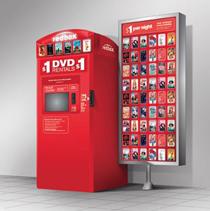 Redbox Revenue is Up Again[teaser]Hey, what do you know? Redbox is making money hand over fist, just like Redbox does. [/teaser] So you might have picked up on this already, but Redbox is very good at making money. Not just at making money, but making lots of money. More money than most people - most companies even - will see in their lives. The latest earnings report from the company shows that revenue is up 33.8 percent in the second quarter of 2011. It's not just new kiosks that increased the company's earnings either - kiosks rented an average of 16.8 percent more discs. Redbox president Mitch Lowe says that the popularity of Redbox for movies and games means more than just money for the company. " More than 1.5 billion movie rentals and the positive consumer reaction to video games highlight the ongoing demand for physical media," he says. Source: Home Media MagazinePosted Tue Aug 2, 2011 at 11:30 AM PDT by:
 -
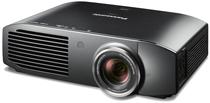 Panasonic Announces Its First Full HD 3D Home Theater Projector[teaser]Highlights include deeper reds, strong contrast ratio, and 3D technology that assists in eliminating crosstalk. [/teaser] The newest projector from Panasonic is a big one for them. It marks the company's first entry to the HD 3D projector space and it seems to be a grand entrance indeed. The PT-AE7000U offers features like a 200-watt Red-Rich lamp that increases the luminance of red colors for a richer final picture. It also boasts Overdrive Technology for its frame sequential 3D. This, combined with a 480Hz LCD panel helps to reduce 3D crosstalk. The PT-AE7000U's video processor can boost the look of 3D images as well as 2D and the projector can even convert 2D images to 3D. What may come as a surprise is that the PT-AE7000U uses active 3D technology. That means you'll have to hand over a hundred bucks or so for every pair of glasses you want. The projector will be available in September at a price of $3,499. Source: eCousticsPosted Tue Aug 2, 2011 at 11:00 AM PDT by:
 -
 Amazon Prime Expands With the Help of NBC Universal[teaser]A new deal with NBC brings 1,000 more movies and TV shows to the service. [/teaser] Amazon has been doing something incredibly interesting when it comes to their instant streaming service. For starters, Prime Video is free for Amazon Prime members - it's not a separate subscription service. Initially it didn't seem like a big deal, but the company has been working to expand the service and has now added over 1,000 movies and TV shows thanks to a deal with NBC Universal. 9,000 total titles isn't going to get Netflix scared, but this new content acquisition will certainly make the streaming giant look twice. Amazon also signed a deal with CBS recently for new content that added around 2,000 new television episodes, bringing the total to 2,000 movies and 7,000 television episodes. That's around a tenth of what Amazon's on demand service has to offer, but it's an impressive start - especially for a service that many people are getting as an added bonus. Source: Home Media MagazinePosted Tue Aug 2, 2011 at 09:00 AM PDT by:
 -
 U-Verse Drops ESPN 3D Without Warning[teaser]The television provider cites high prices and a lack of interest. [/teaser] If you own a 3D television you know that the available content is already pretty limited. You can pick up 3D Blu-rays, auto convert your 2D Blu-rays or enjoy some 3D television on one of the few existing 3D channels. If you're an AT&T U-Verse subscriber your choices just got a little more limited. Just a few nights ago, right before the end of the X-Games 3D broadcast, AT&T pulled ESPN 3D from its lineup. There was no warning - the plug just got pulled. A statement released by AT&T states that they simply decided not to renew their contract. "The price tag for ESPN 3D was too high, especially considering the low demand we've seen from customers." One interesting factor in all of this is that AT&T was the only provider that was charging a premium for just ESPN 3D. Customers that wanted access to 3D sports had to shell out $10 a month for the privilege. Source: EngadgetPosted Tue Aug 2, 2011 at 07:00 AM PDT by:
 -
 High-Def Holidays: August - Ain't No Cure for the Summertime Blusby Dick Ward [teaser]August is a great time to hit the beach, go play some sports, go for walks and all of that other outdoorsy stuff, but it's also humid and hot and horrible if you're not in the mood. Looking for an excuse to stay inside and watch some Blu-rays this month? We're glad to help you out.[/teaser] National Inventors Month Leonardo da Vinci, Alexander Graham Bell, Thomas Edison - all of these men dreamed big, exciting dreams and created technologies that would long outlive them and forever change the world. But none of them thought to put a flux capacitor in a DeLorean. That man would be Dr. Emmett Brown from ' Back to the Future.' Sure, he's a fictional inventor, but that doesn't mean he isn't worth celebrating! National Foot Health Month The health of your feet is very important. I mean, probably, right? You walk on them, so you may as well treat them well. The alternative isn't a pleasant option, even if it does mean you get to let John Turturro whack on it with a fireplace poker for a while like Adam Sandler did in ' Mr. Deeds.' A dire warning to be sure! First Week of August - National Clown Week Irrational or not, there are plenty of people out there who are scared of clowns - men and women whose only crime is that of trying to entertain. It's tough to find a movie with a clown that isn't a terrifying, sadistic murderer, but ' House of 1,000 Corpses' gives us two out of three in Captain Spaulding. Sure, he's a sadistic murderer, but he's somehow wonderful and loveable at the same time. Celebrate National Clown Week with some tasty fried chicken! August 5th - My Sister's Birthday Yeah, I'm going to go ahead and take advantage of this platform to wish my sister a happy birthday! She's pretty badass as far as sisters go and her favorite movie in the world is 'De-Lovely' which is, in her words, "a gross musical love story." I'm going to go ahead and blame the auto-correct on her phone for "gross" and just assume she meant "great. " Second Week of August - National Smile Week If you're really going to celebrate National Smile Week, you can't do it without the incurably infectious smirk of Tom Cruise. The dude's magical. He smiles, you smile. Of course, the same can be said of his 'Knight and Day' counterpart Cameron Diaz. Combined they put Care Bears to shame. August 11th - Hulk Hogan's Birthday Though he was a childhood hero, it's getting really hard to find any respect for The Hulkster these days. From wrestling far past his prime to starring in a reality show and sympathizing with O.J. Simpson , Hulk just isn't the hero he used to be. His movie roles are about the same though. Dude wasn't really in anything good aside from a bit part in ' Rocky III.' So while toasting the fallen hero, it's right to watch the one good movie he made. Third Week of August - National Air Conditioning Week By mid-August, folks start to really learn to appreciate just how great their air conditioning is. Keeping cool at home, at work, and in the car is essential during these crazy hot summer months, but it's important not to overdo it, especially if ' Dogma' is at all accurate. As Azrael is quick to state, " No pleasure, no rapture, no exquisite sin greater... than central air." August 17th - Archeology Day Boy this is a tough one. What movie could possibly have to do at all with archeology while simultaneously being awesome in every way? How about a little movie called ' Jurassic Park ,' which you should be preordering now if you haven't already. Go. The rest of the list can wait until you get back. I mean, you could wait until the 17th to order it if you really wanted to, but it couldn't hurt to jump on it now. August 18th - Bad Poetry Day "Oh freddled gruntbuggly, thy micturations are to me as plurdled gabbleblotchits on a lurgid bee. Groop I implore thee, my foonting turlingdromes. And hooptiously drangle me with crinkly bindlewurdles. Or I will rend thee in the gobberwarts with my blurglecruncheon, see if I don't!" - Prostetnic Vogon Jeltz, third worst poetry in the universe according to The Hitchhiker's Guide to the Galaxy. August 23rd - First Photograph of Earth Taken From the Moon Look, it's a long list so I'm just going with 'Moon.' I haven't seen it yet, but it was directed by David Bowie's kid and that's pretty cool. Also it stars Sam Rockwell, and Sam Rockwell is awesome in everything he's in ever. So watch it, and I will too. Let's make it our August goal.Posted Mon Aug 1, 2011 at 01:30 PM PDT by:
 -
 HDD's Interview with 'Another Earth' Star and Co-writer Brit Marling[teaser]Now open in a limited, but expanding release is Sundance 2011 award winner 'Another Earth.' Star Brit Marling co-wrote the screenplay with director Mike Cahill and recently took some time to talk with High-Def Digest about her life, her motivations, her influences, her experiences.[/teaser] Although the name Brit Marling may not ring a bell, with her talent, it will in the very near future. Her face, though, may be recognizable. If you watched the second season of NBC's 'Community,' you know her as Britta's “gay friend” Page. Luke Hickman – HDD: Since it's hard to find information about you on the internet, can you give a little back story on yourself? Brit Marling: Yes! I was born in Chicago and grew up in Chicago. I went to school at Georgetown. I studied theater and loved doing plays growing up, but I sort of felt [that since] a lot of friends were going to drama school that I didn't have much experience in the way of all the other things of the world. I thought it was important to study philosophy, to study physics, to study political science - all these things were somehow important to me being an actor. … When I was in Georgetown, I ended up majoring in economics and kind of got sucked into that world, maybe to go onto that career path for a while – and then I met Mike [Cahill] … and we started making short films together, and then documentaries, and then we came out to L.A. and I wanted to act again. I didn't really see the way to enter the system. Hollywood is so – there's a lot of barriers of entry there. As a young unknown actress in your early 20s trying to go out an audition and read for things, it's very hard to read for anything that's substantive material at all. I thought it would be best to start writing in order to do the acting that I was hoping I might one day get to do. Mike wanted to make his first fiction feature, so we decided to write the thing together. That's – sort of – what 'Another Earth' came from. His desire to direct and my desire to act made us both decide to try to be writers. HDD: Out of your acting, directing, producing, writing, editing, and cinematography experience, do you have any other aspirations? Brit Marling: (laughs). Oh my gosh, no! Doesn't that sound like too many already? HDD: No! It's awesome! Brit Marling: You know, I think it actually has been useful as an actor to spend some time on the other side of the camera because then you understand that world as well. For me, acting is the most overwhelming challenge. I feel like it is such a humbling craft because no matter how much you practice it, it's so easy to go back to zero - like in an instant. If you lie or if you're inauthentic or you're a phony, it wipes away years of effort and work. … You're not telling the truth and people can fell that. Basically, as an actor, you never want to be caught acting. It's a real challenge for me – and I love that challenge. I love the idea of getting you imagination to a place were it's so strong that you believe in a secondary reality and can … walk into, convince yourself that your primary reality … dissolve. I think I'm going to be pretty preoccupied with just trying to get to the bottom of that craft for a very long time. That's sort of where my focus is – for now, anyway. HDD: With 'Another Earth' being driven by a sci-fi element, are you a fan of sci-fi? Brit Marling: I loved – I don't know if you … ever read when you were a kid – the book 'A Wrinkle in Time.' It's a great sci-fi kid's book. And I loved films like '12 Monkeys' growing up and the [French] short 'La Jetée' it was based upon. ...I love science fiction. … I think what happens is we're all watching so much film and television, now we can sense so many stories. The audiences have gotten so sophisticated at storytelling that they know the character that is going to die, because that always happens in this genre. Or they know that the boy and the girl are going to get together or they're going to fall apart. Everything is anticipated. We've seen so many of these stories so many times. Science fiction kind of lets you put a fresh lens on it. It lets you, I think, make original juxtapositions and force characters into extreme circumstances – but these circumstances ultimately point at very human truths. Like [in 'Another Earth'] when Rhoda is deciding whether or not to go to space, that's just a more extreme version of choices that we face all the time. … For instance, the ending of '12 Monkeys' where the little boy … watches an older version of himself be assassinated. That moment is technically, as far as we understand physics and mathematics now is, impossible – and yet ... it is getting at some truth of humanity and the loss of innocence and of mortality and immortality – all of these things that we feel very deeply but can't always articulate. That scene gave me more feeling … than a lot of other films that have to play by the rules of how we currently understand the universe. Science fiction – or, reality with a bit of a twist – has always been really interesting to me. HDD: If 'A Wrinkle in Time' inspired you as a kid, what inspires you now? Brit Marling: Thing I've been really intrigued by lately are stories of the environment, stories of the natural world. I just saw this great documentary on the Earth Liberation Front called 'If A Tree Falls.' It's a beautifully realized documentary and just really compelling – the place we're in right now where so much of the natural environment seems to be disappearing so quickly. … I think there are a lot of stories to be told there dealing with the natural world and the fight to protect … and preserve it, to not kill everything on this good green Earth (laughs). That's particularly interesting to me right now. But I guess I'll always be interested in the science fiction sort of approach to – I mean, one of the greatest things about science fiction is it allows you to talk about things that are happening now without being didactic or political. 'Twilight [Zone]' episodes and 'Star Trek' used to do this so well. They would talk about racism, the Vietnam War and all these things without hitting you over the head with it … bearing it in a very entertaining science fiction story. I think science fiction is always useful for that – no matter what you are interested in. HDD: 'Another Earth' and the character you play in it go into a very deep, dark and intimate place. Was it hard to put that onto a page, let alone bring it to life? Brit Marling: You know, it's interesting. … I think the really great writers really put themselves into their characters and are not writing in their mind's eye. They are really writing from the perspective of the character, living within it. I think that's how really stunning thing are achieved in fiction where you read a novel and the writer is a 45-year-old man – how did he write this 14-year-old girl so well? I think that the answer is that the writer is also, in some respects, doing a lot of the imaginary work that an actor does before they prepare – which is, really living in that space. In both the writing and the acting it is difficult. It's overwhelming, really … to spend hours daydreaming what it would be like to be in a prison cell or spend four years there, what the first hour is like … what does it smell like, how is the sunlight there and how often do you see the sunlight. You daydream on these senses until you make them real to yourself. Then you can hopefully convince and audience of it. … I think there also has to be a sense of play in it. When you're done with the story, you just let go and have been somewhat hanged by it. If it's a story worth telling, you're always a but changed by the character that you played. And that's actually a great thing, I think. HDD: Was it hard to balance the intimate story with this big concept of “another Earth” with - Brit Marling: With dopplegangers? (laughs). It was really hard, actually. We spent a long time just outlining the story. We would go through outline after outline where, “Okay. The science is too heavy.” “Now it's too light.” “This juxtaposition seems strange.” “How are we going to go from Rhoda and John looking through this telescope at this other Earth … and how are they going to go play Wii in the next room?” It was really a trick balance, but I think what we ultimately found was that so long as the other Earth always felt like an external manifestation of what they are feeling inside, Rhoda and John, some sort of journey they are going through in their relationship, that there would be a connection there, that when the Earth seemed somewhat menacing and threatening … that is where they are in the story. And when it seems sort of light and full of wonder and possibility, that is where they are in their relationship too. I think that's how we tried to navigate it. … I hope that we somewhat succeeded. HDD: Changing gears, do you have a home theater system? Brit Marling: (laughs). That such a good question. It's funny because I'm subletting a place right now … and the place … has a nice theater system, but because I'm subletting it, I have no idea what it is. I just know that when I come home, on the occasion that I do get home, there's like a nice flat screen TV and whatever else. I'm sorry I can't answer that better for you. (laughs). I was just with Mike and … we watched a Blu-ray of … one of the 'Bourne' movies and it was really fun to watch because I love espionage. … HDD: What are some of the shows – besides 'Community' – that you are watching right now. Brit Marling: Oh, my gosh. 'Community' is so much fun. Isn't that the best show? I feel like the writers are liberated on that show. They get to do whatever they want. It's so cool. So, besides 'Community,' I really liked … 'Mildred Pierce.' I thought that was amazing. I really like … 'Hung.' I really like the idea of a female pimp character. I think it's really interesting because we've never seen that before. I like 'So You Think You Can Dance.' (laughs). Because I like to dance. I sometime watch that show with my best friend Jane. We live vicariously through all their dancing antics. HDD: Are we going to see Page on 'Community' again? Brit Marling: I hope so! (laughs) I hope I should be so lucky as to be written back in there. I wonder where they would go with it – that's what I'd be really curious to know, do they have a full on affair (laughs) or did it end at the Valentine's dance? HDD: They are really good a bringing old characters back into the story. Brit Marling: Well, I'm going to be waiting for that phone call.Posted Fri Jul 29, 2011 at 10:45 AM PDT by:
 -
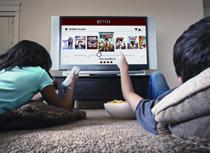 25 Percent of Netflix Users Stream with the Wii[teaser]And we wonder why Netflix doesn't seem concerned with improving their streaming offerings. [/teaser] Netflix is all about giving its customers the most streaming content possible at the lowest price possible. At eight bucks a month you get a vast array of films and television shows to add to your queue and then never get around to watching, but the quality isn't exactly up to snuff for Blu-ray fans. A recent Nielsen survey gives us a look at why Netflix doesn't seem concerned with increasing audio and video quality. The number one device for streaming movies and TV shows from Netflix is the Nintendo Wii, a non HD system with no surround sound capabilities. Adding in smartphones and the iPad reveals that around a third of customers are watching Netflix movies on devices that aren't even HD capable. Another 14 percent of users have a PC hooked up to their television, though the survey does not report how many of those are watching in HD. By comparison a total of 25 percent of respondents are using an Xbox 360 or PlayStation 3 and another 11 percent use their Blu-ray players. Only six percent use the service from a connected TV. Source: Home Media MagazinePosted Fri Jul 29, 2011 at 09:00 AM PDT by:
 -
 Logitech CEO Steps Down - Revue Price Drops to $99[teaser]The company says it's essential to "remove price as a barrier to broad consumer acceptance." [/teaser] Remember back to last year before the Google TV launched? We were all so excited for the potential of the new product, and clearly the folks at Logitech were too. They put a lot of work into the set-top device and a lot of money too. Sadly, Google TV was a bomb. As the result of an incredibly disappointing fourth quarter in 2010 and a similarly sad first quarter in 2011, Logitech CEO Gerald Quindlen has stepped down, leaving former CEO and current chairman Guerrino De Luca in charge. He'll be serving as CEO until the company can find a permanent replacement. The first order of business for Logitech as it tries to turn itself around is getting more Revues out the door. They're doing that by taking a cool $150 off of the price, bringing the unit to a far more reasonable $99. It may still be a bit lacking in terms of functionality, but a $99 it's a lot easier to excuse some of the more minor flaws. Source: EngadgetPosted Fri Jul 29, 2011 at 07:00 AM PDT by:
 -
 HDD's Interview with 'Another Earth' Director and Co-writer Mike CahillNow in theaters with a small but expanding release is 'Another Earth,' Mike Cahill's debut feature film about mistakes and the hope of finding redemption. 'Another Earth' premiered at the 2011 Sundance Film Festival where it won the Alfred P. Sloan Feature Film Prize, the Special Jury Prize and was quickly acquired by Fox Searchlight. In 'Another Earth,' Rhoda (Brit Marling), a bright teenager with a promising future, makes one bad decision that ends up taking the lives of a woman and her little boy, leaving behind a widowed and childless father. Although eventually released from prison, Rhoda has never been released from her guilt. Just before the tragic accident, a mirror version of our planet, deemed “Earth 2,” was spotted in the night sky. On Earth 2, we all exist. The potential that there is a world identical to ours, where Rhoda didn't make that same mistake offers her hope of refuge. After entering an essay contest that will award its winner with a free trip to Earth 2, Rhoda needs to find temporary relief while waiting to find out if she won. To relieve her troubled mind, she decides to try and correct her mistake by helping the husband and father whose life she destroyed. Keeping her identity a secret, she forms a valuable bond based in lies that helps the pull the both of them out of the depths of despair. [teaser]Mike Cahill not only directed 'Another Earth,' but he also served as co-writer and co-producer with long-time friend and star of the film, Brit Marling.[/teaser] Luke Hickman - HDD: 'Another Earth' has a very interesting concept. Can you describe how it came about and who came up with the idea? Mike Cahill: Brit and I have known each other for forever – well, since Georgetown – and … when we were at school, we made a lot of short fictional films. Then, after that, we made several documentaries. About two and a half years ago we wanted to make our first feature fiction film (laughs) and I think we were interesting in the idea – the emotional idea – of what it would be like to meet one's self. … We have all these relationships – our friends, our family – and they are external relationships where you can observe a person, judge a person … so we were curious what that would feel like if the relationship that you have with yourself became externalized, and you could see that person? … What would you feel about that person? Would you like them? Dislike them? … Hate them? And, in this movie, would you be able to forgive them? So we created this spectacle of the other Earth, this high concept where all 6.3 billion of us have the possibility or can imagine the possibility, and we told the story of a girl who is seeking redemption and ultimately needs to forgive herself. … It was a very organic writing process where the two of us wrote it together for about six months. HDD: Now that you've done a feature and a documentary, is there one that you prefer more than the other? Mike Cahill: They are both beautiful art forms … I think I prefer fictional films in the sense that there's a great deal of control over the storytelling. In documentaries, you don't know how it's going to unfold. With a fictional film, you can really craft something that comes from the heart. … The way movies work, pictures and sound, brick to brick to brick is laid together over a sequence of time and we're trying as an experiment to get this emotion across of empathy to the self. … I really love fiction films. I love fiction film that are fantastical too, like reality with a twist. It allows you to zoom in on the human condition in some way. HDD: It seems like there was a pretty large amount of research went into 'Another Earth.' Mike Cahill: Ever since I was a kid I was very much obsessed with space. I used to watch Carl Sagan's 'Cosmos' and read Asimov. There was this astrophysicist named Dr. Richard Barrinson who I really admired. He has this audiobook called 'Pulp Physics.' In his way, he was able to describe the complexity of the universe, the multiverse, the … cutting edge mathematical idea that the universe in a way that was an emotional narrative so that the layperson could really access it. I reached out to him in particular to see if he would be involved and help us, guide us, with the science. He understood that the science was the starting place. Ultimately, we were using it for metaphor – the idea of confronting one's self. Cutting edge theoretical physics seems to propose that there's a multiverse, that every possibility of us has to exist mathematically. It's interesting. We used a lot of artistic flourish and poetry in our way of approaching it. … It's interesting that in the earlier version of the script, there's a lot more of the science in the film, but I … cut a lot of it out just because it was more expositional and it felt like science class and less emotional. I like the mystery of it as it upholds. Yeah, there was a great deal of research that went into it. And I have an obsession – (laughs) – with space and the cosmos. HDD: Was it your intention to always have Brit play the lead? Mike Cahill: Absolutely. … The Hollywood system has very large walls around it. It's very hard to break in. She wanted to act and I wanted to direct, so we wrote this from the beginning with the intention that we were going to make it – that I was going to direct it and that she was going to star in it. We wanted to do a project where we didn't have to ask permission to make it. … That's why we wore so many hats – as producers, co-writers, director/actor, I did the cinematography and editing and a lot of the visual effects. It was our attempt at making something without having to get a ton of money. We were fortunate enough to have this wonderful company called Artists Public Domain, which is based in New York. They are this non-profit that helps finance indie films and allows them to maintain creative autonomy. They helped us to make the movie. HDD: With the two of you playing so many different roles in the film, how does that affect post-production? Doing so much, does that always make for a longer post-production? Mike Cahill: Our post-production was about six months, [which] is pretty typical. … We did have a lot of footage. I took about two months off - from shooting to editing - just so I could get a little distance from the material and then could see it fresh again. I had an assistant editor helping to assemble things. But, for me, it feels - a film of this modest scale – like one continuous brushstroke, the writing, direction, shooting and editing. It's a bit of a control freak thing that I have going on (laughs), but I know that big directors on massive sets are very much involved in all those aspects. So on a little movie – I even operated the camera, actually – it allows for a certain continuity. … I didn't have the opportunity to fight with an editor or … a cinematographer about how best to do something. I would just be fighting with myself (laughs). HDD: Without spoiling the ending, do you know – do you have an exact ending? In the end, we see something that is pretty, uh, shocking – I could say. At first I thought it was just a zinger thrown in there, but the more that I thought about it, that is the meat of the story. Mike Cahill: Exactly. HDD: That gave me something to chew on. It's something to talk about with your friends after you see it. Do you have a definite end to that, or did you always picture it as, “That is how it is and everybody needs to make up their own mind?” Mike Cahill: It's a little bit of both. [Brit and I] needed to have an understanding of what the ending means. We needed that just in terms … how to direct that final moment with the – eh hem, without saying too much. we needed to know so we had a very specific understanding of what happened. … A lot of people have asked us what that means exactly - HDD: Don't tell me! Mike Cahill: We've strayed from doing that because one of the beautiful things about the art process is there are the makers and the viewers. The real art-making comes from that combination, the dialogue between the two. It's almost as if we're building an emotional bridge across a river. As filmmakers, we lay all the bricks - but we don't want to spoon feed in the end, so we leave a few off so that the viewer has to build their own bricks to connect the bridge. For me, as a moviegoer, that's one the most exhilarating feelings in the world – to be able to project myself on screen and use my intuition and my own story to complete the film. But as makers, it's very important that we had an understanding of what we meant by it – but after [the movie] comes out, it no longer belongs to you, but the world. And that's the beautiful thing. HDD: Was that always the way you had envisioned the ending? Mike Cahill: It came about quite organically. We didn't conceive of the ending from the beginning. We first conceived of the … idea of this other Earth where everyone has a doppleganger, then we came up with these characters of the woman and the man and how they would come together, and then from there … we were writing very much in sequence – like “What happens next?” We got towards the ending in the writing process, Brit and I literally looked at each other and asked, “How are we going to end this? We don't know.” “How should we end it? There are so many different ways it could go.” … The possibilities were all over the place. We threw all these ideas around and then, when we clicked in to this ending, it was exhilarating. It was like the Rubik's Cube had come full circle, it came into sync. Then we held onto it. That was a four-month process. We didn't write even the final draft for four months, it was conceiving the idea, throwing it back and forth and then, after we got it, it was like two months and then we had the full script. But that moment where we cracked the story, that was exhilarating. … Once we found it, we held onto it tight. HDD: Having played so many roles in the filmmaking process here, you have to be a tech person. Mike Cahill: Right. (laughs) HDD: Can you tell me what type of filming equipment you used? Mike Cahill: Sure. I shot with a Sony EX3 – which is an HD camera that shoots in 1080p. I cut with Final Cut Pro 7 and it was great. The EX3 shoots on these cards that slide right into a Macbook Pro. It was a very streamlined process. We'd just have a laptop with us in the field, shoot, and load it up immediately. I'd even start rough cutting while I was in the field to see where we were at, what was going on, before we'd finish. … It was hardcore. And then the visual effects were done in [Adobe] After Effects. HDD: It's awesome how far this stuff has come, isn't it? Mike Cahill: (laughs). It's amazing how easy it is to get your hands on these things now. There was such a barrier to entry because the price was so high. … An avid costs $100,000 now – the system – and Final Cut you can get for like twelve hundred bucks. … After Effects and these cameras now are so cheap now that a 1080p camera can hold up on a 100-foot screen. We screened ['Another Earth'] at the Eccles [Theater at Sundance] and it looked gorgeous. We eventually transferred it to film – it's on Fuji Print – and it looks gorgeous. I love the aesthetic because it's so raw, in a way, and yet in that rawness is a texture and an emotion that just makes it more believable for me. HDD: And it looks even better once the story begins to turn and the colors start popping out. Mike Cahill: Yeah! And I wanted it to be raw. I wanted … the audience to, when they're leaving the theater, to imagine that there could be another Earth up there in the sky. Or at least when they see the moon there would be a sense of awe again. So that involves a lot of handheld camerawork. The color palette starts, in the very beginning, it's red, vibrant and it moves very fast, the music is pulsating, and it's all derived from Rhoda's P.O.V.. After the accident – which was very important for me to shoot from a bird's eye point of view, almost from the perspective of the other Earth looking down – from there on out we go to these wider, colder shots to emphasize her isolation. And as their relationship begins to blossom, the colors begin to warm up, … they begin dressing nicer, they really start to reawaken to life, these two isolated people finding each other – this joy. It's wonderful in it's bubble. … But it's all predicated on a lie. And once that bubble bursts, the fall is even steeper. HDD: Can you tell us about your experience at Sundance? Mike Cahill: This is my first experience at Sundance as director with a fictional film. The previous two were both documentaries. It was life-changing. It was one of the most incredible experiences ever. I thing the programmers there … are doing such a major service to independent films. … There's a class of 2011. No one was really famous or known. It was very much “outsider stories, independent films.” There was a resurgence of the art form, which was very much an honor to be part of. Every day felt like my birthday (laughs) – it was amazing! HDD: Do you have a nice home theater? Mike Cahill: Do I have a nice home theater? (laughs). I don't! I wish I did! What do I have? I have a Sony 46' LCD screen (laughs)! It's a Bravia, but it's not very pimped out. I feel like I'm moving around too much to even maintain it – a nice theater. But I have a 30' Mac – I have like six Macintosh computers. I'm obsessed.Posted Thu Jul 28, 2011 at 11:50 AM PDT by:
 -
 SuperSonic Offers up a Google TV Set-Top Box[teaser]The company offers both a Google TV set-top and a Google TV... TV. [/teaser] We knew it wouldn't be long before we started seeing Google TV enabled devices from companies other than Logitech and Sony. The latest from SuperSonic is a set top box that includes the Google TV platform and Android operating system. The set-top, of course, includes the ability to hit up YouTube, grab your email, check the weather and more. It also boasts the ability to play back a wide range of file formats including XviD, H.263 and WMV. The box, called the SuperSonic Internet TV Box, comes along with a wireless keyboard with a touchpad built right in. You can pick it up at a price of $250. Source: TwicePosted Thu Jul 28, 2011 at 11:00 AM PDT by: