-
 Netflix Is Talking Ultra HD Streaming in One to Two Years, Including 'House of Cards'[teaser]"Our goal is for people to get immersed in the story, whatever that is."[/teaser] In an interview with the Verge, Netflix Chief Product Officer Neil Hunt made it clear that Netflix has big plans to be a leader in Ultra HD. "Streaming will be the best way to get the 4K picture into people's homes. That's because of the challenges involved in upgrading broadcast technologies and the fact that it isn't anticipated within the Blu-ray disc standard. Clearly we have much work to do with the compression and decode capability, but we expect to be delivering 4K within a year or two with at least some movies and then over time become an important source of 4K. 4K will likely be streamed first before it goes anywhere else." Also discussed in the interview is the strides that the company has made through Open Connect. By paying for "the cost and expense of installing Open Connect servers at common peering points or within an ISP's network" Netflix has helped to shoulder and maintain its current 30 percent plus of total internet downstream traffic. In fact, what Netflix describes as the biggest obstacle to providing the best quality and selection of streaming content including Ultra HD, is the quality of the source. While many are aware of the common issues that plagued Blu-ray distribution such as incorrect audio encodes, digital content delivered by the studios seems to be even more carelessly done. "We have a ridiculous 30 percent reject rate of assets delivered to us. I can't imagine any other industry surviving when they misdeliver three out of ten different assets. We get the wrong episode, or we get a soundtrack that doesn't match the content, or it has a giant drop-out, or the ads haven't been stripped out. There are lots of problems that have to deal with tracking and management. We need a digital asset-management system that is shared across the industry, a standard or format." Netflix's 'House of Cards' is already on-deck of Ultra HD treatment, "our own original House of Cards was shot in 4K. It's being mastered in full HD, but the raw footage, or a good chunk of it, was shot in 4K, and we hope to have some House of Cards 4K encodes later this year. While Netflix has already demonstrated an Ultra HD streaming prototype, the Chief Product Officer mentioned framerate as lagging behind strides in resolution. "I would love to see the industry get to 60p as a routine standard for shooting material in the first place, instead of the exception. The ultra-HD standard allows for 48p, 60p and 120p framerate delivery... We have a lot of work as an industry to make the frame rate catch up to the same kinds of high quality as the pixel resolution." When asked directly about if there was a demand of need for Ultra HD, the Chief Product Officer responded, "Our goal is for people to get immersed in the story, whatever that is. And to that end we try to make the technology as seamless and smooth as possible." Source: The VergePosted Thu Mar 14, 2013 at 10:00 AM PDT by:
 -
 Panasonic Sets Pricing and Pre-orders for Their Multi-Positional Speaker Solutions[teaser] Even the tightest home theater space can have decent sound.[/teaser] Panasonic has just announced pricing with near immediate availability for four new home theater systems. These systems range in complexity from a single 2 inch high, 60 Watt stereo speaker bar to a five piece 300 Watt 3.1 HDMI speaker system. Announced as the 2013 Panasonic SC-HTB series of Home Theater Systems, the line-up is appropriate for screen sizes from 42-65 inches. Those are display sizes that frequently have afterthought speakers built into a seemingly compromized spot. The SC-HTB70 and SC-HTB65 are single bar designs, but amazingly the SC-HTB70 can be positioned in any one of four ways. The model has a sensor that aids the user in utilizing whatever shelf spot can be found to fit the speaker. The speaker bar contains a built in sub at 60 Watts for a bass capable single piece solution. The SC-HTB65 can be rotated 90 degrees for a sleek wall mounted position. Both models feature optical and analog connections. The SC-HTB70 is priced at $199.00 and is available for Amazon. The SC-HTB65 is priced at $179.99. The SC-HTB370 is a 2.1 set-up with a 240 Watt sub and convertible multi speaker configuration. On the one hand, the speakers can be set up on as one long center bar, or split in half for two small speaker towers. The sub unit is wireless, and the system can accept a Bluetooth source. The main unit of the system includes two optical jacks and an analog Aux jack, and has an announced price of $299.99. Finally, the SC-HTB770 at $399.99 also offers a convertible speaker bar plus sub but in a 3.1 configuration. Essentially, the single multi-speaker bar breaks into three pieces for a two tower plus center speaker configuration. This 300 Watt system is also the only unit to offer HDMI connectivity with three HDMI inputs. SC-HTB770S is the same unit, but in silver. All four units should be available this month. Source: PanasonicPosted Thu Mar 14, 2013 at 07:00 AM PDT by:
 -
 The Economist Blasts HD and Ultra HD Before Acquiescing to a 4K Future[teaser]"At a distance of nine feet, even an existing HDTV set would need to have a screen of around 70 inches across the diagonal for viewers to benefit from the resolution they have paid for. [/teaser] The Economist has gone to some lengths to explain to its readers several aspects of Ultra HD, and in turns explained that there is next-to-no content, no practical delivery method forthcoming, and that "most people sit too far from the screen to be able to see the detail it (HD content) offers." Only after describing the associated challenges in insurmountable terms does the article conclude by saying that delivery obstacles will be overcome and that Ultra HD will eventually become mainstream. While trouncing Ultra HD, several statements about HD are mixed in, including, "The resolution of even an HDTV set with 1,080 progressively scanned lines (ie, continuously from top to bottom) is wasted on the vast majority of viewers. Most people sit too far from the screen to be able to see the detail it offers... At a distance of nine feet, even an existing HDTV set would need to have a screen of around 70 inches across the diagonal for viewers to benefit from the resolution they have paid for. With anything smaller at that distance, details simply blur into one another... Today’s HDTV sets begin to look spotty when their meagre 2.1m pixels are spread over screens greater than around 80 inches." The article also cites 2010 as the year that HD went mainstream before declaring that "it is likely to be 2025 before Ultra HD is in half of all American homes." Nevertheless, the presumption that is carried through the article is that the majority of viewers sit nine feet away from their TVs and at that distance cannot notice the detail provided by HD over SD. That presumption carries with it a negative connotation for the current state of HD, which tends to undercut any commentary with regard to the future of Ultra HD. Source: The EconomistPosted Wed Mar 13, 2013 at 10:00 AM PDT by:
 -
 US Netflix Customers Can Now Join Netflix's Social Experience[teaser] The optional Facebook connection has some privacy options.[/teaser] Netflix Facebook sharing arrives today as Netflix has finally overcome the 1988 Video Privacy Act that was preventing the service from adding the ability to share viewing tastes with others electronically. By opting in, users can pursue their Facebook friends viewing habits, at least for those who wish to share that information. Unlike a previous iteration of Netflix social features, users can selectively share titles by removing viewed titles from the share list. Users can even go as far as to post comments in their timeline about each title. Another important option involves the two levels of sharing, either just within Netflix or within Netflix and Facebook. Many users may feel OK with sharing with Facebook friends inside of Netflix, but would rather not have anything post on their Facebook. Netflix has wisely provided a video demonstrating the ease of use, especially with regards to the PS3. The video also represents the core idea behind the social features, to actively and passively share with others what the viewer is watching, which may serve as a conversation starter. Source: Venture BeatPosted Wed Mar 13, 2013 at 09:00 AM PDT by:
 -
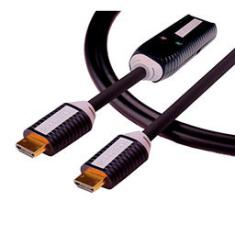 Tributaries Offers New HDMI Cables For Long and Expensive Runs[teaser] IHEC-X cables can take 1080p up to 98 feet. [/teaser] Tributaries Cable, a small firm out of Orlando, Florida, has updated its IHEC (HDMI Ethernet Channel) cables and added an IHEC-X cable for long-distance runs. These new cables contain long length IHEC and a HX102 cable extender, which is powered through a 5volt USB cable. The IHEC-X is said to extends 12-bit/color 1080p up to 98 feet using 24AWG HDMI cable, while an 8-bit/color 1080i signal can be taken up to 130 feet. The updated IHEC cables have updated conductors, connector shielding, and a stronger connector design. The cables themselves have the companies Full Body Armor protective coating, both to ensure that digital signal is not interfered with at a frequency level and also at a physical one. According to TWICE, the IHEC cables range in price $400 to $1,250, and the IHEC-X ranges from $735 to $1,385. While expensive cables are the butt of many a joke, especially when involving a digital signal, HDMI cable runs beyond 20 feet are typically problematic, and that is before incorporating theses cable supported Ethernet, 3D, Ultra HD and ARC. Source: TWICEPosted Tue Mar 12, 2013 at 09:00 AM PDT by:
 -
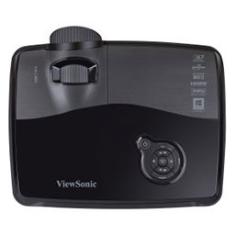 ViewSonic Wants to Project HD in Your Home[teaser]The ViewSonic Pro8520HD offers 5000 Lumens at 1080p.[/teaser] ViewSonic has just added two projectors to its lineup, the Pro8520HD and the Pro8600. While both models have application in the commercial space with their filter-less design, Eco-mode, HDMI, Wireless, and LAN connectivity, and DLP design, the Pro8520HD is undoubtedly the serious home theater option. The Pro8520HD features a 10-bit video processor, a 1080p native resolution, and a 5000 Lumens brightness, that when combined with ViewSonic's BrilliantColor technology makes for a high-end projector, but at much more accessible price than even ViewSonic's own Pro9000. In addition, Eco-mode is advertised as able to extend bulb life by 50 percent and up to 3,000 hours with only a 20 percent drop in brightness. Several other aspects of ViewSonic's commercial applications should ensure the reliability, color quality, and maintenance of the unit to the degree that the investment will last for years and years. The Pro8520HD has been set at $2099.00 and can be ordered here. Source: ViewSonicPosted Tue Mar 12, 2013 at 07:00 AM PDT by:
 -
 Ouya Console Will Launch Without Several Online Features[teaser]Online multiplayer will be in place, but no friend lists. [/teaser] As the Ouya nears the time when it will ship to backers ahead of its June retail release, details have emerged from SXSW about the state of the system's online functionality. As an Android device, several features expected from a console or PC gaming client still need to be implemented, namely online multiplayer. Fortunately, the company has clarified the initial reports by stating that online multiplayer will be available at launch on a per title basis. Online multiplayer functionality needs to be implemented on the developer side, suggesting that at least a smattering of titles with an Ouya focus will be ready at launch. Sadly though, features such as online chat, friends lists, and achievements are not expected to make the system's launch but are mentioned as coming online later this year. Once the Ouya backend is in place for systems like achievements, developers will need to update each title in order for players to experience the functionality. Amid all the talk of online play was also the mention of local multiplayer, which should be more prevalent on the Ouya than any other current Android flavor. The Ouya has a release date set for the month of June and can be pre-ordered here. Source: The VergePosted Tue Mar 12, 2013 at 06:30 AM PDT by:
 -
 Google Fiber Adds 3D Content[teaser]Google adding 3net for free and ESPN3D for $5 extra a month. [/teaser] As Google Fiber continues its to expand its Gigabit internet service throughout Kansas City, it has decided to go ahead and add 3D content to its TV service, Fiber TV. Customers who subscribe to the Gigabit + TV plan will receive 3net at no additional cost while ESPN3D is available for an additional $5 a month. Naturally, customers will need a 3D TV and 3D glasses combination in order to correctly view the new 3D content. As noted by Ars Technica, Samsung has admitted that demand for 3D TV has only realized sales at 30 percent of what the industry expected. Nevertheless, Google TV is promoted as on the cutting edge within its limited but growing market, and now 3D is part of that forward thinking service. ESPN3D may present the best and worst of what is available for as a dedicated 3D channel, but in order for content to improve, customers need to have access to it. Google Fiber is pushing out of Kansas and into Missouri, and so still remains beyond-reach for most customers. Source: Ars TechnicaPosted Mon Mar 11, 2013 at 09:00 AM PDT by:
 -
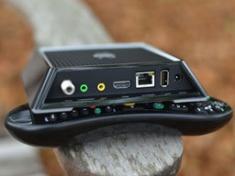 The TiVo Mini Arrives With a Nice Price Point and Little Else[teaser]Its $99.99 plus $6 a month to add a second room TiVo.[/teaser] Engadget has reviewed the latest TiVo, the TiVo Mini, and while it stacks up well in some areas, it comes up short in several others. By looking at four categories, price, form factor, connectivity and functionality, the TiVo Mini just comes off as an ok option for a TiVo-heavy ecosystem/household. A TiVo Mini is available for two prices, either $99.99 with a $6 per-month fee or a just a one-time $249 fee for the device and lifetime service. The form factor is also respectable for a 'Mini' device with stated dimensions being 6" x 6" x 1.3." The connectivity options seem reasonable at first as well. The device sports HDMI, power, coaxial, Ethernet, and mini-jacks for analog break-out cables. What is key here is that the device is dependent on either the coaxial or Ethernet jack. The lack of wireless seems reasonable for an HD DVR like box, however, the TiVo Mini has no tuner. It can only display live TV if networked with a four-tuner TiVo Premiere (a dual-tuner won't cut it). So not only is the TiVo Mini relegated to just an extension of another TiVo, but its functionality is comparably diminished as well. The device currently does not support streaming services like Netflix or Amazon, which have long been part of the TiVo feature set. The device does currently offer Hulu, Pandora, and YouTube functionality. While support for those streaming options may be added later, another sad omission should be readily apparent to TiVo users, and that is the lack of a Manage Recordings and Downloads menu. In essence, while the Mini can playback recordings from a networked full-featured TiVo, it cannot modify Season Pass/recordings options. Smartphone users can already do this remotely, but it nevertheless highlights how limited the TiVo Mini is apart from just adding in another TV in the home. Source:EngadgetPosted Mon Mar 11, 2013 at 07:00 AM PDT by:
 -
 Sharp Now Shipping the 2013 AQUOS 650 Series[teaser]Sharp's new LED TVs all feature Smart capabilities.[/teaser] Sharp has begun shipping the first of its new 6-series TVs, the 60-inch LC-60LE650 and the 70-inch LC-70LE650. These LED Smart sets boast a stat sheet stuffing 4 million: 1 dynamic contrast ratio, a Dual-core processor and built-in Wi-Fi. These new sets emphasize Smart TV capabilities while eschewing 3D. The entire line features Sharp's SmartCentral Smart TV platform, which allows for control via an iOS or Android device. Sharp Beam, a free app, is Sharp's solution for streaming content directly from Smartphones and tablets to the TV. The sets also support split-screen, which allows the user to use half the screen for viewing TV content while the other half uses the set's built-in browser. With the 60-inch and 70-inch currently selling for $1499.99 and $2499.99 respectively, there is room for two other sizes at different ends of the size spectrum. The 50-inch LC-50LE650 is expected to ship next month and retail for $1049.99, while the 80-inch LC-80LE650 is expected in May for $4999.99. The AQUOS 650 sets continue Sharp's combination of stylish bezel and lush display. Here's Robert Heron of Heron Fidelity briefly speaking about the new line: Amazon has both the 60-inch and 70-inch models on sale. Source:Big Picture Big SoundPosted Fri Mar 8, 2013 at 09:00 AM PST by: