-
 Jawbone Updates the Big Jambox With a Set of New and Improved Features[teaser]Improved iOS support and PS Vita support join the new 'Silent Mode' in the free 2.0 update.[/teaser] Jawbone's line of Jambox portable Bluetooth speakers are the standard for portable Bluetooth speakers. Jawbone has issued a few updates to the smaller Jambox, but now the Big Jambox is getting a free update to 2.0. First and foremost are a set of iOS improved features. iOS 6.1 users should find that battery life for both their paired iOS device and for the Big Jambox itself will improve dramatically. The Big Jambox's battery life when synced with an iOS 6.1 device has improved by two hours for up to 17 hours in improbably good playback conditions. Likewise, the improved iOS connectivity should lessen user connection issues. Devices that support AVRCP 1.4 should now have a synchronized volume setting. Adjusting the volume on either the playback device or the Big Jambox should adjust the volume on both devices, eliminating separate volume adjusters. The Big Jambox can now be set to mute non music sounds from the playback device. e.g. By holding down "Talk" and "Minus" buttons while powering on the Big Jambox, and the user will prevent alert tones and other system sounds from being played back over the speaker. This option corrects one of the Big Jambox's major annoyances. PS Vita support is also now part of the Big Jambox's repertoire. Big Jambox owners can update using a USB cable and the MyTalk section of Jawbone's website. The smaller more popular Jambox also sports 'Silent Mode' and is currently at version 2.2. Source: EngadgetPosted Wed Apr 3, 2013 at 08:00 AM PDT by:
 -
 PRIMA Cinema Brings Hollywood Premieres Home in 4:2:2, 10-bit Quality[teaser]$35,000 and an approved home theater nets you a $500 day and date option. [/teaser] Prima Cinema is now offering first-run theatrical films for private home theaters under a model that is as pricey as it is exclusive. As detailed by a review at Digital Trends, becoming a member of PRIMA Cinema involves having a dealer approve your home theater. Criteria includes having a serious 115" range screen and projector in place to start but also includes a limit of a twenty-five seat maximum. After the $35,000 investment for the 2TB networked, PRIMA player, each 2D film costs $500 while 3D movies cost $600. That fee grants the user one 24 hour period to watch the film a single time. Movies are downloaded rather than streamed and can be paused, but cannot be fast forwarded or rewound. The PRIMA player features dual power supplies, dual Ethernet, and dual output HDMI. The system is designed to work under adverse conditions, such as a power supply failure, but the dual HDMI only uses the second HDMI port for audio. Audio is delivered in multi-channel LPCM. Due to severe levels of concern over security regarding the content, biometric identification supplied from the fingerprint from the living user is required to operate and utilize the player, and any attempt to circumvent the hardware or software will cause the player to lock and require dealer servicing. Attempting to capture the image onscreen will yield a player-specific watermark. The player is essentially option free once set-up by the dealer. Controls are limited to selecting which movie to play. Once selected, movies download in the background, but will only begin playing once completed. The system is capable of HFR films in 2D but not 3D. The 3D signal supplied by the player is full 1080p/24 frame 10-bit 4:2:2 stereoscopic so that neither eye lacks for resolution. As of now, content is limited to films from Universal, Lionsgate, Focus Features, Cinedigm, and Magnolia, but PRIMA is pursuing other major studios. After entreating readers not to overly balk at the system's exclusively priced and designed business model, the review described the playback experiences over a two week period as without stutter, glitch or hiccup. "Lived with it for almost two weeks... Then wept bitterly when it left." Source: Digital TrendsPosted Tue Apr 2, 2013 at 09:30 AM PDT by:
 -
 Sony Announces EPIX App for the PS3 with Free Movies for PS Plus Members[teaser]14-day free trial available for all PSN members. [/teaser] Sony will release the EPIX video app for the PS3 today, and has promised that a Vita version will follow "soon." EPIX exists as both a premium cable channel and VOD demand service. As a movie service, EPIX boasts 3,000 titles with their biggest partners being Paramount, Lionsgate, and MGM. For PSN, EPIX is also offering exclusive content such as songs from their Original Concert Events. The service pushes it exclusive deals with Lionsgate and United Artists, but the service also has a myriad of types of content including documentaries, comedy specials, and even some series. While all PSN members are being offered a 14-day free trial. PS Plus members are promised a free movie every week without having to subscribe to EPIX. The specific movie is likely to be chosen by EPIX. Source: PlayStation.BlogPosted Tue Apr 2, 2013 at 07:00 AM PDT by:
 -
 A Learning Computer: What if a Samsung Smart TV's Features Were Taught to the User[teaser]The idea is to mimic video game feature introductions as a way to save the typical user from being baffled by a Smart TV. [/teaser] Somewhere between all the features that are marketed and all the features that are useful, there are features on mainstream products such as Smart TVs that the non-enthusiast user should be enjoying, but are lost in the deluge of the entire feature package. over at Fast Company, there is an article detailing User Interfaces on products like Smart TVs, receivers, cell phones etc. are failing to win over the majority of users to the tune of a 48% return rate (2002) due to product dissatisfaction. According the article, the issue is that the design of most interactive products fail "to take people’s changing capacity and experience into account." The article then outlines how "learning how to use complex products is like learning a computer game." With a specific example of involving the Samsung E8005 Smart TV, an alternative user interface is defined that rewards the user's ability to operate the TV by opening up more functions. "Based on this concept, the interface of the future television and remote control should match the appropriate level of challenge to the user’s skill level. In this future interface, the skill level of the user dictates which interactions are available. Turn on the TV, can you get 10 XP; chose 'Watch Television' and you get 10 more. At that point, only the least challenging interactions, such as volume and channel, are displayed." The example goes on to detail how this kind of user dependant set of features would gently plod the user to tryout other unlearned features. This could be streamlined into something as simple as an 'advanced mode' that has everything unlocked alongside the proposed learning mode. Ultimately, the idea involves recognizing the level of comfort that the user has with the feature set and trying to increase that comfort level. Source: Fast Company via The VergePosted Mon Apr 1, 2013 at 09:00 AM PDT by:
 -
 Audioholics Wants You to Maximize Your Center Channel Speaker Effectiveness[teaser]Center speaker height, angle, and resonance all listed as common pitfalls. [/teaser] Audiholics has posted a guide the begins by bemoaning the sad state of common center channel speaker set-ups. In short, with the center channel shouldering a film's dialogue and anchoring the soundtrack and Foley, some common missed adjustments can make a huge difference on home theaters ranging in cost from a few hundred to several thousand dollars. First off, try to ensure that there is clear air between the center channel and the listener's ear. While this seems simple, the secondary listening positions (for friends and neighbors) is often overlooked and can easily cause volume issues as well as dampening the overall audio enjoyment. This means the height of the center channel in important, but Audiholics also suggest that if necessary, the center speaker should be angled up, which can be accomplished soundly with foam. The fastidious type may even use a laser pointer to verify the right unobstructed vectors for each listening position. Further suggestions include positioning the speaker close to the edge of whatever it is sitting on to avoid unwanted reflections, using sand in hollow speaker stands to gain a sound solidity, and carpeting anything such as a noise reflecting floor. Audioholics also suggests that the center channel be set to "small" in order to redirect bass to the sub for the majority of full set-ups. And of course, re-calibrating after making adjustments. Source: AudioholicsPosted Mon Apr 1, 2013 at 07:00 AM PDT by:
 -
 Panasonic Will Exit TV Production Only as a "Last Resort"[teaser]Panasonic's chairman will step down in June.[/teaser] Panasonic continues to grapple with its position as an employer of 300,000 people that is nevertheless looking at a loss $8.1 billion for the fiscal year, which is marginally smaller than the loss from the previous fiscal year. As the company attempts to consolidate and reorganize without initiating layoffs, it has a stated desire to not surrender its TV business to the surging Samsung and LG. While the company has shed 40,000 jobs in the last two years, those jobs often involve three years of severance. The biggest immediate hope for Panasonic is the weakening Yen, and the company managed $32 million in operating profit from October -December just from a comparably favorable exchange rate. Accepting responsibility for the company's dire straits, Chairman Fumio Otsubo will step down in June. The company's current two year plan is to return to profitability next year with a projected $532 million forecasted profit through next March and a $3.7 billion profit in the next two years. Looking at the last ten years and Panasonic is currently down about $13 billion. While the company has chaffed against the Japanese media reports of the incoming end to their plasma TVs. The current language suggests that it was the entire TV business that may have been cut. Unfortunately, if Panasonic cannot do better than losing billions soon, the company may be forced to exit consumer electronics altogether in favor of its auto and housing interests. Panasonic has already said that it will sell its majority stake in Nippon Express Co. Ltd, which had been Panasonic's logistics interest. When discussing Panasonic's struggling TV business, Panasonic President Kazuhiro Tsuga stated, "To get out would be the final resort. That possibility is not zero.'' Source: EngadgetPosted Fri Mar 29, 2013 at 09:00 AM PDT by:
 -
 CNET: "AV receivers are terrible."[teaser]AV receivers are "embarrassingly backward compared with the rest of your home theater gear."[/teaser] Nearly every week around this time, a major electronics producer are unveils their latest line of AV receivers. Topping the list of must-have features? Connectivity options with a growing array of streaming standards throw-in. Understandably, AV receiver makers compete by attempting to add features that are dazzling with techno jargon and a growing extent of capability. In an article on CNET, however, the modern day receiver is being decried as backward, ugly, space-hogging, packed with useless features, and only for enthusiasts who know what they are doing. The standard receiver footprint and black casing are called out. Those dazzling features? "Featuritis." "We end up with receivers that can do everything, but nothing well." The Pioneer VSX-823-K on-screen display and the Yamaha RX-V475 remote are lambasted as a "bad experience" and "completely intimidating to anyone who's not a home theater enthusiast." Ultimately, the article makes clear that while many people enjoy and utilize many features of mainstream receivers, (at least those that are not unnecessary or poorly executed,) what the mainstream consumers need is more like an amplifier with HDMI inputs. The alternative is to continue to feed sound bar sales until most AV receivers are just discontinued altogether. Source: CNETPosted Fri Mar 29, 2013 at 07:00 AM PDT by:
 -
 Google TV's PrimeTime App Now Boasts Amazon Instant[teaser]Updated PrimeTime app streamlines content selection.[/teaser] As Amazon continues to emphasize Kindle hardware, one neglected user base for Amazon Instant Video is Android users. Fortunately for Google TV owners, they are no longer bundled into that particular neglected group. Once users have updated their Google TV PrimeTime app, not only will they find Amazon Instant Video, including Amazon Prime content, but content from Amazon Prime and other subscription services like Netflix and HBO Go will appear in the Free content section if the user is logged in as a subscriber. Google TV had previously supported Amazon Instant, but only on LG models. Unfortunately, a quick look at the PrimeTime page on Google Play reveals that many users are having trouble with the update, so users may be wise to hold off for now. Source: EngadgetPosted Thu Mar 28, 2013 at 09:00 AM PDT by:
 -
 PlayOn Brings Redbox Instant To Roku, PS3, Wii and Apple TV[teaser]PlayOn software uses a PC to route dozens of streaming content channels to various devices.[/teaser] Redbox Instant has debuted with frankly limited device support. Supported hardware includes the Xbox 360, certain Smasung TVs, and iOS devices. While Redbox has promised to add more devices, PlayOn has announced support for Redbox instant, thereby adding the service to a host of set-top boxes. PlayOn is a software package that when run on a PC funnels a vast number of streaming channels to a wide variety of devices. Device support includes, the 360, PS3, Wii, Wii U, Android, iOS, Kindle Fire, Nook Color, Google TV, OmniBox, Roku among others. Nearly every streaming cable channel is supported, which helps PlayOn's stated desire to help customers "cut the cable." Netflix, Hulu, Pandora, Amazon Instant, and now Redbox Instant join the list of supported streaming services. PlayOn is available for a year or for lifetime for current fees of $24.99 or $44.99 respectively. The company also offers PlayLater, which promises DVR functionality for streaming content. PlayOn is available at www.playon.tv. Source: TWICEPosted Thu Mar 28, 2013 at 07:00 AM PDT by:
 -
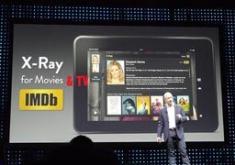 Amazon Brings X-Ray To TV[teaser]X-Ray is powered by IMDb but is limited to a few devices. [/teaser] Six months ago Amazon introduced X-Ray for its Kindle Fire HD for movies. The feature allows users to directly access IMDb related content by just touching the screen of the device that they are using. Amazon has an equivalent version available for many of its e-book offerings. Today though, Amazon announced the expansion from movies to TV series. From IMDb CEO Col Needham, "For over 20 years we have been cultivating a vast database of movie, TV and celebrity content. Can’t remember where you’ve seen the actor playing Lord Grantham in Downton Abbey? No problem. Simply tap on the screen and you’ll see a full filmography, where you’ll realize that Hugh Bonneville was also in Notting Hill. Our vision is to make X-Ray available on every movie and TV show—we’re excited to make another big step forward today, and we are working hard to add X-Ray to more TV shows and movies in the future." Popular shows such as Justified, Downton Abbey, The West Wing, Sons of Anarchy, Falling Skies, American Horror Story, Grey's Anatomy, Doctor Who, The Walking Dead, Lost, Glee, Breaking Bad and Game of Thrones are listed as supporting the service. For supported content with X-Ray at any point all actors on screen are listed with IMDb picture and hotlink on the device, from the leading star to the least notable guest star. It is even possible to follow an actor other films and shows available on Amazon. Device support currently extends to the Kindle Fire HD and to the Nintendo Wii U, but it seems likely that Amazon will add other touch-enabled devices as supported content continues to grow. Source: Slash GearPosted Wed Mar 27, 2013 at 10:00 AM PDT by: